

OBD-II Code P0201: Injector Circuit/Open - Cylinder 1
The Ultimate Guide to What P0201 Means, Why It Triggers, and Exactly How to Fix It
- P0201 flags an electrical fault in the cylinder 1 fuel injector circuit, not necessarily a failed injector.
- Test the circuit with a $15 noid light before spending $100+ on a new fuel injector.
- Swap the cylinder 1 injector with cylinder 2; if the code changes to P0202, the injector is bad, but if P0201 remains, you have a wiring issue.
- Driving with a flashing check engine light and a P0201 code destroys your catalytic converter, turning a $150 wiring repair into a $2,500 exhaust replacement.
- Check the main injector fuse first if you see multiple injector codes (like P0201, P0202, and P0203) simultaneously.
What Does P0201 Mean?

The P0201 code means your Powertrain Control Module (PCM) detected an electrical problem with the fuel injector for cylinder 1. The control circuit is open, shorted, or has abnormal resistance, preventing the injector from delivering fuel. The PCM expects a specific voltage spike (inductive kick) when commanding the injector; if this signal is missing, it sets the code.
Technical definition: SAE/OBD-II defines P0201 as "Cylinder 1 Injector Circuit/Open". The PCM provides constant power and pulses a ground connection to activate the injector's solenoid. This code triggers when the PCM detects voltage or resistance in this circuit outside the expected range.
Can I Drive With P0201?
Yes, But With Caution. You can drive short distances, but we strongly advise against it. Continuing to drive with an active P0201 code causes a rough running engine, poor fuel economy, and costly catalytic converter failure. Unburned fuel entering the exhaust overheats and destroys the converter, a repair costing $800 to $2,500. If the check engine light flashes, pull over immediately—this indicates a severe, catalyst-damaging misfire.
Common Causes

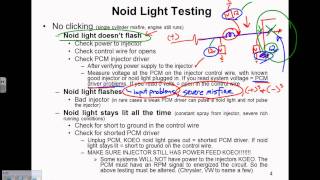
- Damaged or Corroded Wiring/Connector (Very Common) — This is the most frequent cause. Wires fray, break, short to ground, or melt from engine vibration, heat, or rodent damage. Connectors also loosen, corrode, or suffer backed-out pins, interrupting the electrical signal. 🎬 See how to diagnose and fix injector circuit malfunctions
- Faulty Fuel Injector (Common) — The fuel injector's internal electronic coil burns out (creating an open circuit) or develops a short, preventing it from opening. 🎬 Watch this step-by-step guide on how to replace fuel injectors On Gasoline Direct Injection (GDI) engines, intense heat and carbon buildup accelerate this failure.
- Blown Fuse or Faulty Relay (Less Common) — A fuse and relay protect and power the fuel injector circuit. If the fuse blows or the relay fails, it cuts power to one or more injectors. On some vehicles, a single fuse protects multiple injectors.
- Accidental Damage During Other Repairs (Uncommon) — Work on other engine parts often causes accidental damage. Mechanics inadvertently crush wiring harnesses, leave connectors unseated, disconnect ground wires, or bend PCM pins during reinstallation.
- Powertrain Control Module (PCM) Failure (Rare) — The internal driver circuit (a transistor) within the PCM that controls the cylinder 1 injector fails. The injector and wiring remain fine, but the computer cannot send the signal. Suspect this only after exhausting all other options.
- PCM Software/Calibration Issues (Rare) — Manufacturers occasionally release software updates for the PCM to address false or intermittent injector circuit detections. Checking for Technical Service Bulletins (TSBs) resolves this without replacing parts.
Symptoms

- Check Engine Light On — The Malfunction Indicator Lamp (MIL) illuminates. A steady light indicates a standard fault, while a flashing light warns of a severe misfire actively destroying the catalytic converter.
- Rough Idle and Engine Misfire — The engine runs unevenly and shakes, especially at idle. You feel a distinct stutter because cylinder 1 lacks fuel to combust. This frequently triggers a companion P0301 misfire code.
- Reduced Engine Power and Hesitation — The vehicle struggles to accelerate and feels sluggish. The computer often forces the vehicle into 'limp mode' with limited speed to protect the engine and exhaust system.
- Poor Fuel Economy — Gas mileage plummets because the engine runs inefficiently. The PCM dumps extra fuel into other cylinders to compensate for the dead cylinder.
- Raw Fuel Smell — If the injector fails in a stuck-open position, it leaks raw fuel into the cylinder. This unburned fuel travels into the exhaust, creating a strong gasoline odor.
Diagnostic Flowchart
Tap your situation to follow the diagnostic path that matches what you're seeing on this code.
Common Fixes & Costs
- Cleaning Injector Connector — Parts: $5-$15, Labor: $50-$100, ~0.2 hr book time (DIY)
- Repairing Wiring Harness or Connector
— Parts: $10-$50, Labor: $150-$600, ~1.5 hr book time
(Intermediate)
Ford F-150: OEM Motorcraft WPT-1051 (Alt: Dorman 645-203)
Chevy Silverado: OEM ACDelco PT2132 (Alt: Dorman 85112) - Replacing Fuel Injector
— Parts: $50-$300, Labor: $100-$400, ~2.2 hr book time
(DIY)
Ford F-150 (2018-2020 5.0L): OEM Motorcraft CM5265 (Alt: Bosch 62409)
Chevy Silverado (2018 5.3L): OEM ACDelco 12668390 (Alt: Bosch 62431) - Replacing Blown Fuse — Parts: $1-$5, Labor: $0-$50, ~0.1 hr book time (DIY)
- Replacing Powertrain Control Module (PCM) — Parts: $500-$1,500, Labor: $150-$300, ~1.5 hr book time (Professional)
Used vs. New Parts: Buying Guide
When a used part is worth it: Buy remanufactured, not used. A quality remanufactured injector from a reputable supplier performs like new for less money. Avoid junkyard injectors due to unknown history, internal wear, and clogging risks.
Donor-vehicle mileage cap: roughly under 75000 miles for the part to have meaningful remaining life.
Donor quality checklist:
- Look for remanufacturers who provide flow-testing data.
- Ensure the part comes with new O-rings and seals.
- Match the part number exactly to ensure correct flow rates.
Decision logic:
- If Vehicle is newer and under warranty → Use a new OEM part to maintain warranty coverage.
- If Budget is the primary concern and the vehicle is older → A quality remanufactured injector with a warranty is a smart choice.
- If The failure is on a high-performance or GDI engine → Favor a new OEM or top-tier remanufactured part to ensure longevity under high heat.
Warranty tradeoff: Junkyard parts offer zero warranty. Remanufactured injectors typically offer 12-month to lifetime warranties. New OEM parts carry a 12-24 month manufacturer warranty.
Worst-case if a used part fails: $300-600 if a faulty used/reman part requires repeat diagnosis and labor for replacement.
What Happens If You Wait — Timeline
- 0-2 weeks: Check Engine Light turns on with code P0201. A slight, noticeable rough idle or hesitation occurs. The PCM logs the fault. (MPG impact: 3-8%% · Added cost: $0-25 in wasted fuel)
- 2 weeks - 2 months: Engine misfire becomes consistent during acceleration. Fuel economy drops significantly as the PCM compensates. The vehicle fails emissions testing. (MPG impact: 10-20%% · Added cost: $50-150 in wasted fuel)
- 2-6 months: Unburned fuel washes past the piston rings (diluting oil) and enters the exhaust, overheating the catalytic converter. The Check Engine Light flashes during heavy load. (MPG impact: 15-25%% · Added cost: $800-$2,500 (catalytic converter replacement now likely needed))
- 6+ months: Complete failure of the catalytic converter. The constant misfire stresses engine mounts and internal components. Oxygen sensors foul from raw fuel. (MPG impact: 20-30%+% · Added cost: $1,500-$3,500+ (includes catalytic converter, O2 sensors, and engine diagnostics))
Cost of Not Fixing It

- 0-1 month: Noticeable rough idle, hesitation, and a drop in fuel economy of 5-15%. Failed emissions test. (Added cost: Negligible, other than increased fuel cost.)
- 1-6 months: Risk of overheating and destroying the catalytic converter due to unburned fuel entering the exhaust. A flashing check engine light accelerates this timeline to days. (Added cost: $800-$2,500)
- 6+ months: Complete catalytic converter failure, fouled oxygen sensors, and potential internal engine damage from running in a constant misfire condition. (Added cost: $1,500-$3,500+)
Diagnosis Steps

- Scan for Additional Codes
Use an OBD-II scanner to confirm P0201. Look for a P0301 misfire code, which is expected. If you see codes for other injectors (P0202, P0203), immediately check shared components like fuses or the main wiring harness.
Tools: OBD-II Scanner (Beginner) - Visually Inspect the Wiring and Connector
Locate the cylinder 1 fuel injector. Inspect the wiring harness and connector for burns, corrosion, loose pins, or rodent damage. Wiggle the harness near the connector while the engine idles; if the idle changes, you found an intermittent break.
Tools: Flashlight (Beginner) - Test the Injector with a Noid Light
Disconnect the injector and plug in a noid light. Start the engine. If the light flashes rhythmically, the PCM and wiring work, meaning the injector itself failed. If it stays dark or solid, the wiring or PCM is the culprit.
Tools: Noid Light Set (Intermediate) - Measure Injector Resistance
With the engine off, disconnect the injector and measure resistance across its two terminals. Standard port injectors read 11-18 Ohms; GDI injectors read 1-5 Ohms. A reading of infinite resistance (OL) means an open coil, while 0 Ohms indicates a dead short.
Tools: Multimeter (Intermediate) - Swap Components (Injector)
Swap the cylinder 1 injector with cylinder 2. Clear the codes and run the engine. If the code changes to P0202, the injector is faulty. If P0201 returns, the problem remains in the wiring or PCM.
Tools: Basic Hand Tools (Intermediate) - Check for Voltage and Ground at the Connector
With the key on and engine off, check for battery voltage (~12V) at the power supply pin of the injector connector. Next, check the continuity of the control wire from the injector connector back to the PCM. An open circuit confirms a broken wire.
Tools: Multimeter, Vehicle Wiring Diagram (Advanced) - Voltage Drop Test
With the engine running, measure the voltage on the power side of the injector. It must stay within 0.5 volts of battery voltage. A drop greater than 0.5V indicates high resistance (corrosion or a failing wire) that a simple continuity test misses.
Tools: Multimeter, Back-probe Pins (Advanced) - Oscilloscope Waveform Analysis
For intermittent faults, use an oscilloscope to view the injector's voltage pattern. A healthy pattern drops near zero volts when grounded, followed by a 35-70V+ inductive spike when released. A missing spike confirms a circuit or injector problem.
Tools: Automotive Oscilloscope (Professional)
When This Code Triggers (Freeze-Frame Conditions)
- Engine Coolant Temp: 185-205°F (Fully warmed up)
- RPM: 750 (Idle)
- Engine Load: 20-30% (Low load, engine idling in drive)
- Vehicle Speed: 0 mph (Vehicle stopped)
Related Codes
- P0301 — P0301 means 'Cylinder 1 Misfire Detected.' The P0201 electrical fault directly causes the P0301 misfire because no fuel is delivered. Always diagnose P0201 first.
- P0200 — P0200 is a general 'Injector Circuit/Open' code. It indicates a problem with the overall injector circuit, pointing to a shared component like the main power relay or fuse.
- P0202, P0203, P0204 — These codes point to identical faults on different cylinders. Seeing multiple injector codes simultaneously strongly suggests a blown fuse, faulty relay, or damaged main wiring harness.
- P2146 / P2149 — These indicate a fault in the power supply for a whole bank of injectors. A short in one injector circuit (P0201) causes the PCM to shut down the entire bank to protect itself.
Climate & Environmental Factors
- Cold Weather: Rodents seek warmth in engine bays during winter, chewing on soy-based wire insulation. Plastic connectors also become brittle in the cold, cracking easily during repairs.
- High Humidity / Road Salt: The 'Rust Belt' sees higher corrosion rates on electrical connectors and ground points. Moisture seeps past connector seals, causing intermittent open circuits.
How to Talk to a Mechanic About This Code
Say this: "I have a P0201 code for the cylinder 1 injector circuit and a noticeable misfire. I'd like to schedule a diagnosis. Please test the circuit to determine if the fault is the injector itself, the wiring, or the connector before recommending a part replacement. Specifically, I'd like to know the results of a noid light test and the injector's resistance measurement."
This signals you understand that P0201 is an electrical code requiring proper diagnosis, not just automatically replacing the injector. It forces the shop to justify their repair recommendation.
Avoid saying:
- 'My check engine light is on, can you just fix it?'
- 'I think I need a new fuel injector for cylinder 1.'
- 'Just do whatever you think is best.'
Questions to ask before authorizing the repair:
- What was the result of the noid light test on the cylinder 1 connector?
- What did the fuel injector's resistance measure in ohms? Was it within the manufacturer's specification?
- Did you find a specific fault in the wiring, like a break, short, or corrosion?
- If you are recommending an injector replacement, what test confirmed the original injector failed?
Where to Take It: Dealer vs Independent vs Chain
- Dealer:
Best reserved for vehicles under warranty or complex PCM failures requiring proprietary programming.
Best for: Vehicles still under powertrain or emissions warranty., Vehicles with known, complex TSBs related to wiring harnesses or PCM software., Rare cases where a PCM replacement and programming is required.
Downsides: Typically the highest labor rate., May default to replacing larger assemblies (like a full harness) instead of repairing a single wire. (Typical cost: +50% vs. baseline) - Independent Shop:
Best fit for most situations. A competent independent shop easily diagnoses and repairs a P0201 fault using standard industry tools.
Best for: Most out-of-warranty vehicles., Standard electrical diagnosis and component replacement (injector, connector pigtail)., Cost-effective diagnosis and repair.
Downsides: Shop quality and diagnostic skill vary greatly. Vet shops by checking for ASE certifications and online reviews., May lack access to the very latest manufacturer-specific software updates. (Typical cost: +0% vs. baseline) - Chain Shop:
Use with caution. Acceptable for a simple code scan, but risky for actual diagnosis. An incorrect diagnosis leads to replacing a good injector when the real problem is a broken wire.
Best for: Simple, unrelated maintenance like oil changes or tire rotations.
Downsides: Technician skill varies dramatically., Business model incentivizes replacing parts (like the injector) without performing a full circuit diagnosis. (Typical cost: -10% vs. baseline)
When to Walk Away From the Repair
If the estimated repair cost exceeds 50% of your car's private-party market value, seriously consider selling or trading it in rather than repairing it.
- Car worth $3500, fix is $1800: Walk away. A repair cost this high relative to the car's value is a poor investment. The fault is likely a complex wiring issue or a bad PCM, and other age-related failures are imminent.
- Car worth $15000, fix is $750: Fix it. This is a standard repair cost for an injector or minor wiring issue and falls well below the 50% threshold. The repair preserves the value of the vehicle.
- Car worth $5000, fix is $2000: Borderline. Get a second opinion before authorizing. If the diagnosis confirms a rare PCM failure, the cost is accurate but approaches the walk-away point.
What Scan Tool You Need for This Code
Minimum: A basic OBD-II code reader that reads and clears codes, and displays freeze-frame data. This confirms the P0201 code and resets it after a repair.
A simple code reader only tells you the 'what' (P0201), not the 'why'. It cannot distinguish between a bad injector, faulty wiring, or a PCM issue. For diagnosis, you need a noid light and a multimeter.
Budget: BlueDriver Pro Scan Tool (~$100) — Pairs with your smartphone to read/clear codes, view freeze-frame data, and graph live data. Its repair reports provide valuable context based on mechanic-verified fixes.
Mid-range: Foxwell NT510 Elite (~$159) — Offers bidirectional control, allowing you to perform an 'injector buzz test' to command the injector to fire. This directly tests the PCM driver and wiring.
Professional: Autel MaxiCOM MK808 / MK808BT (~$450-550) — Provides full bidirectional control for active tests like commanding the injector on/off. It offers OE-level diagnostics and extensive live data for pinpointing circuit faults.
Rent vs buy: For a one-time diagnosis, auto parts stores like AutoZone offer free loaner code readers. If you do your own repairs regularly, buying a budget or mid-range scanner is a worthwhile investment.
How to Clear the Code After You Fix It
- Use an OBD-II scan tool to clear the P0201 code.
- Perform a complete drive cycle to allow the vehicle's readiness monitors to run.
- Check monitor status with a scan tool before going for an emissions test.
Drive cycle (~30 minutes): A general drive cycle includes a cold start (sitting for 8+ hours), 2-3 minutes of idling, 10-15 minutes of steady highway driving (around 55 mph), and 15-20 minutes of mixed city/suburban driving with several stops and accelerations.
Readiness monitors affected: Catalyst Monitor, Oxygen (O2) Sensor Monitor, Misfire Monitor
Before emissions retest: drive at least 50 miles to fully set monitors.
Watch out for:
- Disconnecting the battery clears the code but resets all readiness monitors, causing an immediate emissions test failure.
- The code returns immediately if you replace the injector but ignore a frayed wire.
- Some vehicles require highly specific drive cycle parameters to set the Catalyst monitor.
Will This Fail Emissions / State Inspection?
Yes — this code typically fails an OBD-II emissions inspection.
- California: An illuminated check engine light is an automatic failure. After repair, a full drive cycle must be completed to set readiness monitors before a retest.
- New York: The NYVIP inspection includes an OBD-II scan; an active P0201 code causes an automatic failure.
- Texas: In emissions-testing counties (like Harris County), P0201 results in a failed inspection. Safety-only counties pass it, but the underlying damage continues.
Most Commonly Affected Vehicles
- Ford F-150 (2011-2025) — TSB 22-2223 for 2021-2025 models points to the engine harness chafing against an A/C line stud. Older models suffer from brittle injector connectors.
- Chevrolet / GMC Silverado, Sierra, Tahoe, Suburban (2014-2022) — GM TSB 21-NA-149 identifies specific harness chafe points causing shorts. Injector failure is also highly common on the 5.3L engines.
- Dodge / Chrysler / Jeep Ram 1500, Challenger, Charger (2013-2020) — On 2013-2018 Ram trucks, multiple injector codes (P0201, P0202) are often caused by a single blown injector fuse, not failed injectors.
- Honda Accord, Civic (2003-2024) — Rodent damage to soy-based wiring insulation is a frequent cause. For 2013-2017 Accords, water intrusion into connectors is a known issue.
- Hyundai / Kia Optima, Sportage, Sorento (2011-2020) — Direct injection (GDI) engines expose injectors to high heat and carbon buildup, leading to a higher failure rate. Loose connectors are also common.
- Toyota Camry (2007-2024) — On 2012-2017 models with the 2.5L engine, the injector harness is vulnerable to heat damage, causing brittle wires to snap.
- Volkswagen / Audi Passat, Beetle, Tiguan, A4 (2018-2020) — VW Technical Tip 97-18-02TT addresses intermittent injector circuit faults on 2.0L engines, requiring inspection of the injector sub-harness.
- FIAT Panda, 500 (2007-2015) — Often occurs after changing spark plugs, where the injector connector is accidentally loosened. The connector feels 'wobbly' even when seated.
Manufacturer-Specific Notes
- General Motors (Chevy/GMC): GM TSB 21-NA-149 identifies specific points where the engine harness chafes and shorts out. GM also issued Special Coverage N212353850 extending the warranty for injector replacement on certain models.
- Ford: On 3.5L EcoBoost and newer 5.0L F-150s, the wiring harness routes poorly and chafes against A/C line studs (TSB 22-2223), breaking the wire and triggering P0201.
- Dodge / Chrysler / Jeep (Stellantis): On Ram trucks (2013-2018), always check the shared injector fuse first when multiple injector codes appear. The 3.6L Pentastar V6 suffers from brittle wiring near the PCM connector.
- Volkswagen / Audi: Per TSB 97-18-02TT, 2018-2020 2.0L engines set intermittent injector faults. Inspect the injector sub-harness and its connections before swapping injectors or condemning the main harness.
Real Owner Stories
2011 Chevrolet Malibu 2.4L with recurring P0201
Owner experienced a persistent misfire and P0201 code despite replacing the fuel injector and spark plugs.
What they tried:
- Replaced fuel injector for cylinder 1
- Replaced spark plugs
- Visually inspected wiring harness for obvious damage
Outcome: The cause was a broken wire hidden within the insulation of the harness, a known issue for this model. The fix required a detailed continuity test of the wiring harness a few inches from the injector plug to find the internal break.
Lesson: A visual inspection isn't enough. Wires break inside the insulation without any external signs of damage. 'Wiggle testing' the harness while the engine runs or performing a continuity test is crucial.
2017 VW Passat 1.8T with intermittent P0201
The car suddenly became jerky and lost power while shifting, triggering a P0201 code. The problem disappeared after restarting the car and didn't return for days.
What they tried:
- Restarting the car, which temporarily cleared the issue.
Outcome: This intermittent fault points to a loose connection, a corroding connector, or a failing wire. The temporary fix (restarting) proves the connection is on the verge of failure. The permanent solution is locating and repairing the compromised circuit.
Lesson: Intermittent electrical faults that clear on their own almost always indicate a wiring or connector problem. Don't assume the problem is gone; it's a warning sign of an impending permanent failure.
2009 FIAT Panda 1.1 ECO with P0201 after DIY repair
Immediately after changing the spark plugs, the owner got a P0201 code and a rough running engine.
What they tried:
- Replacing spark plugs and ignition leads.
Outcome: The electrical connector for the #1 injector felt 'wobbly' and loose after the repair. Changing the spark plugs disturbed the fragile connector, causing an open circuit. The fix was ensuring the connector seated properly.
Lesson: If a new code appears immediately after a repair, the cause is almost always related to the work just performed. Retrace your steps and ensure you didn't accidentally bump or disconnect a nearby sensor.
1995 Subaru Legacy LSI with cold-start stalling
The car stalled on a cold start with the #1 injector plugged in. If unplugged, it ran rough but didn't stall. Once warm, the injector could be plugged back in and the car ran fine.
What they tried:
- Unplugging the injector to get the car started and warmed up.
Outcome: This unusual behavior points to an injector stuck open when cold, flooding the cylinder and causing it to stall. The owner replaced the injectors to resolve the issue.
Lesson: While P0201 is an electrical code, the symptoms sometimes point to the mechanical state of the injector. An injector failing in a specific state (stuck open/closed) produces unique symptoms related to engine temperature.
How to Prevent This Code From Triggering
- Use Top-Tier certified gasoline (Every fill-up) — Top-Tier fuels contain higher concentrations of detergent additives that prevent carbon buildup on injector nozzles, ensuring a proper spray pattern and preventing clogs.
- Perform regular fuel system cleaning (Every 30,000 miles) — Using a quality fuel system cleaner removes deposits that fuel additives miss, restoring injector performance and preventing issues that lead to electrical strain.
- Inspect wiring harnesses during other maintenance (Every 30,000 miles or during any under-hood work) — Visually check the injector wiring for chafing, brittleness, or proximity to hot engine components. Securing loose harnesses with zip ties prevents vibration damage.
- Apply dielectric grease to connectors (When replacing an injector or servicing a connector) — Applying a small amount of dielectric grease to the inside of the injector connector seals it from moisture, preventing corrosion that causes intermittent open circuits.
- Avoid running the fuel tank empty (Daily habit) — Running the tank very low allows sediment from the bottom of the tank to pull into the fuel system, potentially clogging injectors and causing them to fail.
Frequently Asked Questions
I replaced the fuel injector, but the P0201 code came back. What now?
If a new injector doesn't fix the code, the problem is an intermittent open or short in the wiring or PCM. Carefully re-inspect the entire wire length for chafing and check the pins at both connectors. A rare possibility is a failed driver in the PCM itself.
What is the difference between P0201 and P0301?
P0201 is an electrical circuit code for the cylinder 1 injector, while P0301 is a misfire code for cylinder 1. The P0201 fault directly causes the P0301 misfire because no fuel is delivered to burn. Always diagnose and fix the P0201 electrical issue first.
Will replacing the fuel injector always fix a P0201 code?
No, replacing the injector only works if the injector's internal coil has failed. Wiring and connector issues are equally common causes for this code. Always test the circuit with a noid light and multimeter before buying parts.
How do I find cylinder 1?
On most inline engines, cylinder 1 is closest to the front of the engine near the accessory belts. For V-shaped engines, the location varies by manufacturer. Consult your vehicle's service manual or search online for your specific engine's cylinder layout.
Can a bad fuel pump or low fuel pressure cause a P0201 code?
No, P0201 is strictly an electrical circuit fault code for a single injector. A fuel pump or pressure issue affects all cylinders and sets different codes like P0087 (low pressure) or P0300 (random misfire). Focus your diagnosis on the cylinder 1 electrical circuit.
Will the P0201 code clear itself?
No, P0201 indicates a hard electrical fault that requires physical diagnosis and repair. The Check Engine Light remains on until you resolve the underlying issue and clear the code with an OBD-II scanner. It will not reset on its own.
Can I pass an emissions test with a P0201 code?
No, an active P0201 code and illuminated Check Engine Light results in an automatic failure for any state emissions inspection. You must repair the fault and complete a full drive cycle to reset the readiness monitors before retesting.
Key Takeaways
- P0201 flags an electrical fault in the cylinder 1 fuel injector circuit, not necessarily a failed injector.
- Test the circuit with a $15 noid light before spending $100+ on a new fuel injector.
- Swap the cylinder 1 injector with cylinder 2; if the code changes to P0202, the injector is bad, but if P0201 remains, you have a wiring issue.
- Driving with a flashing check engine light and a P0201 code destroys your catalytic converter, turning a $150 wiring repair into a $2,500 exhaust replacement.
- Check the main injector fuse first if you see multiple injector codes (like P0201, P0202, and P0203) simultaneously.
Helpful Videos

The information in this article is provided for general reference and educational purposes only. Vehicle specifications, procedures, and part compatibility can vary by production date, trim level, and region. Always consult your vehicle's factory service manual and verify part numbers before purchasing or performing repairs. Safety-critical components such as airbags, seat belts, and braking systems should be installed by a qualified professional.
- 🎬 Helpful Videos
- What Does P0201 Mean?
- Can I Drive With P0201?
- Common Causes
- Symptoms
- Diagnostic Flowchart
- Common Fixes & Costs
- Used vs. New Parts: Buying Guide
- What Happens If You Wait — Timeline
- Cost of Not Fixing It
- Diagnosis Steps
- When This Code Triggers (Freeze-Frame Conditions)
- Related Codes
- Climate & Environmental Factors
- How to Talk to a Mechanic About This Code
- Where to Take It: Dealer vs Independent vs Chain
- When to Walk Away From the Repair
- What Scan Tool You Need for This Code
- How to Clear the Code After You Fix It
- Will This Fail Emissions / State Inspection?
- Most Commonly Affected Vehicles
- Manufacturer-Specific Notes
- Real Owner Stories
- 2011 Chevrolet Malibu 2.4L with recurring P0201
- 2017 VW Passat 1.8T with intermittent P0201
- 2009 FIAT Panda 1.1 ECO with P0201 after DIY repair
- 1995 Subaru Legacy LSI with cold-start stalling
- How to Prevent This Code From Triggering
- Frequently Asked Questions
- I replaced the fuel injector, but the P0201 code came back. What now?
- What is the difference between P0201 and P0301?
- Will replacing the fuel injector always fix a P0201 code?
- How do I find cylinder 1?
- Can a bad fuel pump or low fuel pressure cause a P0201 code?
- Will the P0201 code clear itself?
- Can I pass an emissions test with a P0201 code?
- Key Takeaways
- 🎟️ Get 5% Off