

OBD-II Code U0109: Lost Communication With Fuel Pump Control Module
What U0109 means, why it triggers, and how to fix it
- Code U0109 completely disables fuel delivery, causing an immediate engine stall or a crank-no-start condition that requires a tow.
- Corrosion destroys the Fuel Pump Control Module (FPCM) on 2007-2014 GM and Ford trucks because the module is exposed on the rear frame rail.
- Inspect the FPCM fuse and wiring harness before buying parts; a melted Fuse 27 on Ford F-150s or a broken ground wire causes 30% of these failures.
- Never replace the fuel pump to fix a U0109 code; this is strictly a communication failure between the main computer and the fuel pump's control module.
What Does U0109 Mean?

Code U0109 means the Powertrain Control Module (PCM) lost communication with the Fuel Pump Control Module (FPCM). The FPCM regulates the fuel pump's speed and pressure. When this data link drops, the fuel pump shuts down, instantly starving the engine of fuel.
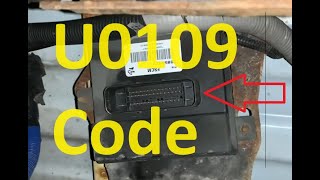
Technical definition: The SAE definition is "Lost Communication With Fuel Pump Control Module A". 🎬 Watch a breakdown of common causes and fixes for U0109. This indicates a failure on the Controller Area Network (CAN) bus between the PCM and the FPCM. In modern returnless fuel systems, the FPCM varies voltage to the fuel pump to control pressure; without this CAN bus signal, the pump defaults to off.
Can I Drive With U0109?
No — Do Not Drive. This code causes a no-start condition or sudden engine stalling while driving. Do not drive the vehicle until repaired due to the high risk of losing power in traffic.
Common Causes

- Blown Fuse or Faulty Relay (Very Common) — A blown fuse cuts power to the module, causing it to drop offline. Corrosion in the fuse box, sometimes melting the fuse holder entirely, prevents power from reaching the FPCM circuit.
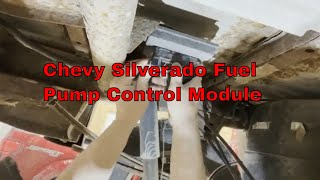
- Faulty Fuel Pump Control Module (FPCM) (Very Common) — The FPCM itself is a frequent point of failure. Mounted on the vehicle's rear frame rail, it suffers exposure to moisture and road salt, leading to internal corrosion and electronic failure.
- Wiring or Connector Issues (Very Common) — Wires and connectors leading to the FPCM corrode, break, or loosen. This occurs frequently at the FPCM connector itself or within the frame-mounted wiring harness due to vibration and elements.
- Poor Ground Connection (Common) — The FPCM requires a solid chassis ground. A rusted or loose ground wire interrupts operation and triggers the code. On many Ford trucks, the G401 ground on the frame is the primary culprit.
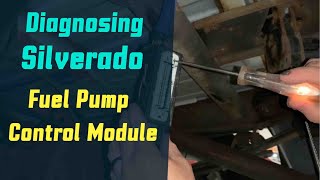
- Corroded Underhood Fuse Block (Less Common) — Particularly on GM trucks, the fuse block corrodes internally at the FPCM fuse terminal. This prevents power delivery even if the fuse appears intact, leading to misdiagnosis of the FPCM itself. 🎬 See how to diagnose a Silverado fuel pump control module.
- Software Corruption or Version Mismatch (Rare) — An incomplete software update or mismatched calibration file prevents the FPCM from communicating. A dealer re-flash resolves this.
- Interference from Other Modules (Rare) — A failing module elsewhere on the network (like a Cadillac OnStar module) creates CAN bus noise, blocking FPCM communication and setting a U0109 code.
- Faulty Powertrain Control Module (PCM) (Very Rare) — The main engine computer rarely fails. Suspect this only after ruling out all other causes and if multiple communication codes exist simultaneously.
Symptoms
- Engine cranks but will not start — The starter turns the engine over, but it will not fire because the fuel pump is disabled.
- Engine stalls while driving — The engine suddenly shuts off while driving, often triggered by hitting a bump.
- Check Engine Light is on — The Malfunction Indicator Lamp (MIL) illuminates immediately.
- Reduced engine power or rough running — Intermittent communication causes hesitation, poor acceleration, and misfires before a complete stall.
- No sound from the fuel pump — The normal 2-second fuel pump priming hum is absent when turning the key to the 'ON' position.
Diagnostic Flowchart

Tap your situation to follow the diagnostic path that matches what you're seeing on this code.
Common Fixes & Costs
- Replace Blown Fuse or Fuse Relocation Kit — Parts: $5-$30, Labor: $100-$150, ~0.6 hr book time (DIY)
- Reseat FPCM Connector — Parts: $0-$5, Labor: $0-$50, ~0.1 hr book time (DIY)
- Replace Fuel Pump Control Module (FPCM) — Parts: $100-$400, Labor: $150-$300, ~1.5 hr book time (Intermediate)
- Clean or Repair Ground Connection — Parts: $1-$10, Labor: $50-$100, ~0.8 hr book time (DIY)
- Repair Wiring or Replace Connector — Parts: $10-$50, Labor: $150-$450, ~2.5 hr book time (Advanced)
Used vs. New Parts: Buying Guide
When a used part is worth it: A used FPCM makes sense only for an older, high-mileage vehicle where budget is the primary concern.
Donor-vehicle mileage cap: roughly under 100000 miles for the part to have meaningful remaining life.
Donor quality checklist:
- Avoid parts from vehicles in the 'Rust Belt' as the FPCM is highly prone to corrosion.
- Verify the exact part number matches; superseded numbers may not be compatible.
- Ask the seller if the donor vehicle was scrapped for an unrelated reason (e.g., collision damage).
Decision logic:
- If The vehicle is less than 10 years old or the part requires programming → Buy a new pre-programmed aftermarket part. Used FPCMs from salvage yards are highly likely to have hidden water damage or require expensive dealer reprogramming.
- If The vehicle is over 15 years old and the budget is extremely tight → A used part from a reputable salvage yard with a short-term warranty is an acceptable risk.
- If The part is for a GM or Ford truck known for this failure → Favor a new aftermarket part, as many are redesigned to be more robust than the original OEM part.
Warranty tradeoff: Used parts typically have a 30-90 day warranty at best. New aftermarket parts often carry a 1-year to limited lifetime warranty. New OEM parts carry a manufacturer's warranty, typically 1-2 years.
Worst-case if a used part fails: $200-$500 if the used module is dead on arrival or fails shortly after installation, requiring repeat labor costs and the purchase of another part.
What Happens If You Wait — Timeline
- First Occurrence: Intermittent stall triggered by a bump. Engine restarts. (MPG impact: 0%% · Added cost: $0)
- 1-4 weeks: Stalling becomes frequent. Extended cranking required. (MPG impact: 0-1%% · Added cost: $100-$250 (High risk of needing a tow).)
- 1-2 months: Permanent crank-no-start. Vehicle is disabled. (MPG impact: 100% (Vehicle is undrivable)% · Added cost: $100-$250 (Towing is now mandatory).)
- 2+ months (if ignored): Moisture wicks up the broken wiring harness, destroying the main fuse box. (MPG impact: 100%% · Added cost: $250-$800 (Potential for additional wiring harness or fuse box repairs on top of the original fault).)
Cost of Not Fixing It
- Immediate: Engine stalls in traffic or refuses to start. High risk of collision. (Added cost: $100-$250 for a tow.)
- 0-1 month: Intermittent stalling continues. Unburnt fuel from misfires enters the exhaust. (Added cost: $0)
- 1-6 months: Raw fuel destroys the catalytic converter. (Added cost: $1200-$2800 for catalytic converter replacement.)
Diagnosis Steps
- Check for Other Codes
Use an OBD-II scanner to check for companion codes. Multiple 'U' codes (U0100, U0073) indicate a broader network failure. Codes like P0627 or P025A point to a localized circuit issue.
Tools: OBD-II Scanner (Beginner) - Inspect the FPCM Fuse
Locate the FPCM fuse in the power distribution box. Verify it is not blown and inspect the slot for melted plastic or green corrosion.
Tools: Owner's Manual, Fuse Puller or Pliers (Beginner) - Visually Inspect the FPCM and Connector
Find the FPCM (usually on the rear frame rail or in the trunk). Unplug the connector and check for water intrusion, bent pins, or green/white corrosion.
Tools: Flashlight, Safety Glasses (Intermediate) - Check for Power at the FPCM Connector
With the key 'ON', use a multimeter to verify 11.5-12.5 volts at the FPCM power supply pin. A 0V reading indicates a blown fuse, broken wire, or faulty fuse box.
Tools: Multimeter, Vehicle-specific Wiring Diagram (Intermediate) - Check the FPCM Ground Connection
Perform a voltage drop test on the FPCM ground circuit while cranking; the reading must be under 0.2 volts. High resistance indicates a corroded ground point.
Tools: Multimeter, Vehicle-specific Wiring Diagram (Intermediate) - PRO TIP: Perform a Harness Wiggle Test
Have an assistant crank the engine while you aggressively wiggle the FPCM wiring harness. If the engine sputters or starts, you have located an intermittent wire break.
Tools: Assistant, Safety Glasses (Intermediate) - Analyze Scan Tool Live Data
Using a bi-directional scanner, monitor 'Fuel Pump Control Module Status'. If it reads 'Offline' or 'Not Present', the module is dead or disconnected.
Tools: Bi-directional OBD-II Scanner (Advanced) - Test the CAN Bus Wires for Resistance
Disconnect the battery. Measure resistance between CAN High and CAN Low at the OBD-II port (pins 6 and 14). A healthy network reads 60 ohms. 120 ohms indicates an open circuit.
Tools: Multimeter, Vehicle-specific Wiring Diagram (Advanced) - Test CAN Bus Wires for Voltage
With the key on, measure CAN line voltage. CAN High fluctuates between 2.5V and 3.5V. CAN Low fluctuates between 1.5V and 2.5V. Static voltages indicate a short.
Tools: Multimeter, Vehicle-specific Wiring Diagram (Advanced) - PRO TIP: Scope the CAN Bus Waveform
Probe the CAN lines with an oscilloscope. Look for a clean, mirror-image square wave. Distorted waveforms indicate network interference or a failed terminating resistor.
Tools: Oscilloscope, Vehicle-specific Wiring Diagram (Advanced)
When This Code Triggers (Freeze-Frame Conditions)
- Engine RPM: 0 RPM (During a crank, no-start event.)
- Vehicle Speed: 0 MPH (During a crank, no-start event.)
- Battery Voltage: 10.5-12.0V (Check for severe voltage drop during cranking.)
- Engine Load: N/A (Not calculated if the engine has not started.)
- Coolant Temperature: Ambient Temperature (When the failure occurs on a cold start.)
Related Codes
- P069E — The FPCM detects an internal fault and requests the MIL. Seeing P069E with U0109 proves the FPCM is failing and sending a final error before dying completely.
- U0100 — Lost Communication with ECM/PCM. If present with U0109, the issue is a network-wide CAN bus failure, not an isolated FPCM problem.
- U0073 — Control Module Communication Bus A Off. Indicates the entire CAN bus is down. The root cause is a shorted network wire or a rogue module, not the FPCM.
- P0627 / P025A — Fuel Pump Control Circuit Open. Seeing these with U0109 confirms a severed wiring harness or unplugged connector is breaking both power and communication lines.
Climate & Environmental Factors
- Road Salt and Humidity: Road salt in the 'Rust Belt' destroys frame-mounted FPCMs and ground wires. This is the leading cause of U0109.
- Cold Weather: Extreme cold makes plastic connectors brittle, causing them to crack and let moisture in.
- Physical Impact: Hitting a pothole jolts corroded connectors, instantly breaking the electrical circuit and stalling the engine.
How to Talk to a Mechanic About This Code
Say this: "I have a U0109 code causing a no-start. Please verify 12V power, ground, and CAN bus resistance at the FPCM connector before condemning the module."
This directs the technician to perform electrical diagnostics instead of firing the 'parts cannon' at the most expensive component, preventing misdiagnosis and unnecessary costs.
Avoid saying:
- My car won't start, I think it's the fuel pump.
- My check engine light is on, can you look at it?
- Just replace the fuel pump module.
Questions to ask before authorizing the repair:
- Did you confirm there is 12-volt power and a good ground at the FPCM connector?
- What were the voltage and resistance readings on the CAN bus wires at the module?
- If the module needs to be replaced, does the new part require programming and is that cost included in the quote?
- Have you ruled out a corroded fuse box terminal or a wiring issue as the cause?
Where to Take It: Dealer vs Independent vs Chain
- Dealer:
Best for: Vehicles under warranty., Complex CAN bus network diagnostics., Repairs that require proprietary software to program a new OEM module.
Downsides: Highest labor rates., Defaults to module replacement instead of more nuanced wiring repair. (Typical cost: +50% vs. baseline) - Independent Shop:
Best fit. An independent shop with strong electrical diagnostic skills correctly identifies whether the fault is a simple wire, fuse, or the module itself, providing the most cost-effective solution.
Best for: Out-of-warranty vehicles where cost is a factor., Diagnosing and repairing common wiring, connector, and ground faults., Installing pre-programmed aftermarket modules.
Downsides: Diagnostic skill for complex electrical issues varies greatly; choose a shop that specializes in electrical work., Lacks the tools to program a new OEM module. (Typical cost: +0% vs. baseline) - Chain Shop:
AVOID for diagnosis. Only use if you are 100% certain of the required repair and it's a simple part replacement.
Best for: Simple part swaps if the diagnosis is already certain (e.g., installing a pre-programmed module you provide).
Downsides: Technicians lack the advanced electrical diagnostic training needed for communication codes., High risk of misdiagnosis (e.g., recommending a fuel pump replacement) and upselling. (Typical cost: -10% vs. baseline)
When to Walk Away From the Repair
If the estimated repair cost exceeds 50% of the car's private-party value, sell or trade it in instead of repairing it.
- Car worth $3500, fix is $1100: Borderline. A $1100 dealer quote for a new FPCM is a significant portion of the car's value. Get a second opinion from an independent shop to see if it's a cheaper wiring or fuse issue before proceeding.
- Car worth $15000, fix is $750: Fix it. The repair cost is well below the 50% threshold and restores a critical function to a valuable vehicle.
- Car worth $2500, fix is $1500: Walk away. The repair cost is 60% of the car's value. It is not financially sensible to invest this much into an aging vehicle.
What Scan Tool You Need for This Code

Minimum: A scanner that reads all system modules (Engine, ABS, SRS, BCM) and views module communication status. A basic engine-only code reader is insufficient.
A $20 reader only tells you the U0109 code exists. It cannot see if other modules are also offline, which is critical for diagnosing a network-wide problem versus a single module failure. It also cannot perform active tests.
Budget: BlueDriver Pro or XTOOL A30M (~$100) — Confirms which modules are online, reads codes from all systems, and displays live data. The XTOOL A30M offers basic bidirectional control, which helps by attempting to activate the fuel pump directly.
Mid-range: Autel MaxiCOM MK808S or Launch CRP919X (~$350) — Offers bidirectional control to command the fuel pump on/off from the tool. If the pump runs, you prove the pump, the FPCM, and its wiring are good, pointing to a communication line or PCM issue.
Professional: Autel MaxiSys MS906 Pro or Launch X431 Series (~$600-1200) — Performs OEM-level module programming. If you determine the FPCM needs replacement and the new part requires programming, these tools perform that function, avoiding a trip to the dealer.
Rent vs buy: Rent a basic scanner from an auto parts store first to confirm the U0109 code and see if any other codes are present. If you plan to diagnose the issue yourself, buy a mid-range scanner with bidirectional control to perform the necessary active tests.
How to Clear the Code After You Fix It
- Reconnect the battery if it was disconnected for the repair.
- Use a compatible OBD-II scan tool to erase the Diagnostic Trouble Codes (DTCs) from the PCM's memory.
- Perform a complete drive cycle to allow the vehicle's readiness monitors to run their self-tests.
Drive cycle (~20 minutes): Start the engine from a cold state and let it idle for 2-3 minutes. Drive in mixed city/highway conditions, including several minutes of steady-state cruising between 45-60 mph. Perform several smooth accelerations and decelerations. Allow the vehicle to cool down completely and repeat if necessary.
Readiness monitors affected: Comprehensive Component Monitor, Misfire Monitor, Fuel System Monitor
Before emissions retest: drive at least 50 miles to fully set monitors.
Watch out for:
- Simply disconnecting the battery clears the code but resets readiness monitors, causing an automatic emissions failure.
- The code returns instantly upon key-on if the wiring break or module failure is still present.
Will This Fail Emissions / State Inspection?
Yes — this code typically fails an OBD-II emissions inspection.
- California: Active U0109 causes an automatic smog failure. A full drive cycle is required after repair.
- New York: Illuminated MIL results in automatic failure.
- Texas: Illuminated MIL fails inspection. Only one 'Not Ready' monitor is allowed.
Most Commonly Affected Vehicles
- Chevrolet / GMC Silverado, Sierra, Tahoe, Suburban, Colorado, Canyon (2007-2014) — FPCM is mounted above the spare tire, making it highly vulnerable to salt corrosion. Underhood fuse block corrosion is also prevalent.
- Ford F-150 (2009-2021) — 2009-2014 models melt Fuse 27. 2018+ models suffer from loose FPCM connectors above the spare tire (TSB SSM 52483).
- Ram 1500 (2013-2018) — Prone to high resistance in the FPCM feedback circuit to the PCM.
- Cadillac Escalade, ATS (2007-2014) — Often sets U0109 with P069E. OnStar (VCIM) module failures can also crash the CAN bus and trigger this code.
- Hyundai Genesis (2015-2016) — TSB 21-FL-003H addresses trunk-mounted FPCM failures.
- BMW M3 (E90, E92) (2008-2013) — EKPS (fuel pump module) overheats under the rear seat, requiring replacement and coding.
- Ford Explorer (2018-2024) — TSBs SSM 52482 and 50661 identify loose harness connectors (C4033) and poor grounds (G407) as the root cause.
- Ford Transit (2023-2024) — TSB SSM 52483 points to poor connections at connector C433 or ground G401.
Manufacturer-Specific Notes

- General Motors (Chevy/GMC/Cadillac): Frame-mounted FPCMs rot out frequently. Buy a pre-programmed Dorman module to skip the $150 dealer programming fee.
- Ford: Fuse 27 melts the fuse box on 2009-2014 F-150s. Install relocation kit EL3Z-14293-A. On 2018+ models, simply unplugging and reconnecting the FPCM fixes the issue.
- Hyundai: The FPCM is safely located in the trunk, making replacement a 15-minute job.
- Ram (Dodge): The PCM monitors a specific feedback wire from the FPCM. If resistance on this single wire exceeds 5.0 ohms, it triggers U0109.
Real Owner Stories
2012 Ford F-150 5.0L with intermittent stall
Truck would die when slowing for a red light, then would start, sputter, and die again. After sitting, it would fire up and seem fine. Code U0109 was present.
Outcome: The eventual diagnosis pointed to a failing Fuel Pump Control Module (FPCM). This part is known to be an issue on 2009-2014 models, carrying over from a known problem on the 2004-2008 generation.
Lesson: Even if a fuse looks good visually, the underlying component fails. The FPCM is a known failure point on 2009-2014 F-150s.
2009 Chevy Silverado with crank-no-start after a fuse box short
After fixing a short in the underhood fuse block, the truck would crank but not start. The fuel pump was no longer priming. Code U0109 was present.
Outcome: The root cause was a faulty Powertrain Control Module (PCM). The initial electrical short in the fuse block likely damaged the PCM, preventing it from sending power to the FPCM circuit. Replacing the PCM resolved the issue.
Lesson: Always verify the module receives power. A shorted fuse box destroyed the PCM, preventing power from reaching the FPCM.
2014 Ford F-150 5.0L with persistent U0109 despite multiple part replacements
Check engine light and service wrench came on while towing. The truck ran perfectly, but the U0109 code would not clear.
Outcome: The owner decided to inspect the wiring harness leading to the FPCM himself. After stripping back the protective loom, he discovered a semi-broken ground wire and two other wires that were bare and corroded due to a hard bend in the harness. Repairing these three wires finally cleared the code and the warning lights.
Lesson: Visual inspection of wire loom is insufficient. A hard bend in the harness caused hidden wire breaks.
2010 Cadillac with intermittent U0109 and P069E codes
For several months, the Check Engine Light would randomly come on at startup and then turn off after about five drives. The codes were U0109 and P069E.
Outcome: A dealership diagnosed the problem as a faulty Vehicle Communication Interface Module (VCIM), also known as the OnStar module. After replacing the OnStar module for $814, the codes did not return.
Lesson: A failed OnStar module crashed the entire CAN bus, blocking FPCM communication. Network topology matters.
How to Prevent This Code From Triggering
- Apply Dielectric Grease to the FPCM Connector (Every 2-3 years, or whenever working near the component.) — Blocks moisture and road salt from corroding the FPCM connector pins.
- Inspect and Clean Frame Ground Connections (Once every few years, especially in the Rust Belt.) — Prevents rust from creating high resistance on the FPCM ground circuit.
- Perform Fuse 27 Relocation (2009-2014 F-150s) (Once, proactively.) — Permanently prevents the fuse box from melting on 2009-2014 F-150s.
- Regularly Wash the Vehicle's Undercarriage (Seasonally, especially after winter.) — Removes corrosive road salt from the frame-mounted FPCM.
- Avoid Driving on a Near-Empty Fuel Tank (Daily habit.) — Keeps the in-tank fuel pump cool, reducing electrical load on the FPCM.
Frequently Asked Questions
Can I still drive my car with a U0109 code?
No. This code means your engine could stall at any moment without warning, or it may not start at all. It is unsafe to drive until the problem is fixed.
Does replacing the Fuel Pump Control Module require programming?
Often, yes. Many original equipment (OEM) modules require dealer programming to sync with your vehicle's VIN. However, you can bypass this by purchasing a pre-programmed aftermarket module for a plug-and-play installation.
Is the U0109 code for the fuel pump or the module?
This code is for the control module, not the fuel pump itself. It specifically means communication with the module has been lost. Replacing the fuel pump will not fix this code.
What is the most common misdiagnosis for U0109?
The most common mistake is replacing the fuel pump itself, as U0109 is an electronic communication code, not a mechanical failure. Mechanics also frequently misdiagnose a blown fuse, corroded fuse box terminal, or bad ground wire as a failed module.
Can a bad battery cause a U0109 code?
A weak battery causes random electronic glitches, but it rarely causes a persistent U0109 code. If the code returns consistently with a fully charged battery, the fault lies within the FPCM circuit.
Where is the Fuel Pump Control Module located?
It is very commonly found mounted to the vehicle's rear frame rail, often above or near the spare tire. On some cars, it is in the trunk near the fuel tank access panel or under the rear seat.
Why did the U0109 code appear after I hit a pothole?
If the FPCM, its connector, or its wiring is already corroded or loose, a sudden jolt from a pothole breaks the electrical connection completely, causing the communication to fail.
Can I bypass the Fuel Pump Control Module?
Do not bypass the FPCM by wiring the fuel pump to run continuously. The FPCM precisely controls fuel pressure for efficiency; bypassing it causes poor performance, reduced fuel economy, and fuel system damage.
Key Takeaways
- Code U0109 completely disables fuel delivery, causing an immediate engine stall or a crank-no-start condition that requires a tow.
- Corrosion destroys the Fuel Pump Control Module (FPCM) on 2007-2014 GM and Ford trucks because the module is exposed on the rear frame rail.
- Inspect the FPCM fuse and wiring harness before buying parts; a melted Fuse 27 on Ford F-150s or a broken ground wire causes 30% of these failures.
- Never replace the fuel pump to fix a U0109 code; this is strictly a communication failure between the main computer and the fuel pump's control module.
Helpful Videos
![Easy Fix for Common Chevy Problem [Fuel Pump Control Module]](https://img.youtube.com/vi/38Xeo1uLBoU/mqdefault.jpg)

The information in this article is provided for general reference and educational purposes only. Vehicle specifications, procedures, and part compatibility can vary by production date, trim level, and region. Always consult your vehicle's factory service manual and verify part numbers before purchasing or performing repairs. Safety-critical components such as airbags, seat belts, and braking systems should be installed by a qualified professional.
- 🎬 Helpful Videos
- What Does U0109 Mean?
- Can I Drive With U0109?
- Common Causes
- Symptoms
- Diagnostic Flowchart
- Common Fixes & Costs
- Used vs. New Parts: Buying Guide
- What Happens If You Wait — Timeline
- Cost of Not Fixing It
- Diagnosis Steps
- When This Code Triggers (Freeze-Frame Conditions)
- Related Codes
- Climate & Environmental Factors
- How to Talk to a Mechanic About This Code
- Where to Take It: Dealer vs Independent vs Chain
- When to Walk Away From the Repair
- What Scan Tool You Need for This Code
- How to Clear the Code After You Fix It
- Will This Fail Emissions / State Inspection?
- Most Commonly Affected Vehicles
- Manufacturer-Specific Notes
- Real Owner Stories
- 2012 Ford F-150 5.0L with intermittent stall
- 2009 Chevy Silverado with crank-no-start after a fuse box short
- 2014 Ford F-150 5.0L with persistent U0109 despite multiple part replacements
- 2010 Cadillac with intermittent U0109 and P069E codes
- How to Prevent This Code From Triggering
- Frequently Asked Questions
- Can I still drive my car with a U0109 code?
- Does replacing the Fuel Pump Control Module require programming?
- Is the U0109 code for the fuel pump or the module?
- What is the most common misdiagnosis for U0109?
- Can a bad battery cause a U0109 code?
- Where is the Fuel Pump Control Module located?
- Why did the U0109 code appear after I hit a pothole?
- Can I bypass the Fuel Pump Control Module?
- Key Takeaways
- 🎟️ Get 5% Off