

P2507 on 2005-2010 Pontiac G6: ECM/PCM Power Input Signal Low Causes and Fixes
This code means the engine computer (ECM) isn't getting enough voltage. The most common cause on a G6 is a weak or dying battery, followed by corroded battery terminals or a bad ground strap on the transmission. Start by testing the battery and cleaning all main power and ground connections. Do not replace the ECM until all other power and ground issues are ruled out.
- P2507 on a Pontiac G6 is almost always a power supply problem, not a bad computer.
- Start your diagnosis with the simplest and most common issues: test the battery and clean all battery and ground connections.
- Pay special attention to the main ground strap on the transmission; it is a known failure point on this car.
- Do not replace the ECM unless you have 100% confirmed it is receiving correct voltage and has a good ground but still does not function.
What's Unique About the 2005-2010 Pontiac G6
The Pontiac G6, built on the GM Epsilon platform, is known for having sensitive electrical systems and is prone to grounding issues. Many G6 models have the battery located in the trunk, meaning the main power cable runs the entire length of the vehicle, creating more potential points for corrosion or damage that can cause a voltage drop at the engine bay fuse box and ECM. Furthermore, specific ground points, like the main ground strap on the transmission case (often designated G105), are documented failure points that can lead to a host of electrical problems, including the P2507 code. Poor terminal contact at the Body Control Module (BCM), a condition known as fretting corrosion, is another widely reported issue that can cause various electrical gremlins and was subject to a recall.
Symptoms You May Notice
- Check Engine Light is on
- Engine stalls intermittently while driving or at idle
- No-start or hard starting condition
- Reduced engine power or sluggish acceleration
- Various other warning lights may appear (e.g., Service Traction Control, ABS, Power Steering)
- Erratic behavior from electrical components like the radio or dashboard lights
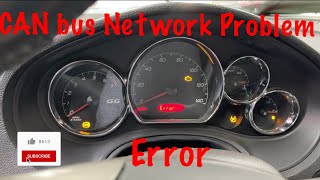
- Inability to communicate with the ECM using a scan tool if voltage is too low 🎬 Watch this diagnostic for no-start issues and ECM communication errors.
- Transmission may enter a limp mode or exhibit harsh shifting
- Replacing the ECM without testing the power and ground circuits first. The P2507 code explicitly points to a problem with the *input signal* to the ECM, not necessarily the ECM itself.
- Replacing the alternator when the actual fault is a corroded ground strap or battery cable, leading to improper charging.
Most Likely Causes
- Weak or Failing Battery 🔴 High Probability The G6 platform is sensitive to battery voltage, and an aging battery that can't hold a charge or deliver sufficient cranking amps is a primary trigger. The trunk-mounted battery location can also hide leaks or corrosion from immediate view.
How to confirm: Test the battery voltage with a multimeter. A healthy battery should read at least 12.4V with the engine off. Perform a load test (most auto parts stores do this for free) to check its true health. With the engine running, voltage should be between 13.5V and 14.5V, which also tests the alternator.
Typical fix: Replace the battery. Ensure the new battery meets or exceeds the OEM specifications for Cold Cranking Amps (CCA).
Est. part cost: $150-$250 - Corroded or Loose Battery Terminals/Cables 🔴 High Probability
How to confirm: Visually inspect the battery terminals (in the trunk) and the remote jump-start posts under the hood. Look for white, green, or blue fuzzy corrosion. Wiggle the terminals to ensure they are tight. Pay close attention to the main chassis ground connection near the battery in the trunk.
Typical fix: Disconnect the battery (negative first). Clean the terminals, cable ends, and chassis ground point thoroughly with a wire brush and a baking soda/water solution. Reconnect securely (positive first) and apply a dielectric grease or anti-corrosion spray.
Est. part cost: $5-$15 for a cleaning kit - Poor Engine/Transmission Ground Strap 🟡 Medium Probability There is a well-documented issue with the main ground straps bolted to the transmission case breaking or corroding. This creates high resistance and prevents the ECM and other modules from having a solid ground reference, leading to low voltage differential. This is a very common failure point discussed in owner forums.
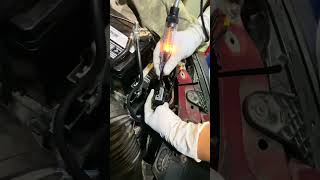
How to confirm: Locate the main ground straps from the chassis to the engine/transmission assembly. On the G6, a key location is on top of the transmission, often a braided strap designated G105 or G106. 🎬 Watch: How to identify and fix a bad G6 ground strap. Inspect for corrosion, fraying, or breakage. Perform a voltage drop test from the negative battery terminal to the engine block; with the engine running, a reading of more than 0.2V indicates a bad ground.
Typical fix: Clean the contact points to bare metal and re-secure the ground strap. If the strap is damaged or broken, it must be replaced. An example OEM part number for a similar GM ground strap is 19332111, though it's best to verify for the specific engine.
Est. part cost: $15-$40 - Faulty Alternator or Fusible Link 🟡 Medium Probability If the alternator is not charging the battery, system voltage will drop while driving, triggering the code. A fusible link on the main power wire from the alternator can also fail, preventing charge current from reaching the battery.
How to confirm: With the engine running, check the voltage at the battery terminals. A reading below 13.2V indicates a charging system problem. If the alternator is suspected, check for voltage at the alternator's main output post. If there's voltage there but not at the battery, the fusible link or the main power cable to the trunk may be damaged.
Typical fix: Replace the faulty alternator. If the fusible link is bad, it must be replaced; this part is often integrated into a section of the main battery cable.
Est. part cost: $200-$400 for an alternator, $20-$50 for a fusible link/cable section - Faulty ECM/PCM Power Relay ⚪ Low Probability
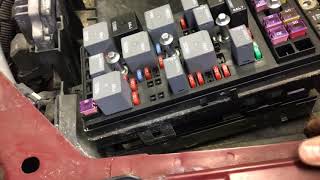
How to confirm: Locate the ECM power relay (often labeled PWR/TRN) in the underhood fuse box. You can swap it with an identical relay from a non-critical system (like the horn) to see if the problem resolves. If the car starts and runs properly with the swapped relay, the original relay is bad.
Typical fix: Replace the faulty relay. This is a simple plug-and-play part.
Est. part cost: $15-$30
Rare But Worth Checking
- Internal Failure of Underhood Fuse Box: The multi-layered fuse box (UBEC) can develop internal corrosion or cracked solder joints, especially on the main power bus bars. This can cause an intermittent voltage drop to the ECM fuse and relay, often appearing when the engine bay is hot. Forum users have reported having to replace the entire fuse box to resolve persistent, untraceable electrical issues.
- Damaged Wiring Harness: The main power wire to the ECM or the wiring harness itself could be chafed, melted, or corroded, causing high resistance. This requires a visual inspection and testing for voltage drop along the harness from the fuse box to the ECM connector.
- Failed Engine Control Module (ECM): This is the least likely cause. The ECM itself can fail internally, but this should only be considered after every other possibility—battery, alternator, grounds, relays, and wiring—has been definitively ruled out.
Diagnosis Steps
- Read all fault codes from all modules, not just the ECM. Note any communication (U-series) codes.
- Turn the engine off. With a multimeter, measure the battery voltage directly at the battery posts in the trunk. It should be above 12.4V.
- Start the engine. Measure the battery voltage again. It should rise to between 13.5V and 14.5V. If it's low, the alternator is likely faulty. If it's high (over 15V), the alternator's voltage regulator is bad.
- Inspect and clean the battery terminals in the trunk and the remote posts under the hood. Ensure they are tight. Don't forget the main ground connection in the trunk.
- Inspect the main engine ground straps. Focus on the braided strap connected to the transmission case (G105/G106). Check for tightness, corrosion, and breakage. These are a known weak point.
- Perform a voltage drop test on the ground side: place the red multimeter lead on the engine block and the black lead on the negative battery terminal. With the engine running, the reading should be less than 0.2V. A higher reading confirms a bad ground.
- Locate the ECM power relay (PWR/TRN) in the underhood fuse box. Swap it with a known good, identical relay and see if the issue is resolved.
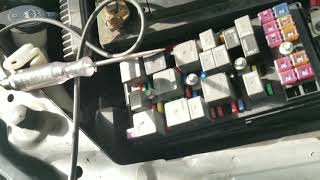
- If the problem persists, inspect the ECM fuse(s) (e.g., ECM, ETC). Check for voltage on both sides of the fuse with the key on. Check for corrosion or loose terminals in the fuse box sockets themselves.
- If all of the above check out, the final steps involve checking for voltage at the ECM connector itself to rule out a wiring issue between the fuse box and the module. If proper voltage and ground are present at the connector, the ECM may be faulty.
Parts You'll Likely Need
- Battery — The most frequent cause of low system voltage that triggers P2507.
- Engine/Transmission Ground Strap — A very common failure point on the G6 and its platform mates, causing a wide range of electrical issues.
- ECM/PCM Power Relay — An inexpensive and easy-to-replace part that can fail and cause low voltage to the ECM.
Related Codes That Often Appear With This One
- U-codes (e.g., U0073, U0100, U0101) — If the ECM is losing power, it will also lose communication with other modules on the CAN bus network, such as the Transmission Control Module (TCM) or Body Control Module (BCM), triggering communication codes.
- P1682 — This code often appears with P2507 and relates to an ignition switch circuit malfunction, pointing to a discrepancy between the two power sources the ECM monitors. This can also be caused by a faulty fuse block or loose relay socket.
Technical Service Bulletins (TSBs) & Recalls
- GM Recall #13036 / NHTSA 14V252000: Addresses voltage fluctuations in the Brake Apply Sensor (BAS) due to increased resistance in the Body Control Module (BCM) connection. While not directly for P2507, it highlights the platform's known BCM issues.
- GM Recall #14V153000 / GM #14772: Pertains to sudden loss of electric power steering (EPS), a common G6 issue often linked to electrical system instability.
- GM TSB #02-00-89-002X: General bulletin on submitting Field Product Reports, often used for tracking recurring electrical issues.
- GM TSB PIP4723J: Pertains to updating software for various electronic modules and testers, indicating the complexity of the G6's electrical system.
Platform-Specific Known Issues
- BCM Water Damage from Sunroof Drain: A very common and well-documented issue on the G6 is the clogging or detachment of the sunroof drain tubes. These tubes, particularly the front ones, are supposed to drain water down the A-pillars. When they fail, water leaks directly onto the floor and can saturate the Body Control Module (BCM), which is located in the passenger-side kick panel area. A water-damaged BCM can cause a cascade of bizarre electrical problems, including communication errors and power supply issues that could potentially trigger a P2507 code.
Mechanic-Grade Diagnostic Values
- Battery Voltage, Engine Off — expected: 12.4V - 12.8V. Failure: Below 12.4V indicates a discharged or failing battery.
- Charging System Voltage, Engine Running — expected: 13.5V - 14.5V. Failure: Below 13.5V indicates a charging problem (alternator); above 14.8V indicates a faulty voltage regulator.
- Cranking Voltage — expected: Should remain above 9.0V - 10.0V. Failure: A sustained drop below 9.0V during cranking can trigger the code.
- Ground Circuit Resistance — expected: < 1.0 Ohm. Failure: Resistance greater than 1.0 Ohm from a ground point to the negative battery terminal indicates a poor ground connection.
- Ground Side Voltage Drop — expected: < 0.2V. Failure: With the engine running, a voltage reading of more than 0.2V between the engine block and the negative battery terminal indicates a high-resistance ground.
- ECM Power Input at Connector (Key On, Engine Off) — expected: Should be within 0.2V - 0.5V of battery voltage.. Failure: A larger voltage drop indicates high resistance in the power feed wiring or fuse box.
Scan Tool Commands That Help
- Tech2 / GDS2: Powertrain Relay ON/OFF Command — This bidirectional control allows a technician to command the PWR/TRN relay on and off to verify the control circuit from the ECM and the relay's mechanical function without needing to physically swap it.
- Tech2 / GDS2: EC Ign. Relay Ckt Short Volts Test Status — This data parameter helps diagnose the ECM's control circuit for the relay. By observing its status ('OK' or 'Fault') while performing specific tests (like jumping the control circuit), a technician can determine if there's a short to voltage or an open/high resistance in the wiring to the ECM.
Wiring & Ground Locations
- G105 — On the left rear side of the engine compartment, bolted to an engine/transmission stud, often below the upper coolant hose.. This is a primary ground point for the ECM and TCM. Corrosion or breakage at this stud is a very common cause of intermittent power loss, communication codes, and P2507.
- G106 — Varies by engine: For 2.4L, it's on the left rear of the engine. For 3.5L & 3.6L, it's on the front of the engine at a transmission stud. For 3.9L, it's on the left side of the engine.. Serves as another critical engine and module ground point. A failure here can cause identical symptoms to a failed G105.
- Underhood Fuse Block (UBEC) — In the engine compartment, typically on the driver's side near the strut tower.. This box contains the critical PWR/TRN (Powertrain) relay and ECM/ETC fuses. Loose relay sockets, internal corrosion, or cracked solder joints within the box itself can directly cause low voltage to the ECM.
- ECM Connector X1, Pin 19 (Pink Wire) — On the main connector (X1) for the Engine Control Module.. This is a primary Ignition 1 Voltage feed to the ECM from the PWR/TRN relay via fuses. A voltage test at this pin is a definitive way to check if power is reaching the module.
- ECM Connector X1, Pin 20 (Red/White Wire) — On the main connector (X1) for the Engine Control Module.. This is the Battery Positive Voltage feed from the 10A ECM fuse. A burned pin here directly points to a power supply issue.
- BCM Connector C2 — On the Body Control Module (BCM), accessed by removing the right side front floor console side trim panel.. While not a direct cause of P2507, fretting corrosion on this connector is a notorious platform issue causing widespread electrical problems. A GM recall (e.g., 14V252000) was issued to apply dielectric grease to this connector.
Real Owner Repair Stories
- YouTube user 'The Lo-fi Mofo' (2008 Pontiac G6 with 2.4L Ecotec engine) — Intermittent no-start, would sometimes start by wiggling the run/crank relay. Eventually became a hard no-start. Codes P1682 and P2507 were present.
❌ Tried (didn't work) Visual inspection of fuses., Testing the original relays (they tested good)., Checking grounds (they were clean and tight).
✅ What actually fixed it The female socket terminals for the run/crank relay inside the underhood fuse box had become spread apart, causing a poor, intermittent connection. Wiggling the relay would make temporary contact. The fix was to use a small tool to carefully bend the socket terminals back together for a tight fit on the relay pins. A new relay was installed as a precaution against damage from arcing. - YouTube user 'A2Z Auto Masters' (2007 Pontiac G6 with 3.5L V6) — No crank, no start, error message on cluster, communication problems with multiple computers.
❌ Tried (didn't work) Initial scan showed multiple communication codes.
✅ What actually fixed it A main ground wire bundle that bolts to the top of the transmission housing had broken. The wires had corroded and snapped off inside the crimped ring terminal, but the insulation was still holding them in place, making the break difficult to see. Repairing this ground connection restored communication and allowed the vehicle to start.
Model Year Variations Within This Range
- 2005-2006: Vehicles in this range were part of an initial safety recall (09V-036) for fretting corrosion on the BCM connector causing brake light failure. Later models were also affected, leading to an expanded recall.
- 2006-2007: These model years are particularly noted for a 'no start when hot' condition caused by a cracked solder joint inside the underhood fuse box (UBEC). The part numbers for the fuse box are highly specific to the engine and year.
Diagnostic Flowchart
Other Known Issues on This Vehicle
Issues unrelated to this code that are worth knowing about as an owner of this generation:
- Electric Power Steering (EPS) Failure 🔴 High — Extremely common, multiple recalls issued. Can occur at any mileage, often starting around 70,000 miles. (Ref: NHTSA Recalls: 14V153000, 14V252000, GM Recall 14772.)
- Leaking Sunroof Drains Causing Interior Water Damage 🔴 High — Very common. Drain tubes become clogged or detach from the sunroof cassette, pouring water into the headliner, floor, and onto electrical modules like the BCM.
- Faulty Body Control Module (BCM) Connections 🟠 Medium — Widespread issue where poor terminal contact at the BCM connectors causes erratic electrical behavior, such as non-functional brake lights or turn signals. (Ref: NHTSA Recall: 14V252000 (related to brake light circuit through BCM).)
- 4T45-E Automatic Transmission Problems 🟠 Medium — Common issues include failed shift solenoids (causing harsh shifting or getting stuck in gear) and broken pressure manifold switches. (Ref: NHTSA Recall: 12V460000 (related to fractured transmission shift cable tabs).)
- Prematurely Worn Control Arm Bushings / Noisy Suspension 🟡 Low — Often reported by owners, leading to clunking noises from the front suspension, especially over bumps.
- Melted Headlight Wiring/Connectors 🟠 Medium — Repeated failure of low-beam headlights is common due to the wiring harness and bulb socket overheating and melting.
Used vs. New Parts: Buying Guide for This Vehicle
When a used part is the smart pick: For a faulty Underhood Fuse Box (UBEC), a used part from a reputable salvage yard is a viable and cost-effective option, provided the part number is an exact match. Relays can also be safely sourced from a donor vehicle.
Donor-vehicle mileage cap: roughly under 120000 miles for the part to have meaningful remaining life.
What to inspect on the donor part:
- For a fuse box, the part number MUST be identical to the original.
- Inspect all connector pins on the bottom of the fuse box for any signs of green or white corrosion, which indicates water damage. Reject any corroded units.
- Check the donor vehicle's history, if possible, to avoid cars from flood-prone areas.
- Ensure the plastic housing of the fuse box is not cracked or damaged, which could allow future water intrusion.
OEM-only on this vehicle (don't cheap out):
- Engine Control Module (ECM/PCM) - While used ECMs are available, they require VIN programming to function. For DIY repair, it's often simpler to use a service that sells pre-programmed modules or to have a new OEM unit programmed by a dealer or qualified shop.
Aftermarket brands forum-validated for this vehicle:
- Battery: Interstate, DieHard, Deka, ACDelco (OEM supplier)
- Alternator: Denso, Bosch, ACDelco (OEM)
Brands owners have reported issues with on this vehicle:
- Ultra-cheap, no-name alternators and batteries often have high failure rates and may not meet the vehicle's electrical demands, potentially causing the same code to return.
Real Owner Stories
Aggregated from forums and TSBs cited above. Mileages and costs reflect what owners reported in those sources.
2005-2010 Pontiac G6
Symptoms: The car set a P2507 code and was stalling intermittently.
What fixed it: The issue was traced to poor ground connections. The recommended fix was to thoroughly inspect and clean the ground connections on the transmission and engine block.
Source hint: G6OwnersClub.com thread titled 'P2507 code, car stalls'
2005-2010 Pontiac G6 with sunroof
Symptoms: Experienced a cascade of bizarre electrical problems, communication errors, and power supply issues after noticing water on the passenger-side floor.
What fixed it: The root cause was a clogged sunroof drain tube leaking onto the Body Control Module (BCM). The fix involved repairing the drain and addressing the water damage to the BCM.
Source hint: Vehicle Specific Issue: BCM Water Damage from Sunroof Drain
Related OBD-II Codes
Frequently Asked Questions
My G6 has a P2507 code and the power steering warning light is on. Are these related?
I heard the ground strap on the transmission is a common problem. Where is it located on my G6?
My mechanic can't connect his scan tool to my car. Could this be related to the P2507 code?
My G6 has a wet passenger-side floor and now I have a P2507 code. Is there a connection?
Where is the battery located on a 2005-2010 Pontiac G6?
How can I quickly test the ECM power relay without special tools?
Helpful Videos



Used OEM Parts in Stock


New Aftermarket Parts Available





The information in this article is provided for general reference and educational purposes only. Vehicle specifications, procedures, and part compatibility can vary by production date, trim level, and region. Always consult your vehicle's factory service manual and verify part numbers before purchasing or performing repairs. Safety-critical components such as airbags, seat belts, and braking systems should be installed by a qualified professional.
- Pontiac G6:
- 🎬 Helpful Videos
- 🛍️ Shop This Part
- What's Unique About the 2005-2010 Pontiac G6
- Symptoms You May Notice
- Most Likely Causes
- Rare But Worth Checking
- Diagnosis Steps
- Parts You'll Likely Need
- Related Codes That Often Appear With This One
- Technical Service Bulletins (TSBs) & Recalls
- Platform-Specific Known Issues
- Mechanic-Grade Diagnostic Values
- Scan Tool Commands That Help
- Wiring & Ground Locations
- Real Owner Repair Stories
- Model Year Variations Within This Range
- Diagnostic Flowchart
- Other Known Issues on This Vehicle
- Used vs. New Parts: Buying Guide for This Vehicle
- Real Owner Stories
- 2005-2010 Pontiac G6
- 2005-2010 Pontiac G6 with sunroof
- Related OBD-II Codes
- Frequently Asked Questions
- 🎟️ Get 5% Off