

OBD-II Code B1325: Device Power Circuit Voltage Below/Above Threshold
The Ultimate Guide to What B1325 Means, Why It Triggers, and How to Fix It for Good
- On GM vehicles, B1325 indicates a power supply issue—test the battery, alternator, and ground cables before ever replacing the Body Control Module.
- A weak battery failing under load is the #1 cause of B1325, accounting for the majority of triggers during cold weather starts.
- For 2014-2019 Chevy and GMC trucks, inspect the G218 ground under the driver's dash and the negative battery cable assembly per TSB 18-NA-161.
- On Ford and Dodge models, B1325 frequently defines an 'In-Cabin Temperature Sensor Circuit' fault, requiring a completely different diagnostic path focused on the HVAC system.
What Does B1325 Mean?

Code B1325 triggers when a control module, usually the Body Control Module (BCM), receives electrical voltage outside its pre-defined acceptable range. This computer requires stable voltage to manage components like lights, radio, power windows, and the instrument cluster. The code sets when the module sees voltage below 9 volts or above 18 volts for 5 continuous seconds.
Technical definition: While the SAE/ISO definition for 'B1' codes is manufacturer-controlled, General Motors universally defines B1325 as 'Device Power Circuit Voltage' or 'Device Power #1 Circuit Malfunction'. This indicates a key control module registered a system voltage too low or too high to operate reliably. The module disables all outputs except essential network communications to protect itself.
Can I Drive With B1325?
No — Do Not Drive. Do not drive. The engine stalls unexpectedly while driving, causing a complete loss of power steering 🎬 Watch: Real-world example of a Sierra stalling from B1325 and braking assist, creating a severe safety hazard. The vehicle will likely fail to restart, leaving you stranded. An over-voltage condition causes permanent damage to expensive electronic modules.
Common Causes

- Weak or failing battery (Very Common) — This is the most frequent cause. An aging battery shows 12.6 volts at rest but collapses under load during engine cranking, causing voltage to dip low enough to set the code.
- Corroded or loose battery terminals and cables (Very Common) — A thin layer of corrosion or a slightly loose clamp on a battery post acts as a major point of resistance, causing a significant voltage drop that starves modules of power.
- Failing alternator (Common) — A faulty alternator fails to produce enough voltage to run the vehicle's electronics and recharge the battery. Conversely, a failed internal voltage regulator causes over-charging (above 16-18 volts), which also triggers B1325.
- Faulty negative battery cable with current sensor (GM) (Common) — On modern GM vehicles, the negative battery cable assembly includes a current sensor. This cable assembly develops high internal resistance, causing a voltage drop even if the battery and alternator are healthy.
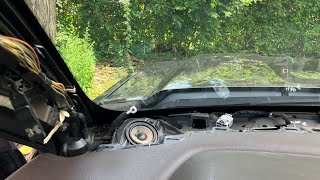
- Poor BCM ground connection (GM's G218) (Common) — On many GM trucks and SUVs, the G218 body ground point under the dash 🎬 See how to locate and fix the G218 ground connection is a notorious failure point. High resistance at this ground starves the BCM, causing a B1325 code and erratic electrical behavior.
- Shorted B+ cable at starter solenoid (GM) (Less Common) — Per GM TSB 18-NA-161, the starter heat shield breaks loose or the B+ cable misroutes, shorting against the starter solenoid terminal. This creates a massive voltage drain.
- Poor connection at underhood fuse block (Less Common) — Main power and ground connections at the underhood fuse block loosen or corrode, creating high resistance for all fed systems.
- Parasitic electrical draw (Rare) — A faulty module failing to 'sleep' or a poorly installed aftermarket accessory drains the battery when the car is off. Upon the next startup, voltage is too low, setting the code.
- Water intrusion into the Body Control Module (BCM) (Rare) — Leaks from a windshield seal or clogged sunroof drain allow water to drip onto the BCM, causing internal short circuits and corrosion.
Symptoms

- Intermittent no-start or hard starting — The engine cranks very slowly or you only hear a clicking sound from the starter solenoid, indicating insufficient battery voltage.
- Multiple, random warning lights — The check engine light illuminates, accompanied by a battery light, 'Service Charging System', 'Service Stabilitrak', or 'Service Power Steering' messages.
- Flickering or dimming lights — Headlights and interior dashboard lights flicker, pulse, or appear dim, especially at idle or when using electrical loads like power windows.
- Engine stalling — The engine stalls unexpectedly at low speeds when turning the steering wheel, as the electrical load from the power steering pump drops the unstable system voltage too low.
- Erratic electronic behavior — The radio shuts off and reboots, the instrument cluster goes blank, power door locks cycle randomly, and wipers stop in the wrong position.
- Inability to shift from Park — A low voltage condition prevents the brake-shift interlock solenoid from operating, trapping the gear selector in Park.
Diagnostic Flowchart
Tap your situation to follow the diagnostic path that matches what you're seeing on this code.
Common Fixes & Costs
- Replace the battery — Parts: $150-$300, Labor: $50-$100, ~0.5 hr book time (DIY)
- Clean or replace battery terminal ends — Parts: $10-$30, Labor: $40-$60, ~0.3 hr book time (DIY)
- Replace the alternator — Parts: $250-$600, Labor: $150-$350, ~1.5 hr book time (Intermediate)
- Replace the negative battery cable (with sensor on GM) — Parts: $80-$150, Labor: $70-$150, ~0.8 hr book time (DIY)
- Repair BCM Ground G218 (GM) — Parts: $1, Labor: $150-$300, ~2 hr book time (Intermediate)
- Replace HVAC In-Cabin Temp Sensor (Ford/Dodge) — Parts: $30-$120, Labor: $800-$1,800, ~8.5 hr book time (Expert)
Used vs. New Parts: Buying Guide
When a used part is worth it: A used OEM alternator from a low-mileage wrecked vehicle is a budget-friendly option for older, high-mileage vehicles.
Donor-vehicle mileage cap: roughly under 80000 miles for the part to have meaningful remaining life.
Donor quality checklist:
- Verify the donor vehicle's mileage and reason for salvage.
- Inspect for physical damage, corrosion, or leaking casing.
- Ensure the pulley spins freely without grinding noises.
Decision logic:
- If You plan to keep the vehicle long-term → Buy a new OEM or high-quality remanufactured alternator.
- If Budget is the primary concern on an older vehicle → A quality remanufactured unit offers the best balance of cost and reliability.
- If The part is for a critical-use vehicle → Buy new. The cost of downtime outweighs initial savings.
Warranty tradeoff: Used parts offer a 30-90 day warranty. Remanufactured parts offer 1-year to limited lifetime warranties. New OEM parts carry a 1-2 year warranty.
Worst-case if a used part fails: $300-$600 if a used part fails prematurely, requiring repeat labor and a replacement part.
What Happens If You Wait — Timeline
- 0-4 weeks (Low Voltage): Code B1325 sets. Intermittent flickering lights, occasional radio resets, or slow engine cranking occur. The vehicle remains drivable but shows clear electrical instability. (MPG impact: 0-2%% · Added cost: $0)
- 1-3 months (Low Voltage): Symptoms increase. Stalling at low speeds occurs. The alternator works at maximum output continuously to compensate for the weak battery or high resistance, accelerating its own wear. (MPG impact: 2-5%% · Added cost: $100-$300 (Towing fee if stranded))
- 3+ months (Low Voltage): Constant strain destroys the alternator's internal components. The battery sustains damage from repeated deep discharging. Both the battery and alternator require replacement. (MPG impact: 5-10%% · Added cost: $600-$1500 (Cost of replacing both battery and alternator))
- Immediate (High Voltage): If the alternator overcharges (> 15.5V), damage is immediate. High voltage fries microprocessors in the BCM, ECM, and instrument cluster, and boils the battery acid. (MPG impact: N/A% · Added cost: $800-$3000+ (Cost to replace alternator, battery, and control modules))
Cost of Not Fixing It
- Immediate: Risk of being stranded due to a no-start condition or engine stalling in traffic. Unpredictable behavior of electronic systems. (Added cost: $100-$300 (Towing and diagnostic fee))
- Weeks to Months (Low Voltage): A constantly low battery forces the alternator to work at maximum capacity, leading to premature alternator failure. (Added cost: $400-$1200 (Premature replacement of alternator or starter))
- Immediate (High Voltage): An overcharging alternator (> 15V) causes irreversible damage to the ECM, BCM, radio, and instrument cluster, and destroys the battery. (Added cost: $500-$3000+ (Replacement of control modules and battery))
Diagnosis Steps

- Check for TSBs and Scan for All Codes
Check for Technical Service Bulletins (TSBs) for your vehicle, like GM's TSB 18-NA-161. Use a professional scan tool to read codes from ALL modules (BCM, ECM, IPC), not just the engine computer. Note which module sets the B1325 and any accompanying codes.
Tools: OBD-II Scanner (professional grade recommended) (Beginner) - Test Battery Voltage and Load Capacity
With the engine off, measure voltage directly at the battery posts. A healthy battery reads ~12.6V. Anything below 12.4V requires a recharge. Next, take the vehicle to an auto parts store for a free electronic load test to determine the battery's true cold-cranking amp capacity.
Tools: Multimeter, Professional load tester (at parts store) (Beginner) - Test the Charging System
Start the engine and measure battery voltage. It must rise to between 13.7 and 14.7 volts. If voltage remains near resting voltage or below 13.5V, the alternator is failing. If it exceeds 15.0V, the voltage regulator failed.
Tools: Multimeter (Beginner) - Inspect All Main Power and Ground Connections
Visually inspect and physically tug on the positive and negative battery cables, main engine/body ground straps, and the large cable at the starter and alternator. Clean any corrosion with a wire brush until shiny. Torque battery cable clamp nuts to spec.
Tools: Wrench/socket set, wire brush, torque wrench (Intermediate) - PRO TIP: Perform a Loaded Voltage Drop Test (GM Spec)
Disable the fuel system to allow the engine to crank without starting. Set the multimeter to low DC Volts. For the negative side, place probes on the negative battery POST and the alternator case; crank the engine. A reading above 200mV (0.2V) indicates a bad ground cable. For the positive side, test from the positive battery POST to the main B+ terminal on the alternator; a reading above 100mV (0.1V) indicates a positive cable problem.
Tools: Multimeter (Advanced) - PRO TIP: Inspect GM Ground G218
For 2014+ GM trucks/SUVs, locate the G218 ground under the driver-side dashboard. Remove the 10mm nut. Cut away any factory sound-deadening mat trapped between the ground eyelet and the body stud. Sand the contact surfaces to bare metal and re-torque securely.
Tools: Socket set, trim removal tools, sandpaper (Advanced) - PRO TIP: Test for a Parasitic Draw
If the battery dies overnight, disconnect the negative battery terminal and connect a multimeter set to Amps (10A scale) in series. With the car off and doors closed, wait 30-60 minutes. A normal draw is under 50mA (0.05A). If higher, pull fuses one by one until amperage drops to identify the problem circuit.
Tools: Multimeter with Amp function (Advanced) - ADVANCED: Scan Tool BCM Voltage PID
Using a professional scan tool, monitor the BCM's 'Device Power #1' or 'System Voltage' PID. This value must closely match the voltage measured at the battery. If the scan tool shows significantly lower voltage (e.g., 10.5V) while the battery reads 12.6V, it confirms high resistance in the BCM's power or ground circuit.
Tools: Professional OBD-II Scanner (Advanced) - ADVANCED: Ford/Dodge HVAC Sensor Resistance Test
If B1325 defines an 'In-Cabin Temperature Sensor' fault, unplug the sensor. Measure resistance across its two pins with a multimeter. Compare this to the manufacturer's spec (e.g., ~10,000 Ohms at 77°F). A reading that is open loop or shorted confirms a failed sensor.
Tools: Multimeter, Trim removal tools, Service manual with resistance chart (Advanced)
When This Code Triggers (Freeze-Frame Conditions)
- System Voltage (at Module): < 9.0V or > 18.0V (The code sets when a control module detects its power supply is outside the acceptable voltage range for 5 continuous seconds.)
- Triggering Event: Engine Cranking or High Electrical Load (Voltage drops occur during engine startup when a weak battery cannot handle the starter's draw, or while driving when high-current accessories activate.)
- Module Action: Outputs Disabled (The affected control module shuts down all non-essential outputs to protect its internal circuitry from unstable voltage.)
- Charging System Status: 13.7V - 14.7V (Normal) (Freeze frame data shows normal charging voltage if the fault only occurs during cranking. Consistently low (<13.0V) or high (>15.0V) voltage points to a failing alternator.)
Related Codes
- P0562 — The generic PCM code for 'System Voltage Low'. Seeing P0562 and B1325 together confirms a vehicle-wide low voltage problem. Diagnose them as one issue.
- U-Codes (U0100, U0140, etc.) — Indicate 'Lost Communication' between modules. Low system voltage causes modules to shut down and drop off the network. Fix the B1325 power issue first.
- C0800 — Means 'Control Module Power Circuit Low Voltage', often set in the Power Steering or ABS module simultaneously with B1325.
- B1517 — A GM-specific code for 'Battery Voltage Below Threshold'. Functionally identical to B1325 but set by a different module.
Climate & Environmental Factors
- Cold Weather: Cold temperatures dramatically reduce a battery's available cranking amps. A borderline battery fails during the first cold snap, causing voltage to drop during cranking and triggering B1325.
- High Humidity / Salt Belt Regions: Road salt accelerates corrosion on battery terminals, cable ends, and crucial ground points like G218. This corrosion creates high resistance, a primary cause of voltage drops.
- High Heat: High under-hood temperatures accelerate the degradation of the alternator's internal voltage regulator, leading to charging system failure.
How to Talk to a Mechanic About This Code
Say this: "I have a B1325 code and symptoms like flickering lights and occasional stalling. Please test the battery, alternator, and perform voltage drop tests on the main cables and grounds before assuming it's a bad module. For my GM vehicle, please inspect the G218 ground and the negative battery cable per TSB 18-NA-161."
This directs the technician to the highest-probability causes first and references a specific TSB, preventing an expensive, time-consuming module replacement diagnosis.
Avoid saying:
- 'My check engine light is on, can you look at it?'
- 'My truck is acting weird, just fix whatever is wrong.'
- 'I think I need a new computer.'
Questions to ask before authorizing the repair:
- What were the results of the battery load test and the charging system test?
- Did you perform a voltage drop test on the battery cables, and what were the readings?
- Can you show me the failed test results for the alternator or battery?
- Will you provide a written, itemized estimate with a clear warranty on parts and labor?
Where to Take It: Dealer vs Independent vs Chain
- Dealer:
Recommended if under warranty, but the most expensive option otherwise.
Best for: Vehicles still under the original bumper-to-bumper warranty., Complex electrical issues where TSBs (like GM's 18-NA-161) are involved.
Downsides: Highest labor rates, often 1.5-2x more than independent shops., Quicker to replace a larger assembly rather than perform a simpler repair. (Typical cost: +50% vs. baseline) - Independent Shop:
Best fit for most owners. An experienced independent technician diagnoses and fixes common causes efficiently.
Best for: Out-of-warranty vehicles where cost is a factor., Shops specializing in electrical diagnostics (ASE certified).
Downsides: Quality varies widely; vetting the shop through reviews is crucial. (Typical cost: +0% vs. baseline) - Chain Shop:
Acceptable for a free battery test, but AVOID for initial diagnosis of B1325.
Best for: Simple fixes like a battery replacement AFTER proper diagnosis elsewhere., Free battery and alternator testing services.
Downsides: Technicians are rarely equipped for in-depth electrical diagnostics., High pressure to upsell common items. (Typical cost: -10% vs. baseline)
When to Walk Away From the Repair
If the estimated repair cost exceeds 50% of the car's private-party value, seriously consider selling or trading in the vehicle.
- Car worth $17000, fix is $1200: Fix it. This repair cost is well below the 50% threshold.
- Car worth $4000, fix is $2200: Walk away. The repair cost is over 50% of the car's value.
- Car worth $8000, fix is $3500: Borderline. Get a second opinion and consider the vehicle's overall condition before authorizing the repair.
What Scan Tool You Need for This Code
Minimum: A scanner that reads manufacturer-specific Body Control Module (BCM) codes and displays live data PIDs, specifically module voltage.
A basic $20 code reader only shows generic powertrain codes and cannot access the BCM to see B1325 or display live voltage data.
Budget: BlueDriver Pro (~$100) — Reads manufacturer-specific codes from the BCM and graphs live data, including the BCM's voltage PID.
Mid-range: Foxwell NT510 Elite / CGSULIT SC530 (~$150) — Offers deeper access to specific systems, performs bidirectional controls, and provides detailed live data streams.
Professional: Autel MaxiCOM MK808 / MK906BT (~$500-1200) — Provides full bidirectional control and dealership-level diagnostic functions, essential for complex electrical issues.
Rent vs buy: For a one-time diagnosis, borrow a scanner from an AutoZone 'Loan-A-Tool' program. Buy a scanner only if you perform diagnostics regularly.
How to Clear the Code After You Fix It
- Reconnect battery if disconnected for repair.
- Use an OBD-II scan tool to clear the B1325 code from all modules.
- Start the vehicle and verify charging system voltage is stable between 13.7-14.7V.
- Perform a complete drive cycle to set readiness monitors.
Drive cycle (~30 minutes): Idle for 2-3 minutes from a cold start. Drive in mixed city/highway conditions for 15-20 minutes. Allow the vehicle to cool down completely.
Readiness monitors affected: Catalyst (CAT) monitor, Oxygen (O2) Sensor monitor, Evaporative System (EVAP) monitor
Before emissions retest: drive at least 100 miles to fully set monitors.
Watch out for:
- Clearing the code without fixing the voltage issue results in the code returning immediately.
- Disconnecting the battery resets all emissions readiness monitors, causing an automatic smog test failure.
Will This Fail Emissions / State Inspection?
Yes — this code typically fails an OBD-II emissions inspection.
- California: A Check Engine Light is an automatic failure. All required readiness monitors must be 'Ready'. A drive cycle of over 100 miles is necessary after repairs.
- New York: An illuminated Check Engine Light results in an automatic failure. For 2001+ models, only one readiness monitor is allowed to be 'Not Ready'.
- Texas: An active B1325 code illuminating the MIL causes the vehicle to fail the OBD-II test in the 17 testing counties.
Most Commonly Affected Vehicles
- Chevrolet Silverado 1500 (2014-2019) — Extremely prone to this code. Primary causes are a faulty negative battery cable, a short at the starter, and a poor BCM ground at G218.
- GMC Sierra 1500 (2014-2019) — Mechanically identical to the Silverado, suffering from the exact same negative battery cable and G218 ground point failures.
- Chevrolet Equinox / GMC Terrain (2010-2017) — B1325 is frequently accompanied by codes B1517 and C0800. The root cause is a weak battery unable to handle the electrical load.
- Chevrolet Cruze, HHR, Cobalt (2006-2016) — Highly sensitive to voltage fluctuations. A weak battery, failing alternator, or loose connection at the underhood fuse block triggers B1325.
- Cadillac Escalade, ATS, CTS, SRX (2013-2019) — High density of electronic modules quickly flags voltage instability. Affected by the same ground and battery cable issues as Chevrolet/GMC.
- Ford F-150 (2004-2014) — CRITICAL: B1325 indicates a fault with the HVAC system's in-cabin temperature sensor circuit, not system voltage. Verify the definition with a scan tool.
- Dodge RAM 1500 (2002-2018) — Similar to Ford, Dodge uses B1325 to indicate a fault within the HVAC control module or its related sensors.
- Nissan Altima, Maxima, Titan (2005-2012) — Triggered by a failing Intelligent Power Distribution Module (IPDM), which suffers from internal relay issues.
Manufacturer-Specific Notes

- General Motors (Chevrolet, GMC, Buick, Cadillac): Technicians must immediately suspect a faulty negative battery cable or a bad G218 ground connection under the dash, per TSB 18-NA-161.
- Ford / Dodge: B1325 points to a fault in the HVAC in-cabin temperature sensor circuit. The repair is extremely labor-intensive if the sensor is behind the dashboard.
- Kia / Hyundai: B1325 refers to a 'Weight Classification System Sensor wrong ID' in the passenger airbag system, usually occurring after an uncalibrated sensor replacement.
- Nissan: Widespread electrical issues triggering B1325 are caused by an internal failure of the Intelligent Power Distribution Module (IPDM) in the engine bay.
Real Owner Stories
2015 Chevy Silverado 1500 with random electrical issues
Truck lost all power intermittently, unable to unlock doors or start. When running, it threw codes B1325 and B1000, worsening in cold weather.
What they tried:
- Replaced the battery.
- Replaced the alternator.
Outcome: Codes returned after replacing the battery and alternator. The owner investigated known failure points addressed in TSB 18-NA-161 and found a faulty negative battery cable assembly. Replacing the cable resolved the issue.
Lesson: On modern GM trucks, if a new battery and alternator fail to fix a B1325 code, test the negative battery cable and specific ground connections before suspecting a bad BCM.
2007 Pontiac G6 GT with B1325 after jump-start
The B1325 code appeared immediately after the owner jump-started the vehicle.
What they tried:
- Identified the code resulted from the low voltage condition requiring the jump-start.
Outcome: The underlying issue was a weak battery unable to hold a charge. Replacing the battery and clearing the code permanently resolved the issue.
Lesson: If B1325 appears immediately after a dead battery or a jump-start, the root cause is the battery itself. Verify battery health before performing complex diagnostics.
2016 Chevy with B1325 and U0164 (Lost Communication with HVAC)
The A/C blower worked for 20 minutes, then fan speed dropped drastically. Codes B1325 and U0164 were present.
What they tried:
- A mechanic replaced and reprogrammed the HVAC control module, but the issue persisted.
Outcome: This was a costly misdiagnosis. The U-code pointed to the HVAC module, but the B1325 code indicated an underlying power supply issue causing the module to shut down. The correct path was diagnosing the battery, charging system, and grounds supplying the HVAC module.
Lesson: When a communication code (U-code) appears alongside a voltage code (B1325), troubleshoot the voltage problem first. Modules lose communication when starved of power.
How to Prevent This Code From Triggering
- Clean battery terminals and cable ends annually (Once per year) — Corrosion on battery terminals acts as a resistor, impeding current flow and causing voltage drops. Cleaning with a wire brush prevents this resistance.
- Inspect and tighten main ground connections (Every 2-3 years) — Vibrations loosen main ground straps from the battery to the frame. A loose ground is a major point of resistance. Tightening them maintains a stable return path for all electronics.
- Limit electronics use with the engine off (Daily habit) — Running the radio or lights without the engine running deeply discharges the battery, shortening its lifespan and forcing the alternator to work harder to recharge it.
- Ensure new batteries are fully charged before installation (At time of battery replacement) — A new, partially charged battery puts an immediate, heavy strain on the alternator, causing older alternators to overheat and fail prematurely.
Frequently Asked Questions
I replaced my battery but the B1325 code came back. What's next?
Test the alternator's output and perform loaded voltage drop tests on the main power and ground cables. On a GM vehicle, inspect the negative battery cable and the G218 ground.
What is the G218 ground on a Chevy Silverado?
G218 is a critical ground stud for the BCM located under the dash near the driver's side A-pillar. It frequently fails because the factory sound-deadening mat gets pinched under the connector, preventing a solid ground.
Can a bad starter cause a B1325 code?
Yes. On some GM trucks, the starter motor's heat shield breaks and contacts the main battery cable terminal, creating a direct short to ground that triggers B1325.
What is the most common misdiagnosis for B1325?
Replacing the Body Control Module (BCM) is the most common mistake. The BCM reports the code, but the cause is almost always the power supplied to it. Always diagnose the battery, alternator, and cables first.
My scanner says B1325 is an HVAC code. Why?
B-codes are not fully standardized across manufacturers. While B1325 means 'Device Power Voltage' for GM, it means 'In-Cabin Temperature Sensor Circuit' for Ford and Dodge. Using a manufacturer-specific scan tool is critical.
What does the '-03' suffix in B1325-03 mean?
For GM, '-03' means 'Circuit Voltage Below Threshold', indicating low voltage. A suffix like '-07' means 'Circuit Voltage Above Threshold', indicating an overcharging condition.
Can I just clear the B1325 code and keep driving?
The code returns immediately once the voltage condition is detected again. Clearing the code does not fix the physical problem, leaving you at risk of stalling.
Key Takeaways
- On GM vehicles, B1325 indicates a power supply issue—test the battery, alternator, and ground cables before ever replacing the Body Control Module.
- A weak battery failing under load is the #1 cause of B1325, accounting for the majority of triggers during cold weather starts.
- For 2014-2019 Chevy and GMC trucks, inspect the G218 ground under the driver's dash and the negative battery cable assembly per TSB 18-NA-161.
- On Ford and Dodge models, B1325 frequently defines an 'In-Cabin Temperature Sensor Circuit' fault, requiring a completely different diagnostic path focused on the HVAC system.
Helpful Videos



The information in this article is provided for general reference and educational purposes only. Vehicle specifications, procedures, and part compatibility can vary by production date, trim level, and region. Always consult your vehicle's factory service manual and verify part numbers before purchasing or performing repairs. Safety-critical components such as airbags, seat belts, and braking systems should be installed by a qualified professional.
- 🎬 Helpful Videos
- What Does B1325 Mean?
- Can I Drive With B1325?
- Common Causes
- Symptoms
- Diagnostic Flowchart
- Common Fixes & Costs
- Used vs. New Parts: Buying Guide
- What Happens If You Wait — Timeline
- Cost of Not Fixing It
- Diagnosis Steps
- When This Code Triggers (Freeze-Frame Conditions)
- Related Codes
- Climate & Environmental Factors
- How to Talk to a Mechanic About This Code
- Where to Take It: Dealer vs Independent vs Chain
- When to Walk Away From the Repair
- What Scan Tool You Need for This Code
- How to Clear the Code After You Fix It
- Will This Fail Emissions / State Inspection?
- Most Commonly Affected Vehicles
- Manufacturer-Specific Notes
- Real Owner Stories
- 2015 Chevy Silverado 1500 with random electrical issues
- 2007 Pontiac G6 GT with B1325 after jump-start
- 2016 Chevy with B1325 and U0164 (Lost Communication with HVAC)
- How to Prevent This Code From Triggering
- Frequently Asked Questions
- I replaced my battery but the B1325 code came back. What's next?
- What is the G218 ground on a Chevy Silverado?
- Can a bad starter cause a B1325 code?
- What is the most common misdiagnosis for B1325?
- My scanner says B1325 is an HVAC code. Why?
- What does the '-03' suffix in B1325-03 mean?
- Can I just clear the B1325 code and keep driving?
- Key Takeaways
- 🎟️ Get 5% Off