

OBD-II Code C0561: Stability/Traction Control Disabled
What C0561 means, why it triggers, and how to fix it
- Code C0561 is a secondary informational flag indicating the Electronic Brake Control Module (EBCM) disabled stability control because it received invalid data from another computer.
- Perform a full-system scan and resolve any primary engine (P-codes), body (B-codes), or communication (U-codes) faults before attempting to diagnose the C0561 code.
- Never replace the $800+ Electronic Brake Control Module (EBCM) for a standalone C0561 code, as manufacturer service bulletins explicitly state it is a symptom rather than the root cause.
- Inspect the electronic throttle body, wheel speed sensors, and the EBCM frame ground (G303/G304) first, as these three components cause over 80% of C0561 codes on 2007-2014 GM trucks.
What Does C0561 Mean?

Code C0561 means the Electronic Brake Control Module (EBCM) disabled your anti-lock brakes (ABS) and StabiliTrak/traction control. It does this as a precaution after receiving invalid or nonsensical data from another computer module, such as the Engine Control Module (ECM) or Body Control Module (BCM). This code is an informational flag—a symptom of another problem—not the root cause itself. The EBCM is essentially stating it cannot operate safely because the incoming data is unreliable, prompting you to check other modules for the primary fault.
Technical definition: The official SAE/ISO definition is "System Disabled Information Stored," often accompanied by a symptom byte like -71 for "Invalid Serial Data Received." This indicates the Electronic Brake Control Module (EBCM) disabled functions like ABS and Traction Control because it received an invalid serial data message from another module on the vehicle's communication network (GMLAN/CAN bus). The term 'invalid data' means the sending module detected its own internal faults (setting its own trouble codes), causing the EBCM to distrust its data.
Can I Drive With C0561?

Yes, But With Caution. Yes, but with extreme caution. Your vehicle's normal braking system functions, but the ABS, traction control, and stability control systems are turned off. This significantly reduces safety in slippery conditions or during an emergency maneuver, increasing the risk of skidding or losing control. If the root cause is a critical engine fault (like a misfire or throttle body issue), the vehicle enters a 'Reduced Engine Power' mode, making it unsafe for highway speeds. Driving with a persistent engine misfire damages the catalytic converter, adding $800-$2,500 to the total repair cost. Diagnose the issue immediately.
Common Causes


- A fault code is stored in another module (Engine, Body, or Transmission) (Very Common) — This is the primary cause. The C0561 code is almost always a secondary code triggered by a problem elsewhere. An engine misfire (P030x), a throttle body fault (P2135), or a low oil level triggering other engine codes causes the Engine Control Module (ECM) to send a message that forces the EBCM to disable stability control as a precaution.
- Failing electronic throttle body (Common) — On many GM trucks and SUVs, a failing throttle position sensor inside the throttle body is a known high-failure item. This triggers a fault in the engine computer (code P2135), which then commands the EBCM to set code C0561 and disable stability control.
- Faulty wheel speed sensor or wiring (Common) — A failing wheel speed sensor sends erratic speed signals to the EBCM. Because the EBCM cannot trust this data, it shuts the system down and sets the C0561 code. Damaged wiring or corroded connectors for these sensors are frequent issues, especially on front wheels where wires flex with steering and on rear harnesses exposed to road spray.
- Weak battery or poor EBCM ground connection (Common) — Low system voltage (below 9.5-10 volts) causes widespread communication errors between modules, triggering a C0561 code. On many GM trucks, the main ground wire for the EBCM (labeled G303 or G304), located on the driver's side frame rail, corrodes and causes intermittent communication faults.
- Cracked/Brittle PCV or Vacuum Hoses (Common) — On GM V8 engines, the PCV hose connecting to the intake manifold becomes brittle with age and cracks. This creates a vacuum leak, triggering engine codes (P0171/P0174) and rough running. The EBCM sees the engine fault and sets C0561 as a result.
- Faulty Steering Angle Sensor (Less Common) — The steering wheel's position is a critical input for the stability control system. If this sensor fails and sends illogical data, the EBCM disables the system and logs the C0561 code. This sets a specific code like C0710 as the primary fault.
- Faulty Brake Pedal Position Sensor (Less Common) — The brake pedal position sensor sends a signal to multiple modules. If this sensor fails, it sends conflicting signals about whether the brake is applied, confusing the EBCM and causing it to disable the stability system.
- Faulty Body Control Module (BCM) (Less Common) — The BCM communicates with the EBCM to share data about vehicle status. If the BCM fails or has internal faults, it sends corrupted data, leading the EBCM to set a C0561 code.
- Failing Electronic Brake Control Module (EBCM) (Rare) — The EBCM itself is rarely the cause of a C0561. Manufacturer service bulletins explicitly warn technicians not to replace the EBCM until all other possible causes are ruled out.
Symptoms
- "Service Stability" or "Service Traction Control" message — A warning message appears on the driver information center (DIC).
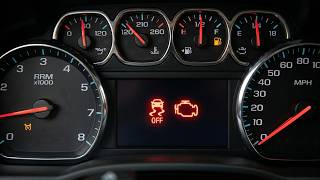
- ABS and/or Traction Control warning lights are on — The dashboard warning lights for the Anti-lock Brake System (ABS) and Traction Control System (TCS) illuminate.
- Vehicle enters "Reduced Engine Power" mode 🎬 Watch: How to fix Reduced Engine Power and StabiliTrak issues — If the root cause is a critical engine sensor like the throttle body, the vehicle severely limits acceleration and speed as a safety measure.
- Cruise control is disabled — As a safety precaution, the cruise control system does not engage when the stability system has a fault.
- Unusual braking behavior — You feel a pulsing in the brake pedal or a slight pull to one side during stops as the system attempts to compensate for missing or incorrect data before shutting down.
Diagnostic Flowchart
Tap your situation to follow the diagnostic path that matches what you're seeing on this code.
Common Fixes & Costs
- Diagnose and repair other stored DTCs — Parts: $0, Labor: $100-$200 (Diagnostic Fee), ~1.5 hr book time (Professional)
- Replace the electronic throttle body — Parts: $150-$300, Labor: $100-$200, ~1.3 hr book time (Intermediate)
- Replace a faulty wheel speed sensor — Parts: $40-$150 (for a bolt-in sensor), Labor: $100-$150, ~1.2 hr book time (DIY)
- Clean or repair the EBCM ground connection — Parts: $1-$5, Labor: $50-$120, ~0.8 hr book time (DIY)
- Repair the Electronic Brake Control Module (EBCM) — Parts: $150-$450 (for mail-in repair service), Labor: $100-$200 (for removal and reinstallation), ~1.5 hr book time (Professional)
DIY vs Professional
- Diagnose and repair other stored DTCs — Beginner:
- Replace the electronic throttle body — Beginner:
- Replace a faulty wheel speed sensor — Beginner:
- Clean or repair the EBCM ground connection — Beginner:
- Repair the Electronic Brake Control Module (EBCM) — Beginner:
Used vs. New Parts: Buying Guide
When a used part is worth it: For the common C0561 causes (throttle body, wheel speed sensors), buying used is not recommended. These are electronic wear items. A used part has a short remaining lifespan and comes with a minimal 30-day warranty. The savings are not worth the risk of paying for labor twice.
Donor-vehicle mileage cap: roughly under 50000 miles for the part to have meaningful remaining life.
Donor quality checklist:
- Verify the exact part number matches; electronic parts have many incompatible variations.
- For wheel speed sensors, avoid parts from rust-belt states as corrosion is a primary failure mode.
- Ask for the donor vehicle's mileage and reason for being salvaged (accident damage is better than engine/electrical failure).
Decision logic:
- If Part is an electronic wear item like a throttle body or wheel speed sensor → Strongly favor a new OEM or high-quality aftermarket part.
- If Vehicle is very old (>15 years) and the new part is discontinued or prohibitively expensive → A used part from a low-mileage, guaranteed source is the only option.
- If The cost of a new part is less than double the cost of a used part → Buy new for the longer warranty and peace of mind.
Warranty tradeoff: Used parts from salvage yards typically offer a 30-90 day warranty on the part only, not labor. New aftermarket parts usually have a 1-year to limited lifetime warranty. New OEM parts carry a 1-2 year warranty.
Worst-case if a used part fails: $300-$600 if a used electronic part fails shortly after installation, requiring a second part purchase plus repeat labor costs.
What Happens If You Wait — Timeline
- 0-1 month: Initial fault (e.g., intermittent misfire, dirty sensor) occurs. 'Service StabiliTrak' light appears intermittently, often resetting after restarting the car. No other symptoms are obvious. (MPG impact: 0-2%% · Added cost: $0)
- 1-3 months: The primary fault becomes more frequent. The C0561 light stays on constantly. If the cause is a misfire, a slight drop in fuel economy and a subtle rough idle are noticeable. MPG loss is around 5-10%. (MPG impact: 5-10%% · Added cost: $50-$150 in wasted fuel)
- 3-6 months: If caused by a persistent misfire, unburned fuel begins to overheat the catalytic converter. The honeycomb substrate starts to melt. The vehicle feels sluggish, and the check engine light flashes during acceleration. (MPG impact: 10-20%% · Added cost: $800-$2500 (Catalytic converter replacement is now likely required))
- 6+ months: The catalytic converter is severely damaged or completely clogged. The engine has a significant loss of power, fails to accelerate past a certain speed, or stalls. The extreme exhaust backpressure causes damage to exhaust valves or head gaskets. (MPG impact: >25%% · Added cost: $2500-$5000+ (Includes catalytic converter and potential engine damage))
Cost of Not Fixing It
- Immediate: Reduced vehicle safety. The ABS and stability control systems are disabled, increasing the risk of losing control in an emergency maneuver or on slippery surfaces. (Added cost: $0)
- 1-6 months: If the root cause is an engine misfire or severe lean/rich condition, continued driving overheats and destroys the catalytic converter. (Added cost: $1200-$2800)
- 6+ months: A persistent primary fault (like a bad sensor or wiring) causes cascading electrical issues or damages other related components, such as oxygen sensors or the ECM, leading to more complex and expensive repairs. (Added cost: $400-$2000+)
Diagnosis Steps

- Perform a Full Vehicle Scan
This is the most important step. Use a scan tool that reads codes from ALL modules (EBCM, ECM, BCM, TCM), not just a basic engine code reader. The C0561 is a secondary code; your goal is to find the primary code stored in another module.
Tools: Professional OBD-II Scan Tool (e.g., GM Tech2 or equivalent) (Intermediate) - Diagnose Primary Trouble Codes First
Ignore the C0561 for now and focus all diagnostic effort on any other codes you found (e.g., P0300 for misfire, P2135 for throttle body, C0040 for wheel speed sensor). Fixing the primary problem almost always clears the C0561.
Tools: Scan Tool, Digital Multimeter, Service Manual (Intermediate) - Check Battery Voltage and EBCM Ground
With the engine running, use a multimeter to check the battery voltage at the terminals. It must be between 13.8V and 14.4V. If voltage is low, test the battery and alternator. On GM trucks, locate the EBCM ground (G303/G304 on the driver's side frame rail below the driver's door), remove the bolt, and clean the contact surfaces to bare metal.
Tools: Digital Multimeter, Wire Brush, Basic Hand Tools (Intermediate) - Inspect Wheel Speed Sensor Wiring
If a wheel speed sensor code is present, visually inspect the sensor's wiring harness for any signs of damage, corrosion, or loose connections, from the wheel hub back to the main harness. Pay close attention to the front harnesses that flex with the wheels and connectors prone to water intrusion.
Tools: Flashlight, Inspection Mirror (Beginner) - Monitor Live Sensor Data (Throttle & WSS)
On a professional scan tool, monitor the PIDs for 'TP Sensor 1' and 'TP Sensor 2'. They must show a smooth, inverse relationship as the throttle is slowly opened and closed. Glitches indicate a failing throttle body. Simultaneously, monitor all four 'Wheel Speed Sensor' PIDs while driving straight at a low speed (>10 mph). All four must read within 1-2 mph of each other. A sensor that reads 0 or is erratic is the faulty component.
Tools: Professional OBD-II Scan Tool (Advanced) - Test Wheel Speed Sensor with a Multimeter (Pro Tip)
For a 2-wire passive sensor, disconnect it and set your multimeter to resistance (Ohms). A good sensor typically reads between 800-1400Ω (check service manual for specs). An open circuit (OL) or short (0Ω) indicates a bad sensor. For a 3-wire active sensor, check for reference voltage (usually 5V or 12V) on one pin and ground on another with the key on.
Tools: Digital Multimeter, Service Manual (Advanced) - Analyze Wheel Speed Sensor with an Oscilloscope (Pro Tip)
For definitive diagnosis, back-probe the sensor's signal wire with an oscilloscope. A good sensor produces a clean, uniform square wave (for digital sensors) or sine wave (for analog sensors) that increases in frequency as the wheel spins. A faulty sensor or damaged tone ring shows dropouts, noise, or an erratic, misshapen waveform.
Tools: Oscilloscope, Back-probe Kit (Advanced) - Advanced System Voltage Analysis (Pro Tip)
Using a multimeter, check Key-On, Engine-Off (KOEO) battery voltage. It must be >12.4V. Start the engine; charging voltage must be 13.8V-14.7V. A voltage reading below 10V triggers the C0561. Perform a voltage drop test on the EBCM power and ground circuits. With the system on, measure voltage between the battery positive post and the EBCM power pin, and between the battery negative post and the EBCM ground pin. A reading greater than 0.2V (200mV) on either test indicates excessive resistance.
Tools: Digital Multimeter, Wiring Diagram (Advanced) - Fuel System Pressure Test (Pro Tip)
If lean codes (P0171/P0174) are present, check fuel pressure. For many 2007-2013 GM trucks (non-FlexFuel), the spec is 55-62 PSI with the Key On, Engine Off (KOEO). For FlexFuel models (VIN 'Z'), the spec is lower, around 48-54 PSI. Pressure that drops off quickly after the pump primes indicates a bad check valve in the fuel pump assembly, leading to long crank times which trigger system faults.
Tools: Fuel Pressure Gauge (Advanced) - Clear Codes and Test Drive
After performing a repair for the primary fault, clear all codes from all modules. Drive the vehicle at speeds above 25 mph to allow the system to run its self-test. If a throttle body or other major component was replaced, a specific relearn procedure with a scan tool is required.
Tools: Professional OBD-II Scan Tool (Beginner)
When This Code Triggers (Freeze-Frame Conditions)
- Engine Coolant Temp: 185-205°F (Fully warmed up)
- RPM: 1200-2500 (Light to moderate acceleration or steady cruise)
- Engine Load: 25-50% (Steady state driving, not heavy acceleration)
- Vehicle Speed: 30-60 mph (City or highway driving)
Related Codes
- P2135 — This code for 'Throttle/Pedal Position Sensor/Switch Correlation' is a very common cause of C0561 on GM vehicles. The ECM detects a throttle body fault and tells the EBCM to disable stability control. If you have both codes, P2135 is the root cause to diagnose and fix.
- C0035, C0040, C0045, C0050 — These codes point to faults in the front-left, front-right, rear-left, and rear-right wheel speed sensor circuits, respectively. An invalid signal from any of these sensors is a direct cause for the EBCM to set C0561. If you see one of these codes alongside C0561, the C00xx code is the primary fault that must be repaired.
- P0171 / P0174 or P0172 / P0175 — These engine codes for 'System Too Lean' (P0171/P0174) or 'System Too Rich' (P0172/P0175) trigger a C0561. The EBCM sees the engine fault data as invalid and disables stability control. Lean codes are often from vacuum leaks (like a cracked PCV hose), while rich codes on FlexFuel vehicles are caused by an incorrect fuel alcohol percentage reading in the ECM.
- P0641 — This code for 'Sensor Reference Voltage 'A' Circuit/Open' is a known cause on vehicles like the Chevy Cobalt. A short in the 5V reference circuit that powers multiple engine sensors causes the ECM to report invalid data, which in turn causes the EBCM to set C0561.
- U0100, U0101 — These are communication codes indicating a total loss of connection with the Engine Control Module (U0100) or Transmission Control Module (U0101). C0561-71 means the EBCM is receiving data, but doesn't trust it. A 'U' code points to a more severe wiring harness, ground, or module failure.
Climate & Environmental Factors
- High-Humidity / Salt Belt Regions: Areas with high humidity or that use road salt in winter experience significantly higher rates of C0561 faults. Salt and moisture accelerate corrosion on the EBCM frame ground connection (G303/G304) and penetrate wheel speed sensor connectors, causing intermittent signal loss and communication errors.
- Cold Climates: In very cold weather, rubber and plastic components become brittle. This causes vacuum hoses, like the PCV hose on GM V8 engines, to crack. The resulting vacuum leak triggers lean codes (P0171/P0174), which the EBCM interprets as an engine fault, disabling stability control and setting C0561.
How to Talk to a Mechanic About This Code
Say this: "I have a 'Service StabiliTrak' light and my scanner shows code C0561. I need a full-system scan to find the primary fault code in the other modules, like the engine or body computer. Please do not replace the EBCM, as I understand this is a secondary code."
This signals to the shop that you've done your research and understand C0561 is a symptom, not the disease. It directs them to perform the correct diagnostic procedure (a full-system scan) and prevents them from jumping to the most expensive and incorrect conclusion (replacing the EBCM).
Avoid saying:
- 'My StabiliTrak light is on, can you fix it?' (Too vague, invites guessing)
- 'I think I need a new brake module.' (Incorrectly diagnoses the problem for them)
- 'Just do whatever it takes to turn the light off.' (Gives them a blank check to replace parts unnecessarily)
Questions to ask before authorizing the repair:
- What was the primary code found in the other module that's causing the C0561?
- Can you show me the freeze-frame data for the primary code?
- What is the specific diagnostic procedure for that primary code, and have you performed it?
- What is the warranty on both the parts and the labor for this specific repair?
Where to Take It: Dealer vs Independent vs Chain
- Dealer:
Best for: Vehicles under warranty, Complex electronic issues on newer or European cars, When a Technical Service Bulletin (TSB) or Special Coverage program applies
Downsides: Highest labor rates, Quicker to replace a whole assembly rather than diagnose a smaller component (Typical cost: +50% vs. baseline) - Independent Shop:
Best fit for most cases, provided they have modern, professional diagnostic equipment capable of a full-system scan. Their focus is often on targeted, cost-effective repairs.
Best for: Out-of-warranty vehicles, Common, well-documented problems (like a GM throttle body or wheel speed sensor), Building a long-term relationship with a trusted mechanic
Downsides: Diagnostic tool capability varies; ensure they have a professional, all-module scanner., Lacks access to the latest manufacturer-only TSBs. (Typical cost: +0% vs. baseline) - Chain Shop:
AVOID for C0561 diagnosis. They correctly identify a simple, related fault like a bad wheel speed sensor, but they are generally not equipped for the multi-module diagnostic process required if the cause is less obvious.
Best for: Simple, routine maintenance like oil changes, tires, and basic brake jobs.
Downsides: Technician skill and diagnostic equipment are highly variable., Lacks the advanced scanners needed to read all modules for a C0561 diagnosis., Business model incentivizes quick parts replacement over complex diagnosis, leading to misdiagnosis. (Typical cost: -10% vs. baseline)
When to Walk Away From the Repair
If the estimated repair cost exceeds 50% of your car's current private-party value, seriously consider selling or trading it in instead of repairing it. For older, high-mileage vehicles (>150,000 miles), some experts suggest an even lower threshold of 40%.
- Car worth $5000, fix is $2800: Walk away. The repair cost is 56% of the car's value, which is above the threshold. That $2,800 is a down payment on a more reliable vehicle.
- Car worth $15000, fix is $1200: Fix it. The repair is only 8% of the vehicle's value, which is well below the threshold.
- Car worth $2000, fix is $1500: Walk away. At 75% of the car's value, this repair is not economically sensible. Other age-related failures are likely imminent.
What Scan Tool You Need for This Code
Minimum: A scanner that reads codes from the Anti-lock Brake System (ABS) / Electronic Brake Control Module (EBCM). A basic engine-only code reader DOES NOT see the C0561 code or any other chassis codes.
A standard $20 engine code reader is blind to the C0561 code. The core of this diagnosis is reading codes from multiple vehicle systems (Engine, Brakes, Body). Without a tool that performs a full-system scan, you cannot find the primary fault and will be guessing.
Budget: BlueDriver Pro (~$100) — Reads and clears enhanced codes from all modules, including ABS/EBCM, on most major brands. It allows you to perform the crucial first step of a full-system scan to find the primary trouble code that is causing the C0561.
Mid-range: Foxwell NT630 Plus / Autel AL619 (~$150) — These handheld scanners offer dedicated ABS/SRS diagnostic functions. The Foxwell NT630 Plus includes bi-directional control for ABS auto-bleed functions, which is useful if the repair involves the hydraulic unit. They provide robust, all-system code reading without needing a smartphone app.
Professional: Autel MaxiCOM MK808 / Launch CRP919E (~$450-650) — Offers full bidirectional control, allowing you to command individual components to test functionality. You view live data streams from all modules simultaneously, graph sensor outputs, and access manufacturer-specific information, which is essential for diagnosing complex communication issues that trigger C0561.
Rent vs buy: Many auto parts stores (like AutoZone) offer free loaner tools, but their scanners are often basic engine code readers that CANNOT read the C0561 code. For this specific issue, you need an ABS-capable scanner. If this is a one-time fix, paying for a professional diagnosis is more cost-effective than buying a mid-range scanner. If you plan to do your own maintenance, a budget pick like the BlueDriver is a worthwhile investment.
How to Clear the Code After You Fix It
- Fix the primary fault that triggered the C0561 code.
- Use a professional OBD-II scan tool to clear codes from ALL modules.
- Perform a complete GM drive cycle to allow readiness monitors to run.
Drive cycle (~30 minutes): Start engine from cold (coolant temp below 122°F). Idle for 2.5 minutes with A/C and rear defroster on. Accelerate to 55 mph at half throttle. Hold a steady 55 mph for 3 minutes. Let the vehicle coast down to 20 mph without using the brakes. Accelerate to 60 mph at 3/4 throttle. Hold a steady 60 mph for 5 minutes. Let the vehicle coast to a stop.
Readiness monitors affected: Catalyst monitor, EVAP system monitor, O2 sensor monitor
Before emissions retest: drive at least 100 miles to fully set monitors.
Watch out for:
- Simply clearing the C0561 code without fixing the primary fault (e.g., a P0300 misfire) causes the light to return immediately.
- Using a basic code reader does not clear codes from the EBCM, causing the light to stay on.
- The catalyst and EVAP monitors are difficult to set and require several drive cycles to complete.
Will This Fail Emissions / State Inspection?
Yes — this code typically fails an OBD-II emissions inspection.
- California: An illuminated ABS/Traction Control light alone does not fail a smog check. However, the C0561 is almost always caused by an engine fault that illuminates the Check Engine Light, which is an automatic failure. Incomplete readiness monitors also block the test.
- New York: The NYS inspection includes a check for illuminated ABS lights. An active ABS light is a reason for inspection failure, in addition to the automatic failure from an illuminated Check Engine Light.
- Texas: In the 17 counties requiring emissions testing, an illuminated Check Engine Light causes an automatic failure. The ABS light status is not part of the emissions test itself but is noted on the vehicle inspection report.
Most Commonly Affected Vehicles
- Chevrolet Silverado, Tahoe, Suburban, Avalanche (2007-2014) — Extremely common on the GMT900 platform. Often caused by a failing throttle body, wheel speed sensor, or a corroded EBCM ground (G303/G304) on the driver's side frame rail.
- GMC Sierra, Yukon, Yukon XL (2007-2014) — Shares the same GMT900 platform and common failures as its Chevrolet counterparts, particularly throttle body, E85 fuel composition errors, and ground issues.
- Cadillac Escalade (2007-2014) — Also part of the GMT900 family, susceptible to the same electronic faults that trigger C0561. Diagnosis is identical to its Chevy and GMC siblings.
- Chevrolet Traverse, Malibu, Cobalt, HHR (2008-2017) — These models are known to set this code, often related to wheel speed sensor connectors prone to water intrusion, weak batteries, or engine performance issues.
- Buick Enclave, LaCrosse (2008-2017) — Like its platform-mates (Traverse, Acadia), the Enclave experiences C0561 due to faulty wheel speed sensor connectors. The LaCrosse also shares this vulnerability.
- Chevrolet / Pontiac Cobalt / G5 (2007-2010) — A known issue on these models involves the engine wiring harness chafing near the A/C compressor. This causes a short in the 5-volt reference circuit, setting a P0641 code and triggering a secondary C0561.
- Saturn Aura, Vue (2007-2010) — As part of the GM family, these vehicles set C0561 for the same reasons as the Malibu and Cobalt, most commonly due to wheel speed sensor faults or wiring issues.
- Ford F-150, Explorer (2005-2014) — On many Ford vehicles, C0561 has a different definition: 'Vacuum Sensor A/B Correlation.' This points to a problem with the brake booster vacuum sensor or its wiring, not a communication fault like on GM vehicles. A broken wire 12-18 inches from the sensor is a known failure pattern.
- BMW 3-Series (E90), 5-Series (E60), X3 (E83) (2004-2013) — While BMW uses different code definitions, the same underlying issue occurs. A corroded rear axle reluctor ring swells and damages the wheel speed sensor, sending erratic data to the DSC (Dynamic Stability Control) module and disabling the system. This is functionally identical to a GM C0561 event.
Manufacturer-Specific Notes
- General Motors (Chevrolet, GMC, Cadillac, Buick): GM has multiple Technical Service Bulletins (including PIT4169F) that explicitly tell technicians NOT to replace the EBCM for a C0561 code. They stress that the code is almost always a symptom of another fault and that other modules must be diagnosed first.
- General Motors (Chevrolet, GMC, Cadillac, Buick): GM has issued Special Coverage Programs for common C0561 causes. Program 14515 extended warranty coverage for faulty throttle bodies on millions of vehicles. Other TSBs address issues like chafed front wheel speed sensor wiring harnesses. Check for active programs for your specific VIN before paying for repairs.
- Ford / Toyota / Honda: On many non-GM vehicles, the code C0561 has a completely different definition, such as 'Vacuum Sensor A/B Correlation'. It is critical to use a scan tool with manufacturer-specific definitions to avoid misdiagnosing the problem.
- BMW: A very common cause for DSC/ABS light activation (the BMW equivalent of a C0561 event) is a corroded rear axle reluctor ring. The ring rusts and expands, hitting and damaging the wheel speed sensor. A temporary diagnostic fix is to place a small washer under the sensor's mounting bolt to increase the air gap.
- Opel / Vauxhall / Saturn: As part of the global GM family, these vehicles experience the same issues. Diagnosing them properly requires brand-specific software (like a Tech2 or GDS2) to read the necessary symptom bytes (-71, -72, etc.) that a generic scanner misses.
Real Owner Stories
2007 Silverado 1500 with intermittent C0561 and no other codes.
Owner experienced random "Service StabiliTrak" messages for months. The only code found was C0561. The issue was related to a rough idle, particularly from the Active Fuel Management (AFM) system.
Outcome: The owner replaced the spark plugs and used a device to disable the AFM system. The rough idle disappeared, and the C0561 code did not return.
Lesson: An underlying engine performance issue, even if it is not severe enough to set its own code immediately, triggers a C0561. A rough idle is a key clue that the problem is engine-related, not brake-related.
2011 Silverado 1500 with C0561, backfiring, and poor MPG.
The truck randomly lost power, backfired, and displayed "Service StabiliTrak" and "Traction Control Off" messages. Fuel economy dropped from 18-20 MPG to 14-15 MPG.
Outcome: This is a classic symptom set for a failing ignition coil or spark plugs. The engine misfire (loss of power, backfire) is the primary fault. The ECM detects the misfire, sends a fault message, and the EBCM disables StabiliTrak, setting C0561.
Lesson: A significant and sudden drop in MPG accompanied by engine performance issues is a strong indicator of a misfire. Address the misfire immediately to prevent catalytic converter damage.
2007 GMC Acadia with C0561 and multiple cam sensor codes.
A repair shop was diagnosing a C0561. The technician noticed a significant engine noise and found four camshaft-related codes.
Outcome: The root cause of all the codes, including the C0561, was a critically low oil level. The lack of oil pressure caused the cam phasers to malfunction, setting engine codes. The EBCM saw the engine fault and disabled stability control. The fix was an oil change.
Lesson: This is a perfect example of C0561 as a secondary 'messenger' code. A basic mechanical issue (low oil) creates a cascade of electronic faults. Always check the basics (like fluid levels) before diving into complex diagnostics.
2009 Chevy Cobalt with C0561 and P0641, 'Reduced Engine Power'.
The car displayed 'SERVICE TRACTION' and 'ENG PWR REDUCED' messages. A full scan revealed C0561 in the ABS module and P0641 (Sensor Reference Voltage 'A' Circuit/Open) in the engine module.
Outcome: Wiggling the harness near the A/C compressor caused the fault to appear and disappear on the scan tool. The technician repaired the damaged wires in the harness, which fixed both the P0641 and the secondary C0561 code.
Lesson: When a communication or reference voltage code is present with C0561, the problem is almost certainly a wiring issue. Focus all diagnostic effort on the primary code (P0641 in this case) and check for TSBs related to wiring harness chafing.
How to Prevent This Code From Triggering
- Periodically clean the electronic throttle body. (Every 75,000 miles or if idle becomes unstable.) — Carbon buildup causes the throttle plate to stick, triggering throttle position sensor codes (like P2135) which are a primary cause of C0561.
- Inspect and clean critical ground connections. (Every 50,000 miles, especially in salt-belt regions.) — Corrosion on the EBCM frame ground (G303/G304 on GM trucks) creates high resistance, causing communication errors that directly trigger C0561.
- Apply dielectric grease to wheel speed sensor connectors. (Whenever tires are rotated or brakes are serviced.) — This prevents moisture intrusion and corrosion in the wheel speed sensor connectors, which are a common source of the 'invalid data' that the EBCM reports as a C0561 code.
- Maintain a healthy battery and charging system. (Test annually after 3 years of battery life.) — Low or unstable system voltage is a leading cause of random communication glitches between modules. A healthy battery ensures all modules, including the EBCM, receive stable power, preventing spurious C0561 codes.
- Address engine misfires immediately. (As soon as a flashing check engine light or rough running is noticed.) — An engine misfire is a primary fault that tells the EBCM to disable stability control. Promptly replacing faulty spark plugs or ignition coils not only fixes the C0561 trigger but also prevents catastrophic damage to the catalytic converter.
Frequently Asked Questions
Can I just clear the C0561 code to fix it?
No. Clearing the code only turns the lights off temporarily. Because C0561 is caused by an underlying problem, the code and warning lights return as soon as the computer detects the original fault again.
The only code I have is C0561. What should I do?
This happens if the primary fault is intermittent or if your scan tool cannot read codes from all modules. A professional-grade scanner often reveals a 'history' code in another module. If no other codes exist, check for low battery voltage, inspect the EBCM ground (G303/G304 on GM trucks), and check for pending TSBs.
What does the number after the code (like -71, -72, or -74) mean?
That is a 'symptom byte' providing more detail. C0561-71 ('Invalid Serial Data') is the most common, indicating the EBCM received data it does not trust. C0561-72 ('Alive Counter Incorrect') points to a data packet timing issue, and C0561-74 ('Value of Signal Protection Calculation Incorrect') is a data checksum error.
Is it safe to drive with the ABS and traction control lights on?
Your car's basic braking system still works, allowing you to stop. However, you lack the assistance of anti-lock brakes (ABS) or stability control in an emergency or on a slippery road, increasing the risk of skidding. Drive cautiously and get the issue diagnosed immediately.
Why did my 'Service StabiliTrak' light come on after I got E85 gas?
On FlexFuel vehicles, an incorrect reading of the fuel's ethanol content causes the engine to run rich, setting a P0172/P0175 code. The brake module sees this engine fault data as invalid and triggers the C0561 code and StabiliTrak light. A 'fuel alcohol content reset' with a proper scan tool fixes this.
What is a common misdiagnosis for C0561?
The most common mistake is replacing the expensive Electronic Brake Control Module (EBCM) without first finding the primary code in another module. Technicians see 'Invalid Serial Data' and assume the EBCM is bad, when it is actually doing its job correctly by reporting a problem elsewhere.
My mechanic says the C0561 is because of low oil. Is that possible?
Yes, critically low oil pressure causes the variable valve timing (VVT) system to set engine trouble codes. The EBCM sees these codes, deems the engine's torque data unreliable, and disables the traction/stability system, setting C0561. Fixing the oil level and clearing the engine codes resolves the issue.
Can a weak battery cause a C0561 code?
Absolutely. A weak battery providing unstable or low voltage (under 10V) is a very common cause of communication glitches between modules. A C0561 appearing right after a jump-start is a strong clue the battery or alternator is the culprit.
Will disconnecting the battery reset the StabiliTrak light?
Disconnecting the battery temporarily clears the code and turns off the light, but it does not fix the underlying problem. As soon as the vehicle's computers run their self-checks and detect the original fault again, the light and the C0561 code return.
What's the difference between StabiliTrak and Traction Control?
Traction Control's primary job is to prevent wheelspin during acceleration. StabiliTrak (or Electronic Stability Control) is a more advanced system that prevents skids and loss of control during cornering or emergency maneuvers by applying individual brakes and modulating engine power.
Key Takeaways
- Code C0561 is a secondary informational flag indicating the Electronic Brake Control Module (EBCM) disabled stability control because it received invalid data from another computer.
- Perform a full-system scan and resolve any primary engine (P-codes), body (B-codes), or communication (U-codes) faults before attempting to diagnose the C0561 code.
- Never replace the $800+ Electronic Brake Control Module (EBCM) for a standalone C0561 code, as manufacturer service bulletins explicitly state it is a symptom rather than the root cause.
- Inspect the electronic throttle body, wheel speed sensors, and the EBCM frame ground (G303/G304) first, as these three components cause over 80% of C0561 codes on 2007-2014 GM trucks.
Helpful Videos

The information in this article is provided for general reference and educational purposes only. Vehicle specifications, procedures, and part compatibility can vary by production date, trim level, and region. Always consult your vehicle's factory service manual and verify part numbers before purchasing or performing repairs. Safety-critical components such as airbags, seat belts, and braking systems should be installed by a qualified professional.
- 🎬 Helpful Videos
- What Does C0561 Mean?
- Can I Drive With C0561?
- Common Causes
- Symptoms
- Diagnostic Flowchart
- Common Fixes & Costs
- DIY vs Professional
- Used vs. New Parts: Buying Guide
- What Happens If You Wait — Timeline
- Cost of Not Fixing It
- Diagnosis Steps
- When This Code Triggers (Freeze-Frame Conditions)
- Related Codes
- Climate & Environmental Factors
- How to Talk to a Mechanic About This Code
- Where to Take It: Dealer vs Independent vs Chain
- When to Walk Away From the Repair
- What Scan Tool You Need for This Code
- How to Clear the Code After You Fix It
- Will This Fail Emissions / State Inspection?
- Most Commonly Affected Vehicles
- Manufacturer-Specific Notes
- Real Owner Stories
- 2007 Silverado 1500 with intermittent C0561 and no other codes.
- 2011 Silverado 1500 with C0561, backfiring, and poor MPG.
- 2007 GMC Acadia with C0561 and multiple cam sensor codes.
- 2009 Chevy Cobalt with C0561 and P0641, 'Reduced Engine Power'.
- How to Prevent This Code From Triggering
- Frequently Asked Questions
- Can I just clear the C0561 code to fix it?
- The only code I have is C0561. What should I do?
- What does the number after the code (like -71, -72, or -74) mean?
- Is it safe to drive with the ABS and traction control lights on?
- Why did my 'Service StabiliTrak' light come on after I got E85 gas?
- What is a common misdiagnosis for C0561?
- My mechanic says the C0561 is because of low oil. Is that possible?
- Can a weak battery cause a C0561 code?
- Will disconnecting the battery reset the StabiliTrak light?
- What's the difference between StabiliTrak and Traction Control?
- Key Takeaways
- 🎟️ Get 5% Off