

P2135 on 2012-2020 Chevrolet Sonic: Throttle Position Sensor Causes and Fixes
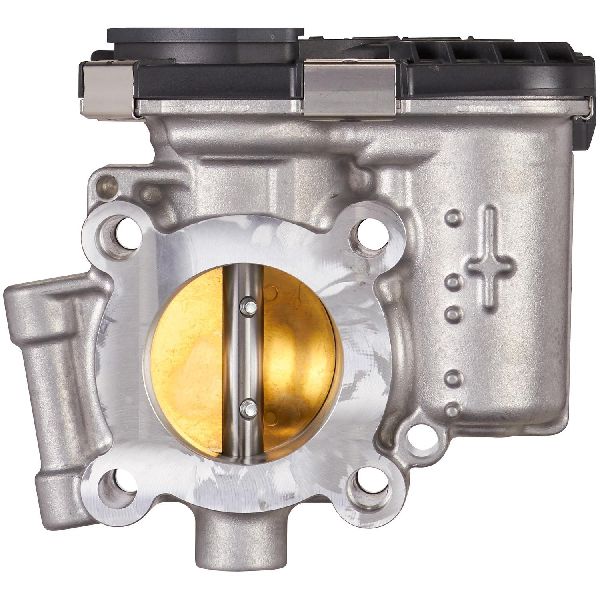
On a 2012-2020 Chevrolet Sonic, code P2135 almost always means the entire electronic throttle body assembly has failed due to internal sensor failure. This triggers 'Reduced Engine Power' mode and a Stabilitrak light. The definitive fix is to replace the entire throttle body assembly and perform a manual idle relearn procedure. Expect to pay $70-$200 for a new part.
- P2135 on a Chevy Sonic is almost certainly a failed throttle body, not the gas pedal.
- The car will enter 'Reduced Engine Power' mode, making it unsafe for normal traffic.
- The fix is to replace the entire throttle body assembly and the gasket. Do not just clean it.
- After replacement, an 'idle relearn' procedure is mandatory for the car to run correctly.
- Ensure you buy the correct throttle body for your engine (1.4L Turbo or 1.8L) as they are different parts.
What's Unique About the 2012-2020 Chevrolet Sonic
This is a notoriously common failure on the Chevrolet Sonic and its platform-mates, the Chevrolet Cruze, Trax, and Buick Encore, which share the same Ecotec engines and throttle body designs. While the generic code definition mentions the accelerator pedal, the issue on these specific GM vehicles is almost always an internal failure of the electronic throttle body assembly itself. The integrated throttle position sensors wear out or develop faults, leading to the voltage correlation error. 🎬 Watch: Diagnosing and fixing the P2135 code Cleaning the throttle body is rarely a permanent fix for this code; complete replacement is the widely accepted and reliable repair.
Symptoms You May Notice
- "Reduced Engine Power" message on the dashboard
- Check Engine Light is on
- Stabilitrak/Traction Control warning light may illuminate
- Severely limited acceleration (limp mode)
- Unstable, rough, or high idle
- Hesitation or surging when trying to accelerate
- Engine may stall at low speeds or when returning to idle
- Car may seem to run fine for a short period after a restart, then suddenly lose power again
- Replacing the Accelerator Pedal Position (APP) Sensor. A faulty pedal sensor is a possible cause for the generic P2135 code, but on GM vehicles like the Sonic, it typically sets a different code (such as P2138) and is very rarely the cause of P2135. Owners have replaced the pedal only to have the code return immediately.
Most Likely Causes
- Failing Throttle Body Assembly 🔴 High Probability The integrated electronic throttle position sensors (TPS) are a known high-failure item on this platform due to wear and tear of the internal contacts.
How to confirm: With a scan tool, monitor the live data for TPS Sensor 1 and TPS Sensor 2. Their voltage or percentage values should move smoothly and in opposition as the throttle is applied (e.g., one goes 0-100% while the other goes 100-0%). If one is erratic, jumps, sticks, or doesn't respond, the throttle body is faulty. This is the most definitive diagnostic step.
Typical fix: Replace the entire throttle body assembly with a new gasket. After replacement, a throttle idle relearn procedure must be performed.
Est. part cost: $70-$200 - Damaged Wiring or Connector ⚪ Low Probability Engine vibration and heat can cause wires to chafe or the connector pins to become loose or corroded over time, though this is much less common than outright throttle body failure.
How to confirm: Visually inspect the wiring harness leading to the throttle body. Unplug the connector and check for any green/white corrosion, bent, or backed-out pins. Wiggle the harness with the engine running to see if it affects the idle or triggers the code. This is a good first step before ordering parts.
Typical fix: If corrosion is found, clean the connector terminals. If wires are broken or pins are damaged, the connector pigtail can be replaced.
Est. part cost: $15-$40
Rare But Worth Checking
- Faulty Powertrain Control Module (PCM): This is very rare. The PCM should only be considered after the throttle body and wiring have been definitively ruled out as the cause. A faulty PCM driver for the TPS circuit is possible but unlikely.
Diagnosis Steps
- Scan for Codes: Use an OBD-II scanner to confirm P2135 is the primary code. Note any other codes that are present.
- Inspect the Wiring: Before buying parts, perform a thorough visual inspection of the throttle body electrical connector and wiring harness. Look for any signs of damage, corrosion, or loose pins. In some instances, such as reported in NHTSA ODI #11191393 for a related GM model, technicians have attempted to resolve P2135 and P2176 by replacing the battery and battery cables when electrical issues were suspected.
- Analyze Live Data: Use a scan tool that can display live data. Monitor the values for 'TPS Sensor 1' and 'TPS Sensor 2'. With the engine off and ignition on, slowly press the accelerator pedal. The values should change smoothly and mirror each other in opposite directions. Any jumps, flat spots, or erratic readings confirm a faulty sensor inside the throttle body.
- Test the Part: If live data is inconclusive, you can back-probe the sensor signal wires at the throttle body connector with a multimeter to verify the voltage signals are smooth and consistent as the throttle plate is manually moved.
- Replace the Throttle Body: If the sensor signals are confirmed to be faulty, the most common and effective fix is to replace the entire throttle body assembly.
- Perform Idle Relearn: After installing the new throttle body, you must perform an idle relearn procedure. This is critical for the engine to idle correctly. A common manual procedure is to start the engine and let it idle in Park for 3 minutes, turn the engine off for 60 seconds, then start and idle again for 3 minutes. 🎬 Watch: How to perform a GM throttle relearn
Parts You'll Likely Need
- Electronic Throttle Body Assembly (1.8L Engine)
(OEM #55561495)— This is the most common failure point for code P2135 on the 1.8L Sonic. The original part number 55577375 has been superseded by GM part number 55561495.
Trusted brands: ACDelco (GM Genuine), Bosch, Standard Motor Products, Hitachi
OEM price range: $160-$220
Aftermarket price range: $90-$150 - Electronic Throttle Body Assembly (1.4L Turbo Engine)
(OEM #55565489)— This is the corresponding high-failure part for the 1.4L Turbo engine. It directly causes the sensor correlation error. It also replaces alternate part number 55581662.
Trusted brands: ACDelco (GM Genuine), Bosch, Standard Motor Products
OEM price range: $150-$220
Aftermarket price range: $70-$160 - Throttle Body Gasket — The gasket provides a critical seal between the throttle body and the intake manifold and should always be replaced when the throttle body is removed. Some new throttle bodies include one, but many do not.
Trusted brands: ACDelco, Fel-Pro, Mahle
OEM price range: $8-$15
Aftermarket price range: $4-$10
Related Codes That Often Appear With This One
- P0121 — This code specifically indicates 'Throttle/Pedal Position Sensor/Switch 'A' Circuit Range/Performance,' which is closely related to the correlation fault.
- P0221 — This code indicates a range/performance issue with the 'B' sensor circuit, the other half of the correlation check.
- P06A3 — This code for 'Sensor Reference Voltage 'D' Circuit Performance' can sometimes appear alongside P2135, pointing to an issue in the electrical circuit shared by the throttle body.
- P2176 — This code for "Minimum Throttle Position Not Learned" is frequently documented alongside P2135 in GM electrical system diagnostics (NHTSA ODI #11191393).
Technical Service Bulletins (TSBs) & Recalls
- GM TSB #11-06-04-007B: This bulletin addresses DTC P2135 across many GM models. It details the diagnostic procedure, which involves checking live data and, if a fault is found, replacing either a throttle position sensor cover kit (on older models) or the entire throttle body assembly. It confirms this is a known issue to GM.
- NHTSA ODI #10585778: A manufacturer service bulletin for a related GM model notes that code P2135 can be traced to the throttle position sensor, requiring the replacement of the sensor assembly (GM 19300180 sensor kit).
Platform-Specific Known Issues
- Failure Mileage: Owners on forums frequently report this failure occurring between 50,000 and 100,000 miles. NHTSA ODI #10836390 describes a platform-mate experiencing repeated P2135 codes and limited power mode at approximately 61,000 miles.
- Cold Weather Trigger: Some owners report that the P2135 code and limp mode are more likely to be triggered during cold weather or on the first start of the day, though failure can happen at any time.
Mechanic-Grade Diagnostic Values
- Throttle Position Sensor 1 (TPS1) Voltage — expected: Approx. 0.35V - 0.7V at closed throttle, sweeping up to approx. 4.0V - 4.5V at wide-open throttle.. Failure: Voltage is erratic, jumps, has dropouts, or does not sweep smoothly when the pedal is pressed.
- Throttle Position Sensor 2 (TPS2) Voltage — expected: Approx. 4.5V - 4.8V at closed throttle, sweeping down to approx. 0.5V at wide-open throttle.. Failure: Voltage does not move in the opposite direction of TPS1, is erratic, has dropouts, or does not agree with TPS1's value.
- 5-Volt Reference at Throttle Body Connector — expected: 4.8V to 5.2V with key on, engine off.. Failure: Voltage is significantly lower than 4.8V, which can indicate a short to ground on the 5V reference circuit, or is absent, indicating an open. If over 5.2V, suspect a short to voltage.
- Low Reference (Ground) Circuit Resistance — expected: Less than 5 ohms between the low reference circuit terminal at the throttle body connector and a known good chassis ground.. Failure: Resistance is greater than 5 ohms, indicating an open or high resistance in the ground circuit for the sensor.
Scan Tool Commands That Help
- GDS2 / Tech2 (or equivalent professional scan tool): Idle Learn Reset / Throttle Learn — This function must be performed after replacing the throttle body. It erases the old learned idle airflow values from the ECM, allowing it to calibrate to the new, clean throttle body for a stable idle.
Wiring & Ground Locations
- G105 — On the frame rail, directly under the battery tray. The tray must be removed for access.. This is a primary ground point. A preliminary service bulletin (PIC5574A) notes that this ground stud can have weld slag or paint on the surface, causing a poor connection that can lead to various electrical and communication codes.
- G104 — Lower right rear of the engine.. This is another critical engine ground. A poor connection here can cause erratic sensor readings and performance issues.
- Two-Piece Main Ground Cable — One cable runs from the engine block to a chassis stud under the battery tray. A second cable runs from the battery negative terminal to a separate chassis stud a few inches away.. A forum analysis suggests this separated design may be a flaw. Ensuring both ground points are clean, tight, and free of corrosion is a critical diagnostic step for any electrical issue, including sensor correlation faults. Some owners have bonded these points together.
- Throttle Body Connector (X2) — Plugged into the electronic throttle body assembly.. This 6-pin connector is the single point of contact for the two TPS sensors and the throttle actuator motor. Checking for backed-out pins, corrosion, or harness damage here is the first step in diagnosing P2135.
Diagnostic Flowchart
Other Known Issues on This Vehicle
Issues unrelated to this code that are worth knowing about as an owner of this generation:
- PCV System Failure (1.4L Turbo) 🔴 High — Very common. A check valve in the intake manifold fails, causing a diaphragm in the valve cover to rupture. Leads to codes P0171, P1101, hissing noises, and high oil consumption. (Ref: GM TSB PIP5197, PI0907B)
- Leaking Water Pump (1.4L Turbo) 🟠 Medium — Common failure, often occurring at low mileage (e.g., 40,000 miles). Causes coolant loss and potential overheating. (Ref: Special Coverage Adjustment 14371A / N142014371 extends warranty to 10 years/150,000 miles for this specific leak on 2012-2014 models.)
- Oil Cooler / Oil Filter Housing Gasket Leaks (Both Engines) 🟠 Medium — Very common. The gaskets between the oil cooler/filter housing and the engine block degrade, causing significant oil and/or coolant leaks.
- Faulty Thermostat / Housing 🟠 Medium — The plastic thermostat housing can crack and leak, or the internal sensor can fail, causing the cooling fans to run constantly and setting code P0597.
- Sticking Purge Valve (EVAP) 🟡 Low — A common cause for a Check Engine Light with code P0496. Can cause rough running and difficulty starting after refueling.
Used vs. New Parts: Buying Guide for This Vehicle
When a used part is the smart pick: For this specific repair, a used throttle body from a junkyard is NOT recommended. The failure is due to electronic wear of internal sensor contacts, not a simple mechanical issue. A used part is likely to have significant wear and may fail soon after installation, repeating the problem.
What to inspect on the donor part:
- Not applicable as used parts are not advised.
OEM-only on this vehicle (don't cheap out):
- While not strictly 'OEM-only', using a GM Genuine or original equipment manufacturer (OEM) part like ACDelco or Bosch is the safest bet for compatibility and longevity. This is a critical safety component, and a quality part is essential.
Aftermarket brands forum-validated for this vehicle:
- ACDelco (GM Genuine)
- Bosch (Often the OEM supplier)
- Standard Motor Products (SMP)
- Hitachi
- Dorman (Often includes design improvements over OEM)
Brands owners have reported issues with on this vehicle:
- Avoid unbranded, no-name parts from online marketplaces. While cheaper, they have a high rate of being defective out of the box or failing prematurely, leading to repeated repairs.
Real Owner Stories
Aggregated from forums and TSBs cited above. Mileages and costs reflect what owners reported in those sources.
2013 Chevrolet Sonic
Symptoms: Getting code P2135, car keeps going into limp-mode, misfired. Went into limp-mode five times within 20 minutes.
What fixed it: Replacing the throttle body (as the TPS is integrated into the assembly).
Source hint: Reddit r/AskAMechanic
2012 Chevrolet Sonic 1.4L Turbo — 50000 miles
Symptoms: Experienced code P2135, high idle, reduced power, and the Stabilitrak light.
What fixed it: Replace the entire throttle body assembly with a new gasket and perform a throttle idle relearn.
Source hint: sonicownersforum.com
Documented NHTSA Reports
An owner reported in NHTSA ODI #10692672 that after their vehicle experienced a P2135 code for the throttle position sensor, the dealer initially attempted to fix the issue by cleaning the throttle body.
In another case, NHTSA ODI #10691577 describes an inspection that found a failed accelerator position sensor associated with code P2135, leading to the replacement of the accelerator position sensor.
NHTSA ODI #10836390 notes that a vehicle repeatedly showed P2135 codes for a throttle/pedal sensor issue, which placed the car in limited power mode during warm-up and at stops.
Related OBD-II Codes
Frequently Asked Questions
Is there a TSB for the P2135 code on my Chevrolet Sonic?
At what mileage does the throttle body usually fail on the Sonic?
Can I just replace the sensor, or do I need the whole throttle body?
Why does my Sonic lose power and show a Stabilitrak light when this code hits?
Do I need to do anything special after installing a new throttle body on my 1.4L or 1.8L engine?
Does cold weather affect this specific issue?
Helpful Videos
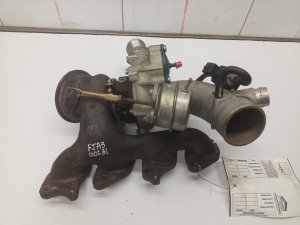
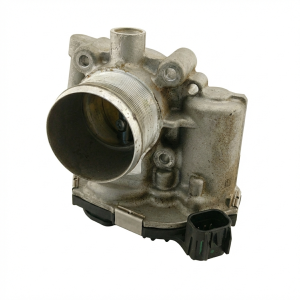
Used OEM Parts in Stock

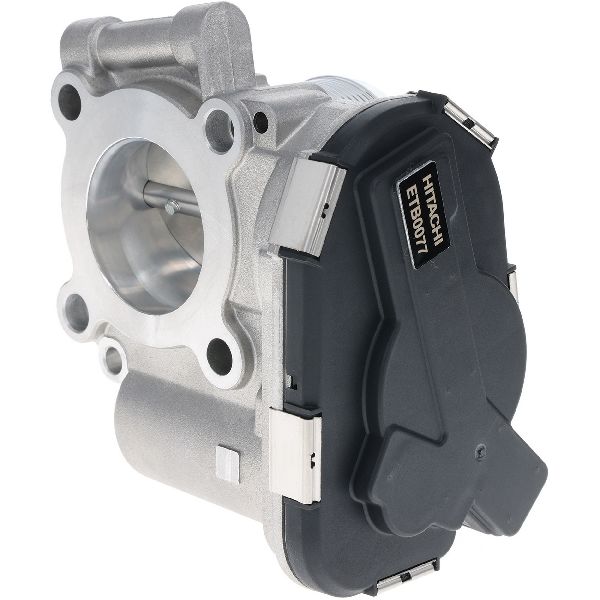
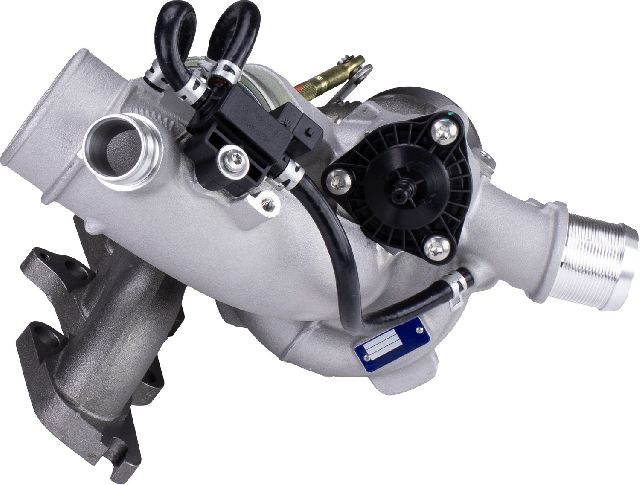
New Aftermarket Parts Available


The information in this article is provided for general reference and educational purposes only. Vehicle specifications, procedures, and part compatibility can vary by production date, trim level, and region. Always consult your vehicle's factory service manual and verify part numbers before purchasing or performing repairs. Safety-critical components such as airbags, seat belts, and braking systems should be installed by a qualified professional.
- Chevrolet Sonic:
- 🎬 Helpful Videos
- 🛍️ Shop This Part
- What's Unique About the 2012-2020 Chevrolet Sonic
- Symptoms You May Notice
- Most Likely Causes
- Rare But Worth Checking
- Diagnosis Steps
- Parts You'll Likely Need
- Related Codes That Often Appear With This One
- Technical Service Bulletins (TSBs) & Recalls
- Platform-Specific Known Issues
- Mechanic-Grade Diagnostic Values
- Scan Tool Commands That Help
- Wiring & Ground Locations
- Diagnostic Flowchart
- Other Known Issues on This Vehicle
- Used vs. New Parts: Buying Guide for This Vehicle
- Real Owner Stories
- 2013 Chevrolet Sonic
- 2012 Chevrolet Sonic 1.4L Turbo — 50000 miles
- Documented NHTSA Reports
- Related OBD-II Codes
- Frequently Asked Questions
- 🎟️ Get 5% Off