

P2015 on 2010-2012 Saab 9-5 2.0L Diesel: Intake Manifold Runner Control Fault
This code almost always points to a problem with the swirl flaps in the intake manifold, either due to heavy carbon buildup causing them to stick or a failed actuator motor. The most common fix is replacing the entire intake manifold assembly, which can cost between $150-$400 for the part. In some cases, an aftermarket repair bracket can be installed on the actuator to fix the range of motion and clear the code.
- P2015 on your Saab 9-5 Diesel points directly to the intake manifold swirl flap system.
- The most probable cause is either flaps that are stuck due to heavy carbon buildup, or a worn actuator linkage causing an 'out of range' error.
- Simply replacing the actuator without checking for stuck flaps may lead to a repeat failure.
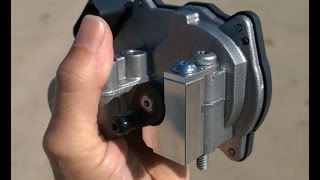
- A cheap and effective fix may be an aftermarket metal bracket that corrects the actuator's range of motion if the flaps themselves are not seized.
- The most reliable, long-term repair for seized flaps is to replace the entire intake manifold assembly.
- This is not a simple DIY job; professional service is recommended due to the complexity of the repair, which involves the high-pressure fuel system.
What's Unique About the 2010-2012 Saab 9-5
The 2010-2012 Saab 9-5 uses a 2.0L diesel engine (A20DTH) from General Motors, which is also found in many Opel and Vauxhall models like the Insignia, Astra, and Zafira. This P2015 fault is a widely documented weak point on this specific engine across all brands that use it. The problem is less about a single broken plastic part, as seen on some German engines, and more commonly about either heavy internal carbon buildup seizing the flaps or the electronic actuator motor's linkage wearing out, causing it to over-travel and send an out-of-range signal. The failure is so common that aftermarket repair kits exist to limit the actuator's travel, preventing the code.
Symptoms You May Notice
- Check Engine Light illuminated
- Reduced engine power or sluggish acceleration
- Vehicle entering 'limp mode' (severely restricted power)
- Rough or unstable idle
- Decreased fuel economy
- Noticeable hesitation during acceleration
- Increased diesel particulate filter (DPF) regeneration cycles
- Replacing only the actuator motor when the root cause is a carbon-fouled and seized intake manifold. The new actuator will quickly burn out, and the code will return.
- Replacing the actuator when the issue is simply a worn linkage causing over-travel. In this case, a much cheaper aftermarket repair bracket could solve the problem.
Most Likely Causes
- Excessive Carbon Buildup in Intake Manifold 🔴 High Probability Diesel engines with EGR systems, like the A20DTH, are inherently prone to carbon accumulation in the intake tract. This buildup physically restricts the movement of the swirl flaps, causing them to stick or seize.
How to confirm: The manifold must be removed for visual inspection and cleaning. A borescope might allow for partial inspection of the runners closest to the throttle body, but removal is the only definitive way to check the full movement of all flaps by hand.
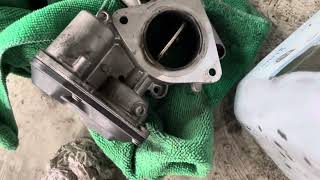
Typical fix: The intake manifold is either replaced with a new unit or, if possible, removed and thoroughly cleaned using chemical cleaners or media blasting. 🎬 Watch: How to thoroughly clean carbon buildup from an intake. Replacement is often preferred as it also renews the flap bushings and seals.
Est. part cost: $150-$400 - Failed or Worn Intake Manifold Runner Actuator 🔴 High Probability The electronic actuator motor or its internal position sensor can fail from heat and constant use. More commonly, the plastic linkage components wear out, allowing the actuator arm to move beyond its specified range, triggering the P2015 code even if the flaps themselves move.
How to confirm: Use a capable scan tool to command the actuator on and off while observing the feedback signal for the position sensor. Visually check if the actuator arm moves during engine start/stop. If the arm moves but seems loose or travels too far, the linkage is likely worn.
Typical fix: Replace the actuator motor. However, if the original failed due to seized flaps, the new one will also fail quickly. It is critical to ensure the flaps move freely before replacing only the actuator. An alternative for a worn linkage is an aftermarket repair bracket that limits the actuator's movement.
Est. part cost: $80-$150 - Wiring or Connector Issue ⚪ Low Probability
How to confirm: Inspect the wiring harness and connector going to the intake runner actuator for any signs of damage, corrosion, or loose pins. Check for proper voltage and ground at the connector according to the service manual.
Typical fix: Repair the damaged section of the wiring harness or clean/replace the connector.
Est. part cost: $5-$50
Rare But Worth Checking
- Leaking Intake Manifold Gasket:
Diagnosis Steps
- Read the fault codes with an OBD-II scanner to confirm P2015 is the primary code.
- Visually inspect the intake manifold area for any obvious issues like disconnected vacuum lines, coolant leaks, or damaged wiring to the actuator.
- Observe the swirl flap actuator arm while an assistant starts and stops the engine. Check for smooth movement. Check for excessive play in the linkage by hand (with the engine off).
- With a diagnostic scan tool (like a Tech2 for Saabs), monitor the live data for the 'Intake Manifold Runner Control Valve Feedback Signal' while commanding the actuator on and off. The value should change smoothly from ~0% to ~100%. An error in adaptation or a jumpy signal points to a faulty actuator or linkage.
- If the actuator does not respond to commands, check for power and ground at the actuator's electrical connector using a multimeter.
- If power is present but the actuator doesn't move, attempt to move the swirl flap linkage by hand (if accessible). If it is stiff or stuck, the manifold is seized with carbon.
- If the linkage moves freely but the actuator doesn't work or the scan tool shows an internal fault, the actuator itself is faulty.
- If the actuator works but the code persists and is related to range/performance, the linkage is likely worn, causing over-travel. This is a candidate for an aftermarket repair bracket.
- For a definitive diagnosis of carbon buildup, the intake manifold must be removed and inspected. This is a complex job.
- After replacing the intake manifold or actuator, an adaptation procedure may need to be performed with a diagnostic tester for the new component to be recognized by the ECM.
Parts You'll Likely Need
- Intake Manifold Assembly
(OEM #55571993)— This is the most common and complete fix, as it replaces the carbon-fouled manifold, the worn swirl flaps, and often includes a new actuator motor. The part number is from the equivalent Vauxhall/Opel, which shares the A20DTH engine.
Trusted brands: GM (Genuine), Pierburg, NTY, LSC
OEM price range: $400-$600
Aftermarket price range: $150-$400 - Intake Manifold Runner Actuator
(OEM #55578352)— If the manifold flaps are confirmed to be clean and free, replacing only the failed electronic actuator can resolve the code. This is a less common standalone fix. The OEM part number is often cross-referenced from its GM siblings.
Trusted brands: Bosch, VDO, GM
OEM price range: $150-$250
Aftermarket price range: $80-$150 - Intake Manifold Actuator Repair Bracket — A very cost-effective fix for when the P2015 code is caused by a worn linkage allowing the actuator to over-travel, rather than a seized manifold. This metal bracket is installed on the actuator to provide a new, hard stop. 🎬 See how to install a P2015 actuator repair bracket.
Trusted brands: ECS Tuning, Tafmet, Various eBay/AliExpress sellers
OEM price range: N/A
Aftermarket price range: $20-$50
Related Codes That Often Appear With This One
- P0234 - Engine Overboost Condition: Can be triggered by heavy carbon buildup in the intake and on the MAP sensor, which is a related issue on this engine.
Technical Service Bulletins (TSBs) & Recalls
- While no specific Saab TSB was found, VW/Audi have issued multiple TSBs (e.g., 24 15 04, 24 17 09) for P2015 on their TDI and TSI engines, pointing to similar failure patterns of manifold runner flaps and recommending manifold replacement or checking for restrictions. This indicates a common design problem across manufacturers for intake runner control systems.
Platform-Specific Known Issues
- The A20DTH engine platform is known for this P2015 fault, primarily due to carbon buildup in the intake manifold seizing the swirl flaps.
- A secondary common failure is wear on the plastic actuator linkage, which causes an over-travel condition and triggers the P2015 code even if the flaps are not seized.
- Coolant leaks from the main intake manifold gasket are also a known issue, which requires manifold removal to fix.
Mechanic-Grade Diagnostic Values
- Resistance between actuator low reference circuit (Terminal 2) and ground. — expected: Less than 5 Ω. Failure: A value greater than 5 Ω indicates an open or high resistance in the low reference circuit.
- Voltage between actuator signal circuit (Terminal 5) and ground with Ignition ON. — expected: Less than 0.3 V. Failure: A value greater than 0.3 V may indicate a short to voltage in the signal circuit.
- Resistance between actuator signal circuit (Terminal 5) and ground with Ignition OFF. — expected: Greater than 500 kΩ. Failure: A value less than 500 kΩ may indicate a short to ground in the signal circuit.
Hidden / Shadow Codes Worth Checking
- P2015 20: Intake Manifold Runner Control Valve Actuator Internal Performance Malfunction (see via A dealer-level scanner like a Saab Tech2 or GM GDS2 is required to see these specific sub-codes.)
- P2015 21: Intake Manifold Runner Control Valve Actuator Internal Performance Incorrect Period (see via A dealer-level scanner like a Saab Tech2 or GM GDS2 is required to see these specific sub-codes.)
- P2015 26: Intake Manifold Runner Control Valve Actuator Internal Performance Low Frequency (see via A dealer-level scanner like a Saab Tech2 or GM GDS2 is required to see these specific sub-codes.)
- P2015 27: Intake Manifold Runner Control Valve Actuator Internal Performance High Frequency (see via A dealer-level scanner like a Saab Tech2 or GM GDS2 is required to see these specific sub-codes.)
Scan Tool Commands That Help
- Saab Tech2 / GM GDS2: Command Q21 Intake Manifold Runner Control Solenoid Valve ON/OFF — Use this bidirectional control to actively test the actuator's response. While commanding it on and off, you should observe the 'Intake Manifold Runner Control Valve Feedback Signal' parameter on the scan tool to see if it moves smoothly through its range.
- Saab Tech2 / GM GDS2: Control Unit / Software Adaptation/Training — After replacing the intake manifold or the actuator, the ECM may need to learn the position sensor values of the new component. This function, sometimes called 'training' or 'adaptation', must be performed for the ECM to recognize the new part's range of motion.
Wiring & Ground Locations
- Q21 Connector Pin 2 — At the electrical connector for the Intake Manifold Runner Control Actuator.. This is the Low Reference circuit terminal. A high resistance reading here points to a bad ground connection for the actuator.
- Q21 Connector Pin 5 — At the electrical connector for the Intake Manifold Runner Control Actuator.. This is the Signal circuit terminal. Voltage and resistance tests on this pin can identify a short to ground, short to voltage, or an open in the signal wire back to the ECM.
- Q21 Connector Pin 6 — At the electrical connector for the Intake Manifold Runner Control Actuator.. This is the Ignition circuit terminal. A test lamp connected between this pin and ground should illuminate with the ignition on, confirming the actuator is receiving power.
- G7 (Potential Ground) — On older 4-cylinder Saab 9-5s (9600 chassis), this ground point is located on the side of the intake manifold.. While this location is for a previous generation, engine control components are often grounded directly to the engine or intake manifold. A corroded or loose G7 ground could cause erratic sensor behavior. Its location on the 2010-2012 model (9650 chassis) may be similar.
Real Owner Repair Stories
- Multiple VW/Audi TDI forums and YouTube videos (Various 2009-2014 VW and Audi models with 2.0L TDI engines (which use a similar actuator range-of-motion principle).) — Check Engine Light with code P2015, sometimes accompanied by limp mode.
❌ Tried (didn't work) Clearing the code (it would return immediately or after a short drive)., Replacing the actuator motor alone when the linkage was the issue., Some owners were quoted over $900 by dealerships to replace the entire intake manifold assembly.
✅ What actually fixed it Installing an aftermarket metal repair bracket (e.g., from Dieselgeek or X8R) onto the actuator motor. This bracket physically limits the actuator's range of motion, preventing the arm from traveling past its intended stop and triggering the 'implausible signal' fault. The fix is reported to take as little as 15-30 minutes and costs between $20-$70.
OEM Part Supersession History
55571993 (GM/Vauxhall/Opel)→No clear supersession found, but many alternative part numbers exist.— This part is widely used across GM brands. Alternative numbers include 93167076, 55229190, and 55261565.
Heads up: The key is to ensure the manifold is for the A20DTH engine. While physical fitment is likely consistent, always verify compatibility with your specific vehicle's VIN before purchasing.N/A (Actuator Motor)→Pierburg 7.01132.12.0— Pierburg is a known OEM-quality supplier for this component. It is sold as a direct replacement for the original actuator.
Heads up: Some documentation for aftermarket actuators suggests that a software adaptation or 'training' procedure may be required with a dealer-level scan tool after installation for the ECM to recognize the new part.
Diagnostic Flowchart
Used vs. New Parts: Buying Guide for This Vehicle
When a used part is the smart pick: A used actuator motor is a reasonable choice if the original motor failed electronically and the intake manifold itself is confirmed to be clean and free of binding. A used intake manifold is NOT recommended unless it has been professionally cleaned and inspected, as it will likely have the same carbon buildup that causes the original failure.
Donor-vehicle mileage cap: roughly under 80000 miles for the part to have meaningful remaining life.
What to inspect on the donor part:
- For a used actuator: Ensure the connector pins are clean and straight. Check the plastic linkage arm for cracks or excessive wear at the ball joint.
- For a used manifold: Manually operate the linkage arm to ensure all swirl flaps move freely with no binding or sticking.
- Use a borescope or flashlight to inspect the intake runners for heavy carbon deposits. If it's caked with soot, it's a poor choice.
- Check for any cracks in the plastic housing, especially around the seams and mounting points.
OEM-only on this vehicle (don't cheap out):
- No parts for this repair are strictly OEM-only, as high-quality aftermarket alternatives are available.
Aftermarket brands forum-validated for this vehicle:
- Pierburg (for complete manifold or actuator)
- Bosch (for actuator)
- Dieselgeek (for repair bracket)
- Tafmet (for repair bracket)
- X8R (for repair bracket)
Brands owners have reported issues with on this vehicle:
- NTY: Some user reviews for this budget brand suggest potential fitment issues requiring the use of old gaskets or additional sealant to work properly.
Real Owner Stories
Aggregated from forums and TSBs cited above. Mileages and costs reflect what owners reported in those sources.
2010-2012 Saab 9-5 2.0L Diesel — ~95000 miles
Symptoms: Check Engine Light came on, the car had reduced power, and the idle was rough. It eventually went into 'limp mode' with severely restricted acceleration.
What fixed it: The primary cause was excessive carbon buildup in the intake manifold, which had physically seized the swirl flaps. The manifold was replaced with a new unit.
Source hint: vehicle_specific_issues section describing carbon buildup as a primary failure on the A20DTH engine platform
2010-2012 Saab 9-5 2.0L Diesel — ~110000 miles
Symptoms: The Check Engine Light was on with code P2015, but the car drove mostly fine aside from a slight hesitation. A visual inspection showed the actuator arm was moving but seemed to have excessive play.
What fixed it: The plastic actuator linkage was worn, causing an 'over-travel' condition. The swirl flaps were confirmed to be moving freely. An aftermarket repair bracket was installed on the actuator to limit its range of motion, which resolved the code.
Source hint: vehicle_specific_issues section describing wear on the plastic actuator linkage as a secondary common failure
Related OBD-II Codes
Frequently Asked Questions
My Saab's swirl flap actuator arm moves, but I still have the P2015 code. What's wrong?
Is it better to clean my original intake manifold or just replace it?
Are the aftermarket repair brackets I see online a valid fix for the P2015 code?
How common is the P2015 fault on the 2.0L Diesel A20DTH engine in these Saabs?
Is it safe to buy a used intake manifold to save money on this repair?
After I replace the intake manifold or actuator, is any special procedure required?
Are there any official Saab Technical Service Bulletins (TSBs) for code P2015?
Helpful Videos
We Have This Part in Stock



The information in this article is provided for general reference and educational purposes only. Vehicle specifications, procedures, and part compatibility can vary by production date, trim level, and region. Always consult your vehicle's factory service manual and verify part numbers before purchasing or performing repairs. Safety-critical components such as airbags, seat belts, and braking systems should be installed by a qualified professional.
- Saab 9-5:
- 🎬 Helpful Videos
- 🛍️ Shop This Part
- What's Unique About the 2010-2012 Saab 9-5
- Symptoms You May Notice
- Most Likely Causes
- Rare But Worth Checking
- Diagnosis Steps
- Parts You'll Likely Need
- Related Codes That Often Appear With This One
- Technical Service Bulletins (TSBs) & Recalls
- Platform-Specific Known Issues
- Mechanic-Grade Diagnostic Values
- Hidden / Shadow Codes Worth Checking
- Scan Tool Commands That Help
- Wiring & Ground Locations
- Real Owner Repair Stories
- OEM Part Supersession History
- Diagnostic Flowchart
- Used vs. New Parts: Buying Guide for This Vehicle
- Real Owner Stories
- 2010-2012 Saab 9-5 2.0L Diesel — ~95000 miles
- 2010-2012 Saab 9-5 2.0L Diesel — ~110000 miles
- Related OBD-II Codes
- Frequently Asked Questions
- 🎟️ Get 5% Off