

P1604 on 2003-2009 Toyota 4Runner: Startability Malfunction Causes and Fixes
On a 2003-2009 4Runner, code P1604 means the engine failed to start or took too long to fire up. This is usually caused by a fuel delivery problem, like a clogged fuel filter or failing fuel pump. Always check for other codes first, as P1604 is a symptom, not the root cause.
- P1604 means your 4Runner failed to start properly, but it doesn't tell you why.
- Always check for other OBD-II codes first; they will point to the true source of the problem.
- The most likely cause is a fuel delivery issue. Start by listening for the fuel pump when you turn the key on.
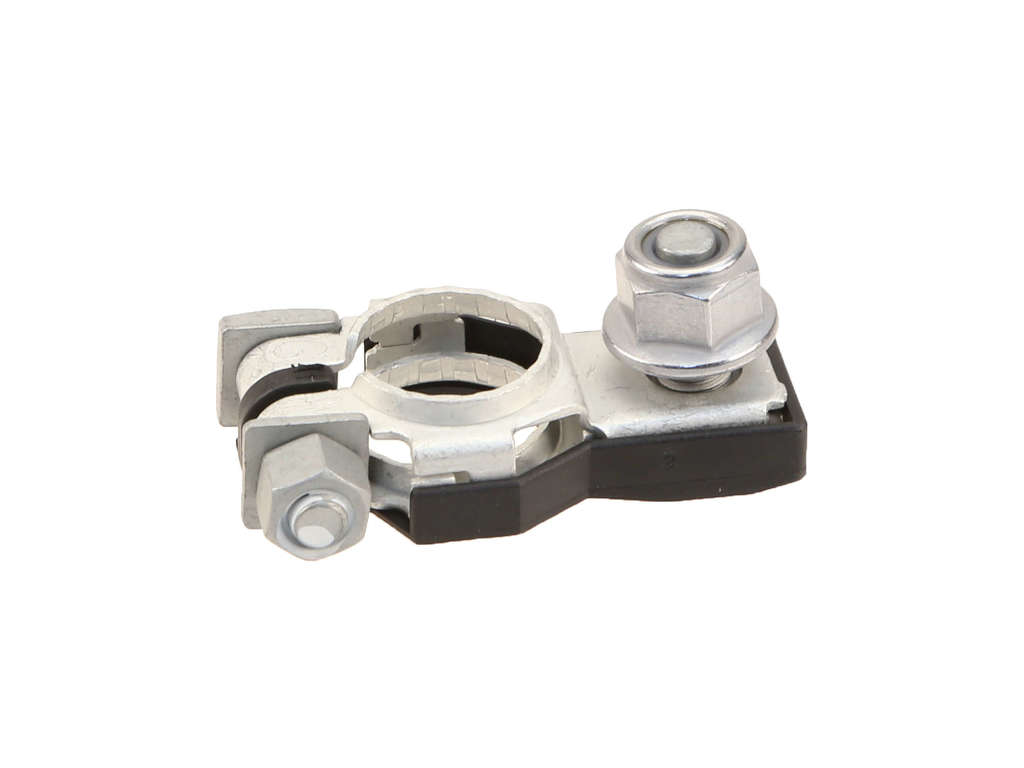
- Don't forget the basics: ensure the battery is fully charged and the terminals are clean before diving into more complex diagnostics.
- If you don't hear the fuel pump, check the EFI relay and fuses before assuming the pump itself is bad.
What's Unique About the 2003-2009 Toyota 4Runner

The 4th Generation 4Runner, with both the 4.0L V6 and 4.7L V8 engines, is one of the Toyota models where the P1604 code is commonly reported. For this vehicle, the code often points towards a problem in the fuel delivery system. The fuel filter and fuel pump are an integrated assembly located inside the fuel tank, which can make diagnosis and replacement more involved than on vehicles with an external filter. Unlike some other vehicles, the 4th Gen 4Runner does not use a simple, single fuel pump relay. Instead, it uses a Fuel Pump Control ECU/Module that receives power from the main EFI relay, making diagnosis slightly more complex than just swapping a relay. Because P1604 is a general starting failure code, the diagnostic path must be followed logically, starting with the most common failures for this platform, which heavily favor the fuel pump assembly.
Symptoms You May Notice
- Engine cranks but does not start.
- Extended cranking time before the engine finally starts.
- Engine starts and then immediately stalls.
- Check Engine Light is illuminated on the dashboard.
- Security light on the dashboard may be flashing (indicates an immobilizer issue).
- Replacing the starter when the engine cranks normally. If the engine is turning over at a normal speed, the starter is likely not the problem.
- Replacing ignition coils or spark plugs without testing fuel pressure first. While ignition issues can cause a no-start, fuel delivery is a much more frequent cause for this specific code on 4th Gen 4Runners.
Most Likely Causes

- Failing Fuel Pump / Clogged Fuel Filter 🔴 High Probability Over time, the electric fuel pump wears out or the integrated fuel filter/strainer becomes clogged with sediment. This is the most common cause of P1604 on this platform. The filter is part of the in-tank pump assembly and is not serviced separately, so the entire unit is typically replaced.
How to confirm: Listen for the fuel pump priming (a 2-second hum from the rear) when the key is turned to 'ON'. If the pump is silent or sounds strained, it's a clue. The definitive test is to connect a fuel pressure gauge to the fuel rail. Pressure should be within 44-50 PSI. Low or zero pressure confirms a fuel delivery issue.
Typical fix: Replace the entire fuel pump and sender assembly located inside the fuel tank. Given the labor involved, using an OEM (Denso) or high-quality aftermarket part is highly recommended.
Est. part cost: $150-$400 for a full fuel pump assembly (e.g., Denso). - Weak or Dead Battery 🟡 Medium Probability This is a universal issue. An old or weak battery may have enough power to turn the engine over slowly, but not enough voltage (dropping below 9-10V while cranking) for the ECM, injectors, and ignition system to operate correctly, triggering the P1604.
How to confirm: Test the battery voltage with a multimeter. A healthy, fully charged battery should read approximately 12.6 volts with the engine off. A reading below 12.2V indicates a discharged or failing battery. Most auto parts stores can perform a load test for free, which is a more accurate health check.
Typical fix: Recharge or replace the battery. Ensure battery terminals are clean and tight.
Est. part cost: $150-$250 for a new battery. - Faulty EFI or Fuel Pump Relay ⚪ Low Probability The relay that powers the fuel pump (often labeled 'EFI' in Toyota fuse boxes) can fail, preventing the pump from turning on at all. It's a common relay used across many Toyota models.
How to confirm: If you do not hear the fuel pump prime when the key is turned on, the relay is a prime suspect. You can swap the EFI relay with an identical relay from a non-critical system (like the horn) to see if the pump then works.
Typical fix: Replace the faulty relay. The OEM part number is typically 90987-02028.
Est. part cost: $15-$60 for an OEM relay.
Rare But Worth Checking
- Faulty Crankshaft or Camshaft Position Sensor: If the ECM doesn't receive a signal from these sensors, it won't know the engine is turning and will not command spark or fuel injection. This usually sets a specific sensor code (like P0335) alongside P1604.
- Immobilizer System Fault: A problem with the key, transponder, or immobilizer ECU can prevent the engine from starting as a security measure. This will typically be accompanied by a flashing security light on the dash and a 'B' body code, such as B2799 (Engine Immobiliser System Malfunction). Toyota TSB BO018-01 addresses immobilizer issues.
- Corroded Fuel Pump Control Module/Connector: On some models, there is a separate fuel pump control module. Corrosion on its connector or an internal failure can prevent the fuel pump from receiving the correct voltage or signal, leading to a no-start. This has been noted in owner forums as a tricky issue to diagnose.
- Faulty Engine Control Module (ECM): This is a very rare cause. The ECM itself can fail, but all other possibilities should be exhaustively ruled out before condemning the ECM. TSB EG052-05 for the 2005 V6 4Runner involves an ECM re-calibration for cold start issues, which could be related in some fringe cases.
- Internal Engine Damage: In extreme cases, P1604 can be triggered by mechanical failure. NHTSA ODI #11534554 describes a case on a different Toyota model where P1604 was present alongside misfire codes and a damaged spark plug, where a borescope inspection revealed piston damage.
Diagnosis Steps

- Scan for All Codes: Use an OBD-II scanner to read all codes from all modules. The codes stored alongside P1604 are your most important clues.
- Check the Basics: Verify there is fuel in the tank. Check that the battery terminals are clean and tight.
- Observe the Security Light: When you turn the key to 'ON' and attempt to crank, watch the security light on the dashboard. If it is flashing, the immobilizer system is likely the cause.
- Test the Battery: Use a multimeter to ensure the battery has at least 12.4 volts. A load test is recommended to confirm battery health.
- Listen for the Fuel Pump: Turn the ignition key to the 'ON' position (without cranking). You should hear a distinct 2-second hum from the fuel tank area. If there is no sound, suspect the fuel pump relay, fuse, or the pump itself.
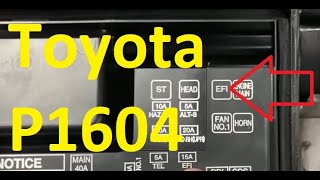
- Check Fuel Pump Relay/Fuses: Locate the EFI and fuel pump relays and fuses in the under-hood fuse box. Inspect them and consider swapping the relay with a known good one (like the horn relay) as a quick test.
- Test Fuel Pressure: This is the most definitive test for the fuel system. Connect a fuel pressure gauge. Expected pressure for the 4th Gen 4Runner is approximately 44-50 PSI. If pressure is low or zero, the fuel pump assembly is the primary suspect.
- Investigate Spark: If fuel pressure is good, check for spark at the spark plugs. A no-spark condition could be due to faulty ignition coils, or a bad crankshaft position sensor.
- Check Sensor Data: If you have an advanced scanner, check the live data for a signal from the crankshaft position sensor (RPMs) while cranking the engine.
Parts You'll Likely Need

- Fuel Pump and Filter Assembly
(OEM #Varies by year/engine. Common numbers include 77020-35062 (2003-04), 77020-35112 (V6 2005+), 77020-35102 (V8 2005+). Always verify with VIN.)— This is the most common fix when P1604 is caused by low fuel pressure. The filter and pump are a single unit inside the tank.
Trusted brands: Denso (OEM Supplier, e.g., part #951-0008), Aisin
OEM price range: $250-$400
Aftermarket price range: $150-$250 - Battery — A weak battery is a simple but common cause of various starting and electrical issues, including P1604.
OEM price range: $180-$250
Aftermarket price range: $150-$220 - EFI Main Relay
(OEM #90987-02028)— A failed relay can prevent the fuel pump from receiving power, causing a no-start condition. It's an inexpensive and easy part to replace for diagnosis.
Trusted brands: Toyota (Genuine)
OEM price range: $40-$80
Aftermarket price range: $15-$30
Related Codes That Often Appear With This One
- P0171/P0174 — System Too Lean. These may be stored from a preceding condition where low fuel pressure was causing a lean air/fuel mixture before the no-start condition occurred.
- B2799 — Engine Immobiliser System Malfunction. If this code is present with P1604, the issue is related to the vehicle's security system, not the fuel or ignition system. Check for a flashing security light.
- P0335/P0340 — Crankshaft/Camshaft Position Sensor Circuit Malfunction. If one of these is present, it is the primary fault that needs to be diagnosed and will cause the P1604.
- P0741/P2757 — Torque Converter/Transmission codes. While rare, NHTSA ODI #11723306 notes a case on a Toyota vehicle where P1604 was retrieved alongside several transmission-related codes including P0741 and P2757.
Technical Service Bulletins (TSBs) & Recalls
- TSB EG052-05: For 2005 4Runner V6, addresses a cold start 'hunting' idle with an ECM calibration update. While not a direct P1604 fix, it relates to startability issues.
- TSB BO018-01: Addresses engine immobilizer system issues, which can be a root cause for a no-start condition that logs P1604 along with code B2799.
- TSB Bulletin #T-SB-0166-19_Rev: While written for the Tundra, this Toyota bulletin notes that P1604 can appear with lean codes (P0171/P0174) and that Techstream analysis may reveal elevated alcohol density estimates affecting startability.
Platform-Specific Known Issues
- Owner Experience: The Fuel Pump is the Usual Suspect: A common story on forums like T4R.org involves a 4th Gen 4Runner owner who experiences a sudden 'crank, no start' situation. After getting code P1604, they might first suspect the battery or relays. However, after confirming the battery is healthy and swapping the EFI relay yields no results, a fuel pressure test reveals near-zero pressure. The fix, in the vast majority of these documented cases, is the replacement of the in-tank fuel pump assembly. Many owners specifically recommend using the OEM Denso unit to avoid premature failure of cheaper aftermarket brands.
Mechanic-Grade Diagnostic Values
- Fuel Injector Resistance (1GR-FE & 2UZ-FE) — expected: Approximately 13.4 Ohms. Failure: A reading of infinity (open circuit) or near zero (short circuit) indicates a failed injector coil.
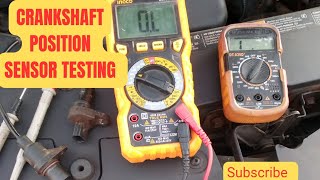
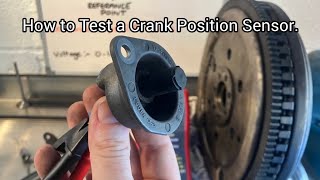
- Crankshaft Position Sensor Resistance (Inductive Type) — expected: Typically between 200 - 2,500 Ohms, with many Toyota sensors falling in the 1,200 Ohm range.. Failure: A reading outside the specified range, or no change in AC voltage when the engine is cranked, points to a faulty sensor.
- Crankshaft Position Sensor AC Voltage (while cranking) — expected: Should generate a small AC voltage, typically 0.1V to 0.2V (100-200 millivolts), that fluctuates as the engine turns.. Failure: No AC voltage produced while cranking indicates the sensor is not generating a signal.
- Battery Voltage (Key Off) — expected: ~12.6V. Failure: Below 12.2V indicates a discharged or failing battery.
- Charging System Voltage (Engine Running) — expected: 13.7V - 14.7V. Failure: Voltage below 13.7V may indicate a failing alternator, which can lead to an undercharged battery and starting issues.
Hidden / Shadow Codes Worth Checking
- P1604 with Info Code: When viewed with a professional scanner like Toyota Techstream, P1604 may be accompanied by a 3-digit 'information code' or 'detail code'. This sub-code provides a snapshot of the engine's state when the startability fault occurred, such as engine RPM, coolant temperature, and cranking duration. This data is invaluable for determining if the failure was due to a long crank, immediate stall, etc., but does not pinpoint a specific failed part. (see via Toyota Techstream software or equivalent high-level diagnostic scan tool.)
Scan Tool Commands That Help
- Toyota Techstream: Active Test: 'Control the Fuel Pump / Speed' — This is a critical diagnostic step. If you suspect a fuel delivery issue (no pump prime sound), this command directly tells the Fuel Pump Control ECU to turn on the fuel pump. If the pump runs with this command, the pump itself is likely good, and the problem lies in the trigger circuit (ECM, wiring, or relays). If it does not run, it points to the pump, its wiring, or the Fuel Pump Control ECU.
- Toyota Techstream: Utility: 'Immobilizer/Smart Key Reset' — If codes like B2799 are present alongside P1604, and you have replaced a component of the immobilizer system (like the ECM), this function is required to 'handshake' the new module with the vehicle's existing keys and immobilizer ECU. A standard mechanic cannot always perform this without the right tool.
Wiring & Ground Locations
- EA, EB — Located on the front inner fenders in the engine compartment.. These are primary chassis ground points for the engine bay. Corrosion or looseness here can cause intermittent electrical issues for multiple systems, including the ECM and ignition components.
- EC, ED — Located directly on the cylinder heads (EC on the right, ED on the left for the V6/V8).. These are the main ground points for the engine itself. A poor connection here can directly affect the signals from critical sensors like the crankshaft and camshaft position sensors, which rely on a clean ground reference to the ECM.
- Fuel Pump Control ECU — While not a ground, its location is critical. On the 4th Gen 4Runner, it is typically located inside the vehicle, often under the rear seat or trim panels near the fuel tank area, rather than exposed under the vehicle.. Since this module controls the fuel pump instead of a simple relay, knowing its location is key for testing power/ground inputs from the EFI relay and outputs to the fuel pump.
- Battery to Engine Block Ground — A large gauge wire running from the negative battery terminal to a bolt on the engine block, often near the alternator or starter.. This is the most important ground for the starting system. If this cable is corroded or loose, the starter will not receive enough current to crank the engine effectively, which can cause a slow-crank condition that may trigger a P1604.
Real Owner Repair Stories
- ClubLexus / Toyota Forums (Various Toyota/Lexus models, including 2012 ES350) — P1604 and B2799 codes stored, but the car starts and runs fine.
❌ Tried (didn't work) Clearing the codes, but they would sometimes return.
✅ What actually fixed it The codes were determined to be historical faults stored after a previous incident of trying to start the car with a weak or dead 12V battery, or a key fob with a dead battery. After replacing the battery and ensuring the key fob was good, clearing the codes resolved the issue permanently. This highlights that P1604 can sometimes be a 'ghost code' from a past event. - YouTube / various forums (Toyota Innova (similar immobilizer system)) — Crank no start, security light continuously blinking, P1604 and B2799 stored.
❌ Tried (didn't work) Checking the transponder key, which tested good.
✅ What actually fixed it The fault was a defective transponder key amplifier (also known as the immobilizer antenna coil) located around the ignition cylinder. When the key is inserted, this coil energizes the chip in the key. A failure of this coil prevents the key from being read, triggering the immobilizer and causing the P1604 as a secondary code. Replacing the amplifier coil resolved the no-start condition. - NHTSA ODI #11592352 — An owner reported that their vehicle stalled in a drive-thru and a mechanic retrieved code P1604. The owner noted that the code was too generic for the mechanic to pinpoint the exact problem immediately.
- NHTSA ODI #11023574 — A service advisor reported pulling codes P1604 (Startability Malfunction), P2610 (ECM/PCM Internal Engine Off Timer Performance), and B1507 for an intermittent issue.
OEM Part Supersession History
90987-02028 (EFI Relay)→90080-87026— Standard component update and consolidation across Toyota's lineup.
Heads up: While functionally similar, some users report slight physical differences. It is always best to use the part number specified for the vehicle's VIN, but 90080-87026 is generally considered the modern replacement for 90987-02028.
Model Year Variations Within This Range
- 2003-2004: V6 (1GR-FE) models were equipped with a 4-speed automatic transmission. The engine itself has some differences from later models, including different sensors and wiring, making direct engine swaps with 2005+ models complex.
- 2005-2009: For 2005, the V6 (1GR-FE) was paired with a new 5-speed automatic transmission. The V8 (2UZ-FE) gained VVT-i, which increased its horsepower significantly from 235 to 270 (later re-rated to 260). These changes mean that some engine and transmission control components are not interchangeable with earlier 2003-2004 models.
Diagnostic Flowchart
Used vs. New Parts: Buying Guide for This Vehicle
When a used part is the smart pick: Used parts are a viable option for relays (EFI, horn) and potentially the Fuel Pump Control ECU, as these are typically robust electronic modules. Buying a used ECM is possible but requires professional reprogramming (key/immobilizer handshake) which can be costly and complex.
Donor-vehicle mileage cap: roughly under 150000 miles for the part to have meaningful remaining life.
What to inspect on the donor part:
- For relays, look for clean, non-corroded terminals.
- For electronic modules (ECM, Fuel Pump ECU), ensure the donor vehicle was not flood-damaged and that the part's connectors are free of corrosion or bent pins.
- When buying a used fuel pump assembly, try to get one from a lower-mileage vehicle, but acknowledge it's a high-wear item with no guaranteed lifespan.
OEM-only on this vehicle (don't cheap out):
- Fuel Pump Assembly: Due to the significant labor involved in dropping the fuel tank, using a new OEM (Denso) or top-tier OEM supplier (Aisin) pump is strongly recommended to avoid repeat failures.
- Crankshaft/Camshaft Sensors: These are critical for engine operation. Aftermarket sensors have a notoriously high failure rate on Toyota platforms; stick with genuine Toyota or Denso parts.
Aftermarket brands forum-validated for this vehicle:
- Denso (OEM supplier for fuel pumps, sensors, and relays)
- Aisin (OEM supplier for many Toyota components, including fuel pumps)
Brands owners have reported issues with on this vehicle:
- Unbranded, 'white box' fuel pumps and electronic sensors from online marketplaces. Forum consensus is that the failure rate is unacceptably high, making the initial cost savings a poor long-term value.
Real Owner Stories
Aggregated from forums and TSBs cited above. Mileages and costs reflect what owners reported in those sources.
Toyota 4Runner (gen not specified)
Symptoms: After installing an aftermarket remote start, the engine would start and then immediately shut down after 1 second, logging a P1604 code.
What fixed it: After removing the remote start unit failed to solve the problem, disconnecting the battery for about ten minutes and then reconnecting it resolved the issue, allowing the vehicle to start and run normally.
Source hint: 4runner-forum.com - Issues after installing remote start unit
2003 Toyota 4Runner V8
Symptoms: Vehicle would crank but not start, and it displayed the P1604 code.
What fixed it: After confirming there was no fuel pressure, the owner replaced the Denso fuel pump assembly, which resolved the issue.
Source hint: T4R.org - 'Crank but no start, P1604 code'
4th Gen Toyota 4Runner
Symptoms: A sudden 'crank, no start' situation occurred, triggering code P1604.
What fixed it: After ruling out the battery and relays, a fuel pressure test showed near-zero pressure. The fix was the replacement of the in-tank fuel pump assembly.
Source hint: Owner Experience from T4R.org (The Fuel Pump is the Usual Suspect)
Related OBD-II Codes
Frequently Asked Questions
What is the most common reason for a P1604 code on a 4th Gen 4Runner?
I don't hear the 2-second hum from the fuel tank when I turn the key. What should I check first?
My security light is flashing and the engine won't start, showing a P1604. What does this indicate?
What brand of fuel pump is recommended for a 2003-2009 4Runner?
Can a weak battery cause a P1604 code even if the engine still cranks?
Does TSB EG052-05 fix the P1604 code?
Helpful Videos
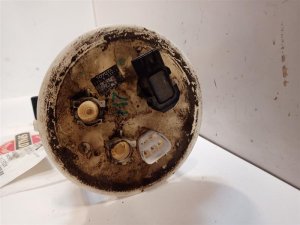
Used OEM Parts in Stock
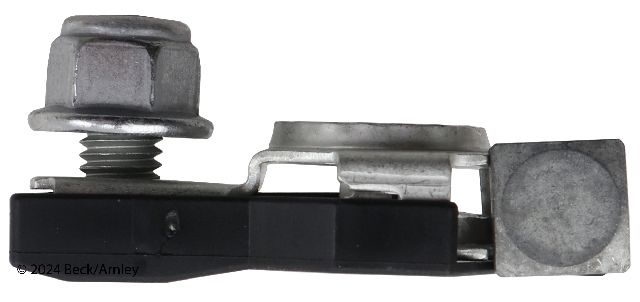
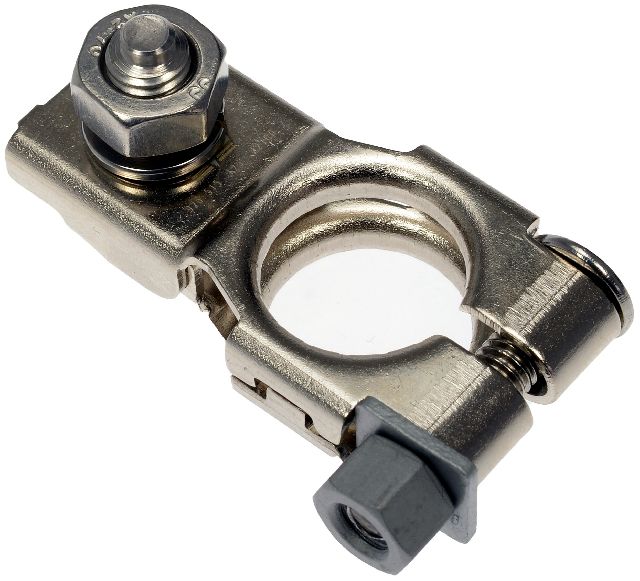
New Aftermarket Parts Available


The information in this article is provided for general reference and educational purposes only. Vehicle specifications, procedures, and part compatibility can vary by production date, trim level, and region. Always consult your vehicle's factory service manual and verify part numbers before purchasing or performing repairs. Safety-critical components such as airbags, seat belts, and braking systems should be installed by a qualified professional.
- Toyota 4Runner:
- 🎬 Helpful Videos
- 🛍️ Shop This Part
- What's Unique About the 2003-2009 Toyota 4Runner
- Symptoms You May Notice
- Most Likely Causes
- Rare But Worth Checking
- Diagnosis Steps
- Parts You'll Likely Need
- Related Codes That Often Appear With This One
- Technical Service Bulletins (TSBs) & Recalls
- Platform-Specific Known Issues
- Mechanic-Grade Diagnostic Values
- Hidden / Shadow Codes Worth Checking
- Scan Tool Commands That Help
- Wiring & Ground Locations
- Real Owner Repair Stories
- OEM Part Supersession History
- Model Year Variations Within This Range
- Diagnostic Flowchart
- Used vs. New Parts: Buying Guide for This Vehicle
- Real Owner Stories
- Toyota 4Runner (gen not specified)
- 2003 Toyota 4Runner V8
- 4th Gen Toyota 4Runner
- Related OBD-II Codes
- Frequently Asked Questions
- 🎟️ Get 5% Off