

OBD-II Code B2799: Engine Immobilizer System Malfunction
What B2799 means, why it triggers, and how to fix it. Note: This guide addresses code B2799, as B2899 is a scanner translation error for this specific Toyota-family fault.
- Code B2799 disables your engine's fuel and spark, leaving you stranded with a crank-no-start condition.
- Test your spare key immediately; a damaged transponder chip inside your primary key causes over 50% of these faults.
- Scan the Immobilizer ECU for specific sub-codes like B2796 or B279A before replacing any hardware.
- Never replace the Engine Control Module (ECM) first; it is the most expensive ($800+) and least likely cause of this code.
What Does B2799 Mean?

B2799 indicates the Engine Control Module (ECM) is not receiving the correct security 'handshake' from the immobilizer system. The immobilizer uses a transponder chip in your key to verify authorization. Without this recognized signal, the vehicle assumes a theft attempt and prevents the engine from running.
Technical definition: The SAE/OBD-II definition for B2799 on Toyota, Lexus, and Scion vehicles is "Engine Immobilizer System Malfunction." It triggers when the ECM detects a communication error, a complete signal loss, or a mismatched security ID from the Transponder Key ECU during startup. Always diagnose codes stored in the Transponder Key ECU first.
Can I Drive With B2799?
No — Do Not Drive. The vehicle cranks but will not start, or starts and immediately stalls. The anti-theft system cuts fuel and spark, disabling the engine. Excessive cranking drains the battery and strands you.
Common Causes

- Defective or Damaged Transponder Key (Very Common) — The fragile chip inside the plastic head of your car key fails due to drops, moisture, or a cracked housing. This is the most frequent cause of B2799.
- Weak or Dead 12V Battery (Common) — The immobilizer 'handshake' requires stable voltage. A weak battery causes a voltage drop during startup that disrupts module communication, triggering a false B2799 code.
- Faulty Transponder Key Amplifier (Ignition Coil) (Common) — The antenna ring around the ignition cylinder powers and reads the key's chip. If this antenna fails, it cannot read the key's code to authorize the start.
- Corroded Immobilizer Wiring (Common) — Water leaks from clogged sunroof drains or A/C lines corrode junction connectors under the dash or in the kick panels, shorting the communication lines.
- Failed Immobilizer ECU (Transponder Key ECU) (Less Common) — The dedicated computer module for the immobilizer system fails due to internal electronic degradation or direct water intrusion.
- Radio Frequency (RF) Interference (Uncommon) — Strong radio signals from aftermarket remote starters, dash cams, or stacking multiple transponder keys on one keychain block the key-reading process.
- Failed or Un-programmed Engine Control Module (ECM) (Rare) — If a replacement ECM is not re-registered to the immobilizer, it lacks the security ID and triggers B2799. A physical failure of the ECM is the least likely cause and is frequently misdiagnosed.
Symptoms
- Engine Cranks But Will Not Start — You turn the key, the engine turns over normally, but it never fires up because fuel and spark are disabled.
- Flashing Security Light During Crank — The dashboard anti-theft light blinks while cranking, indicating the immobilizer is actively blocking the start. It should remain solid and then turn off when a valid key is inserted.
- Engine Starts and Immediately Stalls — The engine fires for one to two seconds and immediately shuts off as the immobilizer cuts the fuel injector pulse.
- Intermittent Starting Issues — The car fails to start once, then works perfectly for days. This points directly to a loose wiring connection, moisture issue, or RF interference.
Diagnostic Flowchart

Tap your situation to follow the diagnostic path that matches what you're seeing on this code.
Common Fixes & Costs
- Replace and Program Transponder Key — Parts: $50-$150, Labor: $100-$250, ~0.5 hr book time (Professional)
- Replace Transponder Key Amplifier
— Parts: $50-$150, Labor: $100-$200, ~1 hr book time
(Intermediate)
Toyota Camry (2007-2011), Toyota Tundra (2007-2012): OEM - Repair Damaged Wiring — Parts: $5-$20, Labor: $150-$400, ~2.5 hr book time (Intermediate)
- Replace Immobilizer ECU
— Parts: $150-$400, Labor: $200-$600, ~2 hr book time
(Professional)
Toyota Camry (2007-2011): OEM - Replace Engine Control Module (ECM)
— Parts: $500-$1500, Labor: $200-$400, ~1.5 hr book time
(Professional)
Lexus ES 350 (2008-2009): OEM
Used vs. New Parts: Buying Guide
When a used part is worth it: Used parts are cost-effective for the Transponder Amplifier coil. Avoid used Immobilizer ECUs unless you have guaranteed access to professional virginizing and programming services.
Donor-vehicle mileage cap: roughly under 100000 miles for the part to have meaningful remaining life.
Donor quality checklist:
- Match the part number exactly; a single digit difference guarantees incompatibility.
- Ensure the donor vehicle was not scrapped due to flood damage.
- Buy from a seller offering a minimum 30-day warranty.
Decision logic:
- If The part is the Transponder Amplifier (coil) → Buy used. It is a plug-and-play component that does not require programming.
- If The part is the Immobilizer ECU or main ECM → Buy new or remanufactured. Used modules require complex reprogramming that many independent shops cannot perform.
- If The vehicle is less than 10 years old → Buy new OEM parts. The reliability outweighs the savings from a used electronic module.
Warranty tradeoff: Used parts carry a 30-day warranty covering only the part. New aftermarket parts offer 1-year warranties. OEM parts offer 1-year warranties with guaranteed compatibility.
Worst-case if a used part fails: $300-$800 if a used electronic module cannot be programmed, requiring repeat labor for removal and installation.
What Happens If You Wait — Timeline
- First Occurrence: Car fails to start once, but starts on a subsequent try. B2799 is stored in history. (MPG impact: 0%% · Added cost: $0)
- 1 week - 2 months: The no-start becomes frequent, creating a high risk of being stranded. (MPG impact: 0%% · Added cost: $100-$300 (Emergency towing fees).)
- 2+ months: The fault becomes permanent. The engine cranks but never starts. The vehicle is disabled. (MPG impact: 0%% · Added cost: $200-$500 (Towing and shop diagnostic fees).)
- Contingent on user behavior: Excessive cranking attempts completely drain and destroy the 12V battery. (MPG impact: 0%% · Added cost: $150-$350 (Cost of a replacement battery).)
Cost of Not Fixing It
- Immediate: Vehicle is stranded and will not start, requiring a tow to a repair shop or locksmith. (Added cost: $100-$300)
- 1-7 Days (Intermittent Issue): The intermittent no-start becomes permanent at an inconvenient location, increasing emergency towing fees. (Added cost: $200-$500)
- 1+ Month: Repeated failed attempts to start the car completely drain and permanently damage the 12V battery. (Added cost: $150-$350)
Diagnosis Steps

- Try Your Spare Key
If your spare key starts the car, your primary key has a failed transponder chip. Remove all other keys from the ring to eliminate RF interference.
Tools: Spare car key (Beginner) - Test the 12V Battery
Measure the battery voltage. A healthy battery reads 12.6 volts with the engine off. Anything below 12.0 volts causes communication errors between the ECM and immobilizer.
Tools: Multimeter (Beginner) - Scan for Immobilizer Sub-Codes
Use an advanced scanner to check the Transponder Key ECU. Codes like B279A (Communication Error) or B2796 (No Communication with Key) pinpoint the exact failure location. Fixing these clears the B2799.
Tools: Advanced OBD-II Scanner (Intermediate) - Test the Transponder Key Amplifier (Coil)
Place a transponder coil tester loop over the ignition cylinder and turn the key to 'ON'. The LED flashes if the amplifier is sending a signal. Alternatively, disconnect the coil and measure resistance across its terminals; a healthy coil reads 18-24 ohms.
Tools: Transponder Coil Tester or Multimeter (Intermediate) - Inspect Immobilizer Wiring for Water Damage
Visually inspect the wiring harnesses behind the glove box and in the driver/passenger footwells. Look for green corrosion or damp carpets caused by clogged sunroof drains.
Tools: Flashlight, trim removal tools (Intermediate) - Test Communication Wires
Disconnect the ECM and Transponder Key ECU. Measure the resistance of the communication lines (IMI and IMO) between the connectors. Resistance must be less than 1 ohm. Resistance to a chassis ground must be 10 kΩ or higher.
Tools: Multimeter, vehicle-specific wiring diagram (Advanced) - Attempt ECU Communication ID Re-registration
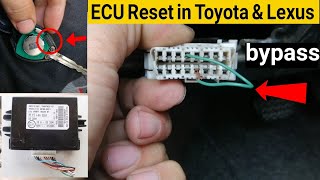
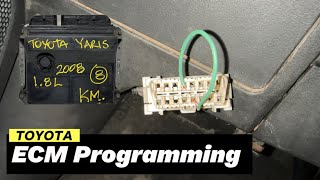
Force the ECM and Transponder Key ECU to re-establish their handshake by shorting pins 4 (CG) and 13 (TC) in the OBD-II connector for exactly 35 minutes. This is mandatory after replacing either module.
Tools: Jumper wire or Advanced scan tool (Advanced) - Verify Fuel Cut Status
Monitor the 'Fuel Cut' or 'Immobiliser' PID in the ECM's live data. An 'Active' status confirms the ECM is intentionally preventing fuel delivery due to a security fault, ruling out a mechanical fuel pump failure.
Tools: Advanced OBD-II Scanner (Advanced) - Check for Oscilloscope Signal
Back-probe the IMI communication line between the Immobilizer ECU and the ECM. Turn the key to 'ON' and look for a one-second square wave data signal. No signal means a failed Immobilizer ECU or antenna.
Tools: Oscilloscope, wiring diagram (Advanced)
When This Code Triggers (Freeze-Frame Conditions)
- Vehicle Speed: 0 mph (The fault logs during a start attempt, never while driving.)
- Engine RPM: 200-350 RPM (The engine is cranking but fails to start.)
- Engine Coolant Temp: Varies (e.g., 40-210°F) (The fault occurs on both cold starts and hot restarts.)
- Immobilizer Status: FAIL / ACTIVE (A manufacturer-specific PID shows the immobilizer system actively blocking the start.)
- Battery Voltage: 9.5-11.5V (Voltage drops during the crank attempt. Readings below 10V trigger communication faults.)
Related Codes
- B279A — Stored in the Immobilizer ECU, meaning 'Communication Error with ECM'. It confirms the fault is in the key, antenna, or immobilizer module, not the main ECM. Diagnose this first.
- B2796 — Means 'No Communication with Key'. If you have both B2799 and B2796, the problem is definitively a bad key or a failed transponder antenna coil.
- P1604 — A 'Startability Malfunction' code. This is a consequence of B2799, not a cause. Ignore P1604 and diagnose the B2799 security fault.
- B2797 / B2798 — Indicates a communication error between individual immobilizer components. Diagnosing these specific sub-codes leads to a faster repair than chasing the generic B2799.
Climate & Environmental Factors
- High Humidity / Rain / Car Washes: Water from clogged sunroof drains leaks into the cabin footwells. This moisture saturates wiring harnesses, causing corrosion and short circuits on the communication lines between the immobilizer ECU and the ECM.
- Extreme Cold: Cold temperatures reduce battery cranking amperage. A weak battery struggling in the cold causes a momentary voltage drop that disrupts the immobilizer handshake, logging a B2799 code.
How to Talk to a Mechanic About This Code
Say this: "My car has a crank-no-start condition with a flashing security light, and my scanner shows code B2799. I've already tried my spare key and it didn't work. I need a diagnosis of the immobilizer system, starting with checking for specific codes in the transponder key ECU."
This proves you have done basic troubleshooting and directs the technician away from unrelated systems like the starter or fuel pump.
Avoid saying:
- 'My car won't start.'
- 'I think I need a new computer.'
- 'Just fix it.'
Questions to ask before authorizing the repair:
- Did you find specific codes in the transponder key ECU, like B2796 or B279A?
- Have you tested the transponder key amplifier coil and its wiring?
- If you recommend a module replacement, what tests ruled out the key and wiring first?
Where to Take It: Dealer vs Independent vs Chain
- Dealer:
Use for warranty work or as a last resort when independent shops fail.
Best for: Vehicles under warranty, Complex module replacements requiring guaranteed software access
Downsides: Highest cost., Tendency to recommend expensive module replacements over tracing simple wiring faults. (Typical cost: +75% vs. baseline) - Independent Shop:
Good second choice. Verify they have experience with Toyota/Lexus immobilizer diagnostics before booking.
Best for: Diagnosing wiring, antenna, or module faults, Out-of-warranty vehicles
Downsides: Must possess brand-specific diagnostic tools (Toyota Techstream) to program modules. (Typical cost: +0% vs. baseline) - Chain Shop:
AVOID. This specialized electronic repair is outside their scope.
Best for: Tires or oil changes.
Downsides: Lack specialized tools for immobilizer diagnostics., High risk of misdiagnosing the issue as a bad starter or fuel pump. (Typical cost: -10% vs. baseline)
When to Walk Away From the Repair
If the total estimated repair cost for the immobilizer system exceeds 50% of your car's private-party value, consider selling the car as-is.
- Car worth $4500, fix is $250: Fix it. A key replacement is a minor cost relative to the car's value.
- Car worth $5000, fix is $2200: Walk away. A $2200 repair for a failed ECM on a $5000 car is a poor investment.
- Car worth $15000, fix is $900: Fix it. A $900 immobilizer module replacement is well below the threshold.
What Scan Tool You Need for This Code
Minimum: A scanner capable of reading manufacturer-specific 'B' (Body) codes. Basic 'P' (Powertrain) code readers are insufficient.
Cheap scanners only show the generic B2799 code from the ECM. They cannot access the immobilizer module to read crucial sub-codes like B2796 or B279A.
Budget: BlueDriver Pro (~$100) — Reads and clears enhanced 'B' codes, providing access to the immobilizer module's specific fault codes.
Mid-range: Foxwell NT710 (~$250) — Provides deep, all-system access to read and clear immobilizer codes, with bidirectional functions for advanced DIY diagnostics.
Professional: Autel MaxiIM IM508S (~$400-700) — Professional-grade tool that includes advanced immobilizer and key programming functions required to add keys or re-register modules.
Rent vs buy: Buy. Auto parts store rentals are basic readers and will not access the immobilizer module required for this diagnosis.
How to Clear the Code After You Fix It
- Reconnect the battery if disconnected.
- Use an OBD-II scan tool to clear B2799 from both the ECM and Immobilizer modules.
- Perform the ECU-Immobilizer handshake procedure if any modules were replaced.
Drive cycle (~20 minutes): Clearing the code is the primary reset. A drive cycle is only needed to set emissions readiness monitors. Drive 25-40 mph in the city, followed by 50-60 mph on the highway for 10 minutes.
Readiness monitors affected: B2799 is a Body code and does not directly affect emissions monitors., Clearing the code resets all monitors, requiring a full drive cycle for state inspections.
Watch out for:
- Clearing the code without fixing the hardware guarantees it returns on the next start attempt.
- Forgetting the 35-minute ECU-Immobilizer re-registration handshake after replacing a module.
- Assuming a drive cycle fixes the code. Drive cycles verify fixes; they do not resolve communication faults.
Will This Fail Emissions / State Inspection?
Yes — this code typically fails an OBD-II emissions inspection.
- California: A vehicle that does not start cannot be tested. If the code is cleared, all OBD-II readiness monitors reset, resulting in an automatic failure for not being ready.
- New York: An active B2799 code with an illuminated security light causes an automatic failure during the OBD-II scan.
- Texas: Vehicles with an active B2799 fail the OBD scan portion of the inspection. The underlying fault must be repaired to pass.
Most Commonly Affected Vehicles
- Toyota Camry (2007-2011) — TSB T-SB-0127-08 addresses cracked key housings causing this code on 2007 models. The immobilizer system is shared with the Lexus ES 350.
- Toyota Corolla (2009-2013) — Frequently experiences B2799 due to key transponder failure or intermittent communication loss.
- Lexus ES 350 (2007-2012) — Shares the Camry immobilizer system. Repair costs for the anti-theft module frequently exceed $1,500 at dealerships.
- Lexus RX 350 (2010-2015) — Intermittent no-start conditions often require immobilizer module replacement, which involves removing the entire dashboard.
- Toyota Highlander (2008-2013) — Wiring and ECU communication problems are common, heavily correlated with water intrusion in the cabin.
- Toyota Tundra (2007-2008) — TSB T-SB-0220-08 addresses B2799 caused by water intrusion into the engine room wire harness connectors.
- Lexus GX 470 (2003-2009) — Intermittent B2799 issues correlate strongly with rainfall, pointing to moisture affecting electronics in the passenger kick panel.
- Subaru BRZ, Crosstrek, Impreza (2012-2020) — Vehicles co-developed with Toyota utilize the same immobilizer architecture. TSB 07-104-16R details key replacement procedures.
Manufacturer-Specific Notes
- Toyota/Lexus/Scion: This code is exclusive to Toyota and its subsidiary brands. Proper diagnosis and module registration require a dealer-level scan tool like Toyota Techstream.
- Toyota/Lexus: Water intrusion in the footwells from clogged sunroof drains is the primary cause of corroded immobilizer wiring, leading to intermittent B2799 faults after rain.
- Honda / Acura: Honda uses an identical system but does not use the B2799 code. A flashing green key symbol on the dash indicates the same immobilizer failure.
- Ford: Ford's PATS system sets codes like P1260 ('Theft Detected, Vehicle Immobilized') for this exact fault. The crank/no-start symptoms are identical.
Real Owner Stories
2008 Toyota Highlander - The Misdiagnosis
Vehicle cranked but would not start with code B2799. A mechanic advised replacing the main ECM.
What they tried:
- Purchased and installed a used ECM from a salvage yard.
- The mechanic failed to program the used ECM to the immobilizer system.
Outcome: The initial advice was incorrect. B2799 points to a communication failure, not a failed ECM. The owner wasted $600 on parts and labor without fixing the issue.
Lesson: Never replace the ECM as a first step. Diagnose the key, wiring, and immobilizer module first.
2004 Lexus GX470 - The Unusual Root Cause
Car cranked but would not start only after heavy rain. The issue resolved on hot, dry days.
What they tried:
- Confirmed all keys were recognized.
- Cleaned body ground connections.
- Forced a re-sync between the ECM and immobilizer, which worked temporarily.
Outcome: Water intrusion from a clogged sunroof drain flooded the passenger footwell junction boxes. Drying the connectors and clearing the drain permanently fixed the car.
Lesson: If B2799 correlates with weather, immediately inspect the front footwells for damp carpets and clear all sunroof drains.
2008 Toyota Camry - The Easy Fix
Car intermittently failed to start at a gas station, logging code B2799.
What they tried:
- Suspected a failing immobilizer module.
- Switched to using the spare key.
Outcome: Using the spare key permanently resolved the issue. The transponder chip in the primary key had degraded.
Lesson: Always try your spare key first. It saves hundreds of dollars in unnecessary diagnostic fees.
How to Prevent This Code From Triggering
- Protect your transponder key (Daily habit) — Dropping the key or exposing it to moisture damages the fragile transponder chip, the leading cause of B2799.
- Clean sunroof and cowl drains (Annually) — Prevents water from overflowing into the cabin footwells and corroding the immobilizer wiring harnesses.
- Maintain a healthy 12V battery (Every oil change) — Prevents voltage drops during startup that disrupt module communication and trigger false codes.
- Avoid stacking transponder keys (Every time you drive) — Prevents radio frequency interference that blocks the antenna from reading the correct key.
Frequently Asked Questions
Why did my car start with the B2799 code before, but not now?
This indicates a degrading component, such as a failing key chip or corroding wire. The connection was temporarily sufficient but has now failed completely.
Can I bypass the immobilizer?
Yes, via an ECM reflash ('immo off' service), but it permanently compromises vehicle security. It also causes secondary electronic issues and is illegal in some jurisdictions.
Do I have to go to the dealer for a new key?
No. Certified automotive locksmiths cut and program transponder keys on-site. This avoids towing fees and costs significantly less than dealership pricing.
I replaced the ECM and the code is still there. What now?
B2799 is rarely caused by a bad ECM. Furthermore, any replacement ECM must be professionally programmed to the car's immobilizer system before it functions. Return to the installer to perform the ECU re-registration handshake.
What is the difference between B2799 and B2899?
B2799 is the standard Toyota/Lexus code for an immobilizer communication failure. B2899 is not a recognized immobilizer code. If your scanner shows B2899 for a Toyota no-start, it is a tool-specific translation error for B2799.
My scanner shows codes B2799 and P1604 in 'history'. Should I worry?
If the car starts normally, these history codes indicate a past voltage drop, usually from a weak battery. Clear the codes and monitor the system. No further action is required unless they return.
Can washing my car cause a B2799 code?
Yes. Clogged sunroof or cowl drains force water into the cabin footwells. This moisture corrodes the immobilizer wiring harnesses, triggering the code.
Key Takeaways
- Code B2799 disables your engine's fuel and spark, leaving you stranded with a crank-no-start condition.
- Test your spare key immediately; a damaged transponder chip inside your primary key causes over 50% of these faults.
- Scan the Immobilizer ECU for specific sub-codes like B2796 or B279A before replacing any hardware.
- Never replace the Engine Control Module (ECM) first; it is the most expensive ($800+) and least likely cause of this code.
Helpful Videos

The information in this article is provided for general reference and educational purposes only. Vehicle specifications, procedures, and part compatibility can vary by production date, trim level, and region. Always consult your vehicle's factory service manual and verify part numbers before purchasing or performing repairs. Safety-critical components such as airbags, seat belts, and braking systems should be installed by a qualified professional.
- 🎬 Helpful Videos
- What Does B2799 Mean?
- Can I Drive With B2799?
- Common Causes
- Symptoms
- Diagnostic Flowchart
- Common Fixes & Costs
- Used vs. New Parts: Buying Guide
- What Happens If You Wait — Timeline
- Cost of Not Fixing It
- Diagnosis Steps
- When This Code Triggers (Freeze-Frame Conditions)
- Related Codes
- Climate & Environmental Factors
- How to Talk to a Mechanic About This Code
- Where to Take It: Dealer vs Independent vs Chain
- When to Walk Away From the Repair
- What Scan Tool You Need for This Code
- How to Clear the Code After You Fix It
- Will This Fail Emissions / State Inspection?
- Most Commonly Affected Vehicles
- Manufacturer-Specific Notes
- Real Owner Stories
- 2008 Toyota Highlander - The Misdiagnosis
- 2004 Lexus GX470 - The Unusual Root Cause
- 2008 Toyota Camry - The Easy Fix
- How to Prevent This Code From Triggering
- Frequently Asked Questions
- Why did my car start with the B2799 code before, but not now?
- Can I bypass the immobilizer?
- Do I have to go to the dealer for a new key?
- I replaced the ECM and the code is still there. What now?
- What is the difference between B2799 and B2899?
- My scanner shows codes B2799 and P1604 in 'history'. Should I worry?
- Can washing my car cause a B2799 code?
- Key Takeaways
- 🎟️ Get 5% Off