

P1604 on 2007-2012 Lexus ES350: Startability Malfunction Causes and Fixes
On a 2007-2012 Lexus ES350, code P1604 most often points to a weak or failing 12-volt battery. Before replacing any other parts, have your battery load-tested. This is often a 'history' code from a past low-voltage event (like a failed start attempt) and may not indicate a current, active problem.
- P1604 means the car had trouble starting, it's not a specific part failure.
- The number one cause on the ES350 is a weak 12V battery; always test this first.
- The code is often found in 'history' without any current symptoms. If so, clear it and see if it returns.
- If the code appears with B2799 (Immobilizer), it strongly points to a low voltage event as the cause.
- If the battery is good, investigate the fuel system (pump, relay) next.
What's Unique About the 2007-2012 Lexus ES350

For the ES350 and other Lexus/Toyota models of this era, the P1604 code is notoriously sensitive to battery voltage. A single attempt to start the car with a weak battery can be enough to log this code in the ECM's memory as a "history" item, even if the car starts normally afterward. Owners frequently discover this code with no active symptoms, often alongside an immobilizer code (B2799), which also points towards a power interruption or low voltage event that caused a communication handshake failure between the key and the car.
Symptoms You May Notice
- Engine cranks for a long time before starting
- Engine starts and then immediately stalls, but may start normally on the second attempt.
- No-start condition (engine cranks but does not fire)
- Check Engine Light may be illuminated
- In many cases, there are no active symptoms and the code is found in 'history' with no Check Engine Light on.
- Replacing the starter motor. P1604 indicates the engine *is* cranking but not starting properly. If the engine cranks, the starter is likely working.
- Replacing the ECM. This is an expensive and rarely necessary fix. It should be the absolute last resort after all wiring, grounds, and inputs are verified.
- Immediately replacing the fuel pump without diagnosis. While a possible cause, it's crucial to confirm the battery is good first, as it is a much more common and cheaper fix.
Most Likely Causes

- Weak or Failing 12V Battery 🔴 High Probability The vehicle's electronics are sensitive to low voltage, and a battery that can't provide sufficient cranking amperage is the most common trigger for a startability code. Cold weather often exposes a weak battery, leading to a spike in this code during winter months.
How to confirm: Use a multimeter to check the battery voltage; it should be ~12.6V with the car off. When running, it should be ~13.7-14.7V. For a definitive test, take the battery to an auto parts store for a free load test, which measures its health under load.
Typical fix: Replace the 12V battery.
Est. part cost: $150-$300 - Fuel Delivery Issue 🟡 Medium Probability While not a specific weakness, a failing fuel pump or clogged filter can cause the long-crank or stall condition that sets this code. The fuel pump relay can also fail, preventing power from reaching the pump.
How to confirm: Listen for the fuel pump to prime (a faint 2-second hum from the rear seat area) when the ignition is turned to 'ON'. A more advanced diagnosis involves checking fuel pressure with a gauge. You can also check the fuel pump relay in the fuse box.
Typical fix: Replace the failing fuel pump assembly or fuel pump relay.
Est. part cost: $200-$500 for a fuel pump assembly - Faulty Immobilizer or Key ⚪ Low Probability A weak battery in the key fob or a communication error between the key and the car's immobilizer system can prevent the engine from starting, triggering P1604, almost always accompanied by B2799. This is often a secondary effect of a weak main 12V car battery.
How to confirm: Check for an accompanying code, typically B2799 (Engine Immobilizer System). Try using a spare key or replacing the battery in the key fob. If the security light on the dash is blinking when you try to start, it's an immobilizer issue.
Typical fix: Replace the key fob battery. If the issue persists, clear codes and see if they return. If they do, professional diagnosis of the immobilizer system may be needed.
Est. part cost: $5-$15 for a key fob battery - Worn Spark Plugs ⚪ Low Probability Overdue spark plugs can lead to a weak spark, making the engine harder to start, especially when cold. This is more likely on higher-mileage vehicles past the 120,000-mile service interval.
How to confirm: Inspect the spark plugs for wear, fouling, or an incorrect gap. If they are past their service interval, they are suspect. A user on ClubLexus noted a start-then-stall issue was resolved after a spark plug change.
Typical fix: Replace all six spark plugs.
Est. part cost: $60-$120 for a set of 6 iridium plugs
Rare But Worth Checking
- Faulty Crankshaft Position Sensor: A failing crankshaft position sensor can prevent the ECM from detecting that the engine is rotating, leading to a no-start or stall condition. This will usually be accompanied by a specific sensor fault code, but can sometimes contribute to P1604. In a related Lexus case (NHTSA ODI #11620473), a technician found P1604 alongside P0335 and P1603, eventually discovering the motor could not be turned by hand.
- Faulty Engine Control Module (ECM): This is extremely rare and should only be considered after all other possibilities, including wiring and other system failures, have been exhaustively ruled out.
- Clogged Fuel Injectors: If the car runs rough and you smell fuel, leaking or clogged injectors could cause a hard start, but this usually comes with other codes like misfires or fuel trim issues. One owner reported smelling gas on a failed start attempt, pointing towards a fuel delivery or ignition timing issue.
Diagnosis Steps
- Check for other stored trouble codes. P1604 is a general code, and other codes (like B2799 or fuel system codes) will point you to the specific system that is failing.
- If no other codes are present, check if P1604 is 'current' or 'history'. If it's in history and the car starts fine, clear the code and see if it returns. It may have been a one-time event.
- Test the 12V battery. Use a multimeter to check for ~12.6V static charge and ~13.7-14.7V when the engine is running. Get a professional load test to confirm battery health under cranking load.
- Inspect battery terminals and main body ground connections for corrosion or looseness. A poor ground can mimic a weak battery.
- If the battery is good, check the basics: Is there fuel in the tank? Is the key fob battery good? Try the spare key.
- If starting issues persist, proceed to diagnose the fuel system. Listen for the fuel pump priming. Check the EFI fuses and fuel pump relay in the engine compartment fuse box.
- If fuel delivery seems okay, inspect the ignition system, starting with the spark plugs if they are near or past their 120,000-mile service interval.
- Consider testing the crankshaft position sensor if a no-start condition persists with no other clear cause.
Parts You'll Likely Need

- 12V Automotive Battery — This is the most frequent cause of P1604 on this vehicle, often due to a simple low voltage condition during cranking.
Trusted brands: Interstate, DieHard, Duralast, ACDelco
OEM price range: $200-$300
Aftermarket price range: $150-$250 - Fuel Pump Assembly
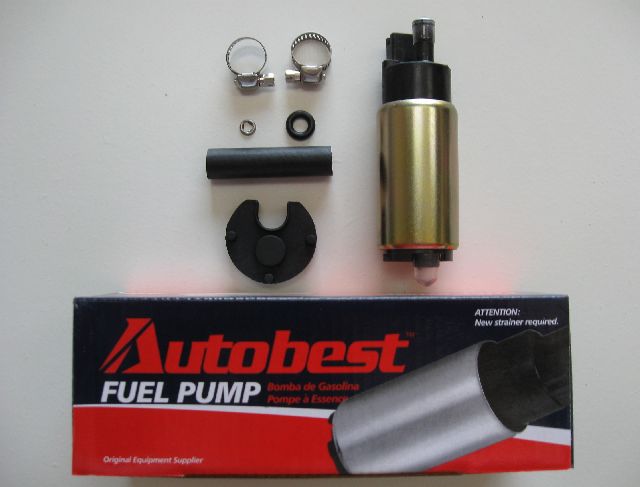
(OEM #77020-33363 (replaces 77020-33360))— If the battery is confirmed good, a weak or failing fuel pump is the next most likely component to cause a startability malfunction.
Trusted brands: Denso (OEM supplier), Aisin
OEM price range: $400-$600
Aftermarket price range: $200-$400 (Denso aftermarket part numbers include 951-0001, 950-0132)
Related Codes That Often Appear With This One

- B2799 — This code means 'Engine Immobilizer System Malfunction.' It is frequently stored alongside P1604 when a low battery voltage event causes a communication error between the key, immobilizer, and ECM. Finding both codes together strongly suggests the root cause was a temporary power loss.
- P1605 — This code for 'Rough Idling' can appear with P1604 if the engine manages to start but runs poorly immediately after, which can be caused by the same underlying issues like fuel delivery or spark problems.
Platform-Specific Known Issues
- History Code from Single Event: Many owners report scanning their ES350 for other reasons and finding a P1604 in the history logs with no current symptoms. This is very common and usually relates to a past event where the battery was weak or disconnected. If the car starts fine, the standard advice is to clear the code and monitor.
- Start, Stall, then Normal Start: A specific symptom reported by an owner was that the car would crank, start, and immediately die on the first attempt. On the second attempt, it would start and run normally. This was sometimes accompanied by a faint smell of gas, suggesting an issue with either fuel delivery or spark on the initial attempt. In that owner's case, the issue was resolved after replacing spark plugs.
Mechanic-Grade Diagnostic Values
- Fuel Pressure (engine off, pump activated via scan tool) — expected: 304 to 343 kPa (44 to 50 psi).. Failure: Pressure below 304 kPa (44 psi) indicates a weak fuel pump, clogged filter, or leak. Pressure above 343 kPa (50 psi) could indicate a faulty pressure regulator.
- Fuel Pressure (engine at idle) — expected: 304 to 343 kPa (44 to 50 psi).. Failure: Low pressure points to fuel delivery issues.
- Fuel Pressure Leak-Down — expected: Pressure should remain above 147 kPa (21 psi) for 5 minutes after the engine is stopped.. Failure: A rapid drop in pressure indicates a leaking fuel injector, faulty fuel pump check valve, or a failing fuel pressure regulator.
- Fuel Injector Resistance — expected: 11.6 to 12.4 Ω at 20°C (68°F).. Failure: Resistance outside this range indicates a faulty injector coil.
- Fuel Pump Resistance — expected: 0.2 to 3.0 Ω at 20°C (68°F).. Failure: Resistance outside this range suggests a problem with the fuel pump motor.
Hidden / Shadow Codes Worth Checking
- P1604 with Detail Code (e.g., 34, 35, 36): When viewed with Toyota Techstream software, P1604 is often accompanied by a 2-digit "detail code" in the freeze frame data that specifies the exact startability failure. Examples include codes indicating 'Engine speed 0 rpm', 'No combustion', or 'Engine stall'. This helps differentiate between a no-crank, a crank-no-start, or a start-and-stall scenario. (see via Toyota Techstream software or a high-end professional scan tool capable of reading manufacturer-specific freeze frame data.)
Scan Tool Commands That Help
- Toyota Techstream: Active Test: 'Fuel Pump / Spd' — This command allows a technician to turn the fuel pump on without cranking the engine. It is essential for safely and accurately measuring fuel pressure to diagnose a weak pump or check for leaks in the system.
- Toyota Techstream: Freeze Frame Data Analysis — For P1604, the freeze frame data is critical. It captures engine parameters at the moment the startability fault occurred, such as engine RPM, coolant temperature, and fuel system status. This data helps determine the conditions that led to the code (e.g., long crank during a cold start).
Wiring & Ground Locations
- Main Engine Ground Strap — On the 2GR-FE, a primary ground strap connects from the engine block (often near the front, lower corner) to the chassis frame rail. Another important ground is from the transmission case to the chassis.. A corroded or loose engine ground can cause insufficient current flow for the starter and ignition system, leading to a slow crank or no-start condition that mimics a weak battery and can trigger P1604.
- ECM and Fuel Pump Grounds — Multiple smaller ground points for the ECM and fuel system are located on the inner fenders in the engine bay and on the firewall. Wiring diagrams show specific ground points labeled with identifiers like 'EA' or 'EB'.. A poor ground for the ECM or fuel pump control circuit can cause erratic behavior, including failure to power the fuel pump or incorrect sensor readings, directly leading to a startability malfunction.
- Instrument Panel J/B (Junction Block) — Located on the driver's side, under the instrument panel.. This junction block contains critical relays and fuses for the ignition and fuel systems, including the 'EFI' fuses. A poor connection or fault within this block can interrupt power needed for starting.
Real Owner Repair Stories
- ClubLexus Forum User (Lexus IS with 2GR-FE engine, 80k-90k km) — Car would occasionally crank, start, and then immediately die. A second attempt would result in a normal start. Code P1604 was stored in history. The owner also noted the engine oil smelled like gasoline.
❌ Tried (didn't work) Cleaning the MAF sensor (fixed a previous 'too rich' code but not the starting issue), Considering a leaking injector
✅ What actually fixed it The issue was resolved after replacing the spark plugs, which were due for service. The mechanic had recommended this during a prior service. - ClubLexus Forum User (2012 Lexus ES350) — P1604 (Startability Malfunction) and B2799 (Engine Immobilizer System) codes found stored in 'history' with no check engine light and no active starting problems.
❌ Tried (didn't work) Initial concern about a complex ECM or transponder key issue.
✅ What actually fixed it The consensus from other forum members was that these two codes appearing together in history are almost always the result of a past low-voltage event, such as trying to start the car with a weak 12V battery or a weak key fob battery. The fix was to simply clear the codes and monitor, as there was no active fault.
OEM Part Supersession History
77020-33360→77020-33363— Standard part revision and update by the manufacturer for the fuel pump assembly.Not Applicable→23280-20060— This is the OEM part number for the Fuel Pressure Regulator, which is a separate component from the pump assembly.
Heads up: If fuel pressure is high, this regulator may be the cause, rather than the entire fuel pump assembly.
Model Year Variations Within This Range
- 2010-2012: The ES350 received a mid-cycle refresh for the 2010 model year. While the 2GR-FE engine and core systems remained the same, changes included revised interior electronics, a new center console, updated navigation system with Enform telematics, and standard rear side airbags. These electrical changes could introduce different diagnostic paths for related codes, though the primary causes for P1604 remain consistent.
Diagnostic Flowchart
Used vs. New Parts: Buying Guide for This Vehicle
When a used part is the smart pick: For a P1604 repair, considering a used part is generally only advisable for a major electronic module like an ECM or an ID Code Box, as a last resort due to high cost. However, this requires professional programming and carries significant risk. A used fuel pump assembly from a low-mileage, verified-running donor vehicle could be a budget-friendly option, but its remaining lifespan is unknown.
Donor-vehicle mileage cap: roughly under 70000 miles for the part to have meaningful remaining life.
What to inspect on the donor part:
- For a fuel pump: Check the donor vehicle's mileage. Lower is significantly better.
- Ensure the part comes from a vehicle that was not in a major accident, especially a rear-end collision.
- Look for a clean fuel tank interior if visible; heavy sediment or rust is a major red flag.
- Verify the part number matches your original part exactly.
OEM-only on this vehicle (don't cheap out):
- Engine Control Module (ECM)
- Immobilizer Components (ID Code Box, Certification ECU)
- Crankshaft Position Sensor (Aftermarket sensors have a high failure/inaccuracy rate for Toyota/Lexus)
Aftermarket brands forum-validated for this vehicle:
- Denso (This is the Original Equipment Manufacturer for the fuel pump and many sensors. Buying a Denso-branded part from a reputable retailer is equivalent to OEM quality).
- Aisin (Another OEM supplier for Toyota/Lexus, known for high-quality fuel and water pumps).
Brands owners have reported issues with on this vehicle:
- Unbranded, 'white-box' electronic sensors and fuel pumps from online marketplaces. These often have poor quality control and can fail prematurely or be dead-on-arrival, complicating diagnosis.
Documented NHTSA Reports
NHTSA ODI #11620473
An owner reported their vehicle had to be towed to a Lexus Certified Repair Facility where a technician scanned the system and found four codes: P0335, P1603, P1604, and P1605. After bore-scoping the front three cylinders, the technician attempted to turn the motor by hand and was unable to do so, indicating a severe mechanical failure alongside the startability codes.
Real Owner Stories
Aggregated from forums and TSBs cited above. Mileages and costs reflect what owners reported in those sources.
2012 Lexus ES350 3.5 engine
Symptoms: P1604 and B2799 codes were present in the system, but there was no check engine light and the car started and ran without any issues.
What fixed it: No definitive fix was reported by the owner. A commenter suggested the codes were likely stored in 'history' from a previous event with a weak 12V battery or key fob battery, and that they could simply be cleared.
Source hint: Reddit r/MechanicAdvice
2010 Lexus ES350 — 125000 miles
Symptoms: A P1604 code was found during a diagnostic scan. There was no check engine light on and no problems were observed when starting the car.
What fixed it: The owner cleared the trouble code and it did not return.
Source hint: ClubLexus
2007-2012 Lexus ES350
Symptoms: The car would crank, start, and then immediately die on the first attempt. On the second try, it would start up and run normally.
What fixed it: The issue was resolved after replacing all six spark plugs.
Source hint: ClubLexus user report cited in article
Related OBD-II Codes
Frequently Asked Questions
I scanned my ES350 and found P1604 in 'history' but the Check Engine Light isn't on. What should I do?
My ES350 starts, stalls immediately, but then starts perfectly on the second try. Is this related to P1604?
I have P1604 along with a B2799 code. What does this combination mean?
How can I confirm if a weak battery is causing the P1604 code on my Lexus?
My 2010 ES350 has 125,000 miles. Could the original spark plugs be the cause of my P1604?
Does this P1604 issue also affect the Toyota Camry or Avalon with the same 3.5L V6 engine?
Used OEM Parts in Stock

New Aftermarket Parts Available



The information in this article is provided for general reference and educational purposes only. Vehicle specifications, procedures, and part compatibility can vary by production date, trim level, and region. Always consult your vehicle's factory service manual and verify part numbers before purchasing or performing repairs. Safety-critical components such as airbags, seat belts, and braking systems should be installed by a qualified professional.
- Lexus ES350:
- 🛍️ Shop This Part
- What's Unique About the 2007-2012 Lexus ES350
- Symptoms You May Notice
- Most Likely Causes
- Rare But Worth Checking
- Diagnosis Steps
- Parts You'll Likely Need
- Related Codes That Often Appear With This One
- Platform-Specific Known Issues
- Mechanic-Grade Diagnostic Values
- Hidden / Shadow Codes Worth Checking
- Scan Tool Commands That Help
- Wiring & Ground Locations
- Real Owner Repair Stories
- OEM Part Supersession History
- Model Year Variations Within This Range
- Diagnostic Flowchart
- Used vs. New Parts: Buying Guide for This Vehicle
- Documented NHTSA Reports
- NHTSA ODI #11620473
- Real Owner Stories
- 2012 Lexus ES350 3.5 engine
- 2010 Lexus ES350 — 125000 miles
- 2007-2012 Lexus ES350
- Related OBD-II Codes
- Frequently Asked Questions
- 🎟️ Get 5% Off