

P1456 on 1996-2005 Honda Civic: EVAP Leak (Fuel Tank) Causes and Fixes
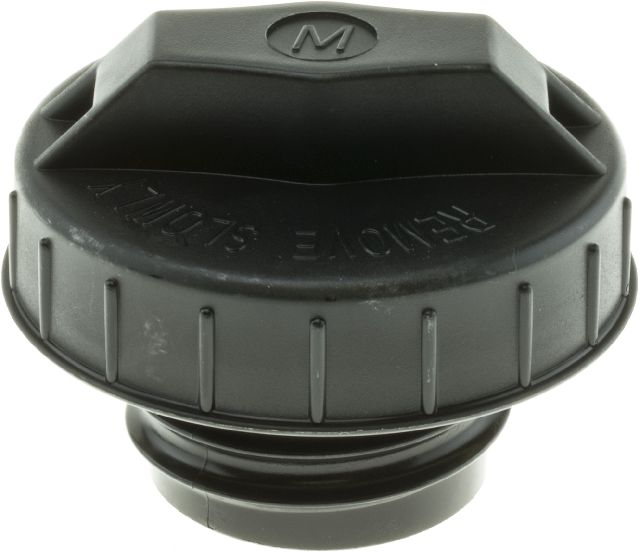
On a 1996-2005 Honda Civic, P1456 almost always means you have a loose or faulty gas cap. Before buying any parts, ensure your cap is tight (at least three clicks) and clean the sealing surfaces. If that fails, a new OEM gas cap is the most likely and affordable fix, costing around $25-$40. Aftermarket caps are a frequent cause of this code; stick with genuine Honda parts.
- P1456 specifically points to a leak on the fuel tank side of the EVAP system.
- The most likely cause by a wide margin is a loose, worn, or incorrect gas cap.
- Always tighten the gas cap until it clicks at least three times after refueling.
- If the code persists, replace the gas cap with a genuine OEM part before attempting more complex repairs.
- If a new cap doesn't fix it, inspect the fuel filler neck for rust or damage before suspecting other parts.
What's Unique About the 1996-2005 Honda Civic

For this era of Honda, the EVAP diagnostic codes are very specific. P1456 points exclusively to a leak on the fuel tank side of the system. This is distinct from the P1457 code, which indicates a leak on the charcoal canister side of the system. This built-in diagnostic separation, detailed in Honda Service Bulletin 99-075, is extremely helpful because it directs the technician to immediately focus on the gas cap and fuel filler neck area, which are the most common failure points for this specific code.
Generation note: This guide covers the sixth generation (1996-2000) and seventh generation (2001-2005) Honda Civic. While the EVAP system components and principles are very similar, the exact location and part numbers for items like the fuel filler neck and EVAP valves may differ slightly. The 7th generation (2001-2005) moved to a MacPherson strut front suspension from the double-wishbone of the 6th generation, but the EVAP system architecture remained largely the same. The primary cause—the gas cap—is a common issue across both generations and related Honda/Acura models of the era.
Symptoms You May Notice
- Check Engine Light (Malfunction Indicator Lamp) is on
- A faint smell of gasoline, particularly after refueling or when parked.
- No noticeable impact on engine performance or drivability.
- Hearing no 'whoosh' sound of pressure releasing when opening the gas cap after driving (indicates the tank is not holding pressure).
- Replacing the EVAP Canister Vent Shut Valve (CVS) or Purge Solenoid. These parts are common failures on this platform, but they typically cause a P1457 code, not P1456.
Most Likely Causes

- Loose, Incorrect, or Faulty Gas Cap 🔴 High Probability The gas cap seal is a simple rubber O-ring that degrades, hardens, and cracks over time, losing its ability to seal. Many owners also do not tighten the cap sufficiently (at least 3 clicks). Aftermarket caps are notorious for not sealing correctly and causing this code.
How to confirm: First, ensure the cap is tightened until it clicks at least three times. If the code returns, inspect the cap's O-ring for cracks or stiffness. Clean the sealing surface on the filler neck and the cap itself. The definitive test is to replace the cap with a new OEM part, as many forum users report this as the final fix after trying aftermarket options. 🎬 Watch: A real-world diagnosis of P1456 and the gas cap fix.
Typical fix: Replace the gas cap with a new, genuine Honda part. Aftermarket caps are known to cause sealing issues.
Est. part cost: $25-$40 - Rusted or Dirty Fuel Filler Neck 🟡 Medium Probability In regions with road salt (the 'rust belt'), the fuel filler neck develops rust pits on the sealing surface where the gas cap O-ring sits, preventing a proper seal even with a new cap.
How to confirm: Remove the gas cap and visually inspect the lip of the filler neck for rust, dirt, or corrosion. Run your finger over the surface to feel for any imperfections that could break the seal. A small pocket mirror and flashlight can help inspect the entire circumference.
Typical fix: Clean the filler neck surface with fine-grit sandpaper or steel wool and brake cleaner to remove light rust or debris. If the neck is heavily corroded, pitted, or cracked, it must be replaced. 🎬 See this step-by-step walkthrough for replacing a rusted filler neck.
Est. part cost: $50-$150 for a new filler neck - Faulty EVAP Two-Way Valve ⚪ Low Probability This valve, located on or near the fuel tank, can fail or stick over time, causing a leak. It is sometimes replaced along with the EVAP bypass solenoid.
How to confirm: This component is more difficult to test. Diagnosis typically involves a professional smoke test to see if the valve is leaking or using a hand vacuum pump to verify its operation per the factory service manual. A user on a Honda forum noted that a faulty two-way valve prevented their fuel tank from building pressure to the specified 3.0V on the FTP sensor, only reaching 2.55V.
Typical fix: Replacement of the two-way valve. On some models, it is serviced as part of a larger assembly.
Est. part cost: $40-$70 - Cracked or Disconnected EVAP Hoses ⚪ Low Probability Rubber hoses connected to the fuel tank and filler neck can become brittle and crack with age, especially the smaller vacuum lines.
How to confirm: A visual inspection may reveal obvious cracks, but small leaks often require a professional smoke test to locate. During a smoke test, low-pressure smoke is injected into the EVAP system, and any leaks will be visible as smoke escapes from the cracked hose or loose fitting.
Typical fix: Replace the specific hose that is found to be leaking.
Est. part cost: $10-$30 per hose
Rare But Worth Checking
- Faulty Fuel Tank Pressure (FTP) Sensor: This is rare for P1456. A faulty FTP sensor usually triggers different codes, but it can sometimes provide incorrect readings that lead the ECU to believe there is a leak when there isn't one. The service manual provides a procedure to check its voltage reading (should be 2.45V-2.55V with the cap off).
- Cracked Fuel Tank: Extremely rare unless the vehicle has suffered physical damage to the undercarriage or severe corrosion. This would be a major leak found easily with a smoke test.
Diagnosis Steps

- Check the gas cap. Ensure it is tight by turning it until it clicks at least three times. Many owners report this alone solves the problem.
- Clear the code with an OBD-II scanner and drive the vehicle for a few days to allow the EVAP monitor to run. The monitor only runs under specific conditions (e.g., fuel level between 1/4 and 3/4).
- If the code returns, carefully inspect the gas cap's rubber seal for any cracks, dirt, or signs of wear. Also inspect the tether to ensure it's not caught under the seal.
- Inspect the metal fuel filler neck where the cap seals. Clean any rust or debris with steel wool and a rag. Feel the surface for pits that could prevent a seal.
- If the cap is old or the seal looks questionable, replace it with a new OEM Honda gas cap. This is the most common fix. Avoid aftermarket caps.
- If a new cap does not solve the issue, perform a thorough visual inspection of all EVAP hoses connected to the fuel filler neck and tank for visible cracks or disconnections.
- If no visual faults are found, the next step is to have a professional mechanic perform a smoke test on the EVAP system to pinpoint the exact location of the leak. 🎬 Watch: How to perform a smoke test to find hidden leaks. This is the most effective way to find leaks in hoses, valves, or the tank itself.
- Advanced diagnostics may involve using a Honda-specific scan tool (HDS) to monitor the Fuel Tank Pressure (FTP) sensor voltage and manually activate EVAP solenoids as outlined in TSB 99-075.
Parts You'll Likely Need
- Fuel Filler Cap
(OEM #17670-S84-A01 (superseded by 17670-T3F-A01); 17670-SM4-A04 (for older models))— This is the most frequent cause of a P1456 code. The seal wears out over time, causing a small leak that the system detects. Using an OEM cap is highly recommended for a proper seal.
Trusted brands: Honda (Genuine OEM)
OEM price range: $25-$40
Aftermarket price range: $10-$20 - Fuel Filler Neck
(OEM #17660-S04-A03 (example for some models, verify by VIN))— The second most common cause, especially in areas with rust. The neck corrodes where the cap seals, preventing a tight fit even with a new cap.
Trusted brands: Honda (Genuine OEM), Spectra Premium, Dorman
OEM price range: $120-$180
Aftermarket price range: $50-$100
Technical Service Bulletins (TSBs) & Recalls
- Honda TSB 99-075: Titled 'Troubleshooting DTC P1456 and P1457', this bulletin provides detailed diagnostic procedures for dealers. It applies to 1996-2000 Civics and other Hondas of the era, outlining steps using the Honda PGM Tester to check sensor voltages and activate solenoids to isolate leaks. It clearly separates the diagnostic paths for P1456 (tank side) and P1457 (canister side).
Platform-Specific Known Issues
- On vehicles operated in the 'rust belt', the fuel filler neck is highly susceptible to corrosion where it meets the body and on the sealing surface for the cap. This is a very common cause of a persistent P1456 after replacing the gas cap.
- NHTSA ODI #10315726 notes that for owners in regions like New England, P1456 and P1457 are extremely common issues, suggesting that environmental exposure and packaging of the units may contribute to these failures.
Mechanic-Grade Diagnostic Values

- Fuel Tank Pressure (FTP) Sensor Voltage (Key On, Engine Off, Gas Cap Off) — expected: 2.45V - 2.55V. Failure: A reading outside this range with hoses disconnected can indicate a faulty sensor or wiring issue.
- Fuel Tank Pressure (FTP) Sensor Voltage (During EVAP Test, System Under Vacuum) — expected: Should drop to ~1.50V and hold steady for at least 20 seconds.. Failure: If the voltage rises more than 0.05V in 20 seconds, a leak is present in the system.
- Fuel Tank Pressure (FTP) Sensor Voltage (Normal Operation, after driving) — expected: Should rise to approximately 3.0V as vapors build pressure.. Failure: Failure to build pressure (e.g., only reaching 2.55V) can indicate a leak or a faulty two-way valve opening prematurely.
Scan Tool Commands That Help
- Honda PGM Tester / HDS (Honda Diagnostic System): EVAP TEST > SINGLE SOLENOIDS — This function allows a technician to individually command specific solenoids (like the bypass solenoid or canister vent shut valve) to open or close, helping to isolate a faulty component without having to remove it. This is detailed in TSB 99-075.
- Honda PGM Tester / HDS (Honda Diagnostic System): EVAP TEST > MULTI SOLENOIDS > PCS ON, CVS ON, BPS ON — This command activates multiple solenoids at once to seal the EVAP system, allowing the technician to apply vacuum and monitor the FTP sensor to test the system's ability to hold vacuum, per TSB 99-075.
Wiring & Ground Locations
- G101 (Thermostat Housing) — On the thermostat housing, a common grounding point for multiple engine sensors.. A corroded or loose G101 ground can cause erratic readings from various sensors, including potentially the Fuel Tank Pressure (FTP) sensor, leading to false codes. While not a primary cause, it's a critical check for any electrical gremlins.
- Engine to Frame Ground Strap — A braided cable running from the engine block (often near the front) to the vehicle's chassis/frame.. The main engine ground is essential for the entire engine management system. Corrosion or breakage of this strap can lead to a host of issues, including intermittent sensor data and ECU problems.
- ECU/PCM Grounds — The ECU itself has several ground pins (e.g., Pins A4, A5 on some 2001-2003 models) that are bundled and grounded to the chassis, often behind the kick panel or under the dash.. A poor ground connection directly at the ECU can corrupt the reference voltage for sensors like the FTP, causing the computer to misinterpret the data and set a false P1456 code.
Real Owner Repair Stories
- Honda-Tech Forum User (1996-2000 Honda Civic (specific year not mentioned)) — Persistent P1456 code after resetting.
❌ Tried (didn't work) Passing a manual vacuum test (system held vacuum for 20 seconds)., Driving with a DVM connected to monitor FTP voltage.
✅ What actually fixed it The user diagnosed a faulty two-way valve. The key finding was that while the system could hold a vacuum, it could not build sufficient pressure. The FTP sensor voltage would only rise to 2.55V, short of the 3.0V specified in the service manual, indicating the valve was likely releasing pressure too early. Replacing the two-way valve was the intended fix. - YouTube - Auto Resource channel (Honda vehicle, model not specified but common issue) — Check Engine Light with code P1456.
❌ Tried (didn't work) Scanning and erasing the code.
✅ What actually fixed it The fuel filler cap was found to be completely loose. Tightening the cap until it clicked multiple times resolved the issue. - YouTube - Rocket Garage Service (2000 Honda Civic LX) — Check Engine Light with P1456.
❌ Tried (didn't work) On a different Civic, replacing the purge valve did not fix a similar EVAP issue.
✅ What actually fixed it The gas cap was faulty. The owner swapped it with a known-good cap from another Honda, cleared the codes, and the light did not return after a month of driving, confirming the cap was the sole cause. - NHTSA ODI #10078623 — An owner reported receiving error codes P0401 and P1456, noting that this seems to be a very common problem with these models. They mentioned attempting to resolve the issue by ensuring the gas cap was tight, though the code persisted.
- NHTSA ODI #10195472 — A technician identified a failure involving codes P0420, P0505, and P1456 on a vehicle with approximately 80,000 miles.
OEM Part Supersession History
17670-S84-A01→17670-T3F-A01— Standard part number update and consolidation across multiple Honda models.
Heads up: The new part number is the correct service replacement and is fully compatible. Using non-OEM caps is the primary source of incompatibility issues.
Model Year Variations Within This Range
- 2001-2005: The 7th generation Civic (2001-2005) uses a different engine family (D17) and chassis compared to the 6th generation (1996-2000, D16). The front suspension was changed from a double-wishbone design to a less complex MacPherson strut setup. While the EVAP system principles are identical, the physical location and part numbers of components like the purge valve and canister may vary slightly.
Diagnostic Flowchart
Other Known Issues on This Vehicle
Issues unrelated to this code that are worth knowing about as an owner of this generation:
- Automatic Transmission Failure (2001-2005) 🔴 High — Very common, particularly in 2001-2003 models, often failing before 100,000 miles. Caused by poor internal lubrication and clutch material breakdown clogging internal passages.
- D17 Engine Head Gasket Failure (2001-2005) 🔴 High — A notorious issue for the 1.7L D17 engine. The gasket is prone to failure, leading to overheating and coolant loss.
- Cracked Exhaust Manifold (1996-2000) 🟠 Medium — The cast iron exhaust manifold is prone to cracking, especially near the primary oxygen sensor bung, causing an exhaust leak and noise.
- Input Shaft Bearing Failure (Manual Transmission) 🟠 Medium — Common on manual transmission models, causing a whirring or grinding noise when the clutch is engaged that disappears when the clutch pedal is pressed.
- Front Lower Control Arm Bushing Wear (2001-2005) 🟡 Low — The compliance bushings wear out, causing a clunking noise from the front suspension over bumps.
- Distributor Oil Leak (Internal Seal) (1996-2000) 🟡 Low — The internal seal inside the distributor fails, causing oil to leak into the distributor cap, which can lead to misfires. A common maintenance item.
Used vs. New Parts: Buying Guide for This Vehicle
When a used part is the smart pick: A used fuel filler neck can be a good value if sourced from a vehicle in a dry, non-rust-belt climate. Visually inspect the sealing surface and the pipe itself for any signs of corrosion or damage before purchasing.
Donor-vehicle mileage cap: roughly under 120000 miles for the part to have meaningful remaining life.
What to inspect on the donor part:
- For a filler neck, check for a smooth, rust-free sealing lip where the gas cap sits.
- Ensure all hose connection points are intact and not cracked.
- Look for a donor car from a southern or western state to minimize the chance of rust.
- Avoid any parts with visible dents, kinks, or heavy surface corrosion.
OEM-only on this vehicle (don't cheap out):
- Fuel Filler Cap: This is the most critical part to buy new from Honda. Aftermarket caps are a well-documented cause of P1456 codes due to improper sealing pressure and gasket material.
Aftermarket brands forum-validated for this vehicle:
- Spectra Premium: Often cited as a reliable aftermarket brand for fuel filler necks and tanks.
- Dorman: A widely available aftermarket option for filler necks, though some users express a preference for Spectra if available.
Brands owners have reported issues with on this vehicle:
- Generic/unbranded fuel caps: Avoid any no-name or 'universal' gas caps, as they are highly likely to cause a P1456 code.
Real Owner Stories
Aggregated from forums and TSBs cited above. Mileages and costs reflect what owners reported in those sources.
1996-2000 Honda Civic
Symptoms: A persistent P1456 code where the system held vacuum but failed to build sufficient pressure. The Fuel Tank Pressure (FTP) sensor only reached 2.55V instead of the service manual's target of 3.0V.
What fixed it: The diagnosis pointed toward a faulty EVAP two-way valve as the cause of the pressure issue.
Source hint: Honda-Tech.com: P1456 DTC is sure difficult to solve!
1996-2005 Honda Civic
Symptoms: The P1456 code returned even after replacing the gas cap with a new OEM part.
What fixed it: Forum members advised that the next step was to inspect the fuel filler neck for rust and check the various hoses connected to it for cracks or leaks.
Source hint: HondaCivicForum.com: p1456 code common causes
2005 Honda Civic
Symptoms: A stubborn P1456 code that persisted after replacing EVAP solenoids and the charcoal canister.
What fixed it: The check engine light coincidentally turned off after the owner had extensive exhaust system rust repair performed, though the direct causal link was uncertain.
Source hint: Reddit r/MechanicAdvice: Stubborn check engine light (evap p1456) goes away after exhaust repair.
Documented NHTSA Reports
NHTSA ODI #10078623
Symptoms: An owner reported receiving error code P1456 along with P0401 (insufficient EGR flow). They noted that this appears to be a very common problem with these models.
What fixed it: The owner attempted to tighten the gas cap, but the EVAP system leak code persisted.
NHTSA ODI #10195472
Symptoms: A maintenance technician identified a failure involving codes P1456, P0420, and P0505.
What fixed it: The failure occurred at approximately 80,000 miles, though the specific repair was not detailed in the report.
NHTSA ODI #10315726
Symptoms: An owner highlighted that P1456 and P1457 are frequent issues for those living in New England.
What fixed it: The report suggests the issue may be related to how the unit is packaged and protected from environmental elements.
Related OBD-II Codes
Frequently Asked Questions
I replaced my gas cap with an aftermarket one, but the P1456 code came back on my Civic. What's wrong?
My 1998 Honda Civic has a P1456 code. Does Honda TSB 99-075 apply to my car?
I live in a snowy state and keep getting P1456 even with a new Honda gas cap. What should I check next?
Will a P1456 code affect my Civic's engine performance or gas mileage?
I don't hear a 'whoosh' sound when I open my gas cap anymore. Is this related to the P1456 code?
What is the difference between code P1456 and P1457 on my Honda?
Helpful Videos
We Have This Part in Stock


The information in this article is provided for general reference and educational purposes only. Vehicle specifications, procedures, and part compatibility can vary by production date, trim level, and region. Always consult your vehicle's factory service manual and verify part numbers before purchasing or performing repairs. Safety-critical components such as airbags, seat belts, and braking systems should be installed by a qualified professional.
- Honda Civic:
- 🎬 Helpful Videos
- 🛍️ Shop This Part
- What's Unique About the 1996-2005 Honda Civic
- Symptoms You May Notice
- Most Likely Causes
- Rare But Worth Checking
- Diagnosis Steps
- Parts You'll Likely Need
- Technical Service Bulletins (TSBs) & Recalls
- Platform-Specific Known Issues
- Mechanic-Grade Diagnostic Values
- Scan Tool Commands That Help
- Wiring & Ground Locations
- Real Owner Repair Stories
- OEM Part Supersession History
- Model Year Variations Within This Range
- Diagnostic Flowchart
- Other Known Issues on This Vehicle
- Used vs. New Parts: Buying Guide for This Vehicle
- Real Owner Stories
- 1996-2000 Honda Civic
- 1996-2005 Honda Civic
- 2005 Honda Civic
- Documented NHTSA Reports
- NHTSA ODI #10078623
- NHTSA ODI #10195472
- NHTSA ODI #10315726
- Related OBD-II Codes
- Frequently Asked Questions
- 🎟️ Get 5% Off