

P1451 on 1999-2003 Ford Windstar: EVAP Vent Control Solenoid Circuit Fixes
This code points to an electrical problem with the EVAP Canister Vent Solenoid or its wiring. The most common fix is replacing the solenoid itself, which is located near the charcoal canister under the vehicle. Expect to pay $75-$110 for the part. Before replacing, inspect the wiring harness for common chafing spots and corrosion.
- P1451 is an electrical circuit code for the EVAP Canister Vent Solenoid, not a leak code.
- The most likely cause is a failed solenoid, followed by damaged wiring at specific, known chafing or corrosion points.
- The part is located under the vehicle near the fuel tank and is a relatively easy DIY replacement.
- Always test the solenoid and check for proper voltage (>10.5V) at the connector before buying parts.
- Do not confuse the vent solenoid (under the car) with the purge solenoid (in the engine bay).
What's Unique About the 1999-2003 Ford Windstar
On this generation of Ford Windstar, the P1451 code is a straightforward electrical fault code. Unlike some other vehicles where this code might be triggered by pressure-related issues, on Fords it specifically points to the electrical integrity of the vent solenoid circuit. The PCM monitors the circuit and expects to see a specific voltage feedback; if that signal is missing or incorrect, the code is set. Owners often find the issue is either the solenoid itself or the wiring leading to it, which can be susceptible to damage or corrosion due to its location under the vehicle. Specific, known failure points in the wiring harness include chafing under the air filter box and corrosion in a connector near the fuel filter.
Symptoms You May Notice
- Check Engine Light is on.
- Failing a state emissions inspection.
- A faint smell of gasoline near the rear of the vehicle.
- In rare cases, difficulty starting immediately after refueling.
- Replacing the gas cap. A bad gas cap typically causes a P0455 (large leak) or P0457 code, not a P1451 electrical circuit code.
- Replacing the EVAP Purge Valve/Solenoid. The purge valve is located on the firewall in the engine bay, while the vent solenoid is under the vehicle near the tank. They are two different parts in the same system.
Most Likely Causes
- Failed EVAP Canister Vent Solenoid 🔴 High Probability The solenoid is exposed to the elements under the vehicle, leading to corrosion and electrical failure over time. The plastic housing can also become brittle and crack.
How to confirm: Remove the solenoid and test its coil resistance with a multimeter; a good Ford solenoid often has 48-65 ohms. You can also apply 12V power to the terminals and listen for a distinct 'click'. If there's no click or the resistance is out of range (open circuit), the solenoid is bad.
Typical fix: Replace the EVAP canister vent solenoid.
Est. part cost: $75 - $110 - Damaged Wiring or Connector 🟡 Medium Probability The wiring harness to the vent solenoid is routed under the van and can be damaged by road debris, corrosion, or chafing against the frame or suspension components. Specific known failure points exist on Ford platforms from this era.
How to confirm: Visually inspect the entire length of the wiring harness from the solenoid to where it enters the main loom. Check for broken, frayed, or corroded wires. Pay special attention to the harness where it passes under the air filter box bracket and check the large harness connector on the frame rail near the fuel filter for corrosion or broken pins. Use a multimeter to verify greater than 10.5V is present at the power wire (often red) in the connector with the key on.
Typical fix: Repair the damaged section of wire or replace the connector pigtail. In cases of severe corrosion, the main harness connector may need to be replaced or bypassed.
Est. part cost: $10 - $40
Rare But Worth Checking
- Clogged EVAP Canister or Vent Hoses: While P1451 is an electrical code, a completely blocked vent path can sometimes cause the PCM to flag a fault. Check for dirt, debris, or insect nests in the vent hose or the canister port, especially if the vehicle is operated in dusty environments.
- Faulty Powertrain Control Module (PCM): This is extremely rare. The PCM's internal driver for the vent solenoid circuit can fail. This should only be considered after all other possibilities (solenoid, wiring) have been exhaustively ruled out. One owner on a forum replaced the PCM for a P1451, but the issue turned out to be wiring.
Diagnosis Steps
- Verify the Code: Use an OBD-II scanner to confirm P1451 is the active code.
- Locate the Component: Find the EVAP canister vent solenoid. On the Windstar, it is located under the vehicle, mounted on or near the charcoal canister, which is behind the driver's side rear sliding door.
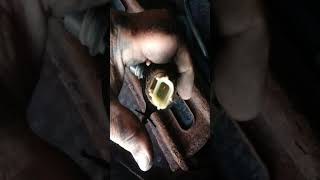
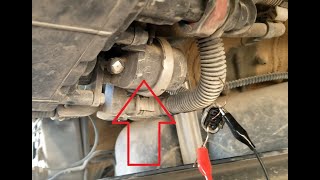
- Inspect Wiring and Connector: Before removing any parts, carefully inspect the electrical connector and the wiring harness leading to the solenoid. Look for any signs of physical damage, corrosion, or loose connections. Check for chafing where the harness passes frame members or brackets, especially under the air filter box. Inspect the larger harness connector near the fuel filter for corrosion. 🎬 Watch: Finding and fixing common Ford vent valve wiring issues
- Check for Power: With the ignition key in the 'On' position, unplug the solenoid and use a multimeter to check for power at the connector. One wire (typically Red) should have battery voltage (greater than 10.5 volts).
- Test the Solenoid: If power is present, test the solenoid itself. Use a multimeter to measure the resistance across the two pins on the solenoid. A reading between 48 and 65 ohms is typical for a good Ford part. An infinite reading means an open circuit and a bad solenoid.
- Bench Test the Solenoid: As a final confirmation, you can apply 12V directly to the solenoid's pins using jumper wires. You should hear a solid 'click' as the valve actuates. If it doesn't click, it has failed.
- Inspect Vent Hoses: While under the vehicle, quickly inspect the rubber hoses connected to the canister and solenoid for cracks, blockages, or disconnections.
- Replace the Faulty Part: Based on your findings, replace the failed vent solenoid or repair the damaged wiring.
Parts You'll Likely Need
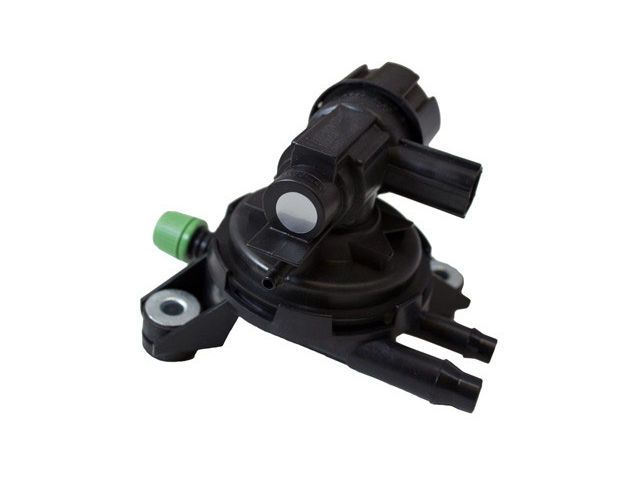
- EVAP Canister Vent Solenoid
(OEM #Aftermarket numbers include Dorman 911-104 (99-00), Standard Motor Products CVS15 (99-00), and Standard Motor Products CVS30 (01-03).)— This solenoid is the most common failure point for a P1451 code, either due to an internal coil failure or mechanical seizure.
Trusted brands: Motorcraft, Dorman, Standard Motor Products (SMP), Wells
OEM price range: $90-$120
Aftermarket price range: $75-$110
Platform-Specific Known Issues
- Common Wiring Failure Points: Owners on Ford forums report specific, recurring locations for wiring failures that cause P1451. One common spot is where the harness rubs against a metal bracket underneath the air filter box, eventually exposing the wire. Another known failure point is a large harness connector located on the frame rail near the fuel filter, which is prone to water intrusion and corrosion, leading to broken pins and an open circuit to the vent solenoid.
- Location Confirmation: On the 1999-2003 Windstar, the charcoal canister assembly is located under the vehicle, just behind the driver's side rear sliding door. The vent solenoid is typically mounted directly to this canister.
Mechanic-Grade Diagnostic Values
- EVAP Canister Vent Solenoid Coil Resistance — expected: 48 - 65 Ohms. Failure: A reading of infinity (OL) indicates an open coil. A reading significantly outside this range indicates a faulty solenoid.
- Voltage at Solenoid Connector (Key On, Engine Off) — expected: Greater than 10.5 Volts (approx. battery voltage) at the power feed wire (typically Red/Yellow).. Failure: Low or no voltage indicates an open or high-resistance in the VPWR (Voltage Power) circuit between the fuse box and the solenoid.
- PCM Commanded Voltage Drop (Scan Tool) — expected: A minimum voltage drop of 4 volts when the solenoid is commanded closed (100% duty cycle).. Failure: If the voltage does not drop as commanded, it points to a problem in the control wire to the PCM or a faulty PCM driver.
Scan Tool Commands That Help
- Ford IDS, ForScan, or other professional bidirectional scanner: Output State Control (OSC) or Functional Test for the EVAP Canister Vent Solenoid (EVAPCV). — This is used after verifying power and ground. The command allows the technician to manually cycle the solenoid on and off (e.g., from 0% to 100% duty cycle) to confirm it is working mechanically (listening for a click) and electrically (monitoring voltage drop on the control wire). If the solenoid clicks and the voltage changes as commanded, the solenoid and wiring are likely good, pointing to a more intermittent issue or a problem with the PCM's monitoring capability.
Wiring & Ground Locations
- Canister Vent Solenoid Connector — On the EVAP canister vent solenoid, located under the vehicle behind the driver's side rear sliding door.. This is the primary point for testing. The Red/Yellow wire is typically the 12V+ power feed from the fuse box. The other wire (color may vary) is the control wire that is grounded by the PCM to activate the solenoid. Corrosion here is a common cause of failure.
- Main Harness Connector (Near Fuel Filter) — On the frame rail, often near the fuel filter. This is a large, multi-pin connector that carries circuits for various rear components.. This connector is a known weak point for water intrusion and corrosion. A corroded or broken pin for the vent solenoid's power or control wire within this connector will cause an open circuit and trigger P1451, even if the solenoid and the pigtail at the component are perfectly fine.
- Ground Point G401 — On a 2001 Windstar, a key ground point for rear components is located at the rear of the vehicle.. While the vent solenoid is typically controlled via a PCM ground, a poor chassis ground for the PCM or related circuits can cause a variety of electrical issues. Verifying major ground points are clean and tight is good practice when diagnosing any electrical fault.
Real Owner Repair Stories
- Ford F-150 Forum user report (applicable principle) (1997 Ford F-150) — Check Engine Light with code P1451.
❌ Tried (didn't work) Initial inspection of hoses.
✅ What actually fixed it The electrical connector at the vent solenoid was severely corroded. One of the pins was broken off inside the connector, and the other was green with corrosion, preventing any electrical contact. Replacing the solenoid and the connector pigtail resolved the code.
OEM Part Supersession History
Varies by year→Varies by year— Model year change
Heads up: There is a distinct part split for the vent solenoid. 1999-2000 models use one version (e.g., Dorman 911-104, SMP CVS15), while 2001-2003 models use a different version (e.g., SMP CVS30). The connectors or mounting may differ. It is critical to order the part specific to the vehicle's model year.
Model Year Variations Within This Range
- 1999-2000 vs 2001-2003: The EVAP Canister Vent Solenoid is different between these two year groups. Aftermarket part catalogs show a clear split, with different part numbers for 1999-2000 and 2001-2003 models. For example, Standard Motor Products lists CVS15 for the earlier models and CVS30 for the later ones. Buyers must ensure they purchase the correct part for their specific year.
Diagnostic Flowchart
Used vs. New Parts: Buying Guide for This Vehicle
When a used part is the smart pick: A used EVAP vent solenoid from a junkyard can be a cost-effective option if the donor vehicle is from a dry, salt-free region to minimize the risk of pre-existing corrosion. Given the low cost of new aftermarket parts, a used part is only recommended if on a very tight budget or if a new part is unavailable.
Donor-vehicle mileage cap: roughly under 120000 miles for the part to have meaningful remaining life.
What to inspect on the donor part:
- Inspect the electrical connector pins on the used solenoid for any signs of green or white corrosion.
- Check the plastic housing for cracks or brittleness.
- If possible, bring a 12V power source (like a portable jump starter) to the junkyard and test for the 'click' before purchasing.
- Look for vehicles that have been recently added to the yard, as the parts have had less exposure to the elements.
Aftermarket brands forum-validated for this vehicle:
- Motorcraft (OEM)
- Standard Motor Products (SMP)
- Dorman (often a viable, lower-cost alternative, though quality can be inconsistent on some product lines)
Brands owners have reported issues with on this vehicle:
- No-name, unbranded parts from online marketplaces should be avoided as their quality and fitment are highly questionable.
Real Owner Stories
Aggregated from forums and TSBs cited above. Mileages and costs reflect what owners reported in those sources.
Ford Windstar
Symptoms: Check engine light with code P1451, smoke test revealed leaks between gaskets.
What fixed it: The owner disassembled the leaking component, soaked the gaskets in power steering leak sealer, and reassembled it. The code reportedly went away after a few days.
Source hint: Donald C. (YouTube Channel)
Ford Ranger (similar platform)
Symptoms: No electrical power was present at the vent solenoid connector.
What fixed it: The owner traced the fault to a corroded main harness connector located above the fuel filter that had broken pins, causing an open circuit.
Source hint: Ranger-Forums.com - 'P1451/Purge Valve Solenoid Issue'
Ford Truck (similar platform)
Symptoms: The P1451 code returned even after replacing the vent solenoid.
What fixed it: The cause was found to be a wire that had rubbed through on a metal bracket located under the air filter box.
Source hint: Ford-Trucks.com - 'p1451 driving me crazy'
Related OBD-II Codes
Frequently Asked Questions
Where is the EVAP canister vent solenoid located on my 1999-2003 Windstar?
I replaced the vent solenoid but the P1451 code is still on. What should I check next?
How can I test the original vent solenoid on my Windstar to confirm it's bad?
Is the P1451 code on my Windstar caused by a loose gas cap?
What voltage should I find at the vent solenoid's electrical connector?
Are other Ford trucks and vans from this era also prone to this specific P1451 wiring issue?
Helpful Videos
We Have This Part in Stock


The information in this article is provided for general reference and educational purposes only. Vehicle specifications, procedures, and part compatibility can vary by production date, trim level, and region. Always consult your vehicle's factory service manual and verify part numbers before purchasing or performing repairs. Safety-critical components such as airbags, seat belts, and braking systems should be installed by a qualified professional.
- Ford Windstar:
- 🎬 Helpful Videos
- 🛍️ Shop This Part
- What's Unique About the 1999-2003 Ford Windstar
- Symptoms You May Notice
- Most Likely Causes
- Rare But Worth Checking
- Diagnosis Steps
- Parts You'll Likely Need
- Platform-Specific Known Issues
- Mechanic-Grade Diagnostic Values
- Scan Tool Commands That Help
- Wiring & Ground Locations
- Real Owner Repair Stories
- OEM Part Supersession History
- Model Year Variations Within This Range
- Diagnostic Flowchart
- Used vs. New Parts: Buying Guide for This Vehicle
- Real Owner Stories
- Ford Windstar
- Ford Ranger (similar platform)
- Ford Truck (similar platform)
- Related OBD-II Codes
- Frequently Asked Questions
- 🎟️ Get 5% Off