

P1450 on 2009-2011 Mercury Mariner: Causes, Fixes for 'Unable to Bleed Up Vacuum'
For a 2009-2011 Mercury Mariner, code P1450 is almost always caused by a faulty EVAP canister purge valve located on the engine. It's a DIY-friendly fix with the part costing around $30-$60. The most common symptom is difficulty starting or stalling immediately after refueling.
- P1450 on your Mariner means there's too much vacuum in the gas tank.
- The most likely cause by a wide margin is a bad EVAP purge valve on the engine.
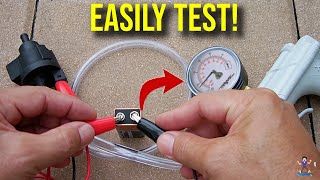
- You can test the purge valve in minutes with no special tools. If you feel suction from it at idle (with the electrical connector unplugged), it's bad.
- This is a common DIY repair that can be done in under 30 minutes with basic tools, typically requiring an 8mm socket.
- Symptoms often include stalling or rough running right after you get gas.
What's Unique About the 2009-2011 Mercury Mariner
The Mercury Mariner from this era is a twin to the Ford Escape and Mazda Tribute, and they all share a common and well-documented issue with the EVAP purge valve. The part was redesigned by Ford around 2009, and this new design has proven to be a frequent failure point, making it the most likely cause of a P1450 code on this specific vehicle. Owners often experience symptoms like stalling after refueling, which is a classic indicator of the purge valve being stuck open on this platform.
Symptoms You May Notice
- Check Engine Light is on.
- Engine stalling or running rough at low speeds or idle, especially within a few minutes of refueling. 🎬 See why your engine stalls or idles rough after fueling
- Difficulty starting the engine immediately after getting gas. The engine may crank but fail to start for several attempts.
- A loud 'whoosh' sound from the gas cap or capless filler neck when opening it (due to the vacuum).
- Bouncing or fluctuating RPMs at idle.
- Replacing the gas cap. While a faulty gas cap can cause other EVAP codes (like P0455 or P0457 for leaks), it is not a typical cause for the P1450 'excessive vacuum' code.
- Replacing the Fuel Tank Pressure (FTP) sensor first. While it's a possibility, the mechanical components like the purge valve are far more likely to fail and are easier to test.
Most Likely Causes
- Faulty EVAP Canister Purge Valve 🔴 High Probability The purge valve on this platform, particularly the design introduced around 2009, is a known high-failure item. It tends to get stuck open or leak internally, allowing constant engine vacuum to pull on the fuel tank. Many owners report that aftermarket replacements can also fail prematurely.
How to confirm: With the engine running, locate the purge valve on the engine. Disconnect the electrical connector first. Then, disconnect the EVAP hose running from the valve toward the back of the car. Place your finger over the port on the valve itself; there should be absolutely no suction. If you feel any vacuum, the valve is leaking internally and must be replaced.
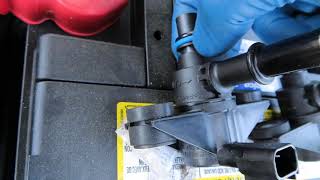
Typical fix: Replace the canister purge valve assembly. It is typically mounted to the engine intake manifold with two 8mm bolts. This is a very common DIY repair taking less than 30 minutes. 🎬 Watch this quick walkthrough of the purge valve replacement
Est. part cost: $30-$60 - Blocked Canister Vent Solenoid or Hose 🟡 Medium Probability The vent solenoid, located near the charcoal canister by the fuel tank, can get stuck closed or its filter can become clogged with dirt, spider webs, or other debris, preventing the system from venting fresh air into the tank to relieve vacuum.
How to confirm: Inspect the vent solenoid and its associated hoses for dirt, debris, or physical blockages. A smoke test is the most effective way to confirm a restriction in the vent path. You can also use a capable scan tool to command the vent valve open and see if the fuel tank pressure returns to normal.
Typical fix: Clean or replace the canister vent solenoid and any clogged hoses. The filter is often integrated or serviceable separately.
Est. part cost: $40-$80 - Kinked or Collapsed EVAP Hose ⚪ Low Probability
How to confirm: Visually inspect all EVAP hoses between the engine, fuel tank, and charcoal canister for any signs of pinching, collapse, or sharp bends that could restrict flow.
Typical fix: Reroute or replace the damaged section of hose.
Est. part cost: $10-$30
Rare But Worth Checking
- Saturated Charcoal Canister: This can happen if the fuel tank is consistently overfilled ('topping off'). The excess liquid fuel floods the canister, which is designed only for vapor, causing it to become a blockage. If you find this, you must also fix the purge valve, as a stuck-open purge valve is often the root cause of the canister flooding.
- Faulty Fuel Tank Pressure (FTP) Sensor: It's possible for the sensor itself to fail and give incorrect readings, causing the computer to believe there is a vacuum when there isn't. However, this is much less common than a mechanical failure of a valve or a blockage.
Diagnosis Steps
- Confirm the code P1450 is present using an OBD-II scanner.
- Check the gas cap to ensure it is tight and the seal is not damaged. Listen for a large 'whoosh' of air when opening it, which indicates a significant vacuum.
- Locate the EVAP canister purge valve on the engine. It will have an electrical connector and two hoses attached and is often mounted with two 8mm bolts.
- Start the engine and let it idle.
- Disconnect the electrical connector from the purge valve. This ensures it is not being commanded open by the computer.
- Disconnect the hose that runs from the purge valve towards the rear of the vehicle (to the charcoal canister).
- Place your finger over the open port on the purge valve. If you feel any suction or vacuum, the valve has failed and needs to be replaced. This is the most common failure.
- If no vacuum is present at the purge valve, the problem is likely a blockage in the vent system. Proceed to inspect the components near the fuel tank.
- Visually inspect the hoses leading to and from the charcoal canister (located near the fuel tank) for kinks, collapse, or damage.
- Inspect the canister vent solenoid (also near the tank) and its filter for blockages from dirt, spider webs, or other debris.
- If a blockage is not visually apparent, a professional smoke test may be required to find the restriction in the EVAP vent path. However, for P1450, the issue is more often a stuck component than a leak a smoke test would find.
Parts You'll Likely Need
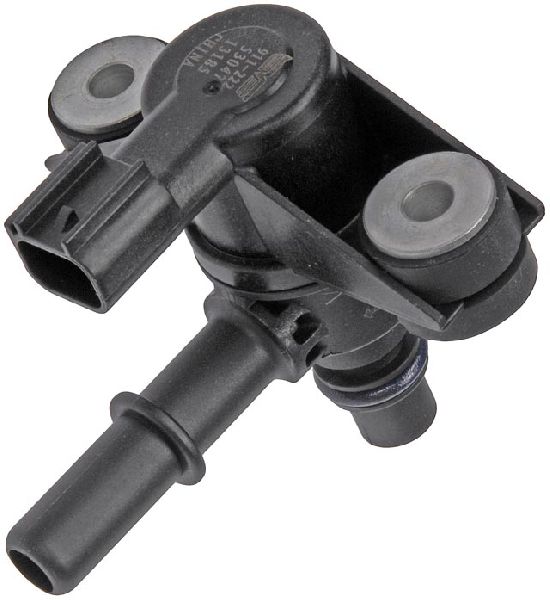
- EVAP Canister Purge Valve
(OEM #9U5Z-9C915-H)— This is the most frequent failure point for code P1450 on this vehicle. It gets stuck open, allowing constant engine vacuum to be applied to the fuel tank. This part number has been superseded by 9U5Z-9C915-J. The Motorcraft service part number is often CX-2409, which was superseded by CX-2626.
Trusted brands: Motorcraft, Dorman, Standard Motor Products
OEM price range: $50-$70
Aftermarket price range: $30-$50 - EVAP Canister Vent Solenoid
(OEM #9L8Z-9D289-A)— This is the second most likely cause if the purge valve tests good. It gets stuck closed or the filter gets clogged with debris, preventing the tank from venting.
Trusted brands: Motorcraft, Dorman
OEM price range: $50-$80
Aftermarket price range: $40-$60
Technical Service Bulletins (TSBs) & Recalls
- While no TSB is issued specifically for P1450 on this exact vehicle, Ford has issued TSBs for related EVAP issues and PCM updates on other models that can sometimes be relevant. For example, TSB 13-3-5 involved a PCM reprogram for certain F-150s with emissions codes. However, for this specific code and vehicle, mechanical replacement of the purge valve is the standard repair, not a software update.
Platform-Specific Known Issues
- Premature Failure of Aftermarket Purge Valves: Multiple owner forums contain reports of aftermarket purge valves failing within a year of replacement, causing the P1450 code to return. While more expensive, using the OEM Motorcraft part is often recommended for longevity.
- Stalling After Refueling is a Key Symptom: A very common owner complaint tied directly to P1450 on this platform is the engine stalling at the first stoplight or two after filling the gas tank. This is caused by the stuck-open purge valve allowing raw fuel vapors from the freshly filled tank to flood the intake manifold, creating a rich condition.
Mechanic-Grade Diagnostic Values
- EVAP Canister Purge Valve Solenoid Resistance — expected: 30 - 38 Ohms. Failure: A reading outside this range indicates a faulty solenoid coil.
- EVAP Canister Vent Solenoid Resistance — expected: 48 - 65 Ohms. Failure: A reading outside this range suggests the vent solenoid coil is bad.
- Fuel Tank Pressure (FTP) Sensor Voltage (Key On, Engine Off) — expected: 2.4 - 2.8 Volts. Failure: A voltage significantly outside this range with the gas cap off (at atmospheric pressure) indicates a faulty sensor or wiring issue.
Hidden / Shadow Codes Worth Checking
- Mode 6, Test ID $82: This refers to the On-Board Diagnostic Test Results for the EVAP system leak check monitor. While not a 'code' in the traditional sense, viewing this data can show if the EVAP monitor is failing its self-test, even before a DTC like P1450 is set. It provides raw test values and limits. (see via A professional scan tool or advanced DIY tool like FORScan that can access OBD-II Mode 6 data.)
Scan Tool Commands That Help
- Ford IDS, FORScan, or other professional bidirectional scanner: EVAP System Test / Manual EVAP Test — This is a guided test that commands the purge and vent solenoids to seal the system and monitors the FTP sensor to check for leaks or blockages. It's the most comprehensive way to test the entire system electronically.
- Ford IDS, FORScan, or other professional bidirectional scanner: Vapor Management Valve (VMV) Command & Canister Vent (CV) Solenoid Command — This allows for manual, individual control of the EVAP solenoids. To test for a stuck-open purge valve, command the purge valve (VMV) to 0% (off) and the vent valve (CV) to 100% (closed). If the FTP sensor still shows a vacuum building with the engine running, the purge valve is mechanically stuck open.
Wiring & Ground Locations
- G104 — Left front of the engine compartment, on the chassis frame rail.. This is a primary ground point for components in the engine bay. A corroded or loose G104 could potentially cause erratic behavior in engine-mounted solenoids like the EVAP purge valve.
- G401 — Rear of the vehicle, typically on the frame rail near the fuel tank and charcoal canister.. This is the main ground for rear-mounted components, including the canister vent solenoid and the fuel pump/FTP sensor assembly. A bad ground here can cause incorrect readings from the FTP sensor or failure of the vent solenoid to operate.
- Powertrain Control Module (PCM) — Rear center of the firewall in the engine compartment.. The PCM is the computer that controls both the purge and vent solenoids and interprets the data from the FTP sensor. All wiring for these components originates at the PCM, making its connectors a key inspection point for corrosion or damage.
Real Owner Repair Stories
- r/fordescape on Reddit (2009 Ford Escape) — Check engine light with code P1450, stalling at red lights within the first 50-70km after refueling, and occasional rough idle when stopped.
❌ Tried (didn't work) The EVAP purge valve had been replaced 3-4 months prior to the problem returning., A mechanic replaced both camshaft position sensors, which did not solve the problem.
✅ What actually fixed it The user was reporting the issue was ongoing after a recent purge valve replacement. The consensus from other owners in the discussion pointed to the high likelihood that the replacement aftermarket purge valve had failed prematurely, a very common occurrence for this part. The final fix is to replace the purge valve again, preferably with an OEM Motorcraft part.
"I Checked Everything" — The Actual Cause
- A smoke test is designed to find leaks where smoke can escape. For code P1450, the problem is the opposite: the system cannot vent or is under a constant, unwanted vacuum. Therefore, a smoke test will almost always be 'clean' or 'pass' because there are no leaks for the smoke to exit. The actual cause is a component failure, not a leak, such as the canister vent solenoid being stuck closed (preventing venting) or the purge valve being stuck open (applying constant vacuum).
OEM Part Supersession History
9U5Z-9C915-H (Purge Valve)→9U5Z-9C915-J— Part revision by Ford, likely to address reliability issues.Motorcraft CX-2409 (Purge Valve Service Part)→Motorcraft CX-2626— Corresponds to the supersession of the base Ford part number.
Heads up: CX-2626 is the service part number for 9U5Z-9C915-J.6L3Z-9C915-A (Purge Valve)→N/A for this vehicle— This was the part number for the pre-2009 models. The 2009 model year introduced a new, more failure-prone design (9U5Z-9C915-H).
Heads up: The pre-2009 valve is not compatible with 2009-2011 models.
Model Year Variations Within This Range
- 2009-2011: The 2009 model year marked a significant change in the EVAP purge valve design for the Escape/Mariner platform. Models prior to 2009 used a different, more reliable part. The part introduced in 2009 (PN 9U5Z-9C915-H) is the one known for its high failure rate, making P1450 a much more common code on 2009 and later models.
Diagnostic Flowchart
Used vs. New Parts: Buying Guide for This Vehicle
When a used part is the smart pick: For this repair, buying used parts is strongly discouraged for the electronic solenoids (purge valve, vent solenoid). Structural parts like EVAP hoses or the charcoal canister body could be sourced from a junkyard if they are thoroughly inspected for cracks and damage.
Donor-vehicle mileage cap: roughly under 50000 miles for the part to have meaningful remaining life.
What to inspect on the donor part:
- For a charcoal canister, ensure it is dry and does not smell strongly of raw fuel, which indicates flooding.
- Inspect all plastic hose fittings for brittleness or cracks.
- Check the vehicle's history if possible to see if the part was already replaced.
OEM-only on this vehicle (don't cheap out):
- EVAP Canister Purge Valve: This is the most critical part to buy OEM (Motorcraft). Forum and repair data show a very high rate of premature failure for aftermarket brands, often within a few months, causing the P1450 code to return.
Aftermarket brands forum-validated for this vehicle:
- For this specific repair, no aftermarket brand has a consistently positive reputation that rivals OEM Motorcraft. Standard Motor Products (SMP) is generally considered a higher-quality aftermarket option, but for this part, OEM is the safest bet.
Brands owners have reported issues with on this vehicle:
- Dorman: While a popular aftermarket brand, their version of this purge valve has been cited by owners for having weaker internal components and a short service life, leading to a quick return of the original problem.
Real Owner Stories
Aggregated from forums and TSBs cited above. Mileages and costs reflect what owners reported in those sources.
2011 Mercury Mariner
Symptoms: Engine stalled while taking a slow turn, check engine light came on with code P1450, RPMs were bouncing between 500-1000 at idle, and the engine died at a red light.
What fixed it: The final fix was not reported in the thread; the owner was seeking diagnostic advice.
Source hint: Reddit r/MechanicAdvice
2009 Ford Escape (3.0L V6)
Symptoms: Engine stalling after refueling.
What fixed it: The symptoms pointed directly to a failed purge valve, which is the common fix.
Source hint: Reddit r/fordescape
2009 Ford Escape
Symptoms: Classic symptoms of stalling after fill-ups and rough idle, even after a shop had recently replaced the purge valve.
What fixed it: The code returned after a shop replaced the purge valve, highlighting the high failure rate of some replacement parts.
Source hint: Reddit r/AskMechanics
Mazda Tribute (platform mate)
Symptoms: Check Engine Light with code P1450.
What fixed it: The owner documented troubleshooting that started with the purge valve and then moved to investigating the canister vent system.
Source hint: Mazdas247.com
Documented NHTSA Reports
NHTSA records for related models highlight how this code can appear alongside other system faults. For instance, NHTSA ODI #11074537 describes a vehicle where the traction light came on and a scan revealed multiple codes including P1450 and P0456.
Related OBD-II Codes
Frequently Asked Questions
My 2010 Mariner stalls right after I get gas. Is this related to the P1450 code?
I replaced the purge valve with an aftermarket part and the P1450 code came back. Why?
Is fixing the P1450 code on my Mariner a difficult DIY job?
My mechanic wants to do a smoke test for P1450. Is that the right first step?
Does this P1450 information also apply to my 2011 Ford Escape?
Are there any recalls or software updates (TSBs) for the P1450 code on my 2009-2011 Mariner?
Helpful Videos
Used OEM Parts in Stock
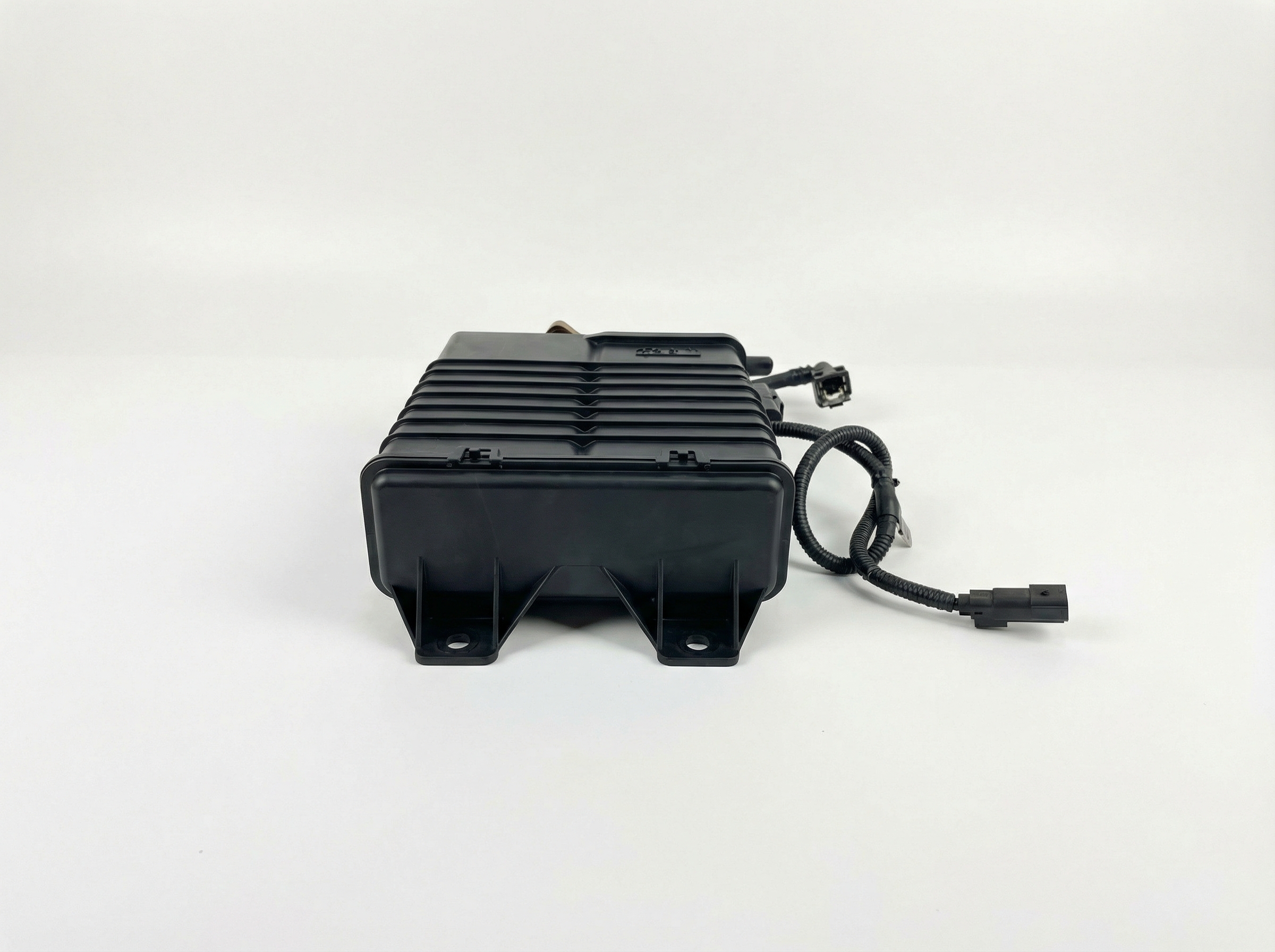

New Aftermarket Parts Available


The information in this article is provided for general reference and educational purposes only. Vehicle specifications, procedures, and part compatibility can vary by production date, trim level, and region. Always consult your vehicle's factory service manual and verify part numbers before purchasing or performing repairs. Safety-critical components such as airbags, seat belts, and braking systems should be installed by a qualified professional.
- Mercury Mariner:
- 🎬 Helpful Videos
- 🛍️ Shop This Part
- What's Unique About the 2009-2011 Mercury Mariner
- Symptoms You May Notice
- Most Likely Causes
- Rare But Worth Checking
- Diagnosis Steps
- Parts You'll Likely Need
- Technical Service Bulletins (TSBs) & Recalls
- Platform-Specific Known Issues
- Mechanic-Grade Diagnostic Values
- Hidden / Shadow Codes Worth Checking
- Scan Tool Commands That Help
- Wiring & Ground Locations
- Real Owner Repair Stories
- "I Checked Everything" — The Actual Cause
- OEM Part Supersession History
- Model Year Variations Within This Range
- Diagnostic Flowchart
- Used vs. New Parts: Buying Guide for This Vehicle
- Real Owner Stories
- 2011 Mercury Mariner
- 2009 Ford Escape (3.0L V6)
- 2009 Ford Escape
- Mazda Tribute (platform mate)
- Documented NHTSA Reports
- Related OBD-II Codes
- Frequently Asked Questions
- 🎟️ Get 5% Off