

P1450 on 2014-2018 Mazda 3: Causes and Fixes for Excessive Fuel Tank Vacuum
On a 2014-2018 Mazda 3, code P1450 is almost always caused by a faulty canister purge solenoid valve that is stuck open. This is a relatively affordable part (around $40-$120) and is a common DIY repair that takes less than an hour. If replacing the purge valve doesn't fix it, the next most likely cause is a blockage in the EVAP canister vent hose, often where it connects to the vehicle's frame.
- P1450 on your Mazda 3 means the fuel tank is holding too much vacuum.
- The most likely cause by a wide margin is a canister purge solenoid valve that is stuck open.
- Symptoms often include a check engine light, difficulty starting the car right after getting gas, and a rough idle.
- This is a DIY-friendly repair; the purge valve is located on top of the engine and is easy to access and replace.
- If a new purge valve doesn't fix the code, the next step is to inspect the EVAP vent hose at the rear of the car for a blockage, especially where it connects to the frame.
What's Unique About the 2014-2018 Mazda 3
While this code is very common on Ford vehicles, which share some historical engineering with Mazda, it's also a known issue on the 3rd generation Mazda 3 and other Skyactiv-powered Mazdas. The root cause is overwhelmingly a faulty purge solenoid valve (Part No. PE01-18-751), a component that controls the flow of fuel vapors to the engine. Mazda has issued technical service bulletins (TSBs) for this exact code on other models like the Mazda6, pointing to a faulty purge valve as the culprit, which reinforces the diagnosis for the Mazda 3. For instance, TSB Bulletin #01-012-14-2908A notes that some vehicles may experience MIL illumination with DTC P1450:00 stored in memory, specifically describing the condition as being unable to bleed up fuel tank vacuum.
Symptoms You May Notice
- Check Engine Light illuminated
- Difficulty starting the engine, especially right after filling the gas tank.
- Rough or unstable idle.
- An audible 'whoosh' of air rushing in when opening the fuel filler neck.
- Difficulty refueling (the gas pump nozzle clicks off repeatedly).
- Replacing the gas cap. A faulty gas cap typically causes a large leak code (like P0455), not a code for excessive vacuum. P1450 indicates the system is sealed too well and cannot vent, which is the opposite problem of a leak.
- Replacing the charcoal canister unnecessarily. While the canister can become saturated or the integrated FTP sensor can fail, it is far less common than a failed purge valve or a simple vent blockage.
Most Likely Causes
- Canister Purge Solenoid Valve Stuck Open 🔴 High Probability This is a very common failure point for this EVAP system design across many Mazda models. The valve fails internally and remains open, allowing constant, un-commanded engine vacuum to pull on the fuel tank.
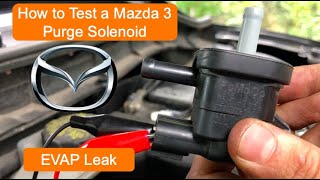
How to confirm: With the engine running at idle, disconnect the EVAP hose that runs from the purge valve to the intake manifold. Place your finger over the port on the valve; if you feel suction, the valve is stuck open 🎬 See how to test your purge solenoid for vacuum leaks. and must be replaced. The valve is located on the driver's side of the intake manifold, under the plastic engine cover.
Typical fix: Replace the canister purge solenoid valve. It is located on top of the engine, secured by two 8mm bolts, and is a straightforward replacement.
Est. part cost: $40-$120 - Blocked EVAP Canister Vent Valve or Hose 🟡 Medium Probability The vent valve and its hoses are located near the rear of the car and are exposed to road debris. A common failure point is the small nipple where the vent hose attaches to the frame rail, which can become completely clogged with dust and dirt, preventing fresh air from entering to relieve vacuum. Spiders are also known to build webs in these lines, causing a blockage.
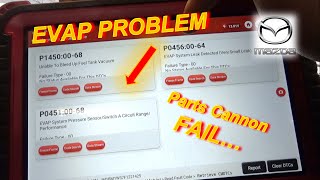
How to confirm: Visually inspect the vent valve and its hoses for blockages. A diagnostic video of a 2015 Mazda 3 showed a technician identifying a clogged vent hose nipple by disconnecting it and seeing the Fuel Tank Pressure (FTP) sensor reading on a scan tool immediately return to zero. 🎬 Watch: A pro technician diagnoses a clogged vent hose nipple. A smoke test can also confirm a restriction. Accessing the vent solenoid itself can be difficult and may require lowering the rear subframe.
Typical fix: Clean the blockage from the vent hose or nipple. If the vent solenoid is faulty, it must be replaced. In some cases for related codes, Mazda has recommended cutting the vent hose at its lowest point to prevent water/ice accumulation.
Est. part cost: $50-$150 - Kinked or Pinched EVAP Hose ⚪ Low Probability
How to confirm: Visually inspect all accessible EVAP system hoses between the engine bay, charcoal canister, and fuel tank for any signs of collapse, pinching, or sharp bends that would restrict flow.
Typical fix: Straighten the kinked hose or replace the damaged section.
Est. part cost: $10-$30
Rare But Worth Checking
- Faulty Fuel Tank Pressure (FTP) Sensor: While less common, the sensor that measures tank pressure can fail and send incorrect data to the computer, causing it to believe there is a vacuum issue when there isn't one. A diagnostic video of a 2015 Mazda 3 with this code showed a faulty FTP sensor was the initial suspicion because it was reading a vacuum at rest, though the ultimate cause was a blocked vent line giving a true vacuum reading. On this vehicle, the FTP sensor is integrated into the charcoal canister.
Diagnosis Steps
- Verify the code is P1450 using an OBD-II scanner. Check for any other accompanying EVAP codes.
- Connect a scan tool and monitor the live data for the Fuel Tank Pressure (FTP) sensor. With the engine off or at idle with the gas cap removed, the reading should be near 0 inches of water (inH2O) or atmospheric pressure. If it shows a significant vacuum, a problem is present.
- With the engine idling, locate the canister purge solenoid on top of the engine. Disconnect the hose leading from the valve to the intake manifold.
- Check for vacuum at the valve's port. There should be NO vacuum at idle. If suction is present, the purge valve is stuck open and is the confirmed fault.
- If no vacuum is felt at the purge valve, the issue is likely a blockage downstream. Proceed to inspect the EVAP vent system at the rear of the vehicle.
- Locate the EVAP canister and vent solenoid near the fuel tank. Inspect the vent hose for dirt, debris, or kinks. Pay special attention to the very end of the hose, where it often connects to a small nipple on the vehicle's frame, as this point can get clogged with dirt.
- With the scan tool still monitoring FTP, disconnect this vent hose. If the vacuum reading immediately drops to zero, the blockage is in the hose you just disconnected or the port it was attached to.
- If possible, use a scan tool with bi-directional controls to command the vent valve open and closed to test its electrical operation, listening for a click.
Parts You'll Likely Need
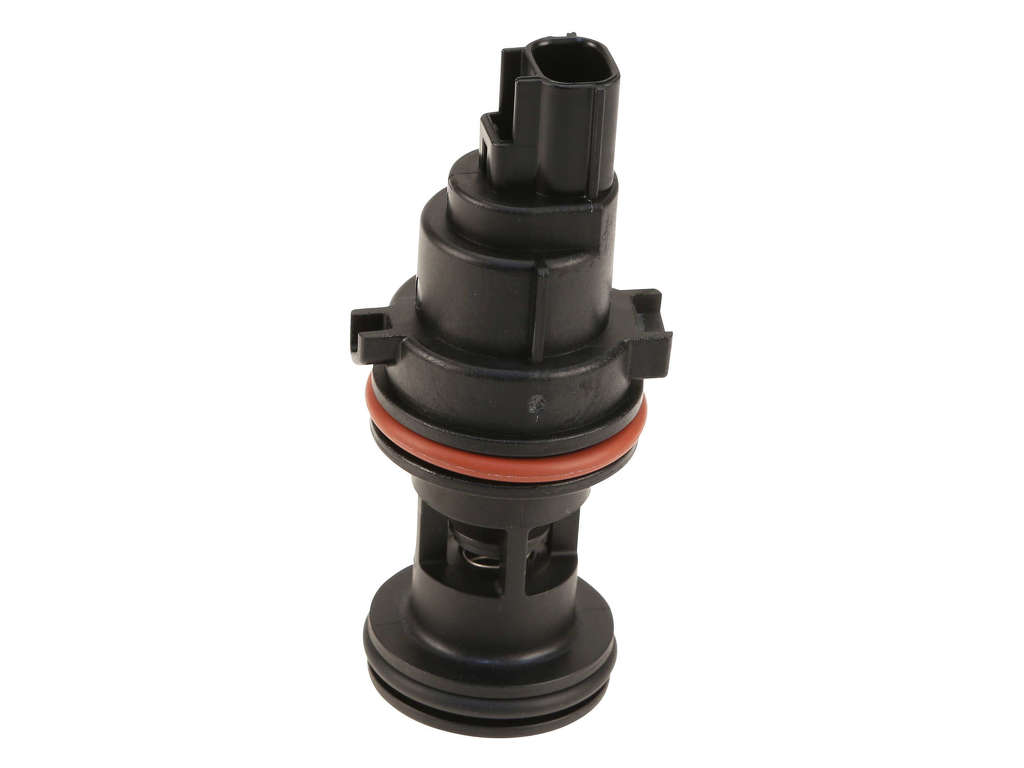
- Canister Purge Solenoid Valve
(OEM #PE01-18-751)— This is the most common failure point for code P1450. It gets stuck internally, allowing constant engine vacuum to be applied to the fuel tank.
Trusted brands: Mazda (Genuine), Dorman, Bosch, Standard Motor Products
OEM price range: $110-$145
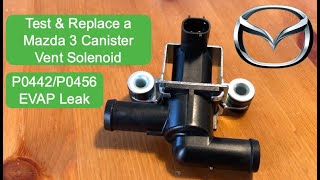
Aftermarket price range: $30-$80 - Canister Vent Valve Solenoid — This part can fail to open, trapping vacuum in the system. It can also become clogged with debris. Replacement can be difficult as it may require lowering the rear subframe for access. 🎬 Watch: How to access and replace the canister vent solenoid.
Trusted brands: Mazda (Genuine), Dorman (e.g., 911-711)
OEM price range: $120-$160
Aftermarket price range: $75-$110
Related Codes That Often Appear With This One
- P0171 — System Too Lean. A stuck-open purge valve creates a vacuum leak, allowing unmetered air (fuel vapor) into the intake manifold, which can cause a lean condition.
- P0507 — Idle Air Control System RPM Higher Than Expected. The vacuum leak from a stuck purge valve can also cause the engine idle speed to be higher than normal.
- P144A — EVAP System Purge Vapor Line Restricted. This code can appear alongside P1450 as the computer tries to diagnose the flow problem within the EVAP system.
- P0451 — Evaporative Emission System Pressure Sensor/Switch Range/Performance. This code often points to an issue with the FTP sensor's reading, which can be caused by the same blockages or faults that trigger P1450. A TSB for P0451 suggests a fix for water in the vent hose that is also relevant to P1450.
Technical Service Bulletins (TSBs) & Recalls
- TSB 01-012/14: While for the 2009-2013 Mazda6, this TSB directly addresses P1450 and confirms the common failure of the purge solenoid valve, instructing technicians to replace it with a modified part.
- TSB Bulletin #01-012-14-2908A: This manufacturer bulletin notes that some vehicles may experience a MIL illumination with DTC P1450:00 stored in memory, which is caused by a purge valve that has been modified to eliminate the concern.
- TSB for P0451 (undisclosed number): A TSB mentioned in a diagnostic video for P0451 on Mazda 3s notes that water can freeze in the vent hose and cause a blockage, a condition that would also trigger P1450.
Platform-Specific Known Issues
- A Mazda Technical Service Bulletin (TSB 01-012/14) was issued for the same P1450 code on 2009-2013 Mazda6 models, identifying a faulty purge valve as the cause and providing a modified part for the repair. This confirms Mazda's awareness of this failure mode.
- In a detailed diagnostic video for a 2015 Mazda 3 with P1450, the ultimate cause was found to be a vent hose nipple completely clogged with dirt where it enters the frame rail, preventing the system from breathing.
- A TSB related to code P0451 (often seen with P1450) on the Mazda 3 suggests that in cold climates, water can accumulate and freeze in the EVAP canister vent hose. The official fix involves cutting the hose at its lowest point to allow water to drain out.
Mechanic-Grade Diagnostic Values
- Fuel Tank Pressure (FTP) Sensor Signal Voltage — expected: Approximately 2.5V - 2.6V with the gas cap off (at atmospheric pressure).. Failure: Voltage is stuck high (near 5V), low (near 0V), or does not decrease from the baseline when a light vacuum is applied with a hand pump.
- Fuel Tank Pressure (FTP) Sensor Reference Voltage — expected: Approximately 5.0V at the sensor connector with Key On, Engine Off (KOEO).. Failure: Voltage significantly less than 5.0V indicates a wiring harness or PCM issue, not a sensor failure.
- Canister Purge Solenoid Coil Resistance — expected: Generally between 15 and 30 Ohms, but vehicle-specific data is recommended.. Failure: A reading far outside the expected range indicates an internal electrical failure of the solenoid.
- Canister Vent Solenoid Coil Resistance — expected: Typically between 20 and 30 Ohms.. Failure: A reading outside this range suggests the solenoid's internal winding is damaged.
Scan Tool Commands That Help
- Mazda M-MDS (or capable aftermarket scanner like Autel/Launch): EVAP Purge Valve Control / Actuation Test — Use this to command the purge valve to 0% (closed) at idle. If you still feel vacuum on the valve's port when commanded closed, it confirms a mechanical failure of the valve, separating it from a wiring or command issue.
- Mazda M-MDS (or capable aftermarket scanner): EVAP Vent Valve Control / Actuation Test — This command allows you to manually open and close the vent valve. While monitoring FTP sensor data, commanding the vent valve open should cause any vacuum in the tank to bleed off to zero. If the vacuum remains, it points to a blockage in the vent path.
Wiring & Ground Locations
- Purge Solenoid Connector — On the driver's side of the intake manifold, under the plastic engine cover.. This 2-pin connector provides power and ground to the purge solenoid. One pin should have battery voltage with the key on, and the other is the ground-side control from the PCM. Testing here can differentiate a bad valve from a wiring problem.
- Vent Valve Solenoid Connector — At the rear of the vehicle, on or near the charcoal canister, which is typically located above the rear subframe.. Provides power and ground to the vent solenoid. Damage to this connector or its wiring from road debris can cause the vent to fail to open, trapping vacuum and triggering P1450.
Real Owner Repair Stories
- Go-Parts Diagnostic Article (2012 Mazda 5 (shares EVAP components)) — Persistent P1450 code.
❌ Tried (didn't work) Replaced the canister purge valve, Replaced the canister vent solenoid, Replaced the gas cap
✅ What actually fixed it A shop performed a smoke test and found a physically kinked EVAP hose that was restricting airflow. Straightening the hose resolved the code.
Model Year Variations Within This Range
- 2014-2016 vs 2017-2018: The Mazda 3 received a facelift for the 2017 model year which included minor exterior and interior styling changes. While the primary EVAP system components like the purge valve (PE01-18-751) remained the same, there could be subtle differences in wiring harness routing or ground point locations. However, no specific changes affecting the P1450 diagnosis have been documented in the search results.
Diagnostic Flowchart
Other Known Issues on This Vehicle
Issues unrelated to this code that are worth knowing about as an owner of this generation:
- Infotainment 'Ghost Touch' and Malfunctions 🟠 Medium — Very common on 2014-2016 models, less so on 2017-2018 but still occurs. The screen registers phantom touches, making it unusable. (Ref: Mazda issued a warranty extension program (SSP B6 for 2014-2016 models) and a later Customer Service Program (CSP13) after a class-action settlement, covering diagnosis and potential replacement of the Connectivity Master Unit (CMU).)
- Automatic Transmission Harsh Shifting/Shuddering 🟡 Low — Reported sporadically, sometimes involving harsh shifts or shuddering under load. Not widespread but a known complaint. (Ref: A TSB was issued for earlier Mazda 3 models for a faulty shift solenoid, and similar symptoms are reported in this generation.)
- Leaking Hydraulic Accessory Belt Tensioner 🟡 Low — Considered a common maintenance item. The hydraulic tensioner can leak fluid, leading to failure and potential belt noise or slippage.
- Binding Rear Parking Brake Caliper 🟠 Medium — Common enough to warrant a recall for 2014-2016 models. Water can enter the brake caliper, causing corrosion and preventing the parking brake from releasing properly. (Ref: NHTSA Recall 16V-587)
- Prematurely Worn Motor Mounts 🟡 Low — Some owners report premature failure of the rubber in the motor mounts, leading to a 'banging' noise on acceleration or when shifting into gear.
Used vs. New Parts: Buying Guide for This Vehicle
When a used part is the smart pick: For this repair, using a used part is generally not recommended for the electronic solenoids (purge or vent valve). The primary causes of failure are internal wear and tear, and a used part carries a high risk of having the same issue or a short remaining lifespan. Used EVAP hoses or the plastic canister housing (if physically damaged) are acceptable if they are in good condition with no cracks.
Donor-vehicle mileage cap: roughly under 60000 miles for the part to have meaningful remaining life.
What to inspect on the donor part:
- For hoses, check for any dry rot, cracking, or soft/spongy spots.
- For the charcoal canister body, inspect for physical cracks or signs of fuel saturation (heavy, sloshing sound).
- Avoid any electronic components like solenoids or sensors from a donor vehicle, as their remaining life is unknown.
OEM-only on this vehicle (don't cheap out):
- No parts for this specific repair are strictly OEM-only, as reputable aftermarket options exist.
Aftermarket brands forum-validated for this vehicle:
- Bosch: Often an OE supplier, their parts are known for quality and reliability.
- Standard Motor Products (SMP): A well-regarded aftermarket brand that states their parts meet or exceed OE specifications.
- Dorman: Provides a cost-effective alternative, particularly for the vent valve solenoid (P/N 911-711), though it is listed for earlier models, it's a common cross-reference.
Brands owners have reported issues with on this vehicle:
- No-name, unbranded parts from online marketplaces should be avoided, as their quality control and material composition are unknown and can lead to repeat failures.
Real Owner Stories
Aggregated from forums and TSBs cited above. Mileages and costs reflect what owners reported in those sources.
2015 Mazda 3
Symptoms: Check Engine Light on with code P1450.
What fixed it: The cause was a vent hose nipple completely clogged with dirt where it enters the frame rail. Cleaning the blockage resolved the issue.
Source hint: A detailed diagnostic video for a 2015 Mazda 3 with P1450
2012 Mazda 5
Symptoms: A year-long struggle with a persistent P1450 code.
What fixed it: The issue was unresolved after replacing the purge valve, vent valve, and gas cap. The owner was advised to investigate a potential hose blockage.
Source hint: mazdas247.com
Related OBD-II Codes
Frequently Asked Questions
I have a 2015 Mazda 3 with P1450. Is the purge valve the most likely cause?
Where is the canister purge solenoid valve located on my 2014-2018 Mazda 3?
My car is hard to start right after I get gas. Is this related to the P1450 code?
How can I test the purge valve on my Mazda 3 myself?
I live in a cold climate. Could ice be causing my P1450 code?
Besides the purge valve, what's another common cause for P1450 on this car?
I heard about a TSB for P1450. Does it apply to my 2017 Mazda 3?
Helpful Videos
We Have This Part in Stock


The information in this article is provided for general reference and educational purposes only. Vehicle specifications, procedures, and part compatibility can vary by production date, trim level, and region. Always consult your vehicle's factory service manual and verify part numbers before purchasing or performing repairs. Safety-critical components such as airbags, seat belts, and braking systems should be installed by a qualified professional.
- Mazda 3:
- 🎬 Helpful Videos
- 🛍️ Shop This Part
- What's Unique About the 2014-2018 Mazda 3
- Symptoms You May Notice
- Most Likely Causes
- Rare But Worth Checking
- Diagnosis Steps
- Parts You'll Likely Need
- Related Codes That Often Appear With This One
- Technical Service Bulletins (TSBs) & Recalls
- Platform-Specific Known Issues
- Mechanic-Grade Diagnostic Values
- Scan Tool Commands That Help
- Wiring & Ground Locations
- Real Owner Repair Stories
- Model Year Variations Within This Range
- Diagnostic Flowchart
- Other Known Issues on This Vehicle
- Used vs. New Parts: Buying Guide for This Vehicle
- Real Owner Stories
- 2015 Mazda 3
- 2012 Mazda 5
- Related OBD-II Codes
- Frequently Asked Questions
- 🎟️ Get 5% Off