

OBD-II Code P0451: EVAP System Pressure Sensor/Switch Range/Performance
The Ultimate Guide to Diagnosing and Fixing P0451
- Code P0451 indicates a performance failure in the Fuel Tank Pressure (FTP) sensor, meaning the sensor's 0-5V signal is irrational or stuck, rather than confirming an actual vapor leak.
- Always inspect and tighten your gas cap first; a loose or degraded $20 cap alters tank pressure enough to trigger this sensor performance code.
- Repair costs range from $20 for a DIY gas cap replacement to over $800 if a shop must drop the fuel tank to replace a faulty FTP sensor.
- Never replace the FTP sensor without first testing its 3-wire circuit with a multimeter, as corroded wiring or a missing 5-volt reference causes the exact same symptoms.
What Does P0451 Mean?

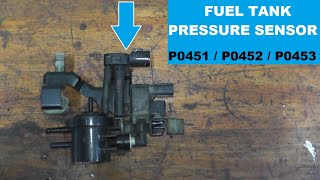
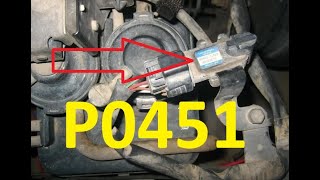
Your Powertrain Control Module (PCM) is receiving an irrational signal from the Fuel Tank Pressure (FTP) sensor. This sensor measures pressure and vacuum in the fuel tank to detect vapor leaks. Code P0451 means the sensor's reading is stuck, erratic, or outside the expected 0-5V range, indicating a hardware or wiring failure.
Technical definition: Evaporative Emission System Pressure Sensor/Switch Range/Performance. 🎬 Watch: A breakdown of P0451 causes and common fixes. The PCM detected the voltage signal from the fuel tank pressure (FTP) sensor is irrational, stuck, or outside the manufacturer's specified range during a system self-test.
Can I Drive With P0451?
Yes. You can safely drive with code P0451. It does not affect core engine performance, braking, or steering. However, your vehicle releases excess harmful emissions and automatically fails an emissions test. Ignoring the code long-term reduces fuel efficiency and masks other serious problems.
Common Causes

- Loose or Defective Gas Cap (Very Common) — A loose, worn, or incorrect gas cap alters tank pressure, triggering a range/performance fault. This is the easiest and most frequent trigger.
- Faulty Fuel Tank Pressure (FTP) Sensor (Very Common) — The sensor fails from age, heat cycles, and constant exposure to fuel vapors, sending incorrect or static voltage signals to the computer.
- Damaged or Corroded Wiring/Connectors (Common) — FTP sensor wiring under the vehicle is exposed to moisture and road salt. Corrosion creates a short, open, or high-resistance circuit, disrupting the 0-5V signal.
- Stuck EVAP Purge/Vent Valve (Less Common) — Purge or vent solenoids control fuel vapor flow. A valve stuck open or closed creates abnormal system pressure, which the FTP sensor accurately reports as an out-of-range condition.
- Blocked or Kinked EVAP Hoses (Less Common) — Debris, spider webs, or water clog EVAP vent lines. Hoses also kink or crack with age, trapping pressure and causing the FTP sensor to report irrational values.
- Saturated or Damaged Charcoal Canister (Rare) — Repeatedly overfilling the gas tank saturates the charcoal canister with liquid fuel. This creates blockages and incorrect pressure readings.
- Faulty PCM or Software Glitch (Very Rare) — The vehicle's main computer fails to correctly interpret FTP sensor signals. Certain newer models require a dealer software update to fix the sensor logic.
Symptoms

- Check Engine Light is On — The most common and often only symptom. The code sets after the vehicle detects the fault over two consecutive drive cycles.
- Difficulty Refueling — The gas pump nozzle clicks off repeatedly before the tank is full. This occurs when the EVAP system fails to vent pressure during refueling.
- Fuel Odor — You smell gasoline around the vehicle because the EVAP system fails to contain and purge fuel vapors.
- Hissing Sound from Gas Cap — Removing the gas cap releases a loud whoosh or hiss as trapped pressure or vacuum escapes.
- Slight Decrease in Fuel Economy — A malfunctioning vapor recycling system causes a minor drop in miles per gallon (MPG).
Diagnostic Flowchart

Tap your situation to follow the diagnostic path that matches what you're seeing on this code.
Common Fixes & Costs
- Replace Gas Cap — Parts: $15-$60, Labor: $0-$50, ~0.1 hr book time (DIY)
- Replace Fuel Tank Pressure (FTP) Sensor — Parts: $40-$220, Labor: $100-$600, ~1.0-4.0 hr book time (Intermediate)
- Repair Damaged Wiring or Connector — Parts: $5-$50, Labor: $100-$300, ~1.0-2.0 hr book time (Intermediate)
- Replace EVAP Purge or Vent Valve — Parts: $30-$120, Labor: $50-$150, ~0.5-1.0 hr book time (DIY)
- Perform EVAP System Smoke Test (Diagnosis) — Parts: $0, Labor: $100-$200, ~1.0-1.5 hr book time (Professional)
Used vs. New Parts: Buying Guide
When a used part is worth it: Buying a used FTP sensor is never recommended. It is an inexpensive electronic part with a finite lifespan. The high labor cost to drop a fuel tank makes the risk of premature failure unacceptable.
Donor-vehicle mileage cap: roughly under 40000 miles for the part to have meaningful remaining life.
Donor quality checklist:
- Only pull from low-mileage, rear-end collision vehicles.
- Match the OEM part number exactly.
- Avoid parts from rust-belt regions due to connector corrosion.
Decision logic:
- If The FTP sensor is easily accessible under the rear seat → Buy a new OEM or premium aftermarket part.
- If The fuel tank must be dropped for access → Absolutely buy a new OEM part to avoid paying $500+ in labor twice.
- If The part is a simple mechanical hose or canister bracket → A used part from a salvage yard is acceptable.
Warranty tradeoff: Used sensors carry a 30-day warranty. New aftermarket parts offer 1-year to lifetime warranties. New OEM parts carry 1-2 year warranties.
Worst-case if a used part fails: $500-$1000 if a used sensor fails, requiring the shop to drop the fuel tank a second time.
What Happens If You Wait — Timeline
- 0-1 month: Code P0451 sets. Check Engine Light turns on. Vehicle fails OBD-II emissions tests. (MPG impact: 0-2%% · Added cost: $0)
- 1-6 months: Slight decrease in fuel economy. Faint fuel smell after parking. The Check Engine Light masks new codes. (MPG impact: 2-5%% · Added cost: $20-$80 in wasted fuel.)
- 6-12 months: Blockages stress other EVAP components, potentially shortening the life of purge or vent valves. (MPG impact: 3-7%% · Added cost: $50-$150 if a valve fails.)
- 12+ months: No direct catastrophic damage occurs. The primary risk is ignoring a severe new engine issue hidden by the existing light. (MPG impact: 3-7%% · Added cost: High risk of missing costly repairs (e.g., misfires).)
Cost of Not Fixing It
- 0-3 months: Automatic failure of emissions inspections. A persistent Check Engine Light masks new, more serious problems. (Added cost: Negligible, aside from failed emissions test fees.)
- 3-12 months: Prolonged incorrect fuel tank pressure stresses EVAP components like the charcoal canister or purge/vent valves. (Added cost: $50 - $200 if another EVAP component fails.)
- 12+ months: No direct damage to major engine components occurs. The primary financial risk is ignoring a severe new issue hidden by the existing Check Engine Light. (Added cost: High risk of catastrophic engine damage if unrelated codes are ignored.)
Diagnosis Steps

- Inspect the Gas Cap
Remove the gas cap and check for cracks in the plastic or damage to the rubber O-ring. Tighten it until it clicks at least once.
Tools: None (Beginner) - Check for Related Trouble Codes
Scan for other codes. Purge valve (P0441), vent valve (P0446, P0449), or leak codes (P0455, P0456) pinpoint the root cause faster. A vent valve code combined with P0451 suggests a stuck valve.
Tools: OBD-II Scanner (Beginner) - Visually Inspect the EVAP System
Look under the vehicle near the fuel tank. Check the EVAP canister and hoses for cracks, kinks, or disconnections. Inspect the FTP sensor wiring connector for corrosion or broken wires.
Tools: Flashlight, Jack and Jack Stands (Beginner) - Analyze Scan Tool Live Data (Voltage)
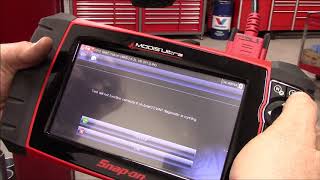
View live data for the FTP sensor voltage. With the key on, engine off (KOEO) and gas cap removed, voltage must be stable near 2.5V. A reading stuck near 5.0V or 0V indicates an electrical fault or failed sensor.
Tools: OBD-II Scanner (Intermediate) - Analyze Scan Tool Live Data (Pressure)
View the 'EVAP System Pressure' PID. With the gas cap off (KOEO), the reading must be 0 inH2O or 0 kPa. A significant vacuum or pressure reading with the cap off confirms a biased, failed sensor.
Tools: Advanced OBD-II Scanner (Advanced) - Test the FTP Sensor Circuit
Disconnect the sensor. With the key on, test the harness connector. Verify a 5-volt reference from the PCM, a ground wire (under 100 ohms to chassis ground), and the signal wire. Missing 5V or ground indicates a wiring issue.
Tools: Multimeter, Vehicle-Specific Wiring Diagram (Advanced) - Test the FTP Sensor's Response
Reconnect the sensor and back-probe the signal wire. Apply a small amount of vacuum (under 27 inH2O) to the sensor port using a hand pump. Voltage must change smoothly. Erratic or static voltage confirms a bad sensor.
Tools: Multimeter, Back-probe Kit, Hand Vacuum Pump (Advanced) - Test the Purge and Vent Solenoids
Use a bi-directional scanner to command the purge and vent solenoids open and closed. Listen for a distinct click. A valve that fails to click or seal requires replacement.
Tools: Bi-directional OBD-II Scanner (Advanced) - Perform a Smoke Test
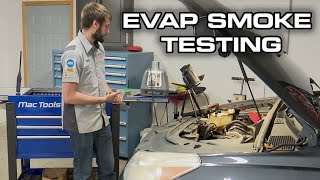
Force low-pressure smoke (under 1 PSI) into the EVAP service port. Smoke escaping from hoses, seals, or valves pinpoints hidden leaks or blockages.
Tools: EVAP Smoke Machine (Advanced)
When This Code Triggers (Freeze-Frame Conditions)
- Engine Coolant Temp: 40-95°F (at startup) (The EVAP monitor requires engine and ambient air temps to be close during a cold start.)
- RPM: 1000-3000 (Steady cruise or controlled idle periods during the test cycle.)
- Vehicle Speed: 45-65 mph (The test requires a period of steady highway-speed driving.)
- Fuel Level: 15-85% (The test aborts if the tank is too full or nearly empty.)
Related Codes
- P0452 — Indicates the FTP sensor signal is stuck low (under 0.5V), pointing specifically to a short to ground or a failed sensor.
- P0453 — Indicates the FTP sensor signal is stuck high (over 4.5V), pointing to an open circuit, loss of ground, or a failed sensor.
- P0449 — Indicates a fault in the EVAP vent valve circuit. A stuck-closed vent valve builds tank pressure, causing the FTP sensor to report an irrational value and triggering P0451.
- P0456 — Indicates a 'very small leak'. P0456 means the FTP sensor works correctly and detected a leak. P0451 means the sensor itself is malfunctioning.
Climate & Environmental Factors
- Ambient Temperature: The EVAP self-test only runs between 40°F and 95°F (4°C to 35°C). The P0451 code often appears seasonally because the diagnostic monitor won't run in extreme weather.
- High Humidity / Road Salt: Moisture and road salt corrode the FTP sensor's exposed wiring and connector, causing short circuits and erratic signals.
- Altitude: Significant altitude changes affect barometric pressure. A weak sensor fails to compensate, providing irrational readings and triggering the code.
How to Talk to a Mechanic About This Code
Say this: "I have a P0451 code. I've checked the gas cap. Please check for TSBs, inspect the FTP sensor wiring, and verify live data before replacing parts. If there's no electrical fault, I authorize a smoke test."
Directs the mechanic to follow a logical diagnostic process rather than blindly replacing an expensive sensor for a simple wiring or blockage issue.
Avoid saying:
- 'My check engine light is on, can you just fix it?'
- 'I need a new fuel tank sensor, give me a price.'
- 'Just do whatever you think is best.'
Questions to ask before authorizing the repair:
- What were the FTP sensor voltage and pressure readings with the gas cap off?
- Did you find any applicable TSBs for my vehicle?
- Did you test the wiring for power, ground, and signal integrity before condemning the sensor?
- What is the warranty on parts and labor?
Where to Take It: Dealer vs Independent vs Chain
- Dealer:
Use only for software updates or warranty work. Otherwise, an independent shop is more cost-effective.
Best for: Vehicles under warranty., Newer vehicles requiring a known software update (TSB)., Complex electrical issues independent shops cannot solve.
Downsides: Highest labor rates., Quick to replace expensive parts rather than repair wiring. (Typical cost: +50% vs. baseline) - Independent Shop:
Best fit for most P0451 repairs. Offers the best balance of expertise and value.
Best for: Out-of-warranty vehicles., Cost-effective diagnostics, including smoke tests., Skilled electrical and emissions diagnostics.
Downsides: Diagnostic capabilities vary. Vet the shop first., May lack access to the latest manufacturer software. (Typical cost: +0% vs. baseline) - Chain Shop:
Avoid for complex diagnostics. Acceptable only for a free code read.
Best for: Free initial code scans., Simple fixes like gas cap replacements.
Downsides: Technicians lack in-depth emissions diagnostic experience., High pressure to upsell sensors without proper diagnosis., Lack advanced bidirectional scanners or smoke machines. (Typical cost: -10% vs. baseline)
When to Walk Away From the Repair
If the repair cost exceeds 40% of your car's private-party value, reconsider the fix. This is critical on older vehicles requiring fuel tank removal.
- Car worth $4000, fix is $1100: Fix it. The cost is high but well below the 40% threshold.
- Car worth $2500, fix is $1200: Walk away. The repair is nearly 50% of the car's value.
What Scan Tool You Need for This Code
Minimum: A scanner that reads live data for the FTP sensor, showing voltage and pressure readings.
A $20 code reader only shows the P0451 code. It cannot display the live sensor data required to determine if the sensor is faulty, biased, or suffering a wiring issue.
Budget: Autel AP200 / BlueDriver Pro (~$60) — Connects to your smartphone to view live data, including critical FTP sensor voltage and pressure readings.
Mid-range: Foxwell NT510 Elite / XTOOL D7 (~$180) — Adds bidirectional control to command EVAP purge and vent valves open and closed for testing.
Professional: Autel MaxiCOM MK808 / MK906BT (~$500) — Offers full bidirectional control and initiates the vehicle's specific EVAP system leak test.
Rent vs buy: Auto parts stores scan codes for free but use basic readers. Buy a budget live-data scanner to diagnose the issue yourself.
How to Clear the Code After You Fix It
- Use an OBD-II scan tool to clear the diagnostic trouble codes.
- Ensure the fuel tank is between 15% and 85% full.
- Perform the specific EVAP drive cycle for your vehicle.
Drive cycle (~30 minutes): A typical EVAP drive cycle requires a cold start (sitting 8+ hours), a few minutes of idling, 10-15 minutes of steady highway driving (55-65 mph), and returning to a stop.
Readiness monitors affected: EVAP System Monitor, Catalyst Monitor, O2 Sensor Monitor
Before emissions retest: drive at least 50 miles to fully set monitors.
Watch out for:
- Disconnecting the battery clears the code but resets all readiness monitors, guaranteeing an emissions failure.
- The code returns immediately if the underlying mechanical or electrical fault remains.
- Failing to meet drive cycle prerequisites (fuel level, ambient temp) prevents the EVAP monitor from running.
Will This Fail Emissions / State Inspection?
Yes — this code typically fails an OBD-II emissions inspection.
- California: Automatic smog check failure. All readiness monitors must be 'Ready'. A specific drive cycle must be completed post-repair.
- New York: Immediate NYVIP3 failure. The EVAP readiness monitor must be set to 'Ready'.
- Texas: Fails the OBD portion of the state inspection in required counties.
Most Commonly Affected Vehicles
- Ford F-150 / Transit / Focus (2004-2021) — Debris in the capless fuel filler neck prevents a proper seal. On Transits, TSB 21-2106 identifies kinked EVAP vent lines. FTP sensor replacement usually requires dropping the fuel tank.
- Chevrolet / GMC Silverado / Sierra / Cruze (2007-2020) — The FTP sensor itself is a frequent failure point on trucks. On the Cruze, corroded connectors are the primary cause.
- Hyundai Sonata / Santa Fe (2003-2023) — On 2020-2023 Sonatas (1.6T), P0451 requires a dealer ECU software update (TSB 25-01-001H). Older models suffer from wiring shorts.
- Kia Rio / Soul / Sorento (2005-2017) — On 2012-2017 Rios, TSB FUE038_R1 links P0451 to a contaminated Canister Close Valve. On the Soul and Sorento, the FTP sensor is easily accessible under the rear seat.
- Subaru Impreza / WRX / Forester / Legacy (2000-2013) — A poor factory ground wire crimp inside the main wiring harness causes erratic signals. The fix requires cutting and soldering the ground wires.
- Honda Civic / Accord (2013-2018) — A loose or worn-out gas cap is the most common trigger. Always check the cap before replacing the FTP sensor.
- Toyota Camry / Corolla (2014-2019) — Spider webs blocking the EVAP vent line near the canister cause incorrect pressure readings.
- Nissan Sentra / Altima (2013-2019) — Often triggered by an ECM software glitch requiring a dealer firmware update. Faulty EVAP canister vent control valves are also common.
Manufacturer-Specific Notes
- Ford: On 'Easy Fuel' capless systems, debris in the filler neck flap prevents sealing. Clean the flap with the provided funnel and compressed air. A Ford TSB warns against automatically replacing the purge valve for this code.
- General Motors (Chevrolet/GMC): The FTP sensor signal wire breaks or corrodes easily on trucks with exposed harnesses. A failing sensor typically shows a static voltage reading that ignores pressure changes.
- Hyundai / Kia: Always check for TSBs before replacing parts. Fixes range from ECU software updates (2020+ Sonata) to replacing contaminated Canister Close Valves (Rio).
- Subaru: 2000-2013 models suffer from a poor factory ground connection for the FTP sensor's shielded wiring. The fix requires locating and soldering the crimped ground wires inside the harness.
Real Owner Stories
2015 Honda Civic - The Simple Fix
Check engine light appeared with no symptoms. Code reader showed P0451.
What they tried:
- Ignored the light initially.
- Read forums suggesting the gas cap.
Outcome: Purchased a new OEM gas cap for $20. After tightening the new cap, the light turned off after three drive cycles.
Lesson: Always check the gas cap first. It is the cheapest and easiest solution for EVAP codes.
2013 Ford Expedition 5.4L - Misdiagnosis and High Labor
P0451 code accompanied by hard starts and highway misfires.
What they tried:
- Suspected a faulty purge valve.
- Mechanic diagnosed a faulty FTP sensor.
Outcome: The shop dropped the fuel tank to replace the FTP sensor, fixing the P0451 code. The misfire remained and was later traced to worn spark plugs.
Lesson: P0451 indicates a sensor performance issue, not a leak. Diagnose unrelated symptoms separately to avoid unnecessary high-labor repairs.
2003 Hyundai Santa Fe 2.4L - The Unusual Wiring Short
Persistent P0451. Scan tool showed FTP sensor voltage stuck at 1.9V with the gas cap off.
What they tried:
- Technician confirmed 5V reference and ground were good at the sensor.
- Jumping 5V directly to the signal pin at the ECM did not change the reading.
Outcome: The technician cut the signal wire near the ECM, which changed the scan tool reading, confirming a short in the harness. Running a new wire resolved the issue.
Lesson: A full electrical diagnosis is crucial. A wiring fault perfectly mimics a failed sensor.
2019 Kia Stinger GT 3.3L - Road Debris Damage
P0451 appeared after running over a moving blanket on the highway. Experienced fuel nozzle shut-off during refueling.
What they tried:
- Scanned code at an auto parts store.
- Posted on a forum for advice.
Outcome: The impact damaged an EVAP hose underneath the car, causing the venting failure and sensor code. A physical repair of the hose fixed the issue.
Lesson: If a code appears immediately after hitting road debris, perform a visual inspection of the undercarriage first.
How to Prevent This Code From Triggering
- Avoid 'topping off' the fuel tank (Every fill-up) — Overfilling forces liquid gasoline into the vapor-only charcoal canister, causing blockages and sensor errors.
- Tighten the gas cap until it clicks (Every fill-up) — A loose cap creates a massive leak, confusing the pressure sensor and triggering performance codes.
- Inspect EVAP hoses (Annually or every 15,000 miles) — Catching cracked or brittle hoses early prevents system faults, especially in rust-belt regions.
- Keep the capless fuel filler clean (As needed) — Cleaning the sealing flap on Ford capless systems prevents dirt from causing EVAP leaks.
- Check for manufacturer TSBs (During routine service) — Dealer software updates adjust diagnostic logic, preventing false P0451 codes on newer vehicles.
Frequently Asked Questions
Can I pass an emissions test with a P0451 code?
No. A P0451 code triggers an automatic emissions test failure. It indicates a fault in the fuel vapor control system and illuminates the Check Engine Light.
What is the difference between P0451 and P0455/P0456?
P0451 means the pressure sensor itself is sending an unbelievable signal. P0455 or P0456 means the sensor works correctly and successfully detected a physical leak.
Why did the P0451 code appear right after getting gas?
You likely left the gas cap loose or overfilled the tank. Overfilling saturates the charcoal canister with liquid fuel, causing pressure reading errors.
Could my P0451 code just be a loose gas cap?
Yes. Always check your gas cap first. Ensure it is tight and the rubber seal is intact before assuming a complex problem.
What are the most common misdiagnoses for P0451?
Mechanics often replace the FTP sensor without testing the wiring or checking for blockages. A smoke test and multimeter circuit check must precede sensor replacement.
My car only gets the P0451 code in certain weather. Why?
The EVAP self-test only runs within specific ambient temperature ranges, typically 40-95°F. Extreme temperatures also expose marginal wiring connections or failing sensor electronics.
Can a bad battery cause a P0451 code?
A failing battery causes low system voltage, leading to erratic sensor signals. However, it is rarely the root cause for P0451 specifically.
Key Takeaways
- Code P0451 indicates a performance failure in the Fuel Tank Pressure (FTP) sensor, meaning the sensor's 0-5V signal is irrational or stuck, rather than confirming an actual vapor leak.
- Always inspect and tighten your gas cap first; a loose or degraded $20 cap alters tank pressure enough to trigger this sensor performance code.
- Repair costs range from $20 for a DIY gas cap replacement to over $800 if a shop must drop the fuel tank to replace a faulty FTP sensor.
- Never replace the FTP sensor without first testing its 3-wire circuit with a multimeter, as corroded wiring or a missing 5-volt reference causes the exact same symptoms.
Helpful Videos
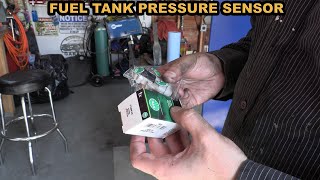
![How to Fix P0451 Engine Code in 3 Minutes [2 DIY Methods / Only $4.35]](https://img.youtube.com/vi/Kj7MQbCh4UA/mqdefault.jpg)

The information in this article is provided for general reference and educational purposes only. Vehicle specifications, procedures, and part compatibility can vary by production date, trim level, and region. Always consult your vehicle's factory service manual and verify part numbers before purchasing or performing repairs. Safety-critical components such as airbags, seat belts, and braking systems should be installed by a qualified professional.
- 🎬 Helpful Videos
- What Does P0451 Mean?
- Can I Drive With P0451?
- Common Causes
- Symptoms
- Diagnostic Flowchart
- Common Fixes & Costs
- Used vs. New Parts: Buying Guide
- What Happens If You Wait — Timeline
- Cost of Not Fixing It
- Diagnosis Steps
- When This Code Triggers (Freeze-Frame Conditions)
- Related Codes
- Climate & Environmental Factors
- How to Talk to a Mechanic About This Code
- Where to Take It: Dealer vs Independent vs Chain
- When to Walk Away From the Repair
- What Scan Tool You Need for This Code
- How to Clear the Code After You Fix It
- Will This Fail Emissions / State Inspection?
- Most Commonly Affected Vehicles
- Manufacturer-Specific Notes
- Real Owner Stories
- 2015 Honda Civic - The Simple Fix
- 2013 Ford Expedition 5.4L - Misdiagnosis and High Labor
- 2003 Hyundai Santa Fe 2.4L - The Unusual Wiring Short
- 2019 Kia Stinger GT 3.3L - Road Debris Damage
- How to Prevent This Code From Triggering
- Frequently Asked Questions
- Can I pass an emissions test with a P0451 code?
- What is the difference between P0451 and P0455/P0456?
- Why did the P0451 code appear right after getting gas?
- Could my P0451 code just be a loose gas cap?
- What are the most common misdiagnoses for P0451?
- My car only gets the P0451 code in certain weather. Why?
- Can a bad battery cause a P0451 code?
- Key Takeaways
- 🎟️ Get 5% Off