

P1450 on 2003-2007 Ford E-Series: "Unable to Bleed Up Fuel Tank Vacuum" Causes and Fixes
On a 2003-2007 Ford E-Series van, code P1450 is most often caused by a blocked canister vent solenoid or its associated filter, often due to debris or even spider webs. A stuck-open purge valve is another common culprit. Expect to spend $30-$75 on parts for a DIY fix.
- P1450 means the EVAP system can't get rid of the vacuum it creates, often due to a blockage or a stuck valve.
- Before buying parts, check for a 'whoosh' sound at the gas cap to confirm the vacuum issue.
- The two most likely culprits are a stuck-open purge valve in the engine bay or a blocked canister vent hose/solenoid at the rear of the van.
- Always check the vent hose inlet near the spare tire for debris like dirt or spider webs before replacing any parts; this is a common and free fix.
- This is a DIY-friendly repair that usually doesn't require expensive tools.
What's Unique About the 2003-2007 Ford E-Series
On Ford trucks and vans like the E-Series, the EVAP system's vent components are often located underneath the vehicle near the spare tire, making them susceptible to dirt, debris, and even insect nests. Forum users for E-Series and other Ford trucks frequently report finding spider egg sacs clogging the canister vent hose or filter, which directly causes the P1450 code. While a faulty purge valve is a common cause on many Fords, the vent pathway blockage is a particularly well-documented issue on these work vans.
Symptoms You May Notice
- Check Engine Light is on.
- A loud 'whoosh' or hissing sound of air rushing in when you remove the gas cap.
- Difficulty starting the engine, or a sputtering, rough idle immediately after refueling.
- Reduced fuel economy.
- A noticeable smell of fuel around the vehicle.
- Difficulty filling the fuel tank, with the pump repeatedly shutting off. 🎬 Watch: How to fix slow fuel filling and vent issues.
- Replacing the fuel tank pressure (FTP) sensor first. While it can fail, it's much less likely to be the cause than a blocked vent or a stuck purge valve.
Most Likely Causes
- Blocked Canister Vent (CV) Solenoid or Filter 🔴 High Probability The vent components are located under the van, exposed to road debris, dirt, and insects. Spider webs and egg sacs are a surprisingly common cause of blockages in the vent hose or filter box.
How to confirm: Locate the EVAP canister and vent solenoid assembly, typically near the spare tire. Disconnect the vent hose and inspect it and the solenoid's filter for any visible blockages like dirt, debris, or insect nests. The solenoid itself should be normally open when de-energized; you should be able to blow through it.
Typical fix: Clean any debris from the vent hose and filter. If the solenoid itself is stuck closed, it will need to be replaced.
Est. part cost: $30-$60 - Stuck-Open EVAP Canister Purge Valve 🔴 High Probability This is a very common failure point on many Ford vehicles from this era. The valve fails internally and remains open, constantly allowing engine vacuum to pull on the fuel tank. NHTSA ODI #11467127 describes a diagnosis where a sticking canister purge valve was found pulling a constant vacuum.
How to confirm: Locate the purge valve in the engine bay. With the engine running, disconnect the vacuum line that runs from the valve to the EVAP canister. There should be NO vacuum felt at the valve's port. If you feel suction, the valve is stuck open.
Typical fix: Replace the canister purge valve. This is often a quick repair requiring only an 8mm socket. 🎬 See this simple diagnosis and purge valve repair walkthrough.
Est. part cost: $25-$50 - Kinked or Pinched EVAP Hose 🟡 Medium Probability Hoses can be misrouted during other repairs or become brittle and collapse over time. Manufacturer TSB Bulletin #TSB 21-2106 notes that a kinked evaporator emissions fresh air vent line can lead to an illuminated MIL with code P1450.
How to confirm: Visually inspect all EVAP system hoses, from the engine bay to the canister at the rear of the vehicle. Look for any sharp bends, kinks, or visible damage. A smoke test is the most effective way to find non-visible cracks or blockages.
Typical fix: Repair or replace the damaged section of the hose.
Est. part cost: $10-$30 - Faulty or Incorrect Fuel Cap ⚪ Low Probability
How to confirm: Ensure the gas cap is tight and the seal is not cracked or damaged. A cap that cannot relieve excess vacuum can contribute to this code. Try cleaning the cap's vent mechanism or testing with a known-good cap. A test from a 2006 Expedition owner showed the cap's internal vent was stuck.
Typical fix: Replace the fuel filler cap.
Est. part cost: $15-$30
Rare But Worth Checking
- Faulty Fuel Tank Pressure (FTP) Sensor: This is less common, but if all other components test good, the sensor providing the vacuum reading to the computer could be at fault. NHTSA ODI #11580810 defines P1450 as being unable to bleed the gas tank due to excessive vacuum, which is the condition this sensor monitors.
- Saturated Charcoal Canister: If the vehicle is habitually 'topped off' with fuel after the pump clicks off, liquid fuel can be forced into the charcoal canister. This saturates the charcoal, turning it into a solid blockage that prevents air from flowing through.
Diagnosis Steps
- Check the gas cap. Ensure it is tight and the seal is in good condition. Listen for a loud 'whoosh' when opening it, which confirms excessive vacuum is present.
- Locate the canister purge valve in the engine bay. With the engine running, disconnect the hose leading towards the rear of the vehicle. Feel the port on the valve; if there is any suction, the valve is stuck open and must be replaced.
- If the purge valve is good, move to the rear of the vehicle. Locate the EVAP canister and canister vent (CV) solenoid, usually above the spare tire.
- Inspect the vent hose inlet for blockages. This is a common place for spider webs, egg sacs, or dirt to accumulate. A user on Ford-Trucks.com reported finding a spider egg sac as the culprit on their 2003 E-250.
- Disconnect the vent hose and inspect the CV solenoid's filter and port for debris. Clean as necessary.
- If the path is clear, you can test the CV solenoid. It should be open when de-energized. You should be able to blow gently through it. If it's closed, it has failed.
- Trace the EVAP hoses from the canister to the fuel tank and to the engine, looking for any visible kinks, collapses, or damage.
- If all other components check out, the fuel tank pressure (FTP) sensor may be faulty, requiring testing with a scan tool that can read live data.
Parts You'll Likely Need
- Canister Vent Solenoid
(OEM #9C2Z-9C985-A (Motorcraft CX-2133))— This valve allows fresh air into the system to bleed off vacuum. It can get stuck closed or its filter can become clogged with debris, especially spider nests.
Trusted brands: Motorcraft, Dorman, Standard Motor Products (SMP)
OEM price range: $50-$80
Aftermarket price range: $30-$60 - Canister Purge Valve
(OEM #7C2Z-9C915-A (Motorcraft CX-2022))— This is a very common failure item on Fords. It gets stuck open, causing constant engine vacuum to be applied to the fuel tank.
Trusted brands: Motorcraft, Bosch, Standard Motor Products
OEM price range: $40-$60
Aftermarket price range: $25-$50 - Fuel Filler Cap
(OEM #FC-1061 (Motorcraft))— A less common but simple cause. A faulty cap may not vent properly, contributing to the vacuum issue.
Trusted brands: Motorcraft, Stant
OEM price range: $20-$35
Aftermarket price range: $15-$25
Related Codes That Often Appear With This One
- P0446 — This code specifically indicates an EVAP vent control circuit malfunction, which directly relates to the inability to bleed off vacuum.
- P0455 — This code indicates a large EVAP leak. While P1450 is about too much vacuum, a related component failure like a stuck purge valve can sometimes trigger other system codes.
- P2196 — As noted in NHTSA ODI #11580810, this code for an O2 sensor stuck rich can sometimes appear alongside P1450.
Platform-Specific Known Issues
- A well-documented issue on Ford trucks and vans is the canister vent hose inlet being clogged by spider webs or egg sacs, preventing the system from drawing in fresh air to relieve vacuum. One owner of a 2003 E-250 with the 5.4L V8 specifically identified a spider egg sac as the cause of their P1450 code.
Mechanic-Grade Diagnostic Values
- EVAP Canister Vent (CV) Solenoid Coil Resistance — expected: 48 - 65 Ohms. Failure: A reading outside this range indicates a faulty solenoid coil.
- EVAP Canister Purge Valve Coil Resistance — expected: 30 - 38 Ohms. Failure: A reading outside this range suggests the valve's coil is open or shorted.
- Fuel Tank Pressure (FTP) Sensor Voltage (Key On, Engine Off) — expected: 2.40 - 2.80 Volts. Failure: A voltage significantly outside this range with the gas cap off indicates a faulty sensor or a VREF/ground circuit issue.
- Live Data: Fuel Tank Pressure (FTP) during normal purge — expected: -2.0 to -4.0 inches of H2O. Failure: If the vacuum consistently exceeds -8.0 in-H2O, it indicates a restriction in the vent path, triggering a P1450.
Scan Tool Commands That Help
- Ford IDS (or equivalent professional scanner): Output State Control (OSC) / Actuation Test — Use this to manually command the Canister Vent (CV) solenoid closed and open. You should hear an audible click. This allows you to test the solenoid's mechanical function and check if it holds vacuum or vents properly without waiting for a full drive cycle.
- Ford IDS (or equivalent professional scanner): EVAP Purge Valve Commanded Duty Cycle — Command the purge valve to 0% (closed) with the engine running while monitoring FTP sensor data. If the FTP data still shows a developing vacuum, the purge valve is mechanically stuck open and has failed, confirming the most common cause of P1450.
Wiring & Ground Locations
- EVAP Canister Purge Valve — In the engine bay, typically at the left rear of the engine on the 5.4L V8.. This is one of the primary failure points. Its location makes it accessible for testing. It receives power and a PCM-controlled ground signal to operate.
- EVAP Canister Vent (CV) Solenoid — At the rear of the vehicle, mounted on or near the charcoal canister, often above the spare tire.. This is the other primary failure point, often due to blockage. Its wiring is exposed underneath the vehicle and can be damaged.
- G100 / G104 — Common ground points in the engine compartment, typically on the left side.. A poor ground connection for the PCM or related sensors can cause erratic behavior and false codes. While not a direct cause, checking major grounds is a valid step in advanced electrical diagnosis.
- Powertrain Control Module (PCM) — Located in the left rear of the engine compartment, near the brake master cylinder.. The PCM is the source of control for both the purge and vent solenoids. Any wiring checks for these components will ultimately trace back to the PCM connector.
Real Owner Repair Stories
- NHTSA ODI #11343783 — An owner reported that a stuck canister purge valve triggered the P1450 "unable to bleed up fuel tank vacuum" code specifically after filling up at a gas station, which sometimes caused the vehicle to stall.
- NHTSA ODI #11321251 — One owner experienced stalling and trouble starting, noting that even after replacing the fuel tank pressure solenoid, the P1450 code and symptoms persisted.
- Mustang6G.com forum user (2017 Mustang GT (Note: Different vehicle, but identical failure mode applicable to any vehicle with an externally-referenced FTP sensor)) — Recurring P1450 code even after replacing the purge valve.
❌ Tried (didn't work) Replacing the canister purge valve (twice).
✅ What actually fixed it The root cause was oily undercoating (Krown) that had clogged the tiny atmospheric reference port on the Fuel Tank Pressure (FTP) sensor. This caused the sensor to give a false vacuum reading. Cleaning the sensor body with brake cleaner or air intake cleaner resolved the code. - Ford Truck Enthusiasts forum user (2000 Ford F-150 (Similar platform and EVAP design)) — P1450 code.
❌ Tried (didn't work) Initial visual inspection showed nothing obvious.
✅ What actually fixed it The owner removed the canister and vent solenoid assembly, cleaned dirt from around the electrical connection, and blew compressed air through the solenoid and all associated lines. After reassembly, the code did not return, indicating a debris blockage was the cause.
"I Checked Everything" — The Actual Cause
- A smoke test will correctly pass if the cause of the P1450 is a clogged Fuel Tank Pressure (FTP) sensor reference port. A smoke test is designed to find system *leaks*, where smoke escapes. In this case, the system is perfectly sealed, but the sensor cannot get an accurate atmospheric pressure reading to compare against the tank pressure. This leads it to report a false vacuum level to the PCM, triggering the code even with no leaks or internal blockages.
Diagnostic Flowchart
Used vs. New Parts: Buying Guide for This Vehicle
When a used part is the smart pick: Used parts can be a cost-effective choice for non-electronic, non-wear items like the plastic charcoal canister housing or mounting brackets if they are physically damaged. A complete canister assembly from a low-mileage donor in a dry climate can also be a good value, as it includes the canister, solenoid, and hoses together.
Donor-vehicle mileage cap: roughly under 75000 miles for the part to have meaningful remaining life.
What to inspect on the donor part:
- Check for excessive rust on the metal body of the vent solenoid.
- Inspect electrical connector pins for corrosion or damage.
- Ensure plastic hose fittings are not brittle or cracked.
- Avoid parts from vehicles with heavy undercarriage corrosion or that have been sitting in a wet field.
OEM-only on this vehicle (don't cheap out):
- Fuel Tank Pressure (FTP) Sensor: While aftermarket sensors are available, using an OEM (Motorcraft) part is often recommended to ensure accurate calibration and avoid persistent, hard-to-diagnose issues.
Aftermarket brands forum-validated for this vehicle:
- Standard Motor Products (SMP): Generally regarded in forums as a reliable alternative to OEM for solenoids and valves.
Brands owners have reported issues with on this vehicle:
- Dorman: Reviews are mixed. Some parts are identical to OEM, while others may have fitment issues, particularly with electrical connectors or hose fittings, sometimes requiring modification to install.
Real Owner Stories
Aggregated from forums and TSBs cited above. Mileages and costs reflect what owners reported in those sources.
2003 E-250 (5.4L 2V V8)
Symptoms: Check Engine Light with code P1450.
What fixed it: Clearing a spider egg sac blockage from the EVAP system.
Source hint: Ford-Trucks.com - Trouble Code P1450
2008 Ford E-250
Symptoms: The fuel pump nozzle constantly clicking off when trying to fill the tank. The Check Engine Light was on with codes P0451 and P1450.
What fixed it: Replaced the solenoid vent valve on the charcoal canister because the old one was blocked.
Source hint: YouTube - Ford E-250 how to fix Slow fill fuel tank. P0451, P1450 solenoid valve vent
Related OBD-II Codes
Frequently Asked Questions
I heard spiders can cause the P1450 code on my E-Series van. Is that really true?
My 2005 E-350 is hard to start and idles rough right after I get gas. Is this related to P1450?
Where is the canister vent solenoid located on my 2003-2007 Ford E-Series?
How can I quickly test the canister purge valve on my 5.4L V8?
The gas pump keeps shutting off when I try to fill my E-Series van. Can this be caused by the P1450 code?
Do other Ford trucks like the F-150 have this same P1450 problem?
Helpful Videos
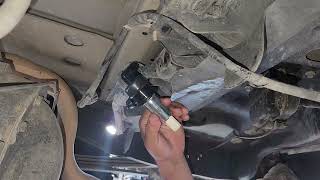

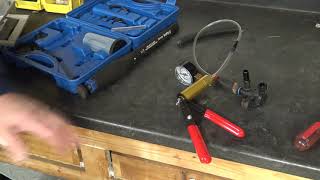

Used OEM Parts in Stock

New Aftermarket Parts Available
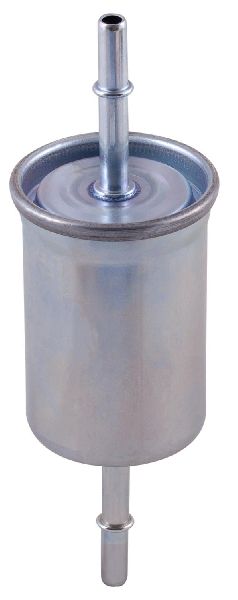
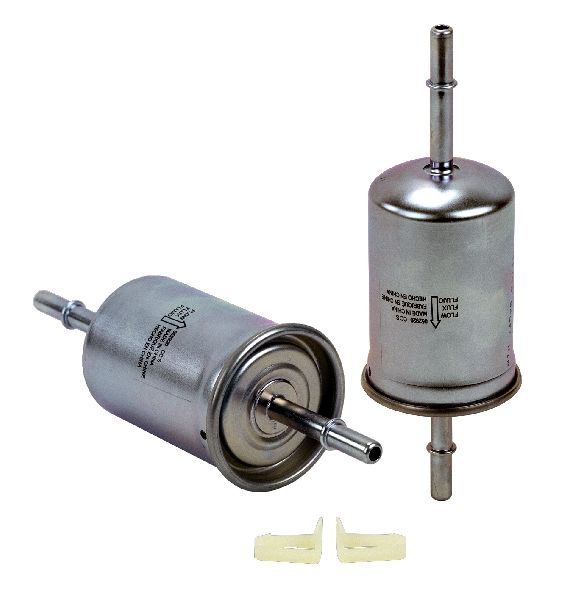


The information in this article is provided for general reference and educational purposes only. Vehicle specifications, procedures, and part compatibility can vary by production date, trim level, and region. Always consult your vehicle's factory service manual and verify part numbers before purchasing or performing repairs. Safety-critical components such as airbags, seat belts, and braking systems should be installed by a qualified professional.
- Ford E-Series:
- 🎬 Helpful Videos
- 🛍️ Shop This Part
- What's Unique About the 2003-2007 Ford E-Series
- Symptoms You May Notice
- Most Likely Causes
- Rare But Worth Checking
- Diagnosis Steps
- Parts You'll Likely Need
- Related Codes That Often Appear With This One
- Platform-Specific Known Issues
- Mechanic-Grade Diagnostic Values
- Scan Tool Commands That Help
- Wiring & Ground Locations
- Real Owner Repair Stories
- "I Checked Everything" — The Actual Cause
- Diagnostic Flowchart
- Used vs. New Parts: Buying Guide for This Vehicle
- Real Owner Stories
- 2003 E-250 (5.4L 2V V8)
- 2008 Ford E-250
- Related OBD-II Codes
- Frequently Asked Questions
- 🎟️ Get 5% Off