

P1445 on 1993-1997 Ford Ranger: Purge Flow Sensor Circuit High Input Causes and Fixes
On a 1993-1997 Ford Ranger, code P1445 is almost always an electrical problem in the EVAP system's Purge Flow Sensor circuit. The most common fixes are repairing a corroded ground wire, fixing a short in the harness where it rubs against the power steering bracket, or replacing a failed Purge Flow Sensor.
- P1445 is an electrical circuit code, not a flow or leak code. Do not start by replacing hoses.
- Before buying any parts, inspect the wiring harness for damage, especially near the power steering bracket.
- The most likely non-part-related fix is cleaning the circuit's ground connection to the chassis.
- If a part must be replaced, it is the Purge Flow *Sensor*, not the Purge *Solenoid* (Valve).
- You can test the sensor with a multimeter; it should read between 40 and 230 ohms.
What's Unique About the 1993-1997 Ford Ranger

For this generation of Ford Ranger, the P1445 code is notorious for being an electrical gremlin rather than a failed mechanical part. Owners frequently chase this code by replacing the wrong components, like the purge solenoid, when the issue is often a simple but hidden wiring fault. The wiring harness for the EVAP system is known to chafe against the power steering bracket, causing a short circuit. Additionally, the main ground point for this circuit, often a cluster of black wires on the chassis near the battery, is highly prone to corrosion, which creates an open circuit and causes the sensor voltage to read high.
Symptoms You May Notice
- Check Engine Light is on.
- Vehicle will fail an emissions inspection.
- In rare cases, a slight decrease in fuel economy may be noticed, but typically there are no other performance symptoms.
- Replacing the Canister Purge Solenoid (Valve). This part failing typically sets code P1443 (Purge Control Valve Circuit) 🎬 See how to diagnose multiple EVAP codes on this Ford generation. or causes flow issues, not the P1445 electrical fault.
- Replacing EVAP hoses. While cracked hoses can cause other EVAP codes (like P0442 for a small leak), they do not cause the 'Circuit High Input' fault of P1445.
- Replacing the gas cap. A bad gas cap causes leak-related codes (like P0455), not electrical circuit codes.
Most Likely Causes

- Corroded or Open Ground Circuit 🔴 High Probability The ground wires for the EVAP circuit, typically located in a group near the battery, are exposed to the elements and are a very common failure point due to corrosion. An open or high-resistance ground causes the sensor's voltage reading to float high, directly triggering the P1445 code.
How to confirm: Locate the ground wires for the circuit (often a cluster of black wires bolted to the chassis near the battery). Disconnect the sensor and turn the key on. Use a multimeter to check for continuity to ground on the ground wire pin (Black/White wire on some models) of the harness connector. A lack of continuity or high resistance (over 5.0 ohms) indicates an open circuit. Visually, the ground point may show green or white corrosion.
Typical fix: Unbolt the ground terminal(s). Use a wire brush or sandpaper to clean the wire terminals and the chassis mounting point to bare metal. Re-secure the bolt tightly. In some cases, a new ground point must be established.
Est. part cost: $0-$10 - Damaged Wiring or Poor Connection 🔴 High Probability The sensor wiring harness is known to rub against the power steering bracket, causing a short to power or an open in the signal wire. This is a well-documented issue on these trucks.
How to confirm: Visually inspect the entire wiring harness from the Purge Flow Sensor back to the firewall. Pay extremely close attention to the area where the harness passes the power steering pump and its bracket. Look for chafed insulation or exposed copper wires. Wiggle the harness while monitoring the sensor voltage on a scan tool (EVAPPF PID) to see if the reading changes or spikes above 4.8V.
Typical fix: Repair the damaged wire using a butt connector with heat shrink. Reroute the harness or wrap it in protective loom to prevent future rubbing.
Est. part cost: $5-$20 - Faulty Purge Flow (PF) Sensor 🟡 Medium Probability The sensor is a thermistor that can fail with age, causing it to send an incorrect voltage signal or develop an internal short.
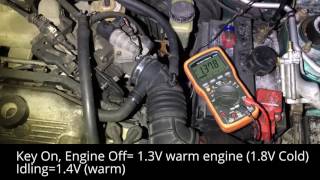
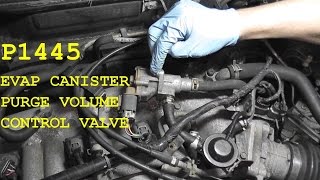
How to confirm: Disconnect the sensor with the key off. Allow it to reach ambient temperature (13-27°C / 55-80°F) for 15-20 minutes. Use a multimeter to measure the resistance between the VPWR (Power) and PF (Signal) pins 🎬 Watch: A step-by-step guide to testing and replacing the sensor. on the sensor itself. The resistance should be between 40 and 230 ohms. If it is outside this range, the sensor is bad.
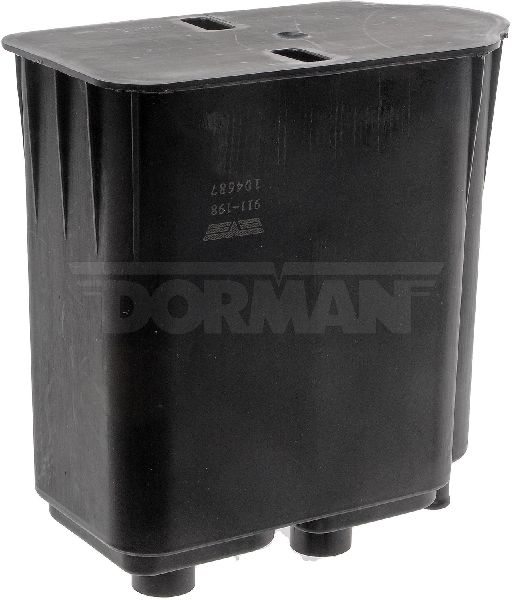
Typical fix: Replace the Purge Flow Sensor. It is located in the engine bay on the driver's side, in the line between the charcoal canister and the purge solenoid.
Est. part cost: $25-$75
Rare But Worth Checking
- Faulty Powertrain Control Module (PCM): This is extremely rare and should only be considered after all wiring and sensor tests have been completed and have passed. A factory service manual diagnostic tree confirms this is the last step after eliminating all other possibilities.
Diagnosis Steps

- Confirm the P1445 code is present using an OBD-II scanner.
- Turn the key on (engine off) and use a scan tool to view live data for the EVAPPF PID. If the voltage is stuck above 4.8V, the fault is active.
- Locate the Purge Flow Sensor assembly on the driver's side of the engine bay, near the battery and charcoal canister. It's a small, 3-wire sensor inline with the EVAP hoses.
- Visually inspect the ground point for the EVAP circuit. This is often a group of black wires bolted to the chassis near the battery. Unbolt it, clean any rust or corrosion from the ring terminals and the chassis surface with a wire brush, and re-secure it tightly. Many repairs stop here.
- Thoroughly inspect the wiring harness for the sensor and the nearby purge solenoid. Check for any signs of rubbing, chafing, melting, or corrosion, especially where the harness passes the power steering bracket.
- If no visible issues are found, disconnect the sensor with the key off. Let the sensor cool/warm to ambient temperature for 15-20 minutes. Measure the resistance across the power (VPWR) and signal (PF) pins of the sensor itself. It should be between 40 and 230 ohms. If not, replace the sensor.
- If the sensor tests good, check the harness connector. With the key on, check for 12V power on the Red wire and check for continuity to ground on the Black/White wire (should be < 5.0 ohms). The signal wire (often Black/Green) goes to pin 11 on the PCM.
- If wiring, ground, and sensor are all confirmed to be good, the fault may lie within the PCM, but this is very unlikely.
Parts You'll Likely Need

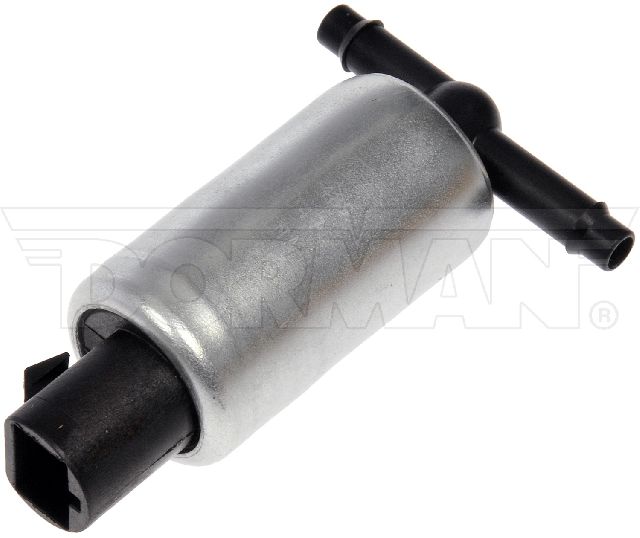
- EVAP Purge Flow Sensor
(OEM #F5TZ-9F991-A, Motorcraft CX1383)— This is the component that fails if the issue is not a wiring problem. It directly causes the high voltage reading.
Trusted brands: Motorcraft, Standard Motor Products
OEM price range: $50-$100
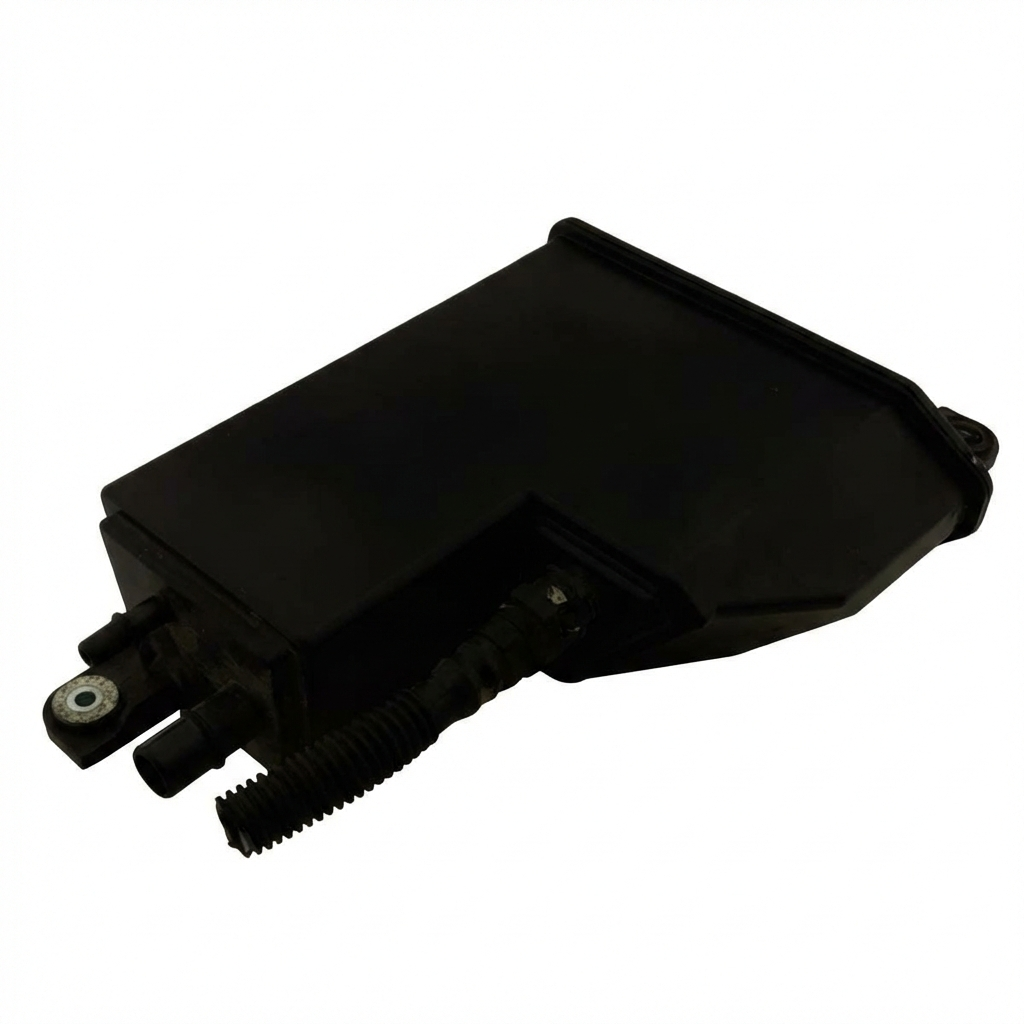
Aftermarket price range: $25-$75 - EVAP Canister Purge Solenoid/Flow Sensor Assembly
(OEM #F57Z-9C987-AB (2.3L), F57Z-9C987-CA (3.0L), F57Z-9C987-BA (4.0L))— Ford often sold the sensor, solenoid, and hoses as a complete assembly. This replaces all related components at once, which can be a convenient if more expensive fix.
Trusted brands: Motorcraft
OEM price range: $100-$200
Aftermarket price range: N/A
Related Codes That Often Appear With This One
- P1443 — P1443 is for the Purge Solenoid circuit. Since the solenoid and sensor are part of the same assembly and share a wiring harness and ground, a problem in the harness or ground connection can sometimes trigger both codes.
Technical Service Bulletins (TSBs) & Recalls
- TSB 96-6-8: Addressed issues related to the Purge Flow Sensor on early models.
Platform-Specific Known Issues
- TSB 96-6-8: A Technical Service Bulletin (TSB 96-6-8) was issued for early models regarding this issue, highlighting the frequency of the problem and providing diagnostic guidance.
- Harness Chafing at Power Steering Bracket: The EVAP wiring harness has a known tendency to rub through on the power steering bracket. A forum member on Ford Truck Enthusiasts confirmed this is a common area to check and that Ford even made a wiring repair kit to reroute the harness.
- Corroded Ground Connection: A YouTube video for a 1996 Ranger showed the P1445 code being fixed simply by cleaning the corroded ground terminals located on the chassis near the battery, with no parts replaced. 🎬 Watch: How cleaning corroded ground terminals fixed this P1445 code.
- Incorrect Wiring Harness After Engine Swap: A user on Ranger-Forums.com solved their P1445 code after an engine swap from a Ford Explorer. The Explorer harness, while physically fitting, was electrically different. Swapping back to the original Ranger harness fixed the code, confirming wiring differences between otherwise similar platforms.
Mechanic-Grade Diagnostic Values
- Purge Flow (PF) Sensor Resistance — expected: 40 - 230 ohms. Failure: A reading outside this range indicates a faulty sensor.
- Purge Flow (PF) Sensor Live Data Voltage (EVAPPF PID) — expected: 0.40 - 4.80 Volts. Failure: A voltage reading greater than 4.80V triggers the P1445 code.
- PF Sensor Harness Ground Circuit Resistance — expected: < 5.0 ohms. Failure: Resistance higher than 5.0 ohms indicates an open or corroded ground circuit.
- PF Sensor Signal Circuit Voltage (Check for Short to Power) — expected: < 1.0 Volt (with sensor disconnected). Failure: Voltage greater than 10.5V on the signal wire at the harness connector (with sensor unplugged) indicates a short to power (VPWR) in the harness.
Scan Tool Commands That Help
- Ford IDS or equivalent professional scanner: Datalogger - EVAPPF PID — This is the primary function used for diagnosing P1445. It allows you to see the live voltage the PCM is receiving from the Purge Flow sensor. Wiggling the harness while watching this data is key to finding intermittent opens or shorts.
- Ford IDS or equivalent professional scanner: KOEO / KOER Self-Tests — Running the Key On Engine Off (KOEO) and Key On Engine Running (KOER) self-tests is a standard Ford diagnostic procedure to confirm active and pending faults within the EVAP system and others.
Wiring & Ground Locations

- PCM Pin 11 — At the main Powertrain Control Module connector.. This is the specific pin on the PCM that receives the voltage signal from the Purge Flow sensor. Checking for continuity between the sensor connector and this pin can identify an open signal wire.
- PCM Pin 24 / 103 — At the main Powertrain Control Module connector.. These are Power Ground (PWR GND) pins on the PCM. The sensor's ground circuit can be checked for continuity back to these pins to verify the integrity of the ground path through the harness.
- Main Chassis Ground — A cluster of black wires bolted to the chassis/inner fender on the driver's side, near the battery.. This is the most common failure point for the sensor's ground circuit. It is exposed to battery fumes and weather, causing corrosion that leads to high resistance or an open circuit, which directly causes the P1445 high voltage reading.
- Harness at Power Steering Bracket — The section of the wiring loom that passes near the power steering pump and its mounting bracket.. This is a known chafe point where engine vibration can cause the harness to rub through, potentially shorting the PF sensor's signal wire to a power source or causing an open circuit.
Real Owner Repair Stories
- Ranger-Forums.com user 'mel' (1997 Ranger XLT 4.0L OHV 4WD) — Check Engine Light with code P1445 immediately after an engine swap.
❌ Tried (didn't work) The owner used the wiring harness that came with the donor engine, which was from a 1997 Ford Explorer.
✅ What actually fixed it The problem was solved by removing the Explorer engine harness and reinstalling the original Ranger wiring harness. This confirmed that despite the physical similarities, there was a critical electrical difference between the two harnesses that caused the P1445 code. - YouTube channel 'Fix it Again' (1996 Ford Ranger) — Persistent P1445 code.
❌ Tried (didn't work) Replacing the purge valve (multiple times)., Replacing the charcoal canister.
✅ What actually fixed it After replacing parts did not work, the owner inspected the wiring. The fix was repairing a fault found within the wiring loom for the EVAP components. The key takeaway was to always check the wiring thoroughly before replacing more expensive parts.
Model Year Variations Within This Range
- 1993-1994 vs 1995-1997: The diagnostic system itself. 1993-1994 models primarily used OBD-I, which had different (and less specific) trouble codes. The P1445 code is an OBD-II code, making it standard on 1995-1997 models. While the physical EVAP components are similar, the diagnostic approach and code retrieval differ.
Diagnostic Flowchart
Other Known Issues on This Vehicle
Issues unrelated to this code that are worth knowing about as an owner of this generation:
- A4LD Automatic Transmission Failure 🔴 High — Very common, especially over 100,000 miles. Issues include loss of overdrive, no forward engagement, or fluid leaks from the front seal due to overheating.
- Cracked Heads or Blown Head Gaskets (4.0L OHV) 🟠 Medium — The 4.0L OHV engine was prone to cracked cylinder heads or head gasket failure if the engine overheated.
- Camshaft Synchronizer Chirp/Squeal (3.0L & 4.0L) 🟡 Low — The camshaft synchronizer, which replaced the distributor, can run dry and produce a loud, annoying chirping sound from the upper engine area. If ignored, it can eventually fail and cause sensor damage.
- Faulty Idle Air Control (IAC) Valve 🟡 Low — A failing IAC valve is common and causes rough idling, stalling, or a 'hunting' idle. It's relatively easy and inexpensive to replace.
- Speed Control Deactivation Switch Fire Hazard 🔴 High — Widespread across many Ford models of the era. The switch could leak and overheat, posing a significant fire risk even when the vehicle was off. (Ref: NHTSA Campaign 05V388000 (Recall 05S28))
Used vs. New Parts: Buying Guide for This Vehicle
When a used part is the smart pick: A used engine wiring harness from a junkyard is a viable, and sometimes necessary, choice if the original is damaged beyond simple repair. Ensure it comes from the exact same model and year Ranger.
Donor-vehicle mileage cap: roughly under 150000 miles for the part to have meaningful remaining life.
What to inspect on the donor part:
- Inspect the entire harness for cuts, abrasions, or evidence of melting.
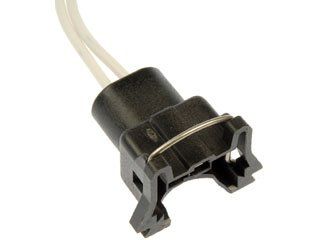
- Check all connectors for cracked plastic, corrosion, or bent pins.
- Verify the donor vehicle is a Ford Ranger, NOT a Ford Explorer or Mazda B-Series of a different year range, to avoid incompatibility.
- Look for a vehicle with no signs of engine fire or major front-end collision.
OEM-only on this vehicle (don't cheap out):
- Powertrain Control Module (PCM) - a used one must be from an identical vehicle and may require programming.
Aftermarket brands forum-validated for this vehicle:
- Motorcraft (OEM)
- Standard Motor Products (SMP)
Brands owners have reported issues with on this vehicle:
- No specific brands are consistently reported as problematic for this part, but ultra-low-cost, unbranded online parts may have poor quality control.
Real Owner Stories
Aggregated from forums and TSBs cited above. Mileages and costs reflect what owners reported in those sources.
1996 Ranger
Symptoms: The vehicle had a P1445 code and the Check Engine Light was on.
What fixed it: The code was fixed simply by cleaning the corroded ground terminals located on the chassis near the battery. No parts were replaced.
Source hint: YouTube video for a 1996 Ranger
Ford Ranger
Symptoms: A P1445 code was present due to a wiring issue.
What fixed it: Repairing the EVAP wiring harness where it had rubbed through on the power steering bracket. The source noted that Ford made a repair kit to reroute the harness.
Source hint: Ford Truck Enthusiasts Forums (ford-trucks.com)
Ford Ranger
Symptoms: A P1445 code appeared immediately after swapping in an engine from a Ford Explorer.
What fixed it: The problem was solved by swapping back to the original Ranger engine wiring harness, as the Explorer harness was found to be electrically different.
Source hint: Ranger-Forums.com
Related OBD-II Codes
Frequently Asked Questions
I have a P1445 code on my Ranger. Where are the most common places to look for the problem?
Is there an official Ford TSB for the P1445 code on these trucks?
How can I test the Purge Flow (PF) sensor itself to see if it's bad?
Will the P1445 code cause any driving or performance issues with my Ranger?
I swapped an engine from a Ford Explorer into my Ranger and now I have a P1445 code. What could be the cause?
Does this P1445 information also apply to my 1995 Mazda B3000?
Helpful Videos
Used OEM Parts in Stock

New Aftermarket Parts Available


The information in this article is provided for general reference and educational purposes only. Vehicle specifications, procedures, and part compatibility can vary by production date, trim level, and region. Always consult your vehicle's factory service manual and verify part numbers before purchasing or performing repairs. Safety-critical components such as airbags, seat belts, and braking systems should be installed by a qualified professional.
- Ford Ranger:
- 🎬 Helpful Videos
- 🛍️ Shop This Part
- What's Unique About the 1993-1997 Ford Ranger
- Symptoms You May Notice
- Most Likely Causes
- Rare But Worth Checking
- Diagnosis Steps
- Parts You'll Likely Need
- Related Codes That Often Appear With This One
- Technical Service Bulletins (TSBs) & Recalls
- Platform-Specific Known Issues
- Mechanic-Grade Diagnostic Values
- Scan Tool Commands That Help
- Wiring & Ground Locations
- Real Owner Repair Stories
- Model Year Variations Within This Range
- Diagnostic Flowchart
- Other Known Issues on This Vehicle
- Used vs. New Parts: Buying Guide for This Vehicle
- Real Owner Stories
- 1996 Ranger
- Ford Ranger
- Ford Ranger
- Related OBD-II Codes
- Frequently Asked Questions
- 🎟️ Get 5% Off