

OBD-II Code P1444: EVAP Purge Flow/Sensor Fault
What P1444 means, why it triggers, and how to fix it
- P1444 is a manufacturer-specific code: it points to a failed EVAP purge valve on a Nissan, but indicates a $2,000 Secondary Air Injection failure on a Toyota V8.
- On 1998-2005 Nissan and Infiniti models, a P1444 code almost always means a disintegrating charcoal canister has blown debris into the purge valve, requiring a $400-$800 replacement of both parts.
- Never replace a purge valve without first disconnecting the inlet hose to check for black, sand-like charcoal granules; failing to clean the lines destroys the new valve immediately.
- Driving with an active P1444 code causes an automatic emissions test failure and reduces fuel economy by 5-15% due to a constant vacuum leak or unburned fuel vapors.
What Does P1444 Mean?

The P1444 code indicates a malfunction in the Evaporative Emission Control (EVAP) system, which traps gas fumes in a charcoal canister and feeds them into the engine to be burned. The code triggers when the engine computer detects incorrect vapor flow or a malfunctioning sensor. Because P1444 is a manufacturer-specific code, its exact definition changes by brand. It points to the EVAP system on Nissans and Fords, but indicates a Secondary Air Injection failure on Toyotas or a diagnostic pump failure on BMWs.
Technical definition: The official definition of P1444 varies by manufacturer. For many vehicles, it is "Evaporative Emission Control System Purge Flow Malfunction." Ford defines it as "Purge Flow Sensor Circuit Low Input." Nissan defines it as "EVAP Canister Purge Volume Control Solenoid Valve." BMW uses it for an open circuit in the Diagnostic Module for Tank Leakage (DM-TL) pump. Toyota and Volkswagen/Audi use it for Secondary Air Injection (SAI) system faults, such as "Switching Valve No. 2 Stuck Open Bank 2".
Can I Drive With P1444?
Yes, But With Caution. Yes, you can usually drive with a P1444 code, but it requires attention. Ignoring it causes a failed emissions test, a 5-15% drop in fuel economy, and engine performance problems. Driving with a stuck-open purge valve creates a constant lean condition, damaging the catalytic converter over time—a $1,200-$2,800 repair. On Toyota V8s, it triggers 'limp mode', severely reducing engine power. For 2000-2006 Honda hybrids, this code signifies a critical high-voltage system fault and the vehicle must be towed.
Common Causes

- Faulty Purge Control Solenoid/Valve (Very Common) — The valve controlling fuel vapor flow to the engine gets stuck open or closed due to electrical failure, internal wear, or debris clogs.
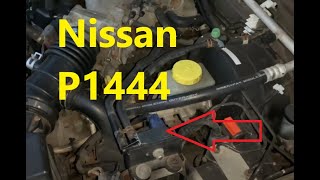
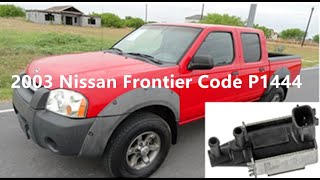
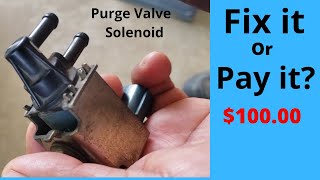
- Clogged or Failed Charcoal Canister (Very Common) — The charcoal canister saturates with fuel from overfilling the gas tank, or its internal structure breaks down. This sends charcoal granules into the EVAP lines, clogging the purge valve—a highly frequent failure on 1998-2005 Nissans. 🎬 See how to replace the Nissan purge volume control valve.
- Defective Secondary Air Injection System Components (Toyota/VW) (Common) — On Toyota V8s and VW/Audi vehicles, this code points to the Secondary Air Injection (SAI) system. It is caused by a seized air switching valve, a failed air pump, or blocked air lines.
- Cracked, Disconnected, or Blocked EVAP Hoses (Common) — Vacuum hoses connecting the EVAP components crack from age, disconnect, or get blocked, disrupting vapor flow and triggering the code.
- Faulty EVAP Vent Valve/Solenoid (Common) — Located near the charcoal canister, the vent valve seals the system for pressure tests. It fails electrically or gets stuck open due to debris, causing a leak that triggers P1444.
- Faulty Purge Flow or Fuel Tank Pressure Sensor (Less Common) — In vehicles with a separate purge flow sensor (common in Fords), the sensor fails and sends incorrect voltage readings. A faulty fuel tank pressure sensor also sends erroneous data to the ECU.
- Damaged Wiring or Poor Electrical Connection (Less Common) — Electrical wiring or connectors for the purge solenoid, vent valve, or flow sensor become damaged, corroded, or loose, resulting in a loss of signal or a short circuit.
- Loose or Faulty Gas Cap (Rare) — A gas cap that is loose, damaged, or incorrect disrupts system pressure and contributes to conditions that trigger a P1444 code.
Symptoms

- Check Engine Light On — The most common and often the only symptom. The light illuminates steadily on the dashboard.
- Poor Fuel Economy — Fuel vapors escape or are managed incorrectly instead of being burned by the engine, decreasing gas mileage by 5-15%.
- Rough Idle or Stalling — A stuck-open purge valve creates a vacuum leak, causing the engine to idle erratically, shake, or stall at low speeds.
- Fuel Smell — A distinct gasoline odor appears near the vehicle because the EVAP system fails to contain fuel vapors.
- Difficulty Starting After Refueling — A stuck-open purge valve floods the engine with excess fuel vapor immediately after filling the tank, causing a hard start.
- Loud 'Leaf Blower' Noise on Cold Start — On Toyota models where P1444 relates to the Secondary Air Injection system, a failing air pump produces a loud whirring sound for a minute after a cold start.
- Failed Emissions Test — The EVAP system is a critical emissions control component. A P1444 fault causes an automatic failure of state-mandated smog tests.
Diagnostic Flowchart
Tap your situation to follow the diagnostic path that matches what you're seeing on this code.
Common Fixes & Costs
- Replace Purge Control Valve/Solenoid — Parts: $30-$120, Labor: $75-$150, ~0.8 hr book time (DIY)
- Replace Charcoal Canister and Clean Lines — Parts: $200-$500, Labor: $150-$300, ~1.5 hr book time (Intermediate)
- Replace Secondary Air Injection Pump & Valves (Toyota) — Parts: $500-$1800, Labor: $800-$2000, ~8.5 hr book time (Advanced)
- Install Secondary Air Injection Bypass Kit (Toyota) — Parts: $150-$250, Labor: $100-$300, ~1.8 hr book time (Intermediate)
- Replace Cracked or Leaking EVAP Hoses — Parts: $10-$50, Labor: $100-$200, ~1.2 hr book time (Intermediate)
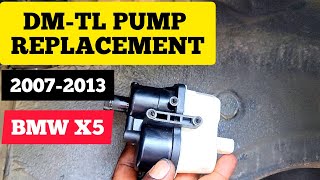
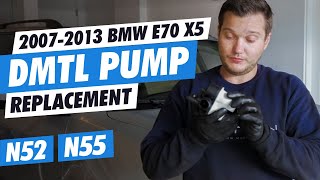
- Replace DM-TL Pump (BMW) — Parts: $100-$250, Labor: $100-$200, ~1.0 hr book time (Intermediate)
- Replace Gas Cap — Parts: $15-$40, Labor: $0, ~0.1 hr book time (DIY)
Used vs. New Parts: Buying Guide
When a used part is worth it: For simple electronic parts like a purge valve, a used OEM part from a reputable salvage yard is a cost-effective option for older, high-mileage vehicles where budget is a primary concern.
Donor-vehicle mileage cap: roughly under 80000 miles for the part to have meaningful remaining life.
Donor quality checklist:
- Verify the donor vehicle was not scrapped for an engine or emissions-related failure.
- Inspect plastic housings for cracks and electrical connectors for corrosion.
- Match the part number exactly, as similar-looking parts have different internal calibrations.
Decision logic:
- If The part is a charcoal canister → Buy new. Used canisters have an unknown history and are likely contaminated with fuel or moisture, which causes the original failure.
- If The part is an electronic solenoid (Purge Valve, DM-TL Pump) and the new part costs under $100 → Buy new for the warranty and peace of mind. The savings on a used part are minimal.
- If The vehicle is over 150,000 miles and the repair is not critical to drivability → A used part is an acceptable budget-friendly choice, but expect a shorter lifespan.
Warranty tradeoff: Used parts from salvage yards typically offer a 30-90 day warranty. New aftermarket parts come with a 1-year to limited lifetime warranty. New OEM parts offer the best warranty but at the highest cost.
Worst-case if a used part fails: $150-$300 if a used electronic part fails shortly after installation, requiring repeat labor costs plus another replacement part.
What Happens If You Wait — Timeline
- 0-1 month: Check Engine Light is on. Vehicle fails emissions test. A slight, often unnoticeable, drop in fuel economy begins. No other symptoms are likely. (MPG impact: 1-5%% · Added cost: $0-$25 in wasted fuel.)
- 1-3 months: If the purge valve is stuck open, a noticeable 5-15% drop in MPG occurs. The engine develops a slightly rough idle, and you experience difficulty starting the car right after refueling. (MPG impact: 5-15%% · Added cost: $50-$150 in wasted fuel and potential tow from a no-start.)
- 3-9 months: A constantly stuck-open purge valve creates a persistent lean/rich condition. The Engine Control Unit tries to compensate, but this causes the catalytic converter to run too hot, beginning the process of internal substrate melting. (MPG impact: 10-20%% · Added cost: $400-$800 if the charcoal canister becomes permanently damaged; catalytic converter damage is now a high risk.)
- 9+ months: Sustained overheating destroys the catalytic converter, which triggers its own codes (e.g., P0420). On Toyota V8s, continuing to drive in limp mode causes exhaust to backflow and damage other sensors in the SAI system. (MPG impact: 15-25%% · Added cost: $1500-$3000 for catalytic converter replacement plus the original P1444 repair.)
Cost of Not Fixing It
- 0-1 month: Failed emissions test and a 5-10% reduction in fuel economy due to incorrect air-fuel mixture or escaping fuel vapors. (Added cost: $20-$50 per month in wasted fuel.)
- 1-6 months: A stuck-open purge valve creates a constant lean or rich condition, causing the catalytic converter to overheat, degrade, and fail prematurely. (Added cost: $1200-$2800 for catalytic converter replacement.)
- 6+ months: Sustained poor engine performance leads to carbon buildup on valves and spark plugs, and permanent damage to the charcoal canister from constant pressure imbalances. (Added cost: $400-$800 for canister replacement, plus engine cleaning costs.)
Diagnosis Steps
- Check the Gas Cap
Ensure your gas cap is tight and the seal is intact. A loose or faulty cap is a simple, common cause for EVAP codes.
Tools: None (Beginner) - Visually Inspect Hoses and Components
Check all accessible EVAP hoses for cracks, breaks, or loose connections between the engine, purge valve, and charcoal canister.
Tools: Flashlight (Beginner) - Inspect the Purge Valve for Debris
Locate the purge valve near the intake manifold. Disconnect the inlet hose coming from the charcoal canister. Look for black, sand-like charcoal granules clogging the valve's inlet port.
Tools: Flashlight, Pliers (Intermediate) - Check for Clogged Lines
If you found charcoal debris in step 3, disconnect the hose at both the purge valve and the charcoal canister. Use compressed air to blow through the line to clear remaining granules. Failing to do this destroys the new purge valve immediately.
Tools: Pliers, Screwdrivers, Compressed Air Source (Intermediate) - Test the Purge Valve Solenoid (Manual Test)
With the engine off, blow through the purge valve; it must be closed and block air. Apply 12V from the battery to the solenoid's electrical pins; it must click open and allow air through. If it fails either test, replace it.
Tools: Jumper wires, 12V power source (Intermediate) - Test Purge Solenoid with a Multimeter
Disconnect the solenoid's electrical connector. Set your multimeter to Ohms. Touch the probes to the two electrical pins on the solenoid. A good purge solenoid has a resistance between 14 and 30 ohms. An infinite reading means an open circuit.
Tools: Multimeter (Advanced) - Check Voltage and Signals at the Connector
With the key on, engine off, disconnect the purge valve connector. One pin must have 12V battery voltage. For Ford's P1444 (Low Input), check the signal wire voltage. With the sensor connected, it must be between 1.3V and 4.8V. A reading below 0.4V indicates a short or failed sensor.
Tools: Multimeter, T-pins (Advanced) - Use a Scan Tool for Live Data Diagnosis
Use a bidirectional scan tool to monitor 'EVAP Purge Command (%)' and 'Fuel Tank Pressure (FTP)'. Command the purge valve to 0% and the vent valve to 'Closed'. The FTP reading must hold steady. If vacuum builds, the purge valve is leaking.
Tools: Bidirectional OBD-II Scan Tool (Advanced) - Perform a Smoke Test
If the purge valve tests good, force low-pressure smoke through the EVAP system's service port. Smoke escapes from cracks or loose connections, pinpointing the exact source of the vapor leak.
Tools: EVAP Smoke Machine (Advanced)
When This Code Triggers (Freeze-Frame Conditions)
- Engine Coolant Temp: 170-220°F (77-104°C) (The engine has reached full operating temperature.)
- RPM: 1200-3000 RPM (The code sets during steady-state cruising, not at idle or heavy acceleration.)
- Vehicle Speed: 45-65 mph (72-105 km/h) (The ECU runs EVAP and SAI monitor tests during steady highway driving.)
- Fuel Level: 15-85% (The EVAP monitor will not run on a full or nearly empty tank.)
- Engine Load: 15-40% (Light to moderate engine load, consistent with cruising conditions.)
Related Codes
- P0442 / P0455 / P0456 — These are generic EVAP leak codes. A stuck-open purge valve (P1444) creates a constant vacuum leak, which the system flags as a P0455 (large leak). Test the purge valve first; if it's good, use a smoke machine to find the physical leak.
- P1443, P1445 — Closely related manufacturer-specific codes. For Ford, if P1444 is 'Low Input' (short to ground), P1445 is 'High Input' (short to power) for the same sensor. For Toyota, P1445 indicates 'Switching Valve No. 2 Stuck Close Bank 2', the opposite of P1444.
- P0325 — On older Nissan vehicles, a clogged purge valve (P1444) creates a vacuum leak that leans out the air-fuel mixture. This causes engine pinging, which the ECU misinterprets as a knock sensor fault (P0325), even if the knock sensor is fine.
- P0418 / P0419 — On Toyota vehicles, these codes indicate a circuit malfunction for the Secondary Air Injection (SAI) pump relay. They appear alongside P1444 when the SAI pump motor fails, draws excessive current, blows the fuse, and causes a cascade of related codes.
Climate & Environmental Factors
- Cold Weather: Cold temperatures make rubber and plastic EVAP hoses brittle and susceptible to cracking, causing vacuum leaks. On Toyota SAI systems, moisture collected in the air pump freezes, destroying the pump motor or seizing the valves.
- High Humidity: On Toyota V8s, the SAI system collects moisture from the air it pumps. In humid climates, this accelerates corrosion and water damage to the air pump and switching valves, leading to premature failure.
- Dusty/Off-Road Conditions: The fresh air intake for the EVAP system and the BMW DM-TL pump clogs with dust and debris in these environments, damaging pump motors or causing blockages that trigger fault codes.
How to Talk to a Mechanic About This Code
Say this: "I have a P1444 check engine light code on my [Year, Make, Model]. I know this code means different things depending on the brand, so I'd like to authorize one hour of diagnostic time to confirm the specific definition for my vehicle and test the most likely component. For my car, I believe that is the [purge valve/secondary air injection system/DM-TL pump]."
This signals you are an informed customer, prevents the shop from guessing, and directs them to the most probable cause, saving diagnostic time. It sets a clear budget for the initial diagnosis and shows you understand the complexity of this specific code.
Avoid saying:
- 'My check engine light is on, can you just fix it?'
- 'I have an EVAP code.' (Too generic, as P1444 isn't always EVAP).
- 'Just replace the purge valve.' (This leads to a failed repair if the root cause is a clogged canister or a different system entirely).
Questions to ask before authorizing the repair:
- What was the specific manufacturer definition of P1444 for my car?
- If you're recommending a purge valve, did you check the EVAP line for charcoal debris?
- For my Toyota, did you confirm if the factory warranty extension for the SAI system applies?
- Can you show me the failed part and explain why it needs to be replaced?
- What is the warranty on the parts and labor for this repair?
Where to Take It: Dealer vs Independent vs Chain
- Dealer:
Best for: Vehicles with manufacturer-specific quirks (Toyota SAI system, BMW DM-TL pump, Honda IMA fault)., Vehicles potentially covered by an emissions warranty or TSB., Complex electrical diagnostics or repairs requiring ECU reprogramming.
Downsides: Highest labor rates, often 1.5-2x more than independent shops., Routinely recommends replacing an entire assembly when only one component has failed. (Typical cost: +50% vs. baseline) - Independent Shop:
Best fit for most common P1444 issues (Nissan, Ford, etc.). For Toyota, BMW, or early Honda Hybrids, a brand-specialist independent or a dealer is strongly recommended.
Best for: Common EVAP-related P1444 faults (e.g., purge valve, hoses, Nissan charcoal canister)., Out-of-warranty vehicles where cost is a major factor., Shops with good reviews and ASE-certified technicians specializing in your vehicle's brand.
Downsides: Quality and diagnostic equipment vary greatly., Lacks experience with manufacturer-specific P1444 definitions (e.g., Toyota SAI). (Typical cost: +0% vs. baseline) - Chain Shop:
Use with caution. Acceptable for a simple, confirmed purge valve replacement, but AVOID for initial diagnosis, especially on Toyota, BMW, or Nissan vehicles where the root cause is complex.
Best for: Simple, clear-cut repairs like a gas cap or an easily accessible purge valve.
Downsides: Technician skill varies widely; lacks the experience for nuanced P1444 diagnosis., High pressure to upsell; replaces parts without a proper diagnosis (e.g., replacing a purge valve without checking for a clogged canister). (Typical cost: -10% vs. baseline)
When to Walk Away From the Repair
If the estimated repair cost exceeds 40-50% of the car's private-party value (check Kelley Blue Book or Edmunds), it's time to seriously consider selling or trading in the vehicle.
- Car worth $7000, fix is $3500: Walk away. This is a classic Toyota SAI system failure. The repair cost is 50% of the truck's value. Consider an aftermarket bypass kit (for off-road use) or sell the vehicle as-is.
- Car worth $3500, fix is $750: Fix it. This is a typical Nissan charcoal canister and purge valve failure. While the cost is ~21% of the car's value, it's a well-known, permanent fix that restores full functionality.
- Car worth $2000, fix is $1500: Walk away. A repair cost of 75% of the vehicle's value is not a sound investment. Other age-related failures are likely imminent.
What Scan Tool You Need for This Code

Minimum: An OBD2 scanner with live data streaming and bidirectional control for the EVAP system.
A basic $20 code reader only tells you the P1444 code exists. It cannot command the purge and vent valves to open or close, which is a critical step to test the solenoids and diagnose the system properly. You will be replacing parts based on a guess.
Budget: BlueDriver Pro or TOPDON TopScan Pro (~$100) — These Bluetooth scanners connect to your smartphone and offer live data for Fuel Tank Pressure and Purge Command (%). BlueDriver provides repair reports, while some TOPDON models have basic bidirectional tests for EVAP systems, which is essential.
Mid-range: FOXWELL NT716 or XTOOL D7S (~$250-400) — Provides full bidirectional control to command the purge and vent solenoids on and off, allowing you to perform a proper EVAP system function test. This is the minimum level recommended for a confident DIY diagnosis of P1444.
Professional: Autel MaxiCOM MK808S / MK900BT (~$450-700) — Offers full, OEM-level bidirectional control, access to manufacturer-specific codes and data, and advanced functions like running automated EVAP leak tests. Essential for diagnosing the complex, non-standard versions of P1444 on Toyota, BMW, and other specific makes.
Rent vs buy: Most auto parts stores like AutoZone offer free loaner tools, but they are typically basic code readers, not bidirectional scanners. For a proper P1444 diagnosis, you must buy a scanner with bidirectional capabilities or rent one from a specialized online service. Buy if you plan to do more than two DIY diagnoses per year.
How to Clear the Code After You Fix It
- Use an OBD-II scan tool to clear the diagnostic trouble codes (DTCs).
- Ensure the fuel tank is between 15% and 85% full.
- Perform a complete drive cycle to allow the EVAP and other readiness monitors to run.
Drive cycle (~30 minutes): Start with a cold soak (engine off for 8+ hours). Idle for 2-3 minutes. Drive at a steady speed of 45-65 mph for 10-15 minutes, avoiding sharp turns or large hills. Allow the vehicle to coast down to 20 mph without braking. Repeat a mix of city and highway driving. The process requires 1-2 days for the EVAP monitor to set.
Readiness monitors affected: Evaporative (EVAP) System, Catalyst (CAT), Oxygen (O2) Sensor
Before emissions retest: drive at least 100 miles to fully set monitors.
Watch out for:
- Disconnecting the battery clears the code but resets all readiness monitors, requiring a new, full drive cycle.
- The code returns immediately if the root cause is not fixed.
- A fuel tank that is too full or too empty prevents the EVAP monitor from running.
- Failing to allow the vehicle to cool down sufficiently (cold soak) before starting the drive cycle.
Will This Fail Emissions / State Inspection?
Yes — this code typically fails an OBD-II emissions inspection.
- California: A P1444 code is an automatic failure. After repair, you must complete a drive cycle. For model year 2000 and newer vehicles, the test can be completed with the EVAP monitor in a 'not ready' state, but all other monitors must be ready.
- New York: The presence of a Check Engine Light and an active P1444 code results in an automatic failure of the NYS emissions inspection.
- Texas: In the 17 counties requiring emissions testing, a vehicle with an active P1444 code fails the OBD-II portion of the test.
Most Commonly Affected Vehicles
- Nissan Pathfinder, Frontier, Xterra, 350Z (1998-2005) — Extremely common for the charcoal canister to degrade, sending debris into the purge valve and causing it to stick open. For 2002 Xterra and Frontier models, Nissan issued TSB NTB02-051 to reprogram an overly sensitive ECM.
- Infiniti QX4, G35 (1998-2005) — Shares the same EVAP system design as Nissan and is prone to the exact same charcoal canister failure, which contaminates the purge solenoid.
- Toyota Tundra, Sequoia, Land Cruiser (2005-2013) — On V8 models (4.7L and 5.7L), P1444 indicates a problem with the Secondary Air Injection (SAI) system, usually a valve stuck open. This is a $2,000-$4,000 repair. Many owners opt for an aftermarket bypass kit.
- Honda Insight, Civic Hybrid (2000-2006) — CRITICAL: P1444 on these early hybrids is NOT an EVAP code. It indicates a serious 'Motor Power Inverter Module Output Circuit Malfunction' or a high-voltage short circuit in the IMA battery system. Requires immediate attention from a hybrid-certified technician.
- BMW 3-Series (E46), 5-Series (E39), Z4 (1999-2006) — P1444 points to an 'Open Circuit' in the Diagnostic Module for Tank Leakage (DM-TL) pump. This component pressurizes the EVAP system to check for leaks. The fix is replacing the pump itself.
- Subaru Impreza, Forester, Legacy (1999-2004) — On these models, the related code P1443 is very common and points to a faulty 'EVAP Control System Vent Control Function', often caused by a bad drain valve or purge control solenoid.
- Volkswagen/Audi Golf, Passat, A3, A4 (1996-2006) — On VAG vehicles, P1444 relates to the secondary air injection system's changeover valve or an EGR valve position sensor fault, not the fuel vapor system.
- Ford Ranger, F-150, Focus (1995-2008) — For Ford, P1444 means 'Purge Flow Sensor Circuit Low Input', pointing to an electrical issue with the sensor or its wiring rather than a mechanical flow problem. Diagnosis focuses on checking for shorts, bad grounds, or a failed sensor.
- Mercedes-Benz C-Class, E-Class (1996-2005) — On these models, P1444 indicates a faulty purge switch-over valve, which is another term for the purge solenoid. It is caused by a failed valve or cracked vacuum lines in the EVAP system.
Manufacturer-Specific Notes

- Nissan/Infiniti: The internal failure of the charcoal canister sends black plastic beads into the EVAP lines, clogging and destroying the purge valve. Both parts must be replaced and the lines blown out with compressed air. For some 2002 models, Nissan issued TSB NTB02-051 to reprogram an overly sensitive ECM.
- Toyota: On V8 Tundras, Sequoias, and Land Cruisers, P1444 points to the Secondary Air Injection (SAI) system, not the EVAP system. The pumps and valves are located under the intake manifold, making replacement a $2,000-$4,000+ job. Many owners install an aftermarket bypass module with block-off plates to trick the ECU.
- BMW: P1444 refers to an open circuit in the 'Diagnostic Module for Tank Leakage' (DM-TL) pump. This small electric pump pressurizes the fuel system to check for leaks instead of using engine vacuum. The fix is replacing the pump itself.
- Ford: The definition 'Purge Flow Sensor Circuit Low Input' points specifically to an electrical problem. Diagnosis focuses on checking for a bad sensor, a short in the wiring to ground, a blown fuse, or a poor connection. The sensor voltage must be above 0.4V; a lower reading triggers the code.
- Volkswagen/Audi: P1444 is not an EVAP code on these cars. It indicates a problem with the 'Secondary Air System Switching Valve' or the EGR position sensor, which deal with injecting fresh air into the exhaust or recirculating exhaust gas, not fuel vapors.
- Honda: On early hybrid models (Insight, Civic), P1444 is a critical code indicating a high-voltage short circuit in the IMA (Integrated Motor Assist) battery system or a fault in the power inverter module. This requires specialized diagnosis by a hybrid technician.
Real Owner Stories
1998 Nissan Pathfinder with P1444 & P0325
Check Engine Light came on. Scan showed P1444 (EVAP Purge Control Valve) and P0325 (Knock Sensor). No immediate symptoms.
What they tried:
- Tested the original purge valve by blowing through it; air passed through, indicating it was stuck open.
- Replaced the purge valve. The light returned after one week.
- Tested the new valve; it had also failed.
- Discovered black charcoal granules coming from the EVAP hose, clogging the valve.
Outcome: The owner realized the charcoal canister was disintegrating and contaminating the system. As a temporary fix, they installed an inline fuel filter before the purge valve to catch the debris. This kept the code from returning for 2,000 miles, but the correct fix is replacing the canister and purge valve and blowing out the lines.
Lesson: On older Nissans, P1444 is almost always caused by a failed charcoal canister. Replacing only the purge valve leads to repeat failures. Always check the EVAP lines for charcoal debris before replacing the valve.
2005 Toyota Tundra V8 with Limp Mode
Check Engine Light, VSC, and TRAC lights came on intermittently, putting the truck into 'limp mode' with severely reduced power.
What they tried:
- Scanned the codes, revealing P1444, indicating a 'Secondary Air Injection System Switching Valve No. 2 Stuck Open'.
- Received a dealership quote for over $2,000 to replace the air pumps and valves located under the intake manifold.
- Researched online forums and discovered this is a common and expensive failure on Toyota V8s.
Outcome: Instead of the expensive OEM repair, the owner purchased an aftermarket Secondary Air Injection (SAI) bypass kit from Hewitt Technologies for under $200. The kit includes an electronic module to trick the ECU and block-off plates to prevent exhaust flow. The installation resolved the codes and limp mode.
Lesson: On Toyota V8s, P1444 is not an EVAP issue. Due to the extremely high repair cost, an aftermarket bypass kit is a popular and effective solution, but it is for 'off-road use' and fails emissions inspections in strict states.
2014 Ford Focus ST with P144C and Poor MPG
Fuel economy dropped from 28 MPG to 23 MPG over a year. Eventually, a Check Engine Light appeared with code P144C (related to the purge valve).
What they tried:
- Replaced the EVAP purge valve, but the check engine light and the permanent code remained.
- Discovered Ford had a recall (18S32) to reprogram the PCM to correctly recognize a new purge valve.
- Had the recall service performed at a dealership, which cleared the light.
Outcome: After the PCM was reprogrammed, the permanent code cleared, and the average fuel economy immediately began to climb back up, eventually returning to the original 28 MPG.
Lesson: A stuck-open purge valve causes a noticeable drop in fuel economy (15-20% in this case). On some vehicles, a simple part replacement isn't enough; a PCM software update via a TSB or recall is required to fully resolve the code.
How to Prevent This Code From Triggering
- Stop fueling at the first click (Every fill-up) — Continuing to 'top off' the gas tank forces liquid gasoline into the charcoal canister, which is designed only for vapor. This saturates the charcoal, causing it to break down and clog the entire EVAP system, leading to $400-$800 repairs.
- Tighten the gas cap until it clicks (Every fill-up) — Ensures the EVAP system is properly sealed. A loose cap causes the system to fail its pressure/vacuum self-test, triggering various EVAP codes and preventing the readiness monitor from setting.
- Periodically inspect EVAP hoses (During every oil change) — Rubber and plastic hoses in the engine bay become brittle and crack over time due to heat and age. A quick visual inspection for obvious cracks or disconnections prevents vacuum leaks that trigger codes like P1444.
- Address check engine lights promptly (As they occur) — Ignoring an initial EVAP code leads to cascading failures. A stuck-open purge valve (P1444) creates a constant lean condition that overheats and destroys the catalytic converter over months, turning a $150 repair into a $2,000 repair.
- For Toyota V8s, keep the SAI foam filter clean (Every 30,000 miles) — The Secondary Air Injection pump has a foam filter. In humid or dusty conditions, this filter clogs or saturates with moisture. This moisture enters the air pump, causing it to fail and seize the valves, leading to the expensive P1444 fault.
Frequently Asked Questions
What are the most common mistakes when diagnosing P1444?
The biggest mistake is ignoring the manufacturer-specific definition. A technician wastes hours smoke testing the EVAP system on a Toyota when the code actually points to the air injection system. On Nissans, replacing only the faulty purge valve without replacing the disintegrating charcoal canister guarantees the new valve will clog immediately.
Can I fix a P1444 code myself?
Yes, replacing a gas cap, purge solenoid, or a visible vacuum hose are beginner-friendly tasks requiring basic hand tools. Stop DIYing and take the car to a shop if you need to diagnose complex electrical shorts or replace parts requiring significant engine disassembly, like a Toyota SAI pump.
How much does it cost to fix P1444?
A new gas cap costs under $20, while a professional purge valve replacement runs $150 to $300. Replacing a failed charcoal canister costs $400 to $800. The most expensive repair is the Toyota Secondary Air Injection system, which costs $2,000 to $4,000 at a dealership.
Will clearing the code make it go away?
Clearing the code turns the check engine light off temporarily, but it returns within a few drive cycles if the underlying mechanical or electrical problem remains unfixed.
What is the difference between a purge valve and a vent valve?
The purge valve is located in the engine bay and controls when fuel vapors are drawn from the canister into the engine. The vent valve is located near the gas tank and allows fresh air into the canister. The vent valve closes to seal the system during self-tests.
My Nissan has a P1444 and I found black stuff in the valve. What is it?
Those are charcoal granules from a failed charcoal canister. You must replace the canister, replace the purge valve, and blow out all EVAP lines with compressed air to clear the debris. Simply replacing the valve guarantees the new part will fail quickly.
What is the Toyota P1444 bypass kit and is it legal?
For Toyota V8s, a bypass kit is an aftermarket electronic module that tricks the ECU into thinking the Secondary Air Injection system works perfectly, preventing limp mode. These kits are intended for off-road use only and fail visual emissions inspections in strict states like California.
Can I just clean a clogged EVAP purge valve?
Cleaning a clogged EVAP purge valve is a temporary fix at best. If the valve is clogged with charcoal from a failed canister, it will clog again immediately. If the internal solenoid coil is failing electrically, cleaning does nothing and the unit requires replacement.
Key Takeaways
- P1444 is a manufacturer-specific code: it points to a failed EVAP purge valve on a Nissan, but indicates a $2,000 Secondary Air Injection failure on a Toyota V8.
- On 1998-2005 Nissan and Infiniti models, a P1444 code almost always means a disintegrating charcoal canister has blown debris into the purge valve, requiring a $400-$800 replacement of both parts.
- Never replace a purge valve without first disconnecting the inlet hose to check for black, sand-like charcoal granules; failing to clean the lines destroys the new valve immediately.
- Driving with an active P1444 code causes an automatic emissions test failure and reduces fuel economy by 5-15% due to a constant vacuum leak or unburned fuel vapors.
Helpful Videos


The information in this article is provided for general reference and educational purposes only. Vehicle specifications, procedures, and part compatibility can vary by production date, trim level, and region. Always consult your vehicle's factory service manual and verify part numbers before purchasing or performing repairs. Safety-critical components such as airbags, seat belts, and braking systems should be installed by a qualified professional.
- 🎬 Helpful Videos
- What Does P1444 Mean?
- Can I Drive With P1444?
- Common Causes
- Symptoms
- Diagnostic Flowchart
- Common Fixes & Costs
- Used vs. New Parts: Buying Guide
- What Happens If You Wait — Timeline
- Cost of Not Fixing It
- Diagnosis Steps
- When This Code Triggers (Freeze-Frame Conditions)
- Related Codes
- Climate & Environmental Factors
- How to Talk to a Mechanic About This Code
- Where to Take It: Dealer vs Independent vs Chain
- When to Walk Away From the Repair
- What Scan Tool You Need for This Code
- How to Clear the Code After You Fix It
- Will This Fail Emissions / State Inspection?
- Most Commonly Affected Vehicles
- Manufacturer-Specific Notes
- Real Owner Stories
- 1998 Nissan Pathfinder with P1444 & P0325
- 2005 Toyota Tundra V8 with Limp Mode
- 2014 Ford Focus ST with P144C and Poor MPG
- How to Prevent This Code From Triggering
- Frequently Asked Questions
- What are the most common mistakes when diagnosing P1444?
- Can I fix a P1444 code myself?
- How much does it cost to fix P1444?
- Will clearing the code make it go away?
- What is the difference between a purge valve and a vent valve?
- My Nissan has a P1444 and I found black stuff in the valve. What is it?
- What is the Toyota P1444 bypass kit and is it legal?
- Can I just clean a clogged EVAP purge valve?
- Key Takeaways
- 🎟️ Get 5% Off