

OBD-II Code P0605: Internal Control Module Read Only Memory (ROM) Error
The Ultimate Guide to P0605: What it means, why it triggers, and how to fix it for good.
- P0605 indicates a fatal Read-Only Memory error in the Powertrain Control Module (PCM), requiring an immediate halt to driving to prevent sudden engine shutdown.
- Test the battery and alternator before replacing the PCM, as voltage drops below 12.4V or AC ripple above 0.5V are the leading triggers for this memory fault.
- Search for manufacturer Technical Service Bulletins (TSBs) before authorizing repairs, as a $150-$300 dealership software reflash often resolves the code without hardware replacement.
- Verify your vehicle's age and mileage against the Federal Emissions Warranty, which mandates free PCM replacement for vehicles under 8 years or 80,000 miles.
- Never attempt a DIY PCM replacement; a new module requires specialized J2534 Pass-Thru programming to sync with the vehicle's VIN and immobilizer system.
What Does P0605 Mean?

P0605 signifies the Powertrain Control Module (PCM) failed its internal self-test by detecting an error in its Read-Only Memory (ROM). This non-volatile memory permanently stores the core software and calibration files required to manage the powertrain. When the PCM calculates a checksum to verify this data and the result mismatches the expected value, it flags its instruction set as corrupt, triggering P0605.
Technical definition: The SAE/OBD-II definition is "Internal Control Module Read Only Memory (ROM) Error." 🎬 Watch: A quick overview of P0605 causes and common fixes. During a key-on or continuous self-check, the PCM detected a checksum discrepancy in its non-volatile ROM. If the calculated checksum of the ROM's content mismatches the factory-programmed value, the module flags its firmware as unreliable and sets this critical fault.
Can I Drive With P0605?
No — Do Not Drive. Do not drive with a P0605 code. The vehicle's primary computer is compromised, causing sudden engine stalling, complete loss of power, or a no-start condition. Continuing to drive poses a severe safety risk, as the vehicle will shut down in traffic. While some vehicles operate normally for a short time, the underlying error guarantees total module failure.
Common Causes

- Low battery voltage or charging system failure (Very Common) — A weak battery (below 12.4V), a failing alternator, or intermittent charging causes voltage drops or spikes during startup and shutdown. This electrical instability is the leading cause of memory corruption in the PCM. Always rule this out first.
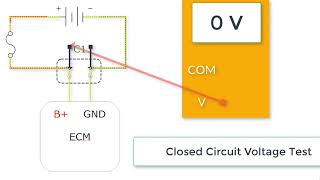
- Poor power or ground connections to the PCM/ECM (Common) — Corroded, loose, or damaged ground straps and power wires interrupt the stable voltage the PCM requires, causing internal calculation errors that manifest as a ROM fault. A visual inspection and voltage drop test of these connections are mandatory. 🎬 See how to professionally test for power and ground at the ECM.
- Corrupted or outdated PCM/ECM software (Common) — An incomplete software update, power interruption during a reflash, or inherent software glitches corrupt the ROM data. A dealership reflash with updated manufacturer software often resolves this. 🎬 Watch this walkthrough on how to reprogram a Ford PCM.
- Internal PCM/ECM hardware failure (Common) — The internal ROM chip, processor, or circuit board fails due to heat cycles, vibration, or age, especially past 120,000 miles. This includes cracked solder points and latent manufacturing defects, constituting a permanent hardware fault.
- Water intrusion and corrosion (Less Common) — Moisture from a clogged A/C evaporator drain, sunroof drain, or a bad cowl seal leaks onto the PCM or its connectors. This causes corrosion on the pins or short circuits on the board itself, leading to memory errors.
- Aftermarket performance tuning or devices (Rare) — Improperly written aftermarket tunes, piggyback devices, or poorly installed remote starters interfere with PCM power or data lines, writing invalid data and triggering a P0605 code.
- Extreme voltage spike (Very Rare) — A nearby lightning strike or improper jump-starting procedure sends a massive voltage spike through the vehicle's electrical system, permanently destroying the PCM's ROM chip.
Symptoms

- Check Engine Light is on — The light illuminates solidly and returns immediately after being cleared.
- Engine stalling or no-start condition — The vehicle cranks but fails to start, or starts and stalls unexpectedly because the PCM cannot access its core operating instructions.
- Erratic transmission shifting or stuck in 'limp mode' — The vehicle enters a protective 'limp mode' with severely limited speed and gear selection, or exhibits harsh shifts.
- Drastically reduced engine performance and fuel economy — The PCM defaults to extremely conservative fuel and timing maps, causing a noticeable loss of power, rough idle, and a significant increase in fuel consumption.
- Multiple other warning lights on (ABS, Traction Control, etc.) — The PCM's failure causes communication loss with other modules, triggering warning lights for systems like ABS and Traction Control.
- Failure to pass emissions inspection — With a critical powertrain code active, the vehicle automatically fails any state-mandated emissions test.
Diagnostic Flowchart
Tap your situation to follow the diagnostic path that matches what you're seeing on this code.
Common Fixes & Costs

- Replacing the battery and/or alternator
— Parts: $150-$500, Labor: $50-$300, ~1.5 hr book time
(Intermediate)
: OEM - Replacing a blown PCM fuse or relay — Parts: $5-$25, Labor: $50-$100, ~0.5 hr book time (Beginner)
- Repairing wiring or cleaning ground connections — Parts: $10-$50, Labor: $100-$300, ~1.5 hr book time (Advanced)
- Reflashing or reprogramming the existing PCM/ECM — Parts: $0, Labor: $150-$300, ~1.0 hr book time (Professional)
- Replacing the PCM/ECM
— Parts: $500-$1800, Labor: $150-$400, ~2.5 hr book time
(Professional)
: OEM
: OEM
DIY vs Professional
- Replacing a blown PCM fuse or relay — Beginner:
- Replacing the battery and/or alternator — Beginner:
- Repairing wiring or cleaning ground connections — Beginner:
- Reflashing or reprogramming the existing PCM/ECM — Beginner:
- Replacing the PCM/ECM — Beginner:
Used vs. New Parts: Buying Guide
When a used part is worth it: For older vehicles (10+ years) where new OEM modules are discontinued, or when the budget is tight. A professionally remanufactured unit is a better choice than a used one from a junkyard.
Donor-vehicle mileage cap: roughly under 80000 miles for the part to have meaningful remaining life.
Donor quality checklist:
- Match the part number exactly; superseded numbers may not be compatible.
- Source from a reputable remanufacturer that offers a warranty and full bench testing.
- Avoid modules from vehicles with flood damage, fire damage, or heavy corrosion.
- Verify the supplier provides programming to your vehicle's VIN to avoid a no-start condition.
Decision logic:
- If Vehicle is under the 8yr/80k mile federal emissions warranty → Get it replaced for free at the dealership.
- If Vehicle is newer and the budget allows → Buy a new OEM part for maximum reliability and warranty coverage.
- If Vehicle is older and a new part is unavailable or cost-prohibitive → A remanufactured PCM with a lifetime warranty offers the best balance of cost and reliability.
Warranty tradeoff: Used (junkyard) parts typically offer a 30-90 day warranty. Remanufactured modules from specialists come with a 1-year to lifetime warranty. New OEM parts carry the manufacturer's standard parts warranty (1-2 years).
Worst-case if a used part fails: $300-$600 if a used or poorly remanufactured part fails after installation, covering repeat labor for removal, installation, programming, and the cost of another replacement unit.
What Happens If You Wait — Timeline
- Immediate (First key-on): PCM fails its internal ROM checksum test. The Check Engine Light illuminates instantly. The vehicle cranks but does not start, or starts and immediately stalls. (MPG impact: N/A (if no-start) or 5-10%% · Added cost: $100-$300 for a tow if it leaves you stranded.)
- 0-1 week of driving (if it runs): The vehicle is highly unpredictable. You experience random stalling in traffic, limp mode activation, or erratic transmission shifting. The risk of a complete shutdown is extremely high. (MPG impact: 10-20%% · Added cost: $0, but the safety risk is severe. Continued operation is strictly prohibited.)
- 1-4 weeks of driving: If the root cause is a failing alternator with high AC ripple, continued driving damages other sensitive electronic modules in the vehicle, such as the TCM or ABS module. (MPG impact: 15-25%% · Added cost: $500-$1500 per additional damaged module.)
- 1+ months: Complete and irreversible PCM failure. The vehicle is permanently in a no-start condition until the PCM is replaced and programmed. (MPG impact: 100% (inoperable)% · Added cost: $800-$2500+ for mandatory PCM replacement and programming.)
Cost of Not Fixing It
- Immediate: High risk of sudden engine stalling or a no-start condition, leaving you stranded. Reduced fuel economy of 10-15% occurs immediately. (Added cost: $100-$300 for towing.)
- 1-6 Months: Continued operation with incorrect fuel and timing calculations causes the engine to run rich, overheating and destroying the catalytic converter. (Added cost: $1200-$2800 for catalytic converter replacement.)
- 6+ Months: Progressive internal damage leads to complete and irreversible failure of the Powertrain Control Module, rendering the vehicle inoperable. (Added cost: $800-$2500+ for PCM replacement and programming.)
Diagnosis Steps

- Scan for All Codes and Check TSBs
Use an advanced OBD-II scanner to read all codes. Note any communication (U-series) codes. Immediately check for manufacturer Technical Service Bulletins (TSBs) for your specific vehicle, as a known software update (reflash) is often the specified fix.
Tools: Professional OBD-II Scanner (Beginner) - Perform a Comprehensive Battery and Charging System Test
Use a digital multimeter to check the battery's state of charge (must be >12.4V engine off). Use a carbon pile load tester to verify battery health under load. Start the engine and verify alternator output voltage is stable between 13.8V and 14.8V.
Tools: Digital Multimeter, Carbon Pile Battery Load Tester (Beginner) - Inspect All PCM Power and Ground Connections
Disconnect the battery. Inspect the PCM connectors for corrosion, moisture, or bent pins. Locate all main engine and chassis ground points using a service manual. Remove, clean, and securely re-fasten them.
Tools: Basic Hand Tools, Wire Brush, Electrical Contact Cleaner (Intermediate) - Perform a PCM Voltage Drop Test (Pro Tip)
With the battery reconnected and key on (engine off), measure the voltage drop between the battery positive post and the PCM power pin; it must be less than 0.2V. Measure between the battery negative post and the PCM ground pin; it must be less than 0.1V. Readings above 0.3V indicate unacceptable resistance.
Tools: Digital Multimeter, Vehicle-Specific Wiring Diagram (Advanced) - Test Alternator AC Ripple Voltage (Pro Tip)
Set a digital multimeter to AC Volts. With the engine running at ~1500 RPM and electrical loads on, place the leads on the battery terminals. A reading above 0.5V (500mV) AC indicates failing alternator diodes leaking AC noise, which corrupts the PCM.
Tools: Digital Multimeter (with AC Voltage function) or Oscilloscope (Advanced) - Analyze Scan Tool Live Data PIDs
Observe PIDs like 'Control Module Voltage' and 'Battery Voltage'. If 'Control Module Voltage' intermittently drops below 12V while the engine is running, it confirms an unstable power supply issue that must be addressed before replacing the PCM.
Tools: Professional OBD-II Scanner (Advanced) - Perform a Module Self-Test/Checksum Verification
Use an OEM-level scan tool to initiate a 'Module Self-Test' or 'ROM Integrity Test'. If the PCM consistently fails this commanded test, it strongly points to an internal, irreparable hardware fault.
Tools: Professional/OEM Scan Tool (Professional) - Attempt a PCM Reflash
If wiring, power, and grounds are perfect, the issue is likely corrupted software. A qualified shop uses a J2534 Pass-Thru device to reprogram the PCM with the latest manufacturer software, overwriting the corrupted ROM data.
Tools: J2534 Pass-Thru Device, Manufacturer Software Subscription (Professional) - Condemn the PCM
If the code returns immediately after a successful reflash, or if the reflash fails to complete, the PCM has an internal hardware failure and must be replaced.
Tools: None (Professional)
When This Code Triggers (Freeze-Frame Conditions)
- Control Module Voltage: <12.0V or >15.0V (The fault is logged when the module's internal checksum test fails, triggered by unstable voltage during a key-on event or a power spike while driving.)
- Engine Run Time: 0 seconds (This code sets immediately at key-on (before the engine starts) when the initial ROM self-test fails.)
- RPM: 0 (Consistent with the code being logged during the startup self-test sequence before the engine is running.)
- Vehicle Speed: 0 mph (Indicates the fault was captured while the vehicle was stationary, common for a startup self-test failure.)
Related Codes
- P0601 — Indicates 'Internal Control Module Memory Check Sum Error'. P0601 is a general failure of the module to verify its memory integrity, while P0605 specifically points to the Read-Only Memory (ROM). They share root causes and solutions.
- P0604 — Indicates a Random Access Memory (RAM) error. P0605 is for ROM (permanent software), while P0604 is for RAM (temporary working memory). A P0604 is sometimes intermittent, whereas a P0605 is a 'hard' fault in the core programming.
- P0606 — Means 'ECM/PCM Processor Fault.' P0605 is a corrupted instruction book (ROM), while P0606 is a failure of the 'brain' (processor) that reads the book. Both are critical internal failures requiring module replacement.
- U0100 — Means 'Lost Communication With ECM/PCM.' Seeing U0100 alongside P0605 strongly suggests the PCM's internal failure is so severe it has gone completely offline. If you only have U0100, the fault is in the CAN bus network wiring.
Climate & Environmental Factors
- Cold Weather: Extremely cold temperatures reduce a battery's cranking power and push a weak battery over the edge. The resulting low voltage during startup is a primary trigger for PCM memory corruption and the P0605 code.
- High Humidity / Heavy Rain: In humid climates or areas with heavy rainfall, the risk of water intrusion into the PCM or its connectors increases. Clogged cowl drains allow moisture to seep in, causing corrosion and short circuits that lead to internal module errors.
How to Talk to a Mechanic About This Code
Say this: "I have a P0605 Internal Control Module ROM Error. I'd like to schedule one hour of diagnostic time. Please begin by testing the battery, alternator, and performing voltage drop tests on the PCM's power and ground circuits before assuming the computer needs replacement."
This signals you understand that P0605 is often caused by power supply issues, not just a bad PCM. It directs the technician to perform foundational electrical tests first, preventing a premature and expensive recommendation to replace the computer.
Avoid saying:
- 'My check engine light is on, can you just fix it?'
- 'I think I need a new computer.'
- 'Just do whatever it takes to get it running.'
Questions to ask before authorizing the repair:
- What were the specific results of the battery load test and the alternator AC ripple test?
- Can you provide the voltage drop readings for the PCM power and ground circuits?
- Did you check for any Technical Service Bulletins (TSBs) related to a software reflash for this code?
- If the PCM needs replacement, is the quote for a new OEM, a remanufactured, or a used part, and what is the warranty on both the part and the labor?
- Does the estimate for replacement include the necessary programming and security relearn procedures?
Where to Take It: Dealer vs Independent vs Chain
- Dealer:
A strong, safe choice, especially if a software reflash is the likely fix or if the vehicle is under the 8yr/80k mile warranty. They have guaranteed access to the correct programming tools.
Best for: Vehicles under the 8yr/80k mile federal emissions warranty., Vehicles with known TSBs requiring a software reflash., Complex diagnostics where manufacturer-specific tools are required.
Downsides: Highest labor rates, typically 1.5-2x more than independent shops., Defaults to replacement over repair of wiring issues. (Typical cost: +50% vs. baseline) - Independent Shop:
Excellent choice if you find a well-equipped shop with a strong reputation for electrical and computer diagnostics. Ask them specifically if they perform J2534 PCM programming.
Best for: Out-of-warranty vehicles where cost is a major factor., Shops specializing in electrical diagnostics or specific vehicle makes., Confirming foundational issues like batteries, alternators, and wiring.
Downsides: Must be vetted carefully; not all shops have advanced J2534 programming equipment or the expertise for deep electrical diagnosis. (Typical cost: +0% vs. baseline) - Chain Shop:
AVOID for P0605 diagnosis and repair. Use only for an initial, free battery test before taking the vehicle to a qualified specialist or dealer.
Best for: A basic battery and alternator test (often free)., Purchasing a new battery if that is the confirmed cause.
Downsides: Technician skill varies dramatically; they are not equipped for the in-depth electrical diagnosis or computer programming required for a P0605., High pressure to sell parts leads to misdiagnosis. (Typical cost: -10% vs. baseline)
When to Walk Away From the Repair
If the estimated repair cost for the P0605 code exceeds 50% of the car's private-party market value, it's time to seriously consider selling or scrapping the vehicle.
- Car worth $4000, fix is $2200: Walk away. The repair cost is over 50% of the car's value. This is a classic 'mechanic's special' to sell as-is or scrap.
- Car worth $12000, fix is $1800: Fix it. The repair is only 15% of the vehicle's value and is a worthwhile investment to keep a more valuable car running.
- Car worth $3000, fix is $300: Fix it. If the diagnosis confirms the issue is a simple wiring repair or reflash, this is an easy decision.
What Scan Tool You Need for This Code
Minimum: A scanner that reads live data, specifically the 'Control Module Voltage' PID. A basic code reader that only provides the P0605 code is insufficient for diagnosis.
A $20 code reader confirms P0605 but gives you no path to diagnose it. You cannot see if the module has unstable voltage, which is a primary cause. You are blind to the data needed to determine if it's a power supply issue or a truly bad PCM.
Budget: Ancel BD310 or similar Bluetooth scanner (~$70) — Pairs with a smartphone app to display live data, including module voltage. This is the minimum requirement to see if the PCM receives steady power while the vehicle is running.
Mid-range: Innova 5610 or Foxwell NT510 Elite (~$350) — Offers OEM-level diagnostics for specific makes, reads codes from all modules, and provides detailed live data graphing. The Innova 5610 features bidirectional control to perform system tests.
Professional: Autel MaxiCOM MK808 / ArtiDiag Pro (~$500-1000) — Offers full-system, bidirectional diagnostics, allowing a technician to command specific module self-tests. Essential for efficiently testing all related systems before condemning a PCM. They do NOT perform the final step of PCM programming (reflashing).
Rent vs buy: Renting a basic scanner is only useful to confirm the code. For P0605, if you plan to diagnose it yourself, you must buy a tool with live data capability. A free scan from a parts store is a good first step, but it is not a diagnostic tool.
How to Clear the Code After You Fix It
- Reconnect the battery if it was disconnected.
- Use a professional OBD-II scan tool to clear all diagnostic trouble codes.
- Perform a complete OBD-II drive cycle to allow readiness monitors to run their self-tests.
Drive cycle (~30 minutes): Start the vehicle from a cold start. Let it idle for 2-3 minutes. Drive in mixed city/highway conditions for 15-20 minutes, including several accelerations and decelerations. Drive for 5 minutes at a steady highway speed (55-65 mph). Allow the vehicle to cool down completely.
Readiness monitors affected: Catalyst Monitor, Oxygen Sensor Monitor, EVAP System Monitor, All other emissions-related monitors
Before emissions retest: drive at least 100 miles to fully set monitors.
Watch out for:
- Disconnecting the battery clears the code but resets all readiness monitors to 'Not Ready', causing an automatic emissions test failure.
- If the root cause of the P0605 code is not repaired, the code returns immediately after being cleared.
Will This Fail Emissions / State Inspection?
Yes — this code typically fails an OBD-II emissions inspection.
- California: An active P0605 code results in an automatic smog check failure. After repair, a full OBD-II drive cycle must be completed to set all readiness monitors before a retest is possible.
- New York: The NYS DMV inspection includes an OBD-II scan. The presence of a Check Engine Light and a code like P0605 is an automatic failure.
- Texas: In counties requiring emissions testing, a vehicle with an illuminated Check Engine Light fails the inspection. Clearing the code without a proper repair results in a 'Not Ready' status, which also leads to failure.
Most Commonly Affected Vehicles
- Ford F-150, Focus, Taurus (2004-2012) — Triggered by intermittent power supply issues or after a battery disconnect. On 2005-2007 Focus models, check for water intrusion from the passenger side cowl vent.
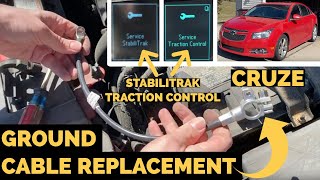
- Chevrolet / GMC Silverado, Sierra, Cruze, Equinox (2006-2016) — On Silverado/Sierra trucks, this indicates a ROM failure in the Transmission Control Module (TCM). On the Cruze, faulty negative battery cables and ground straps are a well-documented cause.
- Toyota Camry, Corolla, RAV4 (2002-2011) — Common in higher-mileage vehicles, pointing to an internal ROM chip failure due to age and heat cycles. Replacement is the most common repair.
- Honda Accord, Civic, CR-V (2003-2008) — Known for a manufacturing defect in some PCM batches causing the circuit board to crack over time, leading to P0605. This is almost always a PCM replacement scenario.
- Nissan Altima, Maxima, Sentra (2007-2013) — Frequently presents with a no-throttle response condition along with the P0605 code. The factory service manual procedure often leads directly to 'Replace ECM.'
- Hyundai / Kia Sonata, Santa Fe, Tucson, Optima, Soul, Seltos (2006-2021) — Multiple Technical Service Bulletins (TSBs) exist for P0605, pointing to a required software update (reflash) to fix an internal logic error. Always check for TSBs before replacing the module.
- Dodge / Ram / Chrysler Ram 1500, Charger, Grand Caravan (2008-2016) — Experiences this code due to software glitches or internal hardware failure of the Totally Integrated Power Module (TIPM) or the PCM itself. Diagnosis must include both modules.
- BMW 3-Series (E90), 5-Series (E60) (2004-2010) — Frequently experience P0605, leading to a recommendation of DME (Digital Motor Electronics) replacement. Water intrusion into the electronics box in the engine bay is a common cause.
- Volkswagen / Audi Golf, Jetta, Passat, A4 (2002-2012) — A P0605 code is a strong indicator of an internal ECM fault that cannot be repaired by a reflash. Module replacement is the typical fix.
Manufacturer-Specific Notes
- Ford: A P0605 code appears intermittently due to a weak battery or after jump-starting. Technicians always perform a full charging system test and check for loose battery connections before considering PCM replacement.
- Nissan: P0605 is notoriously paired with a complete loss of throttle response as the Electronic Throttle Control (ETC) system shuts down. The service manual diagnostic tree points directly to 'Replace ECM.'
- Hyundai/Kia: Hyundai and Kia have issued multiple TSBs for P0605 across various models. The fix is a specific software update to correct a logic error. Failing to check for these TSBs leads to an unnecessary PCM replacement.
- Honda: On early 2000s models, the physical location of the PCM makes it susceptible to vibration damage, leading to cracked circuit boards. P0605 in these vehicles is a classic sign of this specific hardware failure.
Real Owner Stories
2008 Ford Focus at 115K miles - The Simple Fix
Car suddenly wouldn't start, just cranked endlessly. Check engine light was on with P0605. Owner had recently jump-started another car.
What they tried:
- Initially feared a dead PCM.
- Remembering the recent jump-start, tested the battery and found it holding a low charge (under 12.2V).
Outcome: Replaced the 5-year-old battery. The car started immediately and the P0605 code did not return. Total cost: $180.
Lesson: A weak battery is a primary cause of P0605. Always test the battery and charging system thoroughly before assuming the PCM has failed, especially after a jump-start.
2011 Hyundai Sonata at 85K miles - The Misdiagnosis
Check engine light on, car intermittently stalled at stop lights. A generic auto shop scanned P0605 and quoted $1,200 for a new PCM.
What they tried:
- Owner researched and found a Technical Service Bulletin (TSB) related to P0605 for their specific model.
- Took the car to a Hyundai dealership and mentioned the TSB.
Outcome: The dealership confirmed the TSB applied and performed a PCM software update (reflash). The stalling resolved, and the code cleared. Total cost: $185.
Lesson: Always check for TSBs before agreeing to a PCM replacement. A simple software update is often the correct and much cheaper fix.
2006 Chrysler Town & Country at 140K miles - The Unusual Cause
Vehicle exhibited bizarre electrical issues: random stalling, gauges sweeping, and a persistent P0605 code. Battery and alternator tested good.
What they tried:
- Cleaned all ground connections, but the problem persisted.
- Inspected the Totally Integrated Power Module (TIPM) based on forum advice and found internal corrosion on the circuit board.
Outcome: Replaced the TIPM with a refurbished unit. All electrical gremlins disappeared and the P0605 code resolved. Total cost: $450.
Lesson: On Chrysler/Dodge/Jeep vehicles, the TIPM causes symptoms that mimic a PCM failure. If you have P0605 alongside strange electrical behavior, inspect the TIPM.
How to Prevent This Code From Triggering
- Maintain Battery and Terminal Health (Every 6 months) — Prevents the #1 cause of P0605: low/unstable voltage. Regularly clean battery terminals of corrosion and ensure connections are tight to provide stable power to the PCM.
- Test Battery Annually After 3 Years (Once per year (after 3rd year)) — Proactively replacing an aging battery prevents the voltage drops during cranking that corrupt the PCM's memory.
- Apply Dielectric Grease to Critical Connectors (When servicing or inspecting) — Applying a thin layer of dielectric grease to the PCM connector seals prevents moisture intrusion and corrosion, which cause voltage irregularities.
- Ensure Engine Ground Straps are Clean and Tight (Every 12 months / during oil change) — A corroded engine-to-chassis ground strap creates electrical resistance, destabilizing the PCM's ground reference and causing hidden module errors.
- Use a Memory Saver When Changing the Battery (During battery replacement) — A memory saver provides a small amount of power to the vehicle's electronics while the main battery is disconnected, preventing sudden power loss that corrupts module software.
Frequently Asked Questions
What is the most common mistake when diagnosing P0605?
The biggest mistake is immediately replacing the expensive PCM without ruling out simpler electrical causes. Always perform a thorough test of the battery, alternator, and all power/ground connections first. A weak battery or a corroded ground wire is the most frequent culprit.
Can I just reset the code and keep driving?
You can reset the code, but a P0605 almost always returns immediately upon the next self-test. Ignoring it poses a major safety risk, as the engine will shut down without warning. Do not drive the vehicle until the root cause is repaired.
My car seems to drive fine with the P0605 code. Is it really that serious?
Yes, it is a critical code. Even without immediate symptoms, the internal error means the PCM is unstable and untrustworthy. It will fail completely at any moment, leaving you stranded in traffic.
Can a bad battery really cause the P0605 code?
Yes. A weak battery provides unstable voltage during engine cranking. This electrical instability corrupts the PCM's memory during its startup self-checks, directly causing a P0605 code.
Is the PCM covered by warranty?
Under the Federal Clean Air Act, major emissions control components like the PCM carry a mandatory warranty for 8 years or 80,000 miles. If your vehicle falls within this limit, the dealership must repair a P0605 failure at no cost. Check your manual to verify coverage.
How much does it cost to fix P0605?
Costs range from $150 for a simple battery replacement or software reflash to over $2,500 for a full PCM replacement. Diagnosing and fixing wiring issues typically costs $100 to $300. The final price depends entirely on whether the module suffered permanent hardware damage.
Is replacing the PCM a DIY job?
No. A new PCM requires programming with software specific to your vehicle's VIN and immobilizer system. This demands expensive J2534 Pass-Thru tools and software subscriptions. Attempting a DIY swap results in a permanent no-start condition.
Why would the P0605 code appear right after an oil change?
Multiple engine starts in the service bay drain a weak battery, causing voltage to drop low enough to corrupt the PCM's memory during startup. Alternatively, a technician accidentally bumped or damaged a PCM connector during the service. Test the battery first.
What is the difference between P0601 and P0605?
Both indicate internal PCM memory failures. P0601 is a general memory validation failure across the module. P0605 specifically points to an error within the Read-Only Memory (ROM), which stores the core operating software.
Key Takeaways
- P0605 indicates a fatal Read-Only Memory error in the Powertrain Control Module (PCM), requiring an immediate halt to driving to prevent sudden engine shutdown.
- Test the battery and alternator before replacing the PCM, as voltage drops below 12.4V or AC ripple above 0.5V are the leading triggers for this memory fault.
- Search for manufacturer Technical Service Bulletins (TSBs) before authorizing repairs, as a $150-$300 dealership software reflash often resolves the code without hardware replacement.
- Verify your vehicle's age and mileage against the Federal Emissions Warranty, which mandates free PCM replacement for vehicles under 8 years or 80,000 miles.
- Never attempt a DIY PCM replacement; a new module requires specialized J2534 Pass-Thru programming to sync with the vehicle's VIN and immobilizer system.
Helpful Videos

The information in this article is provided for general reference and educational purposes only. Vehicle specifications, procedures, and part compatibility can vary by production date, trim level, and region. Always consult your vehicle's factory service manual and verify part numbers before purchasing or performing repairs. Safety-critical components such as airbags, seat belts, and braking systems should be installed by a qualified professional.
- 🎬 Helpful Videos
- What Does P0605 Mean?
- Can I Drive With P0605?
- Common Causes
- Symptoms
- Diagnostic Flowchart
- Common Fixes & Costs
- DIY vs Professional
- Used vs. New Parts: Buying Guide
- What Happens If You Wait — Timeline
- Cost of Not Fixing It
- Diagnosis Steps
- When This Code Triggers (Freeze-Frame Conditions)
- Related Codes
- Climate & Environmental Factors
- How to Talk to a Mechanic About This Code
- Where to Take It: Dealer vs Independent vs Chain
- When to Walk Away From the Repair
- What Scan Tool You Need for This Code
- How to Clear the Code After You Fix It
- Will This Fail Emissions / State Inspection?
- Most Commonly Affected Vehicles
- Manufacturer-Specific Notes
- Real Owner Stories
- 2008 Ford Focus at 115K miles - The Simple Fix
- 2011 Hyundai Sonata at 85K miles - The Misdiagnosis
- 2006 Chrysler Town & Country at 140K miles - The Unusual Cause
- How to Prevent This Code From Triggering
- Frequently Asked Questions
- What is the most common mistake when diagnosing P0605?
- Can I just reset the code and keep driving?
- My car seems to drive fine with the P0605 code. Is it really that serious?
- Can a bad battery really cause the P0605 code?
- Is the PCM covered by warranty?
- How much does it cost to fix P0605?
- Is replacing the PCM a DIY job?
- Why would the P0605 code appear right after an oil change?
- What is the difference between P0601 and P0605?
- Key Takeaways
- 🎟️ Get 5% Off