

P1440 on 2002-2007 Saturn Vue: EVAP System Fault Causes and Fixes
On a 2002-2007 Saturn Vue, code P1440 almost always indicates a problem with the EVAP system, most commonly a failing canister purge valve solenoid. This code is often defined as "Purge Valve Stuck Open" or a general small leak in the EVAP system. Expect this part to cost between $20 and $50 for an aftermarket replacement, and it's a relatively simple DIY fix for many owners.
- P1440 on a Saturn Vue almost certainly points to a faulty EVAP canister purge valve.
- The most telling symptom is difficulty starting the vehicle immediately after refueling.
- The purge valve is a relatively inexpensive part ($20-$50) and is a straightforward DIY replacement for most owners.
- Always check the gas cap first, as a bad seal is a simple but common cause for all EVAP codes.
- The location of the purge valve differs between the 2.2L and 3.5L V6 engines, with the V6 being slightly more involved to access.
What's Unique About the 2002-2007 Saturn Vue
The first-generation Saturn Vue (2002-2007) used multiple engines, including a GM 2.2L Ecotec and a Honda-sourced 3.5L V6. While the EVAP systems differ slightly in component location, the canister purge valve is a common failure point across all versions. Owner and technician videos consistently show this valve being the primary culprit for EVAP-related codes on this platform. The issue is so frequent that many DIY guides exist specifically for this repair on the Vue. A key symptom of this failure on the Vue is difficulty starting immediately after refueling, which is caused by the engine being flooded with fuel vapors from the stuck-open purge valve.
Symptoms You May Notice
- Check Engine Light is on
- Difficulty starting the engine, or a rough, stumbling start, immediately after refueling.
- Rough or unstable idle.
- Slight decrease in fuel economy.
- A faint smell of fuel around the vehicle.
- Audible clicking or buzzing from the purge solenoid when it shouldn't be active.
- Replacing the oxygen sensors. O2 sensors are not directly related to the EVAP system, and replacing them will not fix this code.
- Replacing the catalytic converter. This is an expensive and unnecessary repair for an EVAP system fault.
- Replacing the fuel injectors. While a stuck-open purge valve can mimic some symptoms of a leaking injector (rough start), the injectors themselves are rarely the cause of P1440.
Most Likely Causes
- Faulty EVAP Canister Purge Valve/Solenoid 🔴 High Probability The purge valve on this platform is known to fail by either sticking open or closed. A stuck-open valve creates a vacuum leak, allowing un-metered fuel vapors into the intake manifold at the wrong time. This leads to rough idle and classic hard starts after fueling because the engine is flooded with vapor.
How to confirm: With the engine off, disconnect the purge valve and try to blow through it. If air passes through, the valve is stuck open and has failed. You can also use a scan tool with bidirectional controls to command the valve open and closed while listening for a click. A healthy valve should not allow air to pass when de-energized.
Typical fix: Replace the canister purge valve solenoid. This part is typically located on or near the engine's intake manifold.
Est. part cost: $20-$50 - Loose or Defective Gas Cap 🟡 Medium Probability The gas cap is a critical seal for the EVAP system. An old, worn, or incorrect cap will cause a leak and trigger a code. It's a very common failure point for all EVAP systems.
How to confirm: Inspect the gas cap for cracks and ensure the rubber seal is pliable and intact. Tighten the cap until it clicks several times. If the code returns, it's worth replacing the cap with a new OEM or high-quality aftermarket part as a cheap and easy diagnostic step. Using non-OEM caps can sometimes cause sealing issues.
Typical fix: Replace the gas cap.
Est. part cost: $10-$25 - Cracked or Disconnected EVAP Hoses ⚪ Low Probability Over time, the rubber and plastic hoses in the EVAP system can become brittle and crack, especially in the engine bay due to heat cycles. On the V6 models, hoses near the intake can be difficult to inspect.
How to confirm: Visually inspect all accessible EVAP lines between the charcoal canister, purge valve, and intake manifold for cracks, disconnections, or damage. A smoke test is the most effective way to find a hard-to-see leak.
Typical fix: Replace the damaged section of hose.
Est. part cost: $5-$30 - Faulty EVAP Canister Vent Solenoid ⚪ Low Probability This valve, located near the charcoal canister under the vehicle, can also stick open or closed. If it sticks closed, it can cause pressure issues and make it difficult to refuel (gas pump clicks off repeatedly). If it sticks open, the system can't seal to run its self-test, triggering a leak code.
How to confirm: Test the solenoid for proper operation using a scan tool or by applying 12V to its terminals and listening for a click. Check for blockages in the valve itself. The valve is normally open and should close when voltage is applied.
Typical fix: Replace the vent solenoid.
Est. part cost: $25-$60
Rare But Worth Checking
- Leaking or Saturated Charcoal Canister: This can happen if the fuel tank is consistently overfilled. Liquid fuel can enter the canister, ruining the charcoal and causing blockages or leaks that can trigger various EVAP codes.
- Faulty Fuel Tank Pressure Sensor: Less common, but if the sensor that monitors EVAP system pressure provides incorrect readings to the ECU, it can cause the computer to set a false code.
- Rusted EVAP Lines: In areas with heavy road salt use, the metal portions of the EVAP lines running underneath the vehicle can rust through, causing a system leak. A smoke test is required to confirm this.
Diagnosis Steps
- Check the Gas Cap: Ensure it is tight and the seal is in good condition. A cracked or brittle seal requires replacement. Clear the code and drive to see if it returns.
- Visually Inspect EVAP Hoses: Look for any obvious cracks, breaks, or disconnected hoses around the engine bay and leading back to the fuel tank. Pay close attention to the connections at the purge valve.
- Test the Canister Purge Valve: Locate the valve on the engine. Disconnect it and check if it's stuck open by blowing through it. If air passes, it has failed and needs replacement. This is the most common fix.
- Test the Canister Vent Valve: Locate the vent valve near the charcoal canister (under the vehicle, typically near the driver's side). Check for blockages and test its function. It should be normally open and close when 12V is applied.
- Perform a Smoke Test: If no obvious issues are found, the next step is to introduce smoke into the EVAP system via the service port. Smoke will escape from any leaks, making them easy to spot. This is the definitive way to find cracked hoses or rusted lines.
Parts You'll Likely Need
- Vapor Canister Purge Valve / Solenoid
(OEM #12581282 (For 2.2L L61 Engine))— This is the most common failure point for EVAP codes on the Saturn Vue, often getting stuck open or closed.
Trusted brands: ACDelco, Dorman, Standard Motor Products (SMP), SKP
OEM price range: $40-$70
Aftermarket price range: $20-$50 - Fuel Tank Cap
(OEM #20882859)— A worn-out seal on the gas cap is a simple but very common cause of EVAP leak codes.
Trusted brands: ACDelco, Stant
OEM price range: $15-$25
Aftermarket price range: $10-$20
Related Codes That Often Appear With This One
- P0442 — Indicates a small EVAP leak, which could be caused by the same faulty component triggering P1440.
- P0455 — Indicates a large EVAP leak. This can occur alongside P1440 if a component fails completely, such as a purge valve that is severely stuck open or a disconnected hose.
- P0496 — Indicates EVAP flow during a non-purge condition. This is a classic and very specific symptom of a purge valve stuck open, making it a very closely related code to P1440.
Platform-Specific Known Issues
- The location of the purge valve varies by engine. On the 2.2L Ecotec, it's easily accessible on top/front of the engine near the intake manifold.
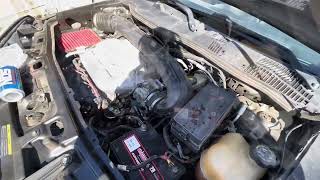
- On the 3.5L Honda V6, the purge valve is located under the intake manifold cover, near the firewall, making it slightly more difficult to access. 🎬 Watch this walkthrough for replacing the V6 purge valve solenoid.
- Owner experiences suggest that some aftermarket purge valves, particularly from certain brands, may have a high premature failure rate, sometimes within days or weeks. It may be wise to use an OEM or a reputable aftermarket brand like ACDelco or SKP.
Mechanic-Grade Diagnostic Values
- EVAP Purge or Vent Solenoid Coil Resistance — expected: 20 - 50 Ohms. Failure: A reading of 0 Ohms indicates a short circuit. An infinite or 'OL' reading indicates an open circuit. Both mean the solenoid has failed.
- Fuel Tank Pressure (FTP) Sensor Voltage — expected: 1.3 - 1.7 Volts (typically rests at 1.5V). Failure: A voltage reading significantly outside this range with the key on, engine off, and the gas cap removed can indicate a faulty sensor or wiring issue.
Scan Tool Commands That Help
- GM Tech2 / GDS2: EVAP Service Bay Test — This function forces the EVAP monitor to run in the service bay, allowing a technician to verify a leak or confirm a repair without performing a full, lengthy drive cycle. It will command the vent and purge solenoids to seal and test the system.
- GM Tech2 / Professional Bidirectional Scan Tool: EVAP Purge Solenoid Control — This allows for direct control of the purge solenoid, commanding it to open or close (or a specific percentage). A technician can use this to listen for the solenoid's 'click' to confirm electrical activation or to seal the system for a smoke test.
- GM Tech2 / Professional Bidirectional Scan Tool: EVAP Vent Solenoid Control — This command directly closes the normally open vent solenoid. This is essential for sealing the EVAP system to perform a pressure, vacuum, or smoke test to find leaks.
Wiring & Ground Locations
- Purge & Vent Solenoid Circuit — Engine bay (purge) and near charcoal canister (vent). On this GM platform, the solenoids typically receive constant 12V power on one wire when the ignition is ON. The Engine Control Module (ECM) supplies the ground on the other wire to activate the solenoid. A common diagnostic step is to check for 12V at the connector with the key on. If 12V is missing, the issue is in the power supply (fuse, wiring). If 12V is present but the solenoid doesn't activate, the issue is the solenoid itself or the control wire/ECM driver.
"I Checked Everything" — The Actual Cause
- If a comprehensive smoke test is performed and shows no leaks, but a P1440 code returns, the cause is almost certainly not a physical leak in a hose or seal. The two most likely culprits are: 1) An intermittently failing EVAP purge or vent solenoid that functions correctly during the test but sticks open or closed during real-world driving. 2) A faulty Fuel Tank Pressure (FTP) sensor that is providing incorrect pressure readings to the ECU, causing it to believe there is a leak when there isn't one.
Diagnostic Flowchart
Used vs. New Parts: Buying Guide for This Vehicle
When a used part is the smart pick: For this repair, used parts are generally not recommended for the electronic solenoids due to their high failure rate. However, structural components like EVAP lines, the charcoal canister itself (if inspected for cracks and dryness), or mounting brackets from a low-mileage, non-rust-belt donor vehicle can be a cost-effective choice.
Donor-vehicle mileage cap: roughly under 100000 miles for the part to have meaningful remaining life.
What to inspect on the donor part:
- For hoses, bend them to check for dry rot or brittleness.
- Inspect plastic components for hairline cracks, especially around mounting points.
- Ensure electrical connector pins are clean and free of corrosion.
- If inspecting a charcoal canister, ensure there are no loose carbon pellets rattling inside and no signs of fuel saturation.
OEM-only on this vehicle (don't cheap out):
- Gas Cap - Aftermarket gas caps are a frequent cause of EVAP codes due to improper sealing. It is highly recommended to use an OEM (ACDelco) or a top-tier OE-equivalent (Stant) cap.
Aftermarket brands forum-validated for this vehicle:
- ACDelco (OEM supplier)
- Standard Motor Products (SMP)
- SKP
Brands owners have reported issues with on this vehicle:
- Dorman - While widely available, Dorman's electronic components and rubber products have a mixed reputation among DIY and professional mechanics, with some reporting premature failures on EVAP system parts. Consider it a viable option only if OEM or other reputable aftermarket brands are unavailable.
Real Owner Stories
Aggregated from forums and TSBs cited above. Mileages and costs reflect what owners reported in those sources.
2004 Vue 3.5L V6
Symptoms: Check Engine Light on with code P1440.
What fixed it: The community pointed to the purge valve solenoid as the likely culprit, reinforcing its status as the primary cause.
Source hint: SaturnFans.com forum thread titled '2004 vue 3.5 p1440 code'
2004 Vue Redline
Symptoms: Check Engine Light with a P0455 (gross leak) code.
What fixed it: A mechanic suggested rusted EVAP lines were to blame, a plausible cause for P1440 in rust-belt states.
Source hint: SaturnForum.com thread titled 'Evap lines'
2007 Vue
Symptoms: A collection of classic EVAP failure symptoms including a shaky idle and trouble starting.
What fixed it: The symptoms were correlated by other users with a faulty purge system.
Source hint: Reddit r/Saturn_Cars thread titled 'EVAP, trouble starting after long drive, shaky'
Related OBD-II Codes
Frequently Asked Questions
Where is the EVAP purge valve located on my 2002-2007 Saturn Vue?
What is the most common cause for code P1440 on this vehicle?
I replaced the purge valve with an aftermarket part and the Check Engine Light came back. What should I do?
My car is very hard to start right after I get gas. Is this related to P1440?
How can I quickly test the purge valve myself?
Is it worth trying to replace the gas cap first for a P1440 code?
The gas pump keeps clicking off when I try to refuel. Could this be related to my EVAP code?
Helpful Videos
Used OEM Parts in Stock
New Aftermarket Parts Available


The information in this article is provided for general reference and educational purposes only. Vehicle specifications, procedures, and part compatibility can vary by production date, trim level, and region. Always consult your vehicle's factory service manual and verify part numbers before purchasing or performing repairs. Safety-critical components such as airbags, seat belts, and braking systems should be installed by a qualified professional.
- Saturn Vue:
- 🎬 Helpful Videos
- 🛍️ Shop This Part
- What's Unique About the 2002-2007 Saturn Vue
- Symptoms You May Notice
- Most Likely Causes
- Rare But Worth Checking
- Diagnosis Steps
- Parts You'll Likely Need
- Related Codes That Often Appear With This One
- Platform-Specific Known Issues
- Mechanic-Grade Diagnostic Values
- Scan Tool Commands That Help
- Wiring & Ground Locations
- "I Checked Everything" — The Actual Cause
- Diagnostic Flowchart
- Used vs. New Parts: Buying Guide for This Vehicle
- Real Owner Stories
- 2004 Vue 3.5L V6
- 2004 Vue Redline
- 2007 Vue
- Related OBD-II Codes
- Frequently Asked Questions
- 🎟️ Get 5% Off