

P1296 on 1996-2000 Chrysler Sebring 2.5L V6: 'No 5 Volts to MAP Sensor' Causes and Fixes
This code means the Manifold Absolute Pressure (MAP) sensor is not receiving its required 5-volt power from the engine computer. The most common causes are a faulty MAP sensor, damaged wiring, or a bad connector. Expect to spend $30-$70 for a new sensor, which is a DIY-friendly fix. Before replacing parts, confirm the 5V is missing at the connector with a multimeter.
- P1296 on this Chrysler means the MAP sensor has lost its 5-volt power supply, which is an electrical fault.
- Do not confuse this with the 'Cooling System Malfunction' definition used by other car brands like VW/Audi.
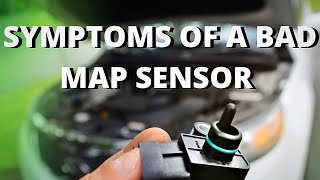
- Symptoms often include hesitation, stuttering, and stalling, which may worsen as the engine warms up.
- The most likely fix is replacing the MAP sensor itself (OEM P/N: 4606133), which is an affordable and accessible part on the 2.5L V6 engine.
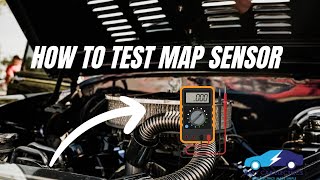
- Before replacing parts, use a multimeter to verify that the 5-volt supply is actually missing at the sensor's connector (Pin 2) to avoid misdiagnosis.
What's Unique About the 1996-2000 Chrysler Sebring
The most critical point for this platform is that P1296 is an electrical fault, not a cooling system fault as it is on many other brands like Volkswagen or Audi. The 1996-2000 Sebring was produced as a Mitsubishi-based coupe and a Chrysler-based convertible; however, both offered the Mitsubishi-designed 2.5L 6G73 V6 engine, making this code's diagnosis consistent across both body styles. Owners often experience symptoms like engine hesitation or stalling that only appear after the vehicle has warmed up for 10-25 minutes.
Symptoms You May Notice
- Check Engine Light is on
- Engine hesitation or bucking, especially under light throttle or when going uphill
- Engine stutters or surges
- Engine may stall, sometimes only after it has warmed up (e.g., after 10-25 minutes of driving)
- Difficult to restart immediately after stalling, may require a cool-down period of 1-2 minutes
- Rough or unstable idle
- Poor fuel economy
- Replacing the Throttle Position Sensor (TPS). A faulty TPS can cause similar hesitation symptoms, but it will typically set different codes (like P0122). One owner reported replacing the TPS for a P1296 issue without success before correctly identifying the MAP sensor as the problem.
- Replacing the Crankshaft Position Sensor. Because a failing crank sensor is a very common cause of stalling when hot on this engine, it is often replaced by mistake when P1296 is present. While it can cause similar symptoms, it usually sets codes like P1391 and does not directly relate to the MAP sensor's 5-volt supply.
Most Likely Causes
- Faulty Manifold Absolute Pressure (MAP) Sensor 🔴 High Probability The MAP sensor is a critical electronic component that operates in a high-heat engine bay environment and can fail internally over time. It is the most common point of failure when code P1296 is present.
How to confirm: After confirming with a multimeter that the 5-volt supply and ground are good at the connector, the sensor itself is the most likely remaining failure point. Replacing the sensor is a common and effective fix. A mechanic on 2CarPros advised that given the intermittent nature and the specific code, replacing the MAP sensor is the logical first step after a visual wiring check.
Typical fix: Replace the MAP sensor. It is typically located on the intake manifold and is easily accessible.
Est. part cost: $30-$70 - Damaged Wiring or Connector 🟡 Medium Probability Engine harness wiring can become brittle and fail from age and heat cycles. The MAP sensor connector or the PCM connector can also corrode or have pins back out. Oil from common valve cover leaks can also contaminate and degrade wiring and connectors.
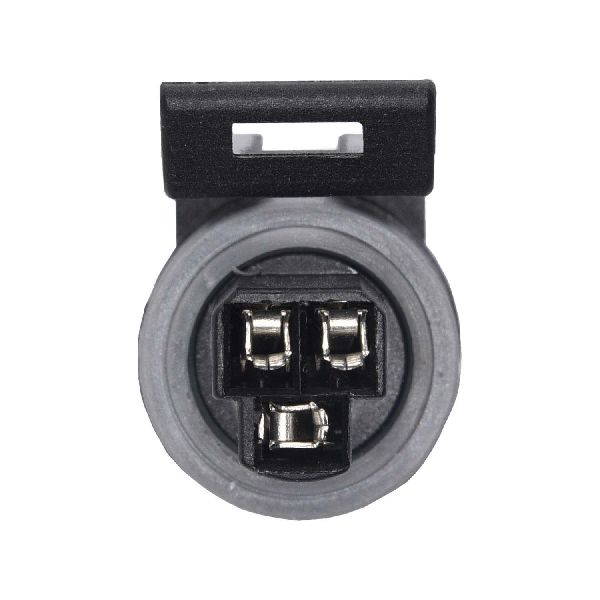
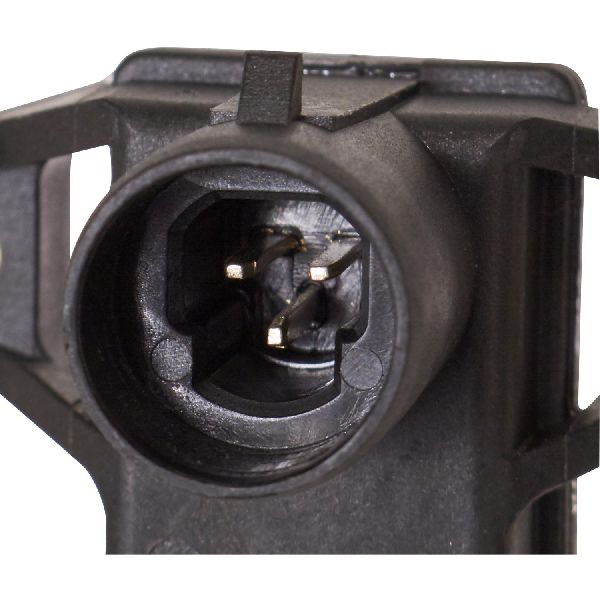
How to confirm: Visually inspect the wiring harness between the PCM and MAP sensor for any signs of damage, melting, or chafing. Unplug the connectors at both the sensor and the PCM to check for corrosion, moisture, or bent/backed-out pins. Use a multimeter on the harness-side connector to check for 5V power and ground. The pins are typically: Pin 1 (Ground), Pin 2 (5V Reference from PCM), and Pin 3 (Signal Output to PCM). A lack of 5V on Pin 2 points to a wiring or PCM issue.
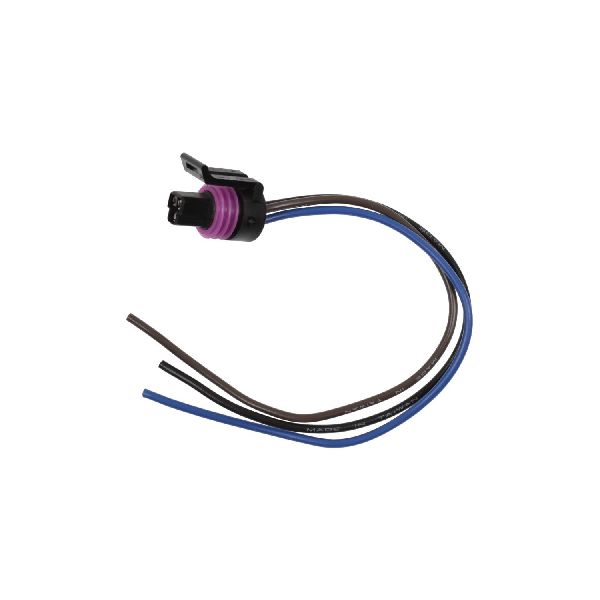
Typical fix: Repair the damaged section of wire or replace the faulty connector pigtail. Clean corroded terminals and apply dielectric grease.
Est. part cost: $10-$30 - Faulty Powertrain Control Module (PCM) ⚪ Low Probability
How to confirm: This should be the last resort after confirming the MAP sensor and all wiring are in perfect condition. If there is no 5-volt output directly at the PCM pin for the MAP sensor circuit (and other 5V reference circuits are also dead), the PCM's internal voltage regulator has likely failed.
Typical fix: Replace the Powertrain Control Module (PCM). This often requires programming to the vehicle's VIN. Rebuilt units are available.
Est. part cost: $200-$500
Diagnosis Steps
- Retrieve all stored DTCs with an OBD-II scanner to confirm P1296 is present and note any other codes.
- Locate the MAP sensor on the top of the intake manifold, near the throttle body.
- Turn the ignition to the 'ON' position, but do not start the engine.
- Disconnect the electrical connector from the MAP sensor.
- Using a multimeter set to DC Volts, probe the terminals on the harness-side connector. A wiring diagram is recommended, but the pinout is commonly: Pin 1 = Ground, Pin 2 = 5-Volt Reference, Pin 3 = Signal.
- Probe Pin 2 (or the corresponding wire). It should have approximately 5 volts. This is the reference voltage from the PCM.
- Probe Pin 1 (or the corresponding wire). It should have close to 0 volts (good ground).
- If the 5-volt reference is missing on Pin 2, the problem is in the wiring harness or the PCM. If 5 volts and ground are present, the MAP sensor itself is the most likely culprit.
- If no voltage is found, inspect the wiring harness for visible damage, paying close attention to areas where oil from the valve covers might have leaked onto the loom.
- If the wiring looks good, the final step is to check for 5-volt output at the corresponding pin on the PCM connector to rule out a failed PCM.
Parts You'll Likely Need
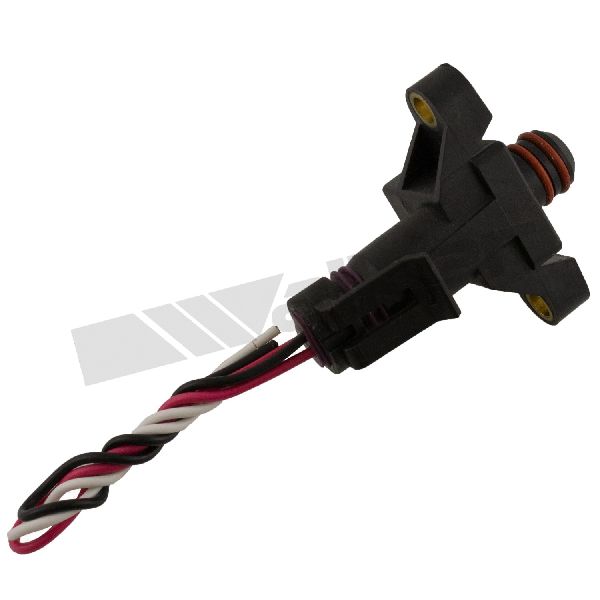
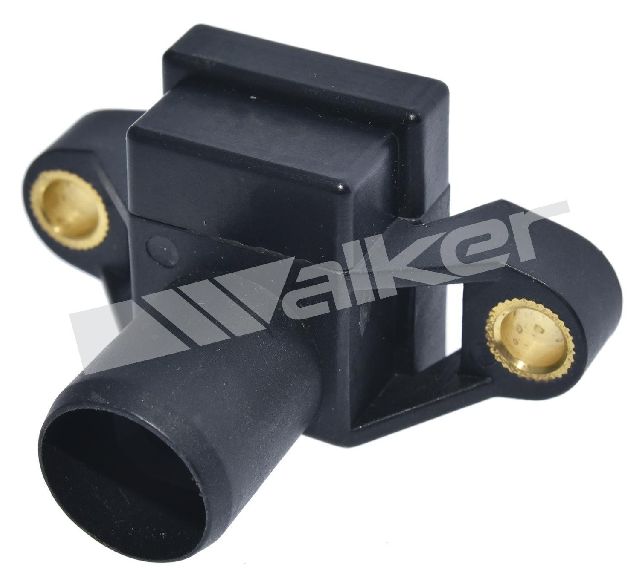
- Manifold Absolute Pressure (MAP) Sensor
(OEM #4606133)— This sensor is the most frequent failure point for code P1296, as it directly relates to the circuit mentioned in the code's definition.
Trusted brands: Mopar, NGK/NTK, Delphi, Standard Motor Products (SMP), Walker
OEM price range: $60-$100
Aftermarket price range: $30-$70
Related Codes That Often Appear With This One
- P1391 — A user on an Edmunds forum reported having P1296 alongside P1391 (Intermittent loss of Cam/Crank Position Sensor). This can occur if a wiring issue or PCM fault affects multiple sensor circuits simultaneously.
Technical Service Bulletins (TSBs) & Recalls
- While no TSBs directly address the P1296 code on this vehicle, a related safety issue is NHTSA Recall 02V191000, which concerns a fraying throttle cable that can cause a loss of throttle control.
Platform-Specific Known Issues
- Oil Contamination from Leaky Valve Cover Gaskets: The 2.5L V6 is well-known for leaky valve cover gaskets. Oil can drip down the back of the engine and onto the wiring and connector for the crankshaft position sensor, causing it to fail and produce stalling symptoms similar to a MAP sensor issue. One owner on an Edmunds forum spent $3400 on various parts before a mechanic found that leaky valve cover gaskets had allowed oil to ruin the crank sensor. This highlights the importance of checking for oil leaks when diagnosing any electrical or sensor-related problem on this engine.
Mechanic-Grade Diagnostic Values
- MAP Sensor 5V Reference Supply — expected: 4.8 to 5.1 Volts DC with key on, engine off.. Failure: Voltage below 4.8V or 0V indicates an open/short in the supply wire or a faulty PCM.
- MAP Sensor Signal Voltage at Idle — expected: 1.1 to 1.8 Volts DC (high vacuum).. Failure: Voltage outside this range at idle suggests a faulty sensor, vacuum leak, or engine mechanical issue.
- MAP Sensor Signal Voltage at Wide Open Throttle (WOT) — expected: 3.9 to 4.8 Volts DC (low vacuum).. Failure: Voltage that doesn't rise close to 5V with the throttle snapped open points to a faulty sensor.
- MAP Sensor Ground Circuit Integrity — expected: 10 to 12 Volts when back-probing the ground wire with the red lead and connecting the black lead to the battery positive terminal.. Failure: Low or no voltage indicates a poor ground connection for the sensor, which can cause erratic readings.
Scan Tool Commands That Help
- DRB III: Module Display (in FCM/IPM or Body Interior menu) — To read the hardware part number of control modules like the Front Control Module (FCM) or Powertrain Control Module (PCM), which is necessary before ordering a replacement or attempting a flash update.
- DRB III: Module Scan — After a repair or module replacement, this function scans all vehicle modules for any set Diagnostic Trouble Codes (DTCs). It's important because replacing one module can sometimes set codes in others.
Wiring & Ground Locations
- MAP Sensor Location — On the intake manifold plenum, near the timing belt cover.. This is the primary component for the P1296 code. Its location makes it susceptible to engine heat, which can contribute to failure.
- G101 — At the left strut tower in the engine bay.. This is a major engine bay ground point. A loose or corroded connection here can cause a variety of sensor and module communication issues, including problems with the 5-volt reference circuits.
- G102 — At the rear of the transaxle.. This ground is critical for the powertrain. A poor connection can lead to intermittent electrical faults that are hard to trace, potentially mimicking sensor failures.
- Splice S115 / S116 — In the engine harness, near the breakout for the MAP/IAT sensor (2.4L) or near the EGR breakout (2.5L).. These splices are points where multiple wires join. A corroded or failed splice can interrupt the 5-volt reference or ground signal to the MAP sensor, directly causing a P1296 code.
Real Owner Repair Stories
- 2CarPros Forum User (1996 Chrysler Sebring Convertible JXi 2.5L V6) — Very intermittent engine stalling/shutting off. Sometimes required a little cranking to restart. The Check Engine Light came on once with code P1296.
❌ Tried (didn't work) The owner was trying to diagnose the intermittent electrical or fuel problem without simply replacing parts.
✅ What actually fixed it A mechanic on the forum advised that based on the P1296 code ('missing 5 volt supply'), the most likely causes were a break in the wire, a bad connector, or an internal failure in the MAP sensor. Due to the intermittent nature of the fault, replacing the MAP sensor was the recommended first step after a visual inspection of the connector. - Edmunds Car Forums User (1997 Chrysler Sebring) — Engine hesitation and stalling, eventually accompanied by code P1296.
❌ Tried (didn't work) Replaced fuel pump., Replaced distributor (which includes the camshaft sensor)., Replaced spark plugs and wires.
✅ What actually fixed it The issue was resolved after replacing the MAP Sensor and its connector. The user noted that they had not received the P1296 code again after this specific repair.
OEM Part Supersession History
5269983→4606133— Part number consolidation and potential design update over the vehicle's production life.
Heads up: While 4606133 is the correct service part, some aftermarket parts may be listed under the older 5269983 number. Always verify fitment for the specific 1996-2000 2.5L V6 model.
Model Year Variations Within This Range
- 1996-2000: The first-generation Sebring was offered as a coupe (FJ body) and a convertible (JX body). The coupe was based on the Mitsubishi Eclipse platform, while the convertible was based on the Chrysler Cirrus sedan platform. However, both body styles used the same Mitsubishi-designed 2.5L 6G73 V6 engine, meaning the diagnosis for P1296 is identical between them.
Diagnostic Flowchart
Other Known Issues on This Vehicle
Issues unrelated to this code that are worth knowing about as an owner of this generation:
- A604/41TE Automatic Transmission Failure 🔴 High — Very common, especially over 100,000 miles. Issues include harsh shifting, slipping, and entering 'limp-home' mode. (Ref: Using incorrect fluid (non-ATF+4) is a primary cause of failure.)
- Distributor and Camshaft Position Sensor Failure 🔴 High — The camshaft position sensor is integrated into the distributor, which is a frequent failure point. Symptoms include stalling when hot, no-start, and misfires. Owners report aftermarket distributors can be unreliable.
- Valve Cover Gasket Oil Leaks 🟠 Medium — Extremely common. The rear valve cover is difficult to access. Leaking oil can foul the spark plug wells and drip onto other critical components like the crankshaft position sensor, causing stalling and no-start conditions.
- Fraying Throttle Control Cable 🔴 High — Sufficiently widespread to trigger an official recall (NHTSA Campaign ID: 02V191000). (Ref: Recall 02V191000: The throttle control cable can fray, causing the throttle to bind or stick, which could result in a loss of throttle control.)
- Clogged EGR Valve and Passages 🟠 Medium — The EGR valve is prone to clogging with carbon, causing rough idle, hesitation, and engine knocking, particularly when the engine is warm. Often triggers code P0401.
Used vs. New Parts: Buying Guide for This Vehicle
When a used part is the smart pick: A used OEM MAP sensor from a junkyard can be a cost-effective option, as they are generally reliable and failures are often age-related rather than a design flaw. Given the low cost of new aftermarket parts, a used part is most sensible if you are already at a salvage yard for other components.
Donor-vehicle mileage cap: roughly under 80000 miles for the part to have meaningful remaining life.
What to inspect on the donor part:
- Check the donor vehicle's mileage; lower is always better.
- Inspect the plastic housing of the sensor for cracks or signs of extreme heat stress.
- Examine the electrical connector pins on the sensor to ensure they are straight and free of corrosion.
- Avoid sensors from engines that show signs of major oil leaks or overheating (e.g., burnt plastic, heavy grime).
OEM-only on this vehicle (don't cheap out):
- Crankshaft Position Sensor
- Camshaft Position Sensor (Distributor)
Aftermarket brands forum-validated for this vehicle:
- NGK/NTK
- Delphi
- Standard Motor Products (SMP)
- Mopar (OEM)
Brands owners have reported issues with on this vehicle:
- Unbranded, 'white-box' parts from online marketplaces should be avoided, as their quality and calibration are often questionable.
Real Owner Stories
Aggregated from forums and TSBs cited above. Mileages and costs reflect what owners reported in those sources.
1996 Chrysler Sebring 2.5L
Symptoms: Bucking and stalling after 25 minutes of driving.
What fixed it: The source corroborates the symptoms and code definition but does not state the final repair.
Source hint: iATN (International Automotive Technicians Network)
Chrysler Sebring 2.5L V6
Symptoms: Stalling problems that were difficult to diagnose.
What fixed it: After spending a significant amount on other parts, a mechanic found the actual cause was a crankshaft position sensor that had been ruined by oil from leaky valve cover gaskets.
Cost: $3400
Source hint: Edmunds.com Car Forums, as cited in Vehicle Specific Issues
Chrysler 2.5L V6
Symptoms: Symptoms leading to a P1296 code.
What fixed it: Replacing the MAP sensor fixed the P1296 code, after the owner had first incorrectly replaced the Throttle Position Sensor (TPS).
Source hint: DodgeForum.com
1996 Sebring
Symptoms: Check Engine Light with code P1296.
What fixed it: The owner reported replacing the MAP sensor and its connector.
Source hint: Edmunds.com Car Forums
Related OBD-II Codes
Frequently Asked Questions
My 1998 Sebring stalls after it's warmed up and then won't restart for a minute. Is this related to code P1296?
I have an oil leak from my valve covers. Could this cause the P1296 code on my 2.5L V6?
What is the most common part to fail when a P1296 code appears?
How can I test the MAP sensor circuit before buying a new sensor?
My mechanic wants to replace the PCM. Is that a common fix for P1296?
I have a 1999 Dodge Stratus with the 2.5L V6 and a P1296 code. Does the information for the Sebring apply?
Helpful Videos
We Have This Part in Stock


The information in this article is provided for general reference and educational purposes only. Vehicle specifications, procedures, and part compatibility can vary by production date, trim level, and region. Always consult your vehicle's factory service manual and verify part numbers before purchasing or performing repairs. Safety-critical components such as airbags, seat belts, and braking systems should be installed by a qualified professional.
- Chrysler Sebring:
- 🎬 Helpful Videos
- 🛍️ Shop This Part
- What's Unique About the 1996-2000 Chrysler Sebring
- Symptoms You May Notice
- Most Likely Causes
- Diagnosis Steps
- Parts You'll Likely Need
- Related Codes That Often Appear With This One
- Technical Service Bulletins (TSBs) & Recalls
- Platform-Specific Known Issues
- Mechanic-Grade Diagnostic Values
- Scan Tool Commands That Help
- Wiring & Ground Locations
- Real Owner Repair Stories
- OEM Part Supersession History
- Model Year Variations Within This Range
- Diagnostic Flowchart
- Other Known Issues on This Vehicle
- Used vs. New Parts: Buying Guide for This Vehicle
- Real Owner Stories
- 1996 Chrysler Sebring 2.5L
- Chrysler Sebring 2.5L V6
- Chrysler 2.5L V6
- 1996 Sebring
- Related OBD-II Codes
- Frequently Asked Questions
- 🎟️ Get 5% Off