

P1128 on 2015-2022 Ram ProMaster City: Closed Loop Fueling Causes and Fixes
On the 2015-2022 Ram ProMaster City, code P1128 is most often caused by a failed upstream oxygen (O2) sensor, frequently fouled by engine oil due to a known oil consumption issue with the 2.4L MultiAir engine. Replacing this sensor is the most common fix. Expect to pay $50-$120 for an aftermarket sensor or $150-$250 for an OEM Mopar part.
- P1128 on a ProMaster City almost always points to a problem with the upstream oxygen sensor (Bank 1, Sensor 1).
- Before replacing the sensor, perform a quick visual inspection for obvious exhaust leaks or wiring damage, as these can cause the same code.
- The 2.4L engine's tendency to consume oil can shorten the life of the O2 sensor; be sure to check your oil level regularly.
- Replacing the upstream O2 sensor is a DIY-friendly task with the right tool (an O2 sensor socket) and can save significant labor costs.
What's Unique About the 2015-2022 Ram ProMaster City
The Ram ProMaster City's 2.4L 'Tigershark' MultiAir engine has a well-documented history of excessive oil consumption, which was addressed by TSB 09-003-23 Rev. A and a related warranty extension (XB1). This is not just an annoyance; it is a direct cause for code P1128. Over time, burning oil contaminates and fouls the tip of the upstream oxygen sensor, degrading its ability to read the exhaust stream accurately. This oil fouling can cause the sensor to become slow to respond or send incorrect signals, preventing the PCM from trusting it and thus blocking the switch to closed-loop operation. This pattern is seen across all vehicles using this engine.
Symptoms You May Notice
- Check Engine Light is on
- Noticeably reduced fuel economy
- Engine hesitation, especially during acceleration
- Rough or unstable idle
- Failing a vehicle emissions test
- Engine may stall, especially when hitting bumps (if wiring is the issue)
- Replacing the downstream (post-catalytic converter) O2 sensor. The downstream sensor's primary role is to monitor catalyst efficiency, while the upstream sensor is the one used for closed-loop fuel control.
Most Likely Causes
- Faulty Upstream Oxygen (O2) Sensor 🔴 High Probability This is the most common failure point for this code on the 2.4L MultiAir engine across all FCA platforms. The sensor's performance is often degraded by oil contamination due to the engine's known oil consumption issue (TSB 09-003-23).
How to confirm: Use a scan tool with live data to monitor the Bank 1 Sensor 1 voltage. During warm-up, the voltage should start fluctuating rapidly between approximately 0.1V and 0.9V. If the sensor is stuck at a certain voltage, responds very slowly, or shows no activity, it has likely failed. Visually inspect the old sensor upon removal; a tip covered in white or black, sooty deposits is a clear sign of oil or fuel fouling.
Typical fix: Replace the upstream (pre-catalytic converter) oxygen sensor. A 7/8" (22mm) offset oxygen sensor socket is highly recommended for this job.
Est. part cost: $50-$250 - Exhaust Leak Before the O2 Sensor 🟡 Medium Probability
How to confirm: Visually inspect the exhaust manifold and the exhaust pipe leading to the O2 sensor for cracks or gasket leaks. You may hear a ticking or puffing sound that is more pronounced when the engine is cold. A smoke test can definitively identify small leaks. Check for soot trails around the manifold or flange connections.
Typical fix: Repair the leak, which may involve replacing a gasket or the exhaust manifold itself.
Est. part cost: $20-$400 - Faulty Engine Coolant Temperature (ECT) Sensor ⚪ Low Probability A faulty ECT sensor can cause a related code, P0128, which is also common on this engine.
How to confirm: Use a scan tool to monitor the ECT sensor reading from a cold start. The temperature should rise steadily as the engine warms up to operating temperature (typically 190-210°F). If it stays locked at a very low or very high temperature, or the reading is erratic, it's likely faulty. The PCM will not enter closed-loop if it believes the engine is not at operating temperature.
Typical fix: Replace the engine coolant temperature sensor.
Est. part cost: $25-$75 - Wiring or Connector Issue ⚪ Low Probability On platform mates like the Jeep Cherokee, the O2 sensor wiring harness is sometimes improperly secured, allowing it to melt on the hot exhaust manifold.
How to confirm: Visually inspect the wiring harness and connector for the upstream O2 sensor. Look for any signs of melting, chafing, corrosion, or loose pins. The harness is located near the hot exhaust, making it susceptible to damage. Trace the wiring from the sensor to its connection point on the main harness.
Typical fix: Repair the damaged section of the wiring harness or replace the connector pigtail.
Est. part cost: $15-$50
Rare But Worth Checking
- Low Fuel Pressure: A weak fuel pump or clogged fuel filter can prevent the engine from receiving enough fuel, which the PCM may interpret as a system fault that prevents closed-loop operation. This would typically be accompanied by other lean condition codes.
- Powertrain Control Module (PCM) Fault: In very rare instances, the PCM itself can fail. On the related Dodge Dart, a PCM software update was sometimes required to fix P1128 per TSB 18-009-15. This should only be considered after all other possibilities have been exhaustively ruled out.
Diagnosis Steps
- Check for Other Codes: Scan the PCM for any other stored trouble codes. Codes related to the O2 sensor circuit (P0131, P0132, P0133) or oil pressure (P0524) strongly point to the cause.
- Check Engine Oil Level: Given the platform's known issues, this is a critical first step. A low oil level can be the root cause of the O2 sensor fouling.
- Inspect for Exhaust Leaks: With the engine cool, start it and listen for any ticking or puffing sounds from the exhaust manifold area. Visually inspect the manifold for cracks.
- Analyze Live Sensor Data: Using a capable OBD-II scanner, monitor live data for the 'Upstream O2 Sensor Bank 1' and 'Engine Coolant Temperature'.
- Verify ECT Sensor Function: Ensure the ECT reading climbs steadily to around 190-210°F and stays there. If not, diagnose the ECT sensor circuit.
- Verify O2 Sensor Function: Once the engine is warm, watch the O2 sensor voltage. It should fluctuate rapidly between ~0.1V and ~0.9V. If it is stuck, slow, or unresponsive, the sensor is the primary suspect.
- Inspect O2 Sensor Wiring: If the sensor appears unresponsive, perform a thorough visual inspection of its wiring and connector for any damage, especially melting, before ordering a new part.
- Test Fuel Pressure: If sensor checks are inconclusive, test the fuel pressure to ensure it is within the manufacturer's specification. This rules out a fuel delivery problem.
Parts You'll Likely Need
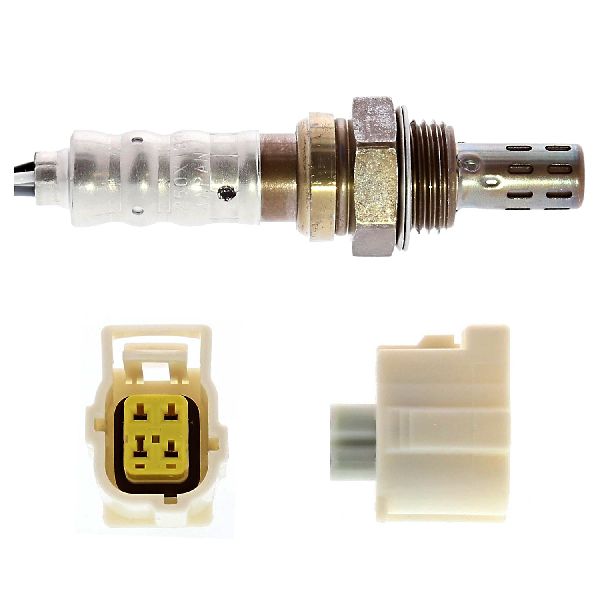
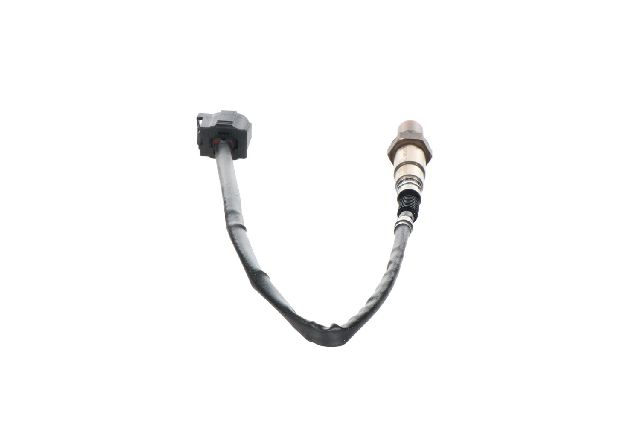
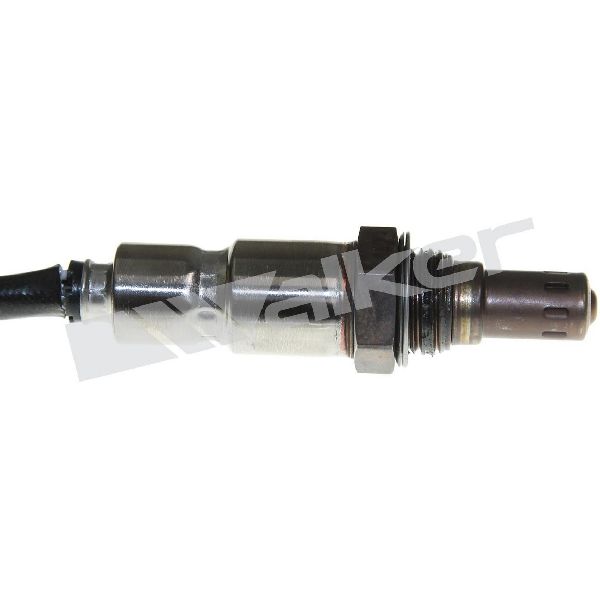
- Upstream Oxygen Sensor
(OEM #68087364AA)— This is the most frequent point of failure for code P1128 on this engine. It is responsible for providing the data needed to enter closed-loop operation. Its failure is often accelerated by the engine's oil consumption issue.
Trusted brands: Mopar, NTK, Denso, Bosch
OEM price range: $150-$250
Aftermarket price range: $50-$120
Related Codes That Often Appear With This One
- P0131 — This code indicates 'O2 Sensor Circuit Low Voltage (Bank 1 Sensor 1)'. It often appears with P1128 because a failing sensor or wiring issue can cause both conditions.
- P0132 — This code means 'O2 Sensor Circuit High Voltage (Bank 1 Sensor 1)'. Like P0131, it points directly to a problem with the upstream O2 sensor or its circuit, which is the root cause of P1128.
- P0133 — This code means 'O2 Sensor Circuit Slow Response (Bank 1 Sensor 1)'. A slow-responding sensor is a classic failure mode that will prevent the system from entering closed-loop, directly causing P1128.
- P0524 — This code for 'Engine Oil Pressure Too Low' is extremely common on this engine due to the oil consumption issue. Its presence alongside P1128 strongly suggests the O2 sensor has been fouled by burning oil.
Technical Service Bulletins (TSBs) & Recalls
- TSB 09-003-23 Rev. A (NHTSA ID 10231800): Directly addresses the underlying '2.4L Excessive Oil Consumption' issue that is a primary root cause of P1128 by fouling the O2 sensor. It details the oil consumption test and long block replacement procedure under the XB1 warranty extension.
Platform-Specific Known Issues
- The 2.4L MultiAir engine is subject to a class-action lawsuit and a related warranty extension program (XB1) for excessive oil consumption. This issue can cause oil to foul the oxygen sensor, leading to premature failure and triggering code P1128. Owners experiencing high oil consumption should contact a dealer to inquire about an oil consumption test under TSB 09-003-23 Rev. A.
Mechanic-Grade Diagnostic Values
- Upstream O2 Sensor (B1S1) Voltage — expected: Rapidly fluctuating between approximately 0.1V and 0.9V in closed-loop.. Failure: Voltage is slow to change, flat, or stuck at a specific value.
- Fuel Pressure (Key On, Engine Off) — expected: 58 psi +/- 5 psi (400 kPa +/- 34 kPa). Failure: Pressure is significantly below 53 psi or drops quickly after the pump primes.
- Engine Coolant Temperature (ECT) Sensor Resistance — expected: ~2000-3000 Ohms at 20°C (68°F), dropping to ~200-300 Ohms at 90°C (194°F).. Failure: Infinite resistance (Open/OL), near-zero resistance (short), or value does not change with temperature.
- ECT Sensor Signal Voltage (Live Data) — expected: High when cold (e.g., ~3.5-4.5V), dropping smoothly to ~0.5-1.0V when at operating temperature.. Failure: Voltage is stuck high (near 5V), stuck low, or does not change as the engine warms up.
Wiring & Ground Locations
- (K41) O2 Sensor 1/1 Signal circuit — The signal wire running between the upstream O2 sensor connector and the Powertrain Control Module (PCM).. This is the primary wire the PCM monitors for the voltage reading used to determine air-fuel ratio. A short or open in this wire will prevent closed-loop operation.
- (K902) O2 Return Upstream circuit — The sensor return (ground reference) wire running from the O2 sensor connector back to the PCM.. A fault in the ground reference circuit can cause incorrect voltage readings, leading the PCM to distrust the sensor and trigger P1128.
- Primary Engine/Transmission Ground Strap — A braided ground strap connecting the transmission case to the chassis frame, often near the driver's side transmission mount.. A corroded or loose main ground can cause a variety of sensor reading issues, including erratic O2 sensor signals that can prevent the system from entering closed-loop.
Real Owner Repair Stories
- DodgeForum.com user (Dodge vehicle (specific model not mentioned, but behavior is relevant to FCA platforms)) — Persistent P1128 code.
❌ Tried (didn't work) Replacing the upstream O2 sensor (Bank 1, Sensor 1) with a Bosch aftermarket part.
✅ What actually fixed it The code was only resolved after replacing the aftermarket sensor with an OEM Mopar oxygen sensor. The user noted that Dodge vehicles can be 'picky' and sometimes only accept Mopar sensors.
When the Usual Fixes Don't Work
- While a faulty upstream O2 sensor is the most common cause, a real-world repair story highlights that using an aftermarket sensor (specifically Bosch) may not solve the problem on some FCA vehicles. The issue was only resolved by installing a genuine OEM Mopar sensor, suggesting a sensitivity to non-OEM parts in the engine management system.
Diagnostic Flowchart
Other Known Issues on This Vehicle
Issues unrelated to this code that are worth knowing about as an owner of this generation:
- Excessive Oil Consumption 🔴 High — Widespread issue affecting a large number of 2.4L Tigershark engines, often appearing between 30,000 and 80,000 miles. (Ref: TSB 09-003-23 Rev. A; Warranty Extension XB1)
- Transmission Failure / Shifting Issues (9-Speed Auto) 🔴 High — Common complaints of harsh shifting, unexpected shifts to neutral, and premature failure. A recall was issued for 2015-2016 models for a wiring connector issue causing shifts to neutral. Later models faced other software and mechanical issues. (Ref: NHTSA Recall 16V-203 (for 2015-2016 models))
- Sliding Door Mechanism Failure 🟠 Medium — Common problem where rollers, handles, cables, or electrical contacts fail, causing the door to get stuck, not open, or not lock properly.
- Turn Signal Malfunction 🟡 Low — A recall was issued because the flash rate might not change to warn the driver if a turn signal bulb fails. (Ref: NHTSA Recall 21V-792 (for 2019-2021 models))
- ABS Module Failure 🔴 High — A recall was issued for potential internal damage to the ABS module, which could lead to a loss of braking performance. (Ref: NHTSA Recall 21V-028 (for 2020-2021 models))
Used vs. New Parts: Buying Guide for This Vehicle
When a used part is the smart pick: For this code, used parts are generally not recommended for the primary failure items. However, if the cause is a cracked exhaust manifold, a used manifold from a low-mileage, collision-damaged donor vehicle can be a cost-effective option.
Donor-vehicle mileage cap: roughly under 75000 miles for the part to have meaningful remaining life.
What to inspect on the donor part:
- For an exhaust manifold, check for any visible cracks, especially around the welds and flanges.
- Ensure all mounting studs are intact and not broken off.
- Verify the donor vehicle was not involved in a front-end collision that could have stressed the manifold.
OEM-only on this vehicle (don't cheap out):
- Oxygen (O2) Sensor: Forum and mechanic experience suggests that FCA vehicles, including the ProMaster City, can be sensitive to aftermarket sensors. To avoid repeat repairs, using an OEM Mopar sensor is strongly recommended.
- Engine Coolant Temperature (ECT) Sensor: Given the high failure rate of this part on the 2.4L engine, installing a new OEM Mopar sensor (P/N 5149077AB) is the safest bet.
Aftermarket brands forum-validated for this vehicle:
- NTK (for O2 Sensors)
- Denso (for O2 Sensors)
Brands owners have reported issues with on this vehicle:
- Bosch (for O2 Sensors): At least one owner reported that a Bosch O2 sensor did not resolve the P1128 code, while an OEM Mopar part did.
Real Owner Stories
Aggregated from forums and TSBs cited above. Mileages and costs reflect what owners reported in those sources.
Ram ProMaster City 2.4L MultiAir
Symptoms: Intermittent misfires and receiving codes P1128 and P1129.
What fixed it: The diagnostic process involved checking O2 sensors, cleaning the throttle body, and replacing the EGR valve.
Source hint: RamForum.com thread titled 'P1128 and P1129'
2014-2019 Jeep Cherokee (KL) 2.4L MultiAir — ~55000 miles
Symptoms: P1128 code caused by oil consumption fouling the upstream O2 sensor.
What fixed it: Replacement of the upstream O2 sensor and addressing the oil consumption issue via TSB 09-003-23.
Source hint: TSB 09-003-23 Rev. A (NHTSA ID 10231800)
Related OBD-II Codes
Frequently Asked Questions
Is there a TSB for the excessive oil consumption that causes P1128 on my Ram ProMaster City?
Does the 2.4L MultiAir engine have a warranty extension that might cover the root cause of this code?
Why does my ProMaster City stall when hitting bumps while the P1128 code is active?
Can a faulty coolant sensor cause P1128 on the 2.4L engine?
What specific tool do I need to replace the upstream O2 sensor on my ProMaster City?
How can I tell if my O2 sensor is fouled by oil rather than just being old?
We Have This Part in Stock

The information in this article is provided for general reference and educational purposes only. Vehicle specifications, procedures, and part compatibility can vary by production date, trim level, and region. Always consult your vehicle's factory service manual and verify part numbers before purchasing or performing repairs. Safety-critical components such as airbags, seat belts, and braking systems should be installed by a qualified professional.
- Ram ProMaster City:
- 🛍️ Shop This Part
- What's Unique About the 2015-2022 Ram ProMaster City
- Symptoms You May Notice
- Most Likely Causes
- Rare But Worth Checking
- Diagnosis Steps
- Parts You'll Likely Need
- Related Codes That Often Appear With This One
- Technical Service Bulletins (TSBs) & Recalls
- Platform-Specific Known Issues
- Mechanic-Grade Diagnostic Values
- Wiring & Ground Locations
- Real Owner Repair Stories
- When the Usual Fixes Don't Work
- Diagnostic Flowchart
- Other Known Issues on This Vehicle
- Used vs. New Parts: Buying Guide for This Vehicle
- Real Owner Stories
- Ram ProMaster City 2.4L MultiAir
- 2014-2019 Jeep Cherokee (KL) 2.4L MultiAir — ~55000 miles
- Related OBD-II Codes
- Frequently Asked Questions
- 🎟️ Get 5% Off