

OBD-II Code P1129: Manifold Absolute Pressure (MAP) Sensor Signal Higher Than Expected
The Ultimate Guide to Diagnosing and Fixing P1129
- Code P1129 indicates the Powertrain Control Module (PCM) detects higher-than-expected intake manifold pressure, meaning there is too little vacuum for current engine conditions.
- Manufacturer definitions vary wildly: P1129 means a MAP sensor/vacuum issue on Hondas, swapped O2 sensors on Fords, and an Electronic Throttle Control System (ETCS) fault on 4.7L V8 Toyotas.
- Vacuum leaks from cracked hoses or a stuck PCV valve cause over 50% of Honda/Acura P1129 codes, making a $30 smoke test the most cost-effective first diagnostic step.
- Driving with an unresolved P1129 code forces a rich fuel mixture that destroys a catalytic converter within 3 to 6 months, turning a $50 sensor fix into a $1,500+ exhaust repair.
What Does P1129 Mean?

Your car's Powertrain Control Module (PCM) receives a Manifold Absolute Pressure (MAP) sensor signal that is higher than expected for current engine conditions. The MAP sensor measures intake manifold pressure to calculate engine load and fuel injection. A high signal means there is less vacuum than anticipated. This tricks the computer into injecting too much fuel, causing a rich running condition, poor performance, and increased emissions.
Technical definition: The SAE/OBD-II definition for P1129 is "MAP Sensor Signal Higher Than Expected". The PCM detects the MAP sensor voltage or pressure reading exceeds the normal range for current operating conditions. On 2008-2012 Hondas, this triggers if MAP voltage exceeds 1.14 volts or pressure exceeds 36.9 kPa for over 5 seconds at idle.
Can I Drive With P1129?

Yes, But With Caution. You can drive with this code, but performance degrades, fuel economy drops 10-20%, and the engine stalls unexpectedly in traffic. Fix it promptly. Prolonged driving with a rich fuel mixture destroys the catalytic converter, turning a minor issue into a $1,500+ repair.
Common Causes

- Vacuum Leaks (Hoses, PCV, or Gaskets) (Very Common) — The primary cause. Cracked hoses, a stuck-open PCV valve, or a leaking intake manifold gasket allow unmetered air into the intake. This reduces vacuum, raising pressure and causing an artificially high MAP reading.
- Faulty MAP Sensor (Common) — Internal sensor electronics degrade over time, causing the sensor to send a slow, stuck, or incorrect voltage signal to the PCM regardless of actual manifold vacuum.
- Dirty or Clogged Throttle Body (Common) — Carbon buildup prevents the throttle plate from closing completely at idle. This creates a persistent air leak into the manifold, raising pressure enough to trigger P1129.
- Electrical Wiring or Connector Issues (Less Common) — Corroded pins, damaged wires, or a poor connection at the MAP sensor plug distort the voltage signal. On older Hondas, the MAP and TPS connectors are identical and sometimes accidentally swapped.
- Stuck EGR Valve (Less Common) — An Exhaust Gas Recirculation (EGR) valve stuck open allows exhaust gases into the manifold at idle, destroying engine vacuum and triggering the code.
- Clogged Catalytic Converter (Rare) — A severely restricted exhaust forces pressure back into the cylinders and intake manifold during valve overlap, artificially raising the MAP sensor reading.
- Incorrect Camshaft Timing (Rare) — A skipped timing belt or chain alters valve timing, pushing combustion pressure back into the intake manifold and raising the MAP reading.
- Aftermarket Air Intake (Rare) — Poorly designed cold air intakes alter airflow characteristics, causing the MAP sensor to read incorrectly under specific conditions.
Symptoms
- Check Engine Light is On — The Malfunction Indicator Lamp (MIL) illuminates immediately.
- Rough or Unstable Idle — The engine shakes, vibrates, or RPM bounces erratically when stopped.
- Poor Engine Performance — You experience sluggish acceleration, hesitation, and a general lack of power.
- Reduced Fuel Economy — The vehicle consumes 10-20% more fuel because the PCM injects excess fuel based on the false high-pressure signal.
- Engine Stalling — The engine stalls at stops, at idle, or when the A/C compressor engages.
- Engine Enters 'Limp Mode' — The PCM limits engine RPM to 3,000-3,500 to prevent internal damage.
- Rotten Egg Exhaust Smell — A sulfur smell occurs when the persistent rich fuel mixture overheats the catalytic converter.
Diagnostic Flowchart

Tap your situation to follow the diagnostic path that matches what you're seeing on this code.
Common Fixes & Costs
- Replace Vacuum Hoses and PCV Valve — Parts: $15-$45, Labor: $0-$75, ~0.5 hr book time (DIY)
- Replace MAP Sensor
— Parts: $90-$150, Labor: $50-$100, ~0.5 hr book time
(DIY)
Honda Civic (2001-2005): OEM 37830-PGK-A01, 37830-PLC-004 (Alt: Denso (OEM Supplier), NGK/NTK, Delphi, Standard Motor Products (AS191))
Honda Accord (2008-2012): OEM 37830-RNA-A01 (Alt: Denso (65452VC), Bosch, Delphi) - Clean Throttle Body and Perform Relearn — Parts: $10-$20, Labor: $100-$150, ~1.0 hr book time (Intermediate)
- Replace Intake Manifold Gasket — Parts: $40-$100, Labor: $250-$450, ~3.5 hr book time (Advanced)
- Replace Downstream Oxygen Sensor(s)
— Parts: $50-$150 per sensor, Labor: $100-$200, ~1.5 hr book time
(Intermediate)
Ford F-150 (2004-2008): OEM 4L3Z-9G444-AA (Motorcraft DY-992) (Alt: Bosch (15664), Denso, NGK) - Replace Electronic Throttle Body Assembly
— Parts: $250-$550, Labor: $150-$250, ~1.5 hr book time
(Advanced)
Toyota Tundra/Sequoia (2002-2004): OEM 22030-50170 (Alt: Aisan (W0133-1768623), Standard Motor Products (S20137))
DIY vs Professional
- Replace Vacuum Hoses — Beginner: Yes
Tools: Pliers, flashlight - Replace MAP Sensor — Beginner: Yes
Tools: Socket set, screwdrivers - Clean Throttle Body — Beginner: Yes, with caution.
Tools: Socket set, throttle body cleaner, soft brush - Replace Downstream O2 Sensor — Beginner: No, intermediate only.
Tools: Oxygen sensor socket, ratchet, penetrating oil - Replace Intake Manifold Gasket — Beginner: No, advanced only.
Tools: Extensive mechanic's tool set, torque wrench
Used vs. New Parts: Buying Guide
When a used part is worth it: Buying a used MAP sensor is not recommended unless the budget is extremely tight. The savings are minimal compared to the risk of installing a degraded part.
Donor-vehicle mileage cap: roughly under 60000 miles for the part to have meaningful remaining life.
Donor quality checklist:
- Verify the part is tested and confirmed working.
- Ensure the donor vehicle was salvaged for collision, not engine failure.
- Demand at least a 90-day warranty.
Decision logic:
- If A new OEM or high-quality aftermarket MAP sensor is under $150 → Buy new. The warranty outweighs the $40 savings of a used part.
- If The required part is a hard mechanical component like an intake manifold → Buy used, provided it is not cracked or warped.
Warranty tradeoff: Salvage yard parts carry a 30-90 day part-only warranty. New aftermarket parts offer 1-year to lifetime warranties.
Worst-case if a used part fails: $150-$300 in repeat diagnostic and labor costs if a used sensor fails.
What Happens If You Wait — Timeline
- 0-1 month: Check Engine Light illuminates. Idle roughens and fuel economy drops slightly. (MPG impact: 5-10%% · Added cost: $20-$50 in wasted fuel.)
- 1-3 months: Hesitation and sluggishness worsen. The rich fuel mixture consistently overheats the catalytic converter, producing a sulfur smell. (MPG impact: 10-15%% · Added cost: $50-$150 in wasted fuel, plus initial catalyst heat stress.)
- 3-6 months: The catalytic converter's internal honeycomb structure melts from constant high temperatures. Efficiency is permanently reduced. (MPG impact: 15-20%% · Added cost: $800-$1,500 for unavoidable catalytic converter replacement.)
- 6+ months: Catastrophic failure. The melted converter creates a major exhaust blockage. The engine loses severe power or fails to start. (MPG impact: 20-30%+% · Added cost: $1,500-$3,000+ for exhaust replacement and diagnostic labor.)
Cost of Not Fixing It
- 0-1 month: Fuel economy drops 10-20%, acceleration suffers, and the engine idles roughly. (Added cost: $20-$60 in wasted fuel per month.)
- 1-6 months: The persistent rich fuel mixture overheats the catalytic converter, producing a sulfur smell and degrading its efficiency. (Added cost: Irreversible catalytic converter heat stress.)
- 6+ months: Catastrophic catalytic converter failure. The internal substrate melts, causing a major exhaust blockage and severe power loss. (Added cost: $800-$2,500+ for catalytic converter replacement.)
Diagnosis Steps
- Retrieve and Analyze Freeze Frame Data
Read the freeze frame data before clearing the code. This snapshot shows engine RPM, speed, and temperature at the exact moment the fault occurred, providing critical context.
Tools: OBD-II Scan Tool (Beginner) - Inspect for Vacuum Leaks
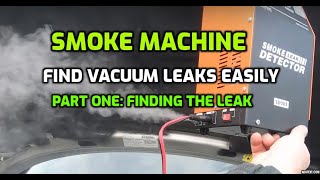
Visually inspect all intake manifold vacuum hoses. Look for cracks or disconnected lines, especially the PCV and brake booster hoses. Listen for hissing at idle. Use a smoke machine to pinpoint hidden leaks.
Tools: Flashlight, Smoke Machine (Beginner) - Analyze MAP Sensor Live Data
View live MAP sensor data. With Key On, Engine Off (KOEO), voltage should be high (2.9-3.1V on Hondas), reflecting atmospheric pressure. At warm idle, it must drop to 0.8-1.1V. A voltage stuck high indicates a leak or bad sensor.
Tools: OBD-II Scan Tool with Live Data (Intermediate) - Test the MAP Sensor Circuit
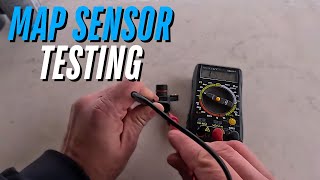
Unplug the MAP sensor. With the key on, probe the connector. Verify a 5-volt reference signal from the PCM, a solid ground (near 0V), and the signal return wire. Missing 5V or ground indicates a wiring fault, not a bad sensor.
Tools: Multimeter (Intermediate) - Test MAP Sensor with a Vacuum Pump
Reconnect the sensor electrically but remove its vacuum hose. Apply 20 inHg with a hand pump while watching live data. Voltage must decrease smoothly and hold steady. Sluggish response or voltage drops indicate a failed sensor.
Tools: Multimeter or Scan Tool, Hand-held Vacuum Pump (Advanced) - Inspect and Clean the Throttle Body
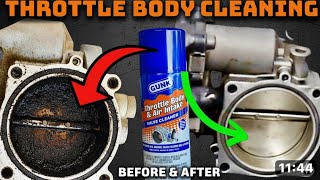
Remove the intake hose and inspect the throttle plate. Clean carbon buildup with throttle body cleaner and a soft brush. Never manually force open an electronic throttle plate.
Tools: Socket set, Throttle Body Cleaner, Soft brush (Intermediate) - Perform a Throttle Body Relearn
After cleaning an electronic throttle body, perform a relearn procedure so the PCM learns the new closed position. This is mandatory on many Hondas to resolve P1129 after throttle service.
Tools: OBD-II Scan Tool (Intermediate) - Check for Exhaust Restrictions
Install a backpressure gauge in the upstream oxygen sensor port. Pressure above 1.5 PSI at idle or 3 PSI at 2500 RPM confirms a clogged catalytic converter.
Tools: Exhaust Backpressure Gauge (Advanced) - Check Fuel Pressure
Connect a fuel pressure gauge to the rail. On a 1992-2000 Civic, pressure should be 38-46 PSI with vacuum connected, rising to 40-47 PSI when disconnected. High pressure indicates a faulty regulator.
Tools: Fuel Pressure Gauge (Advanced) - Verify Mechanical Engine Timing
If electrical and vacuum tests pass, verify the timing belt or chain has not skipped a tooth.
Tools: Full mechanic's tool set (Advanced)
When This Code Triggers (Freeze-Frame Conditions)
- Engine Coolant Temp: 180-205°F (82-96°C) (The engine is fully warmed up and at normal operating temperature.)
- RPM: 650-800 RPM (The code frequently sets at idle when the engine is warm. The PCM expects high, stable vacuum (low MAP voltage) in this state.)
- Engine Load: 15-30% (Occurs under low-load conditions like idling or steady, light-throttle cruising where actual manifold pressure deviates from expected values.)
- Vehicle Speed: 0 mph or 25-45 mph (Triggers when the vehicle is stopped or during steady-state cruising, rarely during hard acceleration.)
Related Codes
- P0108 — P0108 means "MAP Sensor Circuit High Voltage," pointing to a direct electrical short. P1129 means the voltage is plausible but incorrect for the situation, pointing to a vacuum leak.
- P0171 — P0171 means "System Too Lean." A vacuum leak raises manifold pressure (P1129) and lets in unmetered air (P0171). Seeing both guarantees a vacuum leak.
- P1128 — On Dodge/Chrysler, P1128 and P1129 mean "Closed Loop Fueling Not Achieved" for Bank 1 and 2. Seeing both points to a shared issue like a bad ECT sensor.
- P0506 — P0506 means "Idle Air Control System RPM Lower Than Expected." Appears with P1129 when a large vacuum leak destabilizes idle speed.
Climate & Environmental Factors
- Altitude: High altitude lowers atmospheric pressure. The PCM uses the MAP sensor's baseline reading at startup to compensate. A borderline sensor fails to adjust correctly at altitude, triggering P1129.
- Cold Weather: Extreme cold makes rubber hoses and gaskets brittle, increasing the likelihood of vacuum leaks that cause P1129.
- High Humidity: Humidity accelerates corrosion on the MAP sensor's electrical pins, altering the voltage signal sent to the PCM.
How to Talk to a Mechanic About This Code
Say this: "I have a [Year/Make/Model] with a P1129 code. I need a diagnostic appointment. Please start by checking for vacuum leaks with a smoke machine and analyzing the MAP sensor's live data at idle before recommending part replacements."
This directs the technician to perform logical diagnostic steps (smoke test, live data) instead of blindly replacing the sensor. Mentioning your specific vehicle make is critical because P1129 definitions vary wildly by manufacturer.
Avoid saying:
- 'My check engine light is on, can you just fix it?' (Invites open-ended diagnostic fees).
- 'I think I need a new MAP sensor.' (Never suggest a specific part replacement without a confirmed diagnosis).
- 'Just do whatever you think is best.' (Gives up control and invites upselling).
Questions to ask before authorizing the repair:
- Did you find a vacuum leak? If so, where was it?
- What did the MAP sensor voltage read at warm idle?
- What specific test confirmed the original part failed?
- What is the warranty on the recommended parts and labor?
Where to Take It: Dealer vs Independent vs Chain
- Dealer:
Best for: Vehicles under warranty., Ford, Toyota, or Dodge models where P1129 has a manufacturer-specific definition requiring specialized scan tools., Complex electrical harness issues.
Downsides: Labor rates are 1.5x to 2x higher than independent shops., Dealers often replace entire assemblies (like a $500 throttle body) instead of cleaning them. (Typical cost: +50% vs. baseline) - Independent Shop:
Best overall fit for Honda/Acura. Ensure the shop has brand-specific experience if you drive a Ford, Toyota, or Dodge.
Best for: Out-of-warranty Honda and Acura models where P1129 is a common, well-understood vacuum or MAP sensor issue., Cost-effective smoke testing and sensor replacement.
Downsides: May lack awareness of manufacturer-specific quirks for Ford or Toyota P1129 definitions. (Typical cost: +0% vs. baseline) - Chain Shop:
Avoid for initial diagnosis. A chain shop is highly likely to incorrectly replace a MAP sensor on a Ford or Toyota, failing to fix the actual problem.
Best for: Simple part swaps only after a proper diagnosis has been made elsewhere.
Downsides: High pressure to upsell fuel system cleanings., High risk of misdiagnosis due to generic scan tools missing manufacturer-specific code definitions. (Typical cost: -10% vs. baseline)
When to Walk Away From the Repair
If the estimated repair cost exceeds 40-50% of your car's current private-party value, consider selling or trading it in.
- Car worth $3500, fix is $2200: Walk away. The repair is over 60% of the car's value. A neglected P1129 has likely destroyed the catalytic converter, making repair uneconomical.
- Car worth $8000, fix is $250: Fix it. The issue is a simple vacuum leak or MAP sensor. This is well under the threshold and essential for vehicle health.
- Car worth $2000, fix is $900: Borderline. Get a second opinion. If the rest of the car is pristine, repair it. If it needs tires or brakes soon, sell it.
What Scan Tool You Need for This Code
Minimum: A scanner that reads and graphs live sensor data, specifically MAP sensor voltage.
A $20 code reader only shows the P1129 code. Without live data, you cannot determine if the sensor is faulty or if a vacuum leak is causing the bad reading, leading to expensive guesswork.
Budget: BlueDriver Pro Scan Tool (~$100) — Connects to your smartphone, graphs live MAP sensor data, reads freeze frame data, and checks emissions readiness. Perfect for DIY diagnosis of common P1129 causes.
Mid-range: Foxwell NT510 Elite (~$180) — Offers manufacturer-specific diagnostics. Essential for reading unique P1129 definitions for Ford (O2 sensors), Toyota (ETCS), and Dodge (closed-loop fueling) that generic scanners miss.
Professional: Autel MaxiCOM MK808 (~$500) — Provides OE-level diagnostics and bidirectional controls to command specific tests and isolate wiring faults. Overkill for a single DIY repair.
Rent vs buy: For a one-time diagnosis, borrow a capable OBD-II scanner for free from AutoZone's Loan-A-Tool program. Buy a BlueDriver if you diagnose issues multiple times a year.
How to Clear the Code After You Fix It
- Use an OBD-II scan tool to clear the diagnostic trouble code.
- Perform a PCM idle relearn procedure (mandatory for many Hondas).
- Complete a full drive cycle to reset readiness monitors.
Drive cycle (~20 minutes): Start cold and idle for 3 minutes. Drive in mixed conditions, including 5 minutes of steady cruising at 40-60 mph. Idle for 2 minutes before shutting down.
Readiness monitors affected: Catalyst (CAT) monitor, Evaporative System (EVAP) monitor, Oxygen (O2) Sensor monitor
Before emissions retest: drive at least 50 miles to fully set monitors.
Watch out for:
- Disconnecting the battery clears the code but resets monitors to 'Not Ready', causing an automatic emissions failure.
- Forgetting the idle relearn procedure after throttle body service causes the code to return immediately.
Will This Fail Emissions / State Inspection?
Yes — this code typically fails an OBD-II emissions inspection.
- California: An illuminated Check Engine Light is an automatic failure. All required OBD-II readiness monitors must be 'Ready'.
- New York: A P1129 code is an automatic failure. You must complete the repair and a full drive cycle before re-testing.
- Texas: In the 17 emissions-testing counties, an active P1129 fails the OBD inspection.
Most Commonly Affected Vehicles
- Honda Civic (2001-2011) — Extremely common. Caused by vacuum leaks or faulty MAP sensors. 2012+ models require a throttle position relearn after throttle cleaning.
- Honda Accord (1998-2012) — Frequently seen. On 1998-2002 models, the MAP and TPS sensor connectors are easily swapped by mistake.
- Acura TL/RSX (2002-2006) — Symptoms include bouncing idle and hissing noises, pointing directly to vacuum leaks.
- Ford Explorer, F-150 (1998-2008) — CRITICAL: P1129 means "Downstream Heated Oxygen Sensor Signals Reversed." Check for swapped O2 sensor connectors.
- Toyota Tundra, 4Runner, Sequoia (2001-2005) — CRITICAL: For 4.7L V8s, P1129 indicates an Electronic Throttle Control System (ETCS) fault, not a MAP sensor issue.
- BMW 3-Series, 5-Series, X-Series (2002-2010) — P1129 means "Downstream Heated O2 Sensors Swapped" or "Long Term Fuel Trim Bank 2 System Too Rich."
- Dodge/Chrysler/Jeep Ram, Dakota (2007-2012) — P1129 means "Closed Loop Fueling Not Achieved - Bank 2". Investigate ECT sensors and fuel delivery.
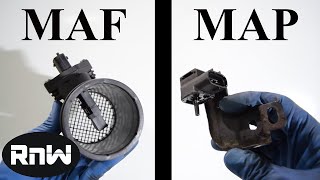
- Volkswagen/Audi Jetta, Golf, A4 (1999-2012) — P1129 means "Long Term Fuel Trim B2 System Too Rich." Focus on leaking injectors or bad MAF sensors.
Manufacturer-Specific Notes
- Honda/Acura: P1129 is a standard MAP sensor/vacuum leak code. The engine frequently enters a 3,000 RPM 'limp mode'.
- Ford: P1129 means "Downstream Heated Oxygen Sensor Signals Reversed." It indicates crossed O2 sensor wiring after exhaust work.
- Toyota: On 4.7L V8s, P1129 indicates a fault in the Electronic Throttle Control System (ETCS), not the MAP sensor.
- Dodge/Chrysler/Jeep: P1129 means "Closed Loop Fueling Not Achieved." The engine fails to enter efficient operation due to ECT or fuel issues.
Real Owner Stories
2007 Honda Civic LX with 119K miles
Car threw P1129, RPMs surged to 3000, and stalled when the A/C engaged.
What they tried:
- Replaced ignition coils, spark plugs, and EGR valve.
- Cleaned the throttle body.
Outcome: The actual problem was a bad MAP sensor and a cracked PCV hose. Replacing both fixed the car.
Lesson: Do not throw expensive parts at P1129. Visually inspect hoses and test the MAP sensor first.
1999 Acura Integra LS after intake swap
After installing a Skunk2 intake manifold, the car threw P1129, lost power above 3k RPM, and hesitated.
What they tried:
- Cleaned IACV and throttle body.
- Replaced MAP sensor and O2 sensor.
Outcome: The owner found a major vacuum leak at the throttle body. A new throttle body gasket fixed the issue.
Lesson: If a code appears immediately after a repair, the new work is the cause. Check all new gaskets and connections.
2007 Dodge Ram with cold stalling
Truck stalled when cold. A shop replaced O2 sensors and the PCM for $800, but P1129 "Closed Loop Fueling Not Achieved" remained.
What they tried:
- Shop replaced O2 sensors and PCM.
Outcome: The code was actually caused by a bad Engine Coolant Temperature (ECT) sensor preventing closed-loop operation.
Lesson: P1129 definitions are manufacturer-specific. On a Dodge, it does not mean a MAP sensor fault. Verify the exact definition to avoid $800 misdiagnoses.
2002 Toyota Tundra 4.7L V8 with high idle
Truck idled at 1700 RPM with zero gas pedal response.
What they tried:
- Owner researched the drive-by-wire system.
Outcome: Thoroughly cleaning the electronic throttle body resolved the issue. Carbon buildup triggered ETCS fault codes like P1129.
Lesson: On Toyota V8s, P1129 points to the Electronic Throttle Control System (ETCS). Focus diagnosis on the throttle body assembly.
How to Prevent This Code From Triggering
- Inspect vacuum hoses (Every 5,000 miles) — Catching a deteriorating hose before it cracks prevents vacuum leak-induced P1129 codes.
- Replace PCV Valve (Every 30,000-60,000 miles) — A stuck-open PCV valve creates a massive vacuum leak. Proactive replacement prevents this common failure.
- Clean the Throttle Body (Every 75,000 miles) — Removes carbon buildup that prevents the throttle plate from closing fully, stopping persistent air leaks.
Frequently Asked Questions
Can I just replace the MAP sensor to fix P1129?
Do not replace the sensor without diagnosing it first. The most frequent cause is actually a simple vacuum leak. Performing a smoke test and checking live sensor data saves you from buying unnecessary parts.
What are the most common misdiagnosis mistakes for P1129?
The biggest mistake is replacing the MAP sensor without checking for vacuum leaks. The second is ignoring manufacturer-specific definitions. Technicians waste hours diagnosing a MAP sensor on Fords or Toyotas when the code actually points to swapped O2 sensors or throttle bodies.
Can a dirty air filter cause a P1129 code?
It is highly unlikely. A dirty air filter restricts airflow, increasing engine vacuum and potentially triggering P1128. P1129 is caused by higher pressure and less vacuum.
Is it safe to drive with code P1129?
You can drive short distances, but it is not recommended. The engine runs poorly, consumes excess fuel, and stalls in traffic. Prolonged driving with a rich fuel condition permanently destroys your catalytic converter.
How much does it cost to fix P1129?
Costs vary by cause. Replacing a vacuum hose costs under $75, while a new MAP sensor runs $140-$230 at a repair shop. Ford O2 sensor replacements average $150-$350 per sensor.
My car has P1129 but also smells like rotten eggs. Are these related?
Yes, they are directly related. A 'rotten egg' smell is a classic sign of an overly rich fuel mixture. Unburnt fuel overheats in the catalytic converter, producing a distinct sulfur smell.
I cleaned my throttle body and now I have a P1129 code. What happened?
Manually forcing an electronic throttle plate open for cleaning erases the PCM's idle calibration. The computer now thinks the plate is slightly open, conflicting with the MAP sensor reading. Perform a throttle position relearn procedure to fix this.
Key Takeaways
- Code P1129 indicates the Powertrain Control Module (PCM) detects higher-than-expected intake manifold pressure, meaning there is too little vacuum for current engine conditions.
- Manufacturer definitions vary wildly: P1129 means a MAP sensor/vacuum issue on Hondas, swapped O2 sensors on Fords, and an Electronic Throttle Control System (ETCS) fault on 4.7L V8 Toyotas.
- Vacuum leaks from cracked hoses or a stuck PCV valve cause over 50% of Honda/Acura P1129 codes, making a $30 smoke test the most cost-effective first diagnostic step.
- Driving with an unresolved P1129 code forces a rich fuel mixture that destroys a catalytic converter within 3 to 6 months, turning a $50 sensor fix into a $1,500+ exhaust repair.
Helpful Videos

The information in this article is provided for general reference and educational purposes only. Vehicle specifications, procedures, and part compatibility can vary by production date, trim level, and region. Always consult your vehicle's factory service manual and verify part numbers before purchasing or performing repairs. Safety-critical components such as airbags, seat belts, and braking systems should be installed by a qualified professional.
- 🎬 Helpful Videos
- What Does P1129 Mean?
- Can I Drive With P1129?
- Common Causes
- Symptoms
- Diagnostic Flowchart
- Common Fixes & Costs
- DIY vs Professional
- Used vs. New Parts: Buying Guide
- What Happens If You Wait — Timeline
- Cost of Not Fixing It
- Diagnosis Steps
- When This Code Triggers (Freeze-Frame Conditions)
- Related Codes
- Climate & Environmental Factors
- How to Talk to a Mechanic About This Code
- Where to Take It: Dealer vs Independent vs Chain
- When to Walk Away From the Repair
- What Scan Tool You Need for This Code
- How to Clear the Code After You Fix It
- Will This Fail Emissions / State Inspection?
- Most Commonly Affected Vehicles
- Manufacturer-Specific Notes
- Real Owner Stories
- 2007 Honda Civic LX with 119K miles
- 1999 Acura Integra LS after intake swap
- 2007 Dodge Ram with cold stalling
- 2002 Toyota Tundra 4.7L V8 with high idle
- How to Prevent This Code From Triggering
- Frequently Asked Questions
- Can I just replace the MAP sensor to fix P1129?
- What are the most common misdiagnosis mistakes for P1129?
- Can a dirty air filter cause a P1129 code?
- Is it safe to drive with code P1129?
- How much does it cost to fix P1129?
- My car has P1129 but also smells like rotten eggs. Are these related?
- I cleaned my throttle body and now I have a P1129 code. What happened?
- Key Takeaways
- 🎟️ Get 5% Off