

P0877 on 2011-2019 Ford Explorer 3.5L: Transmission Pressure Sensor Fault Causes and Fixes
On a 2011-2019 Ford Explorer with the 6F50/6F55 transmission, code P0877 is most often caused by a failed internal transmission component called the molded lead frame. This part contains multiple sensors and is a known weak point. The fix involves replacing the lead frame inside the transmission, which is a complex job requiring removal of the valve body. Expect a shop to charge between $1,000 and $2,000 for this repair, with a significant portion of the cost being labor.
- P0877 on a 2011-2019 Explorer is very likely caused by a failed internal molded lead frame, not an external sensor.
- Symptoms include harsh shifting, getting stuck in gear, and the check engine or wrench light.
- The repair is complex and involves dropping the transmission pan and valve body; professional service is strongly recommended.
- When replacing the lead frame, also replace the pan gasket and connector sleeve seal, and refill with Mercon LV fluid.
- Check for related codes like P0720 or P0722, as they further confirm a lead frame failure.
What's Unique About the 2011-2019 Ford Explorer
While P0877 is a generic code, its appearance on the 5th generation Ford Explorer (equipped with the 6F50/6F55 transmission) points strongly to a very specific and common failure. The pressure sensors are not individual, externally serviceable parts. Instead, they are integrated into a larger assembly inside the transmission called the 'molded lead frame' or 'conductor plate'. This component, which also houses the Output Speed Sensor (OSS), Turbine Speed Sensor (TSS), and Transmission Range Sensor (TRS), is a notorious failure point due to internal circuit breaks and shorts caused by heat and vibration over time. Ford has issued warranty extensions for this part on the similar 6R80 transmission for related speed sensor faults, confirming its problematic history.
Symptoms You May Notice
- Harsh, erratic, or delayed shifting
- Transmission suddenly downshifting to a low gear (e.g., 1st gear) while driving
- Vehicle entering 'limp mode,' getting stuck in a single gear
- Illuminated Check Engine Light
- Illuminated wrench light on the dashboard
- PRNDL (gear indicator) on the dash may not display correctly or may disappear
- Inability to start the vehicle if the integrated range sensor fails to report Park or Neutral
- Replacing only the valve body without replacing the lead frame.
- Assuming a complete transmission rebuild is needed without first diagnosing the lead frame.
- Replacing an individual pressure sensor, which is not possible as they are integrated into the lead frame on this platform.
- Performing a PCM reprogram without addressing the underlying hardware fault. While a temporary fix is sometimes reported, the problem almost always returns.
Most Likely Causes
- Failed Molded Lead Frame (Conductor Plate) 🔴 High Probability The lead frame is a known high-failure item on Ford's 6-speed automatic transmissions of this era (6F50/55 and 6R80). The internal circuitry and integrated sensors are prone to breaking or shorting out from thermal stress and vibration, causing various electrical faults. Ford acknowledged this with Customer Satisfaction Program 19N01 for the 6R80 transmission, which has a similar part.
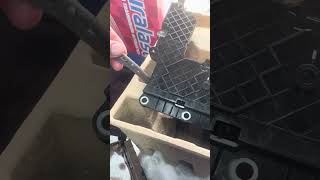
How to confirm: A professional technician will use a high-end scan tool to monitor live data from the transmission sensors. The presence of other speed sensor or range sensor codes (like P0720, P0722, P0731) alongside P0877 strongly points to a failed lead frame. The TFP switches are on/off type; a 'low' circuit fault means the switch is stuck in the closed (grounded) position. Visual inspection of the lead frame after removal may show cracked plastic or burnt connector pins.
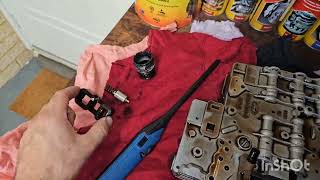
Typical fix: The transmission pan and valve body must be removed to replace the entire molded lead frame assembly. The lead frame connector sleeve seal should always be replaced at the same time to prevent leaks. After reassembly, the transmission fluid must be refilled to the correct level and a transmission adaptive learning procedure should be performed.
Est. part cost: $200-$400 - Low or Contaminated Transmission Fluid 🟡 Medium Probability These transmissions are 'sealed' and have no dipstick, making fluid level checks less straightforward for owners. Neglected maintenance can lead to low fluid levels from minor leaks or fluid that has broken down, causing improper hydraulic pressure and triggering sensor faults. Mercon LV fluid is known to darken quickly, which is not always an indicator of failure but does suggest regular changes are beneficial.
How to confirm: The vehicle must be level and running. With the transmission fluid at operating temperature (around 180-200°F), remove the small check/fill plug on the side of the transmission case. A small, steady stream of fluid should drip out. If nothing comes out, the fluid is low. If it gushes out, it may be overfilled. The fluid should be reddish; if it is dark brown or smells burnt, it is degraded.
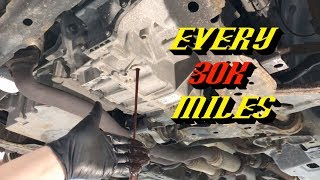
Typical fix: Perform a transmission fluid drain-and-fill using only Motorcraft Mercon LV fluid. A single drain and fill replaces about 5 quarts. If the fluid is very dirty, multiple drain-and-fills may be needed. The internal filter is not considered serviceable without a full transmission teardown.
Est. part cost: $80-$150 - Damaged Wiring or External Connector ⚪ Low Probability
How to confirm: Visually inspect the main transmission wiring harness and the large round connector (C168) where it plugs into the transmission case. Look for any signs of corrosion, pushed-out pins, damaged wires, or fluid contamination from a leaking connector sleeve seal.
Typical fix: Repair the damaged section of the wiring harness or clean/replace the connector. If the connector is full of transmission fluid, the internal connector sleeve seal must be replaced.
Est. part cost: $20-$100
Rare But Worth Checking
- Failed Valve Body: The valve body is the hydraulic control center of the transmission. While less common than the lead frame, a stuck valve, worn solenoid bore, or failed solenoid could cause a pressure fault. It is often replaced as an assembly with the lead frame.
- Faulty Powertrain Control Module (PCM): It is very rare for the PCM to be the cause of this specific code. All other possibilities, especially the lead frame and wiring, should be exhaustively ruled out before considering PCM replacement.
Diagnosis Steps
- Use an advanced scan tool (like Ford's IDS) to confirm code P0877 and check for any other pending or stored transmission codes (e.g., P0720, P0722, P0731). Document all codes.
- Monitor live data PIDs for the transmission fluid pressure (TFP) switches and the Output Speed Sensor (OSS). An erratic or missing OSS signal combined with a TFP code strongly suggests lead frame failure.
- Check the transmission fluid level and condition following the correct procedure (vehicle running, level, at operating temperature). The fluid should be full and clean. If low, top it off and check for leaks. If dirty or burnt, a fluid change is necessary.
- Inspect the main transmission electrical connector (C168) and harness for any visible damage, corrosion, or loose connections. Check for fluid intrusion at the connector, which indicates a failed pass-through sleeve seal.
- If the fluid and wiring are good, and especially if speed sensor codes are also present, the next step is to replace the internal molded lead frame.
- The repair involves dropping the transmission pan, removing the valve body, replacing the lead frame and the connector sleeve seal, and then reassembling using proper torque specs (typically 106 lb-in for valve body bolts).
- After replacement, refill with fresh Motorcraft Mercon LV fluid to the correct level. Clear all codes and perform a transmission adaptive learning procedure with a suitable scan tool.
Parts You'll Likely Need
- Transmission Molded Lead Frame (Conductor Plate)
(OEM #BL3Z-7G276-A (verify by VIN, may supersede AL3Z-7G276-D which was for 6R80))— This is the most common point of failure for code P0877 and related transmission electrical faults on this vehicle.
Trusted brands: Motorcraft, Dorman (P/N: 609-040)
OEM price range: $250-$400
Aftermarket price range: $150-$250 - Transmission Pan Gasket
(OEM #FT-187 (verify by VIN))— Required to be replaced anytime the transmission pan is removed to prevent leaks. Often a reusable gasket, but replacement is best practice.
Trusted brands: Motorcraft, Fel-Pro
OEM price range: $25-$40
Aftermarket price range: $15-$30 - Transmission Connector Sleeve Seal
(OEM #AL3Z-7G276-A (often included with OEM lead frame))— This seal prevents fluid from leaking out of the transmission case at the main electrical connector. It is a critical replacement item during a lead frame service to prevent future leaks and electrical issues.
Trusted brands: Motorcraft
OEM price range: $20-$30
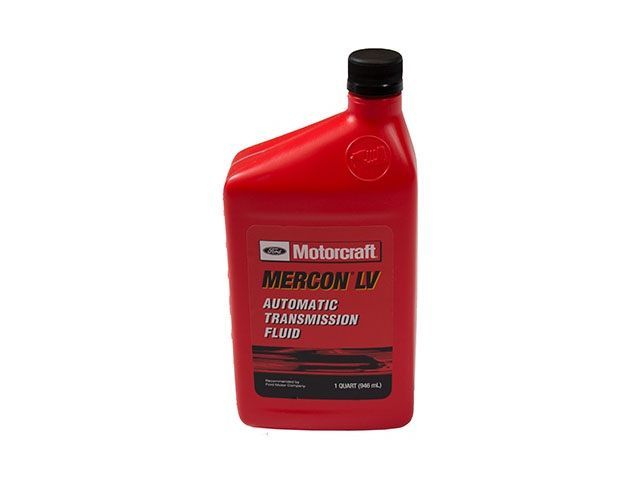
Aftermarket price range: $10-$20 - Motorcraft MERCON LV Automatic Transmission Fluid
(OEM #XT-10-QLVC)— This is the only specified fluid for the 6F50/6F55 transmission. Using any other fluid can cause shifting problems and damage. A drain and fill requires approximately 5-6 quarts.
Trusted brands: Motorcraft
OEM price range: $10-$15 per quart
Aftermarket price range: N/A
Related Codes That Often Appear With This One
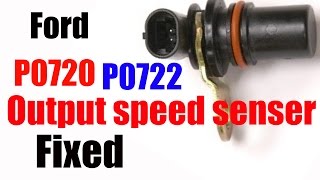
- P0720 — Output Speed Sensor (OSS) Circuit fault. The OSS is integrated into the same molded lead frame, and its failure is a classic symptom of a bad lead frame.
- P0722 — Output Speed Sensor (OSS) Circuit No Signal. Like P0720, this points directly to the failure of the lead frame assembly.
- P0731 — Gear 1 Incorrect Ratio. This code can be triggered when the OSS fails intermittently, causing the PCM to detect a slip that isn't actually happening. It was one of the codes specified in Ford's lead frame warranty extension program.
- P1500 — Vehicle Speed Sensor Intermittent. Another code related to the speed sensors housed within the lead frame assembly.
Technical Service Bulletins (TSBs) & Recalls
- 19N01 - Transmission Molded Leadframe Extended Coverage (Note: Officially for 6R80 transmission, not 6F50/55, but describes the same failure).
- 17-0044 - Exhaust Odor In Vehicle (Related to a separate common platform issue).
Platform-Specific Known Issues
- Ford issued Customer Satisfaction Program 19N01, extending the warranty on the molded lead frame for certain vehicles with the 6R80 transmission (F-150, Expedition) to 10 years/150,000 miles. The covered symptoms were sudden downshifts and faults for codes P0720, P0722, P0731, and P1500. While this program did not officially cover the Explorer's 6F50/55 transmission, it addresses the exact same part failure mode, providing strong evidence of the known defect.
- Owners report long backorders for the OEM Motorcraft lead frame part, sometimes waiting months. This has led many to use aftermarket alternatives like the Dorman 609-040, with mixed reviews.
Mechanic-Grade Diagnostic Values
- Transmission Fluid Pressure (TFP) Switch 'D' Signal Voltage — expected: The TFP switches are on/off. The PCM expects to see either near 0V (closed/grounded) or a reference voltage (typically 5V) depending on the gear and hydraulic state. The expected state changes with each gear.. Failure: For a 'Circuit Low' code like P0877, the PCM is seeing a constant 0V from the 'D' switch, even when it expects to see an open circuit (voltage). This indicates the switch is stuck closed or its circuit is shorted to ground.
- Valve Body Bolt Torque — expected: 106 lb-in (approximately 9 ft-lbs). Failure: Incorrect torque can lead to valve body distortion, leaks, and shifting problems. Bolts must be tightened in the correct sequence.
Scan Tool Commands That Help
- Ford IDS (or equivalent high-end scanner): Solenoid Body Strategy Download / Programmable Module Installation (PMI) — This function is required any time the lead frame or valve body/solenoid assembly is replaced. The PCM must be programmed with the specific calibration/strategy data that corresponds to the new hardware to ensure correct shifting.
- Ford IDS (or equivalent high-end scanner): Transmission Adaptive Tables Reset — After replacing the lead frame and fluid, this function should be used to clear the old learned shift adaptations. This forces the TCM to relearn shift pressures and timing with the new components, ensuring a smooth shift feel.
Wiring & Ground Locations
- C175T — The main 50-pin connector at the Powertrain Control Module (PCM).. This is where the signals from the transmission's internal sensors, including the pressure switches on the lead frame, terminate. A technician can test for continuity and shorts between this connector and the transmission connector (C168) to isolate a wiring fault from an internal transmission fault.
- C168 — The main external round electrical connector on the transmission case.. This is the pass-through connector for all electronic signals going into and out of the transmission. It's a common point for inspection for damage or fluid intrusion from a failed internal sleeve seal.
- G102 / G104 / G105 — Main engine compartment ground points. G102 is at the center rear of the engine compartment, G104 at the right front corner, and G105 at the left side.. A poor ground connection for the PCM or the transmission case can cause floating voltages and erratic sensor readings, potentially triggering a 'Circuit Low' code. Verifying these grounds are clean and tight is a fundamental step in diagnosing any electronic fault.
Real Owner Repair Stories
- Ford F-150 Forum user (2014 Ford F-150 (6R80 transmission, similar to 6F50)) — Sudden, dangerous downshifting on the highway.
❌ Tried (didn't work) Initial dealer diagnosis suggested a new 'main control valve' for $2500.
✅ What actually fixed it The molded lead frame was replaced. Another user confirmed their own lead frame replacement has held up for over 100,000 miles, indicating it is a durable fix. - YouTube channel 'T&T Auto' (2017 Ford F-150 (6R80 transmission)) — Stuck in 5th, 6th, and reverse gears only. Multiple transmission codes stored (P0706, P0707, etc.).
❌ Tried (didn't work) External wiring checks were all good.
✅ What actually fixed it Upon inspection, the transmission pan contained significant metal shavings, suggesting a catastrophic failure needing a full rebuild. However, the customer opted to only replace the molded lead frame. This single repair resolved all codes and restored normal transmission function, despite the presence of metal debris.
OEM Part Supersession History
AL3Z-7G276-A, AL3Z-7G276-B (for 6R80)→AL3Z-7G276-D— Revisions to improve durability and prevent internal circuit failure.
Heads up: The 'D' revision is the latest and most reliable version for the 6R80 transmission and should be used instead of older stock. Ford parts catalogs confusingly refer to this entire assembly as a 'Connector'. Always verify the correct part number for the 6F50/55 via VIN, as it may differ slightly (e.g., BL3Z-7G276-A).
Model Year Variations Within This Range
- 2011-2019: While the core 6F50/6F55 transmission and its common lead frame failure remained consistent, a major vehicle refresh occurred for the 2016 model year. This included new front-end styling, a new 2.3L EcoBoost engine option, and suspension revisions. In 2017, the SYNC 3 system replaced the MyFord Touch interface. These changes do not affect the diagnosis or repair of code P0877.
Diagnostic Flowchart
Other Known Issues on This Vehicle
Issues unrelated to this code that are worth knowing about as an owner of this generation:
- Internal Water Pump Failure 🔴 High — Common after 80,000-120,000 miles. Failure can cause coolant to mix with engine oil, leading to catastrophic engine failure.
- Power Transfer Unit (PTU) Overheating/Failure 🔴 High — Common on AWD models. The PTU fluid overheats due to proximity to the exhaust, leading to seal failure and internal gear damage. Ford specified 'lifetime' fluid, but regular 30k-50k mile fluid changes are recommended to prevent failure.
- Exhaust Fumes / Carbon Monoxide in Cabin 🔴 High — Widespread issue affecting 2011-2017 models, leading to a major NHTSA investigation. Caused by cracked exhaust manifolds or poor body sealing, especially in the rear. (Ref: Ford Service Action 17B25 / TSB 17-0044)
- Electronic Throttle Body Failure 🟠 Medium — Common issue causing sudden power loss and the vehicle entering 'limp mode'. Often throws codes P2111 or P2112.
- Rear Suspension Toe Link Fracture 🔴 High — Subject of a recall (20S32), these links can fracture, causing a sudden loss of steering control. Affects 2011-2017 models. (Ref: Recall 20S32)
- MyFord Touch / SYNC System Glitches 🟡 Low — Very common across the generation. Issues include frozen screens, unresponsive controls, and Bluetooth connectivity problems. (Ref: Multiple software updates were released but did not solve all issues.)
Used vs. New Parts: Buying Guide for This Vehicle
When a used part is the smart pick: For this repair, a used part from a salvage yard is NEVER a smart choice. The molded lead frame is a known high-failure component due to internal material breakdown over heat cycles. A used part carries a very high risk of being faulty or failing shortly after installation, forcing you to pay for the significant labor cost a second time.
What to inspect on the donor part:
- Not applicable, as a used part is not recommended for this repair.
OEM-only on this vehicle (don't cheap out):
- Molded Lead Frame (Conductor Plate)
Aftermarket brands forum-validated for this vehicle:
- None consistently validated in owner forums; Motorcraft (OEM) is the strong consensus.
Brands owners have reported issues with on this vehicle:
- Dorman (P/N: 609-040) has numerous owner complaints of being defective out of the box or failing within a very short period, requiring the job to be done twice.
Real Owner Stories
Aggregated from forums and TSBs cited above. Mileages and costs reflect what owners reported in those sources.
2013 Ford F-150
Symptoms: Owner experienced the 'dreaded Molded Lead Frame problem' and expressed frustration about being outside the 19N01 warranty window.
What fixed it: Replacement of the molded lead frame.
Source hint: Reddit thread where an owner discusses being outside the 19N01 warranty window and the frustration of the known failure.
2011-2019 Ford Explorer 3.5L
Symptoms: Sudden downshifts and faults for codes P0720, P0722, P0731, and P1500.
What fixed it: Replacement of the molded lead frame assembly and the connector sleeve seal.
Source hint: Customer Satisfaction Program 19N01
Related OBD-II Codes
Frequently Asked Questions
Does Ford Customer Satisfaction Program 19N01 apply to my 2011-2019 Explorer with the 3.5L Cyclone V6?
Can I just replace the transmission fluid to fix P0877 on my Explorer?
Is there a specific part number for the lead frame if the Motorcraft version is on backorder?
Why did my Explorer suddenly downshift to 1st gear while I was driving?
How do I check the transmission fluid level on this vehicle since there is no dipstick?
What is the torque specification for the valve body bolts when replacing the lead frame?
Helpful Videos
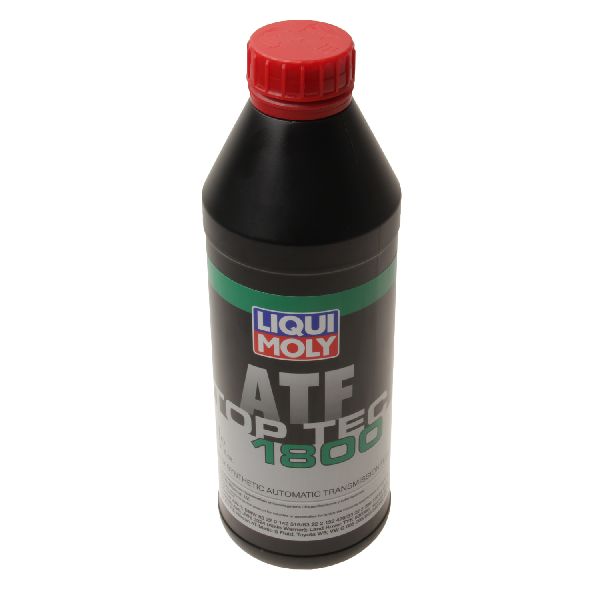
Used OEM Parts in Stock


New Aftermarket Parts Available
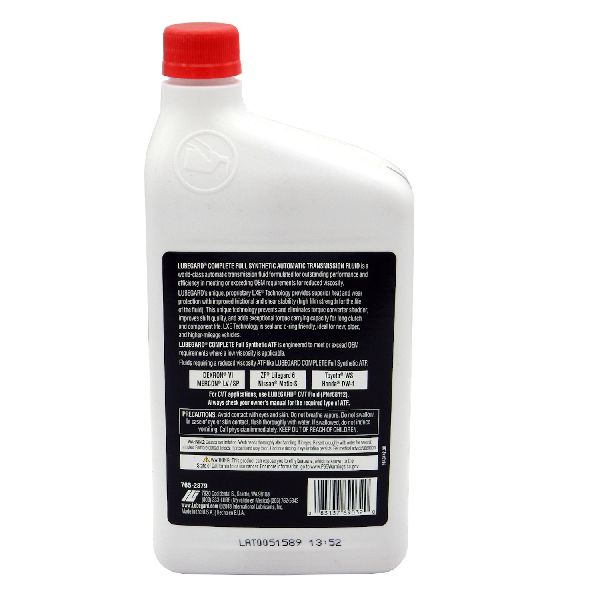



The information in this article is provided for general reference and educational purposes only. Vehicle specifications, procedures, and part compatibility can vary by production date, trim level, and region. Always consult your vehicle's factory service manual and verify part numbers before purchasing or performing repairs. Safety-critical components such as airbags, seat belts, and braking systems should be installed by a qualified professional.
- Ford Explorer:
- 🎬 Helpful Videos
- 🛍️ Shop This Part
- What's Unique About the 2011-2019 Ford Explorer
- Symptoms You May Notice
- Most Likely Causes
- Rare But Worth Checking
- Diagnosis Steps
- Parts You'll Likely Need
- Related Codes That Often Appear With This One
- Technical Service Bulletins (TSBs) & Recalls
- Platform-Specific Known Issues
- Mechanic-Grade Diagnostic Values
- Scan Tool Commands That Help
- Wiring & Ground Locations
- Real Owner Repair Stories
- OEM Part Supersession History
- Model Year Variations Within This Range
- Diagnostic Flowchart
- Other Known Issues on This Vehicle
- Used vs. New Parts: Buying Guide for This Vehicle
- Real Owner Stories
- 2013 Ford F-150
- 2011-2019 Ford Explorer 3.5L
- Related OBD-II Codes
- Frequently Asked Questions
- 🎟️ Get 5% Off