

OBD-II Code P1500: The Ultimate Guide to a Manufacturer-Specific Puzzle
What P1500 means for your specific make, why it triggers, and how to diagnose and fix it like a pro.
- Code P1500 is manufacturer-specific, meaning it indicates a failed transmission leadframe on a Ford, a bad starter circuit on a GM, or a faulty idle air control valve on a BMW.
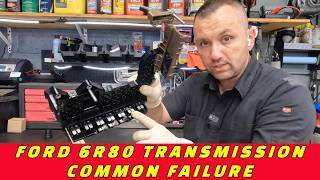
- For 2011-2017 Fords with the 6R80 transmission, P1500 flags a failed molded leadframe (part AL3Z-7G276-D) that causes dangerous, sudden downshifts to first gear at highway speeds.
- The most frequent fixes across all brands include replacing the Vehicle Speed Sensor (VSS), cleaning a stuck Idle Air Control (IAC) valve, or re-soldering a $50 Honda PGM-FI main relay.
- Stop driving immediately if you experience harsh shifting or stalling; ignoring P1500 risks a $2,000+ transmission rebuild or being stranded in traffic.
What Does P1500 Mean?

P1500 is a manufacturer-specific code, meaning its definition changes based on your car's brand. It most frequently points to a failed vehicle speed sensor (VSS), a stuck idle air control (IAC) valve, a faulty starter circuit, or a broken alternator communication line.
Technical definition: This is a manufacturer-specific Powertrain (P) code. Common definitions include 'Vehicle Speed Sensor Intermittent' (Ford, Hyundai, Kia), 'Starter Signal Circuit' (GM, Toyota, Lexus), 'Idle Air Control Valve Malfunction' (BMW, Subaru), 'Fuel Pump Control Circuit' (Honda, Acura), and 'Generator FR Terminal Circuit Malfunction' (Chrysler, Dodge, Jeep, Mitsubishi).
Can I Drive With P1500?

No — Do Not Drive. Driving with a P1500 code is unsafe. For 2011-2017 Fords, it signals a high risk of the transmission suddenly downshifting to first gear at highway speeds, causing a total loss of vehicle control. For other makes, you risk stalling in traffic, losing ABS and traction control, or being stranded by a no-start condition. Ignoring it guarantees expensive secondary damage to the transmission or catalytic converter.
Common Causes

- Faulty Sensor (VSS or IAC) (Very Common) — The sensor itself has failed due to age, heat cycling, or internal electrical degradation. This is the most frequent trigger for P1500 across most Asian and European imports.
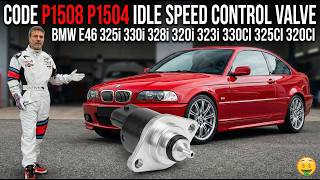
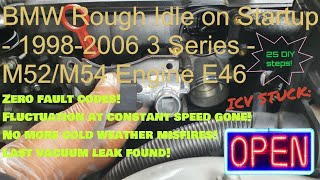
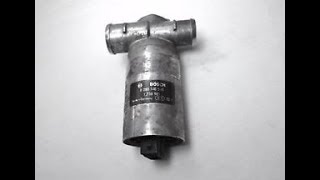
- Dirty or Clogged Idle Air Control (IAC) Valve (Very Common) — Carbon buildup causes the IAC valve's pintle to stick, preventing it from regulating the engine's idle speed. This is the primary cause for BMW and Subaru vehicles. 🎬 Watch: BMW E46 idle control valve replacement walkthrough.
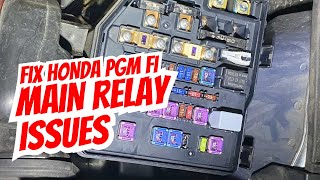
- Faulty Component (Starter Solenoid, Relay, Alternator) (Common) — For brands where P1500 points to the starting or charging system, the root cause is a bad starter solenoid, a failing PGM-FI main relay (Honda), 🎬 See how to fix common Honda PGM-FI relay issues. or an alternator failing to communicate with the ECU.
- Damaged Wiring or Connectors (Common) — Wires routing to the VSS, IAC, or starter have frayed, corroded, or shorted against the chassis. A loose or weather-damaged plastic connector interrupts the 5V reference signal to the computer.
- Damaged ABS Tone/Reluctor Ring (Less Common) — The Vehicle Speed Sensor reads a toothed ring on the axle. If this ring cracks from rust or loses teeth, it sends an erratic signal to the sensor, triggering P1500 even when the sensor is perfectly fine.
- Vacuum Leaks (Less Common) — On cars where P1500 relates to idle speed, a cracked vacuum hose lets unmeasured air into the intake manifold, causing a high or surging idle that the IAC valve cannot correct.
- Faulty Throttle Position Sensor (TPS) (Rare) — An inaccurate signal from the TPS confuses the ECU, forcing it to issue incorrect commands to the Idle Air Control valve and triggering a secondary P1500 code.
- Failed Powertrain Control Module (PCM) (Very Rare) — The car's main computer has an internal short and requires replacement or reprogramming. Consider this only after exhaustively testing all related circuits and sensors.
Symptoms

- Check Engine Light On — The check engine light illuminates immediately. Depending on the specific fault, the ABS, Traction Control, or Battery light also turns on.
- Erratic or Dead Speedometer — If the code flags the Vehicle Speed Sensor, the speedometer jumps erratically, reads the wrong speed, or drops to zero while driving.
- Engine Stalls or Idles Roughly — If the code relates to the Idle Air Control system, the engine stalls when coming to a stop, or the idle speed surges uncontrollably between 500 and 1,500 RPM.
- Poor Automatic Transmission Shifting — The transmission relies on the speed sensor signal to shift. A corrupt signal causes harsh, late, or erratic shifts. In 2011-2017 Fords, it causes a violent downshift to first gear.
- Engine Won't Start — For starter or fuel pump circuit codes, turning the key results in a single click, silence, or endless cranking without firing.
- Cruise Control Inoperative — The cruise control system requires a steady vehicle speed signal. A faulty VSS instantly disables the cruise control system.
Diagnostic Flowchart
Tap your situation to follow the diagnostic path that matches what you're seeing on this code.
Common Fixes & Costs
- Replace Vehicle Speed Sensor (VSS) — Parts: $25-$100, Labor: $100-$250, ~1.2 hr book time (Intermediate)
- Clean or Replace Idle Air Control (IAC) Valve — Parts: $15-$300, Labor: $50-$150, ~0.8 hr book time (DIY)
- Replace Transmission Molded Leadframe (Ford) — Parts: $150-$300, Labor: $600-$1000, ~5.0 hr book time (Professional)
- Replace PGM-FI Main Relay (Honda/Acura) — Parts: $50-$100, Labor: $50-$100, ~0.5 hr book time (DIY)
- Replace Starter Motor or Neutral Safety Switch — Parts: $50-$300, Labor: $100-$300, ~2.0 hr book time (Intermediate)
- Repair Damaged Wiring or Connector — Parts: $10-$50, Labor: $150-$400, ~2.0 hr book time (Professional)
DIY vs Professional
- Replace Vehicle Speed Sensor (VSS) — Beginner: Yes, if easily accessible.
Tools: Socket set, wrenches, penetrating oil. - Clean or Replace Idle Air Control (IAC) Valve — Beginner: Yes. This is a simple DIY task.
Tools: Screwdrivers, socket set, throttle body cleaner, new gaskets. - Replace Transmission Molded Leadframe (Ford) — Beginner: No. This is a complex, professional-level repair.
Tools: Vehicle lift, Torx set, inch-pound torque wrench, transmission fluid pump. - Replace PGM-FI Main Relay (Honda/Acura) — Beginner: Yes. This is a very easy DIY fix.
Tools: Socket set to remove the under-dash kick panel. - Replace Starter Motor — Beginner: Maybe. It is an intermediate task.
Tools: Socket set with extensions, wrenches, jack and jack stands. - Repair Damaged Wiring — Beginner: No. Recommended for professionals.
Tools: Multimeter, wire strippers, crimpers, soldering iron, heat shrink tubing.
Used vs. New Parts: Buying Guide
When a used part is worth it: Used parts are cost-effective for major mechanical components like starters or alternators on older vehicles. Never buy a used electronic sensor or a used Ford leadframe.
Donor-vehicle mileage cap: roughly under 80000 miles for the part to have meaningful remaining life.
Donor quality checklist:
- Verify the donor vehicle was salvaged due to an accident, not an electrical fire or flood.
- Visually inspect the part's electrical connectors for green corrosion or melted plastic.
- Match the OEM part numbers exactly; superseded parts are often incompatible.
Decision logic:
- If The part is a simple electronic sensor (VSS, IAC) or relay (PGM-FI). → Buy a new aftermarket or OEM part. Used sensors are prone to the exact same age-related failures.
- If The part is a major mechanical component like a starter or alternator. → A used OEM part from a low-mileage vehicle is acceptable, though a remanufactured unit is a safer compromise.
- If The part is the Ford molded leadframe. → Only buy the new, updated OEM part (AL3Z-7G276-D). A used part carries the same inherent defect and is a massive safety risk.
Warranty tradeoff: Used parts typically carry a 30-day warranty covering the part only. New aftermarket parts offer 1-year to lifetime warranties. OEM parts carry a 1-2 year warranty if installed by a dealer.
Worst-case if a used part fails: $300-$1500, representing the cost of repeated labor for installation plus the cost of a second replacement part.
What Happens If You Wait — Timeline
- 0-1 month: Check Engine Light illuminates. Speedometer acts erratically, cruise control disables, or the engine exhibits a slightly rough idle. (MPG impact: 0-5%% · Added cost: $0-$50 in wasted fuel.)
- 1-4 months: Transmission shifting becomes harsh as the TCM operates without reliable speed data. The engine stalls intermittently at stoplights. (MPG impact: 5-10%% · Added cost: $50-$200 in wasted fuel and accelerated wear on engine mounts.)
- 4-8 months: Sustained harsh shifting causes premature wear on transmission clutches. A persistent IAC fault fouls spark plugs and overheats the catalytic converter. (MPG impact: 10-15%% · Added cost: $500-$1,500 for catalytic converter or transmission solenoid damage.)
- 8+ months: Catastrophic failure. Continued operation with a severe VSS fault destroys internal transmission clutches. An ignored starter circuit fault leaves you permanently stranded. (MPG impact: 15-25%% · Added cost: $2,000-$5,000+ for a complete transmission rebuild.)
Cost of Not Fixing It
- Immediate (VSS Fault): Erratic transmission shifting, disabled ABS, and disabled traction control systems. (Added cost: $2000-$5000 for a transmission rebuild if internal damage occurs.)
- 0-3 Months (IAC Fault): Engine stalls unexpectedly in traffic, creating a severe safety hazard. Reduced fuel economy. (Added cost: $50-$200 in wasted fuel.)
- 1-6+ Months (VSS/IAC Fault): Continued erratic shifting destroys transmission clutches. A persistent rich/lean condition from an IAC fault melts the catalytic converter. (Added cost: $1200-$2800 for catalytic converter replacement.)
Diagnosis Steps
- Identify Your Code's Specific Meaning
Use an OBD-II scanner to pull the code, then search online for 'P1500 [Your Car's Make, Model, and Year]'. Because P1500 is manufacturer-specific, the diagnosis path depends entirely on this exact definition.
Tools: OBD-II Scanner, Smartphone/Internet Access (Beginner) - Check For Related Codes and Freeze Frame Data
Look for transmission (P07xx), ABS (Cxx), or idle (P05xx) codes to confirm the problem area. Analyze the freeze frame data to see the exact vehicle speed, RPM, and temperature when the code triggered.
Tools: OBD-II Scanner (Beginner) - Perform a Visual Inspection of the Suspect Circuit
Inspect the component related to your code's definition (VSS, IAC valve, starter, or relay). Check for broken wires, loose connectors, or obvious physical damage. For VSS systems, inspect the ABS tone ring for missing teeth.
Tools: Flashlight, Inspection Mirror (Beginner) - Test the Battery and Charging System
A weak battery causes widespread electrical faults. Verify the battery reads 12.6V at rest and the alternator charges at 13.7-14.7V while the engine is running.
Tools: Multimeter (Beginner) - Verify Circuit Power and Ground
Disconnect the sensor. Turn the key to the ON position. Use a multimeter to verify the connector receives the correct reference voltage (usually 5V or 12V) and has a solid ground connection (near 0Ω resistance to the chassis).
Tools: Multimeter, Vehicle Wiring Diagram (Intermediate) - Test Component Resistance (VSS/IAC)
Measure the internal resistance of the VSS or IAC valve across its pins. Compare the reading to the specifications in your repair manual. An open circuit (infinite resistance) confirms the part is dead.
Tools: Multimeter, Repair Manual (Advanced) - Analyze Live Data (VSS/IAC)
Use a scan tool to graph 'Vehicle Speed' during a test drive; the reading must be smooth and match the dashboard speedometer. For IAC faults, use a bi-directional scanner to command the valve open and closed, listening for mechanical movement.
Tools: Advanced OBD-II Scanner (Advanced) - Perform a Voltage Drop Test (Starter/Alternator)
For GM starter issues, backprobe the 'S' terminal on the starter solenoid while cranking; it must show at least 10.5V. For Chrysler alternator faults, monitor system voltage while turning on the headlights and AC; voltage must not drop below 13.0V.
Tools: Multimeter with long leads (Professional)
When This Code Triggers (Freeze-Frame Conditions)
- Engine Coolant Temp: 180-205°F (Vehicle is at normal operating temperature after being driven.)
- RPM: 0-800 (Idle) or 1500-3000 (Cruise) (For IAC faults, the code sets at idle. For VSS faults, the code sets during steady cruising.)
- Engine Load: 20-50% (Light to moderate engine load, consistent with city or highway driving.)
- Vehicle Speed: 0 mph or 25-60 mph (For IAC/starter faults, speed is 0. For VSS faults, the intermittent signal is caught during steady driving.)
Related Codes
- P0500-P0503 — These are generic codes for the Vehicle Speed Sensor (VSS). If you see a P050x code with P1500, the problem is definitively in the VSS circuit.
- P0720 — This code is for the Output Speed Sensor (OSS). On Fords with the 6R80 transmission, P0720 appears with P1500 to confirm the failure of the internal transmission leadframe.
- P0505 — The generic code for Idle Air Control System Malfunction. If it appears with P1500 on a BMW or Subaru, it confirms the problem is a stuck IAC valve.
- P0700 — A general transmission fault code. It means the Transmission Control Module (TCM) detected the P1500 fault and requested the engine computer to turn on the check engine light.
- P0121 — Relates to the Throttle Position Sensor (TPS). A faulty TPS sends conflicting information to the ECU, incorrectly flagging the Idle Air Control system and setting a secondary P1500 code.
Climate & Environmental Factors
- Cold Weather: Extreme cold causes aging solder joints inside electronic components (like the Honda PGM-FI relay) to contract and break the circuit. It also makes plastic wiring connectors brittle and prone to shattering during diagnosis.
- High Humidity / Salt Belt Regions: Road salt accelerates corrosion on exposed wiring connectors and causes ABS tone rings to rust, swell, and crack, leading to erratic VSS signals.
How to Talk to a Mechanic About This Code
Say this: "I have a P1500 check engine light on my [Make, Model, Year]. I know this is a manufacturer-specific code. Can you confirm what the code means for my specific car before starting any diagnostic work?"
This signals you've done basic research and prevents a shop from jumping to an incorrect conclusion. It forces a methodical approach, starting with accurate identification.
Avoid saying:
- 'Just fix whatever's wrong'
- 'My check engine light is on, can you look at it?'
- 'Whatever you recommend'
Questions to ask before authorizing the repair:
- Now that we know P1500 means [VSS/IAC/Starter issue], did you test the component's circuit for power and ground, or just read the code?
- If it's a VSS, was the tone ring checked for rust or cracks?
- If it's an IAC valve, did you try cleaning it first?
- For a Ford leadframe, are you using the updated OEM part (AL3Z-7G276-D) and does the quote include programming?
- Can you provide a written, itemized estimate with a clear warranty on parts and labor?
Where to Take It: Dealer vs Independent vs Chain
- Dealer:
Required for the Ford leadframe repair and best for complex electrical faults. Overkill for most other P1500 causes.
Best for: Vehicles under warranty, The Ford 6R80 transmission leadframe issue, Complex electrical or module communication problems
Downsides: Highest labor rates, May replace an entire assembly when only one component has failed (Typical cost: +50% vs. baseline) - Independent Shop:
Best fit for most P1500 scenarios. A reputable independent shop offers the best balance of expertise and value.
Best for: Out-of-warranty vehicles, Common P1500 fixes like VSS/IAC replacement, starter issues, and wiring repairs, General diagnosis to identify the code's meaning
Downsides: Quality varies, so check reviews and ASE certifications, May lack expensive, dealer-level programming tools for certain modules (Typical cost: +0% vs. baseline) - Chain Shop:
AVOID for diagnosis. Acceptable only if you have a confirmed diagnosis for a simple, external part replacement and are highly price-sensitive.
Best for: Free initial code scan or battery test
Downsides: High risk of misdiagnosis due to the code's variable nature, Technician skill varies dramatically, High pressure to upsell (Typical cost: -10% vs. baseline)
When to Walk Away From the Repair
If the estimated repair cost exceeds 40-50% of the car's private-party value, it's time to seriously consider selling or scrapping the vehicle.
- Car worth $8000, fix is $1200: Fix it. The repair for a Ford leadframe, while expensive, is well below the 50% threshold and resolves a major safety issue.
- Car worth $3500, fix is $250: Fix it. A new VSS or IAC valve is a minor investment to keep a functional car on the road.
- Car worth $2500, fix is $1800: Walk away. The repair cost is over 70% of the car's value. It's not economically sensible.
What Scan Tool You Need for This Code
Minimum: A scanner that reads manufacturer-specific trouble code definitions.
A generic $20 code reader only shows 'P1500: Manufacturer Control,' which is useless. You MUST know the specific definition for your vehicle to begin any diagnosis.
Budget: BlueDriver Pro (~$100) — Connects to your smartphone and provides manufacturer-specific code definitions, freeze frame data, and live data graphing to monitor sensor performance.
Mid-range: Foxwell NT510 Elite (~$180) — Offers bi-directional control, allowing you to command components like an IAC valve to test its function directly.
Professional: Autel MaxiCOM MK808 (~$450) — Full bi-directional control, all-system diagnostics, extensive live data, and service functions required after replacing a part like the Ford leadframe.
Rent vs buy: For a one-time fix, auto parts stores will scan your code for free. If the fix is complex and you plan to DIY, buying a mid-range scanner with live data is a smart investment.
How to Clear the Code After You Fix It
- Use an OBD-II scan tool to clear the P1500 code and any related codes.
- Perform a complete OBD-II drive cycle to allow readiness monitors to run.
Drive cycle (~30 minutes): Cold start and idle for 3 minutes with the A/C on. Accelerate to 55 mph and hold a steady speed for 5 minutes. Perform stop-and-go city driving with several idle periods. Allow the vehicle to cool down completely and repeat.
Readiness monitors affected: Catalyst (CAT), Evaporative (EVAP) System, Oxygen (O2) Sensor, Exhaust Gas Recirculation (EGR)
Before emissions retest: drive at least 100 miles to fully set monitors.
Watch out for:
- Disconnecting the battery clears the code but resets all readiness monitors, guaranteeing an emissions test failure.
- The code returns immediately if the underlying wiring fault or mechanical issue is not repaired.
- Failing to complete a full drive cycle leaves key monitors 'Not Ready'.
Will This Fail Emissions / State Inspection?
Yes — this code typically fails an OBD-II emissions inspection.
- California: An illuminated Check Engine Light from a P1500 code is an automatic test failure. All required readiness monitors must be 'Ready' before a re-test.
- New York: The NYVIP inspection includes an OBD-II check. A P1500 code causes an immediate failure.
- Texas: In emissions-testing counties, an active P1500 code prevents registration renewal until the issue is fixed and the test is passed.
Most Commonly Affected Vehicles
- Ford F-150, Expedition, Mustang (2011-2017) — On models with the 6R80 transmission, P1500 indicates a failed internal transmission leadframe. This is a known safety issue causing sudden downshifts (Recall 19S07).
- General Motors Silverado, Sierra, various cars (1996-2007) — Defines P1500 as 'Starter Signal Circuit.' The cause is usually a bad neutral safety switch or ignition switch, not the starter motor itself.
- BMW 3-Series (E46), 5-Series (E39) (1998-2006) — Triggers P1500 for 'Idle Air Control Valve Malfunction.' The valve sticks due to carbon buildup. Cleaning it thoroughly is the standard first step.
- Honda / Acura Civic, Accord, CR-V (1996-2005) — P1500 means 'Fuel Pump Control Circuit Malfunction.' The issue is almost always a failed PGM-FI Main Relay due to cracked solder joints.
- Subaru Impreza, Forester, Legacy (1999-2007) — Relates to the Idle Air Control (IAC) system, leading to stalling or unstable idle. Diagnosis focuses on a stuck IAC valve or vacuum leak.
- Mitsubishi Lancer, Galant, Eclipse (1999-2008) — Typically 'Generator FR Terminal Circuit Malfunction,' indicating a communication problem between the alternator and the ECU.
- Volkswagen Golf, Jetta, Passat (1996-2005) — Points to a 'Fuel Pump Relay Electrical Malfunction' or 'Vehicle Speed Sensor Intermittent', preventing the car from starting or causing erratic speedometer behavior.
- Kia / Hyundai Sorento, Sportage, Elantra (2001-2009) — Often means 'Vehicle Speed Sensor Intermittent/Malfunction.' Verifying the exact definition with a good scanner is crucial.
Manufacturer-Specific Notes
- Ford: On 2011-2017 vehicles with the 6R80 transmission, P1500 is a severe code for a failed molded leadframe inside the transmission. This is a major repair and a safety recall item.
- General Motors: Defines P1500 as 'Starter Signal Circuit.' The issue is rarely the starter itself; it is usually the neutral safety switch on the transmission.
- BMW: P1500 means 'Idle Air Control Valve Stuck.' Before replacing the expensive valve, remove it and clean it thoroughly with throttle body cleaner.
- Chrysler/Mitsubishi: Uses P1500 to indicate a problem with the alternator's communication circuit ('Generator FR Terminal'). The alternator charges, but the computer cannot control its output.
- Honda: P1500 points to the Fuel Pump Control Circuit. The diagnosis almost always leads to a faulty PGM-FI main relay under the dashboard.
Real Owner Stories
1994 Honda Accord with intermittent no-start
The car cranked but refused to start on hot days. It occasionally stalled in traffic and wouldn't restart for 30 minutes. Code P1500 (Fuel Pump Control) appeared intermittently.
What they tried:
- Suspected a bad fuel pump and checked for priming noise.
- Located the PGM-FI Main Relay under the driver's side dash.
- Removed the relay and inspected the internal circuit board.
Outcome: The owner found cracked solder joints on the relay's circuit board. They re-soldered the joints with a $15 soldering iron. The car started reliably afterward, avoiding a $90 part replacement.
Lesson: For intermittent no-starts on 1990s-2000s Hondas, the PGM-FI main relay is the primary culprit. Heat expands the cracked solder joints, breaking the circuit. Re-soldering or replacing this relay fixes the issue permanently.
2002 Volvo S60 with ABS and Check Engine lights
ABS, Brake, and Check Engine lights were constantly illuminated. The scanner showed P1500 'CAN Data Bus ABS Loss of Signal'. The speedometer worked, but the odometer and cruise control were dead.
What they tried:
- Replaced the Brake Control Module (BCM).
- Replaced all four wheel speed sensors.
- Consulted a specialist who recommended replacing the entire ABS pump assembly.
Outcome: After spending $800 on parts, the issue remained. The actual fault was a corroded pin in the main wiring harness connecting the BCM to the ECU, requiring a $150 wiring repair by an automotive electrician.
Lesson: When P1500 indicates a communication loss between modules, the problem is rarely a simple sensor. Stop shotgunning parts and hire a specialist with an oscilloscope to trace CAN bus signals.
1997 Mitsubishi Eclipse GST with recurring P1500
The Check Engine Light illuminated every 100 miles with code P1500 'Generator FR Terminal Circuit Malfunction'. The alternator was brand new.
What they tried:
- Cleared the code repeatedly.
- Tested the battery voltage, which showed 14.2V while running.
- Checked forum advice regarding the external voltage regulator.
Outcome: The owner replaced the external voltage regulator, which restored the communication signal between the alternator and the ECU. The code vanished permanently.
Lesson: For alternator-related P1500 codes, the alternator itself is often fine. The fault lies in the communication wire or a separate voltage regulator. Test the 'FR' signal wire before buying a $300 alternator.
How to Prevent This Code From Triggering
- Clean the Idle Air Control (IAC) Valve and Throttle Body (Every 40,000 miles) — Carbon buildup causes the IAC valve's pintle to stick, preventing proper airflow regulation at idle. Regular cleaning ensures smooth mechanical operation and prevents IAC-related P1500 codes.
- Inspect and Clean Vehicle Speed Sensor (VSS) and Tone Ring (During every brake pad replacement) — In salt-belt regions, the ABS tone ring rusts, swells, and cracks. Cleaning the sensor tip and inspecting the ring prevents the erratic magnetic signals that trigger VSS-related P1500 codes.
- Proactively Replace PGM-FI Main Relay on Hondas (Once per 100,000 miles) — The solder joints inside these relays are a guaranteed failure point due to repeated heat cycles. Replacing it proactively prevents a frustrating intermittent no-start condition.
Frequently Asked Questions
Can I fix a P1500 code myself?
It depends on your vehicle's specific definition. Replacing an external Vehicle Speed Sensor, a Honda main relay, or cleaning an Idle Air Control valve are straightforward DIY tasks. However, internal transmission repairs or complex wiring diagnostics require a professional.
Why does my cheap scanner just say 'Manufacturer Control'?
Basic code readers only store generic OBD-II codes (P0xxx). Because P1500 is a manufacturer-specific code (P1xxx), basic tools lack the exact definition. You must look up the code online for your specific year, make, and model.
What is the most common misdiagnosis for P1500?
Mechanics often replace the speed sensor when the actual fault is a cracked ABS tone ring. For GM starter codes, the starter is frequently replaced when a cheaper neutral safety switch is to blame. For BMW/Subaru idle issues, the IAC valve is replaced instead of fixing a simple vacuum leak.
I replaced the part, but the P1500 code came back. What now?
The replacement part is faulty, the wiring harness has hidden damage, or the original diagnosis was wrong. Re-verify the circuit for proper 5V/12V reference voltage and a solid ground. Meticulously inspect the wiring harness for chafing or corrosion.
Is it safe to drive with a P1500 code?
No. On 2011-2017 Fords, it triggers a dangerous, sudden downshift to first gear at highway speeds. On other vehicles, you risk stalling in traffic, losing your speedometer, or getting stranded.
Can a low battery cause a P1500 code?
Yes. A weak battery causes low voltage during cranking, triggering codes for the starter circuit or alternator communication. Always test your battery and alternator before replacing expensive sensors.
Can I pass an emissions test with a P1500 code?
No. An active P1500 code illuminates the Check Engine Light, resulting in an automatic failure for emissions and safety inspections. You must repair the fault and complete a drive cycle to pass.
What's the difference between code P1500 and P0500?
P0500 is a generic code meaning 'Vehicle Speed Sensor Malfunction.' P1500 is a manufacturer-specific code that provides more granular detail, such as 'Vehicle Speed Sensor Intermittent,' helping pinpoint the exact failure mode.
Key Takeaways
- Code P1500 is manufacturer-specific, meaning it indicates a failed transmission leadframe on a Ford, a bad starter circuit on a GM, or a faulty idle air control valve on a BMW.
- For 2011-2017 Fords with the 6R80 transmission, P1500 flags a failed molded leadframe (part AL3Z-7G276-D) that causes dangerous, sudden downshifts to first gear at highway speeds.
- The most frequent fixes across all brands include replacing the Vehicle Speed Sensor (VSS), cleaning a stuck Idle Air Control (IAC) valve, or re-soldering a $50 Honda PGM-FI main relay.
- Stop driving immediately if you experience harsh shifting or stalling; ignoring P1500 risks a $2,000+ transmission rebuild or being stranded in traffic.
Helpful Videos

The information in this article is provided for general reference and educational purposes only. Vehicle specifications, procedures, and part compatibility can vary by production date, trim level, and region. Always consult your vehicle's factory service manual and verify part numbers before purchasing or performing repairs. Safety-critical components such as airbags, seat belts, and braking systems should be installed by a qualified professional.
- 🎬 Helpful Videos
- What Does P1500 Mean?
- Can I Drive With P1500?
- Common Causes
- Symptoms
- Diagnostic Flowchart
- Common Fixes & Costs
- DIY vs Professional
- Used vs. New Parts: Buying Guide
- What Happens If You Wait — Timeline
- Cost of Not Fixing It
- Diagnosis Steps
- When This Code Triggers (Freeze-Frame Conditions)
- Related Codes
- Climate & Environmental Factors
- How to Talk to a Mechanic About This Code
- Where to Take It: Dealer vs Independent vs Chain
- When to Walk Away From the Repair
- What Scan Tool You Need for This Code
- How to Clear the Code After You Fix It
- Will This Fail Emissions / State Inspection?
- Most Commonly Affected Vehicles
- Manufacturer-Specific Notes
- Real Owner Stories
- 1994 Honda Accord with intermittent no-start
- 2002 Volvo S60 with ABS and Check Engine lights
- 1997 Mitsubishi Eclipse GST with recurring P1500
- How to Prevent This Code From Triggering
- Frequently Asked Questions
- Can I fix a P1500 code myself?
- Why does my cheap scanner just say 'Manufacturer Control'?
- What is the most common misdiagnosis for P1500?
- I replaced the part, but the P1500 code came back. What now?
- Is it safe to drive with a P1500 code?
- Can a low battery cause a P1500 code?
- Can I pass an emissions test with a P1500 code?
- What's the difference between code P1500 and P0500?
- Key Takeaways
- 🎟️ Get 5% Off