

P0877 on 2012-2020 Chevrolet Sonic: Transmission Pressure Switch 'D' Circuit Low Explained
P0877 on a Chevy Sonic almost always points to a failed internal transmission pressure switch. This isn't a simple external sensor; it's part of the control solenoid body (TEHCM) inside the transmission. The fix requires removing the transmission side cover to repair or replace the control unit, making it a job best left to a professional. The most common failure is a ruptured laminate disc on the switch assembly. This code primarily affects early models (approx. 2012-2013) with the 'Gen 1' 6T30
- P0877 on a Sonic is a serious transmission code that indicates an internal fault.
- The most likely cause is a failed pressure switch diaphragm inside the main transmission control unit (TEHCM), not a simple external sensor.
- Driving with this code can lead to severe shifting problems and potential long-term transmission damage.
- Repair is complex and expensive, requiring removal of the transmission side cover. A cheaper but more delicate option is to repair the existing TEHCM by replacing the internal seals, rather than the entire unit.
What's Unique About the 2012-2020 Chevrolet Sonic
Unlike many vehicles where pressure sensors are individual, screw-in parts, the Chevrolet Sonic's 6-speed automatic transmission (the GM 6T30/6T40) integrates the pressure switches into the main control solenoid valve assembly, often called the TEHCM (Transmission Electro-Hydraulic Control Module). The common failure is not the switch's electronics, but small, laminated plastic discs and seals within the assembly that degrade, crack, or pop out of place, causing an internal pressure leak. This rupture prevents the switch from reading pressure correctly, triggering the P0877 code. This design makes the repair an internal transmission job, not a simple external sensor swap. This entire pressure switch assembly was removed in the 'Gen 2' version of this transmission, meaning this code only applies to early-model Sonics.
Symptoms You May Notice
- Check Engine Light is on
- Harsh, erratic, or delayed gear shifts
- Transmission is stuck in one gear (limp mode)
- Transmission slipping between gears
- Poor acceleration
- Flashing gear selector indicator (PRNDL)
- Complete loss of 3rd, 5th, and Reverse gears
- Assuming the sensor is an easy-to-replace external part. On the Sonic, the pressure switches are internal to the transmission and integrated with the valve body and TCM.
- Replacing the entire transmission when only the TEHCM or its internal seals have failed. This is a much more expensive repair that is often unnecessary for this specific code.
Most Likely Causes
- Failed Pressure Switch Diaphragm/Seal on TEHCM 🔴 High Probability The laminate discs and rubber seals on the TEHCM inside the GM Gen 1 6T30/40/45 transmissions are a well-documented, widespread failure point. Over time and with heat cycles, the plastic discs become brittle, crack, and rupture, causing an internal pressure leak that the sensor detects as a fault.
How to confirm: A technician will use a scan tool to confirm the code and monitor live pressure data. The ultimate confirmation is visual inspection of the pressure switch diaphragms after removing the TEHCM from the transmission; the ruptured disc is often visibly dislodged.
Typical fix: The TEHCM must be removed. A technician can either replace the entire TEHCM assembly or, more affordably, replace just the failed laminate discs and seals using an aftermarket kit from a brand like Sonnax.
Est. part cost: $40-$100 for a seal/disc repair kit, $350-$700 for a complete TEHCM assembly. - Low or Contaminated Transmission Fluid 🟡 Medium Probability
How to confirm: Check the transmission fluid level and condition. The Sonic does not have a traditional dipstick; the level must be checked via a plug on the side of the transmission case while the engine is running and the fluid is at operating temperature (around 180-200°F).
Typical fix: Top off the fluid if low and inspect for leaks. If the fluid is very dirty or burnt, a fluid flush may be attempted, but this rarely fixes an existing P0877 code caused by component failure. It is more of a maintenance item.
Est. part cost: $50-$150 for DEXRON-VI fluid. - Damaged Wiring or Connector ⚪ Low Probability
How to confirm: Visually inspect the main transmission wiring harness that connects to the TCM for any signs of damage, corrosion, or loose pins. A 'circuit low' code can be caused by a wire shorting to ground.
Typical fix: Repair or replace the damaged section of the wiring harness.
Est. part cost: $20-$100 for wiring repair supplies.
Rare But Worth Checking
- Failed Transmission Control Module (TCM): While the pressure switch diaphragms are the most common point of failure on the TEHCM, it is possible for the electronic portion of the module itself to fail, though this is less frequent.
Diagnosis Steps
- Scan for Codes: Use an OBD-II scanner to confirm P0877 is the active code and check for any other related transmission codes like P0989 or P0776.
- Check Transmission Fluid: Verify the transmission fluid level is correct and the fluid is in good condition. This must be done via the check plug on the side of the transmission with the vehicle level and at operating temperature.
- Inspect External Wiring: Examine the transmission's main electrical connector and wiring harness for any obvious damage, corrosion, or shorts.
- Monitor Live Data: Use an advanced scan tool to monitor the voltage readings from all transmission pressure switches. The switch corresponding to P0877 will likely show a fixed low voltage reading when it should be changing with gear selection and engine RPM.
- Access the TEHCM: If the fluid and wiring are good, the next step is to drain the transmission fluid and remove the transmission side cover to gain access to the Control Solenoid Valve Assembly (TEHCM).
- Inspect and Repair/Replace: Visually inspect the pressure switch laminate discs on the TEHCM. If they are cracked, dislodged, or damaged, replace them with a repair kit (e.g., Sonnax 144510-09K) or replace the entire TEHCM assembly.
- Program New Module: If the entire TEHCM is replaced, the new module must be programmed to the vehicle's VIN using dealer-level software.
Parts You'll Likely Need
- TEHCM Pressure Switch Laminate Disc & Seal Kit — This is the specific component that fails within the TEHCM. For a much lower cost, a skilled technician can disassemble the unit and replace just these small discs and seals to restore function. This is the most cost-effective repair.
Trusted brands: Sonnax (P/N: 144510-09K), Superior Transmission Parts
OEM price range: N/A (Not sold by OEM)
Aftermarket price range: $40-$100 - Control Solenoid Valve and Transmission Control Module Assembly (TEHCM)
(OEM #24287420 (Superseded by 24041956))— This entire assembly is the most common point of failure. It contains the integrated pressure switches, solenoids, and the TCM. Replacing the whole unit is the dealer-recommended, albeit expensive, repair and requires programming.
Trusted brands: ACDelco (GM Genuine), Dorman
OEM price range: $500-$700
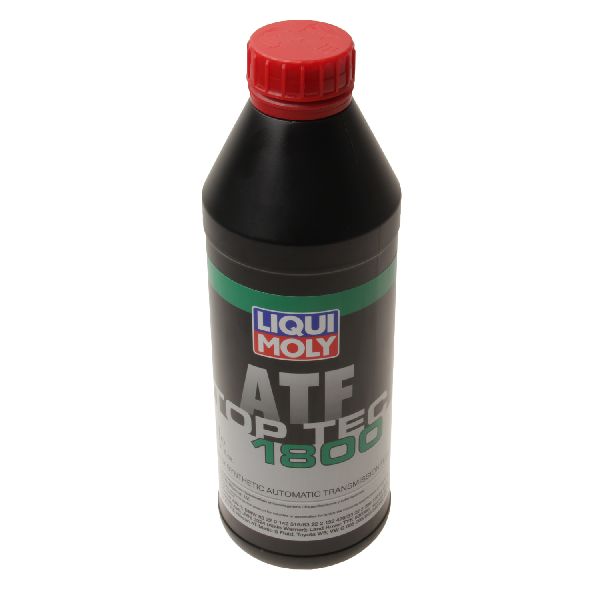
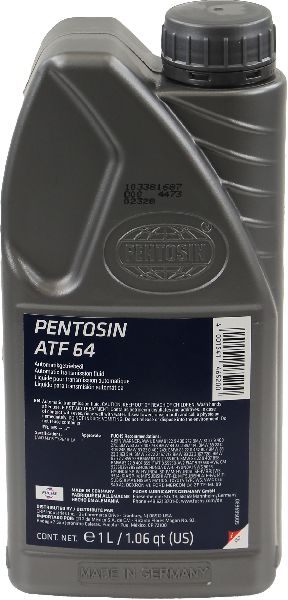
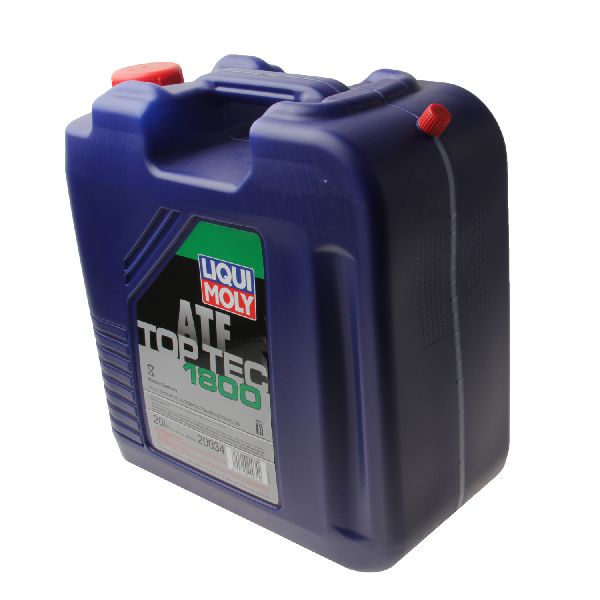
Aftermarket price range: $350-$550 - DEXRON-VI Automatic Transmission Fluid — The transmission fluid must be drained to perform the repair and will need to be replaced with approximately 6-7 quarts of the correct specification fluid.
Trusted brands: ACDelco, Valvoline, Castrol
OEM price range: $15-$25 per quart
Aftermarket price range: $8-$15 per quart
Related Codes That Often Appear With This One
- P0989 — This code is for 'Transmission Fluid Pressure Sensor 'E' Circuit Low'. Since the pressure switches are all part of the same TEHCM assembly, it's extremely common for multiple switch diaphragms to fail around the same time, leading to multiple codes.
- P0843 — This code is for 'Transmission Fluid Pressure Sensor 'A' Circuit High'. Like P0989, it points to a fault within the same internal TEHCM assembly.
- P0776 — This code for 'Pressure Control Solenoid 'B' Stuck Off' can appear alongside pressure switch codes, indicating a broader hydraulic control issue within the TEHCM. TSB PI0670A addresses this combination of faults.
Technical Service Bulletins (TSBs) & Recalls
- PIP4379N: While for a different GM model, this TSB lists P0877 among a large group of transmission pressure and solenoid codes, indicating it is a recognized fault code within the GM transmission family.
- PI0670A: Addresses slipping, no reverse, or no 3rd/5th gear, which can be caused by TEHCM issues on 2012 Sonics, among other models. It recommends diagnostics before replacing the TEHCM.
- 16-NA-019: While not specific to P0877, this TSB provides information on correcting harsh shifts and flares through adaptive learning procedures, which may be necessary after a TEHCM repair.
- PI0604C: Explains that Gen 2 versions of the 6T-series transmissions, introduced in 2012, removed the fluid pressure switches, making DTCs like P0877 not applicable to those models. It confirms some 2012 models (like the Sonic 1.8L) continued to use the Gen 1 design.
Platform-Specific Known Issues
- The failure of the pressure switch laminate discs on the Gen 1 6T30/40/45 TEHCM is a well-documented issue across many GM models, including the Sonic, Cruze, Malibu, and Equinox. The plastic discs become brittle and cannot withstand the hydraulic pressure, leading to ruptures that are often visible upon inspection.
Mechanic-Grade Diagnostic Values
- Pressure Control Solenoid (PCS) Resistance — expected: 3-5 Ohms. Failure: A reading outside this range indicates a failed solenoid. The solenoid must be disconnected from the TEHCM for an accurate test.
- Shift Solenoid (On/Off Type) Resistance — expected: 16-20 Ohms. Failure: A reading outside this range indicates a failed shift solenoid.
- TEHCM Pressure Switch Bench Test — expected: Continuity (closed circuit) to ground with no pressure applied.. Failure: No continuity when the switch is at rest, or continued continuity when the switch is depressed (pressure applied), indicates a failed switch. The switches are normally closed.
- TFP Sensor Reference Voltage — expected: ~5 Volts (Key On, Engine Off). Failure: Missing or incorrect voltage points to a wiring or TCM/PCM issue, not necessarily the sensor itself.
Scan Tool Commands That Help
- GDS2 / Tech 2: Solenoid Cleaning Procedure — This automated process cycles the solenoids while the system is pressurized to dislodge small debris. It should be performed as an initial diagnostic step before component replacement.
- GDS2 / Tech 2: Transmission Adaptive Values Learn (Fast Learn) — This procedure is mandatory after replacing the TEHCM or valve body. It allows the TCM to learn the hydraulic characteristics of the clutches and solenoids to ensure smooth shifting.
- GDS2 / Tech 2 with DT-48616 Test Plate: Solenoid Functional Test — With the TEHCM on the bench, this allows a technician to command each solenoid on and off while applying shop air and monitoring a gauge. It confirms if a solenoid is mechanically stuck or leaking, which an electrical test would miss.
Wiring & Ground Locations
- TEHCM Main Connector (Example from Chevy Cruze) — External connector on the transmission side cover, where the main vehicle harness connects to the TEHCM.. This is the primary interface for power, ground, and data. A pinout example for a 2010 Cruze 6T40 shows Pin 1 for Battery (+), Pin 2 for Ground, and Pin 12 for Ignition. Verifying power and ground here is a key first step.
- Internal TEHCM Pressure Switch Pins — On the TEHCM circuit board itself, accessible after removing the valve body.. For a definitive bench test, a technician can check continuity between the specific signal pin for switch 'D' and the ground pin on the TEHCM. This isolates the switch's electrical function completely.
Real Owner Repair Stories
- YouTube channel 'DC Auto Enhancement' (2011 Chevrolet Equinox V6 (with similar 6T70 transmission)) — Hard, harsh shifts and transmission fault codes P0872, P0877, and P0989.
❌ Tried (didn't work) The video directly targets the known TEHCM issue, implying that other diagnostics were unnecessary given the commonality of the failure.
✅ What actually fixed it The TEHCM was removed and disassembled on a bench. Visual inspection confirmed that multiple laminated pressure switch discs were destroyed and dislodged. The technician replaced all the discs and seals using an aftermarket repair kit. After reassembly and a fluid top-off, the vehicle was test-driven and confirmed to be 'shifting like a dream'.
OEM Part Supersession History
Gen 1 TEHCM (e.g., 24287420)→Gen 2 TEHCM (various PNs)— Complete redesign to improve reliability and simplify electronics.
Heads up: Gen 1 and Gen 2 TEHCMs are NOT interchangeable. The Gen 2 unit eliminated the pressure switches entirely, has different solenoid locations, and different valve body fluid passages. Attempting to install a Gen 2 TEHCM in a Gen 1 vehicle (or vice-versa) will result in numerous fault codes and a non-functional transmission.
Model Year Variations Within This Range
- 2012-2013 (approx.): Chevrolet Sonic models from these early years, particularly those with the 1.8L engine, used the 'Gen 1' 6T30/6T40 transmission which contains the pressure switches that set code P0877. To confirm, the 8th digit of the ID number on the TEHCM will be a number (0-9) for Gen 1.
- 2013-2020 (approx.): Later model Sonics were equipped with the 'Gen 2' 6T30/6T40 transmission. This version had the internal pressure switches completely removed from the TEHCM design to fix the widespread failures. Therefore, code P0877 is not applicable to these vehicles. The 8th digit of the ID number on a Gen 2 TEHCM will be a letter (A, B, C, etc.).
Diagnostic Flowchart
Other Known Issues on This Vehicle
Issues unrelated to this code that are worth knowing about as an owner of this generation:
- PCV System Failure (1.4L Turbo) 🔴 High — Common failure. A failed PCV diaphragm in the valve cover or a faulty check valve in the intake manifold can cause codes like P0171, excessive oil consumption, and rough idle. (Ref: TSB PIP5197)
- Leaking Water Pump (1.4L Engine) 🟠 Medium — A very common issue, especially on 2012-2014 models. Coolant leaks from the pump weep hole or shaft seal, leading to overheating if not addressed. (Ref: Special Coverage Adjustment 14371 / TSB 14371A (Extends warranty to 10 years/150,000 miles))
- Cracked Thermostat Housing / Coolant Outlet 🟠 Medium — The plastic thermostat housing is prone to cracking over time, causing coolant leaks and potential overheating. Often triggers code P0597.
- Failing EVAP Purge Valve 🟡 Low — A common and relatively inexpensive failure that can cause a Check Engine Light (often code P0496) and issues when refueling.
- Oil Leaks from Cooler Lines and Pressure Switch 🟠 Medium — Owners report frequent oil leaks from the oil cooler lines and the oil pressure switch.
Used vs. New Parts: Buying Guide for This Vehicle
When a used part is the smart pick: A used TEHCM from a junkyard is a very high-risk, poor choice. The pressure switch discs fail due to age and heat cycles, so a used part is likely to have the same problem or develop it shortly after installation. A used part only makes sense if it is a confirmed rebuilt unit with new, high-quality laminate discs already installed.
Donor-vehicle mileage cap: roughly under 30000 miles for the part to have meaningful remaining life.
What to inspect on the donor part:
- If buying a 'rebuilt' used unit, demand proof of the rebuild, such as receipts for the disc kit.
- Avoid any TEHCM that has been stored improperly or is covered in dirt/grime, as contamination is a major risk.
- Verify the part number and check the 8th digit of the ID to ensure it is the correct 'Gen 1' type for your vehicle.
OEM-only on this vehicle (don't cheap out):
- While the entire TEHCM is available from aftermarket sources like Dorman, the safest (and most expensive) option is a new GM Genuine/ACDelco part, as it will have the latest revisions and requires programming.
Aftermarket brands forum-validated for this vehicle:
- For the disc/seal repair kit: Sonnax is a highly respected brand in the transmission repair industry and is frequently cited as the go-to for this specific fix.
Brands owners have reported issues with on this vehicle:
- Unnamed, no-brand 'repair kits' from online marketplaces may use inferior materials that will not last. Given the labor involved in accessing the TEHCM, saving a few dollars on a low-quality kit is not worth the risk of premature failure.
Real Owner Stories
Aggregated from forums and TSBs cited above. Mileages and costs reflect what owners reported in those sources.
2012 Chevrolet Sonic 1.8L
Symptoms: Transmission slipping between gears and a complete loss of 3rd, 5th, and Reverse gears.
What fixed it: Diagnostics and potential TEHCM repair/replacement as recommended by TSB PI0670A regarding Gen 1 6T40 transmissions.
Source hint: TSB PI0670A and PI0604C
2012 Chevrolet Sonic (Gen 1 6T40)
Symptoms: The transmission pressure switch laminate discs became brittle, cracked, and ruptured, causing an internal pressure leak detected by the sensor.
What fixed it: Replacing the failed laminate discs and seals using a Sonnax aftermarket kit.
Cost: $40-$100
Source hint: YouTube video "GM 6T70/6T75 Transmission- Fault codes P0877 & P0989 Fix" and Sonnax repair kit documentation
Related OBD-II Codes
Frequently Asked Questions
Does TSB PI0670A apply to my 2012 Chevrolet Sonic with shifting issues?
My 2012 Sonic 1.8L has code P0877, but I heard some 2012 models don't have these sensors. Is that true?
Can I just replace the seals on my Sonic's TEHCM instead of the whole $700 unit?
If I replace the entire TEHCM assembly on my Sonic, is it a simple 'plug and play' repair?
Why is my Sonic's gear selector (PRNDL) flashing along with the P0877 code?
Is the P0877 code related to the common coolant leaks on the 1.4L Sonic engine?
Used OEM Parts in Stock


New Aftermarket Parts Available



The information in this article is provided for general reference and educational purposes only. Vehicle specifications, procedures, and part compatibility can vary by production date, trim level, and region. Always consult your vehicle's factory service manual and verify part numbers before purchasing or performing repairs. Safety-critical components such as airbags, seat belts, and braking systems should be installed by a qualified professional.
- Chevrolet Sonic:
- 🛍️ Shop This Part
- What's Unique About the 2012-2020 Chevrolet Sonic
- Symptoms You May Notice
- Most Likely Causes
- Rare But Worth Checking
- Diagnosis Steps
- Parts You'll Likely Need
- Related Codes That Often Appear With This One
- Technical Service Bulletins (TSBs) & Recalls
- Platform-Specific Known Issues
- Mechanic-Grade Diagnostic Values
- Scan Tool Commands That Help
- Wiring & Ground Locations
- Real Owner Repair Stories
- OEM Part Supersession History
- Model Year Variations Within This Range
- Diagnostic Flowchart
- Other Known Issues on This Vehicle
- Used vs. New Parts: Buying Guide for This Vehicle
- Real Owner Stories
- 2012 Chevrolet Sonic 1.8L
- 2012 Chevrolet Sonic (Gen 1 6T40)
- Related OBD-II Codes
- Frequently Asked Questions
- 🎟️ Get 5% Off