

OBD-II Code P0843: Transmission Fluid Pressure Sensor 'A' Circuit High
The Ultimate Guide to What P0843 Means, Why It Triggers, and Exactly How to Fix It
- Code P0843 is an electrical fault indicating the sensor voltage is stuck above 4.5V, meaning you need a $100-$350 sensor or wiring repair, not a $4,000 mechanical rebuild.
- Stop driving immediately if your transmission bangs into gear or locks into 3rd gear (limp mode), as the resulting maximum line pressure destroys internal clutch packs within weeks.
- Perform the 'jumper wire test' by grounding the sensor's signal wire; if the live data voltage drops to 0V, the wiring is intact and the sensor itself is 100% the culprit.
- On Honda and Acura vehicles from 2005-2017, a flashing 'D' light alongside this code almost always requires a simple 15-minute replacement of the external 2nd or 3rd gear pressure switch.
What Does P0843 Mean?

P0843 means your car's computer detects a critical electrical problem with transmission fluid pressure (TFP) sensor 'A'. This sensor converts hydraulic pressure into an electrical voltage signal, telling the computer how much pressure is applied to a specific clutch pack. 'Circuit High' means the voltage signal is stuck at an abnormally high level (typically over 4.5 volts), an impossible reading under normal operation. 🎬 Watch: A quick overview of P0843 causes and common fixes. This confuses the computer, prevents smooth gear shifts, and forces a fail-safe mode.
Technical definition: The official SAE/OBD-II definition is 'Transmission Fluid Pressure (TFP) Sensor/Switch 'A' Circuit High'. This diagnostic trouble code (DTC) sets when the Powertrain Control Module (PCM) or Transmission Control Module (TCM) registers a voltage from the 'A' TFP sensor circuit that remains above the manufacturer's specified upper limit (usually >4.5V) for a sustained period. This code points specifically to an electrical fault—such as an open circuit, a short to a power source, or an internally failed sensor—rather than an actual mechanical over-pressure condition within the transmission.
Can I Drive With P0843?
no_extended_driving. Driving is not recommended. When the P0843 code is active, the transmission control module (TCM) defaults to maximum line pressure to prevent slippage, causing extremely harsh, banging shifts. This quickly damages internal hard parts like clutch packs, gear sets, and engine mounts. While you can limp a short distance to a repair shop, continued driving turns a sub-$400 sensor repair into a $3,000+ transmission rebuild. Ignoring the issue risks catastrophic transmission failure.
Common Causes

- Faulty Transmission Fluid Pressure (TFP) Sensor/Switch (Very Common) — This is the number one cause. The sensor fails internally, creating an electrical open or a short to its own power reference, sending a constant high voltage signal back to the computer. This is exceptionally common in Honda and Acura models.
- Damaged Wiring or Corroded Connector (Common) — The sensor's signal wire frequently chafes, melts on an exhaust component, or pinches, causing a short to a 12V power source. Connectors also corrode, suffer bent pins, or fill with fluid from a leaking sensor, disrupting the signal. Improperly routed aftermarket wiring (alarms, remote starts) also causes this interference.
- Failed TEHCM Pressure Switch Diaphragm (GM 6L80/6L90) (Common) — On 2007+ GM trucks with 6-speed transmissions, the pressure switches are fragile diaphragms on the internal Transmission Electro-Hydraulic Control Module (TEHCM). These routinely rupture, creating an internal fault that sets P0843.
- Low or Contaminated Transmission Fluid (Less Common) — Severely low or burnt, debris-filled fluid causes erratic hydraulic behavior and overheating that contributes to sensor failure or triggers the code alongside other pressure-related codes like P0868.
- Faulty Transmission Control Module (TCM) or Powertrain Control Module (PCM) (Rare) — A failure within the module's internal driver circuit causes it to misread the sensor signal. A bad module almost always sets multiple other communication or sensor codes alongside P0843.
- Torn Torque Converter Lock-up O-Ring (GM Specific) (Rare) — On certain GM vehicles with the 4T45-E transmission, a torn O-ring on the torque converter causes intermittent TCC apply/release under light throttle, triggering a P0843 code as noted in TSB #08-07-30-018.
Symptoms

- Harsh, Banging, or Jerky Shifts — The most prominent symptom. The transmission shifts with a violent bang, especially between 1st-2nd and 2nd-3rd gears, as the TCM commands maximum hydraulic pressure as a fail-safe.
- Flashing 'D' or Drive Indicator Light — A hallmark symptom on Honda and Acura vehicles. 🎬 See how to diagnose a blinking D light on a Honda CR-V. The 'D' light on the gear selector display flashes continuously to indicate a stored transmission fault.
- Transmission Stuck in 'Limp Mode' — The vehicle locks into a single gear (usually 2nd or 3rd) to prevent further damage. This results in very poor acceleration from a stop and high RPMs at cruising speed.
- Delayed Gear Engagement — You experience a noticeable 1-3 second delay when shifting from Park into Drive or Reverse as the transmission struggles to interpret the faulty pressure signal.
- Check Engine Light (MIL) On — The computer illuminates the Malfunction Indicator Lamp (MIL) on your dashboard to alert you of the fault.
- Increased Fuel Consumption (also visible on scanner) — With the transmission shifting inefficiently, stuck in a low gear, or the torque converter refusing to lock up, the engine runs at higher RPMs, causing a significant drop in fuel economy.
Diagnostic Flowchart
Tap your situation to follow the diagnostic path that matches what you're seeing on this code.
Common Fixes & Costs
- Replace Transmission Fluid Pressure Sensor/Switch 'A'
— Parts: $40-$130, Labor: $120-$300, ~0.5 hr book time
(DIY)
Honda/Acura: OEM
Honda/Acura: OEM - Repair Damaged Wiring or Connector — Parts: $5-$50, Labor: $150-$400, ~1.5 hr book time (Intermediate)
- Replace TEHCM Pressure Switch Diaphragm (GM 6L80)
— Parts: $50-$200, Labor: $400-$700, ~4.5 hr book time
(Professional)
Chevrolet/GMC (6L80): OEM - Transmission Fluid and Filter Change — Parts: $50-$150, Labor: $100-$200, ~1.2 hr book time (DIY)
- Replace Transmission Control Module (TCM)
— Parts: $200-$800, Labor: $150-$300, ~2.0 hr book time
(Professional)
Dodge/Chrysler/Jeep (62TE): OEM
Used vs. New Parts: Buying Guide
When a used part is worth it: For an external pressure switch on a high-mileage vehicle, a used OEM sensor from a reputable auto recycler is a cost-effective option.
Donor-vehicle mileage cap: roughly under 100000 miles for the part to have meaningful remaining life.
Donor quality checklist:
- Match the part number exactly; do not rely on visual similarity.
- Ensure the connector pins are straight and free of corrosion.
- Ask for the donor vehicle's mileage; lower is always better.
- Avoid parts from vehicles in flood-damaged areas.
Decision logic:
- If The part is internal to the transmission (requiring significant labor to access). → Buy new OEM or a high-quality aftermarket part. The risk of a used part failing and requiring a repeat of the expensive labor is too high.
- If The part is external and easy to access (e.g., Honda pressure switch). → A used OEM part is a reasonable choice, but a new aftermarket part often provides a better warranty for a similar price.
- If The vehicle is less than 10 years old or has low mileage. → Buy a new OEM part to maintain reliability and ensure perfect compatibility.
Warranty tradeoff: Used parts typically come with a 30-90 day warranty covering only the part. New aftermarket parts offer 1-year to limited lifetime warranties. New OEM parts offer the best guarantee of quality but are the most expensive.
Worst-case if a used part fails: $300-$800 if a used internal sensor fails after installation, requiring a complete repeat of the labor-intensive job.
What Happens If You Wait — Timeline
- 0-1 week: Code P0843 sets. Check Engine Light and/or flashing 'D' light appears. Transmission defaults to maximum line pressure, causing noticeably harsh, banging shifts. (MPG impact: 5-10%% · Added cost: $0)
- 1 week - 2 months: Continued harsh shifting causes accelerated wear on internal clutch pack friction material. Engine and transmission mounts are repeatedly stressed, leading to premature cracking and wear. (MPG impact: 10-15%% · Added cost: $50-$150 in wasted fuel, plus potential $400-$800 for mount replacement.)
- 2-6 months: The constant high-pressure shifts and slipping cause seals to fail and hard parts like clutch drums or planetary gear sets to develop cracks from the repeated shock loads. The transmission fluid becomes burnt and filled with excess clutch material. (MPG impact: 15-20%% · Added cost: $1,500-$2,500 as internal damage becomes significant, but potentially still repairable without a full rebuild.)
- 6+ months: Catastrophic failure of internal hard parts is likely. A clutch drum cracks, a gear set shatters, or the valve body becomes clogged with debris. The vehicle stops moving altogether. A simple sensor fix is no longer possible. (MPG impact: N/A (vehicle may be undrivable)% · Added cost: $3,000-$7,000+ for a complete transmission rebuild or replacement.)
Cost of Not Fixing It
- 0-1 Month: Consistently harsh, banging shifts. Decreased fuel economy due to inefficient shifting and lack of torque converter lockup. Annoying but not yet catastrophic. (Added cost: $50-$100 in wasted fuel.)
- 1-6 Months: Accelerated wear on clutch packs, gear sets, and internal seals due to constant maximum line pressure. Engine and transmission mounts fail from repeated harsh engagement. (Added cost: $400-$1,200 for mount replacement and early internal transmission wear.)
- 6+ Months: Catastrophic internal transmission failure. The constant banging and high pressure causes hard parts like drums or planetary gear sets to crack or break. A complete transmission rebuild or replacement is now required. (Added cost: $3,000-$7,000+ for a full transmission replacement.)
Diagnosis Steps
- Scan and Document Live Data
Use an advanced OBD-II scanner capable of reading live transmission data. Navigate to the transmission module and observe the voltage for 'TFP Sensor A'. With the key on and engine off, it likely reads a static 4.5V or 5.0V. This confirms the fault the computer sees. A healthy sensor's voltage fluctuates between 0.5V and 4.5V depending on gear and load.
Tools: Advanced OBD-II Scanner (Beginner) - Pro Tip: The Jumper Wire Test (Isolating the Sensor)
This is the fastest way to confirm a bad sensor. Unplug the sensor connector. Turn the ignition ON (engine OFF). Use a jumper wire to connect the signal pin in the wiring harness connector to a solid ground point. Watch the live data on your scan tool. If the voltage drops to 0V and a P0842 'Circuit Low' code appears, the wiring and TCM are good. The fault is 100% in the sensor itself.
Tools: Jumper wire or paperclip, Advanced OBD-II Scanner (Intermediate) - Visual Inspection of Sensor and Harness
Locate TFP Sensor 'A'. Visually inspect the sensor's connector for corrosion, bent pins, or fluid intrusion. A connector full of transmission fluid is a definitive sign the sensor failed internally. Trace the wiring harness, looking for obvious signs of melting or chafing.
Tools: Flashlight, Mirror (optional) (Intermediate) - Verify Fluid Level and Condition
Check that the transmission fluid is at the correct level and is clean and red. While rarely the direct cause for a 'Circuit High' code, incorrect fluid levels cause a host of transmission issues that complicate diagnosis.
Tools: Rag, Transmission fluid dipstick (if equipped) (Beginner) - Test the Circuit with a Multimeter
If the jumper test fails, use a multimeter on the unplugged harness connector (key on) to verify a 5V reference, a solid ground (~0.0V), and 0V on the signal wire. If the signal wire shows voltage, it is shorted to power, requiring you to trace the harness back to the TCM to find the melted or chafed section.
Tools: Digital Multimeter, Vehicle Wiring Diagram (Advanced) - Advanced: Test Sensor Resistance
Measure the sensor's internal resistance. With the sensor unplugged, use a multimeter set to Ohms. For a GM 6L80, a typical shift solenoid reads between 20-40 ohms. An open circuit (infinite resistance) or a dead short (0 ohms) confirms a failed sensor/solenoid.
Tools: Digital Multimeter, Vehicle Service Manual (Advanced) - Pro Tip: Waveform Analysis with an Oscilloscope
For intermittent issues, backprobe the signal wire with the sensor connected. A healthy pressure switch shows voltage toggling cleanly between 0V and 5V as gears shift. With a P0843 fault, you see a flat line stuck at or near 5V, confirming the 'Circuit High' condition.
Tools: Oscilloscope, Backprobe pins (Professional) - Inspect Internal Components (If Applicable)
For vehicles like GM trucks with the 6L80 transmission, if external wiring checks out, drop the transmission pan and valve body to inspect the TEHCM pressure switch diaphragms for visible tears or ruptures.
Tools: Socket set, Torque wrench, Drain pan (Professional)
When This Code Triggers (Freeze-Frame Conditions)
- Engine Coolant Temp: 180-210°F (The fault often sets when the vehicle is fully warmed up and running for several minutes.)
- RPM: 1500-2500 (The code frequently triggers during steady-state cruising or light acceleration, rarely during hard acceleration or at idle.)
- Vehicle Speed: 35-60 mph (Highway or city cruising speeds are common conditions for the code to set as the transmission actively manages shifts and pressures.)
- Transmission Gear: 2nd, 3rd, or 4th (The code appears when the transmission is commanded into a specific gear (like 2nd or 3rd on Hondas) where pressure switch 'A' is critical for confirming the shift.)
Related Codes
- P0842 — This is the direct opposite code: 'Transmission Fluid Pressure Sensor 'A' Circuit Low'. P0843 indicates an open circuit or short to power, while P0842 indicates a short to ground. If you jump the sensor's signal wire to ground and P0843 changes to P0842, the sensor is confirmed as the fault.
- P0847 — This code is for 'Transmission Fluid Pressure Sensor 'B' Circuit Low'. On many Hondas, P0843 (2nd gear switch) and P0847 (3rd gear switch) are common companion codes, and technicians recommend replacing both switches simultaneously.
- P0848 — This code is for 'Transmission Fluid Pressure Sensor 'B' Circuit High'. It points to the exact same type of electrical fault as P0843, but on a different pressure sensor circuit ('B' instead of 'A').
- P0868 — This code means 'Transmission Fluid Pressure Low'. Unlike P0843, which is electrical, P0868 indicates a real mechanical or hydraulic problem (low fluid, failing pump). If you have both, you have a severe fluid leak or a failing pump causing erratic sensor readings.
Climate & Environmental Factors
- High Humidity / Salt Belt Regions: Corrosion is a significant contributor to P0843. Moisture and road salt infiltrate connectors for the pressure sensor or the main TCM harness, causing pin corrosion that leads to high resistance or short circuits.
- Extreme Cold: Extreme cold causes wiring insulation to become brittle and crack, leading to shorts if the harness flexes. It also causes intermittent connection issues at connectors.
- Extreme Heat: High ambient and under-hood temperatures accelerate the breakdown of electronic components. The internal diaphragm and electronics of the pressure sensor are highly susceptible to failure under constant high heat.
How to Talk to a Mechanic About This Code
Say this: "I have a P0843 code, indicating a 'Transmission Fluid Pressure Sensor A Circuit High' fault. I need a diagnostic to confirm if the issue is the sensor itself or a wiring problem. Can you check the live voltage data from the sensor and perform a jumper test to isolate the fault?"
This signals you understand P0843 is an electrical, not a major mechanical, issue. It directs the technician to perform specific, efficient diagnostic steps and prevents them from immediately quoting a transmission rebuild.
Avoid saying:
- 'My transmission is banging into gear.'
- 'My check engine light is on, can you look at it?'
- 'Just fix whatever's wrong with the transmission.'
Questions to ask before authorizing the repair:
- Did the live data show the sensor voltage stuck high, confirming the 'Circuit High' fault?
- Were you able to isolate the fault to the sensor using a jumper wire test or by testing the wiring harness?
- What is the warranty on the parts and labor for this specific repair?
Where to Take It: Dealer vs Independent vs Chain
- Dealer:
Recommended for complex internal repairs (GM) or if the vehicle is under warranty. Otherwise, a trusted independent shop is more cost-effective.
Best for: Vehicles still under powertrain warranty., Complex, manufacturer-specific issues like the GM TEHCM internal repair., When a TCM replacement and programming is required.
Downsides: Highest labor rates., Quicker to replace a whole assembly (like a valve body) rather than just the failed sensor. (Typical cost: +50% vs. baseline) - Independent Shop:
Best fit for most common P0843 scenarios, especially on Honda, Acura, and Ford/Dodge models where it's a known sensor or wiring issue. Ensure they are comfortable with electrical diagnostics.
Best for: Out-of-warranty vehicles., Common P0843 fixes like external sensor replacement (Hondas) and wiring repairs., Getting a second opinion on a high quote from a dealer or chain.
Downsides: Quality and diagnostic capabilities vary widely. Vet the shop by checking reviews and asking if they specialize in transmission electrical diagnosis. (Typical cost: +0% vs. baseline) - Chain Shop:
AVOID for P0843 diagnosis. They are not the right choice for accurately diagnosing the root electrical cause and frequently recommend unnecessary, expensive services.
Best for: Simple fluid changes (but a fluid change won't fix P0843).
Downsides: Technician skill varies dramatically., Often lack the in-depth diagnostic tools and experience for anything beyond basic code reading., High pressure to upsell; frequently incorrectly recommend a transmission flush or replacement. (Typical cost: -10% vs. baseline)
When to Walk Away From the Repair
If the estimated repair cost exceeds 50% of the car's private-party value, sell or trade it in instead of repairing it.
- Car worth $4000, fix is $800: Fix it. This is a common repair cost for an internal sensor and is well below the 50% threshold.
- Car worth $3000, fix is $2800: Walk away. A quote this high for a P0843 code implies a full transmission replacement. The cost is not justified by the car's value.
- Car worth $15000, fix is $900: Fix it. This is a reasonable cost for a professional-level internal repair (like on a GM truck) and is a small fraction of the vehicle's value.
What Scan Tool You Need for This Code

Minimum: A scanner that reads manufacturer-specific transmission codes and views live data PIDs (Parameter IDs) for the Transmission Control Module (TCM).
A basic $20 code reader only shows the P0843 code. It cannot show the live voltage from the pressure sensor, which is essential to confirm the 'Circuit High' fault. Without live data, you are guessing at the cause.
Budget: BlueDriver Pro Scan Tool (~$100) — Connects to your smartphone via Bluetooth. It reads enhanced codes (Transmission) and displays live data for specific PIDs like transmission fluid pressure sensor voltage. This is enough for a skilled DIYer to confirm the fault.
Mid-range: Foxwell NT510 Elite (~$180) — Offers OE-level diagnostics for specific car makes. It reads live transmission data, graphs sensor voltage, and performs bidirectional controls like a transmission relearn procedure after a repair.
Professional: Autel MaxiCOM MK808S (~$400) — A professional-grade tablet scanner with full bidirectional control. It performs advanced functions like transmission adaptation resets and reads all manufacturer-specific PIDs.
How to Clear the Code After You Fix It
- Reconnect any disconnected components, including the battery.
- Use a quality OBD-II scan tool to erase the P0843 and any related fault codes.
- Perform a complete drive cycle to allow the vehicle's readiness monitors to run and confirm the fix.
Drive cycle (~30 minutes): A general drive cycle includes a cold start (after sitting for 8+ hours), a few minutes of idling, followed by mixed city driving and at least 10-15 minutes of steady highway speed (55-60 mph). This allows the TCM to relearn and verify transmission operation.
Readiness monitors affected: Comprehensive Component Monitor (CCM), Catalyst (CAT) Monitor, Oxygen (O2) Sensor Monitor
Before emissions retest: drive at least 50 miles to fully set monitors.
Watch out for:
- Disconnecting the battery clears the code, but it does not reset the readiness monitors required for an emissions test.
- If the underlying electrical fault is not properly fixed, the code returns almost immediately during the first drive cycle.
- Some vehicles require a specific transmission relearn procedure with a dealership-level scan tool after replacing a sensor or TCM.
Will This Fail Emissions / State Inspection?
Yes — this code typically fails an OBD-II emissions inspection.
- California: An active P0843 code causes an automatic failure of the Smog Check. All OBD-II readiness monitors must be in a 'Ready' state to pass, which is blocked by this fault.
- New York: A vehicle with an illuminated Check Engine Light for a code like P0843 fails the mandatory annual OBD-II emissions inspection.
- Texas: In the 17 counties requiring emissions testing, a P0843 code results in a failed inspection.
Most Commonly Affected Vehicles

- Honda Accord, Civic, CR-V, Odyssey, Pilot (2005-2017) — Extremely common issue, almost always a failed 2nd or 3rd gear pressure switch. Presents with a flashing 'D' light. The switches are external, color-coded, and easy to replace. Common part numbers include 28600-RKE-004.
- Chevrolet / GMC Silverado, Sierra, Express, HHR, Cobalt (2007-2014) — On 6-speed 6L80 models, it is typically a ruptured pressure switch diaphragm on the internal TEHCM, a $500-$900 repair. On older 4-speed 4L60-E models, it is a less complex pressure switch manifold inside the pan.
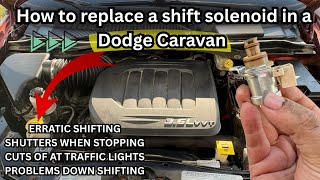
- Dodge/Chrysler/Jeep Grand Caravan, Town & Country, Ram 1500, Journey (2007-2018) — On vehicles with the 62TE transmission, the pressure sensor is part of the main solenoid pack/valve body assembly. Access requires removing the battery and tray to get to the transmission's top cover.
- Acura TL, MDX, RDX (2007-2015) — Similar to Honda, this is a very common issue caused by failed external pressure switches. An '09 TL owner reported the car getting stuck in 3rd gear with a P0843 code, resolved by replacing a pressure switch.
- Nissan Altima, Rogue, Sentra, Murano (with CVTs) (2007-2016) — CVT transmissions are highly dependent on accurate pressure readings. A P0843 code causes significant driveability issues and is typically a failed pressure sensor on the valve body.
- Ford F-150, Explorer, Focus, Fusion (2005-2016) — Diagnosis often points to a failed pressure sensor or a wiring harness issue, particularly where the harness rubs against the chassis or hot exhaust components.
- Toyota Corolla, Camry, RAV4 (2010-2018) — Toyota models experience this code due to sensor failure, especially in vehicles equipped with CVT transmissions which have more complex pressure monitoring systems.
- Hyundai / Kia Elantra, Sonata, Optima, Sorento (2011-2019) — The cause is typically a failed pressure switch located on the valve body or a problem in the wiring harness connector due to corrosion or loose pins.
Manufacturer-Specific Notes
- Honda/Acura: A flashing 'D' (Drive) indicator light is the classic symptom. The failure of the 2nd and 3rd gear pressure switches is extremely common. These are external, color-coded switches replaced in minutes with a basic wrench.
- Chevrolet/GM: On 6-speed (6L80/6L90) transmissions, P0843 is rarely an external sensor. It is almost always caused by one of five fragile pressure switch diaphragms rupturing on the internal TEHCM. A special repair kit exists, avoiding the need to replace the entire expensive module.
- Dodge/Chrysler/Jeep: On models with the 62TE transmission, the pressure sensor is integrated into the solenoid pack/valve body assembly. Accessing it requires removing the battery and its tray to open a cover on top of the transmission.
- Subaru: On some Subaru models, a P0843 code is triggered by a faulty valve body solenoid, not just the pressure switch itself. Technicians check the resistance of the solenoids before replacing the entire valve body assembly.
Real Owner Stories
2009 Honda Civic with P0843
Girlfriend's car had a check engine light and a P0843 code. Owner attempted to fix it by replacing a pressure switch.
What they tried:
- Replaced the 3rd clutch transmission pressure switch, but the code remained.
Outcome: After seeking advice on a forum, it was pointed out that P0843 on this vehicle corresponds to the 2nd clutch pressure switch, not the 3rd. The owner replaced the correct (2nd) switch, which resolved the issue.
Lesson: Never replace a part just because its name is in the code description. Always verify which specific component 'A', 'B', etc., corresponds to for your exact vehicle, as a simple mix-up leads to wasted time and money.
2015 Honda Accord with 44k miles
While driving, the 'D' light began flashing and the code P0843 was stored. The car drove fine otherwise.
What they tried:
- First mechanic cleared the code, but it returned immediately.
- A transmission shop quoted $450 to replace the sensor or $700 for the sensor and a fluid change.
- A second mechanic quoted $1,000 for the sensor replacement with no guarantee of a fix, and recommended a full transmission replacement for $4,800 as a 'safe' option.
Outcome: The owner was correctly advised by the transmission shop that the likely fix was the sensor. The second mechanic's quote for a full rebuild was an extreme and unnecessary upsell for a low-mileage car with a simple electrical fault code.
Lesson: For a standalone P0843 code, especially on a low-mileage Honda, the problem is almost certainly a simple, inexpensive pressure switch. Be extremely wary of any shop that immediately recommends a transmission rebuild without performing a thorough electrical diagnosis first.
2009-2010 Chevrolet Silverado 2500 with 6L80 Transmission
Vehicle triggered a P0843 code, resulting in harsh shifting and the transmission being stuck in 'limp mode' (often 3rd gear).
What they tried:
- Initial diagnosis pointed to an electrical fault with the 'A' pressure switch.
- Checking fluid level and condition confirmed it was not the cause.
Outcome: On these specific GM trucks, the cause is almost always an internally ruptured pressure switch diaphragm on the TEHCM (valve body). The fix requires dropping the transmission pan to replace the TEHCM or use a specialized repair kit. A new TEHCM must be programmed to the vehicle's VIN to function.
Lesson: The location and complexity of the fix for P0843 varies dramatically by manufacturer. While it is an easy external fix on a Honda, it is a complex internal repair on many GM trucks that requires a professional.
How to Prevent This Code From Triggering
- Perform regular transmission fluid drain-and-fills (Every 30,000-60,000 miles) — Clean, fresh fluid helps manage heat and lubricate parts. Overheated or contaminated fluid accelerates the breakdown of electronic components like pressure sensors and solenoids.
- Proactively replace external pressure switches (Honda/Acura) (Every 60,000-80,000 miles) — On many Honda/Acura models, these switches are a known failure point and are inexpensive and easy to access. Replacing them proactively prevents the harsh shifting and limp mode associated with a P0843 failure.
- Protect and inspect wiring harnesses (During any under-hood maintenance) — A significant cause of P0843 is damage to the wiring harness from heat or chafing. Ensure harnesses are properly secured away from hot exhaust components or sharp edges to prevent shorts or open circuits.
- Maintain a healthy battery and electrical system (Ongoing) — Modern transmissions rely heavily on clean electrical signals. A failing battery or alternator causes voltage fluctuations that lead to erroneous sensor readings or damage sensitive control modules.
Frequently Asked Questions
What is the most common fix for P0843?
By far, the most common fix is replacing the faulty transmission fluid pressure sensor 'A'. In the vast majority of cases, this part fails electrically and sends a constant high voltage signal. This is a $100 to $350 repair at most shops.
A shop quoted me $4,000 for a transmission rebuild for P0843. Is this right?
For a standalone P0843 code, a full rebuild is almost never the correct first step. This is an electrical circuit code, not a major mechanical failure code. Get a second opinion from a transmission specialist who will perform a proper electrical diagnosis first.
What does the flashing 'D' light on my Honda mean with this code?
The flashing 'D' light on a Honda or Acura acts as a dedicated transmission warning indicator. It signals that the Transmission Control Module detects a fault. For P0843, it almost always points to a failed external pressure switch.
Can I just clear the code and keep driving?
You can clear the code, but it returns immediately as soon as the computer runs its self-test. Ignoring the code and driving with harsh shifting causes accelerated wear on clutches and gears, quickly leading to permanent, expensive internal damage.
Will changing the transmission fluid fix a P0843 code?
No, a fluid change does not fix a P0843 code. This is an electrical circuit fault, so new fluid cannot repair a faulty sensor, a shorted wire, or a bad computer. While clean fluid is vital for transmission health, it is not the solution for this specific DTC.
Is it safe to drive with a flashing D light?
No, you must not continue driving with a flashing D light. It indicates a transmission problem that causes unpredictable behavior, such as getting stuck in gear or shifting violently. Limping to a nearby repair shop is acceptable, but avoid highway speeds to prevent severe damage.
What's the difference between a pressure 'switch' and a pressure 'sensor'?
A pressure 'switch' is a simple on/off device sending either 0 volts or 5 volts. A pressure 'sensor' is an analog device sending a variable voltage (e.g., 0.5V to 4.5V) corresponding to a wide range of pressures. Both trigger a P0843 code if they fail in an electrically 'open' or 'shorted to power' state.
Key Takeaways
- Code P0843 is an electrical fault indicating the sensor voltage is stuck above 4.5V, meaning you need a $100-$350 sensor or wiring repair, not a $4,000 mechanical rebuild.
- Stop driving immediately if your transmission bangs into gear or locks into 3rd gear (limp mode), as the resulting maximum line pressure destroys internal clutch packs within weeks.
- Perform the 'jumper wire test' by grounding the sensor's signal wire; if the live data voltage drops to 0V, the wiring is intact and the sensor itself is 100% the culprit.
- On Honda and Acura vehicles from 2005-2017, a flashing 'D' light alongside this code almost always requires a simple 15-minute replacement of the external 2nd or 3rd gear pressure switch.
Helpful Videos
![Blinking D [ P0843 07 Honda Crv ]](https://img.youtube.com/vi/SCuSMY97Sxw/mqdefault.jpg)

The information in this article is provided for general reference and educational purposes only. Vehicle specifications, procedures, and part compatibility can vary by production date, trim level, and region. Always consult your vehicle's factory service manual and verify part numbers before purchasing or performing repairs. Safety-critical components such as airbags, seat belts, and braking systems should be installed by a qualified professional.
- 🎬 Helpful Videos
- What Does P0843 Mean?
- Can I Drive With P0843?
- Common Causes
- Symptoms
- Diagnostic Flowchart
- Common Fixes & Costs
- Used vs. New Parts: Buying Guide
- What Happens If You Wait — Timeline
- Cost of Not Fixing It
- Diagnosis Steps
- When This Code Triggers (Freeze-Frame Conditions)
- Related Codes
- Climate & Environmental Factors
- How to Talk to a Mechanic About This Code
- Where to Take It: Dealer vs Independent vs Chain
- When to Walk Away From the Repair
- What Scan Tool You Need for This Code
- How to Clear the Code After You Fix It
- Will This Fail Emissions / State Inspection?
- Most Commonly Affected Vehicles
- Manufacturer-Specific Notes
- Real Owner Stories
- 2009 Honda Civic with P0843
- 2015 Honda Accord with 44k miles
- 2009-2010 Chevrolet Silverado 2500 with 6L80 Transmission
- How to Prevent This Code From Triggering
- Frequently Asked Questions
- What is the most common fix for P0843?
- A shop quoted me $4,000 for a transmission rebuild for P0843. Is this right?
- What does the flashing 'D' light on my Honda mean with this code?
- Can I just clear the code and keep driving?
- Will changing the transmission fluid fix a P0843 code?
- Is it safe to drive with a flashing D light?
- What's the difference between a pressure 'switch' and a pressure 'sensor'?
- Key Takeaways
- 🎟️ Get 5% Off