

P0846 on 2009-2017 Ford Expedition: Transmission Pressure Sensor and Lead Frame Guide
On a 2009-2017 Expedition with the 6R80 transmission, code P0846 almost always points to a failing transmission molded lead frame. This internal component houses multiple sensors that are prone to failure. The definitive fix is to replace the entire lead frame assembly, a job that typically costs between $1,000 and $1,800 at a repair shop.
- P0846 on a 2009-2017 Expedition is a strong indicator of a failing internal transmission lead frame, not just a single sensor.
- Symptoms can be severe, including harsh shifting and dangerous, sudden downshifts. Do not ignore this code.
- The correct repair is to replace the entire molded lead frame assembly, along with the filter and fluid.
- This is not a DIY-friendly job and requires professional service.
- Expect a repair bill in the range of $900 to $1,800.
What's Unique About the 2009-2017 Ford Expedition
For the Ford Expedition equipped with the 6R80 automatic transmission, this code is rarely just a single bad sensor. It is a very common symptom of a well-documented failure of the entire 'molded lead frame' inside the transmission. This lead frame is a plastic and metal circuit board that houses all the transmission's speed and pressure sensors. Over time, heat cycles and vibrations cause the electrical connections on this board to crack or become contaminated with metallic debris from normal clutch wear, leading to intermittent signals, short circuits, and sensor failures that trigger codes like P0846.
Symptoms You May Notice
- Check Engine Light or Wrench Light is on
- Harsh, erratic, or delayed gear shifts
- Transmission getting stuck in one gear (e.g., 3rd or 5th)
- Sudden, unexpected downshifts, sometimes into 1st gear at speed
- Inaccurate speedometer reading or speedometer dropping to zero
- Vehicle enters 'Limp Mode'
- Inability to use manual shift mode
- Gear indicator on the dashboard may not display correctly or at all
- Replacing only a single pressure solenoid when the issue is the lead frame that provides the signal.
- Condemning the entire transmission for a rebuild when only the lead frame needs replacement.
- Performing a PCM software update (per recall 19S07) without replacing the failing lead frame. The software update is designed to prevent the dangerous 1st gear downshift but does not fix the root cause of the sensor failure.
Most Likely Causes
- Failed Transmission Molded Lead Frame 🔴 High Probability The 6R80 transmission has a known design weakness where heat cycles and vibrations cause the electrical traces on the internal lead frame to crack or short out. This leads to intermittent signals from the integrated sensors. Ford has issued multiple warranty extensions and recalls for this part on various models using this transmission.
How to confirm: A professional technician will use a high-end scan tool to monitor live data from the transmission sensors (TFP, OSS, TSS). If signals from multiple sensors are erratic or drop out simultaneously, it confirms a faulty lead frame. The presence of other codes like P0720 (Output Speed Sensor), P0722, or P0731 further points to the lead frame as the single point of failure.
Typical fix: Replace the entire molded lead frame assembly, the transmission fluid filter, the pan gasket, and the valve body-to-case sleeve connector. Refill with fresh Mercon LV transmission fluid. The valve body separator plate is also often replaced as a preventative measure.
Est. part cost: $150-$350 - Low or Contaminated Transmission Fluid ⚪ Low Probability
How to confirm: Check the transmission fluid level and condition. On the 6R80, this is done via a small, stubby dipstick attached to the fill plug on the passenger side of the transmission case, near the catalytic converter. The check must be performed with the engine running and the transmission fluid at a specific operating temperature (190-200°F), which is difficult and hazardous without a vehicle lift. The fluid should be red and not smell burnt.
Typical fix: Perform a transmission fluid drain and fill. If the fluid is low, the source of the leak must be found and repaired. If the fluid is heavily contaminated, it may indicate more severe internal transmission wear.
Est. part cost: $100-$250 - Wiring or Connector Issue ⚪ Low Probability
How to confirm: Inspect the main transmission harness connector (the round connector on the passenger side of the transmission) for corrosion, damage, or loose pins. Fluid can sometimes leak through the internal connector sleeve and contaminate the external pins.
Typical fix: Repair the damaged wiring or clean/replace the connector. The internal-to-external pass-through connector sleeve is often replaced during a lead frame service.
Est. part cost: $20-$100
Rare But Worth Checking
- Faulty Powertrain Control Module (PCM): This is extremely rare. The PCM should only be considered after all other possibilities, especially the lead frame, have been definitively ruled out.
Diagnosis Steps
- Check for and document all stored trouble codes. Note if any speed sensor codes (P0720, P0721, P0722) or gear ratio codes (P0731) are present alongside P0846.
- Check the transmission fluid level and condition. This must be done with the vehicle level and the transmission at a specific operating temperature (around 190-200°F). This is a difficult procedure without a lift and proper tools.
- Inspect the external transmission wiring harness and the main round connector for any visible damage, corrosion, or fluid intrusion.
- Using an advanced scan tool, monitor the live data stream for the Transmission Fluid Pressure (TFP) sensors and the Output Speed Sensor (OSS) while driving. Look for erratic readings or signal dropouts, which strongly indicate a failing lead frame.
- If the lead frame is confirmed as the fault, the next step is replacement. This involves draining the fluid, dropping the transmission pan, and removing the main control/valve body assembly to access the lead frame.
- During reassembly, it is critical to replace the lead frame, transmission filter, pan gasket, and the main connector sleeve. Ensure the manual shift lever inside the transmission is correctly aligned with the new lead frame's range sensor switch before bolting the valve body back in place.
- Reinstall the valve body and pan, torquing bolts to specification. Refill with the correct type and amount of Mercon LV fluid.
Parts You'll Likely Need
- Transmission Molded Lead Frame (Conductor Plate)
(OEM #AL3Z-7G276-D)— This is the root cause of the problem in the vast majority of cases for this vehicle and transmission. The original part number has been superseded by this version.
Trusted brands: Motorcraft, Dorman (926-149)
OEM price range: $200-$300
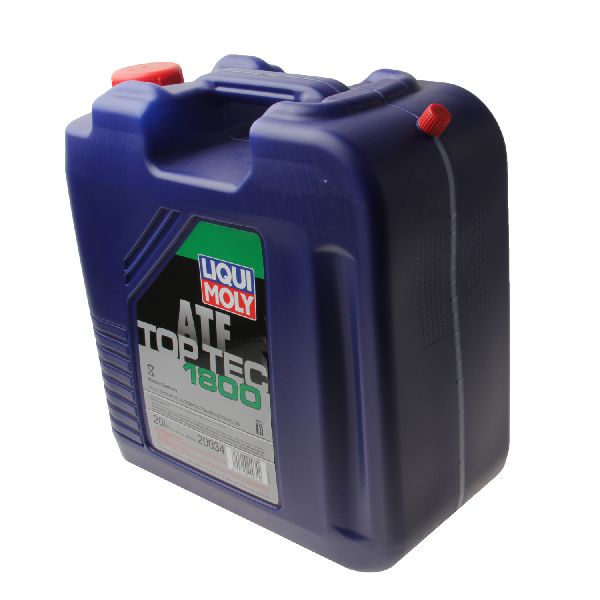
Aftermarket price range: $100-$180 - Automatic Transmission Fluid
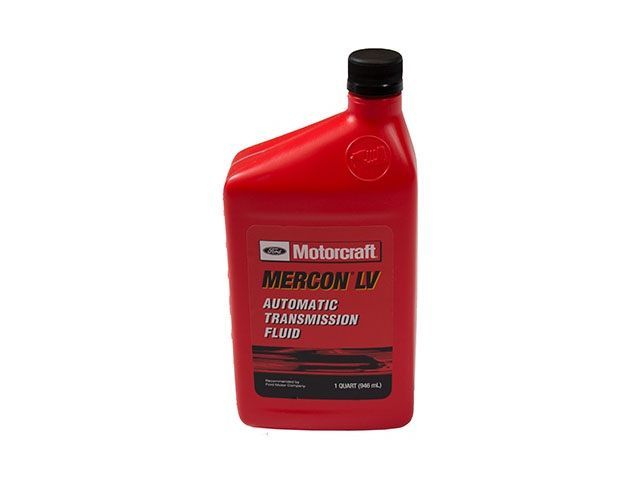
(OEM #XT-10-QLVC (Mercon LV))— The transmission must be drained to perform the repair. The system requires approximately 8.5 quarts for a pan drop and fill. Ford's Mercon LV fluid is specified.
Trusted brands: Motorcraft
OEM price range: $80-$150
Aftermarket price range: $60-$120 - Transmission Filter and Pan Gasket — These are essential 'while you're in there' parts that should always be replaced when the transmission pan is removed.
Trusted brands: Motorcraft, ATP, Wix
OEM price range: $40-$70
Aftermarket price range: $25-$50 - Transmission Case Connector Sleeve
(OEM #AL3Z-7G276-A (often included with lead frame kits))— This sleeve provides the seal between the internal lead frame and the external wiring harness. It is prone to leaking and should always be replaced during this service to prevent future fluid leaks and connection issues.
Trusted brands: Motorcraft
OEM price range: $15-$30
Aftermarket price range: $10-$20
Related Codes That Often Appear With This One
- P0720 — Output Speed Sensor (OSS) Circuit Malfunction. The OSS is located on the same molded lead frame and often fails at the same time.
- P0721 — Output Speed Sensor (OSS) Circuit Range/Performance. Also related to the failing lead frame.
- P0722 — Output Speed Sensor (OSS) Circuit No Signal. Another common code indicating a lead frame failure.
- P0731 — Gear 1 Incorrect Ratio. This code can be set when the OSS signal is lost, confusing the TCM about the transmission's state. It was one of the codes specified in Ford's extended warranty program for the lead frame.
Technical Service Bulletins (TSBs) & Recalls
- Customer Satisfaction Program 19N01: Extended warranty coverage for the transmission molded leadframe on 2012-2013 Expedition/Navigator vehicles due to potential OSS sensor failure causing specific DTCs.
- Safety Recall 19S07: Addressed unintended downshifts on 2011-2013 F-150s by reprogramming the PCM. While not directly for the Expedition, it addresses the same failure mode of the 6R80 lead frame.
Platform-Specific Known Issues
- Ford issued Customer Satisfaction Program 19N01, which extended the warranty on the molded lead frame for certain 2012-2013 Expedition models to 10 years or 150,000 miles. While this program has expired for most vehicles, it officially acknowledges the defect. The program specifically covered replacement if DTCs P0720, P0722, P0731, and/or P1500 were present.
- Recalls for the related F-150 (e.g., 19S07) also targeted this exact issue. The initial fix was often a PCM reprogram to prevent the sudden downshift to 1st gear, but this did not fix the underlying hardware failure of the lead frame itself.
Mechanic-Grade Diagnostic Values
- TFPS Sensor Voltage (Key On) — expected: 5 or 12 volts (depending on circuit design) at the signal wire with the connector unplugged.. Failure: If the voltage is incorrect, it indicates a problem with the power or ground wire from the PCM/TCM, not necessarily the sensor itself.
- Shift Solenoid E (SSE) Resistance (On/Off type) — expected: Approximately 10.5 ohms for units built before Nov 4, 2010; approximately 18 ohms for units built after Nov 3, 2010.. Failure: A reading significantly outside these ranges indicates a failed solenoid. Note that P0846 is a pressure sensor code, but solenoid issues can cause related pressure faults.
- Torque Converter Clutch (TCC) Solenoid Pressure (Live Data) — expected: Should be near 0 PSI when the TCC is commanded locked at cruising speed.. Failure: Pressure readings that are high or fluctuating when lockup is commanded can indicate a hydraulic issue in the valve body or a failing TCC solenoid, which can sometimes be confused with a pressure sensor fault.
Scan Tool Commands That Help
- Ford IDS or FORScan (with extended license): Clear Transmission Adaptive Tables — This service procedure should be performed after replacing the lead frame or valve body. It resets the PCM's learned values for shift timing, allowing it to relearn the characteristics of the new components.
- Ford IDS or FORScan (with extended license): Transmission Characterization Update / Solenoid Body Strategy — This is critical if the entire valve body (solenoid body) is replaced. The new valve body comes with a tag containing a 13-digit strategy number and a 12-digit ID number. These must be programmed into the PCM to ensure correct solenoid operation and shift quality. Failure to do this will result in harsh shifts.
- Ford IDS or similar: Adaptive Learning Drive Cycle — After clearing the adaptive tables, a specific drive cycle is required for the PCM to relearn shift points. This typically involves moderately accelerating from a stop to allow shifts up to 6th gear, holding a steady speed, and then braking to a stop.
Wiring & Ground Locations
- C175T — The main round, pass-through electrical connector on the passenger side of the 6R80 transmission case.. This is the primary external connection point for all internal electronics, including the pressure sensors on the lead frame. A common failure point is the internal sleeve (O-rings) which can leak fluid, contaminating the pins and causing intermittent connections that can trigger P0846 and other codes.
- G101 — On the firewall behind the PCM (Powertrain Control Module) in the engine compartment.. This is a critical ground point for the PCM. A poor connection at G101 can cause erratic PCM behavior and phantom sensor codes, as the PCM may not have a stable ground reference.
- G100 / G102 — G100 is at the starter motor from the battery. G102 is at the right rear of the engine compartment.. These are major engine and chassis grounds. While less direct than the PCM ground, poor connections here can introduce electrical noise into the system, potentially affecting sensitive sensor readings from the transmission.
Real Owner Repair Stories
- Reddit user in r/f150 (2013 F-150 with 6R80 (shared powertrain)) — Classic symptoms of lead frame failure.
✅ What actually fixed it The user replaced the lead frame, filter, gasket, and the transmission connector seal. They noted the job was much easier on a lift and required refilling approximately 8.5 quarts of Mercon LV fluid after the pan drop. - Ford F150 Forum user (2015 F-150 with 6R80 at 142,000 miles) — At highway speed, the transmission jerked, speedometer dropped to zero, airbag light and wrench light came on. After stopping and restarting, it drove normally. Threw code P0722 (Output Speed Sensor No Signal).
❌ Tried (didn't work) A previous software recall update was performed but did not prevent the issue from eventually occurring.
✅ What actually fixed it The user took it to an independent shop familiar with the issue, with the strong expectation that the lead frame was the root cause, as the OSS sensor is integrated into it. This is a classic failure pattern.
OEM Part Supersession History
AL3Z-7G276-A, AL3Z-7G276-B→AL3Z-7G276-D— The -D revision is the updated part designed to be more durable than the original versions. It is the correct and current replacement part.
Heads up: While older revisions might be found, the 'D' version should always be used for repair.
Model Year Variations Within This Range
- 2009-2011 (approx.): Earlier 6R80 models often had the Transmission Control Module (TCM) integrated directly into the lead frame assembly inside the transmission (a 'Mechatronic' unit).
- 2012-2017 (approx.): Later models moved the transmission control functions to the main Powertrain Control Module (PCM) located in the engine bay. The internal lead frame on these models still contains the sensors but does not house the TCM itself. This change affects diagnostic strategy and wiring.
Diagnostic Flowchart
Other Known Issues on This Vehicle
Issues unrelated to this code that are worth knowing about as an owner of this generation:
- Ford 5.4L 3-Valve Engine Timing Component Failure 🔴 High — Very common, especially on models from 2007-2014. Issues with cam phasers, timing chain tensioners, and guides can arise, often starting after 80,000 miles, causing a distinct ticking or rattling noise.
- Spark Plug Breakage/Ejection (5.4L 3V Engine) 🟠 Medium — A notorious issue where the two-piece spark plugs can break upon removal, or on earlier 2-valve engines, the threads could fail and eject a plug. This is most common during the first spark plug change.
- Aluminum Body Panel Corrosion 🟠 Medium — The aluminum hood and liftgate are prone to bubbling and corrosion, especially along the leading edges and seams. This is a cosmetic issue but is very common across this generation.
- HVAC Blend Door Actuator Failure 🟡 Low — Failure of one or more blend door actuators is common, resulting in an inability to control air temperature or direction. Symptoms include a clicking sound from the dashboard.
- Exhaust Manifold Leaks 🟠 Medium — The exhaust manifolds, particularly on the 5.4L V8, are prone to developing cracks or warping, causing an exhaust leak. This is often heard as a ticking noise that is loudest on a cold start and may quiet down as the engine warms up.
Used vs. New Parts: Buying Guide for This Vehicle
When a used part is the smart pick: For this specific repair, buying a used lead frame is strongly discouraged. The part has a known high failure rate due to a design defect, so a used part from a junkyard is likely to have the same problem or fail shortly after installation.
What to inspect on the donor part:
- Not applicable. Do not purchase a used lead frame for this repair.
OEM-only on this vehicle (don't cheap out):
- Molded Lead Frame (Motorcraft AL3Z-7G276-D is highly recommended over aftermarket options for reliability).
- Transmission Fluid (Only use Motorcraft Mercon LV to ensure proper performance and longevity).
Aftermarket brands forum-validated for this vehicle:
- While OEM is preferred, Dorman (part #926-149) is a widely available aftermarket alternative for the lead frame. Owner reviews are mixed; some report success while others report premature failure.
Brands owners have reported issues with on this vehicle:
- Unbranded, no-name lead frames sold on marketplaces like eBay or Amazon should be avoided, as their quality control is unknown and failure rates are reportedly high.
Real Owner Stories
Aggregated from forums and TSBs cited above. Mileages and costs reflect what owners reported in those sources.
2014 Ford F-150 — 170000 miles
Symptoms: Experienced downshift issues and was quoted a high price for a main control valve replacement.
What fixed it: The lead frame was identified as the issue; another user in the same thread confirmed a lead frame replacement resolved similar issues and lasted over 200k miles.
Cost: $2500
Source hint: f150forum.com thread titled '2014 with lead frame issue. Is it worth fixing?'
2016 Ford F-150
Symptoms: Transmission failure symptoms requiring lead frame replacement.
What fixed it: Lead frame replacement.
Cost: $2200
Source hint: Reddit (r/f150)
2015 Ford F-150
Symptoms: Output shaft sensor code present. After a DIY lead frame replacement attempt, the truck would not recognize the gear selection.
What fixed it: The failure was due to incorrect alignment of the manual shift lever with the range sensor on the new lead frame during the DIY repair.
Source hint: ford-trucks.com
2014 Ford Expedition
Symptoms: After a DIY lead frame replacement, the vehicle would not move when placed in Drive.
What fixed it: The owner sought help for a failed DIY installation involving the lead frame.
Source hint: expeditionforum.com thread from March 2024 titled 'Lead frame replacement'
Related OBD-II Codes
Frequently Asked Questions
Is there a warranty extension for the lead frame on my 2012 Ford Expedition?
My 2013 Expedition is downshifting suddenly into 1st gear; is there a recall for this?
Can I replace the lead frame myself on my 2014 Expedition?
What specific transmission fluid should I use for my 2009-2017 Expedition after a lead frame repair?
How can a technician confirm the lead frame is failing rather than just a sensor?
Used OEM Parts in Stock

New Aftermarket Parts Available


The information in this article is provided for general reference and educational purposes only. Vehicle specifications, procedures, and part compatibility can vary by production date, trim level, and region. Always consult your vehicle's factory service manual and verify part numbers before purchasing or performing repairs. Safety-critical components such as airbags, seat belts, and braking systems should be installed by a qualified professional.
- Ford Expedition:
- 🛍️ Shop This Part
- What's Unique About the 2009-2017 Ford Expedition
- Symptoms You May Notice
- Most Likely Causes
- Rare But Worth Checking
- Diagnosis Steps
- Parts You'll Likely Need
- Related Codes That Often Appear With This One
- Technical Service Bulletins (TSBs) & Recalls
- Platform-Specific Known Issues
- Mechanic-Grade Diagnostic Values
- Scan Tool Commands That Help
- Wiring & Ground Locations
- Real Owner Repair Stories
- OEM Part Supersession History
- Model Year Variations Within This Range
- Diagnostic Flowchart
- Other Known Issues on This Vehicle
- Used vs. New Parts: Buying Guide for This Vehicle
- Real Owner Stories
- 2014 Ford F-150 — 170000 miles
- 2016 Ford F-150
- 2015 Ford F-150
- 2014 Ford Expedition
- Related OBD-II Codes
- Frequently Asked Questions
- 🎟️ Get 5% Off