

OBD-II Code P0721: Output Speed Sensor Performance Problem
The Ultimate 2026 Guide: What P0721 means, why it triggers, and how to fix it for good.
- Inspect and clean the magnetic tip of the Output Speed Sensor before buying parts, as a simple buildup of metallic debris causes over 30% of P0721 codes.
- Limit driving to trips under 5 miles directly to a shop; ignoring the harsh shifting caused by P0721 escalates a $300 sensor fix into a $3,000 transmission rebuild.
- Verify your vehicle's sensor location, because replacing an external sensor takes 1 hour and costs $200, while internal sensors (common in Mercedes and Hyundai) require valve body removal and cost over $1,000.
- Test the wiring harness for 5-volt reference and ground before condemning the sensor, as melted wires or corroded connectors trigger this exact performance code.
What Does P0721 Mean?

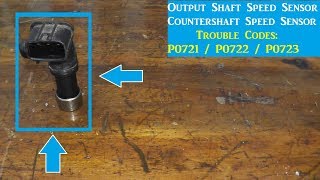
P0721 means your Powertrain Control Module (PCM) is receiving an irrational signal from the transmission's Output Speed Sensor (OSS). This sensor tracks how fast the transmission's output shaft spins, dictating gear shifts and speedometer operation. When the signal is erratic or contradicts engine and wheel speed data, the computer cannot command shifts correctly and triggers the Check Engine Light.
Technical definition: The SAE/OBD-II definition is 🎬 Watch: A complete guide to diagnosing and fixing P0721 "Output Speed Sensor Circuit Range/Performance". The PCM or Transmission Control Module (TCM) detects the OSS signal is erratic or outside its expected operating range compared to the Input Speed Sensor (ISS) or ABS wheel speed sensors.
Can I Drive With P0721?
Yes, But With Caution. You can drive, but limit trips to short, low-speed drives directly to a repair shop. The transmission will likely shift harshly, get stuck in limp mode, or stall the engine when stopping, creating a safety hazard. Continuing to drive causes the transmission to overheat from improper gear selection. This escalates a $300 sensor repair into a $3,000+ transmission rebuild.
Common Causes

- Faulty Output Speed Sensor (OSS) (Very Common) — The sensor's internal magnetics or electronics degrade from heat and vibration, causing it to send an erratic signal.
- Contaminated Fluid or Clogged Filter (Common) — The magnetic tip of the sensor attracts fine metallic shavings from normal transmission wear. This debris cloud blocks the sensor from getting a clear reading. Low or burnt fluid also causes mechanical slipping that the sensor correctly reports as erratic speed.
- Damaged Wiring or Corroded Connectors (Common) — Wires leading to the sensor fray, short to ground, or melt against hot exhaust pipes. Connector pins fill with water, oil, or corrosion, distorting the signal.
- Internal Transmission Mechanical Failure (Less Common) — A damaged reluctor wheel (the toothed ring the sensor reads), slipping clutches, or a failing valve body causes the output shaft speed to be genuinely erratic.
- TCM/PCM Faults or Bad Software (Rare) — The computer module fails to interpret a good signal correctly due to an internal processing fault or incorrect aftermarket tuning software.
- Unstable System Voltage (Rare) — A failing alternator causes voltage drops. The TCM requires stable voltage to process sensor data and misinterprets signals when voltage fluctuates.
Symptoms

- Harsh, Erratic, or Delayed Shifting — The transmission slams into gear, shifts at incorrect times, hesitates, or slips between shifts.
- Transmission Stuck in 'Limp Mode' — The transmission locks into a single gear (usually 2nd or 3rd) to prevent internal damage, making acceleration extremely sluggish.
- Inaccurate or Dead Speedometer — The speedometer needle jumps erratically, reads incorrectly, or drops to zero while driving.
- Check Engine Light is On — The PCM triggers the Malfunction Indicator Lamp (MIL) immediately when this code stores.
- Engine Stalling When Stopping — The transmission fails to downshift or the torque converter stays locked as you slow down, dragging the engine RPM down until it stalls.
- Disabled Safety and Cruise Systems — Because vehicle speed cannot be verified, the PCM disables cruise control. Conflicting data also triggers the ABS and Traction Control warning lights.
- Reduced Fuel Economy — Incorrect shift timing forces the engine to operate outside its optimal power band, burning 10-15% more fuel.
- Irrational Output Speed PID — On a scan tool, the Output Speed Sensor live data drops to zero, spikes, or fails to match the wheel speed sensors.
Diagnostic Flowchart
Tap your situation to follow the diagnostic path that matches what you're seeing on this code.
Common Fixes & Costs

- Replace Output Speed Sensor (OSS) — Parts: $30-$100, Labor: $150-$300, ~1.2 hr book time (DIY)
- Clean Sensor and Change Transmission Fluid — Parts: $50-$120, Labor: $150-$250, ~1.5 hr book time (Intermediate)
- Repair Damaged Wiring or Connector — Parts: $10-$50, Labor: $125-$350, ~1.5 hr book time (Intermediate)
- Replace Transmission Conductor Plate — Parts: $300-$700, Labor: $400-$800, ~6 hr book time (Professional)
- Replace Internal Transmission Harness — Parts: $150-$300, Labor: $400-$800, ~5 hr book time (Professional)
- Replace Powertrain/Transmission Control Module (PCM/TCM) — Parts: $600-$900, Labor: $200-$300, ~2.5 hr book time (Professional)
Used vs. New Parts: Buying Guide
When a used part is worth it: Never buy a used speed sensor. The labor to replace it outweighs the $20 savings. Only consider used parts for high-cost modules like a TCM, and only from a reputable supplier.
Donor-vehicle mileage cap: roughly under 60000 miles for the part to have meaningful remaining life.
Donor quality checklist:
- Verify the donor vehicle was not scrapped due to transmission issues.
- Match the part number exactly.
- Avoid parts from rust-belt regions due to connector corrosion.
Decision logic:
- If The part is an electronic sensor (OSS). → Buy new OEM. Used sensors are unreliable.
- If The part is a high-cost module (TCM) on a 10+ year old car. → Buy a remanufactured or tested used module with a warranty.
- If The part is internal to the transmission. → Buy new OEM parts only. The labor cost to access internal parts is too high to risk a used component.
Warranty tradeoff: Used parts offer a 30-day warranty on the part only. New OEM parts carry a 1-2 year warranty covering part and sometimes labor.
Worst-case if a used part fails: $200 - $500. If a used sensor fails, you pay diagnostic and labor costs a second time.
What Happens If You Wait — Timeline
- 0-1 Month: Check Engine Light illuminates. Shifting becomes slightly harsher. Speedometer flickers intermittently. (MPG impact: 0-5%% · Added cost: $0-$50 in wasted fuel.)
- 1-3 Months: Harsh shifting becomes frequent. Transmission drops into limp mode, requiring a restart to clear. Speedometer is visibly unreliable. (MPG impact: 5-10%% · Added cost: $50 - $200. Increased fuel consumption and minor stress on internal clutches.)
- 3-6 Months: Transmission is consistently in limp mode. Improper gear selection causes significant overheating, burning the fluid and damaging solenoids. (MPG impact: 10-15%% · Added cost: $500 - $1,500. Valve body and torque converter damage occurs.)
- 6+ Months: Catastrophic internal failure. Extreme heat warps metal components and destroys clutch friction material. Vehicle loses all forward gears. (MPG impact: 15-25%+% · Added cost: $2,500 - $6,000+. Requires complete transmission rebuild or replacement.)
Cost of Not Fixing It
- 0-1 Month: Noticeable drop in fuel economy, erratic shifting, and potential stalling. The vehicle is unsafe in traffic. (Added cost: Negligible, beyond increased fuel costs.)
- 1-6 Months: Continued harsh shifting causes excessive heat and wear on clutch packs, bands, and the torque converter.
- 6+ Months: Catastrophic internal transmission failure requiring a complete rebuild.
Diagnosis Steps

- Check Transmission Fluid
Check the transmission fluid level and condition. Fluid must be at the 'Full' mark when warm and bright red. Dark, burnt-smelling fluid or visible metal particles indicate internal wear that must be addressed before replacing sensors.
Tools: Rag (Beginner) - Scan for Codes and TSBs
Use an OBD-II scanner to pull all codes. Check for Technical Service Bulletins (TSBs) for your specific VIN, as manufacturers frequently issue updated repair procedures or extended warranties for P0721.
Tools: OBD-II Scanner (Beginner) - Inspect and Clean the Sensor Tip
Locate the Output Speed Sensor. If externally mounted, remove the single retaining bolt and pull it out. Wipe the magnetic tip clean of any metallic 'fuzz' or debris. Reinstall, clear codes, and test drive. This 10-minute step fixes 30% of P0721 codes.
Tools: Socket/Wrench Set, Rag (Intermediate) - Visually Inspect Wiring and Connector
Examine the wiring harness leading to the sensor for melted insulation, chafing against the frame, or pinched wires. Unplug the connector and check for green corrosion, backed-out pins, or transmission fluid intrusion.
Tools: Flashlight (Intermediate) - Monitor Live Data PIDs
Drive the vehicle while watching the 'Output Speed Sensor' PID on an advanced scan tool. The reading must increase smoothly and match the speedometer. If the reading drops to zero intermittently or spikes, the sensor or circuit is failing.
Tools: Advanced OBD-II Scanner (Advanced) - Test Sensor Resistance
Unplug the sensor and measure resistance across its pins with a multimeter. Compare the Ohms (Ω) reading to the factory service manual specification. A reading of infinity (OL) means an open circuit; near zero means a short. Replace the sensor if out of spec.
Tools: Digital Multimeter, Service Manual (Advanced) - Check Reference Voltage and Ground
Turn the ignition ON (engine off). Probe the harness connector. For a 3-wire sensor, verify a 5-volt reference signal from the TCM and a solid ground. Missing voltage or ground points to a wiring break or bad TCM.
Tools: Digital Multimeter, Service Manual (Advanced) - Perform a Harness Wiggle Test
While monitoring resistance or live data, vigorously wiggle the wiring harness at the sensor and along its routing to the TCM. If the reading drops out, you have located a hidden break in the wire.
Tools: Digital Multimeter (Advanced) - Analyze Waveform with an Oscilloscope
Connect an oscilloscope to the signal wire. Spin the wheels and verify a clean square wave (Hall-effect) or sine wave (magnetic pickup). A distorted or flat-lined waveform confirms a bad sensor or damaged internal reluctor ring.
Tools: Digital Oscilloscope, Service Manual (Professional)
When This Code Triggers (Freeze-Frame Conditions)
- Engine Coolant Temp: 175-210°F (Fully warmed up. Electrical resistance changes with heat, exposing failing sensor internals.)
- Engine RPM: 1500-3000 RPM (During acceleration or steady cruising when the TCM actively compares input and output speeds.)
- Vehicle Speed: 35-60 mph (Triggers during highway driving when the discrepancy between the OSS and wheel speed sensors becomes obvious.)
- Transmission Gear: During a Shift (e.g., 2-3, 3-4) (Logs at the exact moment the TCM commands a gear change and the resulting output speed fails to match the expected ratio.)
Related Codes
- P0720 — P0720 indicates a complete circuit failure (open or short), meaning the signal is dead. P0721 means the signal exists but is erratic. P0720 points to a cut wire; P0721 points to a failing sensor or dirty fluid.
- P0722 — P0722 means 'No Signal'. The computer receives absolutely nothing from the OSS. Diagnostically identical to P0720, focusing on complete electrical failure.
- P0730 — P0730 means 'Incorrect Gear Ratio'. A faulty OSS providing bad speed data causes the TCM to calculate an incorrect ratio. Fixing the P0721 sensor fault usually resolves P0730.
- P0700 — P0700 is a generic code telling the engine computer to turn on the Check Engine Light because the transmission module has a fault. Ignore P0700 and diagnose P0721.
Climate & Environmental Factors
- Operating Temperature: Symptoms worsen as the transmission heats up. High temperatures increase electrical resistance, exposing faults in failing sensors.
- Harsh Climates (Road Salt): Road salt accelerates corrosion inside wiring connectors, disrupting the sensor signal.
- Component Age: Plastic connectors and wiring insulation become brittle over time, cracking easily during inspection.
How to Talk to a Mechanic About This Code
Say this: "I have a P0721 code with erratic shifting. Please start by checking the transmission fluid, inspecting the external wiring and connector, and cleaning the sensor tip before recommending internal repairs."
Guides the mechanic to follow a logical, cost-effective diagnostic path. It prioritizes the cheapest fixes first, preventing them from immediately quoting an expensive transmission replacement.
Avoid saying:
- 'My check engine light is on, can you just fix it?' (Invites unnecessary, expensive diagnostics.)
- 'I think I need a new transmission.' (Leads them to skip simple checks and quote your expensive guess.)
- 'Just do whatever you think is best.' (Gives up your control over the repair process and cost.)
Questions to ask before authorizing the repair:
- Did you check for any Technical Service Bulletins (TSBs) related to this code for my vehicle?
- What did the transmission fluid look and smell like?
- Is the output speed sensor on my car external or internal to the transmission?
- Can you show me the damaged wiring or corroded connector if that's what you found?
Where to Take It: Dealer vs Independent vs Chain
- Dealer:
Best for: Vehicles under powertrain warranty., Vehicles with known issues covered by a TSB or extended warranty (e.g., Ford lead frame, Mercedes conductor plate)., Complex diagnostics requiring manufacturer-specific programming tools.
Downsides: Highest labor rates, often 1.5-2x more than independent shops., Quick to recommend replacing a large assembly (valve body) when a smaller component is the root cause. (Typical cost: +50% vs. baseline) - Independent Shop:
Best choice for most out-of-warranty vehicles. An independent transmission specialist is the ideal place for a P0721 diagnosis.
Best for: Out-of-warranty vehicles where cost is a major factor., Common P0721 causes like external sensor replacement, fluid service, or wiring repair.
Downsides: Quality varies widely; vet shops carefully through reviews., May lack manufacturer-specific programming tools for very new vehicles. (Typical cost: +0% vs. baseline) - Chain Shop:
AVOID for P0721 diagnosis. They are ill-equipped for proper transmission diagnostics and likely to misdiagnose a complex wiring issue.
Best for: Simple, unrelated maintenance like oil changes or tires.
Downsides: Technician skill varies dramatically., Lack specialized tools for anything beyond reading the code., High pressure to upsell services. (Typical cost: -10% vs. baseline)
When to Walk Away From the Repair
If the estimated repair cost for the P0721 fault exceeds 50% of your car's private-party market value, seriously consider selling or trading in the vehicle.
- Car worth $5000, fix is $350: Fix it. An external sensor replacement is a minor cost relative to the car's value.
- Car worth $5000, fix is $2800: Walk away. A repair costing over 50% of the car's value (e.g., an internal conductor plate) is a poor investment.
- Car worth $15000, fix is $2800: Fix it. The repair cost is well below the 50% threshold and restores the vehicle's value.
What Scan Tool You Need for This Code
Minimum: A scanner that reads and graphs live data PIDs, specifically for the transmission.
A basic $20 code reader only shows the 'P0721' code. You must see the live output speed sensor signal to determine if it drops to zero or acts erratically.
Budget: BlueDriver Pro (~$99) — Connects to your smartphone via Bluetooth and graphs live output speed sensor data while you drive. The minimum required for DIY diagnosis.
Mid-range: FOXWELL NT301 / Innova 5610 (~$70-250) — Offers robust live data graphing and access to manufacturer-specific transmission codes. The Innova 5610 offers bi-directional controls to test components.
Professional: Autel MaxiCOM MK808 / Topdon ArtiDiag Pro (~$450-650) — Provides OEM-level diagnostics. Offers fast live data graphing, access to all vehicle modules, and performs advanced resets and programming.
Rent vs buy: Auto parts stores offer free loaner tools, but they are often basic code readers without live data. Buying a budget scanner like the BlueDriver is a necessary investment for DIY diagnostics.
How to Clear the Code After You Fix It
- Use an OBD-II scan tool to erase the P0721 code.
- Perform a complete drive cycle to run readiness monitors.
- Rescan the vehicle to ensure the code remains clear.
Drive cycle (~20 minutes): Start cold. Idle for 3 minutes. Drive in stop-and-go traffic (25-40 mph) for 10 minutes. Drive at a steady highway speed (55-60 mph) for 5 minutes. Coast to a stop without braking.
Readiness monitors affected: Comprehensive Component Monitor (CCM), Catalyst Monitor, EVAP System Monitor
Before emissions retest: drive at least 50 miles to fully set monitors.
Watch out for:
- Disconnecting the battery clears the code but resets all readiness monitors, guaranteeing an emissions test failure.
- The code returns immediately if the wiring short or mechanical fault was not repaired.
Will This Fail Emissions / State Inspection?
Yes — this code typically fails an OBD-II emissions inspection.
- California: P0721 is an automatic failure. All readiness monitors must be 'Ready' before re-inspection.
- New York: An active Check Engine Light for P0721 results in an immediate OBD-II failure.
- Texas: Vehicles in emissions-testing counties will fail the OBD portion of the inspection with this code.
Most Commonly Affected Vehicles
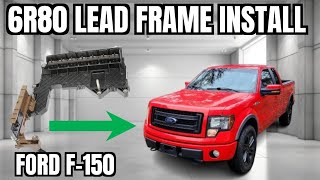
- Ford F-150, Expedition, Mustang, Edge, Explorer (2000-2018) — TSB 18-2119 covers 2018 models with the 10R80 transmission. 6R80 transmissions suffer from molded lead frame failures.
- Dodge / Chrysler / Jeep Ram 1500, Charger, Grand Cherokee, Caravan (2001-2016) — Widespread issue. Often resolved by cleaning metallic debris off the external sensor tip.
- General Motors (Chevy/GMC) Silverado, Tahoe, Suburban, Impala (1999-2014) — Frequently caused by wiring harness chafing near the transmission housing.
- Hyundai / Kia Sonata, Elantra, Santa Fe, Sorento, Optima (2009-2022) — TSB 12-AT-009-4 points to a faulty internal sensor harness on 6-speed automatics, requiring valve body removal.
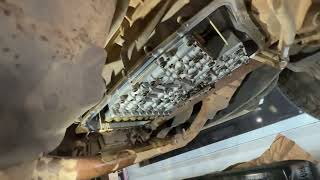
- Mercedes-Benz C-Class, E-Class, ML-Class (722.9 Transmission) (2005-2012) — Speed sensors are integrated into the valve body's conductor plate. The entire plate must be replaced and programmed.
Manufacturer-Specific Notes
- Ford: For 2018 models with the 10R80 transmission, TSB 18-2119 recommends immediate OSS replacement. Older 6R80 transmissions often trigger this code due to a failing internal molded lead frame, covered under extended warranty programs.
- Mercedes-Benz: On 722.9 (7G-Tronic) transmissions, speed sensors are permanently integrated into the conductor plate. You cannot replace just the sensor; the entire plate requires replacement and dealer-level programming.
- Hyundai / Kia: TSBs instruct technicians not to replace the transmission for P0721. The fix involves replacing the internal input/output speed sensor harness, requiring valve body removal.
Real Owner Stories
2016 Dodge Charger - The Simple Fix
Owner experienced delayed shifting. A scan tool showed the output shaft speed frozen at zero while driving.
What they tried:
- Removed the externally mounted Output Speed Sensor for inspection.
Outcome: The sensor's magnetic tip was coated with metallic debris. Cleaning the sensor and reinstalling it restored the signal and permanently cleared the code.
Lesson: Always inspect and clean the old sensor before buying a new one. A 10-minute cleaning saves hundreds of dollars.
2007 Dodge Ram 1500 - The Misdiagnosis
Truck stuck in 3rd gear (limp mode) with code P0721.
What they tried:
- Replaced the Output Speed Sensor with a new $20 part.
Outcome: The new sensor failed to fix the problem. The actual issue was a corroded ground wire in the harness connector.
Lesson: If a new sensor doesn't fix a performance code, the problem is in the circuit. Test the wiring harness for continuity before assuming the transmission is bad.
2013 Ford F-150 3.5L - The Complex Cause
Speedometer dropped to zero and transmission downshifted violently to 3rd gear. Issue only occurred during the first 10 minutes of driving.
What they tried:
- Took it to a dealer to check for extended warranty coverage.
Outcome: The problem was a failing molded lead frame inside the transmission, a known defect on Ford 6R80 transmissions covered under a Customer Satisfaction Program.
Lesson: Check for TSBs and extended warranties. P0721 is often a symptom of a larger, well-documented component failure like the Ford lead frame.
2007 Dodge Charger - The Post-Repair Problem
After a shop replaced the rear main oil seal, the check engine light illuminated with P0721.
What they tried:
- Shop re-inspected all transmission wiring.
Outcome: Two identical harness connectors near the transmission were accidentally swapped during reassembly. Swapping them back fixed the problem instantly.
Lesson: If a code appears immediately after a major repair, look for simple reassembly mistakes like pinched wires or swapped connectors.
How to Prevent This Code From Triggering
- Change transmission fluid and filter every 30,000-60,000 miles (Every 30,000-60,000 miles) — Removes metallic debris that coats the magnetic speed sensor and prevents sludge buildup.
- Check transmission fluid level monthly (Monthly) — Prevents low fluid conditions that cause overheating, slipping, and erratic mechanical operation.
- Apply dielectric grease to transmission connectors (During any related repair) — Seals out moisture and prevents pin corrosion, ensuring a clean sensor signal.
Frequently Asked Questions
Can I fix P0721 myself?
Yes, if the cause is an externally mounted sensor, dirty fluid, or a dirty sensor tip. However, if the sensor is inside the transmission or the problem involves complex wiring, stop DIY efforts and take it to a transmission specialist. Internal repairs require dropping the valve body and risk severe damage if done incorrectly.
How much does it cost to fix P0721?
Replacing an external output speed sensor typically costs $180 to $400 for parts and labor. A transmission fluid change runs $150 to $250. If the sensor is internal or part of a conductor plate (like on Mercedes-Benz models), costs easily exceed $1,000.
What are the most common misdiagnosis mistakes for P0721?
The biggest mistake is immediately replacing the speed sensor without checking the transmission fluid or inspecting the sensor tip for metallic debris. Technicians also frequently fail to check for Technical Service Bulletins (TSBs), which often outline known wiring harness issues. Always verify the wiring integrity before condemning the sensor.
I replaced the speed sensor, but the code came back. What now?
If a new sensor fails to fix the issue, the problem lies in the wiring harness, the connector, or the internal reluctor ring. Re-inspect the wiring for hidden damage and perform a continuity test with a multimeter. If the wiring is perfect, the transmission likely has an internal mechanical failure causing genuine erratic output speeds.
Does dirty transmission fluid really cause this code?
Yes. The output speed sensor is magnetic and attracts fine metal shavings generated by normal transmission wear. A thick layer of this metallic debris blocks the sensor from reading the shaft's rotation accurately, triggering the P0721 performance code.
Can a bad battery or alternator cause P0721?
Yes, though it is rare. The Transmission Control Module (TCM) requires stable voltage to process sensor signals accurately. A failing alternator or weak battery causes voltage drops that make the TCM misinterpret the speed sensor data.
Can other systems like ABS be affected by P0721?
Yes. The output speed sensor provides crucial vehicle speed data to multiple modules. If this data is erratic, it conflicts with the ABS wheel speed sensors, causing the ABS and traction control warning lights to illuminate and disabling those systems.
What is the difference between the Input (ISS) and Output (OSS) Speed Sensor?
The Input Speed Sensor measures the speed of the transmission's input shaft (engine speed after the torque converter). The Output Speed Sensor measures the output shaft speed (final vehicle speed). The computer compares these two readings to verify correct gear ratios and detect internal transmission slippage.
Key Takeaways
- Inspect and clean the magnetic tip of the Output Speed Sensor before buying parts, as a simple buildup of metallic debris causes over 30% of P0721 codes.
- Limit driving to trips under 5 miles directly to a shop; ignoring the harsh shifting caused by P0721 escalates a $300 sensor fix into a $3,000 transmission rebuild.
- Verify your vehicle's sensor location, because replacing an external sensor takes 1 hour and costs $200, while internal sensors (common in Mercedes and Hyundai) require valve body removal and cost over $1,000.
- Test the wiring harness for 5-volt reference and ground before condemning the sensor, as melted wires or corroded connectors trigger this exact performance code.
Helpful Videos

The information in this article is provided for general reference and educational purposes only. Vehicle specifications, procedures, and part compatibility can vary by production date, trim level, and region. Always consult your vehicle's factory service manual and verify part numbers before purchasing or performing repairs. Safety-critical components such as airbags, seat belts, and braking systems should be installed by a qualified professional.
- 🎬 Helpful Videos
- What Does P0721 Mean?
- Can I Drive With P0721?
- Common Causes
- Symptoms
- Diagnostic Flowchart
- Common Fixes & Costs
- Used vs. New Parts: Buying Guide
- What Happens If You Wait — Timeline
- Cost of Not Fixing It
- Diagnosis Steps
- When This Code Triggers (Freeze-Frame Conditions)
- Related Codes
- Climate & Environmental Factors
- How to Talk to a Mechanic About This Code
- Where to Take It: Dealer vs Independent vs Chain
- When to Walk Away From the Repair
- What Scan Tool You Need for This Code
- How to Clear the Code After You Fix It
- Will This Fail Emissions / State Inspection?
- Most Commonly Affected Vehicles
- Manufacturer-Specific Notes
- Real Owner Stories
- 2016 Dodge Charger - The Simple Fix
- 2007 Dodge Ram 1500 - The Misdiagnosis
- 2013 Ford F-150 3.5L - The Complex Cause
- 2007 Dodge Charger - The Post-Repair Problem
- How to Prevent This Code From Triggering
- Frequently Asked Questions
- Can I fix P0721 myself?
- How much does it cost to fix P0721?
- What are the most common misdiagnosis mistakes for P0721?
- I replaced the speed sensor, but the code came back. What now?
- Does dirty transmission fluid really cause this code?
- Can a bad battery or alternator cause P0721?
- Can other systems like ABS be affected by P0721?
- What is the difference between the Input (ISS) and Output (OSS) Speed Sensor?
- Key Takeaways
- 🎟️ Get 5% Off