

P0776 on 2006-2016 Chevrolet Impala: Transmission Solenoid Causes and Fixes
Code P0776 on a 2006-2016 Impala typically means the Pressure Control Solenoid 'B' ('E' in some GM documentation, also known as PCS2 or the 2-6 clutch solenoid) is stuck off. This is extremely common on the 6-speed 6T70/6T75 transmission due to a failed solenoid inside the TEHCM, contaminated fluid, or debris from internal component failure like the 3-5-R wave plate. The fix usually involves replacing the TEHCM (solenoid/valve body/TCM assembly) and fluid, costing between $600 and $1,500.
- P0776 on your Impala indicates a serious transmission problem, specifically with the Pressure Control Solenoid 'B'/'E'.
- Do not continue to drive the vehicle, as you risk sudden shifting problems and catastrophic transmission damage.
- The most common causes are a failed solenoid, contaminated transmission fluid, or a clogged valve body.
- This is not a simple DIY fix. The repair requires opening the transmission and should be handled by a qualified mechanic.
- Be prepared for a potentially costly repair, especially if the entire TEHCM (valve body/solenoid/computer assembly) needs to be replaced.
What's Unique About the 2006-2016 Chevrolet Impala
The 2006-2016 Impala spans two generations with different primary transmissions. Earlier models (2006-2011) often used the 4-speed 4T65-E, while later models (2012-2016), including the 10th generation, used the 6-speed 6T70/6T75 automatic. This P0776 code is particularly common on the 6-speed 6T70/75 platform, which is shared across many GM vehicles. Issues often trace back to either the solenoid itself (which is part of the TEHCM), debris in the valve body, or a broken 3-5-R wave plate, a problem detailed in GM Technical Service Bulletin PI0780A. The TEHCM (Transmission Electro-Hydraulic Control Module) integrates the solenoids, valve body, and TCM into one unit, making it a common but expensive failure point.
Generation note: This range covers the end of the 9th generation (2006-2016 as the 'Limited' fleet model) and the start of the 10th generation (2014-2016). The 9th gen used both the 4-speed 4T65-E and later the 6-speed 6T70/6T75 transmissions. The 10th gen primarily used the 6-speed 6T70/6T75. While the code's meaning is the same, the specific part and procedure will differ between the 4-speed and 6-speed models. This article focuses primarily on the more commonly affected 6-speed transmissions.
Symptoms You May Notice
- Harsh, jerky, or delayed shifting
- Transmission getting stuck in a low gear (limp mode)
- Inability to shift into higher gears
- Transmission slipping between gears
- Illuminated Check Engine Light
- Loss of reverse gear
- Reduced fuel economy
- Transmission overheating
- Replacing only the transmission fluid without addressing the underlying solenoid or valve body issue. If the solenoid has failed electrically, a fluid change will not fix it.
- Replacing the TEHCM/solenoid pack when the root cause is a broken 3-5-R wave plate. The new TEHCM will quickly become contaminated with debris and fail again.
Most Likely Causes
- Failed Pressure Control Solenoid 'B' / TEHCM 🔴 High Probability On the 6T70/6T75 transmission, the solenoids are integrated into the TEHCM, which is submerged in hot fluid. Over time, the solenoids can fail electrically or mechanically. The entire TEHCM unit is a known failure point on these transmissions.
How to confirm: A technician can use a bi-directional scan tool to command the solenoid on and off while monitoring transmission pressure data. A failed solenoid will not respond correctly. Physical inspection may reveal failed laminate discs on the TEHCM's pressure switches.
Typical fix: Replace the entire TEHCM assembly. This part contains the solenoids, the valve body, and the Transmission Control Module. The new unit must be programmed to the vehicle.
Est. part cost: $300-$700 - Low or Contaminated Transmission Fluid 🟡 Medium Probability Fluid breaks down over time, and internal component wear, especially from a failing 3-5-R wave plate, can introduce significant metal shavings and clutch material into the fluid. This debris clogs the fine passages in the valve body and causes solenoids to stick.
How to confirm: Check the transmission fluid level and condition via the dipstick or check plug. If the fluid is dark, smells burnt, or contains visible metallic debris, it is contaminated and indicates internal wear.
Typical fix: Perform a transmission fluid and filter change. However, if significant debris is found, this is often a symptom of a larger internal failure (like the wave plate) that must be addressed. A simple fluid change will not fix a mechanical or electrical failure.
Est. part cost: $50-$150 - Broken 3-5-R Wave Plate 🟡 Medium Probability Early 6T70/6T75 transmissions (up to 2011 models) were notorious for failure of the 3-5-R clutch wave plate. When this plate breaks, it generates a large amount of metallic debris that circulates through the transmission, clogging the valve body and causing solenoid performance codes like P0776. GM issued TSB PI0780A regarding this exact issue.
How to confirm: This is confirmed by finding significant metallic debris in the transmission pan and by symptoms like loss of 3rd, 5th, and Reverse gears. A full transmission teardown is required for visual confirmation.
Typical fix: This requires a complete transmission rebuild or replacement. The transmission must be removed and disassembled to replace the broken wave plate and clean all debris from every component. Simply replacing the TEHCM will result in a repeat failure.
Est. part cost: $1500-$4000 (for rebuild/replacement) - Wiring or Connector Issues ⚪ Low Probability The internal transmission wiring harness is submerged in hot fluid, which can make insulation brittle over time, leading to shorts or open circuits. The main external connector can also suffer from corrosion or damage.
How to confirm: Inspect the external transmission wiring and connectors for damage or corrosion. Check for continuity and resistance of the solenoid circuit from the TCM connector.
Typical fix: Repair the damaged wiring or replace the internal transmission wiring harness.
Est. part cost: $50-$200
Rare But Worth Checking
- Faulty Transmission Control Module (TCM): This is uncommon as a standalone failure. On 6T70/75 transmissions, the TCM is integrated with the valve body (known as a TEHCM) and is replaced as one unit. A logic failure within the TCM can cause this code, but it's usually replaced as part of the TEHCM assembly.
- Internal Mechanical Failure: Severe internal damage, such as a failed piston ring or clutch pack, can generate excessive debris that leads to this code. An owner of a similar GM vehicle reported this code led to a full transmission replacement due to metal contamination from burned clutches.
Diagnosis Steps
- Check and verify the transmission fluid level and condition. Look for excessive metal particles.
- Use an OBD-II scanner to confirm P0776 and check for any other related codes, like P0700.
- With a professional scan tool, access live transmission data to monitor solenoid commands, duty cycle, and fluid pressure.
- Command the Pressure Control Solenoid 'B'/'E' on and off to test its electronic and mechanical response.
- Inspect the external transmission wiring and connectors for any visible damage, corrosion, or loose connections.
- If a 6T70/75 transmission is suspected of TEHCM failure, remove the side cover to inspect the TEHCM pressure switch laminate discs for tears or ruptures.
- If the solenoid is suspected, drain the transmission fluid, remove the oil pan/side cover, and access the valve body/TEHCM.
- Test the solenoid's resistance with a multimeter to check for an open or shorted coil (if applicable to the specific transmission model).
- Inspect the valve body for scoring, sticking valves, or debris. Check the date code on the TEHCM as per TSB PIP4831E.
- If significant debris is found, especially on a pre-2012 model, suspect a broken 3-5-R wave plate, which necessitates a full transmission inspection.
Parts You'll Likely Need
- Transmission Solenoid Pack / TEHCM
(OEM #24256523 (Superseded by newer numbers, verify by VIN))— This is the most frequent point of failure for this code. On 6T70/75 transmissions, the solenoids, valve body, and TCM are serviced as a single unit called a TEHCM (Transmission Electro-Hydraulic Control Module).
Trusted brands: ACDelco, GM Genuine, Dorman (Remanufactured)
OEM price range: $400-$800
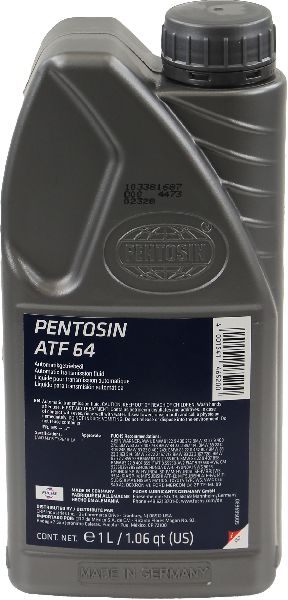
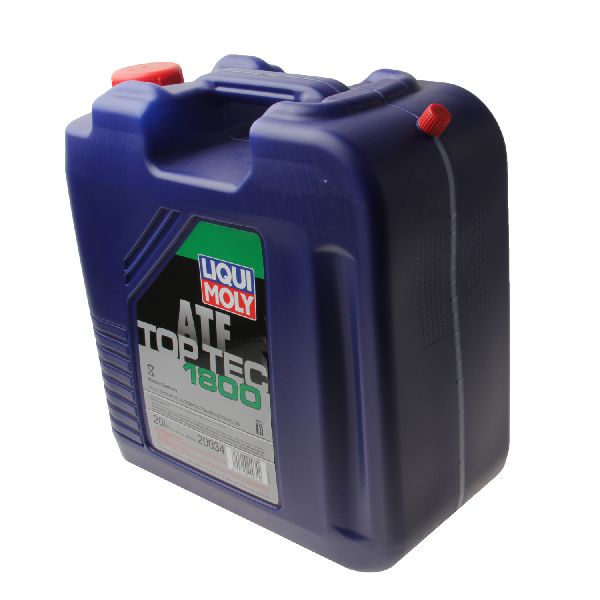
Aftermarket price range: $250-$500 - Transmission Fluid and Filter Kit — Fluid and filter must be replaced any time the transmission pan or side cover is removed for service. Use only DEXRON-VI fluid.
Trusted brands: ACDelco
OEM price range: $80-$150
Aftermarket price range: $50-$100 - 3-5-R Wave Plate (Updated)
(OEM #24254103 (Verify by VIN))— If the root cause is a broken wave plate, this updated part is required during the transmission rebuild. Failure to replace it will lead to recurring issues.
Trusted brands: GM Genuine
OEM price range: $15-$40
Related Codes That Often Appear With This One
- P0700 — P0700 is a generic code indicating the Transmission Control Module (TCM) has stored a fault. It frequently appears alongside specific transmission codes like P0776 to signal that a transmission-specific problem exists.
- P0751 — This code for Shift Solenoid 'A' Stuck Off can appear with P0776 if debris is clogging multiple channels in the valve body, affecting more than one solenoid.
Technical Service Bulletins (TSBs) & Recalls
- Bulletin #PIP4831E: Advises technicians to look for debris in the valve body for a range of solenoid performance codes, including P0776, on various GM vehicles.
- Bulletin #PI0780A: Details the failure of the 3-5-R wave plate causing P0776 and recommends replacement of the plate and piston assembly anytime the transmission is disassembled.
- Bulletin #22-NA-258: Points to a torn screen on the valve body spacer plate in extreme cold as a cause for P0776 and other codes, requiring valve body replacement.
Platform-Specific Known Issues
- On models equipped with the 6T70 or 6T75 transmission, failure of the TEHCM (combined valve body and control module) is a well-documented issue that can cause P0776 and other shifting problems.
- A GM Technical Service Bulletin (#PIP4831E) for similar models points to debris in the valve body as a cause for this code, advising technicians to inspect for it before replacing major components.
- GM TSB #PI0780A specifically identifies a broken 3-5-R apply (waved) plate as a cause for P0776, along with loss of 3rd, 5th, and Reverse gears. This failure generates significant debris that clogs the valve body and solenoids.
- Another TSB, #22-NA-258, notes that in extremely cold weather, a torn screen on the valve body spacer plate can cause valves to stick, resulting in P0776.
Mechanic-Grade Diagnostic Values
- Pressure Control Solenoid (PCS) 'B' (a PWM solenoid) resistance — expected: 3-8 ohms. Failure: A reading outside this range indicates a failed solenoid coil, necessitating TEHCM replacement.
- Shift Solenoid (On/Off type) resistance — expected: 20-40 ohms. Failure: A reading outside this range indicates a failed solenoid coil. While not directly PCS 'B', this helps diagnose the overall health of the TEHCM.
- Pressure Control Solenoid (PCS) 'B' current draw — expected: 1.5-4.0 amps at 12V. Failure: Incorrect amperage suggests the solenoid has failed. This test should be done briefly to avoid damage.
Scan Tool Commands That Help
- GDS2 / Tech2: Solenoid Cleaning Procedure — Use this automated function when a solenoid performance DTC like P0776 is present. The tool cycles all solenoids to flush debris. If the code returns after cleaning, it points towards a mechanical or electrical failure rather than a simple blockage.
- GDS2 / Tech2: Transmission Service Fast Learn — This procedure is mandatory after replacing the TEHCM or rebuilding the transmission. It allows the TCM to learn the clutch fill volumes and shift timing, which is critical for proper operation.
- GDS2 / Tech2 with Kent-Moore DT-47825 test plate: Solenoid Air Test — With the TEHCM removed and connected to a special test plate, this allows a technician to command each solenoid on and off while applying shop air to verify mechanical operation. A faulty solenoid will not change the air pressure reading.
Wiring & Ground Locations
- G111 — On the engine block, typically located above the starter motor.. This is a primary ground point for the engine and transmission assembly. A loose or corroded G111 can cause erratic behavior and communication errors for the Transmission Control Module (TCM), potentially leading to false solenoid codes.
- X181 (10th Gen Impala) — The main 14-pin inline electrical connector to the transmission, located on the lower front of the transmission case.. This is the main interface between the vehicle's wiring harness and the internal TEHCM. A common, often-overlooked failure is a corroded or loose pin within this connector, which can mimic a complete TEHCM failure. A user on a YouTube repair video noted this was their ultimate fix after multiple limp mode events.
Real Owner Repair Stories
- YouTube comment on '2014 Chevrolet Impala transmission electrical problems' (2014+ Chevrolet Impala) — Car repeatedly going into limp mode with multiple TCM communication codes.
❌ Tried (didn't work) The owner was preparing for a full TEHCM replacement based on the codes.
✅ What actually fixed it The mechanic checked the main harness connector going into the TCM (X181). The first time, cleaning the connector resolved the issue temporarily. The second time, a pin in the harness was found to not be making a good connection and needed to be adjusted. This permanently fixed the problem, saving thousands on a TEHCM replacement.
OEM Part Supersession History
24256523→Multiple, including 24287419, 24256797, 24287421— Internal updates to improve reliability and address common failure modes. Later versions often have improved solenoid designs and filter plates.
Heads up: The primary incompatibility is between Gen 1 (pre-2013) and Gen 2 (2013+) TEHCMs. They are not interchangeable due to changes in solenoid design (VBS to VFS) and the elimination of pressure switches in Gen 2. Always verify the correct part number by VIN.
Model Year Variations Within This Range
- 2007-2012 (Gen 1 6T70/75): These models use a 'Gen 1' TEHCM which includes pressure switches. They are also highly susceptible to the 3-5-R wave plate failure, which was addressed with an updated part in later years. The solenoids are a Variable Bleed Solenoid (VBS) type.
- 2013-2016 (Gen 2 6T70/75): These models use a 'Gen 2' TEHCM which eliminated the pressure switches and uses a 'clutch pulse learning' process. The solenoids were updated to a Variable Feed Solenoid (VFS) design. Gen 1 and Gen 2 TEHCMs and valve bodies are not interchangeable.
Diagnostic Flowchart
Other Known Issues on This Vehicle
Issues unrelated to this code that are worth knowing about as an owner of this generation:
- HVAC Blend Door Actuator Failure 🟡 Low — Very common across all 9th generation models. Often presents as a repetitive clicking or ticking sound from the dashboard when the car is started or climate settings are changed.
- Intermediate Steering Shaft Clunk 🟠 Medium — Common on 9th generation models. A clunking or popping noise is heard and felt through the steering wheel, especially during low-speed turns. Caused by a lack of lubrication in the sliding joint of the intermediate shaft. (Ref: Multiple TSBs issued, including #00-02-35-003E and #01-02-32-001P.)
- Excessive Oil Consumption (3.6L LLT V6) 🔴 High — Affects 2009-2011 models with the direct-injected 3.6L LLT V6. Often caused by a clogged PCV orifice in the valve cover and/or worn piston rings. Can lead to premature timing chain wear if oil levels are not monitored closely. (Ref: GM had special coverage programs for this issue.)
- PassLock/PassKey III Anti-Theft Issues 🟠 Medium — Common on 9th generation models. The system can fail to recognize the key, causing a no-start condition with a flashing security light. Often requires replacing the ignition lock cylinder.
- Transmission Cooler Line Leaks 🟠 Medium — The steel lines running to the transmission cooler are prone to rust and corrosion, leading to transmission fluid leaks. This is more common on earlier 9th generation models.
Used vs. New Parts: Buying Guide for This Vehicle
When a used part is the smart pick: A used TEHCM is almost never a smart choice. While it is technically possible to reprogram a used module from another vehicle using GM's SPS2 software, the risk is high. The part may have the same underlying flaws or be near the end of its life. Given the high labor cost to access the TEHCM, installing a used part is a significant gamble.
Donor-vehicle mileage cap: roughly under 40000 miles for the part to have meaningful remaining life.
What to inspect on the donor part:
- Verify the donor vehicle was not in a severe front-end collision.
- Ask for the VIN to confirm it's the correct generation (Gen 1 vs. Gen 2).
- If possible, get a vehicle history report to check for prior transmission issues.
OEM-only on this vehicle (don't cheap out):
- TEHCM / Valve Body Assembly
Aftermarket brands forum-validated for this vehicle:
- ACDelco (GM OE)
- GM Genuine
Brands owners have reported issues with on this vehicle:
- Unbranded/white-box units from online marketplaces. While remanufacturers like Dorman exist, owner feedback is mixed, and the reliability of a new GM OE part is generally considered worth the extra cost for this specific component.
Real Owner Stories
Aggregated from forums and TSBs cited above. Mileages and costs reflect what owners reported in those sources.
2011 Chevrolet Impala 6T70 Transmission
Symptoms: Loss of 3rd, 5th, and Reverse gears along with the P0776 code.
What fixed it: Complete transmission rebuild or replacement to replace the broken 3-5-R wave plate and clean all metallic debris.
Cost: $1500-$4000
Source hint: Bulletin #PI0780A
Chevrolet Malibu 6T70 Transmission
Symptoms: P0776 code and shifting issues; owner replaced the TEHCM only to have the code return shortly after.
What fixed it: Full transmission inspection to address debris from a wave plate failure that contaminated the new TEHCM.
Source hint: chevymalibuforum.com
Chevrolet Traverse (Platform Mate) 6T70 Transmission
Symptoms: Extensive documentation of 3-5-R wave plate failure leading to solenoid performance codes.
What fixed it: Full transmission rebuild.
Source hint: traverseforum.com
Related OBD-II Codes
Frequently Asked Questions
My 2011 Impala is losing 3rd, 5th, and Reverse gears; does TSB #PI0780A apply to me?
Can I just replace the Pressure Control Solenoid 'B' on my 6T70 transmission?
I found metal shavings in my transmission fluid; will a fluid change fix the P0776 code?
Why does my Impala shift harshly only when it is extremely cold outside?
What should I look for on the TEHCM if I suspect it has failed?
Is it true that replacing the TEHCM might not solve the problem permanently?
Helpful Videos
We Have This Part in Stock




The information in this article is provided for general reference and educational purposes only. Vehicle specifications, procedures, and part compatibility can vary by production date, trim level, and region. Always consult your vehicle's factory service manual and verify part numbers before purchasing or performing repairs. Safety-critical components such as airbags, seat belts, and braking systems should be installed by a qualified professional.
- Chevrolet Impala:
- 🎬 Helpful Videos
- 🛍️ Shop This Part
- What's Unique About the 2006-2016 Chevrolet Impala
- Symptoms You May Notice
- Most Likely Causes
- Rare But Worth Checking
- Diagnosis Steps
- Parts You'll Likely Need
- Related Codes That Often Appear With This One
- Technical Service Bulletins (TSBs) & Recalls
- Platform-Specific Known Issues
- Mechanic-Grade Diagnostic Values
- Scan Tool Commands That Help
- Wiring & Ground Locations
- Real Owner Repair Stories
- OEM Part Supersession History
- Model Year Variations Within This Range
- Diagnostic Flowchart
- Other Known Issues on This Vehicle
- Used vs. New Parts: Buying Guide for This Vehicle
- Real Owner Stories
- 2011 Chevrolet Impala 6T70 Transmission
- Chevrolet Malibu 6T70 Transmission
- Chevrolet Traverse (Platform Mate) 6T70 Transmission
- Related OBD-II Codes
- Frequently Asked Questions
- 🎟️ Get 5% Off