

OBD-II Code P0716: Input/Turbine Speed Sensor 'A' Circuit Range/Performance
The Ultimate Guide to Understanding, Diagnosing, and Fixing P0716
- Code P0716 indicates an erratic transmission input speed sensor signal, most often fixed by replacing a $25-$150 sensor or repairing a damaged wiring harness.
- Driving with P0716 causes harsh shifting and limp mode, which destroys internal transmission clutches and turns a $200 repair into a $3,000+ rebuild within weeks.
- Before replacing any parts, check your transmission fluid for metal shavings and search for manufacturer Technical Service Bulletins (TSBs), as a $150 software update fixes this code on many Honda and Acura models.
- Diagnose the exact failure point by using an OBD-II scanner to monitor live data while performing a 'wiggle test' on the sensor's wiring harness to expose hidden electrical shorts.
What Does P0716 Mean?

Your vehicle's Powertrain Control Module (PCM) or Transmission Control Module (TCM) is receiving an erratic, irrational, or intermittent signal from the transmission's Input Speed Sensor (TSS). This sensor reports how fast the transmission's input shaft is spinning, which is critical for commanding smooth gear changes and controlling the torque converter lock-up clutch. When the signal is present but unstable, unbelievable, or doesn't plausibly match other sensor readings (like engine RPM or the Output Speed Sensor), the computer flags it as a 'Range/Performance' problem and logs code P0716.
Technical definition: The SAE/OBD-II definition is "Input/Turbine Speed Sensor 'A' Circuit Range/Performance." This indicates the PCM or TCM detected the primary input speed sensor signal is intermittent, unstable, or not plausible compared to engine RPM and output shaft speed. The signal is dropping out, showing excessive noise, or reporting a mechanically impossible speed.
🎬 Watch: A quick overview of what P0716 means for your car.Can I Drive With P0716?
Yes, But With Caution. Driving is technically possible but strongly discouraged. Expect harsh shifting, potential stalling, and the vehicle entering a 'limp mode' with severely reduced speed. Continuing to drive for more than a few miles causes the transmission to overheat, leading to accelerated wear on clutches and internal seals. This turns a simple sensor fix into a major transmission rebuild costing over $3,000. It is a safety hazard in traffic where acceleration is needed.
Common Causes

- Defective Input/Turbine Speed Sensor (Very Common) — The sensor itself fails internally due to heat, age, or vibration, causing it to send erratic or intermittent signals.
- Wiring, Connector, or Ground Issues (Common) — The wiring harness leading to the sensor becomes damaged from heat or chafing. Connectors loosen, corrode, or have pins back out. A loose or corroded ground wire at the transmission case also introduces voltage fluctuations that mimic a failing sensor.
- Contaminated or Low Transmission Fluid (Common) — Dirty fluid carries metal shavings from normal wear that stick to the magnetic tip of the sensor, disrupting its signal. Low fluid causes slipping or overheating, creating an irrational speed reading that triggers the code.
- TCM Software Glitch (Common) — In specific vehicles (notably Honda/Acura and Ford), TCM software logic errors misinterpret a valid sensor signal during downshifts, falsely triggering P0716. A Technical Service Bulletin (TSB) software update fixes this.
- Internal Transmission Mechanical Failure (Less Common) — A failing torque converter, worn clutches, a broken wave plate, or a damaged reluctor wheel causes the input shaft speed to be genuinely erratic. Significant metal debris in the transmission pan confirms this.
- Faulty TCM or PCM (Rare) — Internal hardware failure or memory corruption causes the computer to misinterpret a perfectly good sensor signal. This is diagnosed only after ruling out all other electrical and mechanical faults.
- Aftermarket Component Interference (Very Rare) — Unbalanced or poorly shielded aftermarket torque converters generate electrical noise picked up by the sensor. Using non-OEM sensors also causes issues on sensitive systems like Chrysler.
Symptoms

- Harsh, Delayed, or Erratic Shifting — The transmission slams into gear, hesitates before shifting, refuses to shift, or shifts at incorrect times.
- Vehicle Enters 'Limp Mode' — The transmission locks into a single gear (usually 2nd or 3rd) to prevent further damage, severely limiting vehicle speed.
- Check Engine Light or Transmission Warning Light is On — The vehicle's computer illuminates a dashboard warning light to alert the driver of the fault.
- Engine Stalling or Fluctuating RPM — The engine stalls when coming to a stop, or RPMs surge unexpectedly while driving at a steady speed without a gear change.
- Inoperable or Fluctuating Speedometer — If the input speed sensor data acts as a reference for the speedometer, the gauge behaves erratically, lags, or stops working.
- Transmission Overheating — Without accurate input speed readings, the TCM fails to control torque converter lockup, leading to fluid overheating and a burning smell.
- Decreased Fuel Efficiency — Inefficient shifting and improper torque converter lockup cause a noticeable drop in MPG.
Diagnostic Flowchart
Tap your situation to follow the diagnostic path that matches what you're seeing on this code.
Common Fixes & Costs
- Replace Input/Turbine Speed Sensor — Parts: $25-$150, Labor: $90-$300, ~1.5 hr book time (DIY)
- Repair Wiring or Connector — Parts: $10-$50, Labor: $100-$300, ~1.5 hr book time (Intermediate)
- Transmission Fluid and Filter Change — Parts: $50-$150, Labor: $100-$250, ~1.5 hr book time (Intermediate)
- Reprogram or Replace TCM/PCM — Parts: $300-$1200+, Labor: $100-$200, ~1.2 hr book time (Professional)
- Transmission Rebuild or Replacement — Parts: $2000-$5000+, Labor: $800-$1500, ~10 hr book time (Professional)
DIY vs Professional
- Replace Input/Turbine Speed Sensor — Beginner: Yes, if external. No, if internal.
Tools: Socket set, wrenches, torque wrench, rags, new sensor. - Repair Wiring or Connector — Beginner: Yes, for simple repairs.
Tools: Multimeter, wire strippers, crimpers, heat shrink tubing, contact cleaner. - Transmission Fluid and Filter Change — Beginner: Yes, with caution.
Tools: Drain pan, socket set, torque wrench, new filter, correct specification fluid. - Reprogram or Replace TCM/PCM — Beginner: No.
Tools: Specialized J2534 passthrough device, OEM software subscription, stable power supply. - Transmission Rebuild or Replacement — Beginner: No.
Tools: Full professional mechanic's toolset, transmission jack, engine hoist.
Used vs. New Parts: Buying Guide
When a used part is worth it: Buying a used input speed sensor rarely makes sense. The savings ($20-$40) are minimal compared to the high risk of the used part failing quickly, requiring you to pay for labor twice.
Donor-vehicle mileage cap: roughly under 60000 miles for the part to have meaningful remaining life.
Donor quality checklist:
- Verify the donor vehicle was not scrapped due to transmission failure.
- Match the part number exactly; sensors for different years look identical but are calibrated differently.
- Avoid parts from salvage yards with no testing or warranty.
Decision logic:
- If The sensor is mounted externally and easy to access. → Buy a new OEM or high-quality aftermarket sensor. The low part cost makes the reliability worth it.
- If The sensor is internal, requiring significant labor to replace. → Absolutely buy a new OEM sensor. The risk of a used part failing is too high to justify repeating a 3-5 hour labor job.
- If The vehicle is very old with low value and the budget is extremely tight. → A used sensor is a gamble but serves as a temporary solution. Expect a limited lifespan.
Warranty tradeoff: Used parts typically have a 30-day warranty that does not cover labor. New aftermarket sensors carry a 1-year warranty. New OEM parts carry a 1-2 year warranty.
Worst-case if a used part fails: $300-$600 if a used internal sensor fails after installation, primarily due to repeating the labor.
What Happens If You Wait — Timeline
- 0-1 month: Check Engine Light illuminates. Intermittent symptoms like slightly delayed shifts occur. Vehicle occasionally enters and exits limp mode. (MPG impact: 0-5%% · Added cost: $0-$50 in wasted fuel.)
- 1-3 months: Harsh 'clunking' shifts and RPM flares become frequent. Limp mode requires a restart to clear. Transmission generates excess heat due to slipping. (MPG impact: 5-10%% · Added cost: $50-$150 in wasted fuel. Transmission fluid begins degrading from heat.)
- 3-6 months: Vehicle is permanently stuck in limp mode. Constant slipping burns clutch material and damages internal seals. Fluid smells burnt and turns dark. (MPG impact: 10-20%% · Added cost: $250-$500. A transmission fluid and filter service is now mandatory, but may not reverse the internal damage.)
- 6+ months: Catastrophic internal transmission failure. Burnt clutches fail to hold, and the valve body clogs with debris. The vehicle stops moving entirely. (MPG impact: >20% (or vehicle is undrivable)% · Added cost: $2,500-$5,000+. The ignored sensor issue now requires a complete transmission rebuild.)
Cost of Not Fixing It
- Short-Term (0-1 month): Noticeable decrease in fuel economy, poor drivability with harsh shifts, and risk of stalling in traffic. The vehicle gets stuck in limp mode, posing a safety hazard. (Added cost: Negligible, besides increased fuel costs.)
- Medium-Term (1-6 months): Continued slipping generates excessive heat, causing transmission fluid to break down. This leads to accelerated wear on clutch packs and internal seals. (Added cost: $250-$500 for a transmission fluid flush that may be required, but won't solve the progressive damage.)
- Long-Term (6+ months): Catastrophic internal transmission failure. Worn clutches, damaged torque converter, or a failed valve body due to overheating. The repair escalates to a full transmission rebuild. (Added cost: $2,500-$5,000+)
Diagnosis Steps

- Check Transmission Fluid
Check the transmission fluid level and condition. Low, dark, or burnt-smelling fluid indicates a problem. Wipe the dipstick on a clean white rag and look for shiny metal particles, which signal internal wear and are a major red flag.
Tools: Rag, Gloves (Beginner) - Scan for Codes and Review Live Data
Use an OBD-II scanner to confirm P0716. Use the 'Live Data' function to monitor the Input Speed Sensor (TSS) and Output Speed Sensor (OSS) simultaneously while driving. The TSS reading must increase smoothly with engine RPM. Erratic jumps or dropouts to zero confirm a circuit problem.
Tools: OBD-II Scanner with Live Data (Beginner) - Check for Technical Service Bulletins (TSBs)
Search online for TSBs related to P0716 for your specific vehicle. Manufacturers like Acura, Honda, and Ford have issued software updates to fix logic errors that falsely trigger this code, saving you from buying unnecessary parts.
Tools: Computer or Smartphone (Beginner) - Visually Inspect Wiring and Connector
Locate the Input Speed Sensor on the transmission. Inspect its electrical connector and wiring harness for corrosion, loose pins, frayed wires, or heat damage from nearby exhaust pipes.
Tools: Flashlight (Intermediate) - Perform a Harness 'Wiggle Test'
With the scanner displaying live data for the input speed sensor, have a helper start the engine. Carefully wiggle the wiring harness and connector. If the live data reading drops out when moving the harness, you found an intermittent open or short.
Tools: OBD-II Scanner with Live Data, Helper (Intermediate) - Test the Sensor Circuit
Disconnect the sensor. With the key on and engine off, use a multimeter to check for a reference voltage (usually 5V) at the connector. Check the ground wire for continuity to the chassis ground (<0.5 Ω). A lack of voltage or ground points to a wiring or TCM issue.
Tools: Digital Multimeter (Intermediate) - Test the Sensor and Inspect Reluctor Wheel
Remove the sensor. Clean any metallic debris off the magnetic tip. Test the sensor's internal resistance with a multimeter (typically 500–1500 Ω, check manual). An out-of-spec reading means the sensor is bad. Inspect the internal reluctor wheel teeth through the sensor hole for damage.
Tools: Digital Multimeter, Socket Set (Intermediate) - Analyze Live Data Voltage PID
Using a bi-directional scan tool, monitor the live voltage PID for the sensor. A healthy sensor's voltage is stable and proportional to speed (e.g., 0.5V at idle to 4.5V at wide-open throttle). Static or jumping voltage confirms a range/performance fault.
Tools: Bi-directional Scan Tool (Advanced) - Analyze the Sensor Signal with an Oscilloscope
Connect an oscilloscope to the sensor's signal wire. A healthy magnetic sensor produces a clean AC sine wave; a Hall-effect sensor produces a clean DC square wave. Dropouts or 'hash' in the pattern indicate a failing sensor or damaged reluctor wheel.
Tools: Oscilloscope (Advanced)
When This Code Triggers (Freeze-Frame Conditions)
- Engine Coolant Temp: 180-210°F (Vehicle is at full operating temperature.)
- Engine RPM: 1500-2500 RPM (During steady-state cruise or light acceleration when the TCM expects a stable signal.)
- Vehicle Speed: 35-55 mph (Highway or city cruising speeds where irrational signal dropouts are easily detected against output speed.)
- Engine Load: 20-50% (Moderate load conditions where the TCM actively manages shift points and torque converter lockup.)
Related Codes
- P0715 — Indicates 'Circuit Malfunction'. The PCM is receiving absolutely no signal from the sensor. P0716 means a signal is present but erratic. P0715 points more strongly to a completely dead sensor or severed wire.
- P0717 — Indicates 'No Signal'. Very similar to P0715, set when the PCM detects zero RPM input while vehicle speed is high. It indicates a total lack of signal.
- P0720 — Relates to the Output Speed Sensor (OSS). The computer compares input (TSS) and output (OSS) speeds. If both sensors show erratic data, suspect a shared wiring ground issue or faulty TCM.
- P0700 — A generic 'Transmission Control System Malfunction' code. It simply means the TCM stored a specific fault (like P0716) and requested the Check Engine Light to turn on.
Climate & Environmental Factors
- High Humidity / Moisture: Moisture penetrates non-sealed connectors or damaged wire insulation, causing corrosion and signal degradation. This creates intermittent shorts that trigger a range/performance code.
- Extreme Temperatures: Extreme engine heat accelerates the breakdown of the sensor's internal electronics and wire insulation. Extreme cold makes plastic connectors brittle and susceptible to cracking from vibration.
How to Talk to a Mechanic About This Code
Say this: "I have a P0716 code with harsh shifting. Please start by checking for TSBs, inspecting the fluid condition, and monitoring the sensor's live data before recommending a major repair."
This signals you've done your research and guides the mechanic toward a logical, cost-effective diagnostic process. It discourages them from immediately jumping to a transmission rebuild.
Avoid saying:
- 'My transmission is acting weird, can you fix it?'
- 'Just do whatever it takes to get the check engine light off.'
- 'A guy online said I need a new transmission.'
Questions to ask before authorizing the repair:
- Did you find any Technical Service Bulletins (TSBs) for my vehicle related to P0716?
- What did the live data from the input speed sensor show? Was it dropping out or just noisy?
- Did you inspect the wiring harness and connector for corrosion or damage?
- If you're recommending a sensor replacement, is it located externally or internally, and what is the labor estimate?
- If you found metal shavings in the transmission pan, can you show them to me?
Where to Take It: Dealer vs Independent vs Chain
- Dealer:
Best for: Vehicles under warranty., Known software issues requiring a TCM reflash (common on Honda/Acura)., Complex internal issues on newer or European vehicles.
Downsides: Highest labor rates, typically 1.5-2x more than independent shops., Defaults to expensive component replacement over wiring repair. (Typical cost: +50% vs. baseline) - Independent Shop:
Best overall fit. A reputable independent transmission specialist offers the best balance of expertise and value for diagnosing P0716.
Best for: Out-of-warranty vehicles where cost is a major factor., Diagnosing common electrical and sensor-related faults., Finding a trusted local transmission specialist for a second opinion.
Downsides: Quality varies widely; vet shops based on reviews and certifications., May lack access to the latest manufacturer-specific software for reflashing. (Typical cost: +0% vs. baseline) - Chain Shop:
Use with extreme caution. Acceptable for a free code scan, but get a second opinion from a dealer or independent shop before authorizing any repairs.
Best for: Getting a quick, free code scan to confirm P0716.
Downsides: High pressure to upsell, often immediately recommending a full rebuild., Technician skill is inconsistent., Lacks equipment for in-depth electrical diagnosis or software updates. (Typical cost: -10% vs. baseline)
When to Walk Away From the Repair
If the estimated repair cost exceeds 50% of the car's private-party value, sell the vehicle rather than repairing it.
- Car worth $8000, fix is $700: Fix it. The repair cost is well below the 50% threshold.
- Car worth $5000, fix is $2800: Walk away. The repair cost is over half the car's value, making it a poor investment.
- Car worth $3000, fix is $1200: Borderline. Get a second opinion and consider the car's overall condition before deciding.
What Scan Tool You Need for This Code

Minimum: An OBD-II scanner that reads and graphs LIVE DATA for transmission-related PIDs, specifically Input and Output Speed Sensors.
A basic $20 code reader only shows the P0716 code. It cannot show the real-time signal from the sensor, which is essential to see if the signal is erratic or dropping out. Without live data, you are just guessing.
Budget: BlueDriver Pro (~$90) — Connects to your smartphone via Bluetooth to read transmission codes and graph live data from the input speed sensor, allowing you to visually confirm the erratic signal.
Mid-range: Foxwell NT510 Elite / Innova 5610 (~$150) — These handheld units offer comprehensive vehicle coverage for enhanced transmission codes and live data without relying on a smartphone.
Professional: Autel MaxiCOM MK808 (~$500) — Provides full bidirectional control to test components and access all manufacturer-specific codes. Overkill for just this code, but powerful for serious DIYers.
Rent vs buy: For a one-time diagnosis, auto parts stores offer free loaner scanners. If you diagnose vehicles more than once a year, buying a tool like the BlueDriver is a worthwhile investment.
How to Clear the Code After You Fix It
- Use an OBD-II scan tool to formally clear the P0716 code and related faults.
- Reconnect the battery if disconnected to reset shift adapts.
- Perform a complete transmission drive cycle to allow readiness monitors to run.
Drive cycle (~20 minutes): Start from a cold engine. Idle for 3 minutes. Drive in stop-and-go traffic with light accelerations. Drive for 10 minutes at a steady 55 mph. Allow the vehicle to cool down completely. The goal is to operate through all gears, upshifting and downshifting.
Readiness monitors affected: Comprehensive Component Monitor (CCM), Catalyst Monitor, Evaporative System Monitor
Before emissions retest: drive at least 50 miles to fully set monitors.
Watch out for:
- Disconnecting the battery clears adaptive memory but often fails to clear the logged fault code or reset readiness monitors.
- The code returns immediately if the root cause (e.g., bad wiring) was not correctly repaired.
- Failing to perform a long enough drive cycle prevents the Comprehensive Component Monitor from verifying the repair.
Will This Fail Emissions / State Inspection?
Yes — this code typically fails an OBD-II emissions inspection.
- California: An active P0716 code causes an automatic smog check failure. The Check Engine Light cannot be on, and the Comprehensive Component Monitor must be 'Ready'.
- New York: The NYS DMV inspection includes an OBD-II scan. A P0716 code and illuminated MIL is an automatic failure.
- Texas: In the 17 counties requiring emissions testing, an active P0716 code results in a failed OBD-II test.
Most Commonly Affected Vehicles
- General Motors Silverado, Sierra, Enclave, Acadia, Traverse, Cruze (2008-2020) — GM 6-speed (6L80/6T70) transmissions have TSBs for P0716 caused by internal failures like a dislodged reluctor ring retainer or a broken 3-5-R wave plate.
- Ford F-150, F-Super Duty, Focus, Fusion (2000-2023) — The 10-speed (10R80/10R140) transmissions are known for TCM software glitches and sensor contamination. A TSB exists for 2020 Super Duty trucks.
- Acura/Honda TLX, MDX, Accord, Civic, Pilot, Odyssey (2015-2023) — TSB B19-003 and A19-004 cover 9-speed transmissions where a TCM software miscalculation triggers P0716 during downshifts, requiring a software update rather than parts.
- Hyundai Elantra, Sonata, Santa Fe, Tucson (2011-2020) — Very common across the lineup. The sensor is located inside the transmission, requiring removal of the valve body to replace, increasing labor costs.
- Kia Forte, Rio, Soul, Sorento (2010-2020) — Similar to Hyundai, many Kia models experience P0716 due to an internally-mounted input speed sensor failing.
- Chrysler/Dodge/Jeep Ram 1500, Caravan, Grand Cherokee (2008-2021) — Common on 65RFE, 6F24, and 8-speed ZF transmissions. These systems are highly sensitive to aftermarket sensors; use OEM Mopar parts only.
- Nissan Altima (2002-2006) — Older Altima models frequently report P0716 stemming from a failed sensor or wiring issues.
- Toyota Camry, Highlander, Sienna (2004-2018) — On 8-speed automatic models (2012-2018), this code is often caused by wiring damage near the transmission pan or a corroded sensor connector.
- Saturn Outlook (2007-2009) — A known issue with a weak internal 3-5-R wave plate breaking causes P0716 and a loss of 3rd, 5th, and Reverse gears.
Manufacturer-Specific Notes
- General Motors: On 6L80 transmissions, a dislodged reluctor ring retainer causes P0716 (TSB 16-NA-013). On 6T70/6T75 6-speeds, a broken 3-5-R wave plate is a common internal failure. GM issued Special Coverage 14404B extending the warranty for this specific failure on certain 2007-2009 models.
- Acura / Honda: TSB B19-003 and A19-004 exist for 9-speed transmissions (2015-2018) where a software miscalculation falsely triggers P0716. The fix is a TCM software update, not a new sensor.
- Ford: TSB 20-2381 for 2020 F-Super Duty trucks with the 10R140 transmission notes P0716 causes the transmission to stick in 7th gear. The fix is replacing the turbine speed sensor.
- Chrysler / Dodge / Jeep: On the 6F24 transmission, the input speed sensor is located internally behind the valve body, making replacement labor-intensive. These vehicles are notoriously sensitive to non-OEM electronic parts.
Real Owner Stories
2011 Chevrolet Corvette GS A6 - Intermittent Limp Mode
Check engine light and transmission 'clunk' while stopped. Vehicle entered limp mode, stuck in 2nd gear. The issue resolved itself after restarting the car later.
What they tried:
- Restarting the car, which temporarily fixed the drivability issue.
Outcome: The intermittent nature pointed to an electrical fault rather than mechanical failure. Diagnosis required testing the input speed sensor signal and inspecting the wiring harness for shorts.
Lesson: If a transmission problem disappears after a restart, it strongly points to an electronic or sensor-related fault. Document the exact driving conditions when the fault occurs to aid diagnosis.
2011 Hyundai Genesis Coupe 2.0T - P0716 Returns After Transmission Replacement
Experienced rough shifting and code P0716. A shop found metal shavings and replaced the entire transmission.
What they tried:
- Complete transmission replacement.
Outcome: Months later, the exact same shifting problems and P0716 code returned on the new transmission, proving the root cause was external.
Lesson: If a major component replacement doesn't fix the problem, the issue lies in the supporting systems. Always investigate the wiring harness and TCM before authorizing a transmission replacement.
2009 Honda Accord - Intermittent Limp Mode and Multiple Warning Lights
Vehicle occasionally entered limp mode, revved high, and stuck in first gear. Check engine, VSA, and warning triangle lights illuminated simultaneously.
What they tried:
- Restarting the car temporarily cleared the lights. Scanned at an auto parts store to find P0716.
Outcome: Identified as a faulty Turbine/Input Shaft Speed Sensor. Failing sensors on Hondas frequently trigger secondary traction control (VSA) warnings.
Lesson: Don't be distracted by multiple warning lights. A single transmission fault triggers seemingly unrelated traction control warnings. Always start diagnostics with the primary OBD-II powertrain code.
How to Prevent This Code From Triggering
- Change transmission fluid and filter regularly (Every 40,000-60,000 miles) — Clean fluid prevents metallic particle buildup that contaminates the magnetic tip of the input speed sensor. It also ensures proper cooling, preventing heat damage to sensor electronics.
- Use the exact OEM-specified transmission fluid (Every fluid change) — Using the wrong fluid alters clutch friction, causing slip rates that the TCM misinterprets as a sensor performance issue (P0716).
- Come to a complete stop before shifting between Drive and Reverse (Daily habit) — Shifting while moving puts immense shock loading on the input shaft, accelerating wear and potentially damaging the reluctor wheel the speed sensor reads.
- Maintain the engine cooling system (Annual inspection) — Transmission fluid is cooled by the radiator. An overheating engine causes an overheating transmission, which cooks sensitive electronics inside the speed sensor.
Frequently Asked Questions
What is the most common misdiagnosis for a P0716 code?
The most common mistake is immediately replacing the input speed sensor without performing a full diagnosis. Technicians and DIYers often overlook cheaper causes like contaminated fluid, a damaged wire, or a simple software update (TSB). Always check fluid condition and wiring before buying parts.
What's the difference between P0716, P0715, and P0717?
P0715 ('Circuit Malfunction') and P0717 ('No Signal') mean the computer is getting absolutely no signal from the sensor. P0716 ('Range/Performance') means the signal is present but erratic, intermittent, or mathematically impossible compared to engine speed.
I replaced the sensor but the P0716 code came back. What now?
If a new sensor didn't fix the issue, the problem lies in the wiring harness, a poor ground, or the connector pins. It can also indicate a mechanical issue like a damaged internal reluctor ring or a pending TCM failure. Perform a wiring 'wiggle test' to find intermittent shorts.
Can low transmission fluid cause a P0716 code?
Yes. Low fluid causes internal clutches to slip or the torque converter to operate inefficiently. This creates a mismatch between expected input speed and actual measured speed, triggering the code.
Where is the P0716 sensor located?
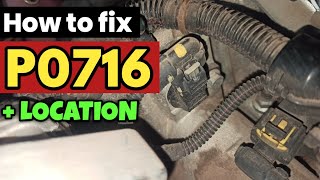
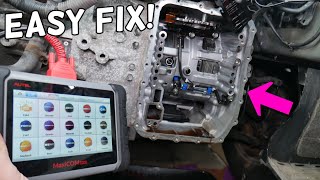
The Input/Turbine Speed Sensor is located on the transmission. On many vehicles, it mounts externally near the bell housing. On others (like many Hyundai/Kia and Chrysler models), it sits internally, requiring transmission oil pan removal to access.
What's the difference between the input and output speed sensor?
The input speed sensor (TSS) measures the speed of the shaft coming from the engine's torque converter. The output speed sensor (OSS) measures the speed of the shaft going out to the wheels. The computer compares both to calculate gear ratios and detect slippage.
How much does it cost to fix P0716?
Costs range from $115 to $450 for an external sensor replacement or wiring repair. Internal sensor replacements cost $400 to $700 due to higher labor. Severe cases requiring a transmission rebuild exceed $3,000.
Can P0716 cause my car not to start?
No. P0716 relates to transmission operation while the engine is running and does not prevent the engine from starting.
Is fuel pressure related to a P0716 code?
No. P0716 is strictly a transmission input speed sensor circuit code. Fuel pressure has no direct relationship to this fault.
Key Takeaways
- Code P0716 indicates an erratic transmission input speed sensor signal, most often fixed by replacing a $25-$150 sensor or repairing a damaged wiring harness.
- Driving with P0716 causes harsh shifting and limp mode, which destroys internal transmission clutches and turns a $200 repair into a $3,000+ rebuild within weeks.
- Before replacing any parts, check your transmission fluid for metal shavings and search for manufacturer Technical Service Bulletins (TSBs), as a $150 software update fixes this code on many Honda and Acura models.
- Diagnose the exact failure point by using an OBD-II scanner to monitor live data while performing a 'wiggle test' on the sensor's wiring harness to expose hidden electrical shorts.
Helpful Videos


The information in this article is provided for general reference and educational purposes only. Vehicle specifications, procedures, and part compatibility can vary by production date, trim level, and region. Always consult your vehicle's factory service manual and verify part numbers before purchasing or performing repairs. Safety-critical components such as airbags, seat belts, and braking systems should be installed by a qualified professional.
- 🎬 Helpful Videos
- What Does P0716 Mean?
- Can I Drive With P0716?
- Common Causes
- Symptoms
- Diagnostic Flowchart
- Common Fixes & Costs
- DIY vs Professional
- Used vs. New Parts: Buying Guide
- What Happens If You Wait — Timeline
- Cost of Not Fixing It
- Diagnosis Steps
- When This Code Triggers (Freeze-Frame Conditions)
- Related Codes
- Climate & Environmental Factors
- How to Talk to a Mechanic About This Code
- Where to Take It: Dealer vs Independent vs Chain
- When to Walk Away From the Repair
- What Scan Tool You Need for This Code
- How to Clear the Code After You Fix It
- Will This Fail Emissions / State Inspection?
- Most Commonly Affected Vehicles
- Manufacturer-Specific Notes
- Real Owner Stories
- 2011 Chevrolet Corvette GS A6 - Intermittent Limp Mode
- 2011 Hyundai Genesis Coupe 2.0T - P0716 Returns After Transmission Replacement
- 2009 Honda Accord - Intermittent Limp Mode and Multiple Warning Lights
- How to Prevent This Code From Triggering
- Frequently Asked Questions
- What is the most common misdiagnosis for a P0716 code?
- What's the difference between P0716, P0715, and P0717?
- I replaced the sensor but the P0716 code came back. What now?
- Can low transmission fluid cause a P0716 code?
- Where is the P0716 sensor located?
- What's the difference between the input and output speed sensor?
- How much does it cost to fix P0716?
- Can P0716 cause my car not to start?
- Is fuel pressure related to a P0716 code?
- Key Takeaways
- 🎟️ Get 5% Off