

P0771 on 2004-2010 Toyota Sienna: Shift Solenoid 'E' Failure Causes and Fixes
P0771 on a 2004-2010 Sienna indicates a 'Stuck Off' fault with Shift Solenoid 'E' (also known as SR). This solenoid is critical for proper gear engagement. The most common fix is replacing the faulty solenoid inside the transmission pan. Always check fluid level and condition first, as low or dirty fluid can cause identical symptoms. 2004-2006 models use Toyota T-IV fluid, while 2007-2010 models use Toyota WS fluid.
- P0771 means Shift Solenoid 'E' is stuck and not working, causing poor shifting.
- Always start by checking the transmission fluid level and condition; low or dirty fluid is a common and easy-to-fix cause.
- The most likely repair is replacing the faulty Shift Solenoid 'E' inside the transmission oil pan.
- While replacing the solenoid, it is highly recommended to also replace the transmission filter and pan gasket.
- Ignoring this code can lead to transmission overheating and severe internal damage, so address it promptly.
What's Unique About the 2004-2010 Toyota Sienna
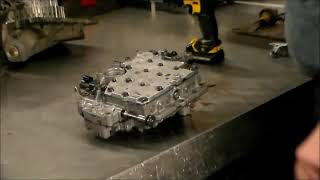
The 2004-2010 Sienna uses the U151E (FWD) or U151F (AWD) 5-speed automatic transmission. This transmission is known for having solenoids that can become problematic 🎬 See a breakdown of common problems with the U151 transmission. with age and mileage, leading to various shifting issues. While P0771 specifically points to solenoid 'E' (SR), owners often experience harsh or flared shifts between other gears as well, sometimes without a code. The issue is typically not the computer but the mechanical or hydraulic function of the solenoid itself, often due to internal wear or contamination from aging fluid. A key distinction is the transmission fluid: 2004-2006 models with the 3.3L engine require Toyota Type T-IV fluid, whereas the 2007-2010 models with the 3.5L engine use the synthetic Toyota WS (World Standard) fluid.
Symptoms You May Notice
- Check Engine Light is on
- Harsh, jerky, or delayed shifts, particularly into 4th or 5th gear
- Transmission slipping between gears or feeling like it's in neutral during a shift
- Vehicle stuck in one gear or in 'limp mode' (often 3rd gear)
- Failure to shift into higher gears, like overdrive
- Reduced fuel economy
- Transmission overheating
- Inability to accelerate past a certain speed (e.g., 50 mph) as the transmission won't upshift
- Replacing the entire transmission when only a single solenoid is at fault.
- Replacing the TCM/ECM when the problem is a simple wiring issue or a faulty solenoid.
- Using the wrong type of transmission fluid (e.g., WS in a T-IV transmission or vice-versa), which can cause shifting problems.
Most Likely Causes
- Faulty Shift Solenoid 'E' (SR) 🔴 High Probability The solenoids in the U151E/F transmission are a known failure point as the vehicle ages. Internal components can wear out, or the solenoid can become clogged with debris from the transmission fluid, causing it to stick.
How to confirm: A mechanic can use a professional scan tool (like Toyota's Techstream) to command the solenoid on and off to test its response. The solenoid's internal resistance can also be checked with a multimeter after removing the transmission pan; it should be between 11-15 Ohms at 68°F (20°C). A click should be heard when 12V power is applied directly to the solenoid.
Typical fix: Replace the faulty shift solenoid. This involves draining the fluid, dropping the transmission pan, and replacing the solenoid on the valve body.
Est. part cost: $50-$250 - Low or Dirty Transmission Fluid 🟡 Medium Probability Transmission fluid degrades over time, losing its lubricating properties and collecting clutch material and metal shavings. If not changed at recommended intervals (Toyota suggests every 60k-100k miles, but many experts recommend 20k-40k), this dirty fluid can clog the small passages within the solenoids and valve body.
How to confirm: Check the transmission fluid dipstick (if equipped). The fluid should be at the correct level and appear bright red or pink. If it is dark brown, black, or smells burnt, it is contaminated and needs to be changed. Note the correct fluid type: Type T-IV for 2004-2006 and WS for 2007-2010.
Typical fix: Perform a transmission fluid drain-and-fill. In severe cases, a full fluid flush may be needed, along with replacing the transmission filter.
Est. part cost: $60-$150 for fluid and filter - Clogged Transmission Filter ⚪ Low Probability The filter can become saturated with debris from old fluid, restricting flow and causing pressure issues that can trigger solenoid performance codes.
How to confirm: The filter is located inside the transmission pan. It must be visually inspected upon removal. If it is dark and full of sediment, it is clogged.
Typical fix: Replace the transmission filter and perform a fluid drain-and-fill. This is typically done at the same time as a solenoid replacement.
Est. part cost: $20-$50 for the filter
Rare But Worth Checking
- Wiring or Connector Issues: The wiring harness leading to the transmission or the connector at the solenoid itself can become damaged, corroded, or loose, causing an intermittent electrical connection.
- Faulty Transmission Control Module (TCM) or Engine Control Module (ECM): While extremely rare, the computer that controls the transmission can fail. This is almost never the root cause and other possibilities should be exhausted first. A faulty TCM driver may fail to send the 12V signal to the solenoid.
- Internal Valve Body or Transmission Failure: If the fluid is heavily contaminated with metal debris, it could indicate a more serious internal failure of clutches or other components, which created the debris that clogged the solenoid. In this case, replacing the solenoid alone will not be a long-term fix.
Diagnosis Steps
- Check the transmission fluid level and condition. Ensure the correct fluid type is being used (T-IV for '04-'06, WS for '07-'10). If low, top it off. If dark, burnt, or gritty, a fluid and filter change is the first step.
- Scan the vehicle for any other pending or active trouble codes to see if other systems are affected. Troubleshoot other codes first.
- Using a professional scan tool (like Toyota Techstream), observe the live data for solenoid commands and transmission gear state.
- Perform an active test with the scan tool to command Shift Solenoid 'E' (SR) on and off, listening for a click and watching for a change in status.
- If the solenoid does not respond, drain the transmission fluid and remove the oil pan to access the valve body.
- Inspect the fluid in the pan for excessive metal shavings or clutch material, which would indicate a larger mechanical problem.
- Disconnect and test the resistance of Shift Solenoid 'E' with a multimeter. A reading outside the 11-15 ohm range at 68°F (20°C) indicates a failed solenoid.
- Test the solenoid's mechanical function by applying 12V from the battery to its terminals and listening for a distinct click.
- Inspect the wiring and connector to the solenoid for any signs of corrosion, damage, or loose pins.
- If the solenoid and wiring test good, the issue may lie within the valve body's hydraulic passages or, rarely, the TCM/ECM.
Parts You'll Likely Need
- Automatic Transmission Shift Solenoid 'E' (SR)
(OEM #35230-33010 (Interchanges with other part numbers, verification by VIN is recommended))— This is the component directly identified by the P0771 code as being stuck or performing incorrectly. It is the most direct and common fix.
Trusted brands: Genuine Toyota, Aisin, Rostra
OEM price range: $200-$300
Aftermarket price range: $50-$150 - Automatic Transmission Fluid
(OEM #Toyota Type T-IV (for 2004-2006) or Toyota ATF WS (for 2007-2010))— New fluid is required when replacing the solenoid, as the old fluid must be drained to access the pan. Using fresh, correct-spec fluid is critical for transmission health.
Trusted brands: Genuine Toyota, Idemitsu (OEM supplier), Aisin (OEM supplier), Valvoline MaxLife ATF (check compatibility)
OEM price range: $10-$15 per quart
Aftermarket price range: $7-$12 per quart - Automatic Transmission Filter Kit
(OEM #35330-08010 (or kit equivalent))— Since the transmission pan is removed for the solenoid replacement, it is best practice to also replace the filter and pan gasket at the same time.
Trusted brands: Genuine Toyota, Wix, ATP
OEM price range: $40-$70
Aftermarket price range: $20-$40
Related Codes That Often Appear With This One
- P0741 — Torque Converter Clutch Circuit Performance or Stuck Off. This code often appears with solenoid codes as they share the same hydraulic system and can be affected by the same fluid quality issues.
- P0986 — Shift Solenoid 'E' Control Circuit High. This is an electrical code for the same solenoid, indicating a short circuit to power, which could be caused by a wiring issue or an internal solenoid failure.
Platform-Specific Known Issues
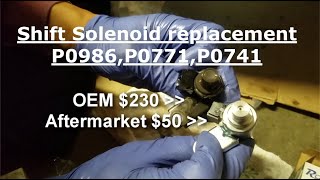
- Owner Experience Replacing Solenoid: A YouTube video shows an owner of a 2005 Sienna with codes P0986, P0771, and P0741 successfully resolving the issue by replacing the 'E' (SR) and 'S4' solenoids. The symptoms were the transmission slipping or failing to shift while driving. After replacement, the owner noted that the transmission shifting felt strong and the problem w
Mechanic-Grade Diagnostic Values
- Shift Solenoid 'E' (SR) Resistance — expected: 11 to 15 Ω at 20°C (68°F). Failure: A reading outside this range indicates a faulty solenoid coil.
- Scan Tool Live Data: Turbine Speed / Output Speed Ratio — expected: When commanding a 4-5 upshift, the ratio should change from ~0.93-1.07 (in 4th gear) to ~0.65-0.79 (in 5th gear).. Failure: If the ratio fails to change to the 5th gear range when the shift is commanded, it indicates the shift did not occur mechanically.
- ECM Ground Circuit Voltage Drop — expected: Less than 0.1 Volts.. Failure: On problematic 2007 Siennas, readings of 0.2V to 0.4V have been found at pin 35 of the E5 connector, indicating high resistance that can cause shifting problems.
- Solenoid Command Voltage at ECM — expected: A steady 12V signal at the corresponding ECM pin when the solenoid is commanded ON.. Failure: A fluctuating or zero voltage reading suggests a fault in the ECM's output driver.
Scan Tool Commands That Help
- Toyota Techstream / Intelligent Tester: Active Test: Shift — This is a critical diagnostic step. It allows a technician to manually command the transmission to shift up or down while driving (below 31 mph / 50 km/h). By comparing the commanded gear on the scan tool to the actual gear reported by speed sensors, you can definitively confirm if Solenoid 'E' (SR) is failing to engage 5th gear when ordered by the ECM.
- Toyota Techstream / Intelligent Tester: Reset Memory (Transmission Adaptation) — This should be performed after replacing a solenoid or valve body. The ECM learns and adapts to the wear and response time of old components. Failing to reset the adaptations can cause continued harsh or incorrect shifting even with new parts, as the computer is still applying old compensation values.
Wiring & Ground Locations
- ECM Connector E5, Pin 35 — On the Engine Control Module (ECM) for the 2007 Toyota Sienna.. This specific pin is a ground circuit. A technical article noted that intermittent shift problems, even after checking other components, were traced back to high resistance on this specific ground pin. Running a redundant ground from this wire to the chassis resolved the issue.
- Ground Points EB and EC — In the engine bay, these are the primary ground points for the transmission wiring harness on a 2007 Sienna.. These are the first places to check for corrosion or looseness when diagnosing any electrical transmission code. A poor ground here can cause a variety of solenoid performance issues.
- Solenoid Connector (at Valve Body) — Inside the transmission oil pan, connected directly to the Shift Solenoid 'E' (SR) on the valve body.. This is the final connection point. The connector itself or the pins can become contaminated with fluid or debris, or the lock tab can break, leading to a poor connection that mimics a failed solenoid.
Real Owner Repair Stories
- Transmission specialist Gary Ferraro on YouTube (2005 Lexus RX330 (uses the same U151E transmission)) — General shifting problems, including flared shifts and slide-bumps, often caused by solenoids hanging up.
❌ Tried (didn't work) Cleaning and reusing the original solenoids. Even if they pass a bench test (click test), they can still hang up under real-world temperature and pressure., Using rebuilt valve bodies. The source reported going through four different rebuilt valve bodies from a supplier before getting one that worked correctly, with each one introducing a different shifting problem (delayed engagement, chatter, flares).
✅ What actually fixed it Replacing the problematic solenoids (SL1, SL2, SL3, and SLT) with new parts during an overhaul, and performing a 'Reset Memory' function with a scan tool to clear the old adaptive shift values.
"I Checked Everything" — The Actual Cause
- A common scenario for the U151E/F transmission is when the solenoid passes basic bench tests (resistance is within spec, and it clicks when 12V is applied) but still causes the P0771 code under driving conditions. The internal spool valve can become worn or contaminated with fine debris, causing it to hang up or move slowly only when hot fluid is flowing under pressure. Many technicians have learned to replace the solenoid if it's the prime suspect, even if it passes the bench test.
- The solenoid and its direct wiring may test perfectly, but the code persists. The actual cause can be a high-resistance ground connection further up the circuit at the ECM itself (e.g., connector E5, pin 35). This fault is often missed because technicians focus their checks at the transmission and its main grounds, not at the control module.
OEM Part Supersession History
35230-33010→35230-33010 (current)— This part number remains current for the application.
Heads up: This part is listed for a wide range of Toyota/Lexus models with U150/U151/U250 transmissions, including Avalon, Camry, Highlander, and Sienna. While it is the correct part for Solenoid 'E' (SR), always verify fitment with the vehicle's VIN as different solenoids on the valve body look similar but are not interchangeable.
Model Year Variations Within This Range
- 2004-2006 (3.3L 3MZ-FE Engine): These models require Toyota Type T-IV transmission fluid. Experts recommend a drain-and-fill every 20,000-30,000 miles for maximum longevity, which is more frequent than the manufacturer's schedule.
- 2007-2010 (3.5L 2GR-FE Engine): These models use the synthetic Toyota World Standard (WS) ATF. This fluid is not compatible with T-IV. Experts recommend a drain-and-fill every 40,000 miles. These later models are also where specific ECM ground issues have been documented.
Diagnostic Flowchart
Other Known Issues on This Vehicle
Issues unrelated to this code that are worth knowing about as an owner of this generation:
- Cracked and/or Sticky/Melting Dashboard 🟠 Medium — Very common, especially in regions with high heat and humidity. Can occur at any mileage. (Ref: Toyota Warranty Enhancement Program ZE6 (also ZLD) extended warranty coverage for this issue.)
- Power Sliding Door Cable Failure 🟠 Medium — Common after 70,000+ miles. The cable that pulls the door open and closed frays and eventually snaps. (Ref: TSB BO013-07 and TSB 0085-09 address this issue. Aftermarket repair kits are widely available.)
- VSC and TRAC OFF Lights Illuminated 🟡 Low — Frequently reported. Often caused by worn steering rack bushings, which create play in the steering and cause the yaw/steering angle sensor to report conflicting data.
- Ruptured Rubber Engine Oil Cooler Hose (V6 models) 🔴 High — A known issue on the 3.3L and 3.5L V6 engines where the rubber section of an oil line can burst, leading to rapid oil loss and potential engine seizure. (Ref: Many owners proactively replace the rubber line with an all-metal line (Part No. 15767-31020) to prevent failure.)
- Shift Lock Solenoid Failure 🟠 Medium — Common enough to trigger a recall. The failure allows the shifter to be moved out of Park without depressing the brake pedal. (Ref: Toyota issued a recall in 2013 to replace the shift lock solenoid assembly.)
Used vs. New Parts: Buying Guide for This Vehicle
When a used part is the smart pick: For this specific repair, sourcing a used part is generally not recommended. While a single used solenoid from a low-mileage donor might work as a temporary, budget-conscious fix, the high failure rate of these components makes it a significant gamble.
Donor-vehicle mileage cap: roughly under 80000 miles for the part to have meaningful remaining life.
What to inspect on the donor part:
- Verify the donor vehicle's mileage is under 80,000 miles, as failures become common after this point.
- Ask to see the transmission fluid from the donor car. If it is dark, burnt, or contains metallic particles, reject the part immediately.
- Inspect the connector pins for any corrosion or damage.
OEM-only on this vehicle (don't cheap out):
- Complete Valve Body Assembly: Strongly recommend OEM/new. Professional rebuilders report extremely high failure rates and quality control issues with aftermarket or even some remanufactured valve bodies for the U151E.
Aftermarket brands forum-validated for this vehicle:
- Aisin (OEM supplier)
- Rostra
Brands owners have reported issues with on this vehicle:
- Unbranded or generic 'white box' solenoids and valve bodies from online marketplaces are very high-risk due to inconsistent quality control.
Real Owner Stories
Aggregated from forums and TSBs cited above. Mileages and costs reflect what owners reported in those sources.
2005 Toyota Sienna
Symptoms: Transmission was slipping or failing to shift while driving, triggering check engine light with codes P0986, P0771, and P0741.
What fixed it: The owner successfully resolved the issue by replacing the 'E' (SR) and 'S4' shift solenoids located on the valve body.
Source hint: YouTube - 2005 Toyota Sienna Transmission Solenoid Valve replacement / p0986 p0771 p0741: https://www.youtube.com/watch?v=R9sN1u0f_w8
Related OBD-II Codes
Frequently Asked Questions
What type of transmission fluid should I use for my 2004-2010 Sienna when addressing a P0771 code?
How can I test the Shift Solenoid 'E' (SR) myself on my Sienna?
My Sienna has codes P0771, P0986, and P0741 all at once. Are they related?
While fixing the P0771 issue, is there anything else I should inspect on my V6 Sienna?
What other vehicles use the same transmission as my Sienna and might have this P0771 problem?
Is a fluid change enough to fix P0771, or do I need to replace parts?
Helpful Videos
We Have This Part in Stock


The information in this article is provided for general reference and educational purposes only. Vehicle specifications, procedures, and part compatibility can vary by production date, trim level, and region. Always consult your vehicle's factory service manual and verify part numbers before purchasing or performing repairs. Safety-critical components such as airbags, seat belts, and braking systems should be installed by a qualified professional.
- Toyota Sienna:
- 🎬 Helpful Videos
- 🛍️ Shop This Part
- What's Unique About the 2004-2010 Toyota Sienna
- Symptoms You May Notice
- Most Likely Causes
- Rare But Worth Checking
- Diagnosis Steps
- Parts You'll Likely Need
- Related Codes That Often Appear With This One
- Platform-Specific Known Issues
- Mechanic-Grade Diagnostic Values
- Scan Tool Commands That Help
- Wiring & Ground Locations
- Real Owner Repair Stories
- "I Checked Everything" — The Actual Cause
- OEM Part Supersession History
- Model Year Variations Within This Range
- Diagnostic Flowchart
- Other Known Issues on This Vehicle
- Used vs. New Parts: Buying Guide for This Vehicle
- Real Owner Stories
- 2005 Toyota Sienna
- Related OBD-II Codes
- Frequently Asked Questions
- 🎟️ Get 5% Off