

OBD-II Code P0986: Shift Solenoid 'E' Control Circuit High
The Ultimate Guide to What P0986 Means, Why It Triggers, and How to Fix It for Good
- P0986 is a hard electrical fault indicating a short-to-power in the Shift Solenoid 'E' circuit, not a mechanical transmission failure.
- Inspect the external transmission wiring harness first; chafed wires shorting to a 12V power source cause over 40% of P0986 codes.
- Never replace the shift solenoid without first testing its resistance (typically 10-40 ohms) at the main transmission connector to rule out external wiring issues.
- Driving with an active P0986 code forces the transmission into limp mode, risking $2,500+ in burnt clutch packs and internal damage within 100 miles.
What Does P0986 Mean?

P0986 means the Powertrain or Transmission Control Module (PCM/TCM) detects a constant high voltage on the 'Shift Solenoid E' control circuit. This solenoid acts as an electronic gate, directing transmission fluid to change gears. The constant high voltage prevents the TCM from commanding it correctly, leading to immediate shifting failures.
Technical definition: The official SAE/OBD-II definition is "Shift Solenoid 'E' Control Circuit High". This indicates the TCM registers a continuous voltage in the control circuit for shift solenoid 'E' that remains near battery voltage (12V) when it should be pulled to ground (0V). This is a hard electrical fault, specifically pointing to a short-to-power in the circuit or a failed solenoid coil.
Can I Drive With P0986?
No — Do Not Drive. Do not drive. The transmission gets stuck in one gear ('limp mode'), shifts harshly, or fails to engage gears, creating a severe safety hazard. Driving for more than a few miles causes cascading internal damage to clutch packs and the valve body, turning a $200 wiring repair into a $3,000 transmission rebuild.
Common Causes

- Shorted or Damaged Wiring Harness (Very Common) — Wires in the transmission harness frequently melt from exhaust heat, chafe against the chassis, or degrade internally. If the solenoid 'E' control wire shorts to a nearby 12V power wire, it creates a constant high voltage signal.
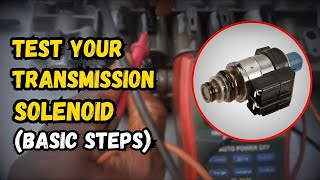
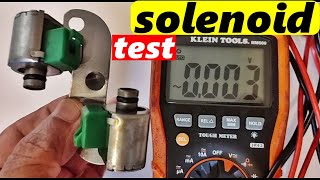
- Faulty Shift Solenoid 'E' (Common) — The solenoid coil fails internally. 🎬 Watch: A quick guide on how to test a transmission solenoid. An electrical short inside the solenoid's electromagnetic winding causes it to register incorrect voltage and fail resistance tests, triggering the code.
- Corroded or Damaged Connector Pins (Common) — Moisture intrusion at the main transmission wiring connector causes corrosion, bridging pins together and creating a short-to-power. Bent or broken pins from a recent service also cause this fault.
- Metallic Debris Contamination (Less Common) — Severe contamination with metallic debris from failing components (like a torque converter) creates electrical shorts across the sensitive contacts within the valve body and lead frame.
- Internal TCM/PCM Driver Failure (Rare) — The computer controlling the transmission fails internally. A burnt driver circuit within the TCM gets stuck in the 'on' position, sending a constant high voltage signal to the solenoid even when the wiring is perfect.
Symptoms
- Harsh, Delayed, or Missed Shifts — The vehicle slams into gear, hesitates violently before shifting, or completely fails to shift into the specific gear controlled by solenoid 'E'.
- Check Engine Light (MIL) is On — The Malfunction Indicator Lamp illuminates immediately when the TCM stores the P0986 fault code.
- Transmission Slipping — Engine RPMs flare up between shifts without a corresponding increase in vehicle speed, indicating the clutches are not fully engaging.
- Transmission Stuck in Gear (Limp Mode) (also visible on scanner) — The TCM commands the transmission into a single 'safe' gear (usually 2nd or 3rd) to prevent destruction. Speed is severely limited, and acceleration is sluggish.
Diagnostic Flowchart

Tap your situation to follow the diagnostic path that matches what you're seeing on this code.
Common Fixes & Costs
- Repairing Damaged Wiring or Connector Pins — Parts: $10-$50, Labor: $150-$300, ~1.5 hr book time (Intermediate)
- Replacing the Shift Solenoid 'E' — Parts: $50-$150, Labor: $250-$500, ~2.5 hr book time (Professional)
- Replacing the Valve Body or Lead Frame — Parts: $350-$700, Labor: $350-$600, ~3.5 hr book time (Professional)
- Replacing the Transmission Control Module (TCM) — Parts: $500-$1,000, Labor: $200-$400, ~1.5 hr book time (Professional)
DIY vs Professional
- Repairing Damaged Wiring or Connector Pins — Beginner:
Tools: Digital Multimeter, wiring diagram, wire strippers, crimpers, heat shrink tubing. - Replacing the Shift Solenoid 'E' — Beginner:
Tools: Socket set, torque wrench, drain pan, new fluid, filter/gasket. - Replacing the Valve Body or Lead Frame — Beginner:
Tools: Extensive socket set, inch-pound torque wrench, shop manual, alignment tools.
Used vs. New Parts: Buying Guide
When a used part is worth it: Only consider a used valve body or solenoid pack for a high-mileage vehicle (>150k miles) where a new OEM part exceeds the car's value. The donor vehicle must have under 70,000 miles and a verified history.
Donor-vehicle mileage cap: roughly under 70000 miles for the part to have meaningful remaining life.
Donor quality checklist:
- Verify the donor vehicle was not scrapped due to a front-end collision that damaged the transmission cooler.
- Match the part number exactly; interchangeable parts have subtle calibration differences.
- Inspect the part for sludge or burnt fluid smell.
Decision logic:
- If The problem is a single, externally accessible solenoid. → Buy a new OEM or high-quality aftermarket solenoid. Used is not worth the labor savings.
- If The fix requires a complete valve body or integrated lead frame. → Purchase a new or professionally remanufactured part with a warranty due to the high labor costs of installation.
- If Vehicle is high-mileage and budget is the absolute primary concern. → A used part is a gamble but provides a temporary solution. Expect a significantly shorter lifespan.
Warranty tradeoff: Salvage yard parts offer a 30-day warranty covering only the part, meaning you pay labor twice if it fails. Remanufactured parts offer 1-year to lifetime warranties.
Worst-case if a used part fails: $1,200
What Happens If You Wait — Timeline
- Immediate (First Drive): Code P0986 sets. The transmission enters limp mode, locking into 2nd or 3rd gear. Harsh shifting and poor acceleration are immediate. (MPG impact: 15-30%% · Added cost: $0)
- 0-100 miles: Driving with high line pressure and harsh shifts causes accelerated wear on transmission clutch packs. The transmission begins to overheat. (MPG impact: 15-30%% · Added cost: $200 - $800)
- 100-500 miles: Overheating breaks down the transmission fluid. Burnt clutch material circulates, risking damage to the valve body and other solenoids. (MPG impact: 20-35%% · Added cost: $800 - $1,800)
- 500+ miles: Catastrophic failure. Burnt clutches, damaged seals, and a contaminated valve body require a complete transmission rebuild. (MPG impact: N/A% · Added cost: $2,500 - $5,000+)
Cost of Not Fixing It
- Immediate (0-100 miles): The transmission locks into limp mode. Harsh shifting creates a severe safety hazard and accelerates wear on internal clutch packs. (Added cost: $0)
- Short-Term (100-500 miles): High line pressure and slipping clutches burn the transmission fluid. Varnish forms on the valve body, and clutch material contaminates the entire system. (Added cost: $500 - $1,500)
- Long-Term (500+ miles): Catastrophic internal failure. Burnt clutches and a destroyed valve body require a complete transmission rebuild or replacement. (Added cost: $2,500 - $5,000+)
Diagnosis Steps
- Scan for Codes and Review Live Data
Use a professional OBD-II scanner to confirm P0986. Clear the codes and test drive. An immediate return signals a hard electrical fault. View live data PIDs for 'Shift Solenoid E Circuit Voltage' to confirm it is stuck high (near 12V).
Tools: Professional OBD-II Scanner (Beginner) - Inspect External Wiring and Connectors
Visually inspect the transmission wiring harness for chafing, melting, or rodent damage. Disconnect the main transmission connector and meticulously check for corrosion, moisture, or bent pins bridging the connections.
Tools: Flashlight, Safety Glasses, Electrical Contact Cleaner (Intermediate) - [PRO TIP] Test Solenoid Resistance at Transmission Connector
Identify the pins for shift solenoid 'E' at the main transmission connector using a wiring diagram. Measure the resistance between the solenoid's power and ground pins. A normal reading is 10-40 ohms. A reading of 'OL' or near zero ohms proves the fault is internal (bad solenoid or internal harness).
Tools: Digital Multimeter, Wiring Diagram (Advanced) - [PRO TIP] Commanded Solenoid Voltage Test
Command solenoid 'E' ON and OFF using a bidirectional scanner while backprobing the control circuit wire at the TCM. When commanded ON, voltage must drop to near 0V. If it remains at 12V, you have confirmed a short-to-power in the external harness or a dead TCM driver.
Tools: Professional OBD-II Scanner, Digital Multimeter, Backprobe Kit (Advanced) - Access Internal Components
If external tests point to an internal short, drain the transmission fluid and remove the oil pan to access the valve body, solenoids, and internal wiring harness.
Tools: Socket Set, Drain Pan, Torque Wrench, Fluid Catch (Advanced) - Test Solenoid Directly
Disconnect the solenoid 'E' connector inside the pan. Measure resistance directly at the solenoid pins. An out-of-spec reading confirms a faulty solenoid. If the solenoid tests good, the internal wiring harness (lead frame) is shorted.
Tools: Digital Multimeter (Advanced)
When This Code Triggers (Freeze-Frame Conditions)
- Transmission Commanded Gear: Varies (e.g., 4th or 5th) (Freeze frame data shows the TCM attempting to command a specific gear, while the high voltage on the 'E' solenoid circuit blocks the shift execution.)
- Engine Coolant Temp: 180-210°F (The fault frequently triggers once the vehicle reaches full operating temperature and the transmission fluid thins, exposing internal shorts.)
- Vehicle Speed: 30-55 MPH (P0986 triggers during city or highway cruising speeds corresponding to the shifts that utilize solenoid 'E'.)
Related Codes
- P0985 — The direct opposite code: 'Shift Solenoid E Control Circuit Low'. P0986 points to a short-to-power, while P0985 points to an open circuit (broken wire) or a short-to-ground.
- P0984 — 'Shift Solenoid E Control Circuit Range/Performance'. P0986 is a hard electrical fault, while P0984 is a logic fault indicating the TCM sees incorrect voltage for the current state, often due to a sticking solenoid.
- P0750 - P0774 — Codes for other shift solenoids (A, B, C, D). If P0986 appears alongside these, suspect a systemic issue like a shared power wire short, a bad main connector, or a failing TCM.
- P0700 — A generic informational code meaning 'Transmission Control System Malfunction.' It simply tells the engine computer to turn on the Check Engine Light because the TCM stored P0986.
Climate & Environmental Factors
- Heat and Thermal Cycling: Extreme exhaust heat makes wiring insulation brittle and prone to cracking. Repeated thermal cycling degrades electrical connections within sealed units like Ford's lead frame.
- Humidity and Moisture: Moisture penetrates external wiring harness connectors, causing corrosion on the pins. This bridges circuits and creates the short-to-power condition triggering P0986.
- Vibration: Engine vibration causes wiring harnesses to chafe against the chassis. This wears through the insulation, allowing the solenoid control wire to short against a 12V power wire.
How to Talk to a Mechanic About This Code
Say this: "I have a P0986 code, which indicates a Shift Solenoid 'E' Control Circuit High. I need a diagnostic appointment to test the solenoid resistance, check the external wiring harness for a short-to-power, and verify the TCM driver. Please do not replace any parts without confirming the electrical fault first."
This proves you understand P0986 is an electrical fault. It forces the shop to perform a logical diagnostic sequence (wiring, solenoid, TCM) rather than blindly replacing expensive components.
Avoid saying:
- 'My transmission is acting weird.'
- 'My check engine light is on, can you look at it?'
- 'Just replace the shift solenoid.'
Questions to ask before authorizing the repair:
- What were the exact results of the solenoid resistance test?
- Did you test the external wiring harness for a short-to-power? What did you find?
- If you recommend a solenoid replacement, can you guarantee the wiring and TCM tested good?
Where to Take It: Dealer vs Independent vs Chain
- Dealer:
Recommended only if your vehicle is under warranty or has a well-documented recall program.
Best for: Vehicles under powertrain warranty., Known manufacturer-specific issues (e.g., Ford lead frame recalls)., Repairs requiring proprietary TCM programming.
Downsides: Highest labor rates., Defaults to replacing large, expensive assemblies instead of repairing wiring. (Typical cost: +50% vs. baseline) - Chain Shop:
AVOID. Chain shops are not equipped to perform nuanced electrical diagnostics.
Downsides: Technicians lack complex transmission diagnostic skills., High pressure to sell unnecessary complete transmission replacements. (Typical cost: -10% vs. baseline)
When to Walk Away From the Repair
If the estimated repair cost exceeds 40-50% of the car's private-party value, sell or trade it in.
- Car worth $4500, fix is $2800: Walk away. The repair cost exceeds 50% of the car's value.
- Car worth $12000, fix is $850: Fix it. The repair is well below the threshold and restores the vehicle's value.
- Car worth $3000, fix is $600: Borderline, but likely worth fixing to keep the car on the road.
What Scan Tool You Need for This Code
Minimum: A scanner that reads manufacturer-specific transmission codes and views live data PIDs from the Transmission Control Module (TCM).
A $20 generic reader only shows the P0986 code. It cannot see live circuit voltage or the commanded state of the solenoid, leaving you guessing between a wiring issue and a bad TCM.
Budget: BlueDriver Pro Scan Tool (~$100) — Reads and clears transmission codes. Displays basic live data from the TCM, but lacks bidirectional control to test the solenoid.
Mid-range: Foxwell NT510 Elite (~$180) — Offers full TCM diagnostics and bidirectional control. Allows you to command the solenoid on and off to test its function and the circuit.
Professional: Autel MaxiCOM MK808S (~$450) — Provides dealer-level diagnostics. Full bidirectional control, graphs multiple PIDs simultaneously, and performs advanced TCM resets and adaptations.
Rent vs buy: Free loaner tools from auto parts stores are insufficient for P0986. Investing in a mid-range tool like the Foxwell NT510 Elite is the most cost-effective choice to properly test the circuit.
How to Clear the Code After You Fix It
- Use an OBD-II scan tool to clear P0986 and any related transmission codes.
- Perform the manufacturer-specific transmission fluid fill procedure to ensure exact levels.
- Execute the transmission drive cycle to allow the TCM to relearn shift adaptations.
Drive cycle (~20 minutes): Cold start and idle in Park for 3 minutes. Drive normally, allowing the transmission to shift through all gears up to 60 mph. Cruise at 60 mph for 5 minutes. Perform three slow coast-downs to a complete stop without braking heavily.
Readiness monitors affected: Transmission Control Module, Comprehensive Component Monitor
Before emissions retest: drive at least 50 miles to fully set monitors.
Watch out for:
- Failing to perform a shift relearn procedure causes harsh shifting even after a successful repair.
- If an intermittent wiring short was not fully repaired, P0986 returns immediately upon hitting a bump.
Will This Fail Emissions / State Inspection?
Yes — this code typically fails an OBD-II emissions inspection.
- California: An active P0986 code results in an automatic smog check failure. All readiness monitors must be set to 'Ready' before a re-test.
- New York: The NYS DMV inspection includes an OBD-II scan. A Check Engine Light with P0986 is an automatic failure.
- Texas: In the 17 Texas counties requiring emissions testing, a vehicle with an illuminated Check Engine Light fails the OBD portion of the inspection.
Most Commonly Affected Vehicles

- Ford F-150, Explorer, Mustang (2011-2020) — Extremely common on 6R80 transmissions due to failures of the molded lead frame containing the internal wiring. Check for Ford Customer Satisfaction Program 19N01.
- Chevrolet Silverado, Cruze, Malibu (2010-2019) — Frequent on 6T40 and 6L80 transmissions. Often caused by a broken wire in the harness or metallic debris from a failing torque converter shorting the solenoid.
- Hyundai Elantra, Sonata, Tucson (2011-2017) — On 6-speed automatics (A6MF1), this code points directly to a faulty solenoid or a burnt internal wiring harness.
- Kia Optima, Sorento, Forte (2011-2018) — Shares transmissions with Hyundai. Diagnosis frequently leads to replacing the solenoid and inspecting the internal harness connector for heat damage.
- Toyota Sienna, Camry, RAV4 (2007-2015) — Often relates to a direct failure of the 'SR' solenoid (Toyota's designation for 'E') or a wiring failure inside the transmission.
- Lexus ES330, LS460 (2004-2014) — Frequently traces to a failure of the 'SR' solenoid or broken pins in the main transmission connector.
- Honda Accord, CR-V, Odyssey (2011-2017) — Strongly indicates an electrical fault. Always check for PCM software updates, as outdated software erroneously sets this code.
- BMW 3-Series, X3, X5 (2008-2015) — Triggered by a fault in the mechatronics unit (combined valve body and TCM) on ZF transmissions, requiring expensive unit replacement.
- Dodge / Ram Ram 1500, Charger, Grand Caravan (2008-2018) — Points to a short in the solenoid pack or the connecting wiring harness. Testing the circuit for a short to voltage is the primary diagnostic step.
Manufacturer-Specific Notes
- Ford: On 6R80 transmissions, solenoids are integrated into a 'molded lead frame'. This entire unit fails frequently. Ford issued Customer Satisfaction Program 19N01, extending the warranty to 10 years/150,000 miles for certain 2011-2013 vehicles.
- Toyota/Lexus: Service manuals refer to Shift Solenoid 'E' as 'Shift Solenoid SR'. Knowing this is critical for identifying the correct component during diagnosis.
- Honda/Acura: Diagnostic procedures emphasize this is strictly an electrical fault. Technicians must check for PCM software updates, as they frequently resolve false P0986 codes without parts replacement.
- Chevrolet/GM: On 6L80 transmissions, catastrophic torque converter failure contaminates the transmission with metallic debris. This debris shorts the shift solenoid, triggering P0986 as a secondary symptom of total failure.
Real Owner Stories
2013 Ford F-150 at 115K miles
Check engine light illuminated, transmission shifted hard from 3rd to 5th gear, and occasionally stuck in 3rd.
What they tried:
- A local shop replaced shift solenoid 'E', but P0986 returned the next day.
Outcome: A transmission specialist diagnosed a failed molded lead frame. The internal wiring on the lead frame had shorted. Replacing the entire lead frame assembly (Part #AL3Z-7G276-D) fixed the issue permanently.
Lesson: On Ford 6R80 transmissions, solenoid codes are almost always caused by the lead frame. Replacing just the solenoid is a wasted repair.
2012 Chevy Cruze at 88K miles
Car went into limp mode with a P0986 code. Shifting was extremely harsh.
What they tried:
- A mechanic quoted a full transmission rebuild for $3,200.
Outcome: A second mechanic inspected the external wiring harness. They found a section rubbed against a chassis bracket, wearing through the insulation and causing a short to a power wire. The mechanic repaired the wires for $250. The code never returned.
Lesson: Always start with a visual inspection of the external wiring harness. It saves you from unnecessary major transmission repairs.
2014 Toyota Camry at 130K miles
P0986 appeared with delayed engagement into Drive and erratic shifts.
What they tried:
- The owner tried a transmission fluid drain and fill, which failed to solve the problem.
Outcome: The owner tested the resistance of the 'SR' solenoid at the transmission connector. The reading was zero ohms, indicating a dead short. They dropped the pan and replaced the single faulty solenoid for under $150 in parts. The car shifted perfectly.
Lesson: Testing resistance from the main connector confirms a bad solenoid before removing the transmission pan, making diagnosis highly efficient.
How to Prevent This Code From Triggering
- Perform regular transmission fluid and filter changes (Every 30,000 to 60,000 miles) — Clean fluid prevents metallic debris from accumulating and shorting out the sensitive electrical contacts on the solenoids and lead frame.
- Install protective wire loom on vulnerable harness sections (Once, during other maintenance) — Wrapping sections of the transmission harness near hot exhaust components prevents insulation from melting, eliminating the primary cause of electrical shorts.
- Ensure the engine's cooling system is in top condition (Annually) — The engine's cooling system cools the transmission fluid. Preventing overheating protects the delicate electrical solenoids from thermal breakdown.
Frequently Asked Questions
What does a shift solenoid actually do?
A shift solenoid is an electronically controlled valve inside your transmission. Your car's computer sends an electric signal to open or close it. This directs high-pressure transmission fluid to engage the clutches and change gears.
Is it safe to drive with code P0986?
No. Your transmission will shift harshly or get stuck in one gear (limp mode), making it unsafe in traffic. Continuing to drive causes rapid internal damage, turning a minor electrical repair into a complete transmission rebuild.
Can I fix P0986 myself?
Only if the cause is an easily accessible external wire or a corroded connector. Most causes require removing the transmission pan to access the solenoid and internal wiring, which is a messy, professional-level job.
Will changing the transmission fluid fix a P0986 code?
No. P0986 indicates a specific electrical short-circuit, not a fluid degradation issue. However, a fluid and filter change is required as part of the repair process when replacing the faulty internal electrical component.
What is 'limp mode'?
Limp mode is a protective feature where the computer locks the transmission into a single gear (usually 2nd or 3rd) to prevent further damage when a serious fault is detected.
My mechanic replaced the solenoid but the code came back. What now?
The fault lies in the wiring, not the solenoid. The issue is a short-to-power in the wiring harness between the TCM and the transmission, or a faulty TCM itself. The harness must be meticulously tested.
What is the difference between code P0986 (High) and P0985 (Low)?
P0986 means the circuit has high voltage when it should be low, indicating a short-to-power. P0985 means the circuit has low voltage when it should be high, indicating a broken wire or short-to-ground.
How much does it cost to fix P0986?
A simple wiring repair costs $150-$350. Replacing a single solenoid costs $300-$650. If the entire valve body or lead frame requires replacement, expect to pay $700-$1,300.
Key Takeaways
- P0986 is a hard electrical fault indicating a short-to-power in the Shift Solenoid 'E' circuit, not a mechanical transmission failure.
- Inspect the external transmission wiring harness first; chafed wires shorting to a 12V power source cause over 40% of P0986 codes.
- Never replace the shift solenoid without first testing its resistance (typically 10-40 ohms) at the main transmission connector to rule out external wiring issues.
- Driving with an active P0986 code forces the transmission into limp mode, risking $2,500+ in burnt clutch packs and internal damage within 100 miles.
Helpful Videos

The information in this article is provided for general reference and educational purposes only. Vehicle specifications, procedures, and part compatibility can vary by production date, trim level, and region. Always consult your vehicle's factory service manual and verify part numbers before purchasing or performing repairs. Safety-critical components such as airbags, seat belts, and braking systems should be installed by a qualified professional.
- 🎬 Helpful Videos
- What Does P0986 Mean?
- Can I Drive With P0986?
- Common Causes
- Symptoms
- Diagnostic Flowchart
- Common Fixes & Costs
- DIY vs Professional
- Used vs. New Parts: Buying Guide
- What Happens If You Wait — Timeline
- Cost of Not Fixing It
- Diagnosis Steps
- When This Code Triggers (Freeze-Frame Conditions)
- Related Codes
- Climate & Environmental Factors
- How to Talk to a Mechanic About This Code
- Where to Take It: Dealer vs Independent vs Chain
- When to Walk Away From the Repair
- What Scan Tool You Need for This Code
- How to Clear the Code After You Fix It
- Will This Fail Emissions / State Inspection?
- Most Commonly Affected Vehicles
- Manufacturer-Specific Notes
- Real Owner Stories
- 2013 Ford F-150 at 115K miles
- 2012 Chevy Cruze at 88K miles
- 2014 Toyota Camry at 130K miles
- How to Prevent This Code From Triggering
- Frequently Asked Questions
- What does a shift solenoid actually do?
- Is it safe to drive with code P0986?
- Can I fix P0986 myself?
- Will changing the transmission fluid fix a P0986 code?
- What is 'limp mode'?
- My mechanic replaced the solenoid but the code came back. What now?
- What is the difference between code P0986 (High) and P0985 (Low)?
- How much does it cost to fix P0986?
- Key Takeaways
- 🎟️ Get 5% Off