

P0771 on 2018-2023 Ford Expedition: Shift Solenoid 'E' Causes and Fixes
Code P0771 on a 2018-2023 Ford Expedition almost always points to a significant issue with the 10-speed 10R80 transmission, often requiring a valve body (main control) replacement or addressing a failed CDF clutch cylinder sleeve, not just a single solenoid. This is a complex, well-documented issue across multiple Ford platforms and is best left to professional technicians familiar with the 10R80.
- P0771 on a 2018-2023 Expedition is a serious code that points to a well-known issue with the 10R80 transmission.
- Do not assume it's just a bad solenoid. The root cause is very likely the transmission's main control (valve body) or another internal component.
- The repair is not a simple DIY job. It requires specialized knowledge and tools and should be handled by a qualified technician familiar with Ford transmissions.
- Reference Ford TSBs like 24-2176 and 22-2428 when discussing the issue with a repair shop, as they outline the official diagnostic and repair procedures.
- Always check the transmission fluid level and condition first, and ensure only Motorcraft MERCON ULV fluid is used.
What's Unique About the 2018-2023 Ford EXPEDITION
The 2018-2023 Expedition uses the Ford 10R80 10-speed automatic transmission, which is notorious for shifting issues and is the subject of multiple class-action lawsuits. Ford has issued numerous Technical Service Bulletins (TSBs) that group P0771 with dozens of other transmission codes, all pointing to the same root causes: sticking valves in the main control (valve body) and a known internal failure of the CDF clutch cylinder sleeve. TSB 24-2176, for example, explicitly lists P0771 and attributes it to potential software issues, sticking valves in the main control, and/or axial movement of the CDF clutch cylinder sleeve. This means P0771 on this specific vehicle is rarely an isolated solenoid failure and almost always signals a more complex, systemic problem with the valve body or other internal transmission parts.
Diagnostic Flowchart
Tap your situation to follow the diagnostic path that matches what you're seeing on this vehicle.
Symptoms You May Notice
- Harsh or abrupt shifts between gears, sometimes with a loud 'clunk'.
- Delayed gear engagement when shifting from Park to Drive or Reverse.
- Transmission slipping or engine RPMs flaring up between shifts.
- Vehicle gets stuck in one gear (limp mode).
- Illuminated Check Engine Light or wrench light.
- Vehicle shudders at low RPMs or feels like it's driving over a rumble strip.
- Delayed or missed shifts, particularly into 4th gear.
- Replacing only the 'E' shift solenoid without addressing the underlying valve body issue. Given the TSBs and known issues with the 10R80, this is unlikely to be a permanent fix.
- Performing a fluid flush without inspecting for the root cause. If the CDF drum or valve body is failing, new fluid will not solve the mechanical or hydraulic problem.
Most Likely Causes
- Faulty Main Control (Valve Body) Assembly 🔴 High Probability The 10R80 transmission is known for having issues with sticking spool valves and internal cross-leaks within the valve body, leading to pressure loss. Multiple Ford TSBs (like 24-2176 and 23-2123) point to overhauling or replacing the valve body as the primary fix for a wide range of shift-related codes, including P0771.
How to confirm: A technician will follow the diagnostic procedure in the TSBs, which involves checking for codes, updating software, and if issues persist, replacing the valve body. Aftermarket companies like Sonnax produce kits specifically to address these valve body leaks.
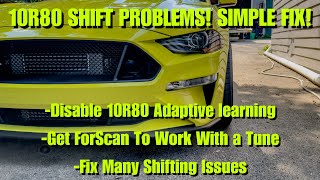
Typical fix: Replacement of the main control valve body assembly, followed by a TCM reprogram with the new 13-digit solenoid strategy and an adaptive learning drive cycle. 🎬 Learn how to manage adaptive learning and shift issues.
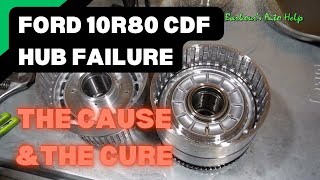
Est. part cost: $800-$1500 - Failed CDF Clutch Cylinder Sleeve 🔴 High Probability This is a well-documented design flaw in earlier 10R80 transmissions. A bushing/sleeve inside the CDF drum can slide out of place, uncovering fluid passages and causing a loss of hydraulic pressure to multiple clutches. This leads to erratic shifting, gear slamming, and can trigger various codes.
How to confirm: This requires significant transmission disassembly to inspect the CDF drum, as outlined in Ford's TSBs. A video teardown shows how the displaced sleeve allows a seal to fail. 🎬 See how the CDF hub fails and the updated fix.
Typical fix: The transmission must be removed and partially disassembled to replace the CDF clutch drum with an updated part (like JL3Z-7H351-B) that has a machined lip or other retention method to prevent the sleeve from moving.
Est. part cost: $200-$400 for the part, but labor is extensive. - Low or Contaminated Transmission Fluid 🟡 Medium Probability While not a design flaw, the complexity and heat generated by the 10R80 can degrade fluid over time. Contamination from internal wear (like the CDF drum issue) can clog valve body passages and solenoids.
How to confirm: Check the transmission fluid level and condition. The fluid should be at the correct level and be bright red (Motorcraft MERCON ULV), not dark brown, black, or smell burnt. Metal shavings are a sign of serious internal wear.
Typical fix: Perform a transmission fluid and filter change. If the fluid is very dirty, it often indicates a larger mechanical problem is present.
Est. part cost: $150-$300 - Faulty Shift Solenoid 'E' ⚪ Low Probability While the code points directly to the solenoid, on the 10R80 it is more often a symptom of a larger valve body or hydraulic pressure problem rather than an isolated solenoid failure. The solenoids are typically replaced as part of the entire valve body assembly.
How to confirm: A technician can test the solenoid's electrical resistance, which should be between 5.0-5.4 ohms at 68°F (20°C). They can also command it on/off with a diagnostic scan tool. However, even if the solenoid tests good, a hydraulic leak elsewhere can prevent it from functioning correctly.
Typical fix: Replace the individual solenoid. However, the standard professional repair is to replace the entire valve body assembly which includes all new solenoids.
Est. part cost: $50-$150 for the solenoid, if available separately.
Rare But Worth Checking
- Wiring Harness or Connector Issue: Damage to the wiring leading to the transmission can mimic a component failure. It's always worth a visual inspection for corrosion or damage before beginning major repairs.
- Faulty Transmission Control Module (TCM): While rare, the TCM itself can fail, causing incorrect signals to be sent to the solenoids. This is usually the last item to be considered after all other possibilities are ruled out.
Diagnosis Steps
- Verify the transmission fluid level and condition. Ensure it is filled with the correct Motorcraft MERCON ULV fluid.
- Use a professional scan tool to check for P0771 and any other related transmission codes. Note all codes present.
- Consult the latest Ford TSBs (like TSB 24-2176 or its successors) for the specific diagnostic path. The procedure often depends on which codes are stored. 🎬 Watch: A professional walkthrough of the 10R80 diagnostic process.
- Check for any available software updates for the Powertrain Control Module (PCM) or Transmission Control Module (TCM) and update if required by the TSB.
- Inspect the transmission wiring harness and connectors for any visible signs of damage, corrosion, or loose connections.
- If directed by the TSB, the next step is typically an overhaul or replacement of the main control (valve body) assembly, followed by programming the new 13-digit solenoid strategy into the TCM.
- If symptoms and codes point towards the CDF drum issue (often involving multiple gear errors), the transmission will need to be removed for internal inspection and repair.
Parts You'll Likely Need
- Transmission Main Control Valve Body Assembly
(OEM #JL3Z-7A100-B (example, part number varies by year/build, always verify with VIN))— This is the most common repair for shift quality issues and solenoid codes on the 10R80 transmission, as recommended by multiple Ford TSBs.
Trusted brands: Motorcraft, Sonnax (offers Zip Kits like 10L80-G1-10R80-ZIP to repair original valve bodies)
OEM price range: $900-$1500
Aftermarket price range: $1000-$1600 - CDF Clutch Drum Assembly
(OEM #JL3Z-7H351-B (supersedes HL3Z-7H351-A and JL3Z-7H351-A))— Required if the internal sleeve has shifted, causing major hydraulic leaks. This is a common point of failure requiring transmission removal.
Trusted brands: Ford (OEM Updated Part)
OEM price range: $200-$400
Aftermarket price range: N/A
Related Codes That Often Appear With This One
- P0751 — Shift Solenoid 'A' fault. These codes often appear together because they are caused by a common systemic issue in the valve body or CDF drum.
- P0756 — Shift Solenoid 'B' fault. These codes often appear together because they are caused by a common systemic issue in the valve body or CDF drum.
- P0761 — Shift Solenoid 'C' fault. These codes often appear together because they are caused by a common systemic issue in the valve body or CDF drum.
- P0766 — Shift Solenoid 'D' fault. These codes often appear together because they are caused by a common systemic issue in the valve body or CDF drum.
- P2700-P2708 — These codes relate to transmission friction element apply time. They are also listed in the same TSBs and point to hydraulic control issues within the valve body or clutch packs.
Technical Service Bulletins (TSBs) & Recalls
- TSB 24-2176
- TSB 23-2250
- TSB 22-2428
- TSB 23-2123
Platform-Specific Known Issues
- The 10R80 10-speed transmission in the 2018-2023 Expedition is the subject of numerous customer complaints and several Technical Service Bulletins (TSBs) from Ford regarding harsh shifting, delayed engagement, and erratic behavior.
- A class-action lawsuit has been filed concerning the 10R80 transmission, alleging the defect can cause vehicles to jerk, lunge, and hesitate between gears, posing a safety issue.
- TSB 24-2176 and its predecessors (like 23-2250 and 22-2428) are the primary documents for dealers to diagnose these widespread issues, often recommending a valve body overhaul or replacement as the first step.
- Owner forums are filled with stories of this issue. One Reddit user with a 2018 Expedition at 150k miles described shuddering and difficulty holding gears, with a mechanic recommending a full transmission and engine replacement. Another on the Expedition Forum reported a dealer quote of $9,000 for a new transmission, with Ford offering partial financial assistance after negotiation.
Mechanic-Grade Diagnostic Values
- Shift Solenoid Resistance — expected: 5.0 - 5.4 Ohms at 20°C (68°F). Failure: A reading outside this range indicates a faulty solenoid coil.
- Scan Tool PID: SSPCE_F (Shift Solenoid Pressure Control E Status) — expected: OK. Failure: Any fault status reported by this PID indicates an electrical or mechanical issue with the solenoid E circuit.
- Scan Tool PID: SSE_AMP (Shift Solenoid Pressure Control E Commanded Amperage) — expected: Value changes based on TCM commands for gear shifts.. Failure: No change in amperage when a shift is commanded, or amperage that doesn't correspond to the command, points to a control module or wiring issue.
Scan Tool Commands That Help
- Ford IDS, FORScan, or equivalent professional scan tool: PCM/TCM Service Function: 'Clear Transmission Adaptive Tables' — This must be performed after a fluid change, valve body replacement, or any major transmission repair to erase old learned values. It is a prerequisite to the adaptive learning drive cycle.
- Ford IDS or equivalent J2534 tool: Module Programming: 'PCM - Transmission Strategy Download' — This is mandatory when replacing the main control (valve body) or the entire transmission. The 13-digit 'Solenoid Body Strategy' number from the new part must be entered into the TCM/PCM for the transmission to function correctly.
- FORScan: TCM Service Function: 'Halt use of transmission adaptive learning' — Some owners and technicians use this function to disable the transmission's adaptive learning feature entirely, reporting more consistent shift quality. This is an advanced/unconventional procedure and should be used with caution.
- Ford IDS, FORScan, or equivalent professional scan tool: Adaptive Learning Drive Cycle — This is a specific, multi-step driving procedure that MUST be performed after clearing the adaptive tables to allow the TCM to relearn clutch fill times and shift pressures. Failure to perform this correctly can result in continued erratic shifting.
Wiring & Ground Locations
- Transmission Case Connector — The main electrical connector on the transmission case.. This is the primary connection point for all solenoids and sensors. Pin 26 (Brown/White wire) is the ground control for Shift Solenoid D, indicating the complexity of the harness. A full pinout diagram is required to test the circuit for Solenoid E specifically.
- Shift Solenoids (A-F) — Inside the transmission, as part of the main control (valve body) assembly.. These are Casting-Integrated Direct-Acting Solenoids (CIDAS), meaning they are mechanical actuators that move valves and do not have fluid passing through them. They are individually calibrated and have a 'band number' (1-5) printed on them that must match if replaced individually.
Real Owner Repair Stories
- Ford F150 Forum (2018 Ford F-150) — Error code indicating 'Solenoid Not Found' when trying to program a new valve body.
❌ Tried (didn't work) Using FORScan to program the new solenoid strategy., Using Ford's official FJDS software with a J2534 device to program the strategy.
✅ What actually fixed it The user was in the process of contacting Ford technical support, as both standard and advanced programming methods failed. The issue was that Ford's servers would not accept the new solenoid strategy number provided with the new valve body, suggesting a potential issue with the part's data in Ford's database or a very specific software incompatibility. - Reddit r/f150 (2018 F-150 2.7L with 138k miles) — General transmission issues, not specifically P0771 but relevant to the common cause.
❌ Tried (didn't work) Not specified.
✅ What actually fixed it The valve body failed around 85,000 miles and was replaced under warranty, which resolved the issue.
OEM Part Supersession History
HL3Z-7H351-A, JL3Z-7H351-A→JL3Z-7H351-B— This is the updated CDF Clutch Drum Hub Assembly. The new part has a design that prevents the internal bushing/sleeve from walking out of place, which was the cause of the original failures.JL3Z-7A100-B→JL3Z-7A100-D— General revision and update to the main control valve body assembly for the 10R80 transmission.
Heads up: Always verify the correct part number with the vehicle's VIN. Different part numbers exist for column-shift vs. electronic-shift models (e.g., JL3Z-7A100-C for column shift, JL1Z-7A100-A for electronic shift in 2018 models).
Model Year Variations Within This Range
- 2017-early 2020: Models in this range are more susceptible to the CDF clutch drum sleeve failure. Ford updated the part design to include a machined lip or other retention method to prevent the sleeve from moving. Vehicles built after mid-2020 are more likely to have the updated drum from the factory.
- 2017-2020: Some models in this range featured an external auxiliary transmission fluid cooler that was removed on many 2021 and newer models. This may slightly alter the service procedure but is not a direct cause of P0771.
Helpful Videos

Used OEM Parts in Stock


New Aftermarket Parts Available


The information in this article is provided for general reference and educational purposes only. Vehicle specifications, procedures, and part compatibility can vary by production date, trim level, and region. Always consult your vehicle's factory service manual and verify part numbers before purchasing or performing repairs. Safety-critical components such as airbags, seat belts, and braking systems should be installed by a qualified professional.
- Ford EXPEDITION:
- 🎬 Helpful Videos
- 🛍️ Shop This Part
- What's Unique About the 2018-2023 Ford EXPEDITION
- Diagnostic Flowchart
- Symptoms You May Notice
- Most Likely Causes
- Rare But Worth Checking
- Diagnosis Steps
- Parts You'll Likely Need
- Related Codes That Often Appear With This One
- Technical Service Bulletins (TSBs) & Recalls
- Platform-Specific Known Issues
- Mechanic-Grade Diagnostic Values
- Scan Tool Commands That Help
- Wiring & Ground Locations
- Real Owner Repair Stories
- OEM Part Supersession History
- Model Year Variations Within This Range
- 🎟️ Get 5% Off