

P0757 on 2008-2012 Honda Accord: Shift Solenoid 'B' Stuck On Causes and Fixes
This code means Shift Solenoid 'B' in the transmission is stuck on. The most common causes are low/dirty transmission fluid or a failed shift solenoid. A fluid change is the first step; if that doesn't work, the solenoid itself likely needs replacement. On this Accord, Shift Solenoid 'B' is part of a dual linear solenoid assembly.
- P0757 on a 2008-2012 Accord points to an issue with Shift Solenoid 'B', most often caused by old fluid or a failed solenoid.
- The first and most important diagnostic step is to check the transmission fluid level and condition. Look for metal debris.
- Driving with this code can cause further transmission damage and is not recommended.
- Shift Solenoid 'B' is part of the Dual Linear Solenoid Assembly, OEM part number 28260-R90-004.
What's Unique About the 2008-2012 Honda Accord

For the eighth-generation Honda Accord, the diagnostic procedure is straightforward. Honda's official service documents emphasize checking the automatic transmission fluid (ATF) condition first. Technicians are instructed to drain the fluid through a strainer to look for metal debris, as this indicates a more severe internal transmission failure that would not be solved by replacing just the solenoid. This highlights the importance of fluid maintenance on these transmissions. Shift Solenoid 'B' is not a standalone part but is integrated into the Dual Linear Shift Solenoid assembly (OEM P/N 28260-R90-004), which also contains other solenoids.
Symptoms You May Notice
- Harsh, jerky, or delayed gear shifts.
- Transmission gets stuck in a single gear or fails to shift.
- Vehicle enters 'limp mode' with reduced power.
- Check Engine Light is on.
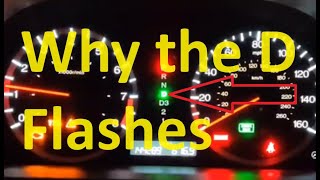
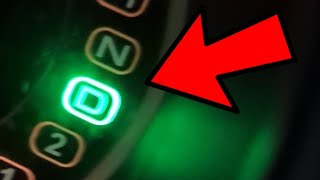
- Flashing 'D' (Drive) indicator light on the dashboard. 🎬 Watch: Why the D light flashes and how to fix it.
- Increased fuel consumption.
- Transmission may feel like it's slipping.
- Replacing the transmission immediately without checking fluid and solenoids first. The issue is often a much cheaper component.
- Replacing the wrong solenoid. It's crucial to correctly identify the 'B' solenoid, which is part of the dual linear solenoid assembly on this model.
Most Likely Causes

- Low or Dirty Automatic Transmission Fluid (ATF) 🔴 High Probability Fluid level and condition are critical for the proper hydraulic operation of Honda transmissions. Over time, fluid breaks down and can become contaminated with clutch material, causing solenoids to stick.
How to confirm: Check the transmission fluid level on the dipstick when the engine is warm and off. Note the fluid's color and smell; it should be red and not smell burnt. The official Honda procedure involves draining the fluid through a strainer to inspect for debris.
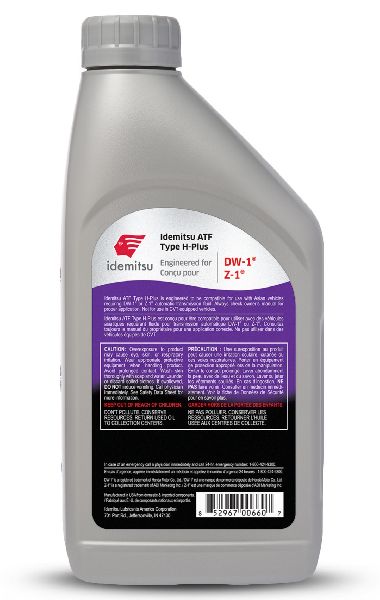
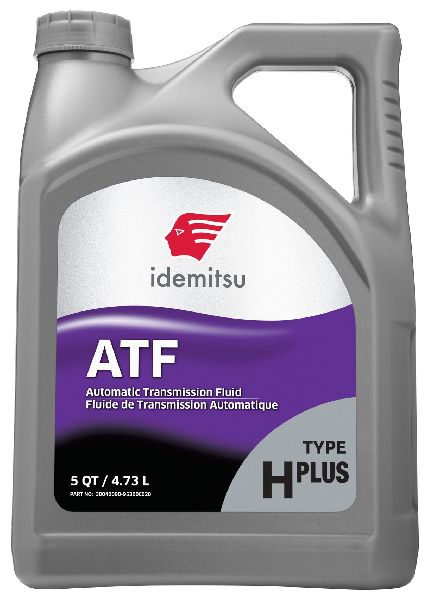
Typical fix: Perform a transmission fluid drain and fill using Honda-specific ATF DW-1. If significant debris is found, the transmission may need to be rebuilt or replaced.
Est. part cost: $40-$80 for fluid - Failed Shift Solenoid 'B' (Dual Linear Solenoid Assembly) 🟡 Medium Probability Solenoids are electro-mechanical parts that can fail either electrically (coil burns out) or mechanically (plunger gets stuck from debris or wear).
How to confirm: After confirming fluid is okay, a technician can use a diagnostic tool (like Honda HDS) to command the solenoid on and off while listening for an audible click. The solenoid's resistance can also be tested with a multimeter to check for an open or shorted coil. A common specification for Honda shift solenoids is 12-25 Ohms. No click or an out-of-spec resistance reading indicates a failed solenoid.
Typical fix: Replace the faulty dual linear shift solenoid assembly. It is located on the exterior of the transmission case, making it accessible without removing the transmission.
Est. part cost: $100-$250 - Clogged Transmission Filter or Passages ⚪ Low Probability Debris from normal wear can accumulate and restrict fluid flow, preventing solenoids and valves from operating correctly.
How to confirm: This is typically found during a fluid service when inspecting the old fluid and the in-pan filter for excessive sludge or metal particles.
Typical fix: Replacing the transmission filter and performing a fluid flush. In severe cases, the valve body may need to be removed and cleaned.
Est. part cost: $20-$50 for a filter
Rare But Worth Checking
- Internal Transmission Failure: If metal shavings or significant clutch material are found in the transmission fluid, it's a strong indicator of worn clutches or other internal hard-part damage. In this case, simply replacing the solenoid will not fix the root problem and a transmission rebuild or replacement is likely necessary.
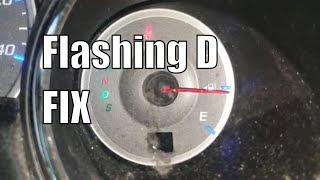
- Faulty Transmission Control Module (TCM) or Wiring: While uncommon, damaged wiring between the TCM and the solenoid, or a failed driver circuit within the TCM itself, can cause this code. This should only be considered after the fluid and solenoid have been ruled out. A visual inspection of the harness for corrosion or damage is a key step. A poor ground connection at G101 (located on the left side of the engine for L4 models, or right front for V6) can also cause intermittent electrical issues. 🎬 Watch: How to fix and reset a flashing D light.
Diagnosis Steps
- Check the automatic transmission fluid (ATF) level and condition. Top off if low.
- If the fluid is dark, burnt, or has particles, perform a drain and fill with Honda-specific ATF DW-1. It is highly recommended to drain the fluid through a fine mesh strainer to check for metal debris.
- If significant metal debris is found, the transmission likely has internal damage and may need to be rebuilt or replaced.
- If the fluid is clean and the code returns, locate the Dual Linear Shift Solenoid assembly on the exterior of the transmission case.
- Inspect the wiring harness and connector going to the solenoid for any signs of damage, corrosion, or loose connections.
- Use a professional scan tool (like Honda HDS) to activate Shift Solenoid 'B'. Listen for a distinct 'click'. If no click is heard, the solenoid is likely bad.
- If a scan tool is unavailable, remove the solenoid assembly. Test the resistance of the 'B' solenoid with a multimeter. Compare the reading to the manufacturer's specification (typically 12-25 Ohms). An out-of-spec reading confirms a bad solenoid.
- If the solenoid clicks and tests good electrically, the issue may be an internal blockage in the valve body or an intermittent electrical problem.
- If all else fails, the problem may lie within the transmission valve body or, rarely, the TCM itself.
Parts You'll Likely Need
- Dual Linear Shift Solenoid Assembly
(OEM #28260-R90-004)— This assembly contains Shift Solenoid 'B', the component directly identified by the code. It is a common failure point that can get stuck mechanically or fail electrically.
Trusted brands: Honda (OEM), Standard Motor Products (TCS99), WVE, Rostra
OEM price range: $150-$250
Aftermarket price range: $80-$150 - Honda Genuine DW-1 Automatic Transmission Fluid
(OEM #08200-9008)— Low or degraded fluid is a primary cause of shifting problems. Using the correct OEM fluid is critical for Honda transmissions. A fluid change is the first diagnostic step.
Trusted brands: Honda
OEM price range: $10-$15 per quart
Related Codes That Often Appear With This One
- P0756 — This code is for 'Shift Solenoid B Stuck Off'. It's the opposite fault for the same component and may appear intermittently if the solenoid is failing electrically or mechanically.
- P0700 — This is a generic transmission fault code, indicating that the Transmission Control Module (TCM) has stored a specific fault code (like P0757). It often appears alongside more specific transmission codes.
- P0741 — This code for 'Torque Converter Clutch Circuit Performance or Stuck Off' can sometimes appear with other transmission codes if fluid degradation or debris is affecting multiple components, like the TCC solenoid and the shift solenoids.
Mechanic-Grade Diagnostic Values

- Shift Solenoid 'B' Coil Resistance — expected: 12 - 25 Ohms. Failure: A reading of 0 Ohms (short circuit) or infinite/OL (open circuit) indicates a failed solenoid coil.
- A/T Clutch Pressure Control Solenoid Valve B Resistance (part of the same assembly) — expected: 3 - 10 Ohms. Failure: A reading outside this range indicates a failure in that specific part of the solenoid assembly.
Scan Tool Commands That Help
- Honda Diagnostic System (HDS): Shift Solenoid Valve B Test (found in the Miscellaneous Test Menu) — This bidirectional command allows a technician to manually activate the solenoid. A distinct 'click' should be heard, confirming the solenoid is mechanically and electrically responding to the command. No click points to a failed solenoid or a wiring issue.
Wiring & Ground Locations
- G101 (L4 Engine) — On the left side of the engine.. This is a primary ground point for the engine and transmission components. A loose or corroded connection here can cause erratic voltage and unpredictable behavior from electronically controlled parts like shift solenoids.
- G101 (V6 Engine) — On the right front of the engine.. Similar to the L4 engine, this is a critical ground point. Ensuring it is clean and tight is a crucial step in diagnosing any electrical fault in the transmission system.
- Dual Linear Solenoid Connector — On the exterior of the transmission housing, often visible under the battery tray area.. This is the direct electrical connection to the solenoid assembly. It should be inspected for corrosion, bent pins, or a damaged locking tab, as a poor connection can mimic a failed solenoid. The connector harness has two wires.
Real Owner Repair Stories
- Honda Accord Forum (2012 Honda Accord 2.4 SE) — Flashing 'D' light, check engine light on, transmission would suddenly stop shifting (act like it was in Neutral) at highway speeds (70 mph) and also at lower speeds in 3rd gear.
❌ Tried (didn't work) The owner removed the solenoid assembly (P/N 28260-R90-004) and tested it. The resistance measured 6 ohms (within the 3-10 Ohm spec for that part of the assembly) and the solenoids clicked when 12V was applied, indicating the part was likely good.
✅ What actually fixed it The owner noted that the connector itself was damaged. After reinstalling the original solenoid with a new gasket and presumably repairing or securing the connector, the issue was resolved. This highlights that the wiring/connector can be the fault even if the solenoid tests good.
OEM Part Supersession History
Not specified, but multiple revisions exist.→28260-R90-004— Standard part evolution and updates.
Heads up: The part 28260-R90-004 is listed as compatible for the entire 2008-2012 generation (and up to 2015 for some models), indicating good backward compatibility.
Model Year Variations Within This Range
- 2011-2012: For the 2011 model year facelift, Honda made revisions to the five-speed automatic transmission, primarily to improve fuel economy. While the core components like the solenoids remained the same, internal gear ratios and TCM software logic may differ slightly from the 2008-2010 models.
- 2008-2012: The V6 models use a different engine (J35Z series) and have different ground point locations (G101 is on the right front) compared to the 4-cylinder models (K24Z series, G101 on the left side). While they share the same 5-speed automatic transmission and P0757 code, the physical layout for diagnosis differs.
Diagnostic Flowchart
Other Known Issues on This Vehicle
Issues unrelated to this code that are worth knowing about as an owner of this generation:
- VTC Actuator Rattle on Cold Start (4-Cylinder) 🟠 Medium — Very common on 2.4L K24 engines. A loud rattle for ~2 seconds upon cold startup. (Ref: Honda TSB 09-010 confirms the issue and provides a replacement procedure for the defective VTC actuator (P/N 14310-R44-A01).)
- Excessive Oil Consumption (V6 Models) 🔴 High — Widespread on V6 engines with Variable Cylinder Management (VCM). Can lead to fouled spark plugs and engine misfires. (Ref: Subject of class-action lawsuit (Soto, et al. v. American Honda Motor Co.). Honda extended the powertrain warranty to 8 years/unlimited miles for certain issues.)
- Premature Rear Brake Wear 🟡 Low — Common on 2008-2009 models, where rear brake pads wear out much faster than expected, sometimes in under 30,000 miles. (Ref: Subject of class-action lawsuits, though no official recall was issued. Using higher-quality aftermarket pads often resolves the issue.)
- Torque Converter Shudder / Failure 🔴 High — More prevalent on the subsequent generation, but can still occur. Owners may experience a shudder or vibration at cruising speeds, sometimes triggering code P0741. (Ref: No specific TSB for this generation, but it's a known Honda issue. Often requires torque converter replacement.)
- Starter Motor Failure 🟠 Medium — A reasonably common failure point as the vehicles age, leading to a no-start condition where the engine only cranks or clicks.
Used vs. New Parts: Buying Guide for This Vehicle
When a used part is the smart pick: A used OEM dual linear solenoid assembly from a reputable salvage yard can be a cost-effective option, especially if the donor vehicle has low mileage. Since this part is externally mounted, it's easy to inspect and replace without major transmission work.
Donor-vehicle mileage cap: roughly under 80000 miles for the part to have meaningful remaining life.
What to inspect on the donor part:
- Check for a clean, corrosion-free electrical connector and pins.
- Inspect the housing for any cracks or physical damage.
- If possible, test the resistance with a multimeter before purchase; it should be within the 12-25 Ohm range for the shift solenoid portion.
- Ask for the donor vehicle's VIN to verify its year and mileage.
OEM-only on this vehicle (don't cheap out):
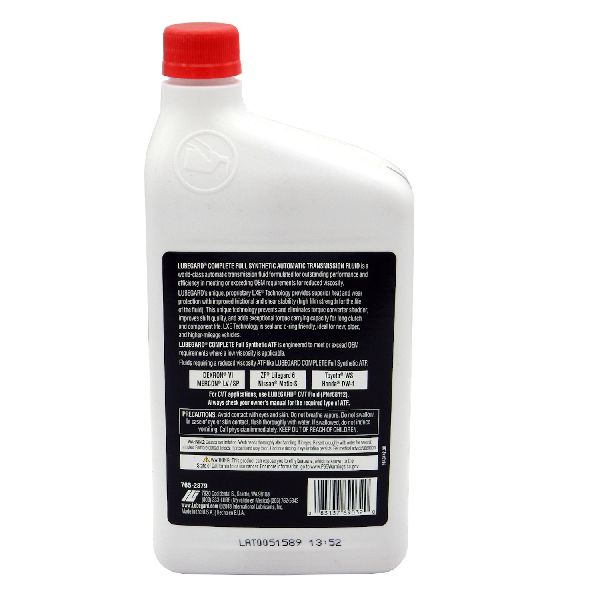
- Automatic Transmission Fluid (ATF) - Only Honda Genuine DW-1 fluid should be used. Aftermarket fluids can cause poor shift quality and long-term damage in Honda transmissions.
Aftermarket brands forum-validated for this vehicle:
- Standard Motor Products (SMP)
- Rostra
Brands owners have reported issues with on this vehicle:
- Unnamed, no-brand parts from online marketplaces should be avoided, as quality control can be inconsistent and lead to premature failure.
Real Owner Stories
Aggregated from forums and TSBs cited above. Mileages and costs reflect what owners reported in those sources.
2008-2012 Honda Accord
Symptoms: The car would not shift past 3rd gear and threw codes P0757, P1780, P1743, and P1745.
What fixed it: The owner replaced the OEM transmission solenoid, which initially made shifts smooth again, but the problem of not shifting past 3rd gear and the same codes returned.
Source hint: Reddit r/accord
2004-2008 Acura TSX
Symptoms: Vehicle triggered code P0757. The initial assumption was a bad dual shift solenoid unit.
What fixed it: The actual root cause was a failed axle seal that resulted in a massive transmission fluid leak. After refilling the fluid to the proper level, the transmission began working correctly again.
Source hint: AcuraZine: TRans code P0757- Shift Solenoid Valve B Stuck ON
Related OBD-II Codes
Frequently Asked Questions
My 2009 Accord's 'D' (Drive) light is flashing. Is this related to the P0757 code?
What is the correct transmission fluid to use when servicing my 2010 Accord for a P0757 code?
Where is Shift Solenoid 'B' located on my 8th generation Accord?
I'm testing the shift solenoid with a multimeter. What resistance reading confirms it's bad?
I hear a loud rattle from the engine for a couple of seconds on a cold start. Is this related to my P0757 transmission issue?
My V6 Accord is burning a lot of oil. Is there a recall for this?
Could a massive fluid leak cause the P0757 code even if the solenoid is good?
Helpful Videos
Used OEM Parts in Stock


New Aftermarket Parts Available


The information in this article is provided for general reference and educational purposes only. Vehicle specifications, procedures, and part compatibility can vary by production date, trim level, and region. Always consult your vehicle's factory service manual and verify part numbers before purchasing or performing repairs. Safety-critical components such as airbags, seat belts, and braking systems should be installed by a qualified professional.
- Honda Accord:
- 🎬 Helpful Videos
- 🛍️ Shop This Part
- What's Unique About the 2008-2012 Honda Accord
- Symptoms You May Notice
- Most Likely Causes
- Rare But Worth Checking
- Diagnosis Steps
- Parts You'll Likely Need
- Related Codes That Often Appear With This One
- Mechanic-Grade Diagnostic Values
- Scan Tool Commands That Help
- Wiring & Ground Locations
- Real Owner Repair Stories
- OEM Part Supersession History
- Model Year Variations Within This Range
- Diagnostic Flowchart
- Other Known Issues on This Vehicle
- Used vs. New Parts: Buying Guide for This Vehicle
- Real Owner Stories
- 2008-2012 Honda Accord
- 2004-2008 Acura TSX
- Related OBD-II Codes
- Frequently Asked Questions
- 🎟️ Get 5% Off