

OBD-II Code P1780: Transmission Switch Circuit Malfunction
What P1780 means, why it triggers, and how to fix it
- P1780 points to a broken Overdrive button circuit on Ford and Nissan vehicles, or a failed Park/Neutral Position sensor on Toyota, Honda, and GM models.
- Inspect the steering column wiring on Fords and the trunk hinge harness on Toyota Camrys first, as broken wires cause over 80% of P1780 codes on these vehicles.
- Do not replace the $150 transmission range sensor until you verify the wiring harness has less than 0.5V of voltage drop and under 1 ohm of resistance.
- Expect to pay under $20 for a DIY wiring repair, or between $200 and $400 at an independent shop for sensor replacement and labor.
What Does P1780 Mean?

P1780 is a manufacturer-specific code with definitions that change based on your car. For Ford, Lincoln, Mazda, and Mercury, it points to a broken Transmission Control Switch (the O/D or Overdrive Off button) circuit. For Toyota, Lexus, Honda, and Chevrolet, it indicates a fault in the Park/Neutral Position (PNP) switch circuit, which tells the computer what gear you selected. For Hyundai, Kia, and BMW, it points to a communication failure between the engine and transmission computers.
Technical definition: The official SAE/OBD-II definition for P1780 varies. The most common definitions are "Transmission Control Switch (O/D Cancel) Out of Self-Test Range" (Ford/Nissan) and "Park/Neutral Position Switch Malfunction" (Toyota/Lexus/GM). Other definitions include "Torque Reduction Fault" (Volkswagen/BMW) and "Shift Control System Malfunction" (Honda), indicating the transmission entered a default 'limp' mode.
Can I Drive With P1780?

Yes, But With Caution. You can drive short distances, but continuing risks severe transmission damage. Expect poor shifting, incorrect gear indicator lights, reduced fuel economy, or getting stuck in one gear (limp mode). On Ford vehicles, the inability to turn off overdrive while towing causes the transmission to overheat, leading to catastrophic failure and a $3,000+ repair. On 2005-2010 Nissans, driving with related symptoms indicates coolant contaminating the transmission fluid, which destroys the transmission if not addressed immediately.
Common Causes

- Damaged wiring or loose electrical connections (Very Common) — This is the most frequent culprit. Wires leading to the transmission range sensor or overdrive switch break, short out, or corrode. Common failure points are inside the steering column for Ford's O/D button, in the trunk hinge for 1997-2001 Toyota Camrys, 🎬 Watch: How a factory defect in the trunk causes P1780. or at the transmission connector where pins corrode from moisture.
- Faulty Transmission Range Sensor (Neutral Safety Switch) (Very Common) — This sensor fails internally, preventing it from sending the correct gear position (Park, Reverse, Neutral, Drive) to the computer. This directly causes starting issues and erratic shifting on Toyota, Honda, and GM vehicles.
- Faulty Transmission Control Switch (O/D or Tow/Haul Button) (Common) — On Ford vehicles, the button on the gear shifter that controls Overdrive or Tow/Haul mode fails. The thin wires inside the shifter break from the repeated stress of moving the gear selector.
- Failure to cycle the O/D switch during a self-test (Common) — On Ford and Nissan vehicles, a technician running a Key-On-Engine-Running (KOER) diagnostic test must press the O/D cancel button. Forgetting this step logs a false P1780 code, even with a perfectly healthy circuit.
- Misadjusted Park/Neutral Position Switch or Shift Linkage (Less Common) — If the mechanical linkage connecting the shifter to the transmission is misaligned, the computer receives a signal that does not match the selected gear, triggering the code.
- Low or Contaminated Transmission Fluid (Rare) — Low or dirty fluid causes erratic shifting and pressure problems, triggering P1780 as the computer tries to compensate. On 2005-2010 Nissans, coolant leaking into the transmission fluid destroys electronics and causes this code.
- Faulty Powertrain Control Module (PCM) or Transmission Control Module (TCM) (Very Rare) — The car's main computer fails occasionally. Exhaustively check all wiring and sensors before suspecting the PCM or TCM.
Symptoms

- Overdrive (O/D) light flashing or O/D button dead — On Ford and Nissan models, the "O/D Off" light flashes, serving as the transmission's specific check engine light. Pressing the button has no effect.
- Car won't start or starts in the wrong gear — Because the computer does not know the transmission is safely in Park or Neutral, the engine will not crank. In severe cases, it starts in a drive gear, creating a major safety hazard.
- Erratic or harsh shifting — The transmission shifts roughly, delays shifts, or gets stuck in one gear (a protective state known as 'limp mode').
- Incorrect gear indicator on the dashboard — The dash lights (P, R, N, D) do not match the selected gear, or multiple lights illuminate at once. On some Toyotas, the 'R' lights up when pressing the brake pedal.
- Check Engine Light is on — The Malfunction Indicator Lamp (MIL) illuminates on the dashboard.
- Increased fuel consumption — If the transmission cannot engage overdrive, highway driving keeps the engine at higher RPMs, noticeably worsening fuel economy.
- Reduced engine power — On BMW or Hyundai models, the computer limits engine torque as a protective measure, resulting in sluggish acceleration.
Diagnostic Flowchart
Tap your situation to follow the diagnostic path that matches what you're seeing on this code.
Common Fixes & Costs
- Repair broken or shorted wiring in the shifter or harness — Parts: $5-$20, Labor: $150-$400, ~1.5 hr book time (Intermediate)
- Replace the Overdrive (O/D) switch or shifter assembly (Ford)
— Parts: $50-$300, Labor: $100-$250, ~1.0 hr book time
(DIY)
Ford F-150 (2009-2014): OEM - Replace the Park/Neutral Position Switch (Transmission Range Sensor)
— Parts: $40-$150, Labor: $150-$250, ~1.2 hr book time
(Intermediate)
Toyota Camry (1997-2001): OEM
Chevrolet Silverado (2005-2010): OEM - Adjust the shift linkage and range sensor — Parts: $0, Labor: $75-$150, ~0.8 hr book time (Intermediate)
- Replace a blown transmission control fuse — Parts: $1-$5, Labor: $0-$50, ~0.1 hr book time (Beginner)
- Replace the Powertrain Control Module (PCM) — Parts: $600-$1200, Labor: $200-$300, ~1.5 hr book time (Professional)
Used vs. New Parts: Buying Guide
When a used part is worth it: A used OEM external Park/Neutral Position switch from a low-mileage vehicle is a cost-effective alternative to new aftermarket parts. Never use used wiring harnesses.
Donor-vehicle mileage cap: roughly under 60000 miles for the part to have meaningful remaining life.
Donor quality checklist:
- Verify the part number matches exactly.
- Inspect the plastic connector for cracks or brittleness.
- Ensure the donor vehicle was not scrapped for transmission failure.
- Avoid parts from heavy road salt regions due to corrosion.
Decision logic:
- If The part is a simple external sensor and a new OEM part exceeds $150 → Buy a used OEM part from a verified low-mileage donor.
- If The part is electronic and critical to vehicle operation → Buy a new OEM or high-quality aftermarket part for reliability.
- If The vehicle is over 15 years old and OEM parts are discontinued → Buy a new aftermarket part from a reputable brand like Denso or ACDelco.
Warranty tradeoff: Used parts offer a 30-90 day warranty. New aftermarket parts offer 1-year to lifetime warranties. New OEM parts carry a 1-year/12,000-mile warranty.
Worst-case if a used part fails: $200-$400 in repeated labor costs if the used part fails prematurely.
What Happens If You Wait — Timeline
- 0-2 weeks: Code sets, Check Engine Light or flashing O/D light appears. Symptoms are intermittent. On Fords, it is often a false code from a KOER test. (MPG impact: 0-10%% · Added cost: $0-$50 in wasted fuel if overdrive is disabled.)
- 2 weeks - 3 months: No-start conditions become frequent. Shifting becomes harsh as the TCM enters 'limp mode' to protect the transmission. (MPG impact: 10-15%% · Added cost: $50-$200 in wasted fuel and increased drivetrain stress.)
- 3-6 months: Driving in limp mode with high line pressure causes internal mechanical wear. Clutch materials degrade, and solenoids are damaged by constant stress. (MPG impact: 10-20%% · Added cost: $500-$1,500 for minor internal repairs like replacing a valve body.)
- 6+ months: Catastrophic internal failure. Continued operation destroys clutch packs, bands, and planetary gear sets. A full transmission rebuild is required. (MPG impact: 10-25%% · Added cost: $2,500-$5,000+ for a complete transmission rebuild.)
Cost of Not Fixing It
- 0-1 month: Annoying starting and shifting issues. A 5-10% drop in fuel economy if overdrive is disabled. Risk of being stranded if the car refuses to start in Park/Neutral. (Added cost: $0-$50 in wasted fuel.)
- 1-6 months: Increased stress on transmission components due to harsh shifting or limp mode. Leads to overheating and premature clutch wear. (Added cost: $500-$1,500 for minor internal transmission repairs.)
- 6+ months: Catastrophic transmission failure. Driving with severe shifting problems destroys clutch packs, bands, and internal hard parts, requiring a full rebuild. (Added cost: $2,500-$5,000+ for a complete transmission rebuild or replacement.)
Diagnosis Steps
- Scan for All Fault Codes and Live Data
Use an OBD-II scanner to read P1780 and related codes (like P0705 or U0101). Monitor the Transmission Range Sensor or O/D switch status (PID: TR_SENS, TCS) in live data while moving the shifter or pressing the button. The value must change instantly and match the selected gear.
Tools: OBD-II Scanner with Live Data (Beginner) - Perform a Visual Inspection of Known Failure Points
Check the wiring harness around the gear shifter and steering column on Fords. Inspect the harness going to the transmission range sensor. On 1997-2001 Toyota Camrys, open the trunk and inspect the wiring loom near the left hinge for broken wires.
Tools: Flashlight (Beginner) - Test the Switch Operation Manually
With the key on and engine off, slowly move the gear shifter through all positions. Watch the dash indicator and scanner live data to verify they match the shifter. For Fords/Nissans, press the O/D button and listen for a relay click or watch the 'O/D Off' light cycle.
Tools: OBD-II Scanner (Intermediate) - Check Fuses and Relays
A blown fuse cuts power to the switch circuit. Consult the owner's manual for transmission control fuses and inspect them. A good fuse has less than 1 ohm of resistance.
Tools: Fuse puller, Multimeter (Beginner) - [PRO TIP] Backprobe the Circuit for Voltage and Ground
Backprobe the connector at the sensor/switch with a multimeter. With the key on, one wire must have a reference voltage (5V or 12V) and another a solid ground (less than 0.1V). For a Toyota PNP switch, the NSW terminal wire reads 0V in Park/Neutral and 12V in any drive gear.
Tools: Multimeter, Backprobe Kit (Intermediate) - Perform Continuity and Voltage Drop Tests
Disconnect the battery, PCM/TCM, and component connector. Check for continuity on each wire; resistance must be under 1 ohm. Check for a short to ground (reading should be OL). Reconnect the circuit and perform a voltage drop test across the wire while energized. A drop over 0.5V indicates excessive resistance requiring repair.
Tools: Multimeter (Advanced) - [ADVANCED] Test Ford O/D Switch Resistance
Disconnect the Transmission Control Switch connector. Measure resistance between the switch terminals. Pressed, resistance must be under 5 ohms. Released, it must exceed 10,000 ohms. Replace the switch if readings fall outside these specs.
Tools: Multimeter (Advanced) - [PRO TIP] Analyze the Signal with an Oscilloscope
For intermittent issues, connect an oscilloscope to the signal wire. Moving the shifter or pressing the button must produce a clean, sharp voltage pattern change. A noisy or absent pattern proves a faulty component or wiring interference. Stop DIY here and take the vehicle to a transmission specialist if you lack this equipment.
Tools: Oscilloscope (Professional)
When This Code Triggers (Freeze-Frame Conditions)
- Engine Coolant Temp: 175-210°F (Vehicle at full operating temperature.)
- RPM: 1500-2500 RPM (Steady cruise or light acceleration.)
- Vehicle Speed: 40-60 mph (Highway or steady arterial driving when the fault logic is met (e.g., illogical gear reading).)
- Gear Position Signal: Invalid or No Signal (The computer received a signal that was illogical (e.g. 'Park' at 50 mph) or no signal at all.)
Related Codes
- P0705 — Means 'Transmission Range Sensor Circuit Malfunction.' P0705 indicates a general failure of the entire circuit (no signal), whereas P1780 indicates a 'logic' failure where the signal received is impossible (e.g., reporting 'Park' at 50 mph).
- P0707 — Means 'Transmission Range Sensor 'A' Circuit Low.' The computer is getting a very weak signal or a short to ground. Focus diagnosis on finding a shorted wire or a failed sensor sending low voltage.
- U0101 — Means 'Lost Communication With TCM.' If the wiring issue causing P1780 cuts a power or data line to the TCM, this communication code sets. Prioritize diagnosing the U-code first.
- P1702 — A manufacturer-specific code indicating the Transmission Range Sensor data is erratic. Having both P1780 and P1702 strongly proves a problem with the sensor or its wiring, rather than the O/D button.
Climate & Environmental Factors
- High Humidity / Salt Belt Regions: Moisture and road salt accelerate corrosion on the transmission range sensor connectors. This corrosion increases circuit resistance, triggering P1780. Visually inspect connectors for green or white crusty buildup.
- Extreme Cold: Old wiring insulation becomes stiff and prone to cracking in sub-zero temperatures, especially in flexing areas like a steering column or trunk hinge. This causes intermittent open circuits that appear exclusively in winter.
How to Talk to a Mechanic About This Code
Say this: "I have a P1780 code on my [Make/Model] and I'm experiencing [specific symptom]. I know this is often a wiring or sensor circuit issue, not an internal transmission failure. I'd like to schedule an electrical diagnostic to pinpoint the fault."
This frames the problem as a specific electrical fault, steering the shop away from an immediate, expensive transmission rebuild diagnosis. It shows you expect targeted electrical testing.
Avoid saying:
- 'My transmission is broken.'
- 'My check engine light is on, can you just fix it?'
- 'I think I need a new transmission.'
Questions to ask before authorizing the repair:
- Based on the diagnostic, is the problem the sensor itself, or the wiring? What were the voltage drop test results?
- (For Ford/Nissan) Have you ruled out a false code from a Key-On-Engine-Running test?
- (For Toyota) Did you inspect the common wiring failure points in the trunk hinge or taillights before recommending a new sensor?
- Can you provide an estimate separating parts and labor?
- What is the warranty on this specific repair?
Where to Take It: Dealer vs Independent vs Chain
- Dealer:
Expensive. Best if under warranty. Ask them to check common wiring faults before approving major part replacements.
Best for: Vehicles under powertrain warranty., Complex issues requiring a manufacturer software update (e.g., Honda).
Downsides: Highest labor rates, often 30-50% more than independent shops., May recommend expensive assembly replacements over simple wiring repairs. (Typical cost: +40% vs. baseline) - Independent Shop:
Excellent value IF the shop has strong electrical diagnostic skills. Ask if they are comfortable diagnosing transmission circuit codes.
Best for: Out-of-warranty vehicles., Common P1780 causes like Ford shifter wire repairs or Toyota trunk harness fixes.
Downsides: Diagnostic capabilities vary. General mechanics may guess by replacing parts instead of testing circuits. (Typical cost: +0% vs. baseline) - Chain Shop:
AVOID. They are unlikely to perform the detailed wiring diagnostics required to find the true root cause.
Best for: Simple maintenance like oil changes.
Downsides: High potential for upselling an electrical fault into an unnecessary transmission replacement., Inconsistent diagnostic experience. (Typical cost: -10% vs. baseline)
When to Walk Away From the Repair
If the estimated repair cost exceeds 50% of the car's private-party value, it is not worth fixing. For cars over 15 years old or 150k miles, lower this threshold to 40%.
- Car worth $4000, fix is $2200: Walk away. The repair is 55% of the car's value. You will likely face other age-related repairs soon.
- Car worth $10000, fix is $450: Fix it. The repair is 4.5% of the car's value. This is a routine ownership cost.
- Car worth $2500, fix is $1200: Borderline. At 48%, this is close to the limit. Fix only if the car is in excellent condition with no deferred maintenance.
What Scan Tool You Need for This Code
Minimum: A scanner that reads manufacturer-specific transmission codes and displays live data for transmission PIDs.
A basic code reader shows P1780 but lacks live data for the range sensor or O/D switch. Watching this data change as you move the shifter is critical to determine if the fault is in the wiring, switch, or computer.
Budget: BlueDriver Pro (~$90) — Connects via Bluetooth. Reads enhanced TCM codes and displays live data for relevant sensors, allowing you to perform key diagnostic steps.
Mid-range: Foxwell NT510 Elite (~$180) — Offers deep, brand-specific diagnostics and bi-directional control, letting you manually activate components to test function.
Professional: Autel MaxiCOM MK808S (~$500) — Professional tablet scanner with full bi-directional control. Performs 'quick learn' resets for transmission adaptive values, often required after replacing parts.
Rent vs buy: Free loaner scanners from auto parts stores rarely read the specific transmission data needed for P1780. Buying a budget pick like BlueDriver is a better investment than paying a shop's diagnostic fee.
How to Clear the Code After You Fix It
- Reconnect the battery if disconnected for repair.
- Use an OBD-II scan tool to clear stored diagnostic trouble codes.
- Perform a complete drive cycle to reset vehicle readiness monitors.
Drive cycle (~30 minutes): A drive cycle requires a cold start (sitting 8+ hours), idling for 3 minutes, mixed city driving (20-40 mph) for 15 minutes, and steady highway driving (55-60 mph) for 10 minutes. Include multiple accelerations and decelerations.
Readiness monitors affected: Comprehensive Component Monitor, Catalyst Monitor, EVAP System Monitor
Before emissions retest: drive at least 100 miles to fully set monitors.
Watch out for:
- Disconnecting the battery clears the code but resets all readiness monitors, causing an immediate emissions test failure.
- The code returns quickly if the underlying electrical fault is not properly repaired.
- Failing to perform a true 'cold start' prevents some monitors from running.
Will This Fail Emissions / State Inspection?
Yes — this code typically fails an OBD-II emissions inspection.
- California: An illuminated Check Engine Light causes an automatic failure. After repair, the vehicle must complete a drive cycle to reset readiness monitors. A stored Permanent DTC (PDTC) causes failure unless the vehicle completes 15 warm-up cycles and 200 miles since clearing.
- New York: An active P1780 code with the Check Engine Light on causes the vehicle to fail the NY VIP OBD-II emissions inspection.
- Texas: In emissions-testing counties, an illuminated Check Engine Light is an automatic failure. The OBD-II system must report all readiness monitors as 'Ready' (allowing one 'Not Ready') to pass.
Most Commonly Affected Vehicles
- Ford F-150, F-250, Expedition, Ranger (1997-2014) — The two thin wires to the O/D cancel button in the column shifter break from fatigue. Repair involves disassembling the column covers and soldering the wires. TSB 04-24-18 addresses this.
- Toyota Camry (1997-2001) — The wiring harness in the left trunk lid hinge frays and breaks from repeated opening. This short triggers P1780 and causes the reverse lights to illuminate when braking.
- Toyota Tacoma (1996-2004) — Triggered by a faulty Park/Neutral Position switch, but frequently caused by shorts in the taillight wiring harness or a corroded connector at the transmission.
- Toyota 4Runner (1999-2002) — Often caused by a faulty ground connection or a cracked flexible circuit board inside the instrument cluster, leading to erratic gear indicator lights.
- Honda Civic, Accord (2003-2015) — P1780 means 'Shift Control System (Transmission Default Mode)'. Caused by a faulty TCM, PCM, or wiring issues. A PCM software update sometimes resolves this.
- Nissan Pathfinder, Frontier, Xterra (2005-2010) — CRITICAL: These years are prone to the 'Strawberry Milkshake of Death' (SMOD), where the radiator fails, mixing coolant with transmission fluid. P1780 is an early symptom of this catastrophic failure.
- Chevrolet Equinox, Silverado (2005-2010) — Indicates a fault in the Park/Neutral Position (PNP) switch circuit. This is a frequent cause of no-start conditions where the vehicle does not recognize it is in Park.
- Hyundai / Kia Santa Fe, Tucson, Sorento (2010-2016) — Points to a 'Torque Reduction Signal Fault' or general TCM circuit malfunction. Often related to internal TCM faults or poor communication between the engine and transmission computers.
Manufacturer-Specific Notes
- Ford: The code is almost always caused by broken wires inside the column gear shifter. The second most common cause is forgetting to press the O/D button during a Key-On-Engine-Running (KOER) self-test.
- Toyota: Frequently caused by seemingly unrelated electrical issues. Check the trunk lid wiring harness on Camrys, instrument cluster grounds on 4Runners, and taillight wiring on Tacomas before replacing transmission sensors.
- Honda: Indicates the transmission is in a default 'limp' mode due to a communication failure between the TCM and PCM. A dealership PCM software update often fixes this without hardware replacement.
- Nissan: On 2005-2010 models, P1780 requires an immediate check of the transmission fluid for coolant contamination (SMOD). Nissan extended the warranty for this radiator failure issue; call 1-877-208-9275 for claims.
Real Owner Stories
2004 Ford F-150 with 155K miles
O/D Off light flashed, and the transmission shifted very hard from 1st to 2nd gear.
What they tried:
- Scanned code P1780.
- Inspected the wiring for the O/D cancel button on the column shifter.
- Found two broken wires where they enter the shifter handle.
Outcome: The owner soldered the wires and insulated them with heat-shrink tubing for under $10. The O/D light stopped flashing, and normal shifting returned.
Lesson: On older Ford trucks with a column shifter, inspect the O/D button wiring first. Shifting fatigues the wires, making this a common, cheap DIY fix.
2002 Toyota Tacoma
Check Engine Light showed P1780. The owner replaced the Park/Neutral Position Switch ($100), but the code returned in 30 minutes.
What they tried:
- Replaced the switch and cleaned the connector.
- Inspected the rear of the truck and found badly frayed taillight wiring from previous splice attempts.
- Repaired the damaged brake light wire.
Outcome: Repairing the taillight harness permanently cleared P1780. The electrical short caused the computer to receive illogical signals, misinterpreting them as a neutral switch fault.
Lesson: On Toyotas, P1780 is often a 'ghost code' caused by electrical shorts elsewhere. Inspect taillight harnesses (Tacoma) or trunk wiring (Camry) before replacing sensors.
2000 Toyota 4Runner with erratic dash lights
Gear indicator lights behaved erratically, the reverse light stayed dimly lit, and hitting bumps caused lights to flicker. P1780 was stored.
What they tried:
- Removed and disassembled the instrument cluster.
- Used a multimeter to find an inconsistent ground connection on the flexible circuit board.
Outcome: The owner soldered a new ground wire to bypass the cracked circuit board section. The gear lights worked perfectly, and P1780 cleared permanently.
Lesson: Flickering dash lights alongside P1780 on older 4Runners indicate a faulty ground in the instrument cluster, not a transmission switch failure.
How to Prevent This Code From Triggering
- Perform regular transmission fluid and filter changes. (Every 30,000-60,000 miles.) — Clean fluid lubricates sensors and solenoids, preventing premature failure. Contaminated fluid causes overheating and electronic malfunctions.
- Apply dielectric grease to electrical connectors. (Whenever a relevant connector is disconnected.) — Dielectric grease seals out moisture and prevents pin corrosion, a primary cause of circuit faults on exposed transmission harnesses.
- For 2005-2010 Nissan owners: Proactively replace the radiator. (Once, before 100,000 miles.) — Prevents the SMOD failure where the internal transmission cooler ruptures, mixing coolant with transmission fluid and destroying the transmission.
- Inspect known wiring failure points. (Every 30,000 miles.) — Visually checking Ford shifter columns and Toyota trunk hinges helps you catch frayed insulation before the wire breaks, preventing the code entirely.
Frequently Asked Questions
Can I fix a P1780 code myself?
Yes, many common causes are DIY-friendly. Repairing a broken wire in a Ford shifter or Toyota trunk harness requires basic soldering skills and costs under $20. Replacing an external Park/Neutral sensor is an intermediate job costing $40-$150 for parts.
What does 'Out of Self-Test Range' mean?
Specific to Ford and Nissan, this means the computer did not see the Overdrive button pressed during a mechanic's diagnostic test (KOER test). This happens if the button is broken, or if the mechanic simply forgot to press it.
I replaced the Park/Neutral sensor, but the P1780 code came back. What now?
If a new sensor fails to fix the code, the problem is in the wiring or connectors. Perform a voltage drop test on the harness between the sensor and the PCM to find high resistance. Ensure the new sensor was properly aligned to 'Neutral' during installation.
Why is my O/D light flashing?
On Ford and Nissan vehicles, a flashing Overdrive light is the transmission's specific Check Engine Light. It signals the transmission computer detected a fault, such as the broken circuit triggering P1780.
Will clearing the code fix the problem?
No. Clearing the code only turns the light off temporarily. The underlying electrical fault remains, and the code returns as soon as the computer runs its self-check, usually within two drive cycles.
Is the Transmission Range Sensor the same as a Neutral Safety Switch?
Yes, the terms are used interchangeably. It prevents the car from starting in gear (safety function) and tells the computer which gear is selected (range-sensing function).
Could a bad battery cause a P1780 code?
A failing battery causes low system voltage, leading to erratic behavior from electronic modules like the PCM and TCM. This triggers a range of false communication and circuit codes. Always ensure your battery and alternator are healthy when diagnosing electrical faults.
My reverse lights come on when I hit the brakes. Is this related to P1780?
On 1997-2001 Toyota Camrys, this exact symptom is a classic sign of P1780. It is caused by frayed wires in the trunk hinge harness shorting together. Repairing the broken wires fixes both the code and the light behavior.
Key Takeaways
- P1780 points to a broken Overdrive button circuit on Ford and Nissan vehicles, or a failed Park/Neutral Position sensor on Toyota, Honda, and GM models.
- Inspect the steering column wiring on Fords and the trunk hinge harness on Toyota Camrys first, as broken wires cause over 80% of P1780 codes on these vehicles.
- Do not replace the $150 transmission range sensor until you verify the wiring harness has less than 0.5V of voltage drop and under 1 ohm of resistance.
- Expect to pay under $20 for a DIY wiring repair, or between $200 and $400 at an independent shop for sensor replacement and labor.
Helpful Videos
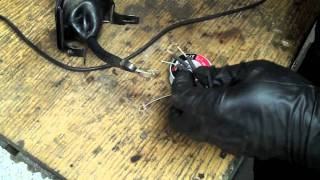

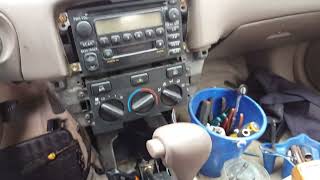


The information in this article is provided for general reference and educational purposes only. Vehicle specifications, procedures, and part compatibility can vary by production date, trim level, and region. Always consult your vehicle's factory service manual and verify part numbers before purchasing or performing repairs. Safety-critical components such as airbags, seat belts, and braking systems should be installed by a qualified professional.
- 🎬 Helpful Videos
- What Does P1780 Mean?
- Can I Drive With P1780?
- Common Causes
- Symptoms
- Diagnostic Flowchart
- Common Fixes & Costs
- Used vs. New Parts: Buying Guide
- What Happens If You Wait — Timeline
- Cost of Not Fixing It
- Diagnosis Steps
- When This Code Triggers (Freeze-Frame Conditions)
- Related Codes
- Climate & Environmental Factors
- How to Talk to a Mechanic About This Code
- Where to Take It: Dealer vs Independent vs Chain
- When to Walk Away From the Repair
- What Scan Tool You Need for This Code
- How to Clear the Code After You Fix It
- Will This Fail Emissions / State Inspection?
- Most Commonly Affected Vehicles
- Manufacturer-Specific Notes
- Real Owner Stories
- 2004 Ford F-150 with 155K miles
- 2002 Toyota Tacoma
- 2000 Toyota 4Runner with erratic dash lights
- How to Prevent This Code From Triggering
- Frequently Asked Questions
- Can I fix a P1780 code myself?
- What does 'Out of Self-Test Range' mean?
- I replaced the Park/Neutral sensor, but the P1780 code came back. What now?
- Why is my O/D light flashing?
- Will clearing the code fix the problem?
- Is the Transmission Range Sensor the same as a Neutral Safety Switch?
- Could a bad battery cause a P1780 code?
- My reverse lights come on when I hit the brakes. Is this related to P1780?
- Key Takeaways
- 🎟️ Get 5% Off