

P0751 on 2007-2016 GMC Acadia: Shift Solenoid 'A' Stuck Off Causes and Fixes
On a 2007-2016 GMC Acadia, code P0751 often points to a failed shift solenoid, but a very common underlying cause is a broken 3-5-R wave plate inside the 6T70/6T75 transmission. This failure contaminates the fluid with metallic debris, causing the solenoid to stick or fail. This is a serious issue requiring professional diagnosis and likely a transmission rebuild, a well-documented problem for this platform.
- P0751 on a 2007-2016 Acadia is a serious code that should be addressed immediately.
- The most probable cause is not just a bad solenoid, but a major internal transmission failure: a broken 3-5-R wave plate.
- Check the transmission fluid for metal debris. If found, a full transmission rebuild is almost certainly necessary.
- Simply replacing the shift solenoid without addressing the root cause (debris from the wave plate) will not be a lasting repair.
- Due to the complexity and likelihood of a major internal failure, this repair is not recommended for DIYers and should be handled by a professional transmission shop.
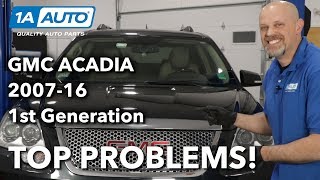
What's Unique About the 2007-2016 GMC Acadia 🎬 Watch: Top 5 common problems for the first generation Acadia.
The 2007-2016 GMC Acadia uses the GM 6T70 or 6T75 six-speed automatic transmission. This specific platform is notorious for a high-failure part known as the 3-5-R clutch wave plate. This thin, spring-like metal plate can fracture, sending metal fragments throughout the transmission's hydraulic system. This debris clogs fluid passages, the filter, and causes solenoids, including Shift Solenoid 'A', to jam or fail. Therefore, while P0751 points to a solenoid, the root cause on an Acadia is very often this more catastrophic internal failure, making it a much more involved and expensive repair than just a simple solenoid swap.
Symptoms You May Notice
- Harsh, delayed, or failed shifts.
- Transmission getting stuck in one gear (limp mode).
- Complete loss of Reverse, 3rd, and 5th gears.
- Check Engine Light is on.
- Transmission slipping between gears.
- Vehicle may not move when put in gear.
- Flashing transmission indicator light at startup.
- Replacing only the shift solenoid/TEHCM without checking for a broken wave plate. If debris from the wave plate is present, the new solenoid will likely fail again in a short time, often within a few hundred miles.
- Performing a transmission fluid flush. If a wave plate has failed, a flush can dislodge larger metal particles and circulate them through the new fluid, potentially causing more damage. The pan must be dropped to inspect for debris first.
Most Likely Causes
- Broken 3-5-R Wave Plate 🔴 High Probability The 6T70/6T75 transmission used in these vehicles has a well-documented design flaw leading to wave plate fractures. The issue was so prevalent that GM issued Special Coverage Adjustment (SCA) 14404B for 2007-2009 models, extending the warranty to 10 years/120,000 miles. Though the SCA targeted early models, the problem can affect vehicles through 2012 and beyond.
How to confirm: The definitive diagnosis requires transmission disassembly. However, finding significant metallic, silvery debris in the transmission pan and fluid during a fluid check is a strong indicator of this failure. The loss of 3rd, 5th, and Reverse gears simultaneously is another classic symptom.
Typical fix: This requires a complete transmission rebuild or replacement. A rebuild involves replacing the broken wave plate with an updated, more robust design, replacing all clutches and seals, and thoroughly cleaning all metal debris from the valve body, solenoids, and torque converter.
Est. part cost: $1500-$4000 (for a rebuild kit or remanufactured transmission) - Failed Shift Solenoid 'A' / Solenoid Body (TEHCM) 🟡 Medium Probability The solenoid itself can fail electrically, but it's more likely to become stuck due to contamination from a failing wave plate or normal wear. The solenoids are part of the Transmission Electro-Hydraulic Control Module (TEHCM), which is located inside the transmission. A torn diaphragm on one of the pressure switches within the TEHCM is also a common failure point on Gen 1 models.
How to confirm: A technician can command the solenoid on and off with a high-end scan tool to check for a response. The solenoid's electrical resistance can also be tested with a multimeter after removing the side cover. If the solenoid clicks but the code persists, it's likely a mechanical jam from debris.
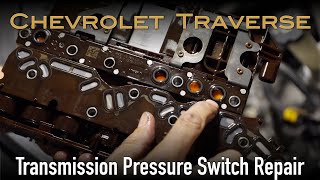
Typical fix: Replace the entire TEHCM assembly, which includes all shift solenoids and the TCM. The transmission fluid and filter must also be replaced, and the new TEHCM must be programmed to the vehicle's VIN. 🎬 See how to repair the Transmission Control Module yourself.
Est. part cost: $300-$700 - Low or Dirty Transmission Fluid ⚪ Low Probability While a possible cause on any vehicle, on the Acadia, dirty fluid is often a symptom of the more serious wave plate failure, as metal fragments contaminate the fluid. Low fluid can also cause shifting issues by preventing the solenoids from building adequate hydraulic pressure.
How to confirm: Check the transmission fluid level and condition via the dipstick. The fluid should be bright red and clear. If it is dark, has a burnt smell, or contains visible metallic particles ('glitter'), there is a serious internal problem.
Typical fix: If the fluid is just low, top it off with DEXRON-VI fluid and check for leaks. If it's dirty with metal, a fluid change is insufficient; the source of the contamination (likely the wave plate) must be found and fixed, which usually means a rebuild.
Est. part cost: $75-$150
Rare But Worth Checking
- Faulty Transmission Control Module (TCM): The TCM is integrated into the TEHCM (solenoid body) in these models. While the entire TEHCM can fail, it's less common for the computer logic to fail than the mechanical solenoids or pressure switches within it. This should be considered after all other mechanical and wiring causes are ruled out.
- Wiring Harness or Connector Issues: Damage to the wiring leading to the transmission or corrosion at the main connector can interrupt the signal to the solenoid, causing this code. Internal harness damage is also possible but less frequent than TEHCM or wave plate failure.
Diagnosis Steps
- Check the transmission fluid level and condition. Look for a dark color, burnt smell, or metallic particles. A 'glitter bomb' in the fluid is a tell-tale sign of wave plate failure.
- Scan the TCM for all stored trouble codes. Note any other codes besides P0751, such as P0700 or other solenoid codes.
- Using a bidirectional scan tool, command Shift Solenoid 'A' on and off to see if it clicks or responds.
- If the solenoid does not respond, drain the transmission fluid and remove the side cover pan.
- Inspect the fluid in the pan and the pan magnet for metal shavings. A significant amount of silvery, metallic debris strongly suggests a broken wave plate.
- If debris is minimal, inspect the wiring harness inside the transmission for any visible damage.
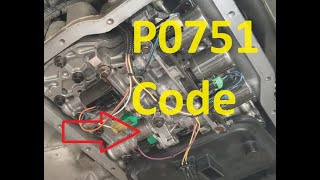
- Test the resistance of Shift Solenoid 'A' using a multimeter to check 🎬 Watch this guide on diagnosing P0751 shift solenoid performance issues. for an electrical failure. Compare readings to manufacturer specifications.
- If the solenoid tests good electrically but was unresponsive, it is likely stuck mechanically, requiring replacement of the TEHCM assembly.
- If significant debris is found, the transmission must be removed and disassembled for a full inspection and rebuild to address the root cause.
Parts You'll Likely Need
- 3-5-R Clutch Wave Plate (Updated Design)
(OEM #24254103)— This is the primary high-failure component in the 6T70/6T75 transmission that leads to code P0751. The original is prone to fracture; an updated, thicker plate is used in rebuilds.
Trusted brands: ACDelco, Sonnax (Drum Saver Kit)
OEM price range: $20-$40
Aftermarket price range: $15-$50 - Transmission Solenoid Body (TEHCM)
(OEM #24261875, 24275870)— The shift solenoids are integrated into this unit. It is often replaced as a complete assembly when a solenoid fails or is clogged with debris. It also contains the TCM and requires programming.
Trusted brands: ACDelco (GM Original Equipment)
OEM price range: $400-$700
Aftermarket price range: $250-$500 (Remanufactured) - Transmission Rebuild Kit — Required for a full repair if the wave plate has failed. Includes new clutches, seals, gaskets, and the updated wave plate.
Trusted brands: ACDelco, Transtar, Precision International
OEM price range: $400-$600
Aftermarket price range: $300-$500
Related Codes That Often Appear With This One
- P0700 — This is a generic code that simply means the Transmission Control Module (TCM) has stored a fault code and has requested the main engine computer to turn on the Check Engine Light. It will almost always be present with P0751.
- P0752 — This code means 'Shift Solenoid A Stuck On'. It's the opposite of P0751 but points to a fault with the same solenoid, often caused by the same debris or electrical issues within the TEHCM.
- P0796 — Pressure Control Solenoid 'C' Performance/Stuck Off. It is common to see multiple solenoid and pressure switch codes logged alongside P0751 when a wave plate failure has sent debris throughout the valve body.
Technical Service Bulletins (TSBs) & Recalls
- 14404B: Special Coverage Adjustment for broken 3-5-R wave plate, resulting in loss of 3rd, 5th, and Reverse gears. Covered certain 2007-2009 models for 10 years/120,000 miles.
- Bulletin #PI1344C: Provides diagnostic tips and repair information for cases where P0751 is set, often accompanied by reduced acceleration at low speeds or transmission slipping from a launch.
Platform-Specific Known Issues
- A fractured 3-5-R wave plate is a widely documented failure on 2007-2016 Acadias and other GM vehicles with the 6T70/6T75 transmission.
- GM issued Special Coverage Adjustment 14404B which extended the warranty for this specific failure to 10 years or 120,000 miles for certain 2007-2009 models. This program has since expired for all vehicles.
- Owner forums are filled with stories of this failure. A common story involves the loss of reverse gear, followed by harsh shifting, the check engine light, and a diagnosis of a failed wave plate requiring a multi-thousand dollar repair.
Mechanic-Grade Diagnostic Values
- Shift Solenoid 'A' (On/Off type) resistance — expected: 20-40 Ohms. Failure: A reading outside this range indicates a failed solenoid coil.
- Shift Solenoid 'A' (On/Off type) current draw — expected: 0.3 - 0.7 Amps at 12V. Failure: Incorrect amperage suggests a failed solenoid.
- PWM Solenoid resistance (other solenoids in TEHCM) — expected: 3-8 Ohms. Failure: Readings outside this range point to a failure in that specific PWM solenoid.
- Voltage at solenoid supply wire — expected: ~12.6V (Battery Voltage). Failure: A voltage drop of more than 0.5V indicates high resistance in the wiring or a bad power feed.
- Shop air pressure for bench testing valve body — expected: 90-100 psi (620.5-690.4 kPa). Failure: Using pressure higher than this can lead to inaccurate test results when checking for stuck valves.
Scan Tool Commands That Help
- GDS2 / Tech2: Solenoid Performance Test / Solenoid Activation — Used to command Shift Solenoid 'A' (also called Clutch Select Solenoid Valve 2) on and off to verify its mechanical and electrical response without removing the pan. Failure to respond confirms a fault.
- GDS2 / Tech2: Service Fast Learn Adapts — This procedure is mandatory after replacing the TEHCM or the entire valve body. It allows the TCM to learn the hydraulic fill times and characteristics of the new components to ensure proper shift quality.
- GDS2 / Tech2: Solenoid Cleaning Procedure — This function cycles all solenoids to flush fluid through them in an attempt to dislodge minor debris that may be causing a solenoid to stick. It can be attempted before component replacement.
Wiring & Ground Locations
- G1xx Grounds (e.g., G103, G104) — Various locations in the engine bay, typically on the engine block, cylinder heads, or chassis frame rails forward of the firewall.. The TEHCM and its external sensors rely on solid ground connections. While a specific TEHCM ground isn't easily identified, a poor engine or chassis ground can cause erratic behavior and fault codes. A user reported an intermittent ground issue from a painted factory ground lug under the hood.
- Transmission Main Connector — On the outside of the transmission case, where the main vehicle harness connects to the internal transmission wiring and TEHCM.. This is the primary electrical interface. Corrosion, bent pins, or damage to this connector can interrupt the command signal to Shift Solenoid 'A', directly causing a P0751 code.
Real Owner Repair Stories
- AR15.com forum user (2009 Saturn Outlook (Lambda platform twin), 161,000 miles) — No symptoms reported. Owner performed a pre-emptive repair based on the known high failure rate of the wave plate before gifting the vehicle.
❌ Tried (didn't work) N/A
✅ What actually fixed it The owner preventatively replaced the 3-5-R wave plate, along with the TEHCM pressure switch seals and engine/transmission mounts. The user noted that performing the repair before the plate shatters and contaminates the transmission is a manageable job.
"I Checked Everything" — The Actual Cause
- The equivalent for this code is 'solenoid tests good electrically, but the code returns.' This scenario is addressed by GM Preliminary Information Bulletin PI1344C. The cause is often the Clutch Select Solenoid Valve 2 physically sticking in its bore within the valve body due to scoring from debris. An electrical test (resistance/voltage) will pass, but the valve cannot move mechanically. The fix in this case is to inspect the valve for scratches and replace the entire lower valve body if any are found.
OEM Part Supersession History
24223806→24254103— The original 3-5-R wave plate was prone to fracturing. The superseding part is an updated, more robust design to prevent this failure.24261875→24275870— Part numbers for the TEHCM (valve body assembly) have been updated multiple times to address reliability issues and accommodate design changes between Gen 1 and Gen 2 transmissions.
Heads up: It is critical to use the correct TEHCM for the vehicle's specific model year and RPO code (Gen 1 vs. Gen 2). The new part must be programmed to the vehicle's VIN using a GM scan tool.
Model Year Variations Within This Range
- 2007-2012 (Gen 1) vs. 2013-2016 (Gen 2): For the 2013 model year, GM introduced the 'Gen 2' 6T70/6T75. These units have a redesigned 3-5-R clutch housing, an improved wave plate design from the factory, and a different TEHCM that uses 'clutch pulse learn' instead of pressure switches. The solenoids were also changed from a Variable Bleed (VBS) to a Variable Feed (VFS) design. Gen 1 and Gen 2 parts, especially the TEHCM, are not interchangeable.
Diagnostic Flowchart
Other Known Issues on This Vehicle
Issues unrelated to this code that are worth knowing about as an owner of this generation:
- Premature Timing Chain Stretch 🔴 High — Very common, often occurs between 70,000 and 120,000 miles. Exacerbated by extended oil change intervals. (Ref: TSB 11340C / SCA 11340C)
- Power Steering Rack and/or Pump Failure 🔴 High — Common failure, can lead to loss of power assist at low speeds. Leaks from the rack or high-pressure lines are frequent. (Ref: SCA 14329 (extending warranty on pump))
- Water Leaks into Cabin (Sunroof Drains) 🟠 Medium — Widespread issue where clogged front sunroof drain tubes cause water to leak into the A-pillar, dashboard, and floor, potentially damaging electronics.
- Water Pump Failure / Coolant Leak 🟠 Medium — The water pump is a common failure point, leading to coolant leaks that can be seen on the passenger side of the engine.
- Stretched/Worn Engine Mounts 🟡 Low — The hydraulic engine mounts can wear out prematurely, causing engine vibration to be felt in the cabin, especially at idle.
Used vs. New Parts: Buying Guide for This Vehicle
When a used part is the smart pick: A complete used transmission assembly can be a cost-effective option if the original unit has suffered catastrophic damage from wave plate debris. However, it is only advisable if the donor unit is a low-mileage, later model year (2013+ Gen 2) to avoid inheriting the same design flaw.
Donor-vehicle mileage cap: roughly under 80000 miles for the part to have meaningful remaining life.
What to inspect on the donor part:
- Verify the donor vehicle's year to ensure it's a later Gen 2 model if possible.
- Check the transmission fluid. It must be bright red, clear, and free of any metallic 'glitter' or burnt smell.
- Ask for any available service history for the donor vehicle.
- Inspect the case for any cracks, damage, or signs of major leaks.
OEM-only on this vehicle (don't cheap out):
- Transmission Electro-Hydraulic Control Module (TEHCM). Due to the high failure rate of internal components and the absolute requirement for VIN-specific programming, a new or professionally remanufactured ACDelco (GM) unit is the only reliable choice.
Aftermarket brands forum-validated for this vehicle:
- Sonnax: Widely respected for their '3-5-R Drum Saver Kit' (124555K) and other valve body repair kits that address the root cause of common failures.
- Transtar / Precision International: Known for providing comprehensive and reliable transmission rebuild kits.
Brands owners have reported issues with on this vehicle:
- Unbranded, low-cost TEHCMs or individual solenoids from online marketplaces. These often have high defect rates, are not properly tested, and can cause significant diagnostic and programming headaches.
Real Owner Stories
Aggregated from forums and TSBs cited above. Mileages and costs reflect what owners reported in those sources.
2008 GMC Acadia — ~125000 miles
Symptoms: The transmission failed with a broken wave plate just two weeks after the 10-year special coverage expired.
What fixed it: The source describes the frustration of the failure occurring just after the warranty window, typically requiring a multi-thousand dollar repair.
Source hint: gm-trucks.com forum post cited in context
2007-2009 GMC Acadia — ~95000 miles
Symptoms: Loss of reverse gear, followed by harsh shifting and the check engine light coming on.
What fixed it: A multi-thousand dollar repair to address a failed wave plate.
Source hint: vehicle_specific_issues section regarding owner forums
2007-2016 GMC Acadia 3.6L V6 — ~85000 miles
Symptoms: Failure typically occurs before 100,000 miles; owners share experiences of losing gears and facing expensive rebuilds.
What fixed it: A proper repair with an updated, more robust wave plate design.
Source hint: bobistheoilguy.com thread titled 'GMC Acadia Wave Plate Failure'
Related OBD-II Codes
Frequently Asked Questions
Does Special Coverage Adjustment 14404B apply to my 2012 GMC Acadia?
I lost Reverse, 3rd, and 5th gears simultaneously in my Acadia. Is this related to P0751?
Can I just replace the solenoid if P0751 is triggered, or do I need a whole TEHCM?
What does 'glitter' in my transmission fluid mean for my P0751 diagnosis?
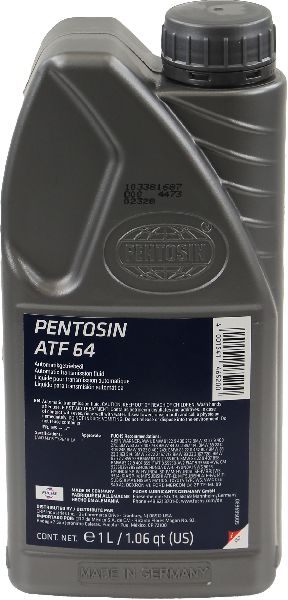
Is there a specific transmission fluid I should use for my 2007-2016 Acadia?
Helpful Videos

Used OEM Parts in Stock

New Aftermarket Parts Available



The information in this article is provided for general reference and educational purposes only. Vehicle specifications, procedures, and part compatibility can vary by production date, trim level, and region. Always consult your vehicle's factory service manual and verify part numbers before purchasing or performing repairs. Safety-critical components such as airbags, seat belts, and braking systems should be installed by a qualified professional.
- GMC Acadia:
- 🎬 Helpful Videos
- 🛍️ Shop This Part
- What's Unique About the 2007-2016 GMC Acadia
- Symptoms You May Notice
- Most Likely Causes
- Rare But Worth Checking
- Diagnosis Steps
- Parts You'll Likely Need
- Related Codes That Often Appear With This One
- Technical Service Bulletins (TSBs) & Recalls
- Platform-Specific Known Issues
- Mechanic-Grade Diagnostic Values
- Scan Tool Commands That Help
- Wiring & Ground Locations
- Real Owner Repair Stories
- "I Checked Everything" — The Actual Cause
- OEM Part Supersession History
- Model Year Variations Within This Range
- Diagnostic Flowchart
- Other Known Issues on This Vehicle
- Used vs. New Parts: Buying Guide for This Vehicle
- Real Owner Stories
- 2008 GMC Acadia — ~125000 miles
- 2007-2009 GMC Acadia — ~95000 miles
- 2007-2016 GMC Acadia 3.6L V6 — ~85000 miles
- Related OBD-II Codes
- Frequently Asked Questions
- 🎟️ Get 5% Off