

P0750 on 2009-2014 Ford F-150: Shift Solenoid 'A' Malfunction Causes and Fixes
P0750 on a 2009-2014 F-150 usually means there's an electrical problem with the Shift Solenoid 'A' circuit. Before replacing internal parts, thoroughly inspect the transmission wiring harness for damage, as chafing against the frame or other components is a very common cause. If the wiring is okay, the solenoid itself, which is part of the molded lead frame inside the transmission, has likely failed and the entire lead frame assembly requires replacement.
- P0750 on a 2009-2014 F-150 points to an electrical issue with the 1-2 shift solenoid circuit.
- ALWAYS inspect the external transmission wiring harness for chafing or damage before assuming an internal transmission failure. This is a very common problem on these trucks.
- If the wiring is good, the most likely internal culprit is the molded lead frame, which houses the shift solenoids.
- Driving with this code is unsafe and can lead to catastrophic transmission damage.
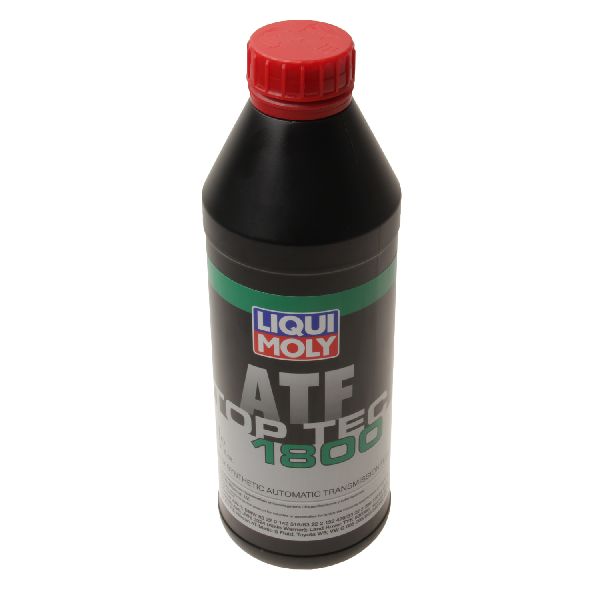
- Use only the specified Motorcraft MERCON LV transmission fluid when performing service.
What's Unique About the 2009-2014 Ford F-150
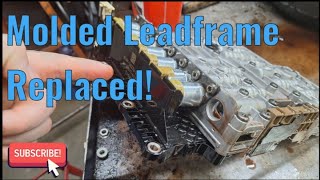
For the 2009-2014 F-150, equipped primarily with the 6R80 automatic transmission, the P0750 code is frequently caused by an external wiring issue before it's an internal transmission problem. The main wiring harness that runs to the transmission is routed in a way that makes it susceptible to rubbing against the chassis, crossmembers, or exhaust components, leading to a short or open circuit. Owners have often fixed this code simply by finding and repairing a single damaged wire in the harness, saving them from a costly transmission repair. The other very common cause is a failure of the molded lead frame itself, a known weak point that prompted Ford to issue an extended warranty under Customer Satisfaction Program 19N01 🎬 See this step-by-step 6R80 lead frame replacement guide..
Generation note: This range covers the twelfth generation of the Ford F-150 (2009-2014). Most of these trucks use the 6-speed 6R80 automatic transmission. Some very early 2009 models with the 4.6L 2V V8 could still have the older 4-speed (4R75E), for which the diagnostic process is different. While the code's meaning is the same, the internal components (solenoid pack vs. molded lead frame) and diagnostic procedures differ slightly.
Symptoms You May Notice
- Check Engine Light is on
- Flashing wrench light or overdrive (O/D) light on the gear selector
- Transmission is stuck in one gear (e.g., 3rd or 5th) and will not shift
- Vehicle enters 'limp mode' with significantly reduced power
- Harsh, delayed, or erratic shifting between gears
- Inability to shift from 1st to 2nd gear
- Reduced fuel economy
- Feels like it starts in a high gear (e.g. 5th)
- Replacing the shift solenoid/lead frame without checking the external wiring harness first. Many owners and shops go straight for the internal part when a simple wire repair would have fixed the issue.
Most Likely Causes
- Damaged Transmission Wiring Harness 🔴 High Probability The wiring harness leading to the transmission is known to chafe against the vehicle's frame or other components, causing wires to break or short out. Common chafe points are where the harness passes over the transmission crossmember or near the catalytic converters.
How to confirm: Visually inspect the entire length of the wiring harness from the PCM to the transmission's main connector. Look for any signs of rubbing, melting, or corrosion. Disconnect the PCM and transmission connectors and use a multimeter to check for continuity on the wire for Shift Solenoid 'A'. On a 2011 F-150, this is typically Pin 9 at the transmission connector and Pin 43 at the PCM connector.
Typical fix: Repair the damaged section of the wire using a solder and shrink wrap connector. Secure the harness away from the area where it was rubbing to prevent future damage.
Est. part cost: $1-$20 - Faulty Shift Solenoid 'A' / Molded Lead Frame 🟡 Medium Probability On 6R80 transmissions, the shift solenoids are part of a component called the molded lead frame, which is a known failure point. The internal circuitry, speed sensors, or the solenoid coil itself can fail. This issue was so common Ford issued Customer Satisfaction Program 19N01, extending the warranty on this part.
How to confirm: After confirming the external wiring is good, drop the transmission pan. Test the resistance of the solenoid at the connector pins. For units built after Nov 2010, the resistance for SSE (Solenoid A) should be around 18 ohms. An out-of-spec reading (open or shorted) confirms failure. Often, the entire lead frame is replaced as a unit.
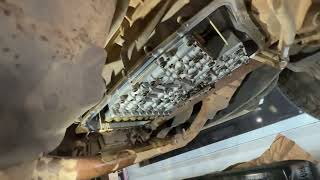
Typical fix: Remove the transmission valve body to access and replace the molded lead frame which contains all the solenoids. 🎬 Watch: A professional walkthrough of the lead frame repair.
Est. part cost: $150-$400 - Low or Contaminated Transmission Fluid ⚪ Low Probability
How to confirm: Check the transmission fluid level and condition using the dipstick (if equipped) or the check plug on the side of the transmission. The fluid should be at the correct level and bright red, not brown, black, or smelling burnt.
Typical fix: Perform a transmission fluid and filter change using the correct Motorcraft MERCON LV fluid. If the fluid is full of metal particles, it indicates a more severe internal mechanical failure.
Est. part cost: $100-$200
Rare But Worth Checking
- Faulty Powertrain Control Module (PCM): This is rare. The internal driver circuit in the PCM that controls the solenoid can fail. This should only be considered after all other possibilities (wiring, solenoid, fluid) have been definitively ruled out.
- Clogged Transmission Valve Body: Debris from normal wear can clog the small passages within the valve body, preventing the solenoid from functioning correctly even if it's electrically sound. This usually happens on higher-mileage vehicles or those with poor maintenance history.
Diagnosis Steps
- Check and record any other stored trouble codes. Pay special attention to codes like P0720, P0722, or P0731, which often accompany lead frame failure.
- Check the transmission fluid level and condition. Ensure it is clean and at the proper level.
- Perform a detailed visual inspection of the transmission wiring harness, looking for any signs of chafing, melting, or damage, especially where it runs near the frame and exhaust.
- If a damaged spot is found, repair the wire and clear the codes. Test drive to see if the code returns.
- If the harness appears intact, use a multimeter to test the continuity of the Shift Solenoid 'A' circuit between the PCM connector (e.g., Pin 43) and the transmission connector (e.g., Pin 9).
- If the external circuit is confirmed to be good, drain the transmission fluid and remove the pan.
- Inspect the internal wiring and the main connector pass-through for any issues.
- Test the resistance of Shift Solenoid 'A' at the lead frame connector. Compare the reading to the manufacturer's specification (approx. 18 ohms for later models). An open circuit (OL) or a reading of zero ohms indicates a failed solenoid.
- If the solenoid is bad, replace the molded lead frame assembly.
- Check if the vehicle is covered under Ford's Customer Satisfaction Program 19N01 for the lead frame, which extended warranty to 10 years/150,000 miles.
- If all wiring and solenoids test good, the issue may be a mechanical problem in the valve body or, rarely, a faulty PCM.
Parts You'll Likely Need
- Transmission Molded Lead Frame (Conductor Plate)
(OEM #AL3Z-7G276-D)— This is the most common internal part to fail on the 6R80 transmission, causing solenoid circuit codes. It contains the shift solenoids, speed sensors, and temperature sensor in one unit. Part number AL3Z-7G276-D supersedes older versions like -A and -B.
Trusted brands: Motorcraft, Dorman
OEM price range: $200-$300
Aftermarket price range: $150-$250 - Transmission Filter Kit
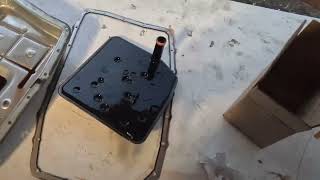
(OEM #BL3Z-7A098-A)— The filter must be replaced any time the transmission pan is removed for service.
Trusted brands: Motorcraft, Wix, ATP
OEM price range: $30-$50
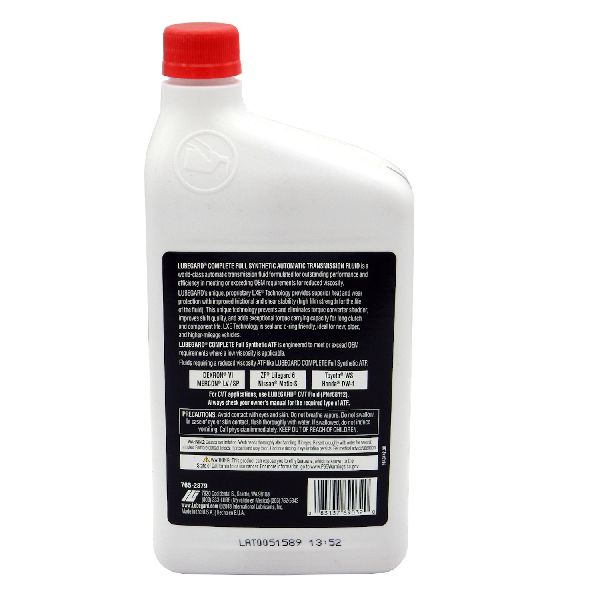
Aftermarket price range: $15-$30 - Motorcraft MERCON LV Automatic Transmission Fluid
(OEM #XT-10-QLVC)— This is the required fluid for the 6R80 transmission. You will need approximately 7-8 quarts for a pan drop and lead frame replacement.
Trusted brands: Motorcraft
OEM price range: $8-$12 per quart
Aftermarket price range: $7-$10 per quart
Related Codes That Often Appear With This One
- P0751 — This code is for Shift Solenoid 'A' Performance/Stuck Off. If there is a wiring harness issue or a failure of the molded lead frame, it can affect multiple solenoid circuits simultaneously.
- P0732 — This code means 'Gear 2 Incorrect Ratio'. If solenoid 'A' fails to perform its function in the shift sequence, the computer will detect that the transmission is not in the expected gear, triggering a ratio error code.
- P0720 — Output Speed Sensor Circuit Malfunction. The OSS sensor is integrated into the molded lead frame. A failure of the lead frame often triggers this code along with solenoid codes.
- P0722 — Output Speed Sensor No Signal. Also points to a failure of the molded lead frame, which houses the sensor.
Technical Service Bulletins (TSBs) & Recalls
- Customer Satisfaction Program 19N01: While not a TSB for P0750 specifically, this program extended the warranty on the molded lead frame to 10 years or 150,000 miles for certain 2011-2013 F-150s. It primarily addressed failures of the integrated speed sensors (causing codes like P0720, P0722) that lead to sudden downshifts, but the entire unit is replaced, which would also fix a faulty solenoid.
Platform-Specific Known Issues
- Owner Experience: A user on F150forum.com reported purchasing a 2011 F-150 with a P0750 code and no-shift condition. Before replacing any parts, they pulled the main harness and found a tiny chafe point that had broken the wire. A repair with a solder/shrink connector, costing less than a dollar and taking a few hours, completely fixed the issue.
Mechanic-Grade Diagnostic Values
- Shift Solenoid 'A' (SSA/SSE) Resistance (Pre-2011 models) — expected: 10-12 Ohms. Failure: Open circuit (OL) or short (near 0 Ohms). These solenoids can be identified by their connector color.
- Shift Solenoid 'A' (SSA/SSE) Resistance (2011+ models) — expected: 18-20 Ohms. Failure: Open circuit (OL) or short (near 0 Ohms). This is the updated solenoid design.
- Solenoid Ground Circuit Continuity — expected: < 0.2 Ohms. Failure: A reading higher than 0.2 Ohms indicates excessive resistance in the ground circuit, which can cause erratic solenoid operation.
- Solenoid Power Supply Voltage (Key On, Engine Off) — expected: Steady 12V (Battery Voltage). Failure: Fluctuating or absent voltage at the solenoid connector points to a wiring fault upstream of the solenoid.
Scan Tool Commands That Help
- Ford IDS (Integrated Diagnostic System) or equivalent professional scanner: Solenoid Activation Test / Bi-directional Control — After verifying external wiring integrity, this command allows a technician to directly command Shift Solenoid 'A' on and off. This helps isolate the fault: if the solenoid clicks when commanded, the electrical coil is likely good, and the problem may be hydraulic or mechanical within the valve body. If it doesn't click, it confirms an electrical failure of the solenoid itself.
Wiring & Ground Locations
- C175T — The transmission connector at the Powertrain Control Module (PCM), which is located on the passenger-side firewall.. This is one of the main connectors for the transmission controls. Pin 43 on this connector is the specific circuit for Shift Solenoid 'A' on many 2011+ F-150s, used for continuity testing back to the transmission.
- Transmission Bulkhead Connector (16-pin) — On the passenger side of the 6R80 transmission case.. This is the main external connector on the transmission itself. Pin 9 is the corresponding pin for the Shift Solenoid 'A' circuit. Testing for continuity between this pin and Pin 43 at the PCM connector (C175T) will confirm if the external wiring harness is intact.
- Body-to-Frame Ground — Underneath the passenger side door area, where a braided or solid wire connects the truck's body to the frame.. While not specific to the P0750 circuit, these main grounds are known to corrode and fail on F-150s, causing a wide range of bizarre electrical and communication issues, including transmission codes. A technician noted that cleaning or replacing these grounds can resolve unexplained electronic faults.
Real Owner Repair Stories
- F150forum.com user (2011 Ford F-150) — Check engine light on, transmission would not shift and felt like it was starting in 5th gear (limp mode). Reverse worked.
❌ Tried (didn't work) The owner immediately suspected a wiring issue before replacing any parts.
✅ What actually fixed it The owner disconnected the PCM and transmission connectors and found no continuity on the SSA circuit (Pin 43 at PCM, Pin 9 at transmission). After removing the entire harness, a very small chafe point was discovered. Repairing the single broken wire with a solder/shrink wrap connector completely resolved the P0750 code and shifting issues. - Ford-trucks.com forum user (commenting on multiple codes) (Vehicle year not specified, but had multiple solenoid and sensor codes (P0750, P0755, P1747, P0743, P0340)) — Vehicle would barely move in forward gears, moved best in reverse, running very rich.
❌ Tried (didn't work) Replaced the entire transmission with a known-good unit, but the exact same symptoms and codes returned.
✅ What actually fixed it A former Ford transmission engineer on the forum diagnosed the issue as a damaged wiring harness, not a faulty transmission or PCM, because replacing the transmission did not fix the problem. The combination of multiple electrical fault codes pointed to a common wiring failure affecting several circuits simultaneously.
OEM Part Supersession History
AL3Z-7G276-A, AL3Z-7G276-B→AL3Z-7G276-D— Ford revised the molded lead frame to address reliability issues with the internal circuitry, sensors, and solenoids. The -D revision is the most current and robust version.
Heads up: The older -A and -B parts should not be used, as they are prone to the failures that the -D revision was designed to fix. Always use the latest revision.
Model Year Variations Within This Range
- 2009-2010 vs 2011-2014: The 6R80 transmission was revised for the 2011 model year. A key change was the addition of a one-way clutch for smoother 1-2 upshifts. Additionally, the shift solenoids themselves were updated; pre-2011 solenoids had a resistance of ~10-12 ohms, while 2011 and later models use solenoids with a resistance of ~18-20 ohms. This is critical for accurate bench testing.
- 2011-2013: These specific model years were the focus of Ford's Customer Satisfaction Program 19N01, which extended the warranty on the molded lead frame to 10 years or 150,000 miles due to a high rate of failure causing speed sensor and downshift issues.
Diagnostic Flowchart
Other Known Issues on This Vehicle
Issues unrelated to this code that are worth knowing about as an owner of this generation:
- Ford 5.4L 3V Cam Phaser Rattle / Failure 🔴 High — Very common on 5.4L 3V engines, especially over 75,000 miles. Often presents as a diesel-like ticking or clattering noise at idle when warm.
- IWE (Integrated Wheel End) Vacuum System Failure 🟠 Medium — Common across all 4x4 models. A vacuum leak in the lines or a faulty solenoid causes a grinding or scraping noise from the front wheels as the hubs partially engage.
- Molded Lead Frame Failure (Sudden Downshift) 🔴 High — Widespread enough to prompt a recall and extended warranty program. Causes sudden, unexpected downshifts to 1st or 2nd gear at speed. (Ref: Safety Recall 19S07, Customer Satisfaction Program 19N01)
- Spark Plug Breakage (5.4L 3V) 🟠 Medium — Primarily affects 2004-2008 models, but early 2009-2010 F-150s with the 5.4L can still have the problematic two-piece spark plug design that can break during removal.
- MyFord Touch / SYNC System Glitches 🟡 Low — Common on models equipped with the touchscreen system. Issues include screen freezing, unresponsiveness, and backup camera failure.
- Exhaust Manifold Leak (4.6L/5.4L V8) 🟠 Medium — Frequent issue causing a ticking sound from the engine bay, especially when cold, that changes with RPM.
Used vs. New Parts: Buying Guide for This Vehicle
When a used part is the smart pick: A used wiring harness from a junkyard can be a cost-effective solution if your original harness is confirmed to be damaged, especially if the damage is extensive and difficult to repair. A complete harness swap can be easier than tracing and fixing multiple breaks.
Donor-vehicle mileage cap: roughly under 120000 miles for the part to have meaningful remaining life.
What to inspect on the donor part:
- For a wiring harness, inspect the entire length for signs of previous repairs, chafing, or heat damage near the exhaust.
- Ensure all connector locking tabs are intact and not brittle.
- Avoid harnesses from vehicles in salt-belt regions, as corrosion can hide in the connectors.
OEM-only on this vehicle (don't cheap out):
- Transmission Molded Lead Frame (Conductor Plate)
Aftermarket brands forum-validated for this vehicle:
- Dorman (for Molded Lead Frame, though OEM is still preferred by many professionals)
Brands owners have reported issues with on this vehicle:
- Unbranded, no-name lead frames sold on marketplaces like eBay or Amazon are a significant gamble due to poor quality control and high failure rates.
Real Owner Stories
Aggregated from forums and TSBs cited above. Mileages and costs reflect what owners reported in those sources.
2011 F-150
Symptoms: P0750 code and a no-shift condition.
What fixed it: Found a tiny chafe point that had broken a wire in the main harness. Repaired the wire with a solder and shrink connector.
Cost: $1-$20
Source hint: f150forum.com thread titled 'p0750 code solved'
2012 F-150 — ~160000 miles
Symptoms: Sudden, unexpected downshifts to 1st or 2nd gear at speed.
What fixed it: Replaced the molded lead frame assembly after the extended warranty from program 19N01 had expired.
Cost: $150-$400
Source hint: Reddit r/f150 thread titled 'Recall 19N01 expire what now?'
Related OBD-II Codes
Frequently Asked Questions
Is the faulty part causing P0750 on my 2011 F-150 covered by a warranty or recall?
My truck has a P0750 code and is also downshifting to 1st gear on the highway. Are these problems related?
Should I replace the shift solenoid first for a P0750 code on my F-150?
What kind of transmission fluid does my 2009-2014 F-150 use?
I want to test the wiring for Shift Solenoid 'A' myself. What pins do I check on a 2011 F-150?
I have codes P0720 and P0722 along with P0750. What does this combination usually mean?
Helpful Videos
Used OEM Parts in Stock

New Aftermarket Parts Available

The information in this article is provided for general reference and educational purposes only. Vehicle specifications, procedures, and part compatibility can vary by production date, trim level, and region. Always consult your vehicle's factory service manual and verify part numbers before purchasing or performing repairs. Safety-critical components such as airbags, seat belts, and braking systems should be installed by a qualified professional.
- Ford F-150:
- 🎬 Helpful Videos
- 🛍️ Shop This Part
- What's Unique About the 2009-2014 Ford F-150
- Symptoms You May Notice
- Most Likely Causes
- Rare But Worth Checking
- Diagnosis Steps
- Parts You'll Likely Need
- Related Codes That Often Appear With This One
- Technical Service Bulletins (TSBs) & Recalls
- Platform-Specific Known Issues
- Mechanic-Grade Diagnostic Values
- Scan Tool Commands That Help
- Wiring & Ground Locations
- Real Owner Repair Stories
- OEM Part Supersession History
- Model Year Variations Within This Range
- Diagnostic Flowchart
- Other Known Issues on This Vehicle
- Used vs. New Parts: Buying Guide for This Vehicle
- Real Owner Stories
- 2011 F-150
- 2012 F-150 — ~160000 miles
- Related OBD-II Codes
- Frequently Asked Questions
- 🎟️ Get 5% Off