

OBD-II Code P0755: Shift Solenoid 'B' Malfunction
The Ultimate Guide to Diagnosing and Fixing P0755
- P0755 indicates a failure in the 'B' shift solenoid circuit, locking your transmission out of specific gears and triggering limp mode.
- Check your transmission fluid first; low or burnt fluid causes over 40% of solenoid-related fault codes.
- Stop driving immediately to prevent a $300 solenoid replacement from escalating into a $3,000+ complete transmission rebuild due to overheating.
- Test the electrical circuit with a multimeter before buying parts; frayed wires or corroded connectors cause P0755 just as often as a dead solenoid.
What Does P0755 Mean?

P0755 indicates the Powertrain Control Module (PCM) or Transmission Control Module (TCM) detected an electrical or mechanical fault in the 'B' shift solenoid. This electronically-controlled valve directs transmission fluid to engage or disengage clutches and bands. When it fails, the computer loses control over specific gear changes, causing severe drivability issues.
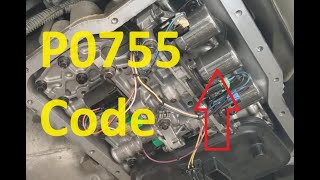
Technical definition: The SAE/OBD-II definition for P0755 is "Shift Solenoid 'B' Malfunction". 🎬 Watch: A quick overview of P0755 causes and common fixes. The code sets when the PCM/TCM commands a gear shift involving solenoid 'B', but input and output speed sensors report the actual gear ratio does not match the commanded ratio. This confirms a failure in the solenoid's control circuit or mechanical operation.
Can I Drive With P0755?
Yes, But With Caution. You can drive short distances, but we strongly advise against it. The transmission will likely shift harshly, get stuck in limp mode, or fail to shift entirely, creating a safety hazard. Forcing the transmission to operate in a single gear overheats the fluid and clutches, quickly turning a $300 solenoid repair into a $3,000 transmission rebuild.
Common Causes

- Low or Dirty Transmission Fluid (Very Common) — Low fluid levels reduce the hydraulic pressure required for solenoids to actuate. Old, contaminated fluid clogs the fine passages within the solenoid and valve body, causing the valve to stick or respond slowly.
- Wiring or Connector Issues (Common) — Wires leading to the transmission fray, short, or break from heat and vibration. The main transmission connector frequently suffers from corrosion, moisture intrusion, or pushed-out pins, interrupting the TCM signal.
- Failed Shift Solenoid 'B' (Common) — The solenoid itself fails electrically when an internal coil winding burns out, or mechanically when the internal plunger seizes from debris or wear.
- Clogged Transmission Filter (Common) — A clogged filter restricts fluid flow throughout the transmission, starving the solenoids of the hydraulic pressure they need to function.
- Internal Transmission Harness Failure (Less Common) — The wiring harness located inside the transmission oil pan becomes brittle from constant heat cycles. Connectors loosen or wires break, causing an intermittent or total loss of connection to the solenoid.
- Faulty Transmission Valve Body (Less Common) — The valve body's intricate passages block with sludge, or the body itself warps, preventing proper fluid flow to and from the shift solenoids.
- Internal Mechanical Transmission Failure (Rare) — Significant metal shavings in the fluid point to a failing clutch pack or hard part. This internal failure creates debris that destroys the solenoids and valve body.
- Faulty Powertrain/Transmission Control Module (PCM/TCM) (Rare) — The internal driver circuit for solenoid 'B' inside the computer burns out, sending an incorrect signal or no signal at all. Diagnose this only after ruling out all other electrical and mechanical faults.
Symptoms

- Check Engine Light is On — The TCM illuminates the Malfunction Indicator Lamp (MIL) immediately upon detecting a persistent fault in the solenoid 'B' circuit.
- Transmission Stuck in Gear (Limp Mode) — To prevent further damage, the TCM locks the transmission into a single fail-safe gear (typically 2nd or 3rd). The vehicle refuses to upshift or downshift, resulting in poor acceleration and high RPMs.
- Harsh, Erratic, or Delayed Shifting — The vehicle jerks, shudders, or slams into gear. You will notice a significant delay between the engine RPMs rising and the gear actually engaging.
- Transmission Slipping — The car loses power or feels 'between gears'. Engine RPMs flare up without a corresponding increase in vehicle speed.
- Transmission Overheating — Slipping and operating in the wrong gear generates excessive friction, overheating the transmission and producing a distinct burning smell.
- Reduced Fuel Economy — Forcing the engine to run at higher RPMs in the wrong gear consumes significantly more fuel.
- Engine Stalling or Misfire-like Symptoms — The car shudders or mimics an engine misfire because the torque converter lock-up clutch engages improperly due to the solenoid fault.
Diagnostic Flowchart
Tap your situation to follow the diagnostic path that matches what you're seeing on this code.
Common Fixes & Costs
- Transmission Fluid and Filter Change — Parts: $50-$120, Labor: $100-$250, ~1.5 hr book time (Intermediate)
- Repair Damaged Wiring or Connectors — Parts: $10-$60, Labor: $100-$350, ~2 hr book time (Intermediate)
- Replace Shift Solenoid 'B' — Parts: $20-$350, Labor: $150-$400, ~2.5 hr book time (Advanced)
- Replace Internal Transmission Wiring Harness — Parts: $75-$250, Labor: $200-$450, ~3 hr book time (Professional)
- Replace Transmission Valve Body — Parts: $300-$800, Labor: $300-$1000, ~3.5 hr book time (Professional)
- Replace or Reprogram PCM/TCM — Parts: $500-$1000, Labor: $150-$300, ~1.5 hr book time (Professional)
DIY vs Professional
- Transmission Fluid and Filter Change — Beginner:
Tools: Socket set, drain pan, funnel, new fluid, new filter/gasket kit, torque wrench. - Repair Damaged Wiring or Connectors — Beginner:
Tools: Multimeter, wire strippers, crimpers, heat shrink tubing, flashlight. - Replace Shift Solenoid 'B' — Beginner:
Tools: Socket set, drain pan, multimeter, service manual, inch-pound torque wrench. - Replace Transmission Valve Body — Beginner:
Tools: Professional-level tools, comprehensive socket/torque wrench set, service manual.
Used vs. New Parts: Buying Guide
When a used part is worth it: For a simple, single shift solenoid on an older, high-mileage vehicle where budget is the primary concern, a used OEM solenoid from a reputable salvage yard is viable. It is not advisable for complex, sealed solenoid packs.
Donor-vehicle mileage cap: roughly under 100000 miles for the part to have meaningful remaining life.
Donor quality checklist:
- Verify the donor vehicle was not scrapped due to transmission failure.
- Match the part number exactly; solenoids look identical but have different internal resistance.
- Ask about the salvage yard's testing process and standard warranty period.
Decision logic:
- If Vehicle is under warranty or has low mileage (<80k) → Buy new OEM to ensure longevity and compatibility.
- If The part is a sealed solenoid pack (common in Chrysler/Dodge/Jeep) → Buy a new aftermarket or new OEM part; the labor to replace it is high and you don't want to do it twice.
- If Vehicle is over 150K miles and the new part is over $200 → A tested, used part with a 90-day warranty is a reasonable budget-conscious choice.
Warranty tradeoff: Used parts typically come with a 30-90 day warranty covering the part only. New aftermarket parts offer 1-year to limited lifetime warranties. New OEM parts offer the best guarantee at the highest price.
Worst-case if a used part fails: $300-600 if a used solenoid fails after installation, representing the repeated labor cost plus the price of another part.
What Happens If You Wait — Timeline
- 0-2 weeks: Check Engine Light illuminates. Shifting is slightly harsh or delayed, but the vehicle remains drivable. (MPG impact: 0-5%% · Added cost: $0)
- 2 weeks - 3 months: Shifting becomes noticeably erratic. The transmission enters limp mode intermittently, getting stuck in 2nd or 3rd gear. Fuel economy drops. (MPG impact: 5-15%% · Added cost: $50-$150 in wasted fuel and minor fluid degradation.)
- 3-6 months: Driving in limp mode generates significant heat, burning the transmission fluid. Clutch packs glaze and internal seals harden. (MPG impact: 15-25%% · Added cost: $800 - $1,800 as the problem requires more than just a solenoid, possibly a valve body or minor clutch repair.)
- 6+ months: Catastrophic failure. Prolonged overheating destroys clutch packs and warps the valve body. The transmission stops functioning entirely. (MPG impact: >25% (or vehicle is undrivable)% · Added cost: $2,500 - $5,000+ for a full transmission rebuild or replacement.)
Cost of Not Fixing It
- 0-1 month: Erratic shifting, a 5-15% drop in fuel economy, and the vehicle getting stuck in limp mode. (Added cost: Negligible, but safety and drivability are severely compromised.)
- 1-6 months: Continued slipping generates excessive heat, degrading transmission fluid and damaging clutch packs and seals. (Added cost: $800 - $1,800)
- 6+ months: Catastrophic transmission failure. Widespread damage to clutch packs and the valve body requires a complete transmission rebuild or replacement. (Added cost: $2,500 - $5,000+)
Diagnosis Steps

- Check Transmission Fluid Level and Condition
With the engine warm and running in Park or Neutral, check the dipstick. Healthy fluid is bright red with a sweet smell. Dark brown/black fluid or a burnt odor indicates internal damage. Metallic shavings confirm severe internal wear.
Tools: Rag, Owner's Manual (Beginner) - Scan for Codes and Review Freeze Frame Data
Use an OBD-II scanner to confirm P0755 is active and check for related codes (e.g., P0700, P0750). Review freeze frame data to identify the vehicle's speed, RPM, and temperature when the code triggered.
Tools: OBD-II Scanner (Beginner) - Inspect External Wiring and Connectors
Visually inspect the wiring harness leading to the transmission. Look for frayed or melted wires. Disconnect the main transmission connector and check for corrosion, bent pins, or moisture.
Tools: Flashlight, Dielectric Grease (Beginner) - Test the Solenoid Circuit Resistance
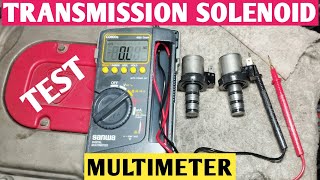
Disconnect the transmission connector and use a multimeter to measure the resistance of the Shift Solenoid 'B' circuit at the pins. Compare your reading to the manufacturer's specification (typically 5-15 Ohms). Infinity (OL) indicates an open circuit; near zero indicates a short.
Tools: Digital Multimeter, Wiring Diagram (Intermediate) - [PRO TIP] Command the Solenoid with a Bi-Directional Scan Tool
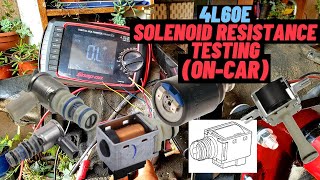
Use an advanced scan tool to command the 'B' solenoid on and off. Listen for a faint click from the transmission pan. If the command sends but there is no click, it confirms a fault in the circuit or the solenoid itself. 🎬 See how to perform a solenoid resistance test on-car.
Tools: Advanced Bi-Directional Scan Tool (Advanced) - [PRO TIP] Perform a Voltage Drop Test
With the circuit connected and key on, back-probe the power wire at the solenoid connector; it should read battery voltage. Perform a voltage drop test on the ground side with the solenoid commanded on; the reading must be under 0.1V. Higher readings indicate high circuit resistance.
Tools: Digital Multimeter with back-probes (Advanced) - Drop the Transmission Pan for Internal Inspection
Drain the fluid and remove the pan to visually inspect the internal wiring harness and the solenoid. Check the pan magnet for excessive metal debris to confirm or rule out major internal mechanical failure.
Tools: Socket Set, Drain Pan, Gasket Scraper, New Gasket (Advanced) - Test the Solenoid Directly
Apply a 12V power source and ground directly to the solenoid's pins. No click means the solenoid is mechanically stuck or electrically dead and requires replacement.
Tools: 12V Power Source, Jumper Wires (Professional) - [ADVANCED] Check Transmission Line Pressure
If fluid and electrical tests pass, connect a transmission pressure gauge to the test port. Measure pressure at idle in Drive and compare to specs. Low pressure indicates a failing pump or internal leaks.
Tools: Transmission Pressure Gauge Set, Service Manual (Advanced)
When This Code Triggers (Freeze-Frame Conditions)
- Engine Coolant Temp: 175-215°F (Vehicle is at full operating temperature.)
- RPM: 1500-3000 RPM (During acceleration or when a shift is commanded.)
- Engine Load: 20-70% (Under moderate acceleration or load, not at idle or full throttle.)
- Vehicle Speed: 25-55 mph (The fault often occurs during the shift from 2nd to 3rd or 3rd to 4th gear.)
Related Codes
- P0700 — A general Transmission Control System Malfunction code. It simply means the TCM has stored a fault and almost always appears alongside a specific code like P0755.
- P0750 — Shift Solenoid 'A' Malfunction. If P0750 and P0755 appear together, it is highly unlikely two individual solenoids failed. The problem is a shared resource: low fluid, a bad power/ground connection, or a failing TCM.
- P0760 — Shift Solenoid 'C' Malfunction. Similar to P0750, seeing P0755 and P0760 together indicates a systemic electrical or hydraulic issue rather than a single component failure.
- P0730 — Incorrect Gear Ratio. This code sets because the failing 'B' solenoid prevents the transmission from achieving the correct gear, triggering P0730 as a direct symptom of the P0755 cause.
Climate & Environmental Factors
- High Humidity / Water Exposure: Moisture penetrates external wiring harness connectors, causing pin corrosion and intermittent short circuits. This triggers a P0755 code even if the solenoid is perfectly fine.
- Extreme Heat: High operating temperatures accelerate fluid breakdown, harden internal seals, and shorten the life of the solenoid's electrical coil windings.
- Extreme Cold: Transmission fluid thickens significantly in freezing temperatures, causing delayed shifting and putting extra mechanical strain on the solenoids during the warm-up cycle.
How to Talk to a Mechanic About This Code
Say this: "I have a P0755 code for a shift solenoid 'B' malfunction and I'm experiencing harsh shifting. I'd like to schedule a diagnostic appointment. Please start by checking the fluid and testing the solenoid circuit, including wiring and connectors, before recommending a solenoid replacement."
This signals you understand the code points to a circuit problem, not just a bad part. It directs the shop toward proper diagnosis and prevents them from immediately replacing the solenoid, which doesn't solve the root cause if the wiring is at fault.
Avoid saying:
- 'My transmission is acting weird, can you fix it?'
- 'The check engine light is on, I think it's a transmission thing.'
- 'Just replace the shift solenoid, I looked it up.'
Questions to ask before authorizing the repair:
- What were the results of the electrical tests on the solenoid circuit? Can you provide the resistance and voltage readings?
- Did you find any issues with the external wiring harness or the main transmission connector?
- If you are recommending a solenoid replacement, what tests confirmed the solenoid itself failed and not the wiring or TCM?
- Will you inspect the fluid and the pan magnet for metal debris when you have it open?
- What is the warranty on the parts and labor for this specific repair?
Where to Take It: Dealer vs Independent vs Chain
- Dealer:
A safe but expensive choice. Best if you suspect a computer issue or a known TSB applies to your vehicle.
Best for: Vehicles still under powertrain warranty, Complex, manufacturer-specific issues or known TSBs, When a TCM/PCM replacement and programming is required
Downsides: Highest labor rates, typically $150-$250/hour., May default to replacing larger, more expensive assemblies (like a full valve body) instead of smaller components. (Typical cost: +50% vs. baseline) - Independent Shop:
Best fit, especially a transmission specialist. An experienced transmission tech accurately diagnoses electrical circuits vs. mechanical faults, saving you money.
Best for: Out-of-warranty vehicles where cost is a factor., Shops that specialize in transmission repair., Getting a second opinion after a dealer diagnosis.
Downsides: Quality and diagnostic capability vary widely. Vet shops carefully by checking reviews for transmission-specific work., May not have access to the very latest manufacturer software updates. (Typical cost: +0% vs. baseline) - Chain Shop:
AVOID for diagnosis. A P0755 code requires more than a simple code read. The risk of misdiagnosis and being sold an unnecessary transmission rebuild is high.
Best for: Simple fluid and filter changes if you trust the technicians.
Downsides: Technician skill varies dramatically., Often lack the advanced diagnostic tools and specialized experience for complex transmission circuit diagnostics., High pressure to upsell leads to recommendations for a full transmission replacement without proper diagnosis. (Typical cost: -10% vs. baseline)
When to Walk Away From the Repair
If the total estimated repair cost exceeds 50% of the car's current private-party market value, sell the vehicle as-is or trade it in.
- Car worth $4500, fix is $2500: Borderline. The repair is over 50% of the car's value. Get a second opinion, but it's likely time to walk away.
- Car worth $15000, fix is $1200: Fix it. The repair cost is well under the threshold and preserves the value of the vehicle.
- Car worth $3000, fix is $2800: Walk away. The repair cost is nearly the entire value of the car. Do not authorize this repair.
What Scan Tool You Need for This Code

Minimum: Reads manufacturer-specific transmission codes and displays live transmission data (like fluid temperature and solenoid commanded status).
A basic $20 code reader only shows the P0755 code. It cannot read enhanced transmission data or perform tests to distinguish a bad solenoid from a bad wire, leading you to guess and replace the wrong parts.
Budget: BlueDriver Pro (~$100) — Reads and clears enhanced transmission codes and displays live transmission data. However, it lacks bi-directional control to command the solenoid directly.
Mid-range: Innova 5610 / Foxwell NT604 (~$250-400) — Offers bi-directional control, allowing you to command the shift solenoid on and off from the scanner to test its function without disassembly. This is the single most important feature for accurately diagnosing this code.
Professional: Autel MaxiCOM MK808Z (~$500-1200) — Provides full bi-directional control, advanced live data graphing, and OEM-level diagnostics. Essential for a professional or serious DIYer diagnosing complex electronic transmission faults.
Rent vs buy: For a one-time P0755 diagnosis, buying a mid-range bi-directional scanner is often cheaper than one hour of a shop's diagnostic labor charge. Auto parts stores typically only rent basic code readers, which are insufficient.
How to Clear the Code After You Fix It
- Use an OBD-II scan tool to clear the diagnostic trouble codes (DTCs).
- Perform a complete drive cycle to allow the vehicle's readiness monitors to run.
- Rescan the vehicle to ensure the P0755 code does not return.
Drive cycle (~20 minutes): A generic drive cycle includes a cold start, idling for 2-3 minutes, a period of mixed city driving (stop-and-go), followed by 5-10 minutes of steady-state highway driving (55-60 mph), and allowing the vehicle to cool down.
Readiness monitors affected: Comprehensive Component Monitor, Catalyst Monitor, Oxygen Sensor Monitor
Before emissions retest: drive at least 50 miles to fully set monitors.
Watch out for:
- Disconnecting the battery clears the code but resets all readiness monitors to 'Not Ready', causing an automatic emissions test failure.
- If the underlying fault is not repaired, the code returns as soon as the TCM attempts to command the solenoid again.
Will This Fail Emissions / State Inspection?
Yes — this code typically fails an OBD-II emissions inspection.
- California: An illuminated Check Engine Light results in an automatic smog check failure. After repairs, a complete OBD-II drive cycle must be performed to set all readiness monitors before a retest.
- New York: The NYS DMV inspection includes an OBD-II scan. A P0755 code causes the vehicle to fail the emissions portion of the inspection.
- Texas: In emissions-testing counties, an active P0755 code is an automatic failure. Clearing the code right before the test results in a 'Not Ready' status, also leading to failure.
Most Commonly Affected Vehicles
- Ford Explorer, F-150, Focus, Ranger (2002-2011) — Common on 4R70W/4R75E and 5R55E transmissions. Issues stem from a failed solenoid pack, a faulty lead frame connector, or corroded external pins.
- Honda Accord, Odyssey, Civic, Pilot (2000-2008) — Debris frequently clogs the small filter screens on the dual-linear solenoid assembly. Cleaning these screens often resolves the issue without replacing the part.
- Toyota Camry, Corolla, RAV4, Sienna (2001-2009) — Solenoid failure is a frequent cause of harsh shifting. Replacement is straightforward, typically costing $300 to $500 at an independent shop.
- Dodge/Chrysler/Jeep Grand Caravan, Ram 1500, Town & Country, Journey (2005-2016) — These vehicles use a unified solenoid pack. A P0755 code requires replacing the entire block. Always check for TSBs regarding TCM software updates first.
- Chevrolet/GMC Silverado, Trailblazer, Impala, Equinox (2004-2012) — On 4L60E transmissions, issues point to the solenoid itself or the internal wiring harness, which becomes brittle and fails inside the pan.
- Hyundai/Kia Elantra, Accent, Sorento, Optima (2006-2018) — The internal transmission harness connector frequently comes loose, causing multiple solenoid codes. On some models, the entire valve body assembly must be replaced.
- Nissan Altima, Maxima, Pathfinder, Sentra (2005-2015) — Conventional automatic transmissions log P0755 due to solenoid or valve body failure. Solenoid resistance should typically test between 10 to 20 ohms.
- Mazda 3, 6, CX-7 (2006-2014) — Shares transmissions with Ford (FN4A-EL, FS5A-EL) and suffers from identical solenoid and connector failures.
Manufacturer-Specific Notes
- Ford: On trucks with 5R55 series transmissions, P0755 is frequently caused by a worn servo bore rather than just a bad solenoid.
- Honda/Acura: A P0755 code is often triggered by debris clogging the small mesh screens on the solenoid assembly. Professional cleaning of these screens restores function without requiring new parts.
- Chrysler/Dodge/Jeep: Failure of one solenoid requires replacing the entire solenoid pack. TSB 21-013-08 recommends a TCM software update as a first step before replacing hardware on certain models.
- Toyota: TSB TC002-06 identifies a fault in the Engine Control Module (ECM) causing P0755 and harsh shifting on 2001-2003 RAV4s, requiring ECM replacement rather than transmission work.
- Hyundai/Kia: A loose internal transmission harness connector is a known issue. If not perfectly seated after a fluid change, it causes intermittent signal loss and triggers multiple solenoid codes.
Real Owner Stories
2004 Ford F-150 with rebuilt transmission
After a transmission rebuild, the truck displayed a 'Trans Fault' warning, a flashing O/D light, and code P0755, stuck in limp mode.
What they tried:
- Replaced shift solenoids 'A' and 'B' and the internal transmission wiring harness.
- Checked the new harness and solenoid resistance with a multimeter, showing correct specs.
Outcome: The P0755 code persisted. Replacing the parts indicated by the code did not solve the problem, pointing to a deeper, unresolved electrical issue in the external wiring or PCM.
Lesson: When part replacement doesn't fix the code, the fault is in the circuit or control module. Perform comprehensive voltage drop tests on the entire circuit back to the computer before buying more parts.
2016 MINI Countryman S ALL4 (R60)
The vehicle entered limp mode daily. A shop diagnosed a bad shift solenoid.
What they tried:
- The owner received a $1,200 quote for parts and labor to replace the solenoid pack.
Outcome: Forum members confirmed $1,200 is a reasonable price, factoring in 4-6 hours of labor, expensive specific ATF, and the cost of replacing all solenoids and the internal harness at once.
Lesson: Solenoid replacement quotes around $1,000-$1,200 at independent shops are often fair, as the job involves dropping the pan, several hours of labor, and expensive vehicle-specific fluid.
2012 Hyundai Elantra with P0700 & P0755
The car downshifted harshly on the highway and entered limp mode with codes P0700 and P0755.
What they tried:
- An independent mechanic replaced the solenoid pack, but the problem returned the next day.
- A dealer diagnosed the same codes and recommended a full transmission replacement.
Outcome: A second independent mechanic found the issue was in the wiring/TCM, not the solenoid. The dealer's recommendation for a new transmission was an expensive leap without confirming the root electrical cause.
Lesson: If a solenoid replacement fails, do not immediately agree to a full transmission replacement. Insist on a full circuit diagnosis from a transmission specialist.
How to Prevent This Code From Triggering
- Change transmission fluid and filter regularly (Every 30,000 to 60,000 miles, or as specified by the manufacturer.) — Clean fluid maintains correct hydraulic pressure and removes contaminants that clog solenoid passages and the valve body.
- Use exact OEM-specified Automatic Transmission Fluid (ATF) (Every time fluid is added or changed.) — Using the wrong fluid alters viscosity and frictional properties, causing solenoids to malfunction and damaging internal seals.
- Install an aftermarket transmission cooler (One-time installation, especially for vehicles used for towing.) — Overheating destroys solenoids and transmissions. An external cooler keeps fluid temperatures stable, extending the life of all electronic components.
- Drive smoothly and respect towing limits (Daily driving habit.) — Hard acceleration and excessive towing generate extreme heat, breaking down fluid and putting immense strain on solenoids and clutches.
Frequently Asked Questions
Is it safe to drive with a P0755 code?
No. Your transmission will shift erratically or get stuck in one gear, creating a safety hazard. Continuing to drive overheats the transmission, causing severe internal damage.
What's the very first thing I should check for a P0755 code?
Check the transmission fluid level and condition. Low, old, or burnt fluid is the most common cause of this code and is simple to verify at home.
Can a transmission fluid flush fix a P0755 code?
Yes, if dirty fluid or a small piece of debris is partially clogging the solenoid. However, if the solenoid has failed electrically or is mechanically stuck, new fluid will not fix it.
Can I fix a P0755 code myself?
Checking fluid and inspecting external wiring are DIY-friendly tasks. Replacing a shift solenoid requires draining the transmission, removing the oil pan, and working with sensitive internal components. Leave this to a professional if you lack transmission experience.
My mechanic replaced the solenoid, but the code came back. What now?
This usually results from misdiagnosing a wiring issue as a bad solenoid. The next step is performing pinpoint electrical tests, like a voltage drop test, to find the break or short in the circuit.
What does it mean if I have P0755 along with P0750 and P0760?
Multiple solenoid codes indicate a shared system failure, not individual bad solenoids. Focus diagnosis on the main power/ground supply, the internal wiring harness, or the TCM.
Will clearing the code fix the problem?
No. The underlying electrical or mechanical fault remains, and the code will return as soon as the computer runs its self-test during your next drive.
Key Takeaways
- P0755 indicates a failure in the 'B' shift solenoid circuit, locking your transmission out of specific gears and triggering limp mode.
- Check your transmission fluid first; low or burnt fluid causes over 40% of solenoid-related fault codes.
- Stop driving immediately to prevent a $300 solenoid replacement from escalating into a $3,000+ complete transmission rebuild due to overheating.
- Test the electrical circuit with a multimeter before buying parts; frayed wires or corroded connectors cause P0755 just as often as a dead solenoid.
Helpful Videos


The information in this article is provided for general reference and educational purposes only. Vehicle specifications, procedures, and part compatibility can vary by production date, trim level, and region. Always consult your vehicle's factory service manual and verify part numbers before purchasing or performing repairs. Safety-critical components such as airbags, seat belts, and braking systems should be installed by a qualified professional.
- 🎬 Helpful Videos
- What Does P0755 Mean?
- Can I Drive With P0755?
- Common Causes
- Symptoms
- Diagnostic Flowchart
- Common Fixes & Costs
- DIY vs Professional
- Used vs. New Parts: Buying Guide
- What Happens If You Wait — Timeline
- Cost of Not Fixing It
- Diagnosis Steps
- When This Code Triggers (Freeze-Frame Conditions)
- Related Codes
- Climate & Environmental Factors
- How to Talk to a Mechanic About This Code
- Where to Take It: Dealer vs Independent vs Chain
- When to Walk Away From the Repair
- What Scan Tool You Need for This Code
- How to Clear the Code After You Fix It
- Will This Fail Emissions / State Inspection?
- Most Commonly Affected Vehicles
- Manufacturer-Specific Notes
- Real Owner Stories
- 2004 Ford F-150 with rebuilt transmission
- 2016 MINI Countryman S ALL4 (R60)
- 2012 Hyundai Elantra with P0700 & P0755
- How to Prevent This Code From Triggering
- Frequently Asked Questions
- Is it safe to drive with a P0755 code?
- What's the very first thing I should check for a P0755 code?
- Can a transmission fluid flush fix a P0755 code?
- Can I fix a P0755 code myself?
- My mechanic replaced the solenoid, but the code came back. What now?
- What does it mean if I have P0755 along with P0750 and P0760?
- Will clearing the code fix the problem?
- Key Takeaways
- 🎟️ Get 5% Off