

OBD-II Code P0760: Shift Solenoid 'C' Malfunction
The Ultimate Guide to Understanding, Diagnosing, and Fixing P0760
- A failed shift solenoid 'C' causes 70% of P0760 codes, making a $200-$700 solenoid replacement the most likely fix.
- Expect immediate drivability issues like harsh shifting, slipping, or the vehicle locking into 2nd or 3rd gear (limp mode) to prevent internal damage.
- Stop driving immediately; pushing a transmission in limp mode escalates a $300 repair into a $3,000+ complete transmission rebuild within days.
- Always check transmission fluid condition and battery voltage first, as dirty fluid or a weak battery triggers false solenoid codes and wastes money on unnecessary parts.
What Does P0760 Mean?

The Powertrain Control Module (PCM) or Transmission Control Module (TCM) detected a problem with the 'C' shift solenoid. This small, electronically controlled valve directs transmission fluid to shift gears smoothly. When it malfunctions, the transmission cannot shift correctly, causing harsh shifting, slipping, or a failure to engage specific gears.
Technical definition: The SAE/OBD-II definition is "Shift Solenoid 'C' Malfunction." The control module flags this code when it detects a discrepancy between the commanded state of the 'C' solenoid and the actual resulting gear ratio, indicating an electrical fault or mechanical failure.
Can I Drive With P0760?
Yes, But With Caution. You can drive a short distance, but we strongly advise against it. Your vehicle enters a 'limp mode' that limits speed and gear selection to prevent catastrophic damage. Continuing to drive overheats the transmission, escalating a minor issue into a $1,800-$3,500 complete rebuild.
Common Causes

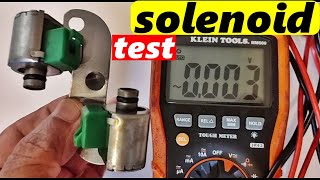
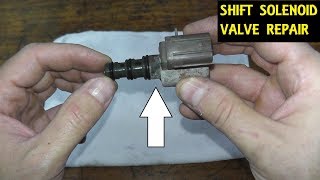
- Faulty Shift Solenoid 'C' (Very Common) — The solenoid's internal coil burns out, develops an electrical short, or its mechanical plunger gets stuck 🎬 See this walkthrough on testing and replacing shift solenoid valves from debris, preventing it from directing fluid pressure correctly.
- Low, Dirty, or Contaminated Transmission Fluid (Common) — Fluid that is low or contaminated with sludge and metal shavings clogs the shift solenoid's passages or the main transmission filter. This starves the solenoid of the hydraulic pressure required to function.
- Wiring or Connector Issues (Common) — The electrical wiring to the solenoid frays, shorts, breaks, or corrodes from heat and vibration. Connectors also loosen or suffer fluid contamination, interrupting the TCM signal.
- Thermal (Heat-Related) Intermittent Failure (Less Common) — As the transmission heats up, the resistance in the solenoid's coil increases beyond its specified range, causing it to fail only when hot. The code appears after driving and disappears when the car cools down.
- Low Vehicle Voltage or Unstable Power Supply (Rare) — A failing battery, loose terminals, or a bad alternator provides low voltage to the TCM. This causes the module to behave erratically and incorrectly flag a solenoid fault.
- Faulty Transmission Valve Body (Rare) — The valve body is the hydraulic control center. Cracks, warping, or excessive wear cause internal leaks and pressure losses that affect solenoid operation, even if the solenoid itself is functional.
- Faulty Powertrain/Transmission Control Module (PCM/TCM) (Rare) — A bad driver circuit within the control module prevents it from properly commanding the solenoid. This is a last-resort diagnosis after eliminating all other possibilities.
Symptoms

- Check Engine Light is On — The primary indicator that the vehicle's computer detected a fault. A dedicated transmission warning lamp also illuminates on some models.
- Transmission Stuck in Gear ('Limp Mode') — The transmission locks into a single gear (usually 2nd or 3rd) to protect itself from internal damage, severely limiting vehicle speed.
- Harsh, Delayed, or Erratic Shifting — You feel a noticeable jerk, delay, or clunking noise when the transmission shifts gears, especially into or out of the gear controlled by solenoid 'C'.
- Transmission Slipping — Engine RPMs increase, but the vehicle does not accelerate accordingly. This rapidly causes overheating and internal clutch damage.
- Decreased Fuel Economy — Because the transmission cannot shift into the most efficient gear (like overdrive), the engine runs at higher RPMs, consuming significantly more fuel.
- Loss of Reverse Gear — In specific transmissions, shift solenoid 'C' controls the hydraulic circuit for reverse. A failure prevents the vehicle from backing up.
Diagnostic Flowchart
Tap your situation to follow the diagnostic path that matches what you're seeing on this code.
Common Fixes & Costs

- Replace Shift Solenoid 'C' — Parts: $50-$250, Labor: $150-$450, ~2.5 hr book time (Intermediate)
- Transmission Fluid and Filter Change — Parts: $50-$150, Labor: $100-$250, ~1.5 hr book time (DIY)
- Repair or Replace Wiring Harness/Connector — Parts: $20-$100, Labor: $150-$300, ~2 hr book time (Intermediate)
- Replace Transmission Valve Body — Parts: $300-$1,000+, Labor: $300-$700, ~4 hr book time (Professional)
- Replace Transmission Control Module (TCM) — Parts: $200-$800, Labor: $150-$400, ~2.5 hr book time (Professional)
DIY vs Professional
- Transmission Fluid and Filter Change — Beginner: Yes
Tools: Socket set, drain pan, funnel, torque wrench, correct fluid type. - Replace Shift Solenoid 'C' — Beginner: No (Intermediate DIYer)
Tools: Socket set, torque wrench, drain pan, multimeter, vehicle-specific service manual. - Repair or Replace Wiring Harness/Connector — Beginner: No (Intermediate DIYer)
Tools: Multimeter, wire cutters/strippers, soldering iron or crimping tool, heat shrink tubing, wiring diagrams. - Replace Transmission Valve Body — Beginner: No (Professional Recommended)
Tools: Extensive socket/wrench set, inch-pound and foot-pound torque wrenches, service manual, clean assembly area. - Replace Transmission Control Module (TCM) — Beginner: No (Professional Recommended)
Tools: Basic hand tools for removal, dealership-level scan tool for programming.
Used vs. New Parts: Buying Guide
When a used part is worth it: For a simple shift solenoid, the cost savings of a used part are minimal compared to the labor involved. A used part only makes sense for high-cost assemblies like a complete valve body or solenoid pack on older, high-mileage vehicles.
Donor-vehicle mileage cap: roughly under 80000 miles for the part to have meaningful remaining life.
Donor quality checklist:
- Verify the part number matches exactly; transmission components are highly specific.
- Source from a reputable salvage yard offering at least a 30-90 day warranty.
- Avoid parts from vehicles scrapped due to transmission failure or high-mileage wear.
Decision logic:
- If The part is a single, inexpensive solenoid and labor is required → buy new (OEM or quality aftermarket). The risk of premature failure of a used part outweighs the small cost savings.
- If The part is an expensive solenoid pack or valve body on a vehicle over 150K miles → a low-mileage used part is a reasonable option to save money, but accept the risk of a shorter lifespan.
- If The part is electronic, like a TCM → favor a remanufactured unit with a warranty over a used one, as used electronics carry a high risk of failure and programming compatibility issues.
Warranty tradeoff: Used parts typically have a 30-90 day part-only warranty, meaning you pay for labor again if it fails. New aftermarket parts often carry a 1-year to lifetime warranty.
Worst-case if a used part fails: $300-600 if a used solenoid or pack fails after installation, primarily due to repeated labor costs.
What Happens If You Wait — Timeline
- 0-4 weeks: Check Engine Light illuminates. You notice occasional, subtle harsh shifts or a slight delay when shifting, especially when the vehicle is cold or hot. (MPG impact: 0-5%% · Added cost: $0)
- 1-3 months: Shifting problems become frequent. The transmission intermittently gets stuck in a single gear ('limp mode'), forcing a restart. Fuel economy noticeably declines. (MPG impact: 5-15%% · Added cost: $50-200 in wasted fuel and potential towing.)
- 3-6 months: Slipping and harsh shifting generate significant heat, breaking down transmission fluid and accelerating wear on internal clutches and seals. (MPG impact: 10-20%% · Added cost: $800-$1,700 as damage extends to the valve body, requiring a more costly repair.)
- 6+ months: Catastrophic internal failure. Burnt clutch material contaminates the fluid, clogs the filter, and scores hard parts. The vehicle is undrivable. (MPG impact: 20%+% · Added cost: $2,000-$4,000+ for a complete transmission rebuild or replacement.)
Cost of Not Fixing It
- 0-1 month: Noticeable decrease in fuel economy (5-15%), harsh shifting, and potential for being stranded if the vehicle enters limp mode. (Added cost: 50-150 in extra fuel costs, plus potential towing fees.)
- 1-6 months: Continued slipping generates excessive heat, breaking down transmission fluid and causing permanent damage to clutch packs and the valve body. (Added cost: $800-$1,700 for a valve body replacement, escalating the original repair cost significantly.)
- 6+ months: Catastrophic internal transmission failure. Friction material from burnt clutches contaminates the entire system, requiring a complete rebuild. (Added cost: $2,000-$4,000+ for a full transmission replacement or rebuild.)
Diagnosis Steps

- Check Transmission Fluid Level and Condition
Park on level ground and check the transmission dipstick following the manufacturer's procedure. The fluid must be at the 'Full' mark and bright red. Low, brown, black, or burnt-smelling fluid indicates degradation. Dark fluid with metallic particles confirms severe internal wear.
Tools: Rag or paper towel (Beginner) - Scan for Codes and Review Freeze Frame Data
Use an OBD-II scanner to confirm P0760 is active. Check for related transmission codes (P0761-P0763) or power codes (P0562, P0882). Analyze freeze-frame data to identify the vehicle speed, RPM, and engine load when the fault occurred.
Tools: OBD-II Scanner (Beginner) - Inspect Wiring and Connectors
Visually inspect the wiring harness routing to the transmission. Look for chafing, melting, or corrosion. Unplug the main transmission harness connector and check for bent, pushed-out, or fluid-contaminated pins.
Tools: Flashlight, mirror (Intermediate) - Test the Solenoid Circuit Resistance
Using a multimeter set to Ohms (Ω), check the resistance of the solenoid's coil at the transmission connector. Compare the reading to manufacturer specs (typically 5-20 Ω cold). A reading of 0 Ω is a short; infinite (O.L.) is an open circuit. Test again when hot to catch thermal failures.
Tools: Multimeter, vehicle-specific wiring diagram (Advanced) - Check for Power and Ground at the Connector
With the key on (engine off), use a multimeter set to DC Volts to verify the solenoid circuit receives a 12V reference signal from the TCM. Verify a solid ground connection (close to 0 Ω to the chassis). Missing power or ground isolates the fault to the wiring or TCM.
Tools: Multimeter, vehicle-specific wiring diagram (Advanced) - Command the Solenoid with a Bi-Directional Scanner
Use an advanced scan tool to directly command the 'C' solenoid on and off. Listen for a distinct 'click' from inside the transmission pan. A click confirms the wiring and TCM driver work, isolating the issue to a mechanical or hydraulic fault.
Tools: Advanced Bi-Directional Scan Tool (Professional) - [ADVANCED] Monitor Live Data PIDs
While driving, monitor the 'Shift Solenoid C Command' and 'Current Gear' PIDs. A mismatch where the TCM commands the shift but the gear does not change indicates a mechanical/hydraulic issue. If the command is never sent, suspect a TCM logic problem.
Tools: Advanced Scan Tool (Advanced) - [PRO TIP] Perform a Transmission Hydraulic Pressure Test
Connect a transmission pressure gauge to the test port. With the engine running, command solenoid 'C' on and off via a scan tool. If pressure fails to rise and fall according to the manufacturer's chart, the transmission pump is failing, or the valve body is blocked.
Tools: Transmission pressure gauge set, vehicle-specific service manual (Professional) - Inspect the Valve Body and Pan
If electrical tests pass, drain the fluid and remove the transmission oil pan. Inspect the valve body for cracks or scoring. Excessive metallic debris or clutch material in the pan indicates a major internal failure requiring a rebuild.
Tools: Socket set, torque wrench, drain pan (Advanced)
When This Code Triggers (Freeze-Frame Conditions)
- Engine Coolant Temp: 180-210°F (The fault usually occurs when the vehicle is fully warmed up, indicating a thermal failure.)
- RPM: 1500-2500 (Occurs during moderate acceleration when attempting to shift into a higher gear.)
- Engine Load: 25-60% (Triggered under normal driving load, not necessarily heavy acceleration.)
- Vehicle Speed: 30-55 mph (Commonly occurs during city or highway cruising speeds when an upshift is commanded.)
Related Codes
- P0761 — Indicates Shift Solenoid 'C' is Stuck Off. The TCM commanded the solenoid ON, but the transmission did not shift. This points to a mechanical issue (stuck plunger, hydraulic blockage) rather than an electrical fault.
- P0762 — Indicates Shift Solenoid 'C' is Stuck On. The TCM commanded the solenoid OFF, but it remained activated. This strongly suggests debris is preventing the solenoid valve from closing.
- P0763 — Points specifically to an electrical problem in the Shift Solenoid 'C' circuit (short to power, short to ground, or open circuit). Diagnosis must focus entirely on wiring, connectors, and coil resistance.
- P0700 — A generic Transmission Control System Malfunction code. It simply turns on the Check Engine Light to indicate the TCM stored a specific fault code (like P0760). Ignore P0700 and diagnose the P0760.
Climate & Environmental Factors
- High Operating Temperature: As the transmission heats up, the electrical resistance of the solenoid's internal coil increases beyond its specified range, causing it to ignore TCM commands. Once cooled, resistance normalizes and the symptom disappears, requiring hot-testing for accurate diagnosis.
- Extreme Cold Weather: Cold temperatures thicken transmission fluid, causing delayed or harsh shifting on initial startup. While this triggers general performance codes, it rarely causes a specific P0760 electrical malfunction unless the fluid is severely degraded.
How to Talk to a Mechanic About This Code
Say this: "I have a P0760 code for shift solenoid 'C'. I authorize one hour of diagnostic time. Please check the fluid condition and test the solenoid's electrical circuit—including its resistance when hot—before recommending part replacements."
This signals you've done your research and want a proper diagnostic path, not just a part swap. It specifically requests tests for common failure points and caps the initial cost.
Avoid saying:
- 'My transmission is acting weird.' (too vague)
- 'Just fix the P0760 code.' (invites replacing the solenoid without proper diagnosis)
- 'Do whatever you think is best.' (gives a blank check for unnecessary repairs)
Questions to ask before authorizing the repair:
- What was the condition and level of the transmission fluid?
- What was the Ohm reading of the solenoid coil, and was it tested when the transmission was hot?
- Did you verify power and ground at the solenoid connector?
- If you are recommending a solenoid replacement, what is the warranty on the part and your labor?
Where to Take It: Dealer vs Independent vs Chain
- Dealer:
Recommended only if your vehicle is under warranty or is a model with a known, covered issue (e.g., Ford Focus/Fiesta).
Best for: Vehicles under warranty., Vehicles with known manufacturer-specific issues (like Ford TCM failures) covered by extended warranties or recalls., Complex diagnostics requiring proprietary software.
Downsides: Highest labor rates, often 1.5-2x more than independent shops., May default to replacing larger, more expensive assemblies rather than smaller components. (Typical cost: +50% vs. baseline) - Independent Shop:
A good choice, provided you find an independent shop that specializes in transmissions.
Best for: Out-of-warranty vehicles where cost is a primary concern., Well-known and common transmission problems.
Downsides: Quality and expertise vary widely., May lack specialized diagnostic equipment for complex models. (Typical cost: +0% vs. baseline) - Chain Shop:
AVOID for diagnosis and repair. They are not equipped for the proper electrical and hydraulic diagnostics that a P0760 code requires.
Best for: Basic fluid changes, provided they use the correct manufacturer-specified fluid.
Downsides: Technician skill varies dramatically., Lack specialized tools and training for in-depth transmission diagnostics., High pressure to upsell services. (Typical cost: -10% vs. baseline)
When to Walk Away From the Repair
If the estimated repair cost exceeds 50% of the car's private-party value, sell or trade it in instead of repairing it.
- Car worth $5000, fix is $600: Fix it. This is a relatively low-cost repair compared to the vehicle's value.
- Car worth $4000, fix is $2500: Walk away. The repair cost is over 60% of the car's value, indicating a new transmission is needed. Put this money toward a replacement vehicle.
- Car worth $8000, fix is $3500: Borderline. If the rest of the car is in excellent condition, fixing it might be worthwhile. Get a second opinion before proceeding.
What Scan Tool You Need for This Code
Minimum: A scanner that reads manufacturer-specific transmission codes and views live data for transmission-related PIDs.
A basic $20 code reader only shows the P0760 code. It cannot show live command status from the TCM, transmission fluid temperature, or command the solenoid to activate—critical steps to differentiate a bad solenoid from a wiring problem.
Budget: Ancel BD310 / Basic Foxwell or Autel models (~$60) — Reads and clears the P0760 code and shows generic live data like engine RPM and vehicle speed. Insufficient for a full diagnosis.
Mid-range: BlueDriver Pro / Foxwell NT510 Elite (~$120) — Reads manufacturer-specific transmission codes, graphs live data PIDs, and reads transmission fluid temperature. The Foxwell NT510 Elite offers bi-directional control to command the solenoid.
Professional: Autel MaxiCOM MK808 / Innova 5610 (~$500) — Provides full bi-directional control, allowing you to command the 'C' solenoid on and off to listen for a click. It also performs transmission-specific relearn procedures after a repair.
Rent vs buy: AutoZone's 'Loan-A-Tool' program allows you to borrow a basic OBD-II scanner for free. However, these loaner tools lack the advanced functions needed for a full P0760 diagnosis. Buying a mid-range scanner is a worthwhile investment for DIYers.
How to Clear the Code After You Fix It
- Use an OBD-II scan tool to clear the diagnostic trouble code (DTC).
- Perform a transmission relearn procedure if required by the manufacturer.
- Conduct a complete drive cycle to allow the vehicle's readiness monitors to run.
Drive cycle (~30 minutes): A comprehensive drive cycle includes a cold start (sitting for 8+ hours), 5-10 minutes of stop-and-go city driving, followed by 15 minutes of steady highway driving between 50-65 mph, and allowing the vehicle to cool down.
Readiness monitors affected: Comprehensive Component Monitor, Transmission-related monitors
Before emissions retest: drive at least 100 miles to fully set monitors.
Watch out for:
- Disconnecting the battery clears the code but resets all readiness monitors to 'Not Ready', causing an automatic emissions test failure.
- The code returns immediately if the underlying mechanical or electrical fault is not repaired.
- Failing to perform a specific drive cycle prevents readiness monitors from setting for hundreds of miles.
Will This Fail Emissions / State Inspection?
Yes — this code typically fails an OBD-II emissions inspection.
- California: An illuminated Check Engine Light from a P0760 code is an automatic smog check failure. After repair, all readiness monitors must be 'Ready' before re-testing, requiring a specific drive cycle.
- New York: The NYVIP3 inspection includes an OBD-II scan. A P0760 code causes an automatic failure. Clearing the code without a proper repair results in a 'Not Ready' status, also leading to failure.
- Texas: In counties requiring emissions testing, an active P0760 code results in an automatic failure. After clearing the code, you can only have one monitor 'Not Ready' to pass.
Most Commonly Affected Vehicles
- Honda Odyssey, Accord, Pilot (2002-2013) — On 2005-2010 models, P0760 is sometimes related to a failing Torque Converter Clutch (TCC) solenoid located near the shift solenoids. Inspect both.
- Ford Focus, Fiesta (2011-2018) — The DPS6 PowerShift automatic transmission is notorious for TCM failures that log solenoid codes. Ford issued an extended warranty and settled a major class-action lawsuit over these defects.
- Chrysler/Dodge/Jeep Town & Country, Grand Caravan, Ram 1500 (2008-2016) — The integrated solenoid pack is a common failure point. A fault in one solenoid requires replacing the entire pack. Often accompanied by a P0882 code (TCM Power Input Signal Low).
- Hyundai/Kia Elantra, Sonata, Optima, Sorento (2001-2015) — Hyundai issued several Technical Service Bulletins (TSBs) for solenoid codes, often requiring a TCM software update before replacing hardware.
- Chevrolet Silverado, Cruze, Malibu (2005-2017) — P0760 frequently results from issues with the internal transmission wiring harness, which becomes brittle from heat and fluid exposure.
- Toyota Camry, Sienna, RAV4 (2004-2012) — Generally reliable, but aging models experience straightforward solenoid failures resolved by a direct replacement after electrical testing.
Manufacturer-Specific Notes
- Honda: Transmission codes are frequently caused by failing torque converter clutch solenoids or clogged passages in the linear solenoid assembly, rather than the flagged shift solenoid. Diagnose the entire system.
- Chrysler/Dodge/Jeep: These vehicles use an integrated solenoid pack. A failure of one solenoid requires replacing the entire unit. Low power input to the TCM often triggers this, setting a P0882 code alongside P0760.
- Ford: On 2011-2018 Focus and Fiesta models with the DPS6 transmission, P0760 strongly indicates a TCM failure. Check the official Ford Transmission Settlement website for extended warranty eligibility before paying for repairs.
- Hyundai: Hyundai issued TSBs specifying that the TCM requires a software update to prevent false solenoid codes before replacing any hardware. Always check for applicable TSBs first.
Real Owner Stories
2010 Dodge Grand Caravan with an intermittent P0760
Check engine light and limp mode activated only after the van was fully warmed up.
Outcome: The wildly fluctuating resistance reading confirmed a thermal failure. Replacing the entire solenoid pack resolved the P0760 code permanently.
Lesson: If your P0760 code appears only when hot, perform diagnostic tests under those exact conditions. A part that tests 'good' when cold can still be the root cause.
2014 Ford Focus with 93K miles and multiple transmission codes
The car shifted poorly, lost reverse, and threw a check engine light. The problem vanished overnight but returned weeks later.
Outcome: The dealer confirmed the TCM was at fault and replaced it under Ford's warranty program at no cost to the owner.
Lesson: For specific models with known issues (like the Ford Focus/Fiesta TCM), check for recalls or extended warranties before starting diagnosis.
1999 Honda Odyssey with hard shifting and a P0740 code
The vehicle experienced severe hard shifting between 1st and 2nd gear.
Outcome: The owner replaced the 'B' and 'C' shift solenoids (a $35 pair of parts). This immediately and completely fixed the hard shifting problem without draining the fluid.
Lesson: Cleaning a solenoid is often a temporary solution. Replacement is the only permanent fix, and for some models, it is a surprisingly low-cost DIY repair.
2010 Ford Focus with P0760 after an ignition switch repair
After replacing a faulty ignition switch to fix a no-start issue, the car would not shift past 45 mph and threw a P0760 code.
Outcome: The owner concluded the solenoid failed independently or was damaged by low voltage during the no-start issue, and purchased a full set of solenoids to replace.
Lesson: Correlation does not equal causation. A low vehicle voltage event during an unrelated problem can damage sensitive electronics like a shift solenoid.
How to Prevent This Code From Triggering
- Regular Transmission Fluid Changes (Every 30,000 to 60,000 miles) — Fresh fluid maintains correct viscosity and contains detergents that prevent sludge buildup, ensuring the fine passages within the solenoids and valve body remain clear.
- Use the Correct Manufacturer-Specified Fluid (Every fluid change) — Using universal ATF instead of specific fluids (like Honda DW-1 or Mopar ATF+4) causes improper clutch engagement, overheating, and seal damage.
- Install an External Transmission Cooler (Once, especially for vehicles used for towing or in hot climates) — Heat is the primary cause of transmission failure. An auxiliary cooler stabilizes fluid temperatures, preventing breakdown and extending solenoid life.
- Check and Maintain Battery and Electrical System Health (Annually) — A weak battery or failing alternator provides unstable voltage to the TCM, causing erratic behavior and triggering false solenoid codes.
Frequently Asked Questions
What does Shift Solenoid 'C' actually do?
It is an electronically controlled valve that opens and closes to direct the flow of transmission fluid. This hydraulic pressure engages or disengages the clutches and bands inside the transmission to shift into a specific gear.
How much does it cost to fix code P0760?
A simple transmission fluid change costs $150-$400, while replacing the shift solenoid typically costs $200-$700. If the problem requires a new valve body or TCM, the repair cost rises to $500-$1,700 or more.
Can a bad or weak battery cause a P0760 code?
Yes. Modern transmissions rely on stable voltage. A weak battery or poor connection causes the TCM to receive erratic signals, leading it to incorrectly flag a solenoid fault.
My car only shows P0760 symptoms when it's hot. What could be the cause?
This points to a thermal failure. The solenoid's internal coil develops high resistance when hot, causing it to malfunction, but works normally when cooled. Test the solenoid's resistance immediately after the problem occurs to confirm the out-of-spec reading.
What is the most common misdiagnosis for P0760?
The most common mistake is immediately replacing the shift solenoid without testing the circuit. The root cause is often dirty fluid, a corroded connector, or a damaged wire that is much cheaper to fix.
Will changing the transmission fluid fix a P0760 code?
If dirty or low fluid is restricting the solenoid's movement, a fluid and filter change fixes it. However, if the solenoid has already failed electrically, changing the fluid will not solve the issue.
Can I replace just one shift solenoid or do I need to replace the whole pack?
This depends on your vehicle's design. On Toyota and Honda, individual solenoids are replaceable. On Chrysler, Dodge, and some Ford models, solenoids are integrated into a single block, requiring full assembly replacement.
My mechanic replaced the solenoid, but the code came back. What now?
The issue is elsewhere. Meticulously re-check the wiring for intermittent shorts, check for a pending TCM software update, inspect the valve body for blockages, or test the TCM itself.
What is the difference between P0760 and P0763?
P0760 is a general malfunction code indicating an electrical or mechanical issue with the solenoid's operation. P0763 is a highly specific electrical circuit fault code, meaning the problem is strictly in the wiring, connector, or coil.
Key Takeaways
- A failed shift solenoid 'C' causes 70% of P0760 codes, making a $200-$700 solenoid replacement the most likely fix.
- Expect immediate drivability issues like harsh shifting, slipping, or the vehicle locking into 2nd or 3rd gear (limp mode) to prevent internal damage.
- Stop driving immediately; pushing a transmission in limp mode escalates a $300 repair into a $3,000+ complete transmission rebuild within days.
- Always check transmission fluid condition and battery voltage first, as dirty fluid or a weak battery triggers false solenoid codes and wastes money on unnecessary parts.
Helpful Videos


The information in this article is provided for general reference and educational purposes only. Vehicle specifications, procedures, and part compatibility can vary by production date, trim level, and region. Always consult your vehicle's factory service manual and verify part numbers before purchasing or performing repairs. Safety-critical components such as airbags, seat belts, and braking systems should be installed by a qualified professional.
- 🎬 Helpful Videos
- What Does P0760 Mean?
- Can I Drive With P0760?
- Common Causes
- Symptoms
- Diagnostic Flowchart
- Common Fixes & Costs
- DIY vs Professional
- Used vs. New Parts: Buying Guide
- What Happens If You Wait — Timeline
- Cost of Not Fixing It
- Diagnosis Steps
- When This Code Triggers (Freeze-Frame Conditions)
- Related Codes
- Climate & Environmental Factors
- How to Talk to a Mechanic About This Code
- Where to Take It: Dealer vs Independent vs Chain
- When to Walk Away From the Repair
- What Scan Tool You Need for This Code
- How to Clear the Code After You Fix It
- Will This Fail Emissions / State Inspection?
- Most Commonly Affected Vehicles
- Manufacturer-Specific Notes
- Real Owner Stories
- 2010 Dodge Grand Caravan with an intermittent P0760
- 2014 Ford Focus with 93K miles and multiple transmission codes
- 1999 Honda Odyssey with hard shifting and a P0740 code
- 2010 Ford Focus with P0760 after an ignition switch repair
- How to Prevent This Code From Triggering
- Frequently Asked Questions
- What does Shift Solenoid 'C' actually do?
- How much does it cost to fix code P0760?
- Can a bad or weak battery cause a P0760 code?
- My car only shows P0760 symptoms when it's hot. What could be the cause?
- What is the most common misdiagnosis for P0760?
- Will changing the transmission fluid fix a P0760 code?
- Can I replace just one shift solenoid or do I need to replace the whole pack?
- My mechanic replaced the solenoid, but the code came back. What now?
- What is the difference between P0760 and P0763?
- Key Takeaways
- 🎟️ Get 5% Off