

P0747 on 2005-2010 Pontiac G6: Pressure Control Solenoid 'A' Stuck On Causes and Fixes
This code means the Pressure Control Solenoid 'A' in the transmission is stuck on, causing harsh shifting and potential damage. The most common fix is replacing the solenoid itself, which is located inside the transmission and is a labor-intensive job. Expect to replace the entire solenoid pack as a preventative measure.
- P0747 on a Pontiac G6 points to the Pressure Control Solenoid 'A' being stuck on, which requires immediate attention to prevent severe transmission damage.
- The most common cause is a failed solenoid within the 4T45-E transmission, a known issue for this platform.
- Due to the high labor cost to access the internal solenoids, it is standard practice to replace the entire solenoid assembly (shift, TCC, and pressure control) as a preventative measure.
- Before authorizing repairs, check for other symptoms like burnt fluid or significant metal debris, which could indicate a more serious internal failure beyond just the solenoid.
- This is a complex repair not recommended for most DIY mechanics due to the need to partially disassemble the transmission.
What's Unique About the 2005-2010 Pontiac G6
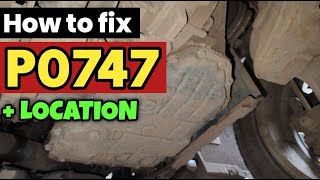
The Pontiac G6 from this era commonly uses the GM 4T45-E 4-speed automatic transmission. Solenoid failure is a known weak point with these transmissions as they age. While the code points to a single solenoid, the solenoids (Shift, TCC, and EPC) are housed in a single assembly on the valve body, which is located behind the side cover of the transmission. 🎬 Watch: This walkthrough shows how to access the side cover. The repair is labor-intensive, requiring removal of the driver's side wheel, CV axle, and draining the fluid to access the side cover. Because of the high labor cost, mechanics strongly recommend replacing the entire solenoid pack at the same time to prevent repeat repairs for other solenoids that are likely near the end of their service life.
Symptoms You May Notice
- Harsh, jerky, or delayed gear shifts, especially from Park into Drive.
- Transmission slipping, where engine RPMs rise without an increase in speed.
- Vehicle gets stuck in one gear or enters 'limp mode'.
- Transmission warning light or Check Engine Light is on.
- Reduced fuel economy.
- Engine may stall when coming to a stop.
- Replacing the high-pressure pump when the issue is actually the solenoid, its wiring, or the valve body.
Most Likely Causes
- Faulty Pressure Control Solenoid 'A' or Solenoid Assembly 🔴 High Probability Solenoid failure is a common wear item on the 4T45-E transmission used in the G6 and its platform mates like the Chevy Cobalt.
How to confirm: A mechanic can command the solenoid on and off with a professional scan tool to check its response. The solenoid's electrical resistance can also be measured (typically should be 4-7 ohms when warm) to see if it's within specification. If the solenoid tests good electrically, the issue may be mechanical (stuck plunger) or a hydraulic issue in the valve body.
Typical fix: Replace the pressure control solenoid. It is highly recommended to replace the entire solenoid pack/kit at the same time due to the high labor cost involved in accessing the valve body.
Est. part cost: $75-$200 for a full solenoid kit - Low, Dirty, or Contaminated Transmission Fluid 🟡 Medium Probability
How to confirm: Check the transmission fluid level and condition. Fluid that is dark, smells burnt, or contains metal particles indicates a problem that could be causing the solenoid to stick or points to a larger internal failure.
Typical fix: Perform a transmission fluid and filter change using the correct fluid (DEXRON-VI is specified for these models). If the fluid is heavily contaminated, this may be a symptom of a larger internal failure and a fluid change alone may not be a permanent fix.
Est. part cost: $50-$100 for fluid and filter - Damaged Wiring or Connectors ⚪ Low Probability
How to confirm: Visually inspect the wiring harness leading to the transmission for any signs of damage, corrosion, or loose connections. A multimeter can be used to check for continuity and shorts in the circuit between the TCM and the solenoid connector.
Typical fix: Repair or replace the damaged section of the wiring harness or the connector.
Est. part cost: $20-$100
Rare But Worth Checking
- Worn Transmission Valve Body: Blocked hydraulic passages or, more specifically, wear in the bore for the solenoid regulator valve can cause pressure regulation issues that trigger this code, even with a new solenoid. This is a known issue in some GM transmissions and requires either reaming the bore and installing a sleeve or replacing the entire valve body.
- Faulty Transmission Control Module (TCM): The TCM driver circuit that controls the solenoid can fail, causing it to remain on. This is less common than the solenoid itself failing and should be considered after other causes are ruled out.
- Internal Transmission Mechanical Failure: A failing transmission pump can cause low line pressure, while damage to clutch packs can contaminate the fluid and clog passages, leading to pressure issues. This usually presents with more severe symptoms like no movement or significant slipping.
Diagnosis Steps
- Check the transmission fluid level and condition. Top off or change the fluid and filter if necessary. Burnt fluid or excessive metal is a sign of a larger problem.
- Use a professional OBD-II scanner to check for other transmission-related codes and view live data, specifically the commanded vs. actual line pressure. 🎬 See how to troubleshoot a stuck pressure control solenoid.
- Visually inspect the external transmission wiring harness and connectors for any visible damage, corrosion, or loose pins.
- If accessible, test the resistance of the Pressure Control Solenoid 'A' to ensure it is within the manufacturer's specifications (typically 4-7 ohms).
- Using a bi-directional scanner, command the solenoid on and off to verify its mechanical operation by listening for a click or observing pressure changes.
- If the solenoid and wiring are confirmed to be good, further diagnosis of the valve body for worn bores, the transmission pump, or the TCM itself is required.
Parts You'll Likely Need
- Transmission Solenoid Master Kit
(OEM #ACDelco 24227792 (This is a common master kit, verify application))— This is the most common cause of failure. Due to the high labor cost of accessing the solenoids, it is standard practice to replace all of them at once (Shift, TCC, and Pressure Control) to prevent future failures.
Trusted brands: ACDelco, Dorman, Delphi
OEM price range: $150-$250
Aftermarket price range: $75-$150 - Transmission Shift Solenoid (A or B)
(OEM #ACDelco 24230298 or 24207236 (Verify specific solenoid needed if not buying a kit))— If only replacing a single solenoid, this is the part. The 4T45-E uses two identical shift solenoids.
Trusted brands: ACDelco
OEM price range: $40-$60
Aftermarket price range: $20-$40 - Transmission Fluid (DEXRON-VI)
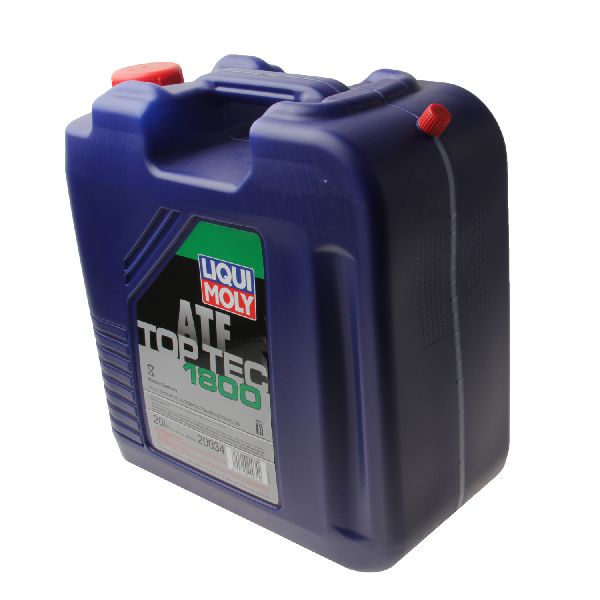
(OEM #ACDelco 10-9395 (or any licensed DEXRON-VI fluid))— The transmission must be drained to perform the repair, so new fluid is required for refilling.
Trusted brands: ACDelco, Valvoline, Castrol
OEM price range: $10-$15 per quart
Aftermarket price range: $8-$12 per quart - Transmission Filter and Pan Gasket — Should be replaced whenever the transmission is serviced.
Trusted brands: ACDelco, Dorman
OEM price range: $30-$50
Aftermarket price range: $15-$30
Related Codes That Often Appear With This One
- P0700 — P0700 is a general transmission fault code that indicates the TCM has stored a specific trouble code, like P0747. It often appears alongside other transmission-related codes.
- P0745, P0746, P0748, P0749 — These are other codes related to the Pressure Control Solenoid 'A' circuit, indicating performance issues, electrical faults, or intermittent problems, which can help pinpoint the nature of the failure.
Technical Service Bulletins (TSBs) & Recalls
- NHTSA Recall 14V252: Addresses potential voltage fluctuations in the Body Control Module (BCM) that can affect brake light operation. While not directly for P0747, it highlights the electrical sensitivities of the platform.
- NHTSA Recall 12V460: Pertains to fracturing transmission shift cable tabs on 4-speed automatic models, which can lead to incorrect gear indication.
Platform-Specific Known Issues
- Owner Experience with P0747: A user on g6ownersclub.com with a 2009 G6 reported experiencing the P0747 code along with harsh shifting. After confirming the fluid was clean, they opted to have a transmission shop replace the solenoid pack. The repair resolved the issue, confirming that solenoid failure was the root cause in their case. This aligns with the common diagnosis for this platform.
Mechanic-Grade Diagnostic Values
- Pressure Control Solenoid 'A' (EPC) Resistance — expected: 3.0 to 7.0 ohms. Failure: A reading of 0 ohms indicates a short, while an infinite (O.L.) reading indicates an open circuit. Readings significantly outside the expected range suggest a failing coil.
Scan Tool Commands That Help
- GM Tech2 / GDS2: Transmission Output Controls > Pressure Control (PC) Solenoid — This bidirectional command allows a technician to manually command the EPC solenoid on and off while monitoring transmission line pressure data. A lack of pressure change or an inability to hear the solenoid 'click' when commanded points to a failure in the solenoid, wiring, or TCM driver.
Wiring & Ground Locations
- G105 / G109 / G110 / G111 — These are primary engine/transmission grounds. Locations vary slightly by engine, but they are typically found on a transmission case stud, near the throttle body, or on the engine block/cylinder head. For example, on some models, G110 is on the top left front of the engine block, and G111 is on the left rear corner of the cylinder head.. The Transmission Control Module (TCM) and other critical sensors share these grounds. Corrosion or breakage at the ring terminal on the transmission stud is a well-documented failure point on G6s and related platforms, causing erratic behavior, loss of communication with the TCM, and multiple transmission codes, including P0747.
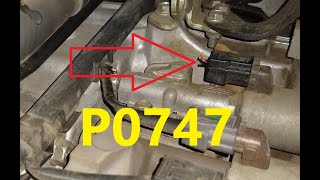
- Transmission 20-Way Connector — The main electrical connector on the transmission case where the external harness connects to the internal components.. This is the primary point for testing continuity and resistance of the solenoids from outside the transmission. The pins for the Pressure Control Solenoid can be identified here using a wiring diagram to test the circuit back to the TCM.
- TCM 49-Way Connector — The main connector at the Transmission Control Module (TCM), which is located on the left side of the engine compartment on these vehicles.. This is the other end of the circuit for the solenoid. Testing for voltage signals from the TCM to the solenoid is performed at this connector to rule out a faulty TCM driver.
Real Owner Repair Stories
- YouTube video by 'Just a Dude' (2007 Pontiac G6 3.5L) — No crank, no start, no communication with TCM, multiple U-codes.
❌ Tried (didn't work) Initial diagnosis pointed towards a bad TCM or other module.
✅ What actually fixed it The main ground wires bolted to a stud on top of the transmission case (likely G105 or similar) were completely corroded and broken inside the insulation. The fix was to cut back the bad wire, crimp on a new ring terminal, and re-secure the ground connection, which restored communication and allowed the vehicle to start. This highlights a critical, often-overlooked wiring failure that can cause or accompany transmission codes.
OEM Part Supersession History
24212690→24227792— Update/revision to the solenoid design.
Heads up: This part is often listed as a TCC PWM solenoid or a 3-2 shift solenoid, not a Pressure Control (EPC) solenoid. While it fits many GM transmissions, it's critical to verify the exact solenoid being replaced, as they are not all interchangeable despite similar appearances.
Model Year Variations Within This Range
- 2005-2010: While the 4T45-E was the primary 4-speed automatic, V6 models (3.5L, 3.6L, 3.9L) could be equipped with the 4T65-E or a 6-speed automatic (6T40/6T70). The diagnosis for P0747 on a 4T65-E is similar (solenoid, valve body wear) but the parts and specific locations are different. It is critical to confirm which transmission is in the vehicle, usually via the RPO code sticker in the glove box (MN5 for 4T45-E, M15/M76 for 4T65-E).
Diagnostic Flowchart
Other Known Issues on This Vehicle
Issues unrelated to this code that are worth knowing about as an owner of this generation:
- Sudden Loss of Electric Power Steering (EPS) 🔴 High — Very common across early model years (2005-2009). A message appears on the DIC and steering becomes very heavy at low speeds. (Ref: NHTSA Recalls: 14V153, 14116, 14772. GM extended coverage programs were also issued.)
- Clunking Noise from Intermediate Steering Shaft 🟠 Medium — Widespread issue causing a clunk or knock felt in the steering wheel when turning at low speeds. Often caused by a worn U-joint on the shaft. (Ref: While a very common complaint, no specific recall was found, often repaired out of warranty.)
- Airbag System Faults (Service Airbag Light) 🔴 High — Extremely common. The airbag light illuminates, disabling the system. Often caused by a faulty connection under the passenger or driver seat, not the airbag itself. (Ref: TSB #08-09-41-002H addresses high resistance in airbag connector circuits.)
- Brake Light Malfunction / BCM Connector Corrosion 🟠 Medium — Can cause brake lights to stay on or not illuminate. Linked to corrosion in a Body Control Module (BCM) connector or issues with the Brake Apply Sensor (BAS). (Ref: NHTSA Recall: 14V252.)
- Fractured Transmission Shift Cable 🟠 Medium — The tabs on the shift cable end may break, preventing the driver from selecting gears or causing the gear indicator (PRNDL) to be inaccurate. (Ref: NHTSA Recall: 12V460.)
Used vs. New Parts: Buying Guide for This Vehicle
When a used part is the smart pick: A used part is generally not recommended for this repair due to the high labor cost. However, a complete, low-mileage used transmission assembly from a reputable salvage yard can be a cost-effective alternative to rebuilding a severely damaged unit. A used valve body may also be considered if it comes from a low-mileage donor and is thoroughly inspected.
Donor-vehicle mileage cap: roughly under 75000 miles for the part to have meaningful remaining life.
What to inspect on the donor part:
- For a complete transmission, verify the donor vehicle's mileage and check for any history of accidents or flood damage.
- Ask the seller to drain a small sample of the transmission fluid. It should be bright red and not smell burnt or contain excessive metal particles.
- Inspect all electrical connectors on the used part for corrosion, cracks, or broken locking tabs.
- If buying a valve body, look for any scoring or deep scratches on the mating surfaces.
OEM-only on this vehicle (don't cheap out):
- While not strictly 'OEM-only', using a complete solenoid master kit from a trusted OE supplier like ACDelco is highly recommended over individual, unbranded solenoids to ensure reliability and avoid repeat labor.
Aftermarket brands forum-validated for this vehicle:
- ACDelco (OE Supplier)
- Dorman (Offers complete kits and individual solenoids)
- Delphi
- Sonnax (Specializes in high-quality valve body repair components and improved valves)
Brands owners have reported issues with on this vehicle:
- No-name, unbranded solenoid kits from online marketplaces are a significant gamble. The cost savings do not outweigh the risk of premature failure and having to pay for the labor a second time.
Real Owner Stories
Aggregated from forums and TSBs cited above. Mileages and costs reflect what owners reported in those sources.
2009 Pontiac G6
Symptoms: Harsh shifting along with the P0747 code.
What fixed it: A transmission shop replaced the solenoid pack.
Source hint: vehicle_specific_issues: A user on g6ownersclub.com with a 2009 G6
Related OBD-II Codes
Frequently Asked Questions
My 2009 G6 is shifting very harshly and has the P0747 code. Is this a common issue?
The mechanic recommends replacing the pressure control solenoid for P0747. Should I replace just that one part?
Could low or dirty transmission fluid cause the P0747 code on my G6?
What type of transmission fluid should be used when servicing my G6 for this issue?
My G6 seems stuck in gear. Is this related to the shift cable recall (NHTSA 12V460)?
Are other GM cars like the Chevy HHR or Saturn Ion also prone to this P0747 solenoid failure?
Helpful Videos

We Have This Part in Stock





The information in this article is provided for general reference and educational purposes only. Vehicle specifications, procedures, and part compatibility can vary by production date, trim level, and region. Always consult your vehicle's factory service manual and verify part numbers before purchasing or performing repairs. Safety-critical components such as airbags, seat belts, and braking systems should be installed by a qualified professional.
- Pontiac G6:
- 🎬 Helpful Videos
- 🛍️ Shop This Part
- What's Unique About the 2005-2010 Pontiac G6
- Symptoms You May Notice
- Most Likely Causes
- Rare But Worth Checking
- Diagnosis Steps
- Parts You'll Likely Need
- Related Codes That Often Appear With This One
- Technical Service Bulletins (TSBs) & Recalls
- Platform-Specific Known Issues
- Mechanic-Grade Diagnostic Values
- Scan Tool Commands That Help
- Wiring & Ground Locations
- Real Owner Repair Stories
- OEM Part Supersession History
- Model Year Variations Within This Range
- Diagnostic Flowchart
- Other Known Issues on This Vehicle
- Used vs. New Parts: Buying Guide for This Vehicle
- Real Owner Stories
- 2009 Pontiac G6
- Related OBD-II Codes
- Frequently Asked Questions
- 🎟️ Get 5% Off