

P0746 on 2006-2011 Honda Civic: Pressure Control Solenoid 'A' Causes and Fixes
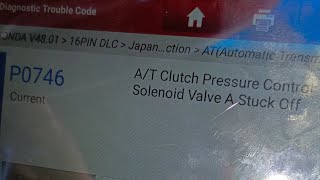
For a 2006-2011 Honda Civic, code P0746 almost always points to a problem with the automatic transmission, specifically the Pressure Control Solenoid 'A'. The most common fixes are replacing low or dirty transmission fluid or replacing the solenoid itself. In many cases, the solenoid can be replaced without removing the entire transmission. Expect to pay $300-$700 for a professional repair.
- P0746 on a 2006-2011 Civic is a serious transmission code that should be addressed immediately to prevent severe damage.
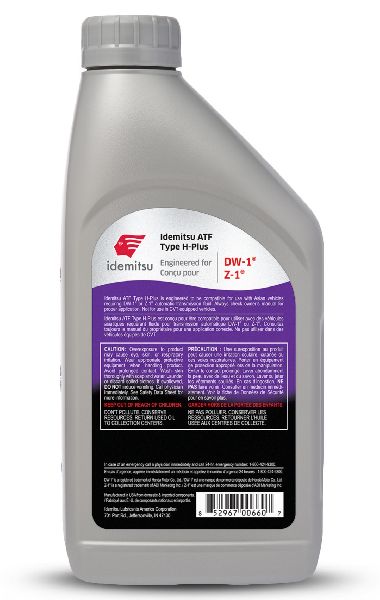
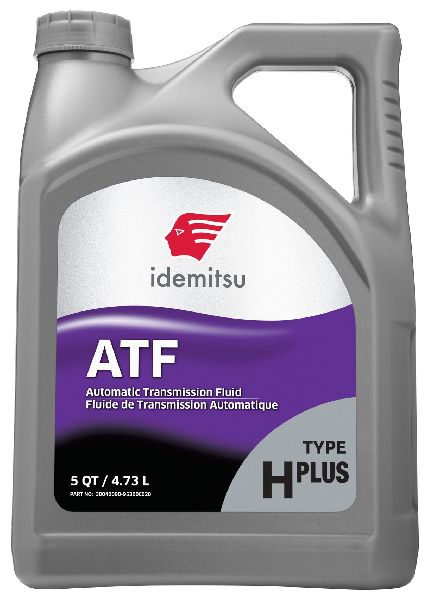
- The first and most important diagnostic step is to check the level and condition of the automatic transmission fluid. Use only Honda ATF DW-1.
- The most common fixes are a fluid change or replacing the Pressure Control Solenoid 'A' itself.
- Due to the complexity and risk of causing more damage, this repair is recommended for experienced DIYers or professional mechanics.
- Do not continue to drive the vehicle, as you risk turning a ~$500 repair into a multi-thousand dollar transmission replacement.
What's Unique About the 2006-2011 Honda Civic

The 2006-2011 Honda Civic (8th generation) with the 1.8L R18 engine uses a conventional 5-speed automatic transmission (codes SPCA/MPCA), not the Continuously Variable Transmission (CVT) found in many later models. This is important because the causes and repairs for P0746 are specific to this traditional automatic system. The issue is almost always hydraulic or electronic, relating to fluid quality or the solenoid itself, rather than the belts and pulleys of a CVT. On this specific transmission, the pressure control solenoid 'A' is often externally accessible, making replacement less labor-intensive than on transmissions where it is located inside the main case.
Symptoms You May Notice
- Harsh, jerky, or delayed gear shifts.
- Transmission getting stuck in one gear (limp mode).
- Vehicle struggling to accelerate. 🎬 Watch: Troubleshooting common gear shifting and acceleration problems.
- Engine revs high but the car doesn't accelerate properly (transmission slipping).
- Illuminated Check Engine Light or a flashing 'D' (Drive) indicator on the dashboard.
- Potential for transmission overheating.
- Sudden 'clunk' as the transmission engages a gear.
- Increased fuel consumption due to inefficient shifting.
- Replacing the entire transmission when only a fluid change or solenoid replacement was needed.
- Replacing the wrong solenoid. The transmission has multiple solenoids (e.g., A, B, C), and it is critical to identify and replace the correct one. The 'A' solenoid is part of the linear solenoid assembly on this model.
Most Likely Causes

- Low or Dirty Automatic Transmission Fluid (ATF) 🔴 High Probability Over time, fluid breaks down and collects debris. Insufficient or contaminated fluid cannot provide the hydraulic pressure the solenoid needs to operate and can cause it to stick.
How to confirm: Check the transmission fluid dipstick (with the engine warm and on level ground). The fluid should be at the correct level, bright red, and not smell burnt. Dark, brown, or metallic-flecked fluid indicates a problem.
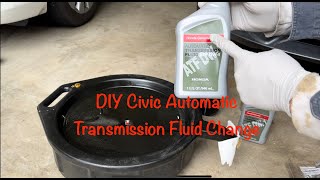
Typical fix: Perform a transmission fluid drain and fill using Honda-specific ATF DW-1. If the fluid is very dirty, multiple drain-and-fills may be needed. 🎬 See how to properly drain and fill your transmission fluid. Do NOT use a high-pressure flush system on high-mileage transmissions, as this can dislodge debris and cause more issues.
Est. part cost: $30-$60 for fluid - Faulty Pressure Control Solenoid 'A' 🔴 High Probability Solenoids are electro-mechanical parts that can fail electrically (coil burns out) or mechanically (plunger gets stuck) from age, heat cycles, and debris in the fluid.
How to confirm: After ruling out fluid issues, a mechanic can test the solenoid's resistance with a multimeter (should be 5.0 to 5.6 Ω at 68°F) or apply direct 12V voltage to see if it clicks (actuates). This requires accessing the solenoid on the transmission, which is typically on the top or front of the case.
Typical fix: Replace the faulty pressure control solenoid assembly. On the 8th gen Civic, this is often a single or dual-linear solenoid pack on the exterior of the transmission case.
Est. part cost: $75-$250 - Clogged Transmission Filter or Blocked Valve Body Passages 🟡 Medium Probability If the transmission fluid has not been changed regularly, sludge and debris can clog the internal filter or the small hydraulic passages within the valve body, restricting fluid flow to and from the solenoid.
How to confirm: This is typically diagnosed after fluid and solenoid replacement fails to fix the issue. Inspecting the valve body requires removing it from the transmission.
Typical fix: Replace the transmission filter (if serviceable) and/or clean or replace the valve body.
Est. part cost: $150-$500 for a valve body
Rare But Worth Checking
- Wiring or Connector Issues: The wiring harness leading to the solenoid can become damaged, corroded, or loose, causing an intermittent or total loss of signal. A visual inspection of the harness and connector is a wise step during diagnosis.
- Faulty Transmission Control Module (TCM): While rare, the TCM itself can fail and stop sending the correct signal to the solenoid. This is usually the last item to suspect after all other possibilities have been exhausted.
Diagnosis Steps
- Scan for Codes: Read all stored trouble codes with an OBD-II scanner.
- Check Transmission Fluid: This is the most important first step. Check the fluid level and condition. If it's low, top it off with Honda ATF DW-1 and check for leaks. If it's dark, burnt, or contains debris, proceed with a drain and fill.
- Inspect Wiring: Visually inspect the wiring harness and connector going to the pressure control solenoid for any signs of damage, corrosion, or loose connections.
- Test the Solenoid: If the fluid is good, the solenoid itself should be tested. This can be done by measuring its internal resistance with a multimeter (compare to OEM specs of 5.0-5.6 Ω) or by applying 12V power to see if it makes an audible click.
- Replace the Solenoid: If the solenoid fails testing, it must be replaced. Ensure you are replacing Solenoid 'A', which is part of the linear solenoid assembly (Part No. 28250-RPC-003). 🎬 Watch: Step-by-step guide to replacing the pressure control solenoid.
- Inspect Valve Body: If a new solenoid and fresh fluid do not resolve the code, the problem may lie deeper within the valve body (clogged passages) or the transmission itself (internal wear). This step is best left to a professional.
- Clear Codes and Test Drive: After any repair, clear the codes and perform a test drive to ensure the shifting issues are resolved and the code does not return.
Parts You'll Likely Need

- Pressure Control Solenoid 'A' (Linear Solenoid Assembly)
(OEM #28250-RPC-003)— This is the component directly identified by the trouble code and is a common failure point. It often contains both Solenoid A and B in one housing.
Trusted brands: Honda (OEM), Standard Motor Products, Dorman
OEM price range: $180-$250
Aftermarket price range: $75-$150 - Honda Automatic Transmission Fluid (ATF DW-1)
(OEM #08200-9008)— Low, old, or incorrect fluid is a primary cause of solenoid issues. Using the correct OEM-spec fluid is critical for Honda transmissions.
Trusted brands: Honda (OEM)
OEM price range: $10-$15 per quart
Aftermarket price range: N/A - Solenoid Gasket
(OEM #28252-RPC-000)— The gasket for the linear solenoid assembly should always be replaced when the solenoid is removed to prevent leaks. It is often sold separately.
Trusted brands: Honda (OEM)
OEM price range: $10-$20
Aftermarket price range: $5-$15
Related Codes That Often Appear With This One
- P0700 — P0700 is a general Transmission Control System Malfunction code. It often appears alongside more specific transmission codes like P0746 to indicate a fault has been registered by the TCM.
- P0747, P0776, P0777 — These are codes for other pressure control solenoids ('A' stuck ON, 'B' stuck OFF, 'B' stuck ON). If multiple solenoid codes are present, it may point to a widespread electrical issue, a bad TCM, or severely contaminated fluid affecting the entire valve body.
- P2821 — This code is for Pressure Control Solenoid 'J' and can appear alongside P0746, often pointing to a fluid level/condition issue affecting multiple circuits.
Mechanic-Grade Diagnostic Values

- Pressure Control Solenoid 'A'/'B' Assembly Resistance — expected: 5.0 to 5.6 Ω at 68°F (20°C). Failure: A reading of 0 Ω indicates a short, while an infinite (OL) reading indicates an open circuit. Any reading significantly outside the specified range suggests a faulty solenoid coil.
- Solenoid Connector Voltage (Manual Test) — expected: An audible 'click' from the solenoid when 12V is applied.. Failure: No click indicates the solenoid's internal plunger is mechanically stuck or the coil is completely dead.
Scan Tool Commands That Help
- Honda Diagnostic System (HDS): Clutch Pressure Control (Linear) Solenoid Valve A Test — From the 'Miscellaneous Test Menu', this command allows a technician to directly actuate the solenoid. The tool will command the solenoid on and off, and the technician should listen for an audible click from the part to confirm mechanical operation. This is the definitive way to test the solenoid's function without removing it.
- No Tool Required: Idle Relearn Procedure — This is a critical and often-missed step after replacing the solenoid or disconnecting the battery. Failure to perform this can result in a high or erratic idle. The procedure involves resetting the ECU (by disconnecting the battery), warming the engine, holding RPMs at 3,000 until the radiator fan engages, and then allowing the engine to idle undisturbed for 5 minutes.
Wiring & Ground Locations
- Linear Solenoid Connector — On the top/front of the transmission case, accessible after removing the air cleaner housing and battery base. The connector is a 2-pin flat blade type.. This is the direct electrical connection to the solenoid assembly. Technicians can backprobe this connector to test for the 12V PWM signal from the TCM or directly apply power for a bench test. For a manual test, connect 12V positive to terminal 1 and ground to terminal 2 to check for an audible click.
- G101 — On the right rear of the engine, typically on the thermostat housing for non-Si models.. This is a primary ground point for the PCM/TCM and various sensors and actuators, including the transmission solenoids. A corroded or loose G101 ground can cause a host of intermittent electrical issues, including erratic solenoid behavior that could potentially trigger a P0746 code.
Real Owner Repair Stories
- 8thcivic.com forum user (2008 Honda Civic EX Coupe) — Flashing 'D' light, harsh shifting from 1st to 2nd, and P0746 code stored.
❌ Tried (didn't work) A 3x transmission fluid drain and fill using genuine Honda ATF DW-1.
✅ What actually fixed it Replacing the dual linear solenoid assembly (OEM Part No. 28250-RPC-003) and its gasket. After the replacement and clearing the code, the shifting issues and flashing 'D' light were resolved. - Honda Owner Report (NHTSA ODI #10609124) — An owner reported that after being told their fluid levels were fine, both transmission solenoids failed, triggering codes P0746 for Pressure Control Solenoid "A" Performance/Stuck Off and P0777 for Solenoid "B" Stuck On.
When the Usual Fixes Don't Work
- While a transmission fluid change is the correct first step, it is not always a guaranteed fix. In a documented case on an 8thcivic.com forum, an owner performed a full 3x drain-and-fill with the correct Honda ATF DW-1 fluid, but the P0746 code and harsh shifting symptoms persisted. The ultimate solution required replacing the linear solenoid assembly, demonstrating that even with fresh fluid, a mechanically or electrically failed solenoid will still cause the fault.
- In some instances, the failure may be more severe; NHTSA ODI #10638514 describes a case where a vehicle was diagnosed with a completely failed transmission despite normal fluid levels, exhibiting codes P0741, P0746, and P0777.
OEM Part Supersession History
28250-PRP-013→28250-RPC-003— Part revision and consolidation across multiple Honda models.
Heads up: The two part numbers are interchangeable, with 28250-RPC-003 being the current and correct part to order.
Diagnostic Flowchart
Other Known Issues on This Vehicle
Issues unrelated to this code that are worth knowing about as an owner of this generation:
- Cracked Engine Block (1.8L R18A1) 🔴 High — Affects 2006-2009 models. A manufacturing defect could cause a coolant leak from a crack in the engine block, leading to overheating. Honda issued TSB 10-048 and extended the warranty to 10 years, but this has now expired. (Ref: TSB 10-048)
- Failing Clear Coat / Peeling Paint 🟡 Low — Widespread across many 8th generation Civics, particularly on dark colors (roof, hood, trunk). The clear coat fails and peels, leaving the base coat exposed. Honda had a warranty extension for some colors/years, but it has expired. (Ref: Various expired warranty extensions, not a formal recall.)
- Drooping / Broken Sun Visors 🟡 Low — Extremely common. The plastic housing at the pivot point cracks, causing the visor to droop and not stay in the stowed position. It's a safety hazard as it can obstruct the driver's view. (Ref: Class action lawsuit (Cooper v. American Honda) was filed, but no official recall.)
- Failing Passenger Side Engine Mount 🟠 Medium — The hydraulic passenger-side engine mount is prone to leaking and collapsing, causing excessive engine vibration to be felt in the cabin, especially at idle and a clunking noise. (Ref: TSB 06-060)
Used vs. New Parts: Buying Guide for This Vehicle
When a used part is the smart pick: A used solenoid is generally not recommended. Because the failure can be mechanical (stuck plunger) or due to internal contamination, a used part from a junkyard carries a high risk of having the same issue or a very short remaining lifespan. The labor involved in the replacement makes it worth using a reliable new part.
Donor-vehicle mileage cap: roughly under 60000 miles for the part to have meaningful remaining life.
What to inspect on the donor part:
- Verify the donor vehicle had no transmission-related codes.
- Inspect the fluid from the donor transmission; if it's dark, burnt, or contains debris, avoid the part.
- Check the electrical connector pins for any corrosion or damage.
OEM-only on this vehicle (don't cheap out):
- Pressure Control Solenoid Assembly
Aftermarket brands forum-validated for this vehicle:
- Standard Motor Products (often considered a reliable OEM-equivalent)
Brands owners have reported issues with on this vehicle:
- Unbranded, no-name parts from online marketplaces are a significant gamble. Dorman is a common aftermarket brand, but owner feedback is mixed for transmission solenoids, with some reporting premature failure compared to OEM.
Real Owner Stories
Aggregated from forums and TSBs cited above. Mileages and costs reflect what owners reported in those sources.
2007 Honda Civic
Symptoms: The owner experienced delayed and hard gear shifts, accompanied by a flashing 'D' (Drive) indicator light. A mechanic initially recommended replacing the entire transmission.
What fixed it: The owner was advised by another user to first check the transmission fluid condition and then replace the externally accessible pressure control solenoid, which is the more likely and far cheaper culprit than the entire transmission.
Source hint: Reddit - r/civic - P0746 civic 2007
2012 Honda Civic
Symptoms: The vehicle was diagnosed with codes P0746 and P2821. The pressure control solenoid had already been replaced, but the problem persisted.
What fixed it: A mechanic correctly identified the root cause as a low transmission fluid level resulting from a leaking axle seal. Topping off the fluid after fixing the leak resolved the issue, highlighting that low fluid was the actual problem, not the solenoid.
Source hint: YouTube - Honda Civic P0746 Valve A, transmission oil leak problems
Documented NHTSA Reports
Honda CR-V (Cross-Manufacturer Reference)
Symptoms: Diagnostic results showed multiple codes including P0741 (Torque Converter Clutch Circuit Performance/Stuck Off), P0780 (Shift Malfunction), and P0746 (Pressure Control Solenoid A Performance/Stuck Off).
Source hint: NHTSA ODI #11702634
Related OBD-II Codes
Frequently Asked Questions
My mechanic says I need a whole new transmission for a P0746 code on my 2007 Civic. Is that my only option?
What is the correct transmission fluid to use for a drain and fill on my 8th generation Civic?
Is it safe to use a high-pressure transmission flush machine on my high-mileage Civic?
I need to replace the Pressure Control Solenoid 'A'. What is the part number for a 2006-2011 Civic?
How can I test the pressure control solenoid myself to see if it's bad?
Does this P0746 solenoid issue affect other Hondas from the same era, like the CR-V or Element?
Helpful Videos

We Have This Part in Stock




The information in this article is provided for general reference and educational purposes only. Vehicle specifications, procedures, and part compatibility can vary by production date, trim level, and region. Always consult your vehicle's factory service manual and verify part numbers before purchasing or performing repairs. Safety-critical components such as airbags, seat belts, and braking systems should be installed by a qualified professional.
- Honda Civic:
- 🎬 Helpful Videos
- 🛍️ Shop This Part
- What's Unique About the 2006-2011 Honda Civic
- Symptoms You May Notice
- Most Likely Causes
- Rare But Worth Checking
- Diagnosis Steps
- Parts You'll Likely Need
- Related Codes That Often Appear With This One
- Mechanic-Grade Diagnostic Values
- Scan Tool Commands That Help
- Wiring & Ground Locations
- Real Owner Repair Stories
- When the Usual Fixes Don't Work
- OEM Part Supersession History
- Diagnostic Flowchart
- Other Known Issues on This Vehicle
- Used vs. New Parts: Buying Guide for This Vehicle
- Real Owner Stories
- 2007 Honda Civic
- 2012 Honda Civic
- Documented NHTSA Reports
- Honda CR-V (Cross-Manufacturer Reference)
- Related OBD-II Codes
- Frequently Asked Questions
- 🎟️ Get 5% Off