

OBD-II Code P0747: Pressure Control Solenoid 'A' Stuck On
The Ultimate Guide to Meaning, Diagnosis, and Repair
- Code P0747 means Pressure Control Solenoid 'A' is stuck on, forcing maximum hydraulic pressure that causes violent shifting and triggers limp mode.
- Stop driving immediately; continuing to drive with maximum line pressure destroys clutch packs and turns a $300 solenoid repair into a $4,000 transmission rebuild.
- Do not blindly replace the solenoid; on 2017+ GM trucks, the root cause is almost always a worn valve body requiring a $1,500 replacement.
- Check your transmission fluid condition and scan for electrical codes like P0748 before buying any hard parts.
- GM owners must check their VIN against Special Coverage Program #N242454441, which extends valve body warranty to 15 years or 150,000 miles.
What Does P0747 Mean?

P0747 means the Transmission Control Module (TCM) detects the Pressure Control Solenoid 'A' is stuck in the 'on' position. This solenoid regulates the hydraulic fluid pressure required for smooth gear shifts. When stuck on, pressure spikes to maximum, causing violent shifts and extreme mechanical stress on internal transmission components.
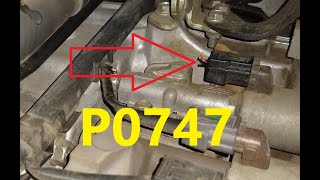
Technical definition: The SAE/OBD-II definition is "Pressure Control Solenoid 'A' Stuck On". 🎬 Watch: A breakdown of common causes and fixes for P0747. The TCM sets this code when it commands the 'A' solenoid to turn off, but hydraulic pressure sensors or gear ratio calculations indicate the associated clutch pack remains fully applied.
Can I Drive With P0747?
No — Do Not Drive. Do not drive. The transmission is operating at maximum hydraulic pressure. This causes violent, damaging shifts, forces the vehicle into limp mode, and rapidly overheats the fluid. Continuing to drive destroys internal clutches, turning a $300 solenoid repair into a $4,000+ transmission rebuild. On some GM vehicles, this fault causes momentary rear-wheel lock-up, creating a severe safety hazard.
Common Causes

- Faulty Transmission Valve Body (Very Common) — Premature wear in the valve body bores causes internal valves to stick, mimicking a solenoid failure. This is the absolute most common cause in 2017+ GM trucks and many Nissan CVTs.
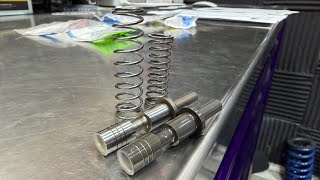
- Faulty Pressure Control Solenoid 'A' (Very Common) — The solenoid itself fails internally due to a mechanical jam, a shorted coil, or a welded spool valve, forcing it to stay open and supply continuous maximum pressure.
- Degraded or Incorrect Transmission Fluid (Common) — Low, burnt, or debris-filled fluid clogs the tiny passages in the valve body and causes the solenoid plunger to stick. Using non-OEM fluid also triggers this code due to incorrect viscosity.
- Damaged Wiring or Connector (Less Common) — A short circuit to power in the transmission wiring harness continuously supplies voltage to the solenoid, forcing it to stay on even when commanded off by the TCM.
- Failing Internal Transmission Pump (Rare) — A failing pump produces erratic pressure and sends metal shavings through the system, jamming the pressure control solenoid open.
- Faulty Transmission Control Module (TCM) (Rare) — A faulty driver circuit within the TCM shorts internally, sending a continuous 'on' signal to the solenoid. Rule out all mechanical causes before replacing the TCM.
Symptoms

- Violent, Banging Shifts — The vehicle slams into gear, especially when shifting from Park to Drive or during low-speed 1-2 shifts.
- Transmission Stuck in Gear (Limp Mode) — The transmission locks into a single 'safe' gear (often 5th gear in GM trucks) to prevent further damage. A 'Service Transmission' message appears.
- Transmission Slipping or Overheating — Engine RPMs flare without an increase in speed, accompanied by a strong burning odor from overheating fluid.
- Check Engine Light Illuminated — The Malfunction Indicator Lamp turns on, often accompanied by a generic P0700 transmission fault code.
- Engine Stalls When Stopping — High hydraulic pressure prevents the torque converter clutch from disengaging, stalling the engine when coming to a complete stop.
Diagnostic Flowchart
Tap your situation to follow the diagnostic path that matches what you're seeing on this code.
Common Fixes & Costs
- Replace Transmission Valve Body
— Parts: $500-$1300, Labor: $400-$1200, ~4.5 hr book time
(Professional)
: OEM 24049465 (10L80), 24071206 (10L80), 24272846 (8L90) (Alt: Sheng Hai, Street Smart Transmission)
: OEM 31705-28X0B (Rogue JF016E) (Alt: Street Smart Transmission) - Replace Pressure Control Solenoid 'A'
— Parts: $50-$150, Labor: $200-$500, ~3 hr book time
(Intermediate)
: OEM 24044716, 29541895 (Alt: ACDelco, Rostra)
: OEM 28400-P6H-013, 28250-R97-004 (Alt: Standard Motor Products (TCS99)) - Transmission Fluid and Filter Change — Parts: $60-$150, Labor: $100-$300, ~1.5 hr book time (DIY)
- Repair Wiring Harness/Connector — Parts: $20-$200, Labor: $150-$500, ~2.5 hr book time (Intermediate)
- Replace Transmission Control Module (TCM) — Parts: $600-$900, Labor: $200-$400, ~2 hr book time (Professional)
DIY vs Professional
- Transmission Fluid and Filter Change — Beginner:
- Replace Pressure Control Solenoid 'A' — Beginner:
- Repair Wiring Harness/Connector — Beginner:
- Replace Transmission Valve Body — Beginner:
Used vs. New Parts: Buying Guide
When a used part is worth it: Never buy a used valve body. They suffer from invisible internal wear. A used solenoid is only acceptable if you are repairing a high-mileage vehicle on a strict budget.
Donor-vehicle mileage cap: roughly under 60000 miles for the part to have meaningful remaining life.
Donor quality checklist:
- Verify the donor vehicle was not scrapped due to transmission failure.
- Match the part number exactly.
- Always prefer remanufactured valve bodies over used ones.
Decision logic:
- If The failed part is the valve body. → Buy a new OEM or a quality remanufactured unit. A used valve body will fail again.
- If The vehicle is a 2017+ GM truck. → Do not buy parts. Go to a dealer for free replacement under Special Coverage N242454441.
Warranty tradeoff: Used parts offer a 30-day warranty. Remanufactured valve bodies come with a 1-3 year warranty, protecting you from paying labor twice.
Worst-case if a used part fails: $1200 if a used valve body fails, requiring you to pay for labor and fluid a second time.
What Happens If You Wait — Timeline
- 0-1 week (0-200 miles): Check Engine Light illuminates. Intermittent harsh shifts occur, most noticeable as a 'garage slam' when shifting from Park to Drive. (MPG impact: 0-5%% · Added cost: $0)
- 1 week - 1 month (200-1,000 miles): Harsh shifts become constant. Transmission enters 'limp mode,' locking into a single gear. Fluid overheats due to clutch binding. (MPG impact: 10-20%% · Added cost: $150 in wasted fuel and accelerated fluid degradation.)
- 1-3 months (1,000-3,000 miles): Sustained maximum pressure glazes and burns clutch packs. Seals blow out. A distinct burning smell emits from the transmission. (MPG impact: 15-25%% · Added cost: $1,500-$2,500. The original valve body fix is no longer sufficient; clutch packs now require replacement.)
- 3+ months (3,000+ miles): Catastrophic failure. Burned clutches send metal debris throughout the transmission, cracking hard parts like clutch drums. The vehicle loses all forward propulsion. (MPG impact: >25%% · Added cost: $4,000-$8,000 for a complete transmission replacement.)
Cost of Not Fixing It
- Immediate (0-100 miles): Violent 'garage slam' shifts. Transmission locks into limp mode. Fuel economy drops by 15%. (Added cost: Negligible if fixed immediately.)
- Short-Term (100-1,000 miles): Maximum pressure accelerates wear on clutch packs and blows out internal seals. Fluid overheats and breaks down. (Added cost: $250 for wasted fluid, but root cause remains unfixed.)
- Long-Term (1,000+ miles): Catastrophic internal failure. Clutches burn out completely, sending metal debris through the transmission and cracking hard parts. (Added cost: $4,000-$8,000 for a complete transmission replacement.)
Diagnosis Steps

- Scan for Accompanying Codes
Use an OBD-II scanner to read all stored codes. Look for P0748 (Electrical), which immediately points to a wiring issue rather than a mechanical failure. Ignore P0700, as it is just a generic indicator.
Tools: OBD-II Scanner (Beginner) - Check Transmission Fluid Condition
Verify fluid level and condition. Fluid must be reddish and not smell burnt. If the fluid is black, smells burnt, or contains metallic flakes, stop diagnosis; the transmission requires a rebuild.
Tools: Rag, Transmission fluid dipstick (or fluid level plug), Owner's manual (Beginner) - Monitor Live Pressure Data
Using a bi-directional scan tool, monitor Transmission Line Pressure and the commanded state for Solenoid 'A'. If commanded pressure is 0% but actual line pressure remains high, the TCM is working, but a mechanical fault (stuck solenoid or worn valve body) is keeping pressure high.
Tools: Bi-directional OBD-II Scan Tool (Advanced) - Test Solenoid Resistance
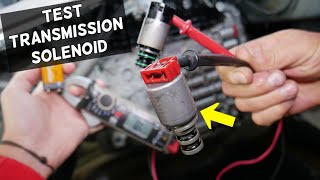
Disconnect the main transmission connector. Use a multimeter to measure resistance across the pins for Solenoid 'A'. Compare to service manual specs (typically 5-7 ohms for GM). Infinite resistance means an open circuit; zero means a shorted solenoid.
Tools: Multimeter, Service manual, Basic hand tools (Intermediate) - Perform Solenoid Active Test
Use a bi-directional scan tool to command the solenoid on and off. Listen for a distinct clicking sound from the transmission pan. If there is no click, the solenoid or its internal wiring is dead.
Tools: Bi-directional OBD-II Scan Tool (Advanced) - Inspect Wiring and Connectors
Visually inspect the external wiring harness connected to the transmission. Look for melted wires, corrosion in the connector pins, or damage from road debris that causes a short-to-power.
Tools: Flashlight, Mirror (Intermediate) - Inspect the Valve Body
Remove the transmission oil pan. Visually inspect the valve body for scoring or stuck valves. On modern GM trucks, if the solenoid tests fine electrically, the valve body is the guaranteed culprit and requires replacement.
Tools: Socket set, Torque wrench, Drain pan, Gasket scraper (Professional)
When This Code Triggers (Freeze-Frame Conditions)
- Engine Coolant Temp: 170-210°F (77-99°C) (Code sets when the vehicle reaches full operating temperature and fluid thins out.)
- Vehicle Speed: 30-60 mph (48-97 km/h) (Fault is detected during steady-state cruising when the TCM expects smooth pressure modulation.)
- Gear Commanded: Any gear (Triggers when the TCM commands a shift requiring Solenoid 'A' to turn OFF, but line pressure indicates it remains ON.)
Related Codes
- P0700 — A generic transmission fault code. It simply means the TCM requested the Check Engine Light to turn on. Always diagnose the P0747 first.
- P0746 — The exact opposite of P0747. P0746 means the solenoid is stuck OFF, causing low pressure and severe transmission slipping.
- P0748 — Indicates an electrical circuit malfunction for Solenoid 'A'. If present with P0747, the problem is guaranteed to be electrical (wiring or TCM), not mechanical.
- P0745 — A generic malfunction code for the Pressure Control Solenoid 'A' circuit, less specific than P0747.
Climate & Environmental Factors
- Extreme Heat: Accelerates the breakdown of transmission fluid, leading to varnish buildup that causes solenoids and valve body plungers to stick open.
How to Talk to a Mechanic About This Code
Say this: "I have a Check Engine Light with code P0747 causing violent shifting. I need a diagnostic. (For GM: Please check my VIN for Special Coverage Program N242454441 for the valve body)."
Frames the problem correctly and directs the shop to look beyond the solenoid. For GM owners, it immediately brings up the free warranty repair.
Avoid saying:
- 'My transmission is acting weird.'
- 'The internet said to replace the solenoid.'
- 'Just fix the Check Engine Light.'
Questions to ask before authorizing the repair:
- Did you check for Technical Service Bulletins (TSBs) or special coverage?
- Did actual line pressure remain high when the solenoid was commanded off via the scan tool?
- Did you test the solenoid's resistance, or are you guessing based on the code?
- What is the warranty on the valve body and labor?
Where to Take It: Dealer vs Independent vs Chain
- Dealer:
Mandatory first stop for modern GM trucks. Good second opinion for others.
Best for: 2017+ GM vehicles to claim free repairs under Special Coverage N242454441., Vehicles under powertrain warranty., Complex transmissions requiring TCM software updates.
Downsides: Highest labor rates ($150-$250/hr). (Typical cost: +50% vs. baseline) - Independent Shop:
Excellent choice if they specialize in transmissions. Avoid general auto repair shops.
Best for: Out-of-warranty Honda, Toyota, or Ford vehicles., Must be a dedicated transmission specialist.
Downsides: General mechanics will misdiagnose this by replacing only the solenoid. (Typical cost: +0% vs. baseline) - Chain Shop:
AVOID. They lack the diagnostic capability for complex hydraulic faults.
Best for: Oil changes and tires.
Downsides: High pressure to sell a $4,000 transmission rebuild regardless of the actual cause. (Typical cost: -10% vs. baseline)
When to Walk Away From the Repair
If the repair cost exceeds 50% of the car's private-party value, sell the car as-is.
- Car worth $4000, fix is $2500: Walk away. The repair is over 50% of the car's value.
- Car worth $15000, fix is $1800: Fix it. The repair restores significant value.
- Car worth $35000, fix is $0: Fix it immediately. This is a GM truck covered under the special warranty program.
What Scan Tool You Need for This Code
Minimum: A bi-directional scan tool that reads TCM live data and commands solenoids.
A $20 code reader only shows P0747. You need live data to see commanded vs. actual pressure to determine if the fault is mechanical or electrical.
Budget: Foxwell NT604 Elite (~$90) — Reads transmission codes and displays live TCM data to see solenoid commands.
Mid-range: Innova 5610 (~$350) — Offers bi-directional control to actively command the solenoid on and off, confirming if it clicks.
Professional: Autel MaxiCOM MK808 (~$450) — Provides OE-level diagnostics, bi-directional controls, and performs the mandatory adaptive pressure relearn after replacing the valve body.
How to Clear the Code After You Fix It
- Use a compatible OBD-II scan tool to clear the Diagnostic Trouble Codes (DTCs).
- Perform a transmission adaptive pressure relearn procedure using a bi-directional scan tool.
- Perform a complete drive cycle to allow the readiness monitors to run.
Drive cycle (~20 minutes): 1. Cold start (coolant below 122°F). 2. Idle in Drive for 3 minutes. 3. Accelerate to 55 mph at moderate throttle and hold for 3 minutes. 4. Coast down to 20 mph without braking. 5. Repeat steps 3 and 4 to allow the TCM to relearn shift points.
Readiness monitors affected: Comprehensive Component Monitor (CCM), Transmission
Before emissions retest: drive at least 50 miles to fully set monitors.
Watch out for:
- Disconnecting the battery will not clear the code from the TCM memory.
- Failing to perform the adaptive relearn procedure results in continued harsh shifting even after installing a new valve body.
Will This Fail Emissions / State Inspection?
Yes — this code typically fails an OBD-II emissions inspection.
- California: An illuminated Check Engine Light is an automatic smog check failure. A full drive cycle must be completed post-repair.
- New York: Fails the mandatory OBD-II emissions inspection if the Check Engine Light is on.
- Texas: In emissions counties, you cannot renew your registration until the P0747 code is repaired and cleared.
Most Commonly Affected Vehicles

- Chevrolet / GMC Silverado, Sierra, Tahoe, Yukon, Escalade (2017-2024) — Vehicles with 8-speed (8L90) and 10-speed (10L80) transmissions are highly prone to this code due to premature valve body wear. GM issued Special Coverage Program #N242454441 (15yr/150k miles) to replace the valve body for free.
- Honda Accord, Civic, Odyssey, Pilot (2005-2015) — Often caused by degraded fluid. Hondas are notoriously sensitive to fluid type; using non-genuine Honda ATF is a primary trigger for solenoid codes.
- Nissan Altima, Maxima, Rogue, Murano (2007-2018) — In CVTs, this code frequently points to internal wear within the valve body assembly, requiring full replacement rather than a single solenoid.
- Ford F-150, Explorer, Mustang (2011-2021) — On 6-speed (6R80) transmissions, issues with the molded lead frame connector inside the transmission cause solenoid codes.
- Subaru Impreza, Outback, Forester (2012-2017) — Indicates a failure of the solenoid pack within the CVT valve body, typically requiring replacement of the entire assembly.
- Toyota Camry, Corolla, RAV4 (2002-2016) — Triggered by a failing solenoid or internal valve body wear on higher mileage vehicles.
Manufacturer-Specific Notes
- General Motors (GM): On 8- and 10-speed transmissions, P0747 is almost always caused by internal wear in the valve body, not a bad solenoid. Special Coverage Program #N242454441 extends the warranty for valve body replacement to 15 years or 150,000 miles.
- Honda: Honda automatic transmissions require genuine Honda DW-1 ATF. Using universal fluid alters hydraulic pressure and triggers P0747.
- Nissan: In Nissan CVTs, P0747 points to a problem within the complex valve body assembly. Replacing just the solenoid rarely fixes the issue.
Real Owner Stories
2019 Chevy Silverado 1500 (8-speed) at 75K miles
Check Engine Light illuminated with violent 'slam' shifting from a stop. Truck entered limp mode, stuck in 5th gear.
What they tried:
- Cleared the code, but it returned immediately.
- Independent shop replaced the 'A' solenoid for $450, but the problem persisted exactly as before.
Outcome: Owner towed the truck to a GM dealer. The dealer confirmed code P0747 and identified the root cause as a known valve body failure. The entire valve body assembly was replaced under GM's Special Coverage Program #N242454441 at no cost, saving the owner $1,800.
Lesson: On 2017+ GM trucks, P0747 is almost never a bad solenoid. The root cause is a worn valve body. Always check with a dealer for Special Coverage Program #N242454441 before paying for repairs.
2012 Honda Odyssey at 140K miles
Transmission shifted harshly and erratically. Check Engine Light showed P0747.
What they tried:
- Checked transmission fluid, which was dark with a slightly burnt smell.
- Performed three consecutive 'drain and fills' using genuine Honda DW-1 ATF to replace the old fluid.
Outcome: Shifting quality improved dramatically after the third drain and fill. The owner cleared the P0747 code, and it did not return. The $120 fluid fix has held for over a year.
Lesson: Honda transmissions are highly sensitive to fluid quality. A simple fluid service with genuine OEM fluid often resolves pressure-related solenoid codes cheaply.
2014 Nissan Rogue (CVT) at 110K miles
Vehicle shuddered on acceleration with a P0747 code. Fuel economy dropped by 15%.
What they tried:
- Local mechanic replaced the individual pressure control solenoid for $600.
Outcome: The P0747 code returned within 50 miles. A transmission specialist explained that on this CVT, the solenoid is rarely the true cause; the issue is wear within the valve body itself. The entire valve body was replaced for $1,800. The initial $600 solenoid replacement was wasted.
Lesson: Misdiagnosing P0747 by replacing only the solenoid is a common, expensive mistake. For CVTs, consult a transmission specialist immediately.
How to Prevent This Code From Triggering
- Change transmission fluid and filter every 30,000-60,000 miles. (Every 30,000 miles for severe service (towing, city traffic); 60,000 miles for normal driving.) — Fresh fluid maintains hydraulic properties and prevents varnish buildup, which causes solenoid plungers and valve body valves to stick.
- Use strictly OEM-specified Automatic Transmission Fluid (ATF). (Every fluid service.) — OEM fluids contain specific friction modifiers engineered for your transmission. Universal fluids cause solenoid performance codes, especially in Hondas and Nissans.
- Install an auxiliary transmission cooler. (One-time installation for towing or hot climates.) — Keeps fluid temperatures stable (175-200°F), preventing fluid breakdown and reducing thermal stress on the valve body and solenoids.
Frequently Asked Questions
What is a pressure control solenoid?
It is a computer-controlled valve inside your transmission that manages hydraulic fluid flow. This precise pressure control allows your automatic transmission to shift gears smoothly.
Can I just clear the P0747 code and keep driving?
No. The code will return immediately. Ignoring it forces the transmission to operate at maximum pressure, which destroys internal clutches and costs thousands to fix.
I replaced the solenoid, but the P0747 code came back. What now?
This is a classic misdiagnosis. The problem is likely a worn valve body bore that prevents the new solenoid from controlling pressure. You must replace the entire valve body.
What is the most common mistake when diagnosing P0747?
The biggest mistake is blindly replacing the solenoid without checking live data. On modern vehicles, the code points to the solenoid, but the root cause is usually a worn valve body.
Will a transmission fluid change fix a P0747 code?
Only if the problem is caused by dirty fluid making the solenoid stick. If the valve body is worn or the solenoid is electrically dead, a fluid change will not fix it.
What's the difference between P0747 (Stuck On) and P0746 (Stuck Off)?
P0747 means the solenoid is stuck open, causing maximum pressure and violent, banging shifts. P0746 means the solenoid is stuck closed, causing low pressure and transmission slipping.
My GM truck has P0747. Does the dealer have to fix it for free?
Yes, if your VIN qualifies. GM Special Coverage Program #N242454441 covers the valve body repair for 15 years or 150,000 miles from the in-service date.
Can a bad battery cause a P0747 code?
No. While low voltage causes erratic electrical issues, P0747 is a specific hydraulic or circuit control failure. A bad battery will not cause a solenoid to stick on.
Key Takeaways
- Code P0747 means Pressure Control Solenoid 'A' is stuck on, forcing maximum hydraulic pressure that causes violent shifting and triggers limp mode.
- Stop driving immediately; continuing to drive with maximum line pressure destroys clutch packs and turns a $300 solenoid repair into a $4,000 transmission rebuild.
- Do not blindly replace the solenoid; on 2017+ GM trucks, the root cause is almost always a worn valve body requiring a $1,500 replacement.
- Check your transmission fluid condition and scan for electrical codes like P0748 before buying any hard parts.
- GM owners must check their VIN against Special Coverage Program #N242454441, which extends valve body warranty to 15 years or 150,000 miles.
Helpful Videos


The information in this article is provided for general reference and educational purposes only. Vehicle specifications, procedures, and part compatibility can vary by production date, trim level, and region. Always consult your vehicle's factory service manual and verify part numbers before purchasing or performing repairs. Safety-critical components such as airbags, seat belts, and braking systems should be installed by a qualified professional.
- 🎬 Helpful Videos
- What Does P0747 Mean?
- Can I Drive With P0747?
- Common Causes
- Symptoms
- Diagnostic Flowchart
- Common Fixes & Costs
- DIY vs Professional
- Used vs. New Parts: Buying Guide
- What Happens If You Wait — Timeline
- Cost of Not Fixing It
- Diagnosis Steps
- When This Code Triggers (Freeze-Frame Conditions)
- Related Codes
- Climate & Environmental Factors
- How to Talk to a Mechanic About This Code
- Where to Take It: Dealer vs Independent vs Chain
- When to Walk Away From the Repair
- What Scan Tool You Need for This Code
- How to Clear the Code After You Fix It
- Will This Fail Emissions / State Inspection?
- Most Commonly Affected Vehicles
- Manufacturer-Specific Notes
- Real Owner Stories
- 2019 Chevy Silverado 1500 (8-speed) at 75K miles
- 2012 Honda Odyssey at 140K miles
- 2014 Nissan Rogue (CVT) at 110K miles
- How to Prevent This Code From Triggering
- Frequently Asked Questions
- What is a pressure control solenoid?
- Can I just clear the P0747 code and keep driving?
- I replaced the solenoid, but the P0747 code came back. What now?
- What is the most common mistake when diagnosing P0747?
- Will a transmission fluid change fix a P0747 code?
- What's the difference between P0747 (Stuck On) and P0746 (Stuck Off)?
- My GM truck has P0747. Does the dealer have to fix it for free?
- Can a bad battery cause a P0747 code?
- Key Takeaways
- 🎟️ Get 5% Off