

P0746 on 2013-2017 Honda Accord: Pressure Control Solenoid 'A' Failure Guide for CVT and V6
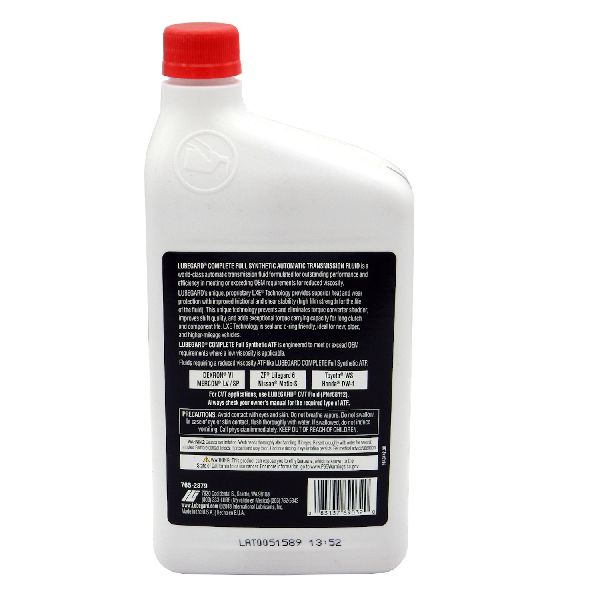
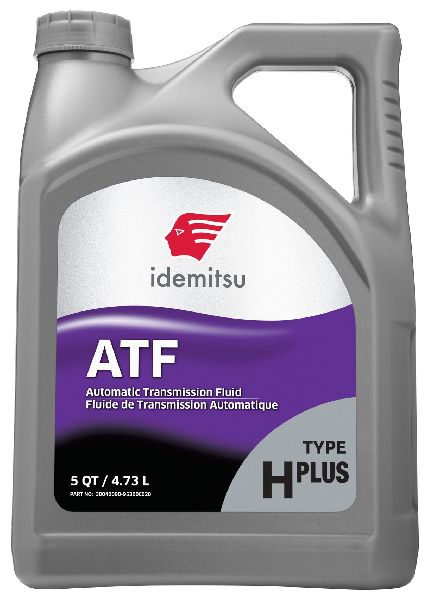
On a 2013-2017 Honda Accord, P0746 is most often caused by low or degraded transmission fluid. Before replacing parts, check the fluid and perform a drain-and-fill using the correct type: Honda HCF-2 for 4-cylinder CVT models or Honda ATF DW-1 for V6 automatic models. If the issue persists, the pressure control solenoid 'A' is the next likely culprit.
- P0746 has different meanings for 4-cylinder (CVT) and V6 (6-speed auto) Accords of this generation.
- The first and most important diagnostic step is to check the transmission fluid's level and condition.
- Only use genuine Honda-specified fluid: HCF-2 for the CVT and ATF DW-1 for the 6-speed automatic. Using the wrong fluid will cause damage.
- If a fluid change doesn't fix the problem, the pressure control solenoid 'A' is the next most likely part to have failed.
- This is a serious code that affects drivability; address it promptly to avoid the risk of more expensive transmission failure.
What's Unique About the 2013-2017 Honda Accord
The 2013-2017 (9th generation) Accord is unique because it offered two very different automatic transmissions: a CVT for the 4-cylinder engines and a traditional 6-speed automatic for the V6. While P0746 applies to both, the diagnosis and parts are completely different. Honda CVTs are known to be highly sensitive to fluid condition, and using anything other than genuine Honda HCF-2 fluid can cause serious problems. Similarly, the 6-speed automatic is designed specifically for Honda ATF DW-1, and fluid degradation has been linked to performance issues like transmission judder on this platform, as documented in TSB 17-017.
Symptoms You May Notice
- Check Engine Light is on
- Blinking 'D' (Drive) indicator on the dashboard
- Poor, sluggish, or hesitant acceleration
- Harsh, erratic, or delayed shifting, sometimes described as a 'clunk'
- Transmission feels like it's slipping (engine RPMs rise without an increase in speed)
- Vehicle enters limp mode, possibly limiting gears
- Unusual engine speeds at various vehicle speeds
- Replacing the entire transmission without first checking the fluid and testing the individual solenoid. A simple fluid change or solenoid replacement is often all that is needed.
- Assuming a transmission judder on a V6 model is a bad torque converter without first performing the software update and fluid flush outlined in Honda TSB 17-017.
Most Likely Causes
- Low, Dirty, or Incorrect Transmission Fluid 🔴 High Probability Both the CVT and 6-speed automatic are sensitive to fluid condition. Fluid degrades over time, losing its hydraulic properties and causing components like solenoids to stick or malfunction due to contamination or varnish deposits.
How to confirm: Check the transmission fluid level and condition with the engine warm. For the CVT, the fluid should be translucent and light-colored; for the 6-speed, it should be reddish. Dark brown, black, or burnt-smelling fluid is a clear sign it needs to be changed. Ensure you are using the correct fluid type for your transmission.
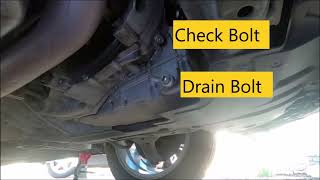
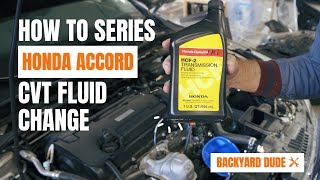
Typical fix: Perform a transmission fluid drain-and-fill. It may take multiple drain-and-fills to replace a majority of the old fluid. 🎬 Watch: How to change CVT fluid and the internal filter. Use ONLY Honda HCF-2 fluid for the CVT or Honda ATF DW-1 for the 6-speed automatic. For the V6 judder issue, Honda's TSB specifies a triple flush. 🎬 See how a triple flush fixes V6 transmission judder.
Est. part cost: $50-$150 for fluid - Faulty Pressure Control Solenoid 'A' 🟡 Medium Probability Solenoids can fail electrically (open/short in the coil) or mechanically (the internal valve gets stuck) due to age, heat, and contamination from old fluid.
How to confirm: After confirming the fluid is good, a technician can test the solenoid. This involves checking its electrical resistance with a multimeter and, in some cases, applying direct power to see if the valve actuates (clicks). A professional scan tool (like the Honda HDS) can also be used to command the solenoid on and monitor its response.
Typical fix: Replace the faulty pressure control solenoid. The specific part and location differ between the CVT and 6-speed automatic transmissions. This is often done after a fluid change fails to resolve the code.
Est. part cost: $100-$300 - Wiring or Connector Issue ⚪ Low Probability
How to confirm: Visually inspect the wiring harness leading to the pressure control solenoid for any signs of damage, corrosion, or loose connections. A multimeter can be used to check for continuity and shorts in the circuit from the TCM to the solenoid.
Typical fix: Repair the damaged section of the wiring harness or clean/replace the corroded connector.
Est. part cost: $10-$50
Rare But Worth Checking
- Clogged Transmission Filter or Valve Body Passages: If the transmission fluid is extremely dirty or contains metal debris, it can clog the internal filter or the fine hydraulic passages within the valve body, starving the solenoid of the pressure it needs to control. This often requires a more intensive repair, potentially involving valve body removal and cleaning.
- Faulty Transmission Control Module (TCM): In rare cases, the computer that controls the transmission can fail and stop sending the correct signal to the solenoid. This is usually diagnosed only after all other possibilities (fluid, solenoid, wiring) have been ruled out.
Diagnosis Steps
- Read the trouble codes with an OBD-II scanner and note any other codes present.
- Crucially, identify your transmission type. Check if you have the 4-cylinder (CVT) or V6 (6-speed automatic).
- Check Transmission Fluid. With the engine warm and off, check the fluid level and condition. Ensure the correct fluid type is being used (HCF-2 for CVT, ATF DW-1 for 6-speed). If the fluid is low, dark, or burnt, perform at least one drain-and-fill.
- Clear the code using the scanner and test drive the vehicle to see if P0746 returns. If it does not, the issue was likely the fluid.
- If the code returns, inspect the wiring harness and connector for the Pressure Control Solenoid 'A' for any visible damage or corrosion.
- Test the solenoid's electrical resistance with a multimeter to ensure it is within the manufacturer's specification. This confirms the electrical integrity of the solenoid's coil.
- If possible, command the solenoid 'on' with a bi-directional scan tool or apply a 12V source to listen for an audible click, which indicates mechanical movement. Lack of a click points to a mechanically stuck solenoid.
- If the solenoid fails electrical or mechanical testing, replace it.
- If the solenoid and wiring test good, the issue may be a clogged valve body, a failing transmission pump, or a faulty TCM, which requires professional diagnosis.
Parts You'll Likely Need
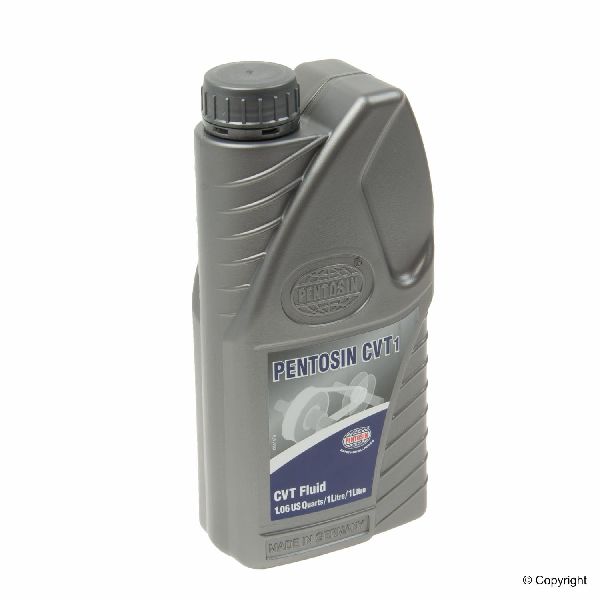
- Honda Genuine HCF-2 CVT Fluid
(OEM #08200-HCF2)— This is the required fluid for the CVT in 4-cylinder models. Degraded fluid is the most common cause of this code. Using non-genuine fluid is highly discouraged.
Trusted brands: Honda
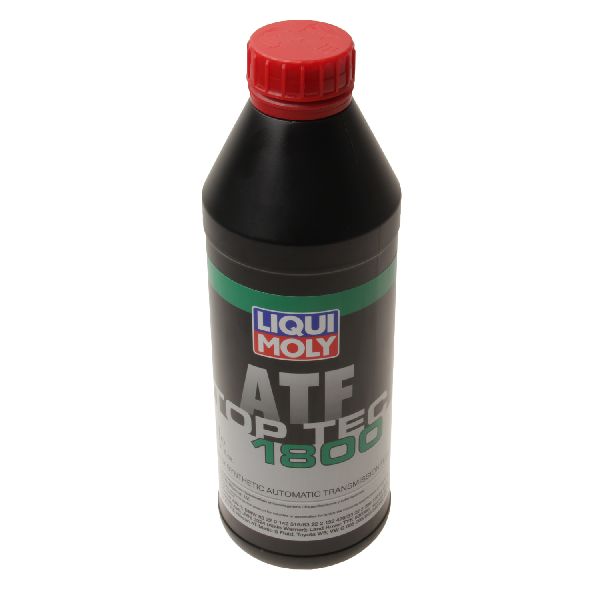
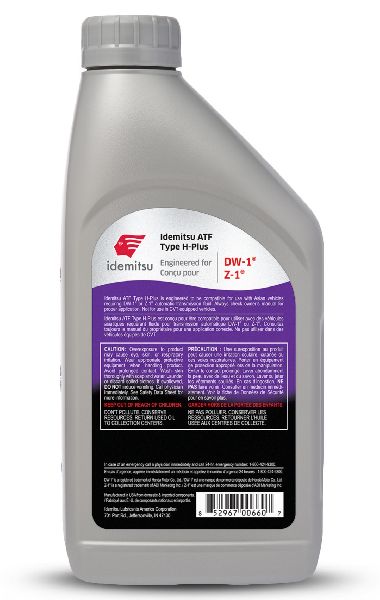
OEM price range: $15-$25 per quart - Honda Genuine ATF DW-1 Automatic Transmission Fluid
(OEM #08200-9008)— This is the required fluid for the 6-speed automatic in V6 models. Old fluid is a primary cause of solenoid performance issues and judder.
Trusted brands: Honda
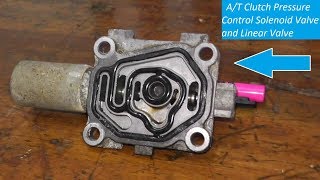
OEM price range: $10-$20 per quart - Pressure Control Solenoid 'A' (for V6 6-Speed AT)
(OEM #28250-R97-004)— If a fluid change does not resolve the issue on a V6 model, the solenoid itself has likely failed. This part is also referred to as a 'Linear Solenoid Assembly'.
Trusted brands: Honda (OEM)
OEM price range: $250-$400
Aftermarket price range: $80-$200 - Pressure Control Solenoid 'A' (for 4-Cyl CVT)
(OEM #28250-5C1-003)— If a fluid change does not resolve the issue on a 4-cylinder CVT model, the solenoid has likely failed. This is the specific part for the CVT application.
Trusted brands: Honda (OEM)
OEM price range: $200-$350
Aftermarket price range: $70-$180
Related Codes That Often Appear With This One
- P0747 — This code is for 'Pressure Control Solenoid 'A' Stuck On', the opposite of P0746. Seeing them together or intermittently could point to an erratic solenoid or a wiring issue causing inconsistent operation.
- P0777 — This code is for 'Pressure Control Solenoid 'B' Stuck On'. Seeing this with P0746, as reported by some owners of similar Honda powertrains, can indicate a more widespread hydraulic control issue, possibly due to severely degraded fluid affecting multiple solenoids.
- P0745, P0748, P0749 — These are other codes related to the Pressure Control Solenoid 'A' circuit, indicating electrical faults (like an open or shorted circuit) rather than a performance/stuck issue.
Technical Service Bulletins (TSBs) & Recalls
- Judder from the Torque Converter Lock-Up Clutch: Applies to 2013-2017 V6 models. A judder is felt between 20-60 mph. Honda identified the cause as deteriorated ATF DW-1 fluid, not a faulty torque converter. The fix is a PGM-FI/A/T software update to better regulate fluid temperature, followed by a specific fluid flush procedure (often a triple drain-and-fill). This TSB is for a judder symptom, which could be misdiagnosed but is not a direct fix for a P0746 code.
- Judder from the Torque Converter Lock-Up Clutch After Software Update: A follow-up to TSB 17-017. If a vehicle has already had the software update but the judder returns, this bulletin advises performing the fluid flush procedure again.
- Starter Motor Grinds at Startup: Applies to 2013-2015 V6 models. Addresses a grinding noise from the starter. The fix involves replacing the starter motor and repositioning the torque converter ring gear.
- Warranty Extension: 2016–17 Accord Headlight LED DRL: Addresses the common failure of the LED daytime running light strips on 2016-2017 models by extending the warranty coverage for this specific component.
Platform-Specific Known Issues
- CVT Models (4-Cylinder): These transmissions are known to be sensitive to fluid degradation. Failure to change the HCF-2 fluid at recommended intervals (typically every 30,000 miles) can lead to juddering, hesitation, and solenoid-related codes like P0746. Early 2013 models were noted to have some 'growing pains' with the new CVT, including
Mechanic-Grade Diagnostic Values
- Pressure Control Solenoid 'A' Coil Resistance — expected: 4.7 to 5.9 ohms. Failure: A reading of 0 Ω indicates a short, while an infinite reading (OL) signifies an open circuit. Readings outside the specified range indicate a faulty coil.
- Scan Tool Live Data: Solenoid Duty Cycle — expected: Varies with TCM commands, typically 30-70% during engagement.. Failure: A value of 0% when the solenoid should be active can indicate a TCM signal issue or an open circuit.
- Scan Tool Live Data: Transmission Line Pressure — expected: Actual pressure should match the commanded pressure from the TCM within approximately 5 PSI.. Failure: A significant discrepancy between commanded and actual pressure points to a hydraulic issue, such as a stuck solenoid or clogged passage, rather than an electrical fault.
Scan Tool Commands That Help
- Honda Diagnostic System (HDS) or equivalent professional scan tool: Clear DTCs — This is the first step before test driving to see if a code is intermittent or persistent after a fluid change.
- Honda Diagnostic System (HDS) or equivalent bi-directional scan tool: Solenoid Activation Test (e.g., 'TCC Solenoid Activation') — After verifying wiring and fluid, this test commands the solenoid on and off to confirm mechanical function. The technician should listen for an audible 'click' and monitor pressure changes on the scan tool. A lack of response indicates a stuck or failed solenoid.
Wiring & Ground Locations
- G101 — Typically located on the engine itself, often on the intake manifold plenum or cylinder head on the driver's side of the engine bay.. G101 is a primary ground point for the engine control module (ECM/PCM) and its associated sensors and actuators, including transmission solenoids. A poor connection at this ground can cause erratic voltage and unpredictable behavior from electronically controlled components, potentially triggering performance codes like P0746.
OEM Part Supersession History
28250-R97-004→N/A— This part number appears to be consistent for the V6 6-speed automatic transmission.
Heads up: This part number is listed for Honda models from 2007 through 2015, including the Accord, Odyssey, and Pilot with V6 engines. This indicates it was carried over into the 9th generation Accord but may not apply to the final years of the range. Always verify the part number with the vehicle's VIN.
Model Year Variations Within This Range
- 2013-2017: The 9th generation Accord received a significant refresh for the 2016 model year, which included updated exterior and interior styling and the addition of the Honda Sensing safety suite. However, sources indicate that the core powertrain options (2.4L CVT and 3.5L 6-speed automatic) were unchanged. Therefore, the causes and diagnostic procedures for P0746 are expected to be the same across the entire 2013-2017 model range for each respective transmission type.
Diagnostic Flowchart
Other Known Issues on This Vehicle
Issues unrelated to this code that are worth knowing about as an owner of this generation:
- Premature Starter Motor Failure 🔴 High — Common on both 4-cylinder and V6 models from 2013-2015. Symptoms include intermittent no-start, grinding noises, or multiple attempts needed to start the engine. (Ref: Honda TSB 16-002 specifically addresses a grinding noise at startup on 2013-2015 V6 models, requiring starter replacement and repositioning of the torque converter. A class-action lawsuit was also filed regarding this issue.)
- VTC Actuator Rattle on Cold Start 🟠 Medium — A very common issue on the 2.4L 4-cylinder engine. A loud, brief rattle or grinding noise is heard for about 2 seconds immediately after a cold start. (Ref: Honda TSB 09-010 (later revised) addresses this by recommending the replacement of the VTC actuator. The noise is caused by a lack of oil pressure in the actuator when the engine has been off for hours.)
- Burnt-Out LED Daytime Running Light (DRL) Strips 🟡 Low — Widespread on 2016-2017 models with LED headlights. The LED strip on one or both headlights fails, often due to an overpowered LED chip that overheats and burns out. (Ref: Honda issued TSB 19-042 and extended the warranty for this specific issue on some 2016-2017 models. Repair involves replacing the internal LED board, which requires opening the headlight assembly.)
- Transmission Judder (V6 Models) 🟠 Medium — Affects V6 models with the 6-speed automatic, causing a shudder or vibration when driving between 20 and 60 mph. (Ref: Honda TSB 17-017 and 17-018 directly address this. The cause is identified as deteriorated transmission fluid, not a faulty torque converter. The fix involves a software update to better manage fluid temperature and a triple fluid flush with ATF DW-1.)
- Weak/Undersized Battery 🟡 Low — Particularly noted on 4-cylinder models, the small factory battery can fail prematurely, leading to a variety of electrical issues and no-start conditions. (Ref: A recall was issued to replace a faulty 12-volt battery sensor, but the underlying issue for many owners is the battery's low capacity.)
Used vs. New Parts: Buying Guide for This Vehicle
When a used part is the smart pick: A used valve body assembly from a low-mileage donor vehicle can be a cost-effective option if the original is suspected of having clogged internal passages that are difficult to clean. This can sometimes be more reliable than replacing a single solenoid in a high-mileage transmission where other components may also be worn.
Donor-vehicle mileage cap: roughly under 80000 miles for the part to have meaningful remaining life.
What to inspect on the donor part:
- Verify the mileage of the donor vehicle.
- Inspect the color and smell of the transmission fluid from the donor part, if possible. Avoid if dark, burnt, or full of debris.
- Ask for the donor vehicle's VIN to check for a history of accidents or major repairs.
- Prefer parts from vehicles with documented service history.
OEM-only on this vehicle (don't cheap out):
- Transmission Fluid (Honda HCF-2 for CVT, Honda ATF DW-1 for 6-Speed AT). Using non-genuine fluid is a leading cause of transmission problems and solenoid codes in these vehicles.
Real Owner Stories
Aggregated from forums and TSBs cited above. Mileages and costs reflect what owners reported in those sources.
Acura TL (V6)
Symptoms: The transmission was slipping and making a clunking noise.
What fixed it: The owner was advised to replace the pressure control solenoid first before condemning the entire transmission as the likely fix.
Source hint: Reddit r/MechanicAdvice/comments/f0g19c/p0746_code_acura_tl/
Acura (V6 Powertrain)
Symptoms: Experienced odd shifting behavior and had both P0746 and P0777 codes stored.
What fixed it: The discussion pointed to a likely failure of one or more pressure control solenoids, which should be investigated before suspecting more severe internal transmission wear.
Source hint: AcuraZine thread where a user with a related Honda V6 powertrain experiences both P0746 and P0777...
Honda Accord (V6)
Symptoms: An owner reported a complete transmission failure where fluid levels were normal, but the vehicle stored codes P0741, P0746, and P0777 (NHTSA ODI #10638514).
What fixed it: In this severe case, the diagnosis was a total transmission failure despite proper fluid levels.
Honda Odyssey (V6 Powertrain)
Symptoms: Shortly after a fluid check, the transmission solenoids were reported as failed with codes P0746, P0777, and P0741 (NHTSA ODI #10609124).
What fixed it: The technician identified multiple solenoid failures within the hydraulic control system.
Honda CR-V (CVT Powertrain)
Symptoms: A diagnostic scan revealed a cluster of CVT-related codes including P0746, P0741, P0780, and P1898 (NHTSA ODI #11702634).
What fixed it: These codes collectively pointed to a failure in the CVT drive pulley pressure control valve and associated solenoids.
Related OBD-II Codes
Frequently Asked Questions
My 2015 Honda Accord V6 is juddering between 20-60 mph. Is there a known fix for this?
What is the correct transmission fluid for my 2016 Accord?
The 'D' (Drive) light on my dashboard is blinking. What does that mean?
I already had the TSB 17-017 software update for the transmission judder, but it's come back. What should I do?
Is the 4-cylinder CVT model prone to the P0746 code?
My 2014 V6 Accord makes a grinding noise at startup. Is this related to the transmission?
Helpful Videos

Used OEM Parts in Stock

New Aftermarket Parts Available

The information in this article is provided for general reference and educational purposes only. Vehicle specifications, procedures, and part compatibility can vary by production date, trim level, and region. Always consult your vehicle's factory service manual and verify part numbers before purchasing or performing repairs. Safety-critical components such as airbags, seat belts, and braking systems should be installed by a qualified professional.
- Honda Accord:
- 🎬 Helpful Videos
- 🛍️ Shop This Part
- What's Unique About the 2013-2017 Honda Accord
- Symptoms You May Notice
- Most Likely Causes
- Rare But Worth Checking
- Diagnosis Steps
- Parts You'll Likely Need
- Related Codes That Often Appear With This One
- Technical Service Bulletins (TSBs) & Recalls
- Platform-Specific Known Issues
- Mechanic-Grade Diagnostic Values
- Scan Tool Commands That Help
- Wiring & Ground Locations
- OEM Part Supersession History
- Model Year Variations Within This Range
- Diagnostic Flowchart
- Other Known Issues on This Vehicle
- Used vs. New Parts: Buying Guide for This Vehicle
- Real Owner Stories
- Acura TL (V6)
- Acura (V6 Powertrain)
- Honda Accord (V6)
- Honda Odyssey (V6 Powertrain)
- Honda CR-V (CVT Powertrain)
- Related OBD-II Codes
- Frequently Asked Questions
- 🎟️ Get 5% Off