

P0746 on 2013-2020 Ford Fusion: Pressure Control Solenoid 'A' Causes and Fixes
This code indicates a problem with the transmission's Pressure Control Solenoid 'A', often leading to harsh shifting or getting stuck in gear. The most common causes are low/dirty transmission fluid or a failed solenoid, which is part of the valve body. A fluid change might fix it, but replacing the solenoid is a more involved repair.
- P0746 on a 2013-2020 Fusion points to a serious transmission issue, most often related to fluid quality or the pressure control solenoid.
- Symptoms are noticeable and affect drivability, such as harsh shifting and the risk of entering limp mode.
- Start diagnosis by checking the transmission fluid level and condition, as a fluid/filter change is the cheapest potential fix.
- Repair almost always requires dropping the transmission pan and is best left to a professional.
- The most common part needed is the complete solenoid body assembly, not just a single solenoid.
What's Unique About the 2013-2020 Ford Fusion
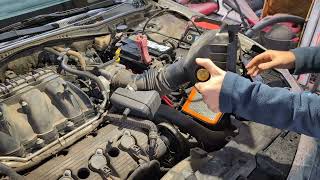
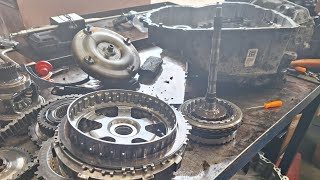
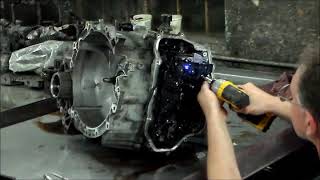
The 2013-2020 Ford Fusion primarily uses the 6F35 automatic transmission (for non-hybrid models). While P0746 is a generic code, on these specific transmissions, it often points directly to issues within the valve body where the solenoids are housed. Problems can range from simple fluid contamination clogging the solenoid to internal wear and tear requiring replacement of the entire solenoid body assembly. 🎬 See this walkthrough on replacing the valve body and solenoids. Unlike some vehicles where external wiring is a frequent culprit, on the Fusion, the issue is very often internal to the transmission itself, a claim corroborated by numerous owner experiences and repair guides.
Symptoms You May Notice
- Harsh, abrupt, or delayed gear shifts.
- Transmission slipping (engine RPMs rise without an increase in speed).
- Vehicle enters 'limp mode,' getting stuck in a single gear. 🎬 Watch: What it looks like when a Fusion enters limp mode.
- Transmission warning light or Check Engine Light is on.
- Transmission may overheat.
- Increased fuel consumption.
- Replacing only the transmission fluid when the solenoid has already failed mechanically.
- Assuming a complete transmission rebuild is needed without first diagnosing the valve body and solenoids.
- Mistaking a software issue for a mechanical failure. On lower mileage vehicles, harsh shifting can sometimes be resolved with a TCM software update.
Most Likely Causes
- Low or Contaminated Transmission Fluid 🔴 High Probability Over time, transmission fluid breaks down and can become contaminated with clutch material and metal shavings. This dirty fluid can clog the small passages in the pressure control solenoid, causing it to stick or perform poorly.
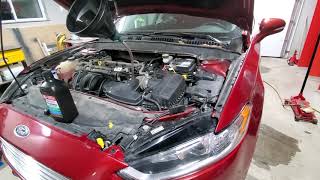
How to confirm: Check the transmission fluid level and condition. The fluid should be bright red and clear, not brown, black, or smell burnt. Note that many modern Fusions do not have a traditional dipstick, so this may need to be checked by a professional by removing a fill plug on the side 🎬 Watch: How to check and fill your Fusion's transmission fluid. of the transmission case.
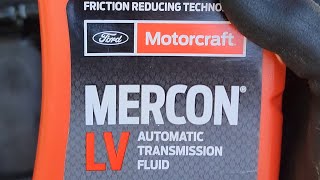
Typical fix: Perform a transmission fluid and filter change. Use the correct Motorcraft MERCON LV fluid specified for the 6F35 transmission.
Est. part cost: $75-$150 - Failed Pressure Control Solenoid 'A' 🔴 High Probability The solenoid is an electro-mechanical part that can fail electrically (coil burnout) or mechanically (plunger gets stuck) from wear and tear or contamination. Debris in the fluid is a primary cause of the solenoid sticking.
How to confirm: A professional technician can use a scan tool to command the solenoid on and off while monitoring pressure. They can also test the solenoid's electrical resistance with a multimeter after removing the transmission pan and valve body.
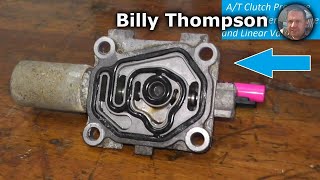
Typical fix: The pressure control solenoids are typically part of the main control/solenoid body assembly. The entire assembly is usually replaced. This requires removing the transmission pan and valve body.
Est. part cost: $250-$500 - Faulty Valve Body 🟡 Medium Probability Besides the solenoid itself, the passages within the valve body can become clogged with debris or warped from heat, preventing proper fluid flow and causing pressure regulation issues.
How to confirm: This is diagnosed after ruling out the fluid and the solenoid itself. Inspection of the valve body after removal may show scoring, blockages, or stuck valves. In some cases, remanufactured valve bodies are available to address known wear issues.
Typical fix: The valve body may be cleaned or, more commonly, replaced with a remanufactured or new unit.
Est. part cost: $400-$800
Rare But Worth Checking
- Wiring Issues: While less common than internal issues on this platform, the wiring harness leading to the transmission or the internal transmission harness could be damaged, causing a loss of signal to the solenoid. A visual inspection and continuity test can confirm this.
- Faulty Transmission Control Module (TCM): In rare cases, the TCM itself can fail and stop sending the correct signal to the solenoid. This is usually the last thing to suspect after all other possibilities have been exhausted.
Diagnosis Steps
- Check and verify the transmission fluid level and condition. If low, top it off. If dark, burnt, or full of debris, a fluid and filter change is the first step.
- Use a professional OBD-II scanner to check for any other transmission-related codes and to view live data from the TCM, comparing commanded pressure versus actual pressure.
- Inspect the transmission's external wiring harness and connectors for any visible damage, corrosion, or loose connections.
- Perform an electrical test on the solenoid. This involves checking its resistance with a multimeter to see if it's within the manufacturer's specified range. An actuation test can also be performed by applying 12V directly to the solenoid to see if it clicks.
- If the fluid and wiring are good, the next step is to remove the transmission pan to inspect for excessive metal debris, which would indicate a more severe mechanical failure.
- With the pan removed, a technician can remove the valve body to test or replace the pressure control solenoid/solenoid body.
Parts You'll Likely Need
- Transmission Solenoid Body Assembly
(OEM #BL3Z-7A100-B (verify by VIN, as multiple revisions exist))— This assembly contains the pressure control solenoids. Since the solenoids are often the root cause and integrated into the block, replacing the entire assembly is the standard repair for the 6F35 transmission.
Trusted brands: Motorcraft, ATP Automotive, Dorman
OEM price range: $400-$600
Aftermarket price range: $250-$450 - Automatic Transmission Fluid
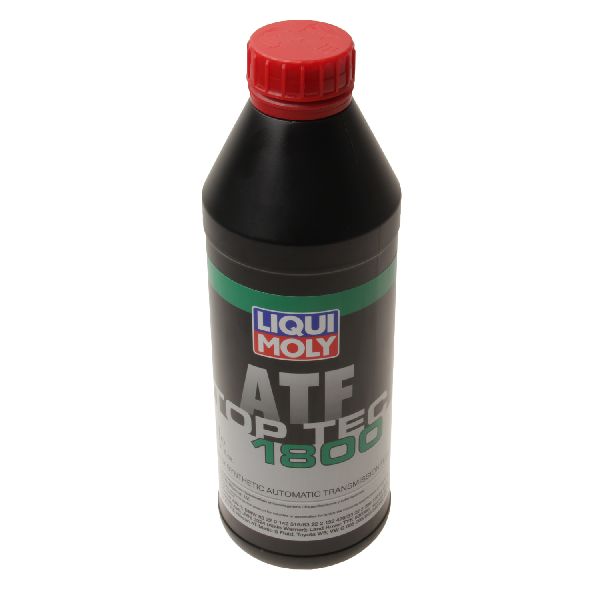
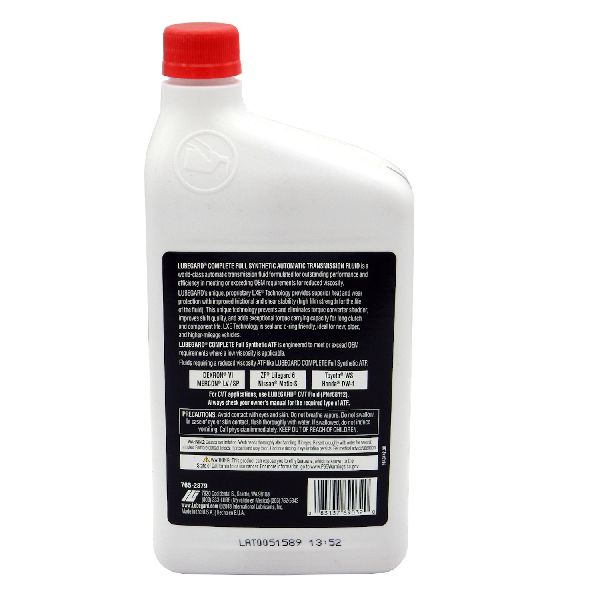
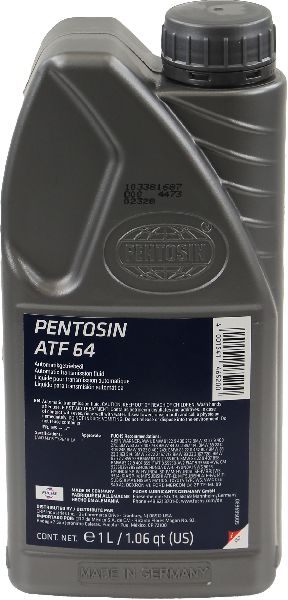
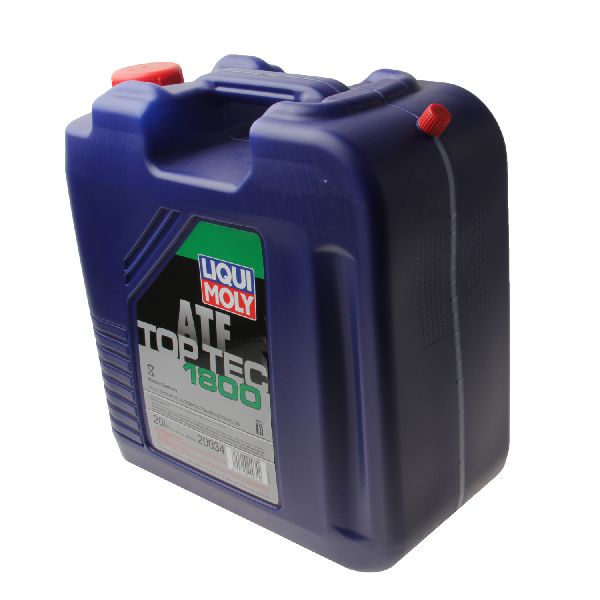
(OEM #Motorcraft XT-10-QLVC)— A fluid and filter change is required for any repair involving the removal of the transmission pan or valve body. Using the correct fluid (MERCON LV) is critical for the 6F35 transmission's health.
Trusted brands: Motorcraft (MERCON LV)
OEM price range: $10-$15 per quart
Aftermarket price range: $8-$12 per quart - Transmission Filter Kit
(OEM #FT-188 (Motorcraft))— Should be replaced anytime the transmission pan is removed to ensure the new fluid stays clean.
Trusted brands: Motorcraft, Wix, Fram
OEM price range: $30-$50
Aftermarket price range: $20-$40
Related Codes That Often Appear With This One
- P0700 — P0700 is a general Transmission Control System Malfunction code, often triggered alongside more specific transmission codes like P0746 to indicate a fault has been registered by the TCM.
- P0745, P0747, P0748, P0749 — These are all related codes for the Pressure Control Solenoid 'A' circuit, indicating different types of failures (malfunction, stuck on, electrical, intermittent). Seeing them together points strongly to an issue with this specific solenoid or its circuit.
Technical Service Bulletins (TSBs) & Recalls
- TSB 16-0111: Addresses harsh transmission engagement after an auto start/stop event on some 2014-2016 Fusions with the 6F35, which could be related to transmission pressure issues.
Platform-Specific Known Issues
- Customer Satisfaction Program 22N12 was issued for some 2019-2020 Fusions (and other models) with the 2.0L engine and 6F35 transmission for cracked flexplates. Symptoms include a rattling noise, vibration, or loss of power. While not a direct cause of P0746, a related failure of the transmission fluid pump could lead to pressure problems.
- Some earlier models (2014-2016) with the start/stop feature could exhibit harsh engagement and set a P0C27 code due to air entering an auxiliary pump tube, as noted in TSB 16-0111.
Mechanic-Grade Diagnostic Values
- Pressure Control Solenoid (LPC) Resistance — expected: 4.00 - 5.89 Ohms at room temperature (68-86°F / 20-30°C). The resistance changes with temperature.. Failure: A reading outside the specified range for a given temperature indicates a faulty solenoid coil.
Hidden / Shadow Codes Worth Checking
- Solenoid Body Strategy ID: This is not a fault code, but a 13-digit alphanumeric identifier for the specific calibration profile of the solenoid body. The PCM uses this to precisely control the solenoids based on their unique flow characteristics. An incorrect strategy ID programmed into the PCM will cause shift quality issues and can trigger performance codes like P0746. (see via A sticker on the transmission case, a sticker supplied with a new valve body, or by using a Ford-specific scan tool (like FORScan or IDS) to read the currently programmed ID from the PCM.)
Scan Tool Commands That Help
- FORScan / Ford IDS: Clear Transmission Adaptive Tables — This service procedure should be performed after replacing the valve body or transmission. It erases the PCM's learned values for clutch application times, forcing it to relearn with the new components.
- FORScan / Ford IDS: Transmission Characterization Update — This is a mandatory step after installing a new solenoid body. This function allows the technician to input the new 13-digit Solenoid Body Strategy ID from the sticker on the new part into the PCM. The tool then downloads the correct calibration file from Ford's servers.
Wiring & Ground Locations
- G108 / G111 / G112 — These are key engine compartment grounds. G108 is on the left rear of the engine compartment, while G111 and G112 are located on the left front of the engine compartment on the Fusion.. The Transmission Control Module (TCM) and its sensors rely on clean ground connections. A corroded or loose ground at these locations can cause erratic voltage, communication errors, and incorrect solenoid operation, potentially triggering a P0746 code.
- C175T — This is the main transmission electrical connector located on the transmission case.. This connector houses the pins for all the transmission solenoids. Checking for corrosion, moisture, or pushed-out pins at this connector is a critical step before assuming an internal transmission failure.
Real Owner Repair Stories
- YouTube channel 'mazdab3k' (2010 Ford Fusion (Gen 1 6F35, but process is highly relevant to Gen 2)) — Harsh shifting and transmission fault codes.
❌ Tried (didn't work) Replaced the entire valve body with a remanufactured unit., Swapped individual solenoids from the old valve body to the new one.
✅ What actually fixed it The ultimate cause was found to be wiring damage in the harness leading to the transmission, which had been chewed by a rat. Repairing the damaged wires resolved all symptoms and codes.
OEM Part Supersession History
Varies (Original Solenoid Body)→Varies (New Solenoid Body)— Manufacturing updates and revisions to address wear and performance issues.
Heads up: A new solenoid body is physically compatible but electronically incompatible until its unique Solenoid Body Strategy ID is programmed into the vehicle's PCM/TCM using a capable scan tool. Failure to perform the 'Transmission Characterization Update' will result in poor shift quality.
Diagnostic Flowchart
Other Known Issues on This Vehicle
Issues unrelated to this code that are worth knowing about as an owner of this generation:
- 1.5L EcoBoost Coolant Intrusion 🔴 High — Common in 2014-2019 Fusions with the 1.5L engine. A design flaw in the engine block can cause cracks between cylinders, leading to coolant leaking into the combustion chamber. (Ref: TSB 19-2375, TSB 20-2100, TSB 22-2134. The fix often requires a new engine short block.)
- Shifter Cable Bushing Failure 🟠 Medium — Widespread on 2013-2016 models. The bushing that attaches the shifter cable to the transmission degrades, which can prevent the vehicle from going into the selected gear or cause it to roll away when in 'Park'. (Ref: Ford Recalls 18S20, 19S16, 22S43.)
- Steering Gear Motor Bolt Corrosion 🔴 High — Affects 2013-2016 models, particularly in regions that use road salt. Bolts securing the power steering motor can corrode and break, causing a sudden loss of power steering assist. (Ref: Ford Recalls 15S14, 19S26.)
- Cracked Flexplate 🟠 Medium — Affects some 2019-2020 models with the 2.0L engine and 6F35 transmission. Can cause a rattling noise, vibration, or loss of power. (Ref: Customer Satisfaction Program 22N12.)
Used vs. New Parts: Buying Guide for This Vehicle
When a used part is the smart pick: For this repair, a used valve body/solenoid assembly is strongly discouraged. However, obtaining good used 'hard parts' like a planetary gear set from a low-mileage donor vehicle at a junkyard can be a cost-effective option if more significant internal damage is found.
Donor-vehicle mileage cap: roughly under 70000 miles for the part to have meaningful remaining life.
What to inspect on the donor part:
- Verify the donor vehicle's mileage if possible.
- Avoid parts from vehicles that show signs of a major collision or flood damage.
- When buying a used transmission for hard parts, inspect the fluid color and smell if possible. Dark, burnt-smelling fluid is a major red flag.
OEM-only on this vehicle (don't cheap out):
- Transmission Fluid (Motorcraft MERCON LV is required). Using a universal or incorrect fluid type can cause shifting problems and damage.
- Solenoid Body Assembly (Motorcraft is highly recommended for fitment and to ensure a valid Strategy ID is provided).
Aftermarket brands forum-validated for this vehicle:
- Remanufactured valve bodies from reputable transmission-specific suppliers like Street Smart Transmission or Cobra Transmission are considered a reliable alternative to new OEM.
Brands owners have reported issues with on this vehicle:
- Unnamed, low-cost solenoid assemblies from online marketplaces. These often fail prematurely or come without a valid, programmable Solenoid Body Strategy ID.
Real Owner Stories
Aggregated from forums and TSBs cited above. Mileages and costs reflect what owners reported in those sources.
2018 Ford Fusion
Symptoms: shifting issues
What fixed it: replacing the transmission solenoid control module
Source hint: Reddit r/fordfusion
2019 Ford Fusion with 2.0L engine
Symptoms: rattling noise, vibration, or loss of power
What fixed it: One-time repair process covered by Ford under Customer Satisfaction Program 22N12 for a cracked flexplate.
Source hint: Ford Edge Forum - 'Customer Satisfaction 22N12- Flex Plate Crack on 2.0'
Related OBD-II Codes
Frequently Asked Questions
What is the correct transmission fluid for my 2013-2020 Ford Fusion?
My 2019 Fusion with the 2.0L engine is making a rattling noise. Could this be related to a P0746 code?
How do I check the transmission fluid level on my Fusion?
My 2015 Fusion with auto start/stop shifts very harshly sometimes. Is there a known fix?
If the pressure control solenoid is bad, do I replace just the one solenoid or a larger part?
My car is stuck in one gear and the check engine light is on. Is this a symptom of P0746?
Helpful Videos

Used OEM Parts in Stock

New Aftermarket Parts Available


The information in this article is provided for general reference and educational purposes only. Vehicle specifications, procedures, and part compatibility can vary by production date, trim level, and region. Always consult your vehicle's factory service manual and verify part numbers before purchasing or performing repairs. Safety-critical components such as airbags, seat belts, and braking systems should be installed by a qualified professional.
- Ford Fusion:
- 🎬 Helpful Videos
- 🛍️ Shop This Part
- What's Unique About the 2013-2020 Ford Fusion
- Symptoms You May Notice
- Most Likely Causes
- Rare But Worth Checking
- Diagnosis Steps
- Parts You'll Likely Need
- Related Codes That Often Appear With This One
- Technical Service Bulletins (TSBs) & Recalls
- Platform-Specific Known Issues
- Mechanic-Grade Diagnostic Values
- Hidden / Shadow Codes Worth Checking
- Scan Tool Commands That Help
- Wiring & Ground Locations
- Real Owner Repair Stories
- OEM Part Supersession History
- Diagnostic Flowchart
- Other Known Issues on This Vehicle
- Used vs. New Parts: Buying Guide for This Vehicle
- Real Owner Stories
- 2018 Ford Fusion
- 2019 Ford Fusion with 2.0L engine
- Related OBD-II Codes
- Frequently Asked Questions
- 🎟️ Get 5% Off