

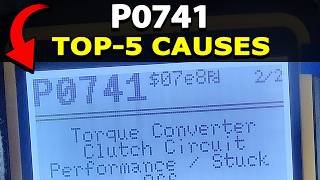
P0741 on 2014-2023 Dodge Durango: Torque Converter Clutch Performance Guide
P0741 on a 2014-2023 Dodge Durango most often points to a faulty torque converter clutch (TCC) solenoid or the torque converter itself. Less common causes include low or dirty transmission fluid. Expect repair costs to range from a fluid service to a more expensive solenoid or torque converter replacement.
- P0741 indicates the torque converter clutch is failing to lock up as commanded by the vehicle's computer.
- The most common culprits are a bad TCC solenoid, the torque converter itself, or low/dirty transmission fluid.
- Do not ignore this code. Continued driving can cause transmission overheating and severe internal damage.
- This is not a simple DIY fix. Professional diagnosis with a proper scan tool is required to avoid replacing expensive parts unnecessarily.
- Ask your technician about known issues, like Chrysler STAR Case S1321000013, which may speed up diagnosis.
What's Unique About the 2014-2023 Dodge Durango
The third-generation Dodge Durango uses several variations of the robust ZF 8-speed automatic transmission (such as the 8HP45, 8HP50/850RE, and 8HP70), which are also used in many Jeep, Ram, and Chrysler vehicles. While generally reliable, these transmissions are highly sensitive to fluid condition and electronic faults. The P0741 code is a known issue, with owner complaints filed with the NHTSA mentioning this specific code. One owner noted a dealer referencing a Chrysler STAR case (S1321000013) for a similar model, which suggests a known issue pattern recognized by the manufacturer. [OWNER COMPLAINT #11374669] This indicates that service centers have a specific diagnostic path to follow for this code on these vehicles, which often involves checking for related speed sensor DTCs first, then analyzing TCC slip data.
Symptoms You May Notice
- Check Engine Light is on
- Reduced fuel economy
- Engine RPMs are higher than normal at highway speeds
- A sensation of shuddering or vibration, similar to driving over rumble strips
- Vehicle may stall after coming to a stop from high speeds
- Harsh or delayed shifts
- Transmission overheating warning light may illuminate
- Slipping sensation when shifting gears.
- Replacing the torque converter when the actual problem is a much cheaper and easier to replace TCC solenoid.
- Replacing a single TCC solenoid when the entire solenoid block or valve body has an issue, leading to the code returning.
Most Likely Causes
- Faulty Torque Converter Clutch (TCC) Solenoid 🔴 High Probability The TCC solenoid is an electronic component submerged in transmission fluid that can fail electrically or mechanically over time. It's a very common point of failure for this code across many vehicles. In the ZF 8-speed, the solenoids are part of the mechatronics unit (valve body) and are often replaced as a complete set.
How to confirm: A technician can use a scan tool to command the solenoid on and off to check its response. The solenoid's internal resistance can also be tested with a multimeter, which requires dropping the transmission pan and valve body for access.
Typical fix: Replacement of the TCC solenoid. On ZF 8-speed transmissions, this often involves replacing the entire solenoid kit, which is attached to the valve body. This requires removing the transmission pan and mechatronics unit.
Est. part cost: $50-$150 for a single solenoid, $400-$600 for a full solenoid kit. - Low or Dirty Transmission Fluid 🟡 Medium Probability The ZF 8-speed transmission is sensitive to fluid level and condition. Low fluid can cause pressure issues preventing the TCC from engaging, while old, degraded fluid can cause solenoids to stick or passages to clog. Using the incorrect fluid is also a common cause of problems.
How to confirm: Check the transmission fluid level and condition. These transmissions do not have a traditional dipstick; the check must be performed by a technician from a fill plug on the transmission with the fluid at a specific temperature (usually 30-50°C). The correct fluid is Mopar 8 & 9 Speed ATF (ZF Lifeguard 8) or a certified equivalent.
Typical fix: Perform a transmission fluid and filter service using the correct OEM fluid. If the fluid is very dark, burnt, or contains metal particles, it may indicate a more severe internal problem like a failing torque converter.
Est. part cost: $250-$400 for a Mopar fluid and filter kit. - Worn or Failed Torque Converter 🟡 Medium Probability The clutch material inside the torque converter can wear out over time, especially with high mileage or heavy use, preventing it from locking up effectively. This is a common final diagnosis if fluid and solenoid replacement do not resolve the code.
How to confirm: This is typically diagnosed after confirming the TCC solenoid, wiring, and fluid are all good. A scan tool showing TCC slip RPMs that remain high (over 200 RPM) when the clutch is commanded to lock points strongly to a bad converter.
Typical fix: Replacement of the entire torque converter, which is a major repair that requires removing the transmission from the vehicle.
Est. part cost: $400-$900
Rare But Worth Checking
- Damaged Wiring or Connectors: The wiring harness to the transmission can be damaged by road debris or corrosion, causing an intermittent connection to the TCC solenoid. This should be inspected before condemning internal parts. A forum user with a similar vehicle suspected a wiring issue when the code appeared intermittently.
- Faulty Valve Body: The valve body (or mechatronics unit in a ZF transmission) contains a maze of hydraulic passages and valves that direct fluid flow. A worn valve or a blockage can prevent the TCC from getting the hydraulic pressure it needs to engage.
- Faulty Transmission Control Module (TCM) or PCM: While rare, the computer that controls the transmission can fail or have software glitches. This is usually the last item to consider after all other possibilities have been ruled out.
Diagnosis Steps
- Scan the vehicle's computer for P0741 and any other related trouble codes, such as for speed sensors.
- Check the transmission fluid level and condition. This requires a shop visit as there is no dipstick. The fluid must be at a specific temperature for an accurate reading.
- Using a professional scan tool, monitor live data such as TCC Desired Slip vs. Actual Slip RPM while driving to see if the clutch is attempting to engage. If slip remains high (>200 RPM) when lockup is commanded, it confirms a mechanical/hydraulic failure.
- Inspect the transmission's external wiring harness and connectors for any signs of damage, corrosion, or loose connections.
- If the fluid, wiring, and converter are deemed okay, the next step is to test the TCC solenoid. This involves dropping the transmission pan to access the mechatronics unit and testing the solenoid's resistance or replacing the solenoid pack.
- If the fluid, wiring, and solenoid are confirmed to be good, the problem is almost certainly an internal issue with the torque converter itself, requiring transmission removal to replace.
Parts You'll Likely Need
- Torque Converter Clutch (TCC) Solenoid Kit
(OEM #1087298388 (ZF Part Number for Solenoid Kit))— The solenoid pack is a common electrical failure point. On ZF8 transmissions, it's often recommended to replace the entire set of solenoids on the mechatronics unit rather than just one.
Trusted brands: Mopar, ZF, Rostra
OEM price range: $500-$650
Aftermarket price range: $350-$500 - Torque Converter — If the solenoid and hydraulics are working correctly, the clutch inside the converter itself has likely failed. This is a major repair that requires transmission removal.
Trusted brands: Mopar, Power Torque, Transtar
OEM price range: $600-$900
Aftermarket price range: $400-$700 - Automatic Transmission Fluid and Filter Kit
(OEM #68218925AB (Mopar 8 & 9 Speed ATF))— Correct fluid level and condition are critical for the proper function of the ZF 8-speed transmission. A fluid and filter change is a necessary first step if the service history is unknown. The OEM fluid is ZF Lifeguard 8, re-branded by Mopar.
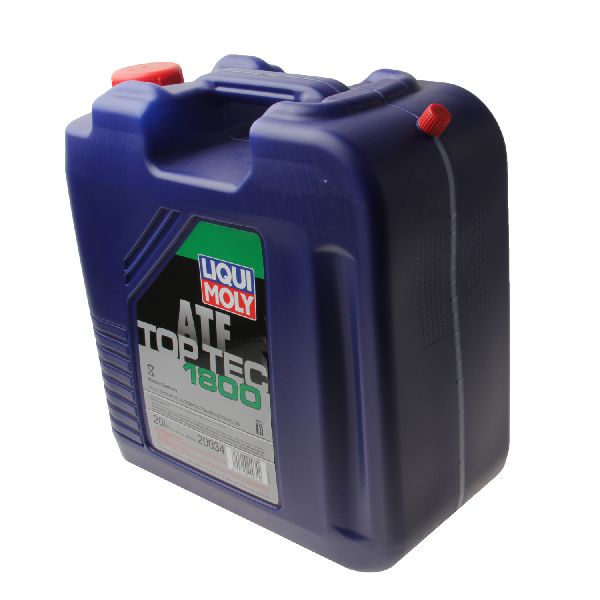
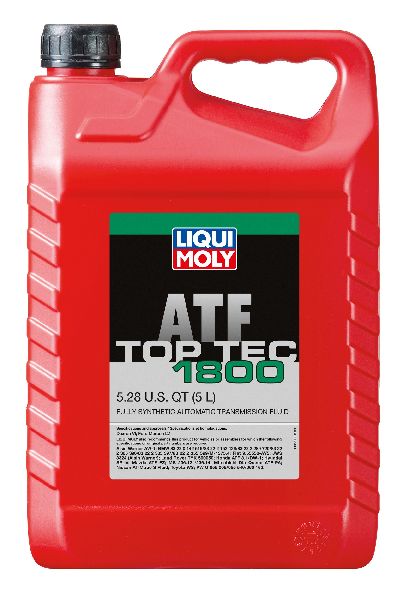
Trusted brands: Mopar (ZF Lifeguard 8), Liqui Moly Top Tec 1800, Valvoline MaxLife ATF
OEM price range: $250-$400
Aftermarket price range: $150-$250
Related Codes That Often Appear With This One
- P0700: Transmission Control System Malfunction
- P0218: Transmission Over Temperature Condition
Technical Service Bulletins (TSBs) & Recalls
- Chrysler STAR Case S1321000013: While the full text is not public, its existence, noted by an owner in NHTSA complaint #11374669, confirms that Chrysler has a specific internal diagnostic procedure for dealers to follow when encountering P0741 on these vehicles.
Platform-Specific Known Issues
- A 2013 Dodge Durango owner reported code P0741 and was informed by the dealer of a Chrysler STAR Case: S1321000013, indicating a known issue. [OWNER COMPLAINT #11374669]
- An owner of a Dodge Charger with a similar powertrain reported code P0741 and was told the torque converter was 'stuck off,' eventually leading to a transmission replacement diagnosis. [OWNER COMPLAINT #11232819]
- Another Dodge owner with P0741 had a dealer perform a transmission service, fluid check, and computer relearn as initial diagnostic steps. [OWNER COMPLAINT #10515526]
- On DodgeForum.com, a 2013 Charger owner with P0741 replaced the TCC solenoid, but the code returned. The dealer ultimately diagnosed a failed torque converter, which was replaced under warranty, fixing the issue.
Mechanic-Grade Diagnostic Values
- TCC Solenoid and Shift Solenoid Resistance — expected: Approximately 5.5 ohms. Failure: A reading of infinite resistance (open circuit) or near-zero ohms (short circuit).
- TCC Actual Slip vs. TCC Desired Slip (Live Scan Tool Data) — expected: Difference should be less than 60-200 RPM when TCC status is 'SLIP' or 'LOCKED'.. Failure: If TCC Actual Slip exceeds Desired Slip by more than the calibrated value (typically >60-200 RPM) for a set period, it confirms a hydraulic or mechanical fault.
- Transmission Fluid Temperature for Diagnostics — expected: Diagnostics and adaptation procedures should be performed when the fluid temperature is between 60°C (140°F) and 100°C (212°F).. Failure: Performing tests outside this range can lead to inaccurate results or aborted procedures.
Scan Tool Commands That Help
- wiTECH (Dealer Tool) or AlfaOBD/Appcar DiagFCA (Advanced Aftermarket): Quick Learn — This procedure must be performed after replacing the valve body/mechatronics unit, solenoids, or the entire transmission. It resets and relearns the clutch fill times and pressures to ensure proper shift quality.
- wiTECH or equivalent: Reset Adaptive Values — Used before the 'Quick Learn' procedure to clear out old, stored clutch wear data from the TCM's memory.
- wiTECH or equivalent: TCC Break-In Procedure — A specific routine to be run after a new torque converter is installed to properly seat the new clutch and learn its engagement characteristics.
Wiring & Ground Locations
- Transmission Main Connector — On the passenger side of the transmission case, a large, round 16-pin connector.. This is the sole electrical interface for the internal mechatronics unit, including the TCC solenoid. Checking for corrosion, damage, or fluid intrusion here is a critical first step in electrical diagnosis.
- Powertrain Ground Straps — Key grounds are typically located from the engine block/cylinder head to the chassis/firewall and from the transmission bell housing area to the vehicle frame.. A poor or corroded ground connection can cause erratic behavior in the transmission's electronic controls, leading to incorrect solenoid operation and potentially triggering a P0741 code.
Real Owner Repair Stories
- Dodge Durango Forum member (2014 Dodge Durango R/T (5.7L V8)) — Check engine light with code P0741, slight shudder at highway speeds.
❌ Tried (didn't work) Transmission fluid and filter change.
✅ What actually fixed it The dealership diagnosed a failed torque converter. Replacement of the torque converter resolved the code and symptoms. - Jeep Garage Forum member (similar ZF8-equipped vehicle) (Jeep Grand Cherokee with ZF 8-speed transmission) — P0741 code and noticeable transmission shudder.
❌ Tried (didn't work) Clearing the code, which would return quickly.
✅ What actually fixed it Replacement of the entire valve body (mechatronics unit), which includes all new solenoids. This fixed the problem, suggesting the issue was with the solenoid pack or a hydraulic leak within the valve body itself.
OEM Part Supersession History
68218925AA, 68157995AA, 68157995AB→68218925AB— Standard part number consolidation and potential minor formula updates for Mopar 8&9 Speed ATF.
Heads up: These part numbers are generally interchangeable for this application.
Model Year Variations Within This Range
- 2014-2017 (approx.): Durangos with the 3.6L V6 engine primarily used the ZF 8HP45 or the Chrysler-built 845RE. Models with the 5.7L V8 used the ZF 8HP70.
- 2018-2023 (approx.): For the 3.6L V6, the transmission was updated to the second-generation 850RE (a version of the 8HP50). The 5.7L V8 continued with the 8HP70. While the fundamental design and P0741 causes are the same, software and internal solenoid revisions may differ slightly.
Diagnostic Flowchart
Other Known Issues on This Vehicle
Issues unrelated to this code that are worth knowing about as an owner of this generation:
- HEMI V8 Lifter/Camshaft Failure ('Hemi Tick') 🔴 High — Common on 5.7L and 6.4L HEMI engines, often appearing after 80,000 miles. Caused by MDS lifter roller bearing failure, which damages the camshaft.
- 3.6L Pentastar V6 Cracked Oil Filter Housing 🟠 Medium — Extremely common issue where the plastic oil filter/cooler housing, located in the engine valley, cracks due to heat cycles, causing significant oil leaks.
- Uconnect 8.4-inch Screen Delamination & Ghost Touch 🟠 Medium — Widespread on 2017-2018 models especially. The screen adhesive fails, causing bubbles and phantom screen presses that disrupt radio, navigation, and climate controls. (Ref: Chrysler Star Case S2108000130 (NHTSA ID 10223465) acknowledges the issue but is not a recall.)
- Leaking 'Racetrack' Taillight Assembly 🟡 Low — The center taillight panel is known to have poor seals, allowing water to enter and cause sections of the LED to fail.
- Rear Spoiler Flying Off 🟠 Medium — A recall was issued for the rear spoiler, which could loosen and detach from the vehicle while driving. (Ref: Yes, a recall exists for this issue.)
Used vs. New Parts: Buying Guide for This Vehicle
When a used part is the smart pick: A complete, used transmission assembly from a verified low-mileage donor vehicle (e.g., a rear-end collision) can be a cost-effective alternative to a full rebuild or a new unit from the dealer, which can be prohibitively expensive.
Donor-vehicle mileage cap: roughly under 60000 miles for the part to have meaningful remaining life.
What to inspect on the donor part:
- Verify the donor vehicle's VIN to confirm mileage and ensure it wasn't totaled due to a frontal impact that could have damaged the transmission or cooler.
- Ask for a video of the donor vehicle running and driving, if possible.
- Inspect the fluid from the donor transmission. It should not be black, burnt-smelling, or contain excessive metal particles.
- Ensure the main electrical connector pins are clean, straight, and free of corrosion.
OEM-only on this vehicle (don't cheap out):
- Mechatronics Unit / Valve Body: Due to the precise calibration and integrated TCM, a new OEM (ZF or Mopar) unit is highly recommended. Used units can have worn solenoids or internal leaks, and programming can be difficult.
- Solenoid Kit: Always buy new OEM (ZF) or a reputable aftermarket brand. Used solenoids carry the same risk of failure as the part you are replacing.
Aftermarket brands forum-validated for this vehicle:
- Torque Converter: Reputable remanufacturers like Transtar or Power Torque are generally considered reliable alternatives to OEM.
- Transmission Fluid: Liqui Moly Top Tec 1800 and Valvoline MaxLife ATF are often cited by independent shops as suitable alternatives to the more expensive Mopar/ZF fluid, provided they meet the ZF Lifeguard 8 specification.
Brands owners have reported issues with on this vehicle:
- Unbranded, low-cost solenoid kits from online marketplaces. These often have high failure rates and can cause more issues than they solve.
Real Owner Stories
Aggregated from forums and TSBs cited above. Mileages and costs reflect what owners reported in those sources.
2013 Dodge Charger (Platform Mate)
Symptoms: The owner experienced code P0741. A technician initially replaced the TCC solenoid, but the code returned shortly after.
What fixed it: The dealer diagnosed a failed torque converter and replaced the entire unit under warranty.
Source hint: DodgeForum.com thread titled '2013 p0741 torque converter clutch circuit performance'
2012 Dodge Durango 3.6L
Symptoms: The owner reported the transmission was slipping along with the P0741 code.
What fixed it: Identified as a classic symptom of torque converter clutch issues requiring diagnostic steps for fluid, solenoids, or converter replacement.
Source hint: Reddit r/AskAMechanic post 'Dodge Durango 2012 3.6 code P0741'
2013 Dodge Durango
Symptoms: Vehicle triggered code P0741; dealer referenced a specific manufacturer internal case for the diagnosis.
What fixed it: Dealer followed Chrysler STAR Case: S1321000013 for diagnostic and repair procedures.
Source hint: NHTSA OWNER COMPLAINT #11374669
Dodge Charger (Platform Mate)
Symptoms: The torque converter was found to be 'stuck off,' which eventually led to a full transmission replacement diagnosis.
What fixed it: Transmission replacement.
Source hint: NHTSA OWNER COMPLAINT #11232819
Related OBD-II Codes
Frequently Asked Questions
Is there a specific Chrysler STAR Case for the P0741 code on my Dodge Durango?
What specific transmission fluid should be used in my 2014-2023 Durango to avoid P0741 issues?
Can I check the transmission fluid level myself to see if it's causing the P0741 code?
If the TCC solenoid is failing on my ZF 8-speed transmission, can I replace just the one part?
My Durango is shuddering like I'm driving over rumble strips; is this related to P0741?
Helpful Videos

Used OEM Parts in Stock


New Aftermarket Parts Available



The information in this article is provided for general reference and educational purposes only. Vehicle specifications, procedures, and part compatibility can vary by production date, trim level, and region. Always consult your vehicle's factory service manual and verify part numbers before purchasing or performing repairs. Safety-critical components such as airbags, seat belts, and braking systems should be installed by a qualified professional.
- Dodge Durango:
- 🎬 Helpful Videos
- 🛍️ Shop This Part
- What's Unique About the 2014-2023 Dodge Durango
- Symptoms You May Notice
- Most Likely Causes
- Rare But Worth Checking
- Diagnosis Steps
- Parts You'll Likely Need
- Related Codes That Often Appear With This One
- Technical Service Bulletins (TSBs) & Recalls
- Platform-Specific Known Issues
- Mechanic-Grade Diagnostic Values
- Scan Tool Commands That Help
- Wiring & Ground Locations
- Real Owner Repair Stories
- OEM Part Supersession History
- Model Year Variations Within This Range
- Diagnostic Flowchart
- Other Known Issues on This Vehicle
- Used vs. New Parts: Buying Guide for This Vehicle
- Real Owner Stories
- 2013 Dodge Charger (Platform Mate)
- 2012 Dodge Durango 3.6L
- 2013 Dodge Durango
- Dodge Charger (Platform Mate)
- Related OBD-II Codes
- Frequently Asked Questions
- 🎟️ Get 5% Off