

OBD-II Code P0218: Transmission Over Temperature Condition
The Ultimate Expert Guide to Understanding, Diagnosing, and Fixing P0218
- Stop driving immediately and tow the vehicle; operating a transmission above 260°F destroys internal seals and clutches, turning a minor repair into a $3,000+ replacement.
- Check the transmission fluid level and condition first, as low or severely degraded fluid is the leading cause of P0218.
- On 2013-2018 Ram 2500/3500 trucks, replace the factory thermal bypass valve with an aftermarket delete kit to permanently fix known cooler flow restrictions.
- Verify the overheat is real by comparing the scanner's live Transmission Fluid Temperature (TFT) reading to the actual pan temperature using an infrared thermometer before replacing parts.
What Does P0218 Mean?

P0218 means the Powertrain Control Module (PCM) or Transmission Control Module (TCM) detects dangerously hot transmission fluid. The transmission fluid temperature (TFT) sensor reports a temperature exceeding the safe limit, typically between 240°F (116°C) and 290°F (143°C). This is an urgent overheating problem that destroys seals and warps clutch plates.
Technical definition: The SAE/OBD-II definition for P0218 is "Transmission Fluid Over Temperature Condition." The PCM sets this code when the TFT sensor reports fluid exceeding the maximum allowable temperature for a sustained period. The module then activates a protective 'limp mode' or alters the shift schedule to prevent catastrophic failure.
Can I Drive With P0218?
No — Do Not Drive. Driving with an overheating transmission causes catastrophic internal damage. Pull over safely and tow the vehicle. Continuing to drive turns a repairable issue into a $3,000-$7,000+ transmission replacement. A $100-$300 tow is the only safe option.
Common Causes

- Low or Burnt Transmission Fluid (Very Common) — Insufficient or degraded fluid is the leading cause of overheating. Low levels stem from leaks at cooler lines, pan gaskets, or seals. Degraded fluid loses its cooling and lubricating properties, creating a cycle of extreme friction and heat.
- Towing or Heavy Loads (Very Common) — Exceeding the vehicle's maximum towing capacity or hauling heavy loads uphill overwhelms the stock transmission cooling system, triggering an immediate overheat.
- Faulty Transmission Cooler Thermal Bypass Valve (Common) — Many vehicles (especially 2013+ Ram trucks 🎬 Watch: How to install a thermal bypass delete kit.) use a thermal bypass valve to regulate fluid flow to the cooler. When this valve sticks closed, fluid never reaches the cooler, causing rapid overheating under load.
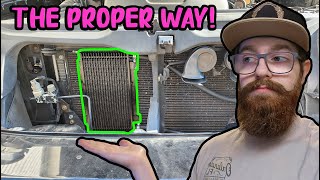
- Restricted Transmission Cooler or Lines (Common) — The transmission cooler or its lines become blocked with internal wear debris or external obstructions like mud. This restricts fluid flow and halts the cooling process.
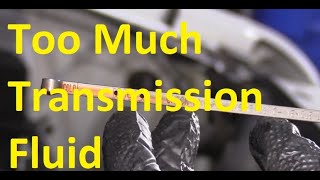
- Overfilled Transmission Fluid (Common) — Adding too much fluid causes rotating internal parts to churn the fluid into foam. Aerated fluid cannot cool effectively and expands, pushing past seals and causing overheating.
- Internal Transmission or Torque Converter Failure (Less Common) — Slipping clutches or a failing torque converter generate massive friction. This rapidly overheats the fluid and requires a complete transmission rebuild.
- Faulty Transmission Fluid Temperature (TFT) Sensor (Less Common) — The sensor fails and sends a falsely high-temperature reading to the computer. This triggers the code even when the actual fluid temperature is normal.
- Damaged Wiring or Connectors (Less Common) — Frayed wires or corroded pins at the TFT sensor connector create high electrical resistance. The PCM interprets this resistance as a high temperature reading.
- Out-of-Date Control Module Software (Rare) — Factory software calibration is sometimes too sensitive, misinterpreting normal operating temperatures as excessive. A dealer software update resolves this.
Symptoms

- Check Engine Light or Transmission Warning Light — An illuminated Malfunction Indicator Lamp (MIL) or a specific transmission temperature warning light appears on the dashboard.
- Limp Mode Activation — The computer limits engine power and locks the transmission in a single gear (usually 2nd or 3rd) to prevent further damage.
- Harsh, Delayed, or Slipping Shifts — The transmission slams into gear, hesitates before shifting, or engine RPMs flare up between shifts.
- Burning Smell — An acrid, burnt toast smell emanates from under the vehicle, indicating breaking-down transmission fluid.
- Fluid Leaking Under the Vehicle — Bright red or dark brown fluid pools on the ground. Extreme heat expands the fluid, pushing it past seals or out the vent tube.
- Cooling Fan Running Constantly at High Speed — The computer commands engine cooling fans to run at maximum speed to cool the transmission fluid, even if engine coolant temperature is normal.
Diagnostic Flowchart
Tap your situation to follow the diagnostic path that matches what you're seeing on this code.
Common Fixes & Costs
- Transmission Fluid and Filter Change — Parts: $50-$150, Labor: $100-$200, ~1.5 hr book time (Intermediate)
- Replace/Delete Transmission Cooler Thermal Bypass Valve — Parts: $50-$150, Labor: $100-$250, ~1.5 hr book time (Intermediate)
- Replace Transmission Cooler Lines — Parts: $100-$250, Labor: $150-$350, ~2.0 hr book time (Intermediate)
- Replace Transmission Fluid Temperature Sensor — Parts: $50-$150, Labor: $150-$300, ~2.5 hr book time (Advanced)
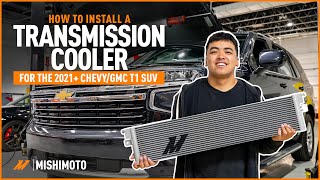
- Install Aftermarket Transmission Cooler — Parts: $150-$500, Labor: $200-$500, ~2.5 hr book time (Professional)
- Transmission Rebuild or Replacement — Parts: $1500-$3500, Labor: $1500-$3500, ~10.0 hr book time (Professional)
DIY vs Professional
- Transmission Fluid and Filter Change — Beginner:
Tools: Socket set, drain pan, funnel, torque wrench, new fluid/filter. - Replace/Delete Transmission Cooler Thermal Bypass Valve — Beginner:
Tools: Socket set, line wrenches, drain pan. - Replace Transmission Cooler Lines — Beginner:
Tools: Line wrenches, socket set, drain pan, new fluid. - Replace Transmission Fluid Temperature Sensor — Beginner:
Tools: Socket set, drain pan, torque wrench, specialized internal transmission tools. - Install Aftermarket Transmission Cooler — Beginner:
Tools: Drill, wrenches, line cutter, mounting hardware, extra hose/fluid. - Transmission Rebuild or Replacement — Beginner:
Tools: Professional mechanic's toolset, transmission jack, engine hoist.
Used vs. New Parts: Buying Guide
When a used part is worth it: Buy used external coolers or lines from low-mileage donor vehicles to save money. Never buy used electronic sensors or internal transmission parts.
Donor-vehicle mileage cap: roughly under 60000 miles for the part to have meaningful remaining life.
Donor quality checklist:
- Verify no front-end collision damage to the cooler.
- Inspect cooler fins for crushing and lines for kinks or rust.
- Ensure mechanical bypass valves move freely and are not seized.
Decision logic:
- If The part is electronic (TFT sensor) or internal → Buy new. Labor costs to replace a failed used part negate any savings.
- If The part is an external cooler or line → A low-mileage used part is acceptable after careful inspection.
- If The part is a known high-failure item (Ram bypass valve) → Buy a new aftermarket upgrade. Used OEM parts carry the same factory defect.
Warranty tradeoff: Salvage yards offer 30-90 day part-only warranties. New aftermarket/OEM parts offer 1+ year warranties covering defects.
Worst-case if a used part fails: $500-$1500 in repeat labor and replacement parts if a used component fails.
What Happens If You Wait — Timeline
- First Occurrence: Fluid exceeds 240°F. Fluid begins to oxidize. No permanent damage if cooled promptly. (MPG impact: 0%% · Added cost: $0)
- Weeks to Months of Intermittent Overheating: Fluid repeatedly hits 260°F. Varnish forms on valves. Rubber seals harden. Burning smell develops. (MPG impact: 0-2%% · Added cost: $150-$350 (Requires immediate fluid service).)
- 2-6 months of Consistent Overheating: Fluid hits 295°F. Brittle seals cause pressure loss. Clutch packs glaze and slip. Shifting becomes harsh. (MPG impact: 5-10%% · Added cost: $1,800-$3,500 (Transmission rebuild required).)
- 6+ months / Catastrophic Event: Fluid exceeds 300°F. Clutches destroyed. Metal hard parts warp. Vehicle stops moving. (MPG impact: 15-25%+% · Added cost: $4,000-$8,000+ (Complete transmission replacement required).)
Cost of Not Fixing It
- 0-1 month: Fluid oxidizes and loses lubricating properties. Shifting becomes harsh and a burning smell develops. (Added cost: $0 (if addressed immediately before permanent damage).)
- 1-6 months: Permanent damage to internal seals and clutch packs. The transmission slips and varnish forms on valves. (Added cost: $1800-$3500 for a transmission rebuild.)
- 6+ months: Catastrophic transmission failure. Internal hard parts warp and the vehicle becomes undriveable. (Added cost: $4000-$8000+ for a complete transmission replacement.)
Diagnosis Steps

- Check Fluid Level and Condition
With the engine running and transmission in Park (verify via owner's manual), pull the dipstick. Fluid must be at the 'FULL' mark, translucent, and pink/red. Low, dark, burnt-smelling, or foamy fluid confirms a physical overheat or fluid issue.
Tools: Rag or paper towel (Beginner) - Inspect for Leaks and Cooler Obstructions
Visually inspect the transmission pan, cooler lines, and the front-mounted transmission cooler for fluid leaks. Clear any leaves, plastic bags, or mud blocking airflow to the cooler fins.
Tools: Flashlight (Beginner) - Scan for Codes and Review Freeze Frame Data
Use an OBD-II scanner to check for related codes (P0740, P0868, P0217). Review P0218 freeze frame data to identify the exact vehicle speed, load, and temperature when the code triggered.
Tools: OBD-II Scanner (Beginner) - Verify the Overheat Condition (Sensor vs. Reality)
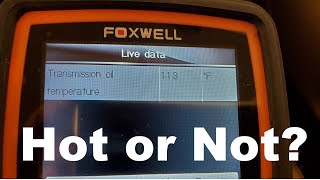
Using a scan tool with live data, compare the TFT sensor reading to the actual transmission pan temperature using an infrared thermometer. If the scanner shows 280°F but the pan is 180°F, the sensor or wiring is faulty. If both read high, the overheat is real.
Tools: OBD-II Scanner with Live Data, Infrared Thermometer (Intermediate) - Check Transmission Cooler Flow
Carefully feel the inlet and outlet lines at the cooler after driving. If the inlet is hot but the outlet is cool, fluid is not flowing. This confirms a stuck thermal bypass valve or a clogged cooler.
Tools: Mechanic's gloves, Infrared Thermometer (Intermediate) - [PRO TIP] Cold Start Sensor Rationality Check
With the vehicle sitting overnight, compare the TFT reading with Engine Coolant Temperature (ECT) and Intake Air Temperature (IAT) on a scanner. All three must be within 5°F of ambient temperature. A significantly different TFT reading confirms a faulty sensor.
Tools: OBD-II Scanner with Live Data (Intermediate) - [ADVANCED] Test the TFT Sensor Circuit
Disconnect the TFT sensor. Back-probe the connector terminals with the ignition on. Verify a 5V reference from the PCM and a solid ground. Disconnecting the sensor should force a default low-temp reading (e.g., -40°F) on the scanner.
Tools: Multimeter, Vehicle-Specific Wiring Diagram (Advanced) - [ADVANCED] Measure TFT Sensor Resistance
Measure the disconnected sensor's resistance with a multimeter. Compare the reading to the manufacturer's temperature-to-resistance chart. A typical sensor reads ~37,000 Ohms at 32°F and ~180 Ohms at 250°F.
Tools: Multimeter, Manufacturer Resistance Chart (Advanced) - Inspect for Internal Damage
If fluid is dark and full of debris, drop the transmission pan. Inspect the magnet and filter for excessive metal shavings or clutch material. Heavy debris mandates a transmission rebuild.
Tools: Socket set, drain pan, gasket scraper (Advanced) - Check for Technical Service Bulletins (TSBs)
Search online service databases for TSBs related to P0218 for your specific VIN. A manufacturer software re-flash often solves overly sensitive diagnostic thresholds.
Tools: Access to TSB database (e.g., NHTSA website) (Intermediate)
When This Code Triggers (Freeze-Frame Conditions)
- Engine Coolant Temp: 195-220°F (Fully warmed up and under stress.)
- RPM: 1800-3000 (Sustained cruise, pulling a grade, or accelerating.)
- Engine Load: 40-80% (Engine is working hard, such as towing or climbing a hill.)
- Vehicle Speed: 45-65 mph (Highway driving under load where torque converter slip generates significant heat.)
Related Codes
- P0868 — Transmission Fluid Pressure Low. Hot fluid thins out, dropping pressure. If temperature rises first, P0218 is the root cause. If pressure is low at normal temps, suspect a pump or leak.
- P0740 — Torque Converter Clutch Circuit. A slipping TCC generates extreme heat, causing P0218. Monitor TCC slip RPM; high slip means P0740 is the root cause.
- P0711 — TFT Sensor Circuit Range/Performance. P0218 means the sensor reads a real high temp. P0711 means the sensor is faulty. Compare live data to pan temp to differentiate.
- P0217 — Engine Coolant Over Temperature. An overheating engine overheats the transmission via the shared radiator cooler. Fix the engine cooling system first.
Climate & Environmental Factors
- Hot Climates: High ambient temperatures drastically reduce transmission cooler efficiency, making P0218 highly common in stop-and-go traffic or under load.
- High Altitude: Less dense air reduces the effectiveness of air-cooled components. The engine produces less power, forcing the transmission to hold lower gears longer, generating excess heat.
- Cold Climates: Thermal bypass valves designed to warm fluid faster stick closed in freezing temperatures. This prevents fluid from reaching the cooler, causing rapid overheating once at highway speeds.
How to Talk to a Mechanic About This Code
Say this: "I have a P0218 code. Please check the fluid level and condition, and inspect the cooler lines for blockages. Before recommending major repairs, verify the overheat is real by comparing the scanner's live temperature reading with an infrared thermometer on the transmission pan."
Directs the shop to perform logical diagnostics rather than jumping to a $4,000 transmission replacement.
Avoid saying:
- 'My transmission is slipping and burning.' (Invites a high-cost rebuild quote)
- 'My check engine light is on, fix it.' (Too vague, invites upselling)
- 'I think I need a new transmission.' (Never diagnose the most expensive part for them)
Questions to ask before authorizing the repair:
- What was the exact condition and level of the fluid?
- Did you find any blockages in the cooler or bypass valve?
- What was the temperature difference between the scanner and the IR thermometer?
- If the fluid is burnt, can you show me the metal in the pan?
Where to Take It: Dealer vs Independent vs Chain
- Dealer:
Use only if under warranty or for a specific software TSB. Otherwise, get a second opinion.
Best for: Vehicles under powertrain warranty., Known TSB software updates.
Downsides: Highest labor rates., Defaults to full transmission replacement rather than targeted repairs. (Typical cost: +50% vs. baseline) - Chain Shop:
AVOID. High risk of misdiagnosis or being sold an unnecessary transmission replacement.
Best for: Simple fluid changes (excluding quick-lube places).
Downsides: High pressure to upsell full rebuilds., Lacks advanced internal diagnostic capabilities. (Typical cost: -10% vs. baseline)
When to Walk Away From the Repair
If the transmission rebuild/replacement cost exceeds 50% of the vehicle's KBB private-party value, sell the vehicle.
- Car worth $5000, fix is $3500: Walk away. Repair is 70% of value. Sell as a 'mechanic's special'.
- Car worth $25000, fix is $6000: Fix it. Repair is 24% of value. Justifiable if the truck is in excellent condition.
- Car worth $12000, fix is $400: Fix it. Replacing a bypass valve is a minor expense that restores full value.
What Scan Tool You Need for This Code
Minimum: OBD-II scanner with Live Data streaming to read the Transmission Fluid Temperature (TFT) PID.
A $20 code reader cannot show live temperature data. You must have live data to verify if the overheat is real or a sensor failure.
Budget: BlueDriver Pro (~$100) — Bluetooth scanner displays live TFT data on your smartphone, allowing you to perform the critical 'Sensor vs. Reality' test.
Mid-range: Foxwell NT510 Elite / Autel MaxiCOM MK808S (~$180-380) — Standalone tablets offering deep TCM access and bi-directional control to command cooling fans during testing.
Professional: Autel MaxiSys Series (~$900-2000+) — Dealer-level diagnostics and TCM programming. Overkill for DIYers.
Rent vs buy: Rent a live-data scanner from AutoZone for a one-time diagnosis. Buy a BlueDriver if you perform regular maintenance.
How to Clear the Code After You Fix It
- Use an OBD-II scan tool to clear the P0218 code.
- Allow the transmission to cool completely to ambient temperature.
- Perform a complete drive cycle to run readiness monitors.
Drive cycle (~30 minutes): Start cold. Idle 3 minutes. Drive stop-and-go city traffic. Drive steady 55-65 mph for 15 minutes. Coast and decelerate. Park and cool down.
Readiness monitors affected: Comprehensive Component Monitor, Catalyst Monitor, O2 Sensor Monitor
Before emissions retest: drive at least 50 miles to fully set monitors.
Watch out for:
- Clearing the code without fixing the overheat guarantees the code returns immediately under load.
- Disconnecting the battery resets all readiness monitors, causing an automatic emissions test failure.
- Short drive cycles leave monitors in a 'not ready' state.
Will This Fail Emissions / State Inspection?
Yes — this code typically fails an OBD-II emissions inspection.
- California: Active P0218 causes automatic smog check failure. All OBD-II readiness monitors must be 'Ready' after clearing.
- New York: Active P0218 is an automatic NYS DMV inspection failure. Repair and clear code before re-testing.
- Texas: Active P0218 fails emissions in the 17 required counties. Clearing the code right before the test fails the readiness check.
Most Commonly Affected Vehicles
- Ram 2500/3500 (2013-2018) — Infamous for a faulty transmission cooler thermal bypass valve that sticks closed, blocking fluid and causing rapid overheating while towing.
- Chevrolet / GM Cruze, Malibu, Equinox, Sonic (2008-2017) — 6T30/6T40/6T45 transmissions frequently trigger P0218 due to overfilled fluid after a service, causing aeration and overheating.
- Ford F-150 (2011-2020) — Occurs during heavy towing or from overfilling after a fluid change. 2018+ 10R80 models have known TSBs for shifting issues exacerbated by temperature.
- Jeep Grand Cherokee (2005-2013) — P0218 acts as an informational code alerting the driver that the 'Overheat' shift schedule activated due to heavy city traffic or towing.
- Dodge/Chrysler General (45RFE/545RFE/68RFE) (1999-2018) — Common indicator of fluid breakdown, cooler restriction, or heavy use. Often confirms a genuine overheat event occurred.
- Nissan Altima, Rogue, Murano (CVT) (2007-2018) — CVTs are highly sensitive to fluid temperature. P0218 points to degraded fluid, clogged cooler filters, or fatal internal wear.
- Ford Freestyle, Five Hundred (CVT) (2005-2007) — Code appears on hot days or hilly terrain, indicating the CVT fluid is overheating and breaking down.
- Volkswagen/Audi DSG / Tiptronic Models (2003-2015) — Points to issues with internal mechatronics units, degraded fluid, or failing complex cooling systems.
Manufacturer-Specific Notes
- Dodge/Ram/Jeep (Chrysler/Stellantis): P0218 is an 'informational' code confirming the transmission entered an 'overheat' shift schedule to protect itself. The system works as designed but is subjected to extreme conditions or a faulty bypass valve.
- Chevrolet / GM: On 6T-series transmissions, overfilling fluid after service causes aeration and overheating. Always verify fluid level using the strict factory temperature-check procedure.
- Ford: Overfilled transmissions trigger P0218. The 10R80 transmission has multiple TSBs for shifting issues sensitive to temperature fluctuations.
- Allison (GM HD Trucks): Code sets when sump temp exceeds 252°F for 10 seconds. The TCM freezes shift adapts and defaults to a 'hot mode' shift schedule to force cooler flow without illuminating the Check Trans light.
Real Owner Stories
2016 Ram 2500 at 75K miles
P0218 triggered while towing 10,000 lbs uphill. Dash temp hit 250°F+.
What they tried:
- Idled in neutral to cool down.
- Shop verified fluid was full and clean.
- Shop found cooler inlet line scorching hot, outlet line cool.
Outcome: The factory thermal bypass valve failed closed. Replaced with an aftermarket delete kit for $100. Transmission now runs 30°F cooler while towing.
Lesson: For 2013+ Ram HD trucks, P0218 while towing is almost always the thermal bypass valve. Install an aftermarket delete kit immediately.
2014 Chevy Cruze at 110K miles
Code appeared during city driving shortly after a quick-lube fluid change.
What they tried:
- Took to a transmission specialist fearing major failure.
Outcome: Transmission was overfilled by 1.5 quarts. Shop performed the strict factory temperature-check procedure and drained excess fluid for $125. Code never returned.
Lesson: If P0218 appears right after a fluid service, the shop overfilled it. Excess fluid foams and overheats.
2008 Jeep Wrangler at 175K miles
P0740 (TCC Circuit) appeared. Replaced solenoid block, but P0740 returned alongside P0218.
What they tried:
- Replaced solenoid block.
- Monitored live data and saw torque converter slipping constantly at highway speeds.
Outcome: The failing torque converter generated massive heat, triggering P0218. Required a new torque converter.
Lesson: P0218 is often a symptom of P0740. A slipping torque converter creates extreme heat. Fix the slip to fix the heat.
How to Prevent This Code From Triggering

- Change transmission fluid and filter. (Every 30,000-60,000 miles (15,000 if towing).) — Fresh fluid maintains cooling and lubricating properties, preventing friction and heat buildup.
- Upgrade to full synthetic transmission fluid. (During next fluid change.) — Synthetic ATF offers superior thermal stability, resisting breakdown at high temperatures.
- Install an auxiliary transmission cooler. (One-time upgrade for tow vehicles.) — Adds massive cooling capacity, keeping fluid safe under heavy loads.
- Clean the front of the transmission cooler. (Every oil change.) — Removes bugs and debris blocking airflow, restoring radiator efficiency.
Frequently Asked Questions
Can I just let the transmission cool down and keep driving?
No. The code indicates a mechanical failure or severe fluid degradation that caused the overheating. Ignoring it guarantees repeated overheating and catastrophic transmission failure.
Is P0218 always a serious problem?
Yes. Operating a transmission above safe temperatures rapidly destroys internal seals, clutches, and hard parts. Prompt diagnosis is mandatory to avoid a $3,000+ replacement.
What's the difference between P0218 and P0711?
P0218 means the sensor correctly detects a real overheat. P0711 means the sensor itself is broken and sending fake data. Use an infrared thermometer on the transmission pan to see which is true.
My mechanic just serviced the transmission, why did this code appear now?
The shop likely overfilled the transmission fluid. Excess fluid churns into foam, which cannot dissipate heat, leading directly to an overheat code.
Could I have caused this by towing my trailer?
Yes. Towing beyond your vehicle's capacity, especially uphill in summer, overwhelms the stock cooling system. Install an aftermarket transmission cooler if you tow frequently.
How much does it cost to fix a P0218 code?
A fluid service costs $150-$350. Replacing a faulty bypass valve costs $150-$450. If internal damage occurred, a rebuild costs $3,000 to $7,000+.
What is 'Limp Mode'?
Limp Mode is a self-preservation feature where the computer slashes engine power and locks the transmission in 2nd or 3rd gear. It prevents further internal damage while allowing you to pull over safely.
Key Takeaways
- Stop driving immediately and tow the vehicle; operating a transmission above 260°F destroys internal seals and clutches, turning a minor repair into a $3,000+ replacement.
- Check the transmission fluid level and condition first, as low or severely degraded fluid is the leading cause of P0218.
- On 2013-2018 Ram 2500/3500 trucks, replace the factory thermal bypass valve with an aftermarket delete kit to permanently fix known cooler flow restrictions.
- Verify the overheat is real by comparing the scanner's live Transmission Fluid Temperature (TFT) reading to the actual pan temperature using an infrared thermometer before replacing parts.
Helpful Videos
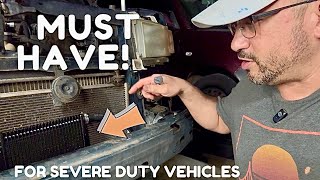
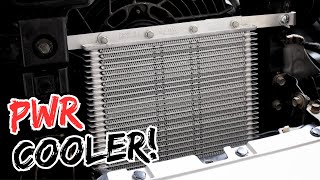

The information in this article is provided for general reference and educational purposes only. Vehicle specifications, procedures, and part compatibility can vary by production date, trim level, and region. Always consult your vehicle's factory service manual and verify part numbers before purchasing or performing repairs. Safety-critical components such as airbags, seat belts, and braking systems should be installed by a qualified professional.
- 🎬 Helpful Videos
- What Does P0218 Mean?
- Can I Drive With P0218?
- Common Causes
- Symptoms
- Diagnostic Flowchart
- Common Fixes & Costs
- DIY vs Professional
- Used vs. New Parts: Buying Guide
- What Happens If You Wait — Timeline
- Cost of Not Fixing It
- Diagnosis Steps
- When This Code Triggers (Freeze-Frame Conditions)
- Related Codes
- Climate & Environmental Factors
- How to Talk to a Mechanic About This Code
- Where to Take It: Dealer vs Independent vs Chain
- When to Walk Away From the Repair
- What Scan Tool You Need for This Code
- How to Clear the Code After You Fix It
- Will This Fail Emissions / State Inspection?
- Most Commonly Affected Vehicles
- Manufacturer-Specific Notes
- Real Owner Stories
- 2016 Ram 2500 at 75K miles
- 2014 Chevy Cruze at 110K miles
- 2008 Jeep Wrangler at 175K miles
- How to Prevent This Code From Triggering
- Frequently Asked Questions
- Can I just let the transmission cool down and keep driving?
- Is P0218 always a serious problem?
- What's the difference between P0218 and P0711?
- My mechanic just serviced the transmission, why did this code appear now?
- Could I have caused this by towing my trailer?
- How much does it cost to fix a P0218 code?
- What is 'Limp Mode'?
- Key Takeaways
- 🎟️ Get 5% Off