

P0740 on 2012-2019 Buick Encore: Torque Converter Clutch Circuit Causes and Fixes
On a 2012-2019 Buick Encore, code P0740 most often points to a faulty Torque Converter Clutch (TCC) solenoid or low/dirty transmission fluid. The solenoid is inside the transmission, making the repair moderately difficult. Expect to pay $50-$100 for the solenoid and another $100 for fluid and a filter. A professional repair involving solenoid replacement can range from $400 to $850.
- P0740 on your Buick Encore means there's an electrical fault in the torque converter clutch circuit.
- Start by checking the transmission fluid level and condition; low or dirty fluid is a simple fix.
- The most likely culprit is a failed TCC solenoid, which is located inside the transmission.
- Due to the complexity of accessing internal transmission components, this repair is best left to an experienced DIYer or a professional shop.
- Do not ignore this code, as it can lead to poor fuel economy and potentially more serious transmission damage over time.
What's Unique About the 2012-2019 Buick Encore
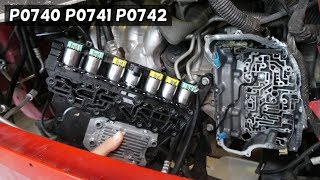
The Buick Encore from this era typically uses a GM 6T30 or 6T40 series automatic transmission, shared with the Chevrolet Cruze, Sonic, and Trax. For these specific transmissions, the P0740 code is a very common indicator of a failing TCC solenoid 🎬 Watch: Understanding the P0740 code and common fixes, which is a known issue. Unlike some engine codes that can be easily accessed, this solenoid is located inside the transmission, mounted on the valve body (often called the control module or TEHCM). This means a repair requires draining the fluid and removing the transmission's side cover, making it more involved than a simple bolt-on part replacement.
Symptoms You May Notice
- Check Engine Light is on
- Reduced fuel economy
- Engine RPMs are higher than usual at highway speeds
- Shuddering or vibration, especially during light acceleration or at low speeds.
- Harsh or delayed gear shifts
- Vehicle may stall when coming to a stop (if the solenoid is stuck on)
- Transmission may feel like it's slipping
- Replacing the entire transmission without first diagnosing the TCC solenoid, wiring, or fluid condition.
- Replacing the torque converter when the issue is only a simple solenoid or a wiring fault.
Most Likely Causes
- Low or Dirty Transmission Fluid 🔴 High Probability Transmission fluid degrades over time and can be consumed by slow leaks. Dirty or burnt fluid can clog the fine channels in the valve body and solenoids, causing them to malfunction.
How to confirm: Check the transmission fluid level and condition. On the Encore, this often requires removing a check plug on the side of the transmission case as there may not be a traditional dipstick. Fluid should be bright red and not smell burnt. If it is dark, brown, or has particles in it, it needs to be changed.
Typical fix: Perform a transmission fluid and filter change. Use only the specified fluid (DEXRON-VI for this transmission). This may resolve the issue if it's caught early.
Est. part cost: $75-$150 - Faulty Torque Converter Clutch (TCC) Solenoid 🔴 High Probability The solenoid is an electronic part submerged in hot fluid that cycles thousands of times. Electrical failure (open coil) or mechanical failure (sticking plunger) is a common wear item on the 6T30/6T40 transmission family.
How to confirm: After accessing the solenoid, test its resistance with a multimeter. An out-of-spec reading (usually infinite for an open circuit or outside the 10-16 ohm range) confirms failure. A scan tool can also monitor the commanded state vs. the actual state to see if the solenoid is responding.
Typical fix: Replace the TCC solenoid. This solenoid is part of the larger Transmission Control Module (TCM) assembly on the valve body. It is often replaced as a single unit.
Est. part cost: $50-$100 - Damaged Wiring or Connectors 🟡 Medium Probability The internal transmission wiring harness is bathed in hot fluid, which can make wires brittle over time. External connectors can also suffer from corrosion or physical damage. A loose pin at the main TCM connector can also cause this fault.
How to confirm: Visually inspect the external transmission connector. Test for continuity and shorts in the wiring harness between the TCM and the transmission connector. This requires a wiring diagram and multimeter. A pushed-back pin in the VCM connector was the cause in one documented case.
Typical fix: Repair the damaged section of the wiring harness or replace the connector. Ensure all pins are fully seated.
Est. part cost: $20-$200 - Internal Torque Converter Failure ⚪ Low Probability While less common for this specific electrical code, a failing lock-up clutch inside the torque converter can shed metallic debris that clogs the solenoid and valve body, eventually causing this electrical code.
How to confirm: This is a difficult diagnosis. A large amount of metallic debris found in the transmission pan during a fluid change is a strong indicator. A transmission specialist may use a scan tool to look for excessive TCC slip when the clutch is commanded on.
Typical fix: Replace the torque converter and flush the transmission cooler lines. This is a major repair requiring transmission removal. A new torque converter part can cost $150-$500, with total repair costs reaching $800-$1800.
Est. part cost: $200-$500
Rare But Worth Checking
- Faulty Transmission Control Module (TCM): This should be the last suspect after all other possibilities (solenoid, wiring, fluid) have been exhaustively ruled out. A faulty TCM driver circuit can mimic a solenoid or wiring failure. On these GM transmissions, the solenoids are integrated into the TCM assembly (called a TEHCM), so a solenoid failure often requires replacing the whole unit anyway.
Diagnosis Steps
- Verify the code is present using an OBD-II scanner. Check for other transmission codes like P0700 or P0741.
- Check the transmission fluid level and condition. On the Encore, this is done via a check plug on the side of the transmission. Fluid should be red (DEXRON-VI) and not smell burnt.
- Using an advanced scan tool, monitor the TCC slip speed and command the TCC solenoid on and off to check for a response. This helps determine if it's an electrical or mechanical issue.
- Inspect the main transmission wiring harness connector for corrosion, damage, or pushed-out pins.
- If external wiring is okay, test the resistance of the TCC solenoid circuit from the main connector. It should be within manufacturer specs (e.g., 10-16 ohms).
- If the problem points to an internal issue, drain the transmission fluid and remove the side cover to access the valve body and TCM/solenoid assembly.
- Visually inspect the internal wiring harness for signs of heat damage or brittleness.
- Disconnect the TCC solenoid and test its internal resistance directly with a multimeter. Compare the reading to the manufacturer's specification.
- If the solenoid and wiring are confirmed to be good, the issue may lie with a clogged passage in the valve body, the torque converter itself, or the TCM, which may require professional diagnosis.
Parts You'll Likely Need
- Torque Converter Clutch (TCC) Solenoid — This solenoid is the most common point of failure for the P0740 code on this vehicle. It is often part of the complete solenoid/TCM assembly.
Trusted brands: ACDelco, Rostra, Carquest Premium
OEM price range: $80-$150
Aftermarket price range: $40-$90 - Transmission Control Module (TCM) / Valve Body Assembly
(OEM #24256525, 24275860 (verify by VIN))— On the GM 6T30/6T40, the solenoids are integrated into the TCM, which is mounted to the valve body. Often, the entire assembly is replaced to ensure reliability. This part is also called the 'Control Solenoid Valve Assembly' or 'TEHCM'.
Trusted brands: ACDelco (OEM Remanufactured)
OEM price range: $300-$450
Aftermarket price range: $200-$350 - Automatic Transmission Fluid (DEXRON-VI) — The transmission must be drained to access the solenoid, requiring 4-6 quarts for a drain and fill.
Trusted brands: ACDelco, Valvoline, Castrol
OEM price range: $10-$15 per quart
Aftermarket price range: $8-$12 per quart - Transmission Filter Kit — It is best practice to replace the filter anytime the transmission pan or side cover is removed.
Related Codes That Often Appear With This One
- P0741 — P0741 indicates 'TCC System Performance or Stuck Off.' If the electrical circuit fault of P0740 prevents the TCC from engaging, the computer may also set a performance code.
- P0700 — P0700 is a general 'Transmission Control System Malfunction' code. It's a request from the TCM to the main engine computer (ECM) to turn on the Check Engine Light. It almost always appears alongside more specific transmission codes like P0740.
- P0742 — P0742 indicates 'TCC System Stuck On.' This is the opposite of P0741 and can happen if the solenoid or valve gets stuck, causing the engine to shudder or stall at low speeds.
Technical Service Bulletins (TSBs) & Recalls
- PI0604C: Information on 6T30/6T40/6T45/6T50 Automatic Transmission Product Updates - This bulletin from May 2013 details design changes between 'Gen 1' and 'Gen 2' versions of these transmissions, which affects parts compatibility. It notes that 2013 and newer models like the Encore use the Gen 2 design.
Platform-Specific Known Issues
- TCM/Solenoid Assembly Replacement: For the 6T30/6T40 transmission in the Encore, the TCC solenoid is part of the larger control module assembly (often referred to as the TCM or TEHCM). While the individual solenoid can sometimes be replaced, many shops and DIYers opt to replace the entire remanufactured assembly (ACDelco P/N 24256525 or similar) to prevent future failures of other integrated solenoids.
Mechanic-Grade Diagnostic Values
- TCC Solenoid Resistance — expected: 10–16 Ohms (@ 20°C). Failure: Infinite resistance (open circuit) or a value significantly outside the expected range.
- Other Pressure Control Solenoids (PCS) Resistance — expected: 3-5 Ohms. Failure: A reading outside this range indicates a faulty solenoid coil.
- TCC Slip RPM (Live Scan Tool Data) — expected: Near 0 RPM when lock-up is commanded at steady cruising speed.. Failure: Sustained slip of over 100 RPM when lock-up is commanded indicates a mechanical slip problem with the converter clutch itself or a severe hydraulic leak.
Scan Tool Commands That Help
- GDS2 (GM Factory Tool): Solenoid Cleaning Process — This is an automated function that cycles the solenoids while the system is pressurized to dislodge small debris that may be causing a solenoid to stick. It should be attempted before transmission disassembly if a sticking solenoid is suspected.
- GDS2 (with tool DT-48616): Solenoid ON/OFF Command (Bench Test) — This allows a technician to test the entire TEHCM (valve body with TCM) outside of the transmission. The scan tool commands a specific solenoid on and off while an air pressure gauge is monitored to see if the valve physically actuates. This definitively tests the solenoid and its driver on the TCM.
- GDS2 (or equivalent): Transmission Service Fast Learn — This procedure is mandatory after replacing the TEHCM/valve body assembly. It allows the TCM to learn the hydraulic characteristics and solenoid apply pressures of the new components to ensure proper shift quality.
Wiring & Ground Locations
- G101 — Located at the left front of the engine, on the lower block. It may jumper to G106 on the front center frame cross rail.. This is a primary ground location for the Engine Control Module (ECM) and the Transmission Control Module (TCM). A poor connection here can cause a host of intermittent electrical faults and communication errors, including erroneous solenoid circuit codes like P0740.
- Transmission Main Connector — On the driver's side of the transmission case, where the main vehicle harness connects to the internal transmission harness/TEHCM.. This is the critical connection point for all power, ground, and command signals to the TCC solenoid. Corrosion, moisture, or pushed-back pins in this connector can directly cause an open or shorted circuit, triggering P0740.
Real Owner Repair Stories
- Gears Magazine, referencing a common but often-missed failure (General GM 6T40/6T70 applications (e.g., Chevy Malibu, Buick Encore)) — A converter slip code (P0741), often accompanied by other pressure solenoid codes.
❌ Tried (didn't work) Often, technicians would replace solenoids or the entire TEHCM based on the codes.
✅ What actually fixed it The root cause was found to be a flattened seal on the 3-5-R clutch housing. This seal degradation would cause a hydraulic cross-leak that the TCM could not compensate for, leading it to set performance and slip codes. Replacing the seal resolved the issue.
OEM Part Supersession History
24256525→24260029, 24256797, 24258557 (among others)— Part revisions to improve reliability and address known failure points in the TEHCM.
Heads up: The 2012-2019 Encore uses a Gen 1 or Gen 2 6T30/6T40. These TEHCMs are NOT interchangeable. Gen 1 has pressure switches, Gen 2 does not. The 8th digit of the ID on the TEHCM identifies the generation (1, 2, or 3 for Gen 1; B, C, or D for Gen 2). Installing the wrong generation TEHCM will result in multiple codes and severe operational issues.
Model Year Variations Within This Range
- 2012 (Early vs. Late): Early 2012 6T30 models may have a different side cover bolt pattern (fewer bolts) than later 2012 and subsequent year models, which standardized with the 6T40 pattern. This is a minor physical difference but important during service.
- Gen 1 vs. Gen 2 (within the 2012-2019 range): The internal electronics of the TEHCM (TCM) changed. Generation 1 units (roughly pre-2013) included pressure switches which were a common failure point and were eliminated in Generation 2 units. The solenoids were also relocated and their operation (normally high vs. normally low) was altered for PCS2 and PCS5. This makes the TEHCMs incompatible between generations.
Diagnostic Flowchart
Used vs. New Parts: Buying Guide for This Vehicle
When a used part is the smart pick: A used TEHCM (TCM/Valve Body assembly) from a low-mileage donor vehicle can be a cost-effective option, but it is a significant gamble. It makes most sense if the part comes with a warranty and a clear return policy from a reputable auto recycler.
Donor-vehicle mileage cap: roughly under 60000 miles for the part to have meaningful remaining life.
What to inspect on the donor part:
- Verify the donor vehicle's VIN to confirm it had the same 6T30/6T40 transmission.
- Inspect the electrical connector pins for any signs of corrosion, damage, or moisture.
- Ask for the donor vehicle's mileage and check if it was involved in a front-end collision (less likely to have transmission issues) vs. a rollover or other major trauma.
- Ensure the part is identified as the correct Generation (Gen 1 or Gen 2) to match your vehicle.
OEM-only on this vehicle (don't cheap out):
- Transmission Control Module (TEHCM): Due to the need for VIN-specific programming and the high failure rate of aftermarket electronics in this harsh environment, using a new or remanufactured ACDelco TEHCM is strongly recommended for a lasting repair.
Aftermarket brands forum-validated for this vehicle:
- ACDelco (OEM Remanufactured): This is the most reliable choice for the complete TEHCM assembly.
- Rostra: Often cited as a reliable source for individual replacement solenoids if you are rebuilding a valve body.
Brands owners have reported issues with on this vehicle:
- Unbranded, no-name TEHCM assemblies from online marketplaces are a high risk. They often use inferior electronics, may not be properly tested, and can fail quickly or be impossible to program.
Real Owner Stories
Aggregated from forums and TSBs cited above. Mileages and costs reflect what owners reported in those sources.
GM Truck (related GM family)
Symptoms: A persistent P0740 code that would not clear after other attempted repairs.
What fixed it: The problem was traced to a pushed-back pin in the main computer (VCM) connector that was not making a solid connection. Reseating the pin resolved the code.
Source hint: gm-trucks.com - 'P0740 TCC clutch circuit malfunction' (2014)
Ram Truck (non-GM example)
Symptoms: The P0740 code was intermittent and seemed to be triggered by heavy use like towing or by having old transmission fluid.
What fixed it: Owners in the discussion recommended performing a transmission fluid and filter change as the first diagnostic step before assuming a more serious hard part had failed.
Source hint: RamForum.com - 'P0740 code went way' (2023)
Related OBD-II Codes
Frequently Asked Questions
What type of transmission fluid should I use for my Buick Encore when addressing a P0740 code?
Is the TCC solenoid a separate part I can buy for my 2014 Encore?
How do I check the transmission fluid level on my Encore? I can't find a dipstick.
Is there a TSB from GM that relates to the transmission in my 2015 Encore?
My mechanic tested the TCC solenoid circuit and got a reading of 25 ohms. Is that bad?
Are other GM vehicles like the Chevy Cruze or Trax known for this P0740 issue?
Helpful Videos
We Have This Part in Stock



The information in this article is provided for general reference and educational purposes only. Vehicle specifications, procedures, and part compatibility can vary by production date, trim level, and region. Always consult your vehicle's factory service manual and verify part numbers before purchasing or performing repairs. Safety-critical components such as airbags, seat belts, and braking systems should be installed by a qualified professional.
- Buick Encore:
- 🎬 Helpful Videos
- 🛍️ Shop This Part
- What's Unique About the 2012-2019 Buick Encore
- Symptoms You May Notice
- Most Likely Causes
- Rare But Worth Checking
- Diagnosis Steps
- Parts You'll Likely Need
- Related Codes That Often Appear With This One
- Technical Service Bulletins (TSBs) & Recalls
- Platform-Specific Known Issues
- Mechanic-Grade Diagnostic Values
- Scan Tool Commands That Help
- Wiring & Ground Locations
- Real Owner Repair Stories
- OEM Part Supersession History
- Model Year Variations Within This Range
- Diagnostic Flowchart
- Used vs. New Parts: Buying Guide for This Vehicle
- Real Owner Stories
- GM Truck (related GM family)
- Ram Truck (non-GM example)
- Related OBD-II Codes
- Frequently Asked Questions
- 🎟️ Get 5% Off