

P0707 on 2011-2015 Kia Sorento: Transmission Range Sensor Circuit Low Causes and Fixes
P0707 on a 2011-2015 Kia Sorento most often means the transmission range sensor (inhibitor switch) has failed or its wiring is corroded. This part tells the car what gear it's in. A replacement sensor costs around $50-$85 for the part, and DIY replacement is moderately difficult as it's located under the battery tray, requiring its removal for access.
- P0707 on your Sorento points directly to a problem with the transmission range sensor circuit, which tells the car what gear it's in.
- The most likely cause is a failed sensor, followed by corroded wiring at the sensor's connector.
- The sensor is located under the battery and battery tray, making replacement a moderately difficult DIY job that requires about 1-2 hours.
- When replacing the sensor, proper alignment in the Neutral position is critical to ensure correct operation.
- Due to the risk of being stranded or having unpredictable shifting, it's best to address this code promptly.
What's Unique About the 2011-2015 Kia Sorento
On the second-generation Kia Sorento and its platform-mate, the Hyundai Santa Fe, the transmission range sensor is a known trouble spot. Kia and Hyundai have issued multiple Technical Service Bulletins (TSBs) for inhibitor switch issues across various models and years, indicating a persistent design weakness. For the Sorento, the sensor is located on top of the transmission, which requires removing the air intake, battery, and battery tray for access, making the job more involved than on vehicles where it's on the side of the transmission.
Symptoms You May Notice
- Check Engine Light is on
- Vehicle will not start, or will only start in Neutral instead of Park.
- Transmission is stuck in one gear (limp mode).
- Harsh or delayed gear engagement.
- Incorrect or no gear selection displayed on the instrument cluster.
- Reverse lights do not turn on.
- Possible stalling when shifting gears.
- Replacing the transmission range sensor without checking the wiring first. A corroded connector or broken wire can mimic the symptoms of a failed sensor.
- Replacing the sensor when it only needed adjustment. If the car starts in Neutral but not Park, this often points to an alignment issue, not a failed sensor.
Most Likely Causes
- Faulty Transmission Range Sensor (Inhibitor Switch) 🔴 High Probability This component is a well-documented failure point across the Hyundai/Kia lineup, as evidenced by numerous owner reports and multiple TSBs for related issues. The sensor is exposed to heat and moisture on top of the transmission, leading to internal failure from wear or contamination, especially after a heat soak.
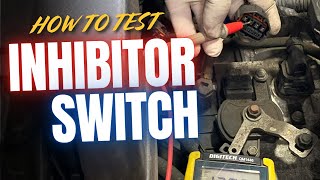
How to confirm: After confirming power and ground at the sensor connector, use a scan tool to monitor the sensor's output data while moving the shifter. If the data is erratic, does not change, or is nonsensical, the sensor is bad. You can also test the sensor's internal resistance or voltage output across different gear positions with a multimeter, comparing readings to the service manual specifications.
Typical fix: Replace the transmission range sensor. This requires removing the air intake, battery, and battery tray to access the sensor 🎬 Watch this step-by-step Kia Sorento range sensor replacement guide on top of the transmission. The new sensor must be correctly aligned in the Neutral position before tightening.
Est. part cost: $50-$85 - Damaged Wiring or Corroded Connector 🟡 Medium Probability The wiring harness and connector for the sensor are located on top of the transmission, where they are exposed to engine heat, vibration, and moisture, which can lead to corrosion (green/white powder on pins) or broken wires over time.
How to confirm: Visually inspect the wiring harness and the electrical connector for signs of corrosion, burnt pins, or frayed wires. Perform a continuity test on the wires between the sensor and the Transmission Control Module (TCM). Check for voltage at the power supply pin on the connector with the key on.
Typical fix: Clean the connector terminals with an electrical contact cleaner and a small brush. If the wiring is damaged, repair the specific wire or replace the connector pigtail. Apply dielectric grease to the connector terminals upon reassembly to prevent future corrosion.
Est. part cost: $10-$40 - Misadjusted Transmission Range Sensor or Shift Cable ⚪ Low Probability This typically occurs after a recent repair where the sensor was not correctly aligned during reinstallation, or if the shift cable has stretched or become loose.
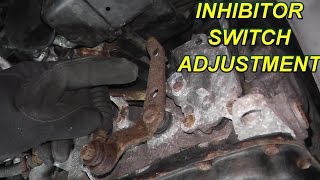
How to confirm: Check the physical alignment of the sensor. When the transmission is in Neutral, an alignment hole on the sensor body should line up perfectly with a corresponding hole on its rotating arm. A 5mm bolt or drill bit can be used as an alignment tool. 🎬 See how to properly align and adjust an inhibitor switch If the gear indicator on the dash doesn't match the physical gear selection, adjustment is needed.
Typical fix: Loosen the sensor's mounting bolts, correctly align it with the transmission in Neutral, and retighten the bolts. Adjust the shift cable linkage at the transmission lever if necessary.
Est. part cost: $0
Rare But Worth Checking
- Faulty Powertrain or Transmission Control Module (PCM/TCM): This is an uncommon cause. The module itself can fail, but this should only be considered after the sensor and wiring have been thoroughly tested and confirmed to be good.
- Loose or Damaged Shift Linkage: A loose nut on the shift lever arm or a disconnected linkage can prevent the sensor from rotating correctly, causing it to send an incorrect signal even though the sensor itself is functional. This is a mechanical issue that sets a circuit code.
- Poor Ground Connection: A TSB points to a loose or corroded ground bolt for the rear combination lamp harness as a potential, non-obvious cause 🎬 Watch this helpful video on troubleshooting inhibitor switch issues first for inhibitor switch related symptoms.
Diagnosis Steps
- Read the fault codes with an OBD-II scanner to confirm P0707 and any other related codes (P0700, P0705, etc.). Note any freeze frame data.
- Check the transmission fluid level and condition. While not a primary cause, low or burnt fluid can indicate larger transmission issues that should not be ignored.
- Gain access to the transmission range sensor by removing the air intake snorkel, the battery (10mm/12mm nuts), and the battery tray (typically four 12mm bolts).
- Visually inspect the sensor's electrical connector and wiring harness for any signs of corrosion, moisture, or physical damage like frayed or burnt wires.
- With the key on and engine off, use a multimeter to verify that the sensor is receiving battery voltage at the power supply pin (Pin 3, typically a pink wire).
- Use a scan tool with live data capability to observe the gear position data from the sensor as you slowly move the shift lever through all positions. The reading for 'TRS A Voltage' should not be stuck below 0.5V. If the reading is stuck, intermittent, or incorrect, it points to a sensor, wiring, or adjustment issue.
- If a scan tool is unavailable, test the output signals. Back-probe the connector and check for 12V on the corresponding signal pin as you select each gear (e.g., Pin 8 for Park, Pin 7 for Neutral). A lack of voltage on all outputs points to a bad sensor or loss of power/ground.
- Check for proper adjustment. Put the car in Neutral. Check if the alignment marks on the inhibitor switch line up. If not, adjustment is needed.
- As per TSB TRA 055, check the 'TCU2' fuse in the engine bay fuse box and inspect/retighten the ground bolt for the rear combination lamp harness.
- If wiring, power, ground, and adjustment are all confirmed good, the transmission range sensor is the most likely culprit and should be replaced.
- After replacement, ensure the new sensor is properly aligned in Neutral before tightening the mounting bolts and connecting the shift cable.
- If the problem persists after replacing the sensor, a more complex diagnosis of the wiring harness continuity back to the TCM and the TCM itself may be required.
Parts You'll Likely Need
- Transmission Range Sensor / Inhibitor Switch
(OEM #42700-3B100 (2011-2013), 42700-3B700 (2014-2015))— This is the most common component to fail, causing the P0707 code. There are several superseded part numbers; verify the correct one for your specific year and VIN. Part number 42700-26700 is a newer replacement that supersedes many older versions.
Trusted brands: Kia (OEM), Duralast, Standard Motor Products (SMP), WVE
OEM price range: $60-$85
Aftermarket price range: $45-$65
Related Codes That Often Appear With This One
- P0705 — P0705 indicates a general malfunction in the Transmission Range Sensor circuit. It often appears alongside more specific circuit codes like P0707 and is cited in the same TSBs.
- P0700 — P0700 is a generic code that means the Transmission Control Module (TCM) has stored a fault code. It acts as a 'check engine light' for the transmission system and will be present anytime a specific transmission code like P0707 is logged.
- P0706 — Indicates a Range/Performance problem with the sensor, suggesting the signal is present but irrational. Can appear with P0707 if the sensor is failing intermittently.
- P0708 — The opposite of P0707, indicating a 'Circuit High' condition. Seeing both codes together could point to a severe wiring short or internal sensor failure.
Technical Service Bulletins (TSBs) & Recalls
- SA126: Addresses a no-start condition and/or DTC P0705 on 2010-2011 Sorento models by installing an inhibitor switch bracket.
- SA317A: Pertains to 2017 Sorento and other models for P0705, no-start, and erratic shifting due to the inhibitor switch, showing the problem's persistence.
- Hyundai TSB 17-AT-005: A related bulletin for Hyundai vehicles covering diagnostic procedures for P0705, P0706, P0707, and P0708, demonstrating the shared nature of this fault.
Platform-Specific Known Issues
- A Technical Service Bulletin (SA126) was issued for 2011-2012 Sorentos for a related code (P0705) and no-start/shifting issues, which involved adding a bracket to the inhibitor switch. This indicates a known weakness in this area from the factory.
- A later TSB (SA317A) for 2017 models addresses the exact same symptoms (P0705, no-start, erratic shifting), confirming this is a persistent problem for Kia across generations and models.
Mechanic-Grade Diagnostic Values
- Inhibitor Switch Connector Power Supply Voltage — expected: Battery Voltage (approx. 12V). Failure: 0V or significantly low voltage indicates a wiring or fuse issue before the sensor.
- Inhibitor Switch Connector Output Voltage (Signal 1 - Park) — expected: Battery Voltage (approx. 12V) when in Park. Failure: 0V when in Park (while power is confirmed on Pin 3) indicates a faulty switch.
- Inhibitor Switch Connector Output Voltage (Signal 3 - Neutral) — expected: Battery Voltage (approx. 12V) when in Neutral. Failure: 0V when in Neutral (while power is confirmed on Pin 3) indicates a faulty switch.
- Scan Tool Live Data: 'TRS A Voltage' — expected: Voltage should change corresponding to gear selection.. Failure: Voltage reading below 0.5V confirms the 'Circuit Low' condition.
Scan Tool Commands That Help
- Kia GDS (or equivalent professional scanner): Live Data / Data Stream for TCM — This is the primary software-based diagnostic step. Use it to monitor the 'Current Gear Shift Lever Switch' parameter while moving the shifter. If the displayed gear on the scanner does not match the physical gear position, it confirms a fault in the sensor, wiring, or adjustment.
Wiring & Ground Locations
- Inhibitor Switch Connector — On top of the transmission, below the battery tray.. This is the central point for all electrical testing. Pin 3 (Pink) is power in. Pin 8 (Brown) is Park signal out. Pin 7 (Green) is Neutral signal out. Pin 9 (Pink) is Drive signal out. Pin 4 is Reverse signal out.
- TCU2 Fuse — In the engine room fuse box.. A TSB recommends checking this fuse, as it may be the power source for the inhibitor switch circuit. A blown fuse would cause a no-voltage condition.
- Rear Combination Lamp Harness Ground — In the rear of the vehicle, near the tail light assemblies.. A Kia TSB (TRA 055) identifies a poor ground at this location as a potential cause of inhibitor switch-related symptoms. This is a highly unusual and easily missed diagnostic step.
Real Owner Repair Stories
- YouTube Channel 'Top 5 Auto Repairs' (2011 Kia Sorento) — Check engine light, transmission stuck in one gear (limp mode), incorrect gear selection on dash.
❌ Tried (didn't work) The vehicle had the transmission range sensor replaced before arriving at the shop, but the problem was not fixed.
✅ What actually fixed it The new sensor was improperly installed and needed to be correctly aligned. The final code was P0706 (Shift Cable Alignment Error), which was resolved by adjusting the sensor's position until the alignment marks lined up correctly in Neutral.
OEM Part Supersession History
42700-3B100→42700-26700— Part consolidation and design improvement.
Heads up: 42700-26700 is the current recommended replacement for most earlier part numbers.42700-3B700→42700-26700— Part consolidation and design improvement.
Heads up: 42700-26700 is the current recommended replacement for most earlier part numbers.42700-3B500, 42700-3B710→42700-26700— Part consolidation and design improvement.
Heads up: This part number consolidates multiple previous versions into one.
Model Year Variations Within This Range
- 2011-2012 (produced Oct 2009 - Feb 2011): A Technical Service Bulletin (SA126) requires the installation of an additional bracket onto the inhibitor switch to correct potential no-start or erratic shifting issues related to code P0705. This suggests a mechanical stability issue with the switch mounting on early second-generation models.
Diagnostic Flowchart
Other Known Issues on This Vehicle
Issues unrelated to this code that are worth knowing about as an owner of this generation:
- Theta II Engine Failure 🔴 High — Widespread across 2.4L GDI and 2.0L Turbo engines, typically occurring between 60,000 and 100,000 miles. Caused by manufacturing debris blocking oil passages, leading to connecting rod bearing failure and potential engine seizure or fire. (Ref: NHTSA Recall SC147; Subject of a major class-action lawsuit providing lifetime warranties and reimbursements for affected vehicles.)
- Premature Headlight Burnout / Connector Failure 🟠 Medium — Very common owner complaint. Low beam bulbs burn out frequently, and the connector/socket can melt or seize, making replacement difficult. The issue was significant enough for NHTSA to open an investigation. (Ref: Service Campaign SC149 was issued for 2011-2012 models to replace the headlamp low beam connector wiring harnesses due to potential loss of electrical contact.)
- Broken Exterior Door Handles 🟡 Low — A very common annoyance where the plastic exterior door handle breaks, preventing the door from being opened from the outside. The issue is prevalent across many Kia/Hyundai models of this era. (Ref: No TSB or recall, but it is a widely documented failure. DIY replacement is common.)
- Faulty Brake Light Switch 🟠 Medium — A known issue where the brake light switch fails, causing the brake lights to not illuminate, which is a significant safety hazard. It can also cause issues with push-button start and cruise control. (Ref: Subject to recalls on other Kia models, but a frequent failure point on the Sorento as well.)
- AC Compressor Clutch Failure 🟠 Medium — The clutch on the AC compressor is known to seize, which stops the AC from working even if refrigerant levels are normal. This often requires replacement of the entire compressor assembly.
Used vs. New Parts: Buying Guide for This Vehicle
When a used part is the smart pick: Due to the high failure rate of this specific component on Kia/Hyundai vehicles and the relatively low cost of a new part, purchasing a used inhibitor switch is strongly discouraged. The labor involved in the replacement is significant enough that installing a part with unknown history or limited remaining life is a poor economic choice.
Donor-vehicle mileage cap: roughly under 15000 miles for the part to have meaningful remaining life.
What to inspect on the donor part:
- If buying used is unavoidable, source from a verified low-mileage vehicle.
- Visually inspect the electrical connector pins for any signs of green or white corrosion.
- Ensure the plastic housing is not cracked or showing signs of heat stress.
- Manually rotate the central hub to ensure it moves smoothly without binding.
OEM-only on this vehicle (don't cheap out):
- Transmission Range Sensor / Inhibitor Switch
Aftermarket brands forum-validated for this vehicle:
- Dorman
- Standard Motor Products (Intermotor)
- WVE
Brands owners have reported issues with on this vehicle:
- Unbranded, no-name parts from online marketplaces should be avoided due to the critical function of this sensor and the labor required for replacement.
Real Owner Stories
Aggregated from forums and TSBs cited above. Mileages and costs reflect what owners reported in those sources.
2011 Kia Sorento
Symptoms: The vehicle won't start sometimes and has other shifting issues; the owner found they had to jiggle the shifter to get the engine to turn over.
What fixed it: Replacement of the inhibitor switch (transmission range sensor).
Source hint: https://www.kia-forums.com/threads/2011-sorento-wont-start-sometimes-and-other-shifting-issues.333899/
2011 Kia Sorento V6 AWD
Symptoms: Owner seeking guidance on replacing the inhibitor switch due to common failure symptoms; confirmed part is located under the battery tray.
What fixed it: Inhibitor switch replacement.
Source hint: https://www.sorentonation.com/threads/inhibitor-switch-replacement-2011-v6-awd.396946/
2010-2015 Kia Sorento V6
Symptoms: Erratic shifting and P0707/P0705 codes; the sensor output data was stuck or nonsensical.
What fixed it: Replacement of the Transmission Range/inhibitor Switch using 10mm, 12mm, and 14mm sockets.
Source hint: YouTube - '2010-2015 Kia Sorento/Hyundai Santa Fe Transmission Range/inhibitor Switch Replacement(v6)' by JL's Auto Solution
Related OBD-II Codes
Frequently Asked Questions
My 2011 Sorento won't start unless I jiggle the shifter or put it in Neutral. Is there a TSB for this?
I'm seeing P0707 on my 2012 Sorento. Where is the sensor located and how hard is it to reach?
Can I use a 2011 Hyundai Santa Fe repair guide to fix my P0707 code on my Sorento?
What specific tool do I need to align the new inhibitor switch on my Kia?
Is there a fuse I should check before replacing the whole sensor for a P0707 code?
How much should I expect to pay for the replacement part for my 2014 Sorento?
Helpful Videos


Used OEM Parts in Stock

New Aftermarket Parts Available





The information in this article is provided for general reference and educational purposes only. Vehicle specifications, procedures, and part compatibility can vary by production date, trim level, and region. Always consult your vehicle's factory service manual and verify part numbers before purchasing or performing repairs. Safety-critical components such as airbags, seat belts, and braking systems should be installed by a qualified professional.
- Kia Sorento:
- 🎬 Helpful Videos
- 🛍️ Shop This Part
- What's Unique About the 2011-2015 Kia Sorento
- Symptoms You May Notice
- Most Likely Causes
- Rare But Worth Checking
- Diagnosis Steps
- Parts You'll Likely Need
- Related Codes That Often Appear With This One
- Technical Service Bulletins (TSBs) & Recalls
- Platform-Specific Known Issues
- Mechanic-Grade Diagnostic Values
- Scan Tool Commands That Help
- Wiring & Ground Locations
- Real Owner Repair Stories
- OEM Part Supersession History
- Model Year Variations Within This Range
- Diagnostic Flowchart
- Other Known Issues on This Vehicle
- Used vs. New Parts: Buying Guide for This Vehicle
- Real Owner Stories
- 2011 Kia Sorento
- 2011 Kia Sorento V6 AWD
- 2010-2015 Kia Sorento V6
- Related OBD-II Codes
- Frequently Asked Questions
- 🎟️ Get 5% Off