

P0700 on 2002-2010 Mercury Mountaineer: Transmission Control System Fault Causes and Fixes
P0700 means your transmission has a problem. On most 2002-2010 Mountaineers with the 5-speed automatic, this is very often caused by a failed transmission solenoid block or worn-out servo bores in the transmission case. You must scan the TCM for specific transmission codes to know the real issue.
- P0700 is a general alert; you MUST use a capable scan tool to read the specific codes from the Transmission Control Module (TCM).
- For most Mountaineers (with the 5-speed 5R55S), the most likely causes are a bad solenoid block or worn servo bores in the transmission case.
- A flashing 'O/D OFF' light is a classic sign of a transmission fault on this vehicle and should be diagnosed immediately.
- Check the transmission fluid level and condition first, as low fluid can cause many shifting problems.
- Due to the complexity and need for special tools, transmission repair for this code is best left to a professional transmission shop.
What's Unique About the 2002-2010 Mercury Mountaineer
The 2002-2010 Mountaineer spans two generations using Ford's 5R55 series (5R55W/S) and 6R60 automatic transmissions. The 5-speed 5R55S, used in most V6 models across this range, is notoriously prone to two main issues that trigger a P0700: failure of the solenoid block that controls shifting, and premature wear of the servo bores in the aluminum transmission case, which causes pressure loss and shift problems. The flashing 'O/D Off' light is a classic symptom of these issues on this platform.
Generation note: This range covers the second (2002-2005) and third (2006-2010) generations of the Mountaineer. - 2002-2005 models used the 5R55W or 5R55S 5-speed automatic. - 2006-2010 V6 models continued with the 5R55S 5-speed. - 2006-2010 V8 models used the heavier-duty 6R60 6-speed automatic. While some causes are shared, the 5R55S is most known for servo bore and solenoid issues, while the 6R60 has its own distinct problems like mechatronic unit faults and internal clutch/bushing wear.
Symptoms You May Notice
- Check Engine Light is on
- Flashing 'O/D OFF' (Overdrive Off) indicator light
- Harsh, erratic, or delayed shifting
- Slipping between gears or engine RPMs flaring up during shifts
- Vehicle enters 'limp mode,' often stuck in 2nd or 3rd gear
- Inability to engage reverse or other specific gears
- Harsh downshift when coming to a stop
- Delayed reverse engagement
- Fluid venting or foaming, potentially leading to fluid leaking from the bellhousing area
- Replacing only the transmission fluid and filter without diagnosing the underlying cause. If the cause is a worn servo bore or a bad solenoid, a fluid change will not fix it.
- Assuming the transmission needs a complete rebuild immediately. A faulty solenoid block is a common, less expensive repair that can resolve many shifting issues without a full rebuild.
- Replacing the PCM/TCM without confirming the failure. While TCM failure is possible, it is much less common than mechanical or electromechanical failures within the transmission itself.
- Using an incorrect solenoid block. Early (2002-2003) and late (2004+) solenoid packs are not always interchangeable. Using an early pack on a later vehicle can cause persistent shifting problems.
Most Likely Causes
- Failed Transmission Solenoid Block (5R55S/W Transmissions) 🔴 High Probability The solenoid block is a known weak point on the 5R55 series transmissions. Debris can clog the small passages or the solenoids can fail electrically, leading to poor shift control and pressure regulation. These failures can be purely electrical or mechanical (sticking valves) within the solenoid pack.
How to confirm: A mechanic will use a scan tool to check for specific solenoid circuit fault codes (e.g., P0750-P0770). They may also perform active tests to command the solenoids and check for response. Resistance for the shift solenoids should be 16-45 Ohms, while the TCC solenoid should be 9-16 Ohms.
Typical fix: Replacement of the entire solenoid block assembly. This is located inside the transmission oil pan. The Motorcraft part number is often 9L2Z-7G391-A, which supersedes older numbers like 4L2Z-7G391-AA.
Est. part cost: $250-$500 for an OEM part. - Worn Servo Bores in Transmission Case (5R55S/W Transmissions) 🔴 High Probability The steel servo pins that actuate the transmission bands wear out their bores in the softer aluminum transmission case. This causes a loss of hydraulic pressure, especially when the fluid is hot and thin, leading to shift flares and band failure. TSB 09-12-12 specifically addresses this widespread issue, noting it can cause loss of 2nd, 3rd, and 5th gears.
How to confirm: This is diagnosed based on symptoms (shift flares, loss of 2nd, 3rd, or 5th gear, delayed reverse) and specific incorrect gear ratio codes like P0732, P0733, or P0735. The problem is often worse when the transmission is warm.
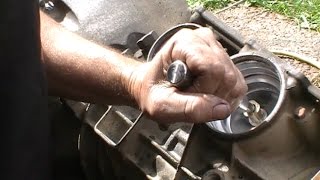
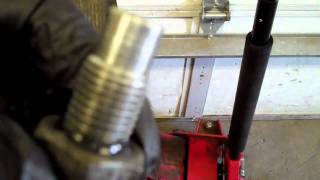
Typical fix: The OEM-specified fix involves removing the transmission, reaming the worn bores with a special tool (Rotunda Tool 5RW Master Kit), and installing hardened sleeves. A popular aftermarket solution involves installing servo pins with added O-rings 🎬 Watch: Step-by-step guide to repairing worn servo bores. to seal the worn bores, which can be done without removing the transmission. Another option is the Sonnax Sleeve Kit (Part #56361J-01K) which provides replacement sleeves. If bands are already damaged, a full rebuild is required.
Est. part cost: $60-$300 for a sleeve or O-ring servo kit, but labor for the reaming procedure is very high. - Low or Burnt Transmission Fluid 🟡 Medium Probability Leaks from the pan gasket, cooler lines, or the bulkhead electrical connector sleeve (on 6R60 models) can lead to low fluid levels, causing pressure issues and overheating. TSB 10-16-5 notes that on some 2006-2010 models, water from the A/C drain can drip directly into the solenoid body connector, causing corrosion and codes.
How to confirm: Check the transmission fluid level and condition. On these models, this is done via a plug on the bottom of the transmission pan, not a traditional dipstick, 🎬 See how to properly check and fill your transmission fluid. and requires a specific procedure with the vehicle at temperature (80°F - 120°F). The fluid should be bright red and not smell burnt. Dark, brown, or gritty fluid indicates a problem.
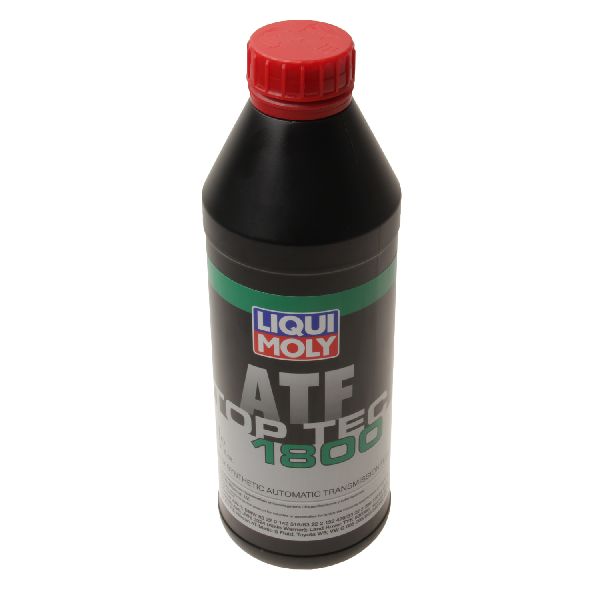
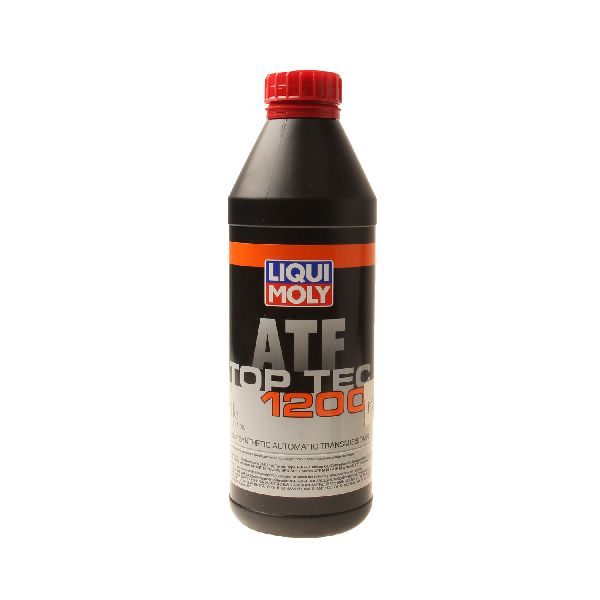
Typical fix: Address the source of the leak and perform a transmission fluid and filter change. Use only the correct specification fluid (Motorcraft MERCON V for 5R55S/W, MERCON SP/LV for 6R60).
Est. part cost: $50-$150 - Failed Mechatronic/Valve Body Assembly (6R60 Transmission) 🟡 Medium Probability On the 6-speed transmission found in V8 models, the mechatronic unit (which combines the valve body and control module) can fail electrically or hydraulically, causing erratic shifting or limp mode. Solenoids within the unit can fail, and require replacement.
How to confirm: Diagnosis requires an advanced scan tool to check for specific communication or solenoid codes related to the 6R60 transmission. Symptoms include harsh or erratic shifts. Individual solenoids should have a resistance of 5.0-6.0 ohms at 68°F (20°C).
Typical fix: Replacement of the valve body or the entire mechatronic assembly. This may also require programming the solenoid strategy to the vehicle's computer.
Est. part cost: $500-$1200
Rare But Worth Checking
- Broken Transmission Band: Often a secondary failure caused by worn servo bores leading to improper band application pressure. This results in a complete loss of the gears controlled by that band (e.g., 2nd, 3rd, 5th) and requires a full transmission rebuild.
- Failed Input/Output Speed Sensor: A faulty speed sensor can provide incorrect data to the TCM, leading to erratic shifting and triggering a fault. This is less common than solenoid or servo issues but is a possible cause.
- Damaged Wiring Harness or Connectors: Corrosion or damage to the main transmission connector or wiring can interrupt signals between the PCM/TCM and the transmission solenoids, causing electrical fault codes. On 2006-2010 models, water intrusion from the A/C drain into the solenoid body connector is a known issue addressed by TSB 10-16-5.
- Faulty Powertrain Control Module (PCM): In some rare cases, particularly on 2003-2004 Lincoln models with the 5R55S, a faulty PCM has been found to cause extremely high line pressure, leading to harsh shifts and erratic behavior. The fix is to tap on the computer while monitoring line pressure; if the pressure fluctuates, the PCM is likely bad.
Diagnosis Steps
- Scan for Codes in the TCM: Use an OBD-II scanner capable of accessing the Transmission Control Module (TCM) to retrieve the specific P07xx codes. The P0700 is just the starting point.
- Check Transmission Fluid: Verify the fluid level is correct and inspect its condition. This requires a specific procedure on a level surface with the engine running and at operating temperature (80-120°F). Fluid should be red, not brown or black, and should not smell burnt.
- Analyze Symptoms: Note the specific symptoms. Does it happen when hot? Is it a specific shift (e.g., 2-3 flare)? Is the 'O/D Off' light flashing? This helps narrow down the cause.
- Inspect External Wiring: Check the main wiring harness connector at the transmission for corrosion, damage, or fluid intrusion, paying special attention to the area below the A/C drain on 2006-2010 models.
- Drop the Transmission Pan: Inspect the pan for excessive metal shavings or debris. A small amount of fine metallic dust on the magnet is normal, but large flakes or chunks indicate severe internal mechanical damage.
- Test Solenoids: If solenoid codes are present, a technician will test the solenoid block. This includes checking resistance values across the pins of the case connector.
Parts You'll Likely Need
- Transmission Solenoid Block (5R55S/W)
(OEM #9L2Z-7G391-A)— This is the most common point of failure for a wide range of shifting problems on the 5-speed automatic transmission.
Trusted brands: Motorcraft, Rostra
OEM price range: $350-$500
Aftermarket price range: $200-$350 - Servo Bore Sleeve Kit — Required to permanently fix the common issue of worn servo bores in the transmission case, which causes pressure loss and shift flares.
Trusted brands: Sonnax, Superior Transmission Parts
OEM price range: N/A
Aftermarket price range: $100-$250 - Transmission Filter and Gasket Kit — Must be replaced any time the transmission pan is removed for service, such as when replacing the solenoid block.
Trusted brands: Motorcraft, ATP
OEM price range: $30-$60
Aftermarket price range: $20-$40 - Mechatronic Assembly (6R60) — For V8 models with the 6-speed transmission, this entire unit is often replaced to fix complex shifting problems.
Trusted brands: Motorcraft
OEM price range: $800-$1500
Aftermarket price range: N/A
Related Codes That Often Appear With This One
- P0731-P0735 — These are 'Incorrect Gear Ratio' codes for gears 1-5. They are commonly stored alongside P0700 when worn servo bores or slipping clutches prevent the transmission from achieving the correct gear ratio. A basic code reader may not see these codes, while a more advanced scanner will.
- P0741 — This code for 'Torque Converter Clutch Circuit Performance or Stuck Off' indicates a problem with the TCC lockup system, often related to a bad TCC solenoid or a worn valve body.
- P0750-P0770 — These codes indicate electrical faults in the various shift solenoids (A, B, C, etc.). They point directly to a likely failure in the solenoid block or its wiring.
Technical Service Bulletins (TSBs) & Recalls
- TSB 09-12-12: Addresses shift concerns, loss of 2nd, 3rd, and 5th gear, and incorrect ratio DTCs due to servo pin bore wear in 5R55S/W/N transmissions. It provides the official procedure for inspecting and repairing the bores with sleeves.
- TSB 05-21-8: Notes delayed or harsh reverse engagement on 2004-2005 models with the 5R55S, which can be related to pressure control issues that may also be linked to servo bore wear.
Platform-Specific Known Issues
- 5R55S/W Servo Bore Wear: The most infamous issue. The aluminum case wears where the steel servo pins operate, causing pressure loss. Symptoms include 2-3 shift flare, loss of gears (2, 3, 5), and delayed reverse. It is officially addressed by Ford TSB 09-12-12.
- 5R55S/W Solenoid Block Failure: The solenoid block is a high-failure item. Electrical failure of individual solenoids or clogging from debris will cause harsh shifting, no shifts, or incorrect gear starts. OEM Part Number 9L2Z-7G391-A is a common replacement.
- 6R60 Mechatronic/Valve Body Issues: The 6-speed transmission in V8 models can suffer from failures in the complex mechatronic unit, leading to harsh shifts and fault codes. This is a more expensive repair and may require dealer programming.
Mechanic-Grade Diagnostic Values
- 5R55S/W/N Shift Solenoid (A, B, C, D) Resistance — expected: 16 - 45 Ohms. Failure: Resistance outside of this range indicates a faulty solenoid coil.
- 5R55S/W/N Torque Converter Clutch (TCC) Solenoid Resistance — expected: 9 - 16 Ohms. Failure: Resistance outside of this range indicates a faulty TCC solenoid coil.
- 5R55S/W/N Pressure Control (PC) Solenoid (A, B, C) Resistance — expected: 3.3 - 7.5 Ohms. Failure: Resistance outside of this range indicates a faulty pressure control solenoid.
- 6R60/6R80 Solenoid Resistance (all) — expected: 5.0 - 6.0 Ohms at 68°F (20°C). Failure: Resistance outside this range points to a bad solenoid.
- 5R55S Line Pressure at Idle — expected: 55-75 PSI in Drive/Reverse. Failure: Pressure significantly below spec can indicate pump wear, internal leaks, or a pressure control solenoid issue. Pressure significantly above spec can indicate a stuck regulator or PCM fault.
Scan Tool Commands That Help
- Ford IDS (or equivalent advanced scan tool): KAM (Keep Alive Memory) Reset — This procedure should be performed after replacing major transmission components like the solenoid block or a complete transmission to clear the old adaptive shift strategy from the computer's memory. Failure to do so can result in continued poor shifting even with new parts.
- Ford IDS (or equivalent advanced scan tool): Solenoid Bench Mode / Output State Control — Allows a technician to command individual shift solenoids ON and OFF while monitoring voltage or pressure to confirm the solenoid is functioning electrically and hydraulically without having to drive the vehicle.
Wiring & Ground Locations
- C175T (PCM Connector) — Main connector at the Powertrain Control Module (PCM), typically in the engine bay.. This is the central connector where all transmission sensor and solenoid signals are processed. A diagnostic document for a 2007 model shows pins for speed sensors, range sensor, TFT sensor, and all pressure control and shift solenoids pass through here, making it a key point for checking circuit integrity back to the PCM.
- Transmission Case Connector (16-pin) — External connector on the driver's side of the transmission case.. This is the primary interface for all electronic controls. All solenoid resistance checks can be performed from this single connector without dropping the pan. It is also the connector susceptible to water intrusion from the A/C drain on 2006-2010 models per TSB 10-16-5.
Real Owner Repair Stories
- AJ1E Superior Solutions Customer Feedback (2006 Ford Explorer 4.0L 2WD) — No overdrive, 2nd gear acting funny. Vehicle had a prior transmission rebuild ($3500) that did not last.
❌ Tried (didn't work) A complete transmission rebuild by a previous owner.
✅ What actually fixed it The owner installed an aftermarket Overdrive servo kit with O-rings and adjusted both transmission bands. This restored overdrive function and proper shifting, and improved fuel economy. - AJ1E Superior Solutions Customer Feedback (2007 Ford Sport Trac) — Transmission codes, likely related to shifting issues.
❌ Tried (didn't work) A repair shop misdiagnosed the issue as a failed torque converter, quoting $2,000 for the repair.
✅ What actually fixed it The owner found the larger (intermediate) servo piston shaft was completely broken. Installing an aftermarket servo kit with O-rings resolved the codes immediately. The repair took under 2 hours on a lift.
OEM Part Supersession History
4L2Z-7G391-AA→9L2Z-7G391-A— Updated design to improve reliability and address high failure rates of the original solenoid block.
Heads up: The updated part (9L2Z-7G391-A) is specified for 2004-2010 models but is often used to retrofit and update 2002-2003 models. However, using an early-style (pre-2004) solenoid pack in a 2004+ vehicle is known to cause shifting problems.
Model Year Variations Within This Range
- 2002-2003 vs 2004-2010 (5R55S/W): The solenoid block design was changed around 2004. While the later part can often be retrofitted to earlier models as an update, the early part should not be used in later models. Additionally, the overdrive planet setup was different in 2004 and newer models.
- 2006-2010: These model years are specifically mentioned in TSB 10-16-5 as being susceptible to water intrusion into the transmission connector from the A/C drain hose, leading to electrical faults.
Diagnostic Flowchart
Used vs. New Parts: Buying Guide for This Vehicle
When a used part is the smart pick: A complete, used transmission from a low-mileage donor vehicle can be a cost-effective choice if your current transmission has suffered catastrophic internal damage (broken bands, excessive metal debris). This avoids the high cost of a full rebuild.
Donor-vehicle mileage cap: roughly under 100000 miles for the part to have meaningful remaining life.
What to inspect on the donor part:
- Verify the donor vehicle's mileage and check its VIN for any reported accident history.
- Inspect the transmission fluid from the donor unit if possible. It should be reddish and not smell burnt.
- Check the case for any cracks or damage, especially around mounting points.
- Get a warranty from the salvage yard, even if it's only 30-90 days, to protect against a dead-on-arrival unit.
OEM-only on this vehicle (don't cheap out):
- Transmission Solenoid Block: While aftermarket options exist, many forum users and technicians recommend using the OEM Motorcraft/Bosch part (9L2Z-7G391-A) for best results and to avoid compatibility issues.
Aftermarket brands forum-validated for this vehicle:
- Sonnax: For servo bore sleeve kits (56361J-01K) and other valve body repair components.
- AJ1E Superior Solutions: For their patented servo pistons with integrated O-rings, which provide a no-rebuild fix for worn servo bores.
Brands owners have reported issues with on this vehicle:
- Unbranded, cheap solenoid packs from online marketplaces can be poorly remanufactured and may fail quickly or be incompatible, causing more diagnostic headaches.
Real Owner Stories
Aggregated from forums and TSBs cited above. Mileages and costs reflect what owners reported in those sources.
Ford Explorer (sister vehicle)
Symptoms: Severe transmission issues that almost caused the vehicle to be sent to the junkyard.
What fixed it: Installed an aftermarket O-ring servo kit to seal the worn servo bores instead of paying for a rebuilt transmission.
Cost: $211-$211
Source hint: owner_experience section for 'Worn Servo Bores in Transmission Case'
Lincoln Aviator (sister vehicle)
Symptoms: No reverse or forward gears.
What fixed it: The owner resolved the issue by drilling and sleeving the worn servo bores and replacing the transmission solenoid pack.
Source hint: Ford-Trucks.com forum cited in the 'Worn Servo Bores' owner experience section
Ford Explorer/Mercury Mountaineer
Symptoms: General shifting issues and transmission-related codes.
What fixed it: Owners frequently report that replacing the entire solenoid pack resolves the problems. Some have also had success with cleaning and rebuilding the original solenoid pack.
Source hint: explorerforum.com cited in the 'Failed Transmission Solenoid Block' owner experience section
Related OBD-II Codes
Frequently Asked Questions
My Mountaineer's 'O/D OFF' light is flashing and it's shifting harshly. What's the most likely cause?
I have codes P0732 and P0733 along with P0700. Does a TSB address this?
My transmission shifts fine when cold but flares between gears once it's hot. Is this a known problem?
I need to replace the solenoid block on my 5R55S transmission. Is there a recommended part number?
My mechanic says the servo bores are worn out. Do I need a complete transmission rebuild?
I have a 2009 V8 Mountaineer. Are its transmission issues different from the V6 models?
My mechanic found water in my transmission's main electrical connector. How could that happen?
Helpful Videos
We Have This Part in Stock

The information in this article is provided for general reference and educational purposes only. Vehicle specifications, procedures, and part compatibility can vary by production date, trim level, and region. Always consult your vehicle's factory service manual and verify part numbers before purchasing or performing repairs. Safety-critical components such as airbags, seat belts, and braking systems should be installed by a qualified professional.
- Mercury Mountaineer:
- 🎬 Helpful Videos
- 🛍️ Shop This Part
- What's Unique About the 2002-2010 Mercury Mountaineer
- Symptoms You May Notice
- Most Likely Causes
- Rare But Worth Checking
- Diagnosis Steps
- Parts You'll Likely Need
- Related Codes That Often Appear With This One
- Technical Service Bulletins (TSBs) & Recalls
- Platform-Specific Known Issues
- Mechanic-Grade Diagnostic Values
- Scan Tool Commands That Help
- Wiring & Ground Locations
- Real Owner Repair Stories
- OEM Part Supersession History
- Model Year Variations Within This Range
- Diagnostic Flowchart
- Used vs. New Parts: Buying Guide for This Vehicle
- Real Owner Stories
- Ford Explorer (sister vehicle)
- Lincoln Aviator (sister vehicle)
- Ford Explorer/Mercury Mountaineer
- Related OBD-II Codes
- Frequently Asked Questions
- 🎟️ Get 5% Off